How to fix Formula 1’s latest ‘Sprint Saturday’ format

Could alternate layouts provide the answer in F1’s search for the right sprint format?
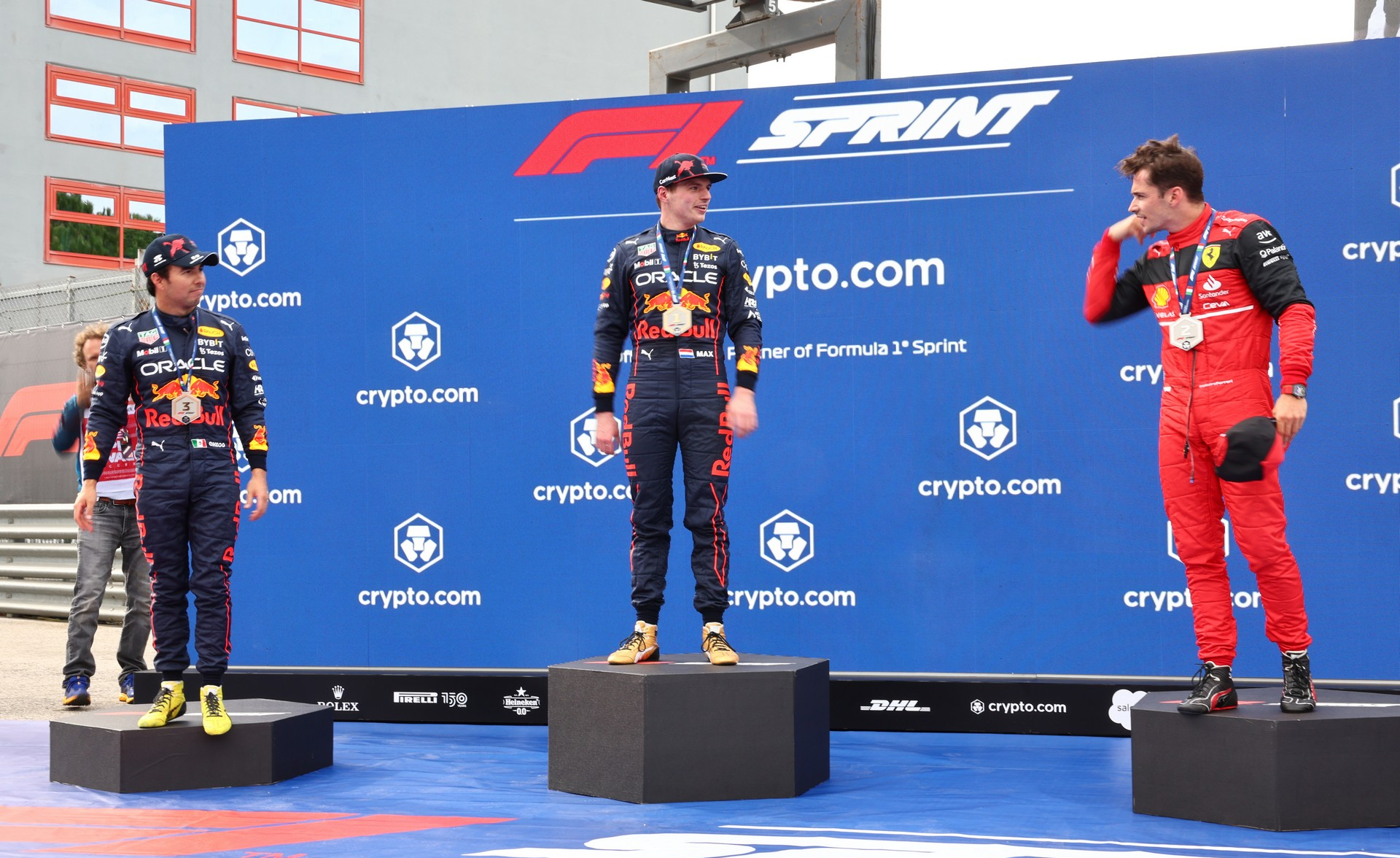
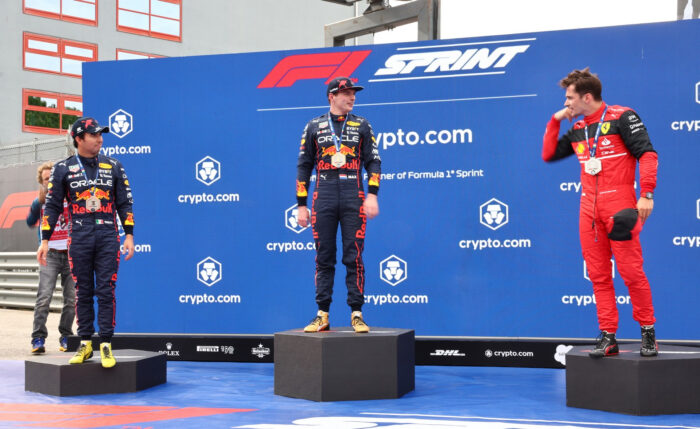
Max Verstappen won the first edition of the new Formula 1 Sprint format.
Image credit: XPB Images

Formula 1 revamped its polarising sprint format for April’s Azerbaijan Grand Prix weekend, but the fans appeared to remain unconvinced.

Baku saw the introduction of a ‘Sprint Saturday’.

Where previously there had been a meaningless Free Practice 2 session on Saturday morning followed by a Sprint Race to decide Sunday’s grid, in Azerbaijan we had the inaugural ‘Sprint Shootout’ – a half-length qualifying session to decide the grid for the Sprint Race later that day – with Sunday’s grid set by the regular qualifying session on Friday.

Whilst some issues with the Sprint format have been fixed – or at least lessened – by these changes, the overriding ones remain.

This writer, however, feels there may be a solution.

The pros and cons

There was certainly something to be said for the revamp in Baku. It tidied up some of the not overly serious but nonetheless frustrating issues, such as who was officially awarded pole position: initially, not the fastest qualifier but the winner of the sprint race; then the fastest qualifier but not necessarily the driver who actually started on pole…

And, in theory, the drivers had more of an incentive to produce some wheel-to-wheel action.

When the Sprint Race decided the grid for Sunday’s main event, many were cautious, as the risk of starting from the back outweighed the reward of an extra point or two for a lick-the-stamp-and-send-it overtaking manoeuvre. With less to lose, surely there would be more action?
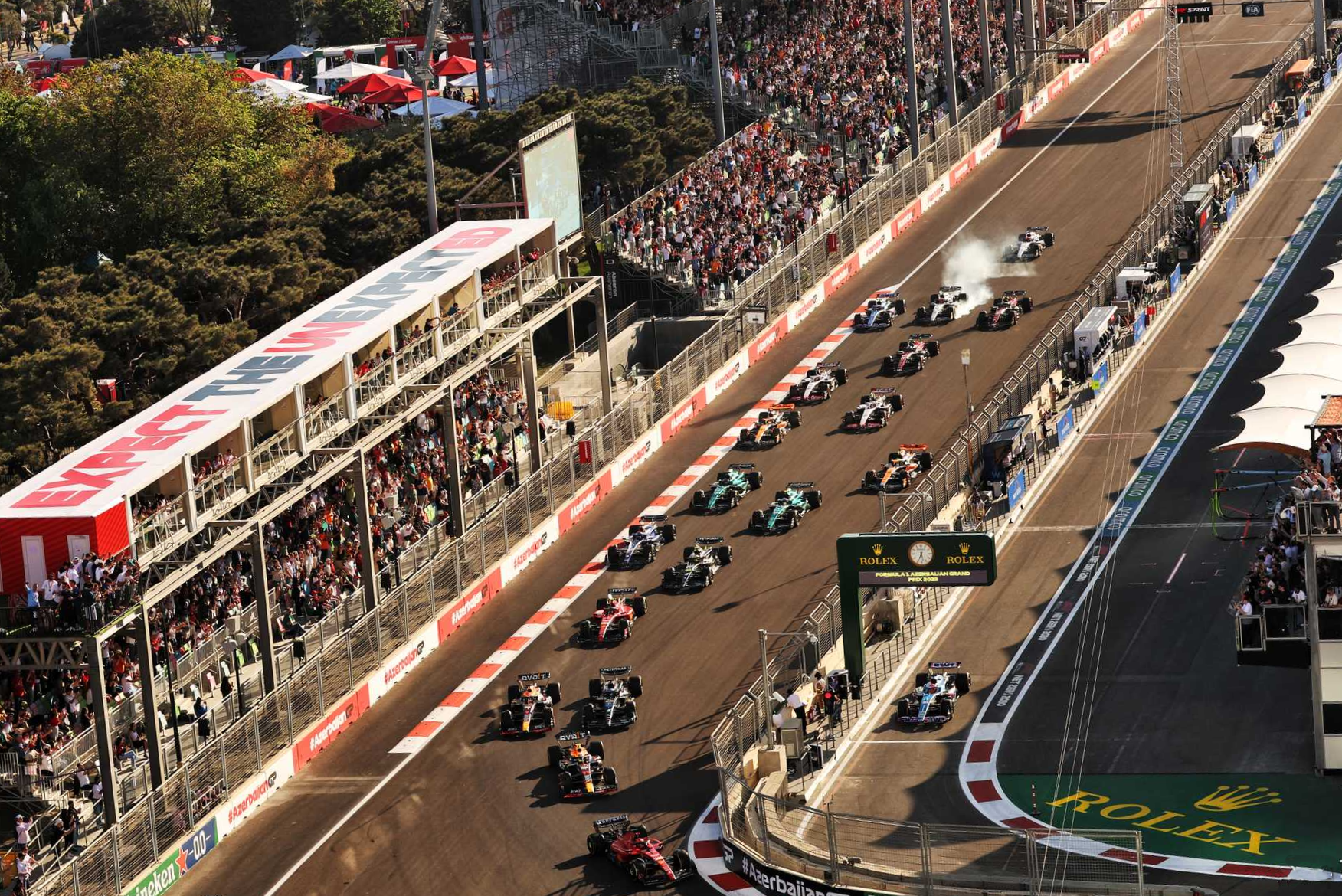
The start of the regular Sunday race during the Formula 1 Sprint weekend in Baku.
Image credit: XPB Images

That didn’t really prove to be the case, though, as the drivers outside of the top eight had very little to fight for and there remained a risk of costly damage – particularly during an era of budget caps – or penalties that could be served on Sunday.

A few new issues also arose.

The structure felt unclear and a little jumbled. The usual, natural crescendo – each session organically building in importance through to Sunday’s grand prix – was no longer present. Going from one qualifying session to another arguably less important one was jarring.

And there were certainly some loopholes to be closed too. We almost saw Lando Norris and Yuki Tsunoda battling it out for P9 on wet tyres in SQ3 due to the fact they had run out of the mandatory option of new softs, but there was no rule to prevent them using the wets.

Overall, a slight improvement, but not enough of one

On balance, despite those concerns, this iteration of a sprint weekend was probably a slight improvement on the previous ones. However, the overriding problems remain unsolved.

The biggest of those is that a sprint race acts as an effective spoiler for the main race. For example, where normally we’d have gone into the Sunday in Azerbaijan wondering whether Charles Leclerc could take an unexpected fight to the mighty Red Bulls, Sprint Saturday had made it clear that he would stand no chance.
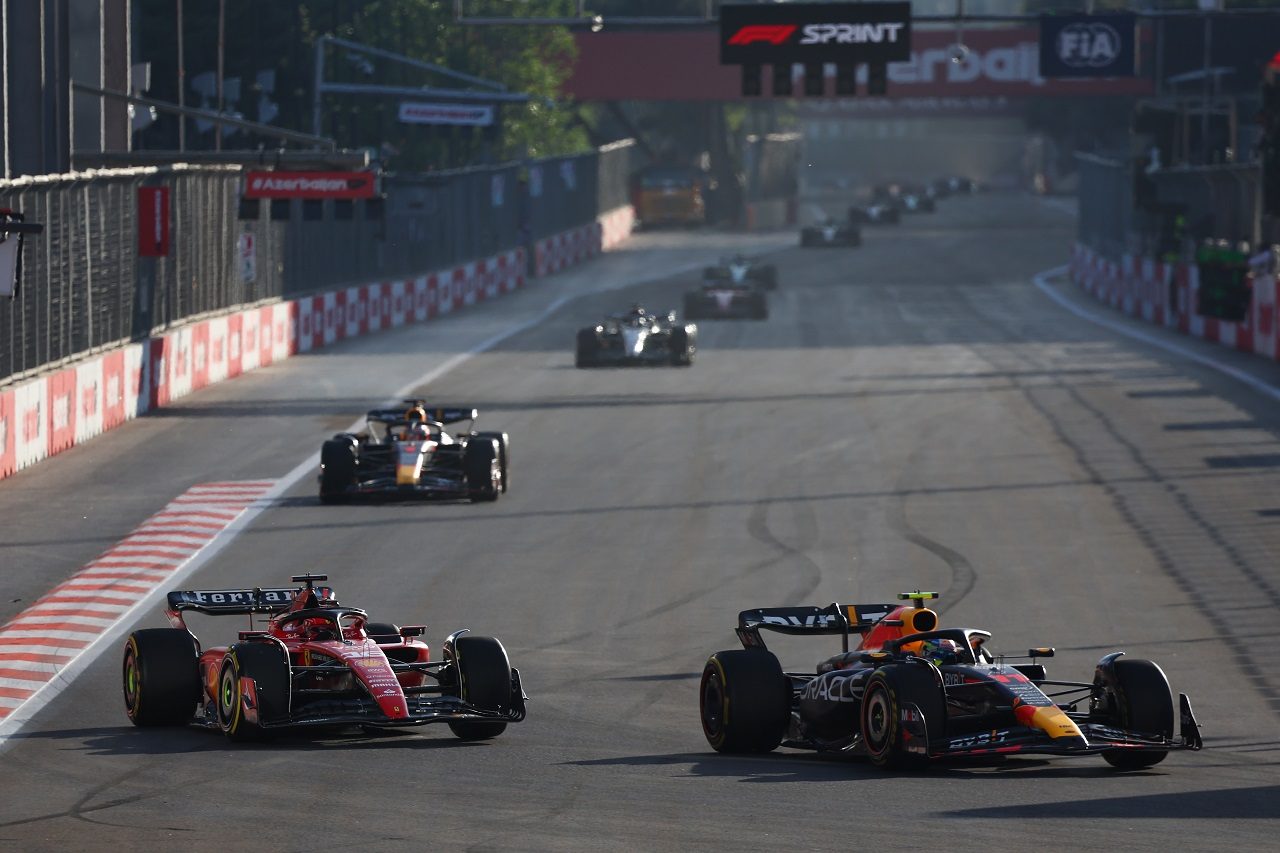
Charles Leclerc being passed by Sergio  Pérez at the Formula 1 Sprint in Baku.
Image credit: XPB Images

And to what end?

After the obvious excitement of a race start – and a bonus safety car restart – there was precious little action. With no scope for strategic calls, the cars will more often than not just follow one another round in a DRS train.

A potential solution

So, if Formula 1 is going to persist with the sprint format, what could be the solution?

The answer – or at least my suggestion – consists of two words: alternate layouts.

Sprint weekends should only feature on tracks where there is the potential for a second track layout. With all the sprint sessions now condensed down to Saturday, it is surely feasible to make the required amendments between the two layouts on Friday and Saturday night.

It would prevent the sprint spoiling what we can expect from the race, whilst also adding variables and excitement. And we know how FOM feels about both of those.

Some examples

It would make sense to go with short, snappy layouts for a sprint, and there are already plenty of options on the current calendar. Here are just a few…
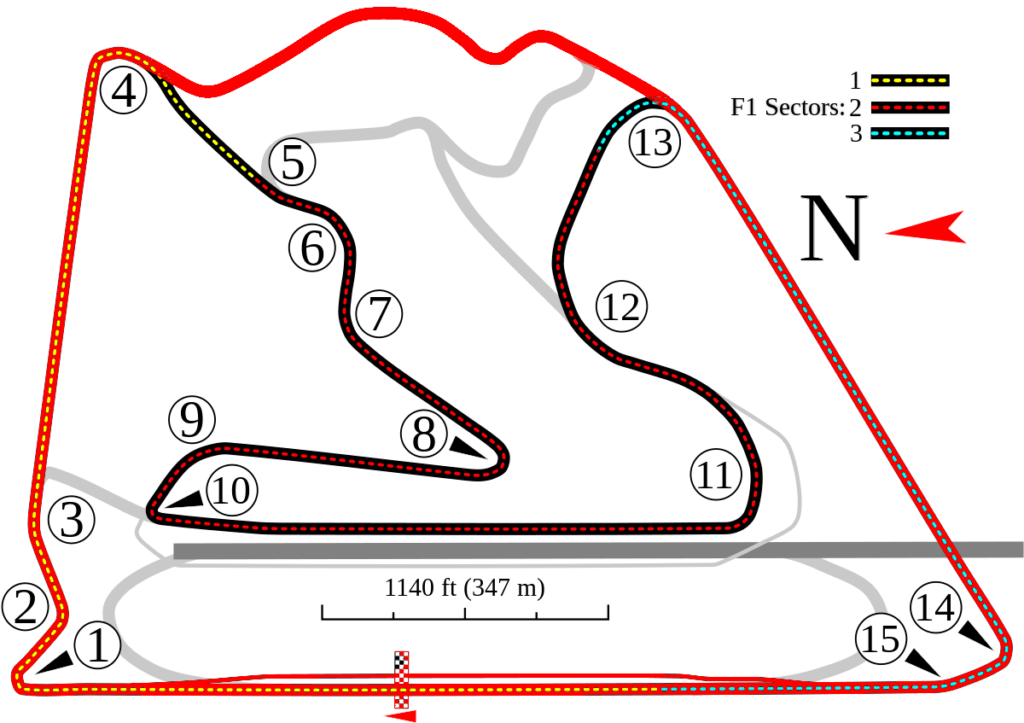
Bahrain

We have already experienced a grand prix around Sakhir’s ‘Outer Circuit’ in 2020.

It proved fairly popular and produced a good amount of action. It would be perfect for a quick blast on a Saturday.
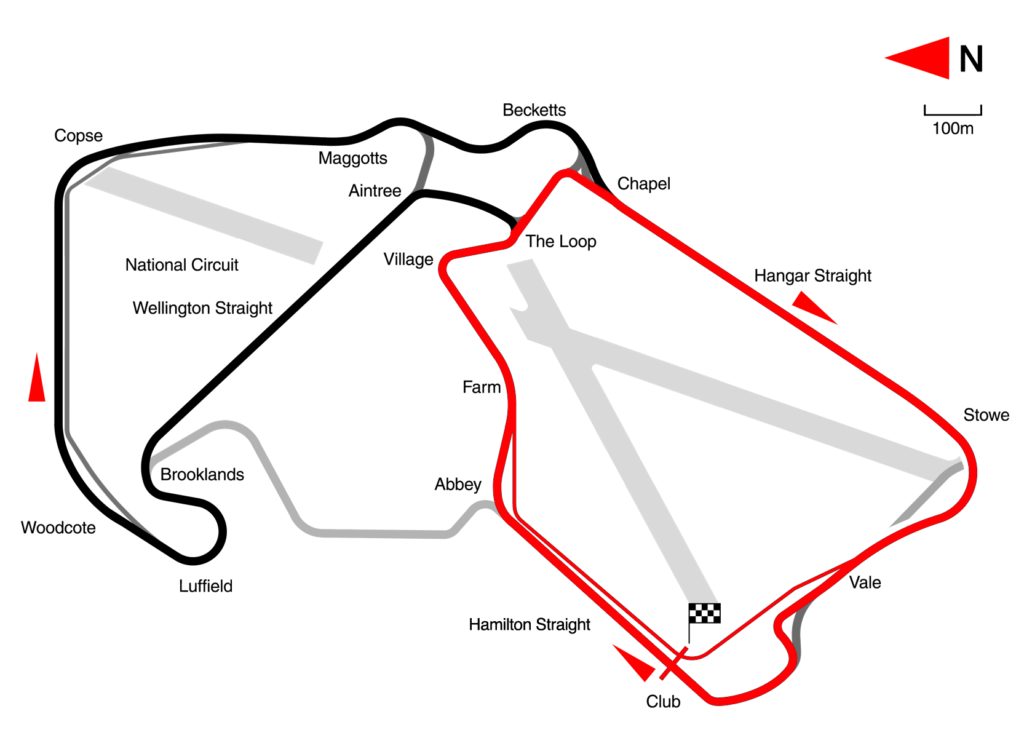
Great Britain

Silverstone’s ‘International Circuit’ could also work well. It retains the Hangar Straight to enable a DRS zone and plenty of passing opportunities.
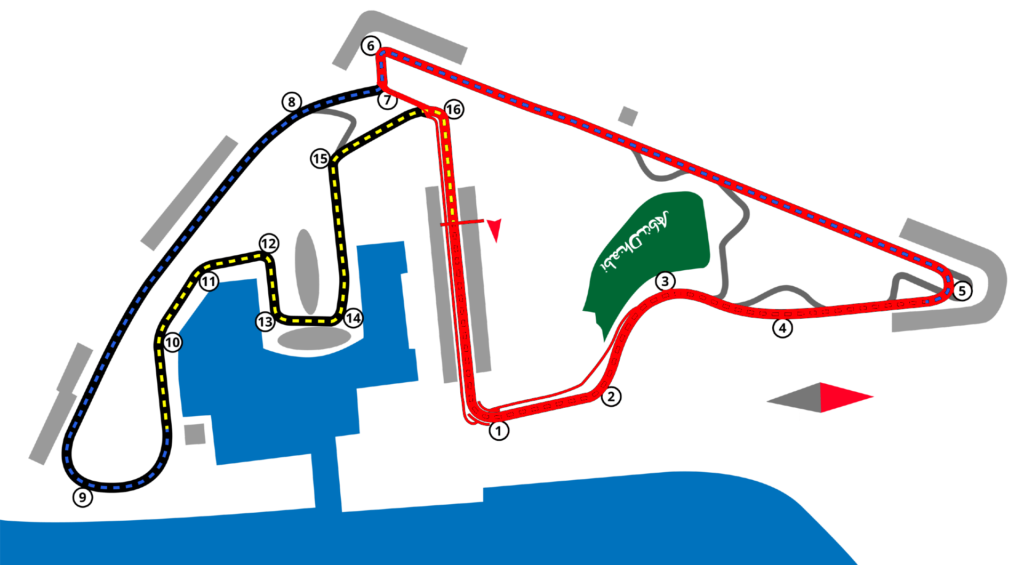
Abu Dhabi

Yas Marina isn’t quite at the levels of Paul Ricard when it comes to numerous layouts, but there are a fair few.

Of course, F1’s resident experts could decide which the best option would be, but at a glance this course looks to be a decent one.
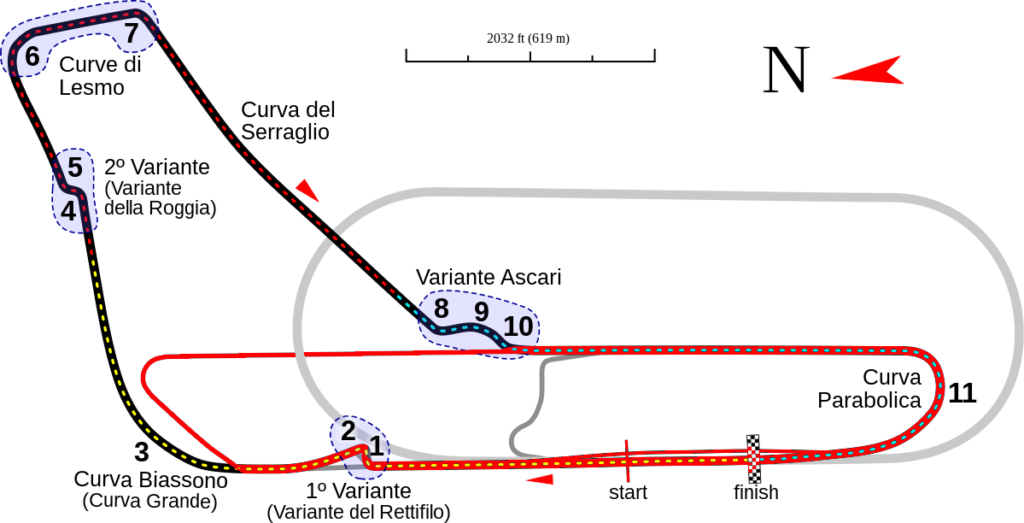
Italy

And hey, why not make the Temple of Speed a Temple of Sprint Speed too?

A proper old-school Monza vibe that is basically just an oval with a chicane.

These are just four quick mock-ups of the idea. Zandvoort, Suzuka and COTA all also have existing short-circuit alternatives.

It seems highly likely that Baku and Singapore could provide options with a potential cut-through where two sections of track run parallel to each other and, if called upon, plenty of other venues would surely be able and willing to create options.

If F1 insists on having us Sprint our way through the weekend with constant action, let’s make it a true sprint and at least mix things up with a journey into the unknown that doesn’t ruin the main event on Sunday.
2021 British GP report | Hamilton wins at home after Verstappen clash

Finally, the flashpoint.
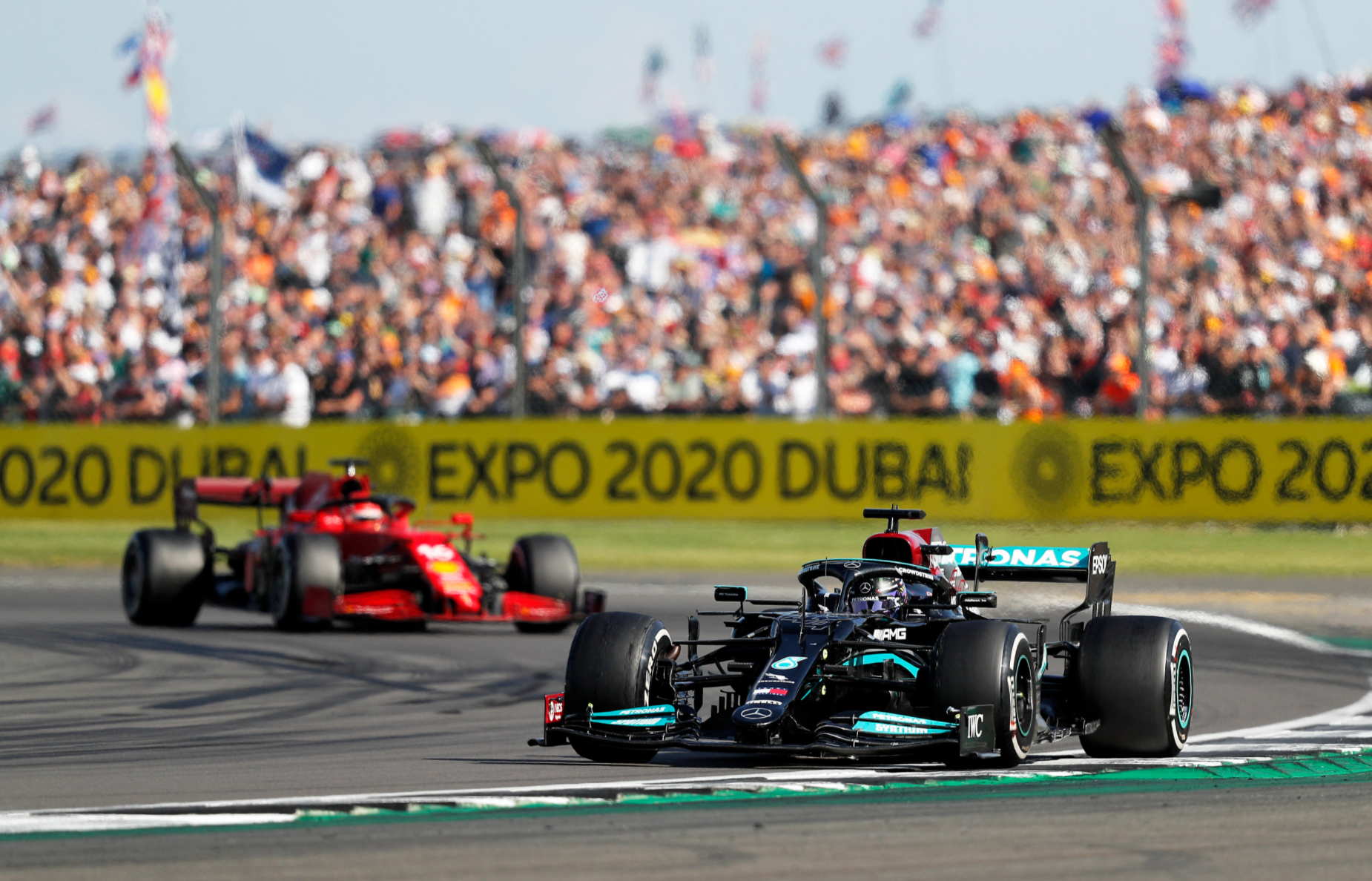
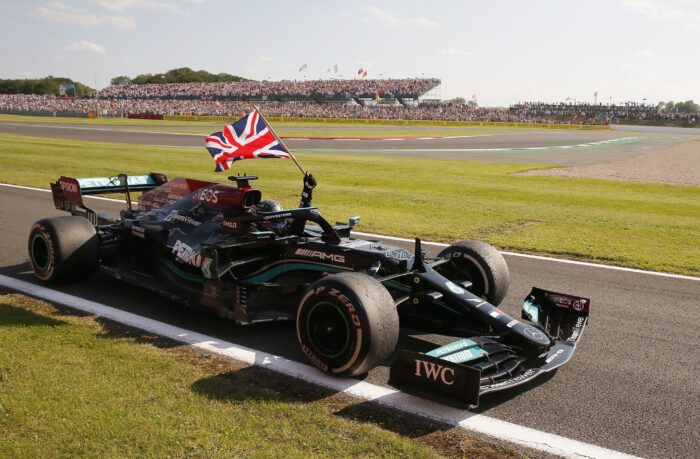
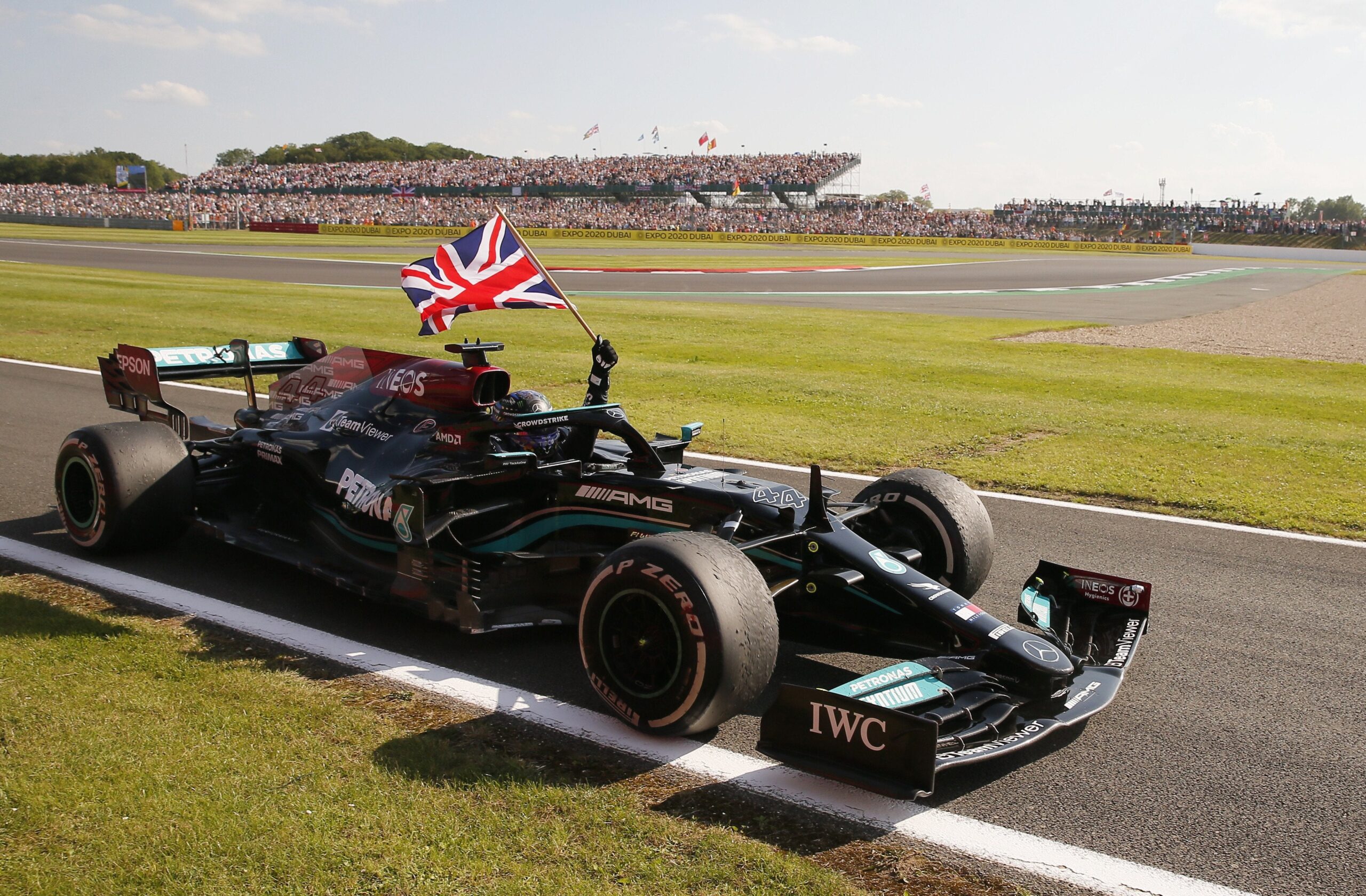
Lewis Hamilton celebrated his victory at the British Grand Prix.
Image credit: Reuters

Lewis Hamilton delighted his home fans with victory at the British Grand Prix after recovering from a first-lap clash with title rival Max Verstappen.

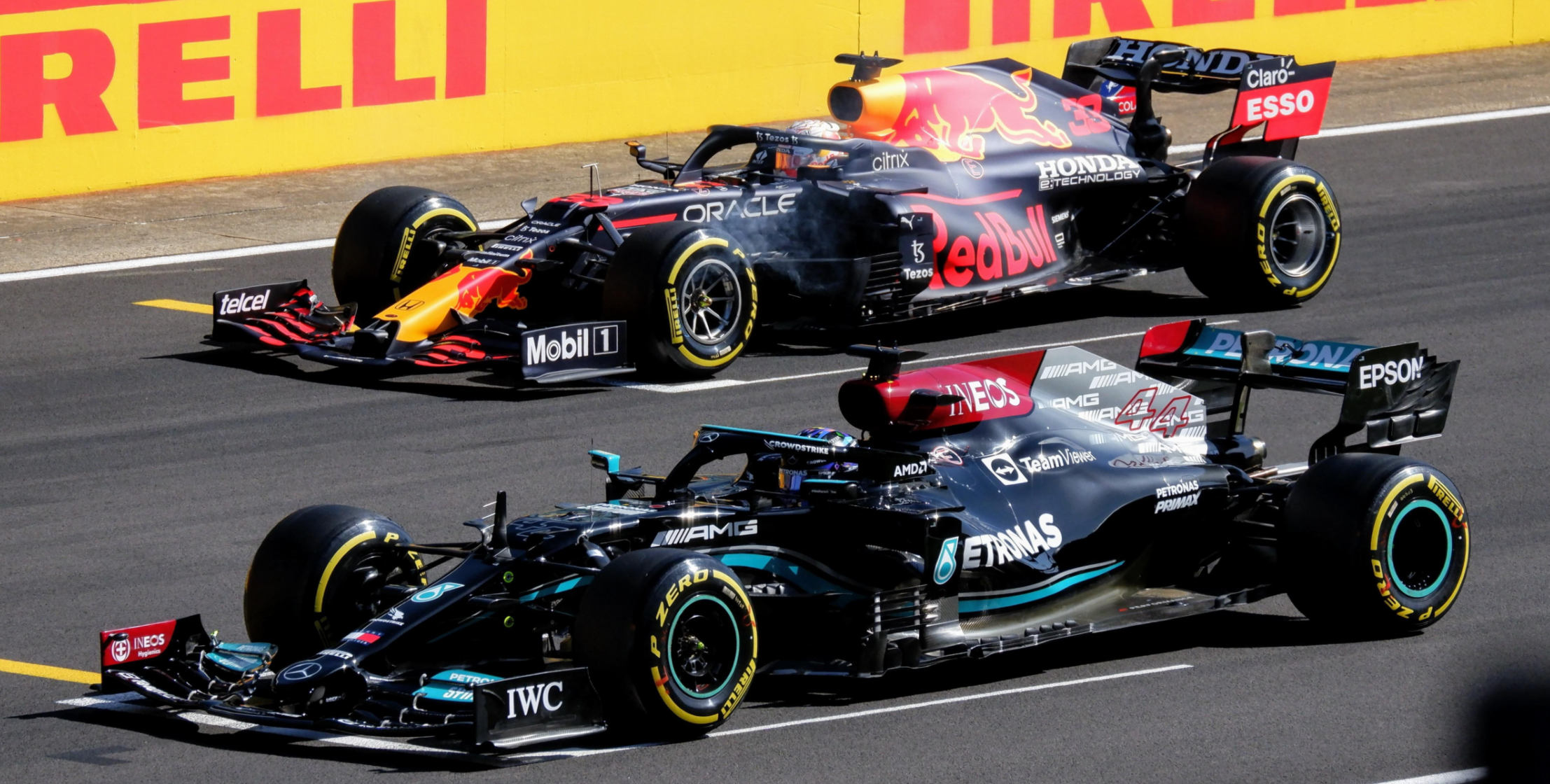
Saturday’s sprint qualifying experiment had put Verstappen on pole, leaving Hamilton disappointed after a great performance in the regular qualifying format on Friday evening.

When the lights went out on Sunday, though, it was the World Champion who got away better. The pair fought tooth and nail for half a lap, regularly wheel-to-wheel and once brushing tyres on the Wellington Straight. Hamilton took a wide line around Luffield to get better drive and closed in on Verstappen down the old pit straight. The Red Bull defended but Hamilton sold him a dummy to move up the inside as the pair approached Copse at nearly 200 mph.

And then the clash – which has been narrowly avoided on numerous occasions this year – finally occurred.

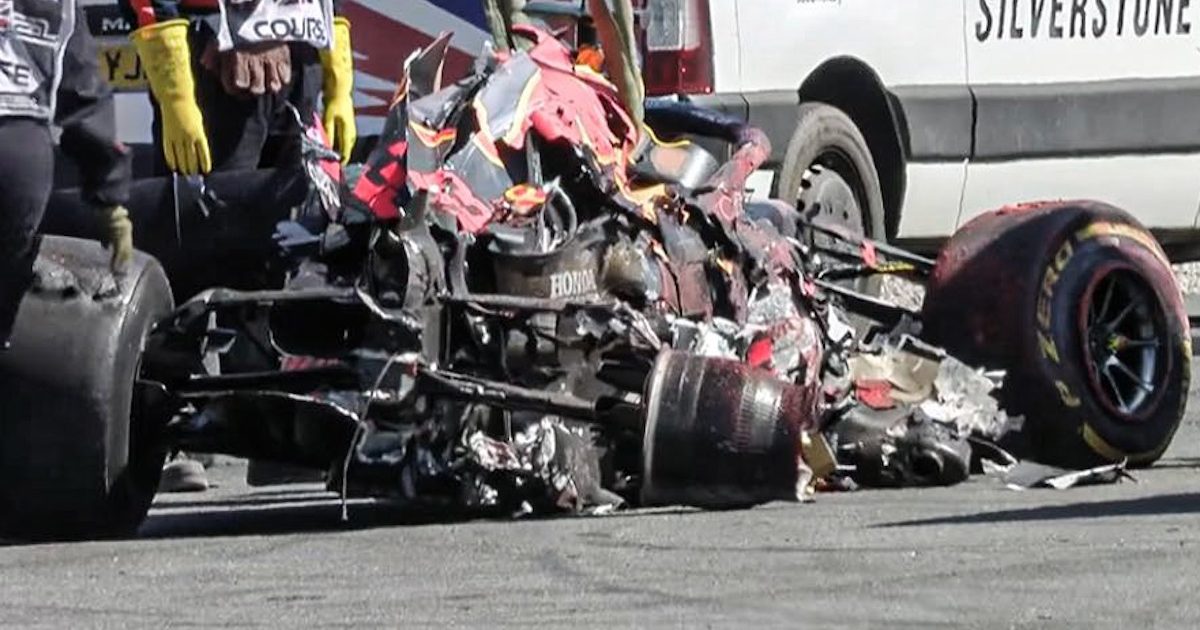
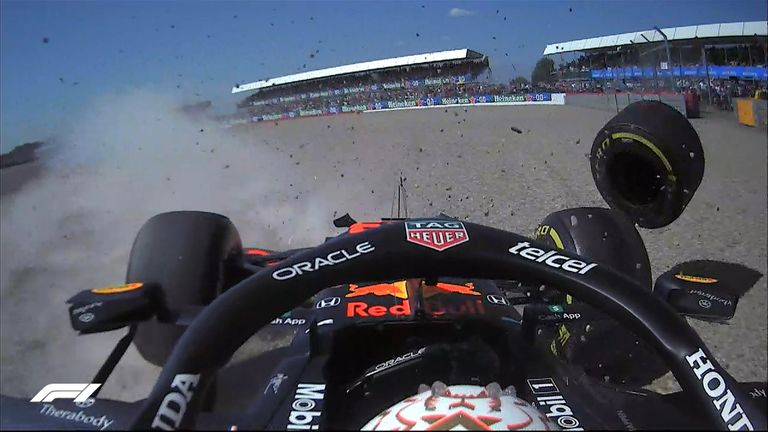
Hamilton’s right front and Verstappen’s left rear touched and the Dutchman was sent spearing into the wall at a terrifying speed. Whilst clearly winded and shaken, he was able to walk away from the accident and transported to hospital for cautionary checks.

The wreckage of Max Verstappen's Red Bull.

The Mercedes, meanwhile, had survived with minor damage and the race had been red flagged.

Once the barriers had been repaired, we witnessed our third standing start of the weekend with Charles Leclerc the unlikely polesitter. Hamilton sat in second – the damage to his car repaired with a bit of superglue – with his teammate, Valtteri Bottas, in third and fellow home hero Lando Norris in fourth.

The Ferrari held Hamilton at bay on the run to the first corner, but behind them Norris started well and passed Bottas for a provisional podium spot.

That would – somewhat surprisingly – remain the order through to the pit stops. Hamilton was generally within two seconds of the leader but couldn’t get close enough to fashion a move, despite occasional power issues for the Ferrari.

The Briton had been given a ten-second penalty as a result of his first-lap collision so an undercut was out of the question. He ran longer than those following, pitting on lap 28 and rejoined in what would effectively become fourth place.

A slow stop for Norris had left him behind Bottas and he didn’t fight as his compatriot stormed past into Copse on lap 31.

As Hamilton closed in rapidly on fresher tyres, his teammate was asked to move aside and that left just Leclerc – nine seconds up the road with 12 laps remaining.

By lap 50 of 52, Hamilton was within the slipstream of the Monegasque. Once again he found himself pulling alongside the leader on the run to Copse. This time, slightly further back, he backed out of it but Leclerc – aware of his competitor’s presence – ran wide and Hamilton was through.

Lewis Hamilton and Charles Leclerc at the British Grand Prix.
Image credit: AFP

The crowd roared and the World Champion repaid their support with his first victory since the Spanish Grand Prix back in May.

Leclerc came home an excellent second for his first podium of the year, with Bottas in third and Norris fourth – the young Briton now impressively moves up to third in the standings.

Daniel Ricciardo in the other McLaren held off Carlos Sainz for fifth and earned his best result yet in papaya. Fernando Alonso took a commendable seventh after his sprint qualifying heroics on Saturday, with Lance Stroll, Esteban Ocon and Yuki Tsunoda completing the top 10.

The Biggest Moment of the Season So Far

This collision had been coming. For months, if not years.

Hamilton and Verstappen have come within millimetres of each other on more than occasion this season.

Generally – throughout their time in F1 – Hamilton has been the one to back out. His approach has more often than not been focused in the long term, on the championship. Verstappen, on the other hand, has usually been in a position where he has nothing to lose.

Lewis Hamilton and Max Verstappen on the grid for the Sprint.

This time, crucially, those roles were reversed, but Verstappen’s approach remained the same.

This season, Hamilton was shoved wide at the first corner in Imola, and was very accommodating as his rival launched a divebomb up the inside a few weeks later in Spain. He learnt a long while back – and the hard way in 2011 – that staying out of trouble is often the best way to earn titles. But now, with the Red Bull the class of the field recently and Verstappen having opened up a 33-point lead, he found himself in a position to take risks again.

That has not been the case for a long time, and perhaps Verstappen thought he simply had the better of Hamilton. The Dutchman’s approach has always been comparable with Ayrton Senna‘s mantra of ‘Either you back out or we crash’.

Here at Silverstone, Hamilton did not back out and they did crash. And it was Verstappen who came off worse.

On board Max Verstappen's scary crash.

In hindsight, as the man with the significant points advantage, he should have been more circumspect. But his natural competitiveness and youthful hotheadedness – which has clearly not been totally ironed out just yet – saw him continue to take risks. Twice before their collision, Hamilton had avoided the Red Bull.

At the first corner, Verstappen came back onto the track sharply after running wide and then used up all the track at Brooklands despite entering the corner behind Hamilton.

In the end, a small penalty for car number 44 felt about right. It follows the precedent set by recent incidents where a driver on the inside has clipped the wheel of one on the outside, with an extra five seconds perhaps for the speed involved.

This was certainly not solely Hamilton’s fault. He understeered wide of the apex on cold tyres in a heavy car – he actually had more steering lock on than when hitting the apex during his battle with Leclerc – but Verstappen could also have left more space. Indeed, Hamilton backed out of a very similar situation with the situations reversed in the sprint 24 hours earlier.

The comments made by Christian Horner and Helmut Marko – who claimed Hamilton should receive a race ban – were frankly ridiculous, inflammatory and unnecessary.

Whatever your opinion on the incident, it has undeniably reignited a title battle that looked to be slipping away from Mercedes and likely provided a real spark between the two protagonists. Hamilton lifted the trophy on Sunday, but F1 was the biggest winner.

What Did We Make of Sprint Qualifying?

Fernando Alonso at the British Grand Prix.

This was due to be the main talking point until the lap 1 drama unfolded. But it’s still worth mentioning on a weekend where F1 trialled the biggest change to its format for decades.

Personally, I remain unconvinced. It didn’t sit right with me that the fastest driver over one lap didn’t earn pole position. The sprint on Saturday cheapened the regular qualifying session and acted as a spoiler for the main race, revealing certain elements of teams’ race pace and tyre life that would normally remain a mystery until the headline event.

As for the sprint itself, the first couple of laps were, of course, thrilling, but the remaining 15 were something of a procession as those out front were barely seen and a DRS train formed in the midfield. Fernando Alonso‘s extraordinary start provided most of the remaining entertainment as he slowly fell backwards after moving up from 11th to 5th in the first few corners.

Ross Brown and co are clearly determined to add more events to the race weekend, but they must be wary of quantity over quality on an ever-increasing calendar.

However, a close friend who has never really been interested in F1 messaged me after the race – initially commenting on Hamilton’s “big ball energy”… – to say that he had been drawn in by the new weekend format, with it sounding more interesting to a casual viewer. So, it has clearly had the desired effect.

If something like this ends up as a special occasion at three or four races a year, that could certainly work. The sprint race itself needs some tweaking. Perhaps a reverse-championship-order sprint for a few points to really embrace the mayhem; although the budget cap means teams are unlikely to go for that. Whatever they choose, for the love of god, just call it a race rather than ‘Sprint Qualifying’. It’s quite clearly a short race, and all the members of the media desperately trying to avoid calling it as such was a bit cringeworthy.

The British Grand Prix in 60 Seconds

Answering the Burning Questions

Will the Sprint Qualifying format be a success? A disaster? Somewhere in between? See above. Let’s go with somewhere in between.

Can Mercedes get back on terms with Red Bull at one of Hamilton’s most successful tracks? One way or another, yes.

Will their long overdue upgrades make a big difference? The updates certainly seem to have brought them closer. With Verstappen out of the race and Sergio Pérez stuck at the back, though, it was hard to tell.