How to fix Formula 1’s latest ‘Sprint Saturday’ format

Could alternate layouts provide the answer in F1’s search for the right sprint format?
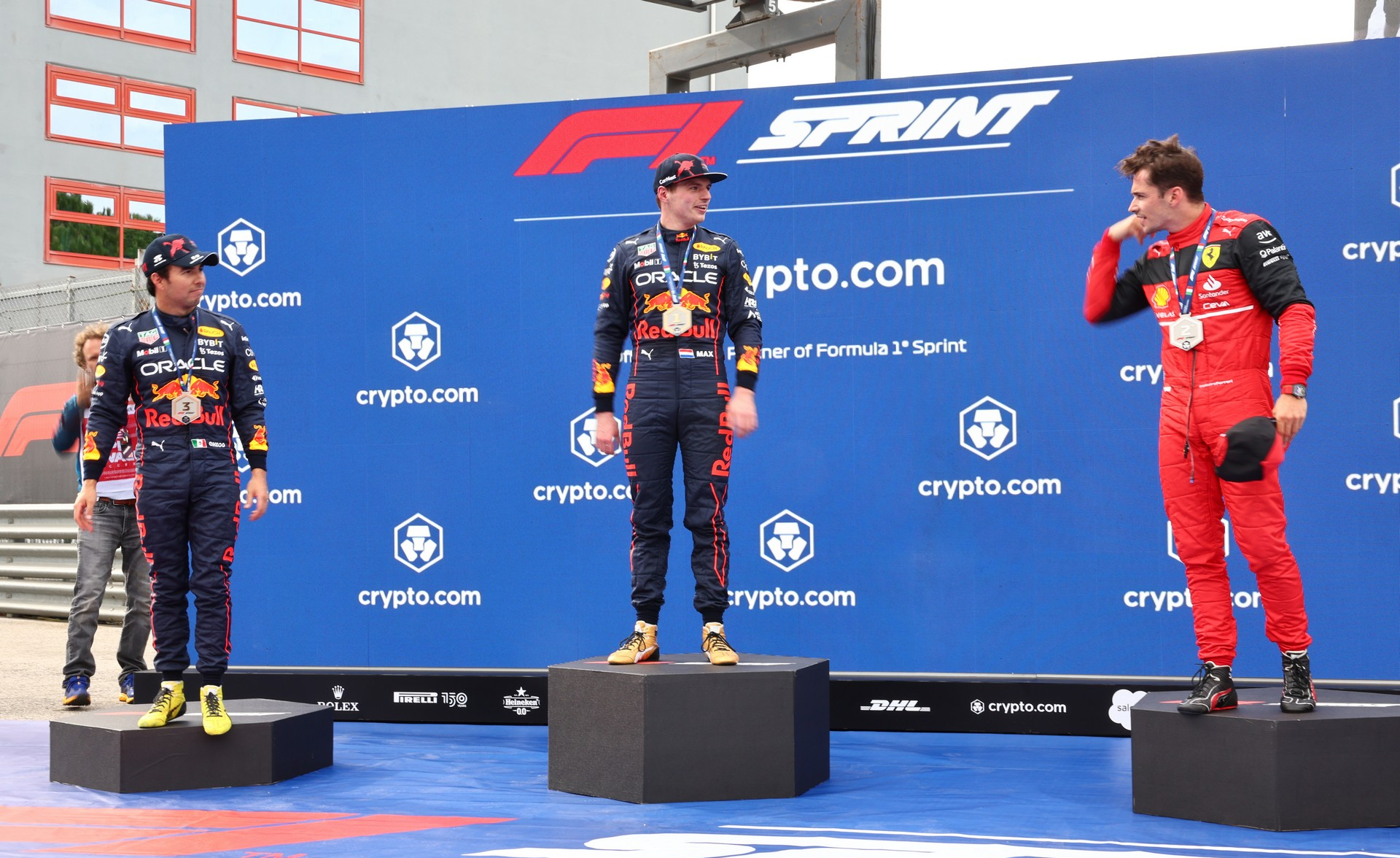
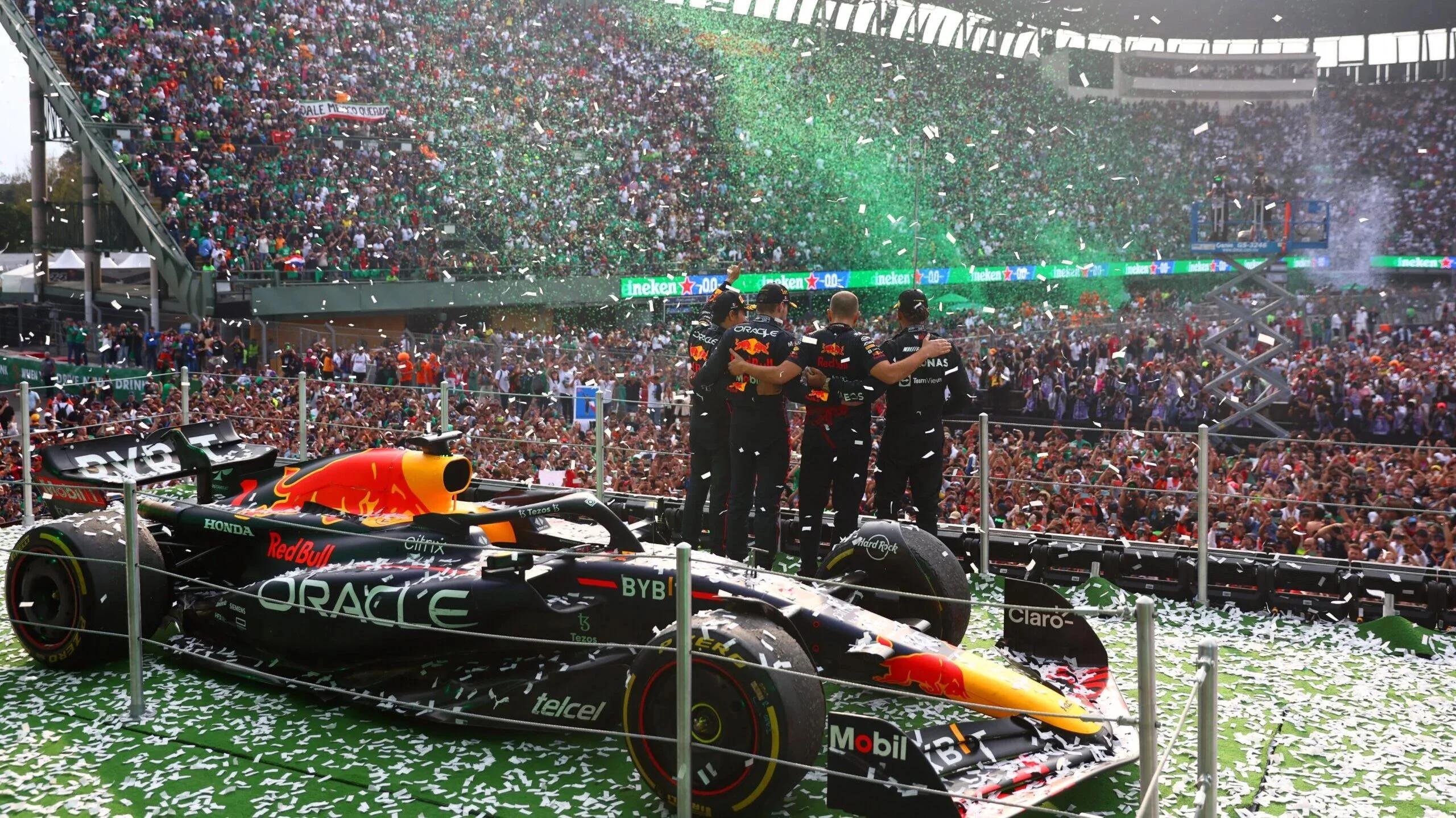
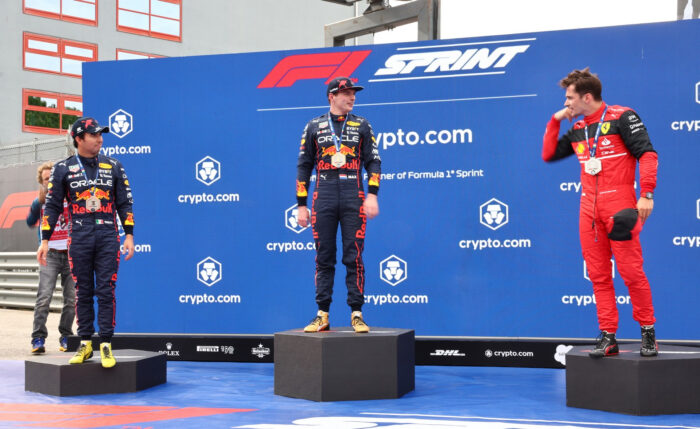
Max Verstappen won the first edition of the new Formula 1 Sprint format.
Image credit: XPB Images

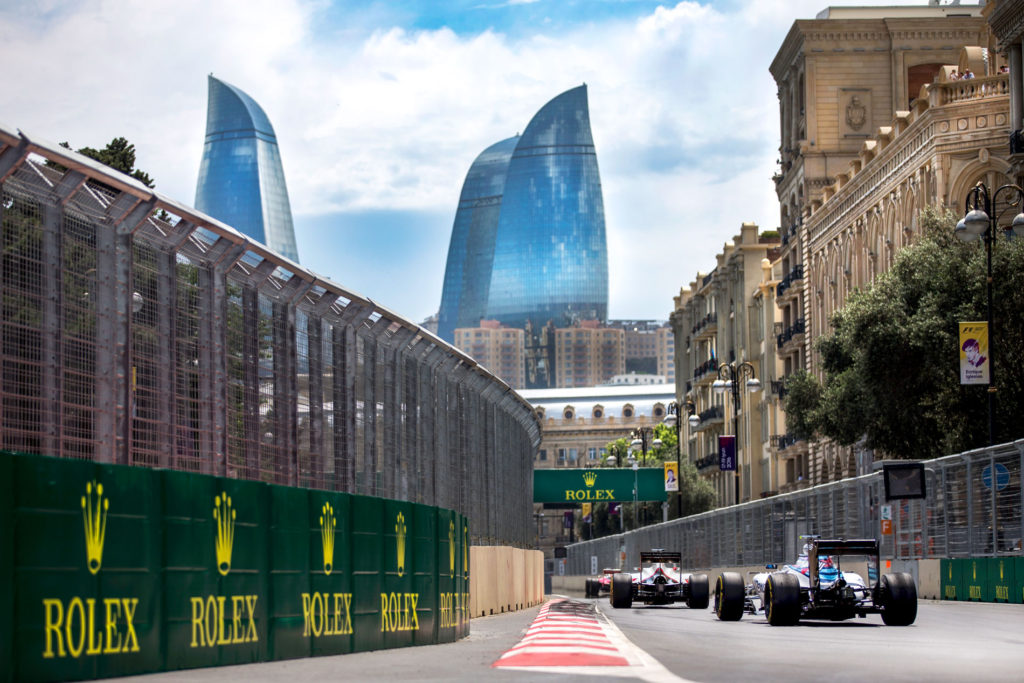
Formula 1 revamped its polarising sprint format for April’s Azerbaijan Grand Prix weekend, but the fans appeared to remain unconvinced.

Baku saw the introduction of a ‘Sprint Saturday’.

Where previously there had been a meaningless Free Practice 2 session on Saturday morning followed by a Sprint Race to decide Sunday’s grid, in Azerbaijan we had the inaugural ‘Sprint Shootout’ – a half-length qualifying session to decide the grid for the Sprint Race later that day – with Sunday’s grid set by the regular qualifying session on Friday.

Whilst some issues with the Sprint format have been fixed – or at least lessened – by these changes, the overriding ones remain.

This writer, however, feels there may be a solution.

The pros and cons

There was certainly something to be said for the revamp in Baku. It tidied up some of the not overly serious but nonetheless frustrating issues, such as who was officially awarded pole position: initially, not the fastest qualifier but the winner of the sprint race; then the fastest qualifier but not necessarily the driver who actually started on pole…

And, in theory, the drivers had more of an incentive to produce some wheel-to-wheel action.

When the Sprint Race decided the grid for Sunday’s main event, many were cautious, as the risk of starting from the back outweighed the reward of an extra point or two for a lick-the-stamp-and-send-it overtaking manoeuvre. With less to lose, surely there would be more action?
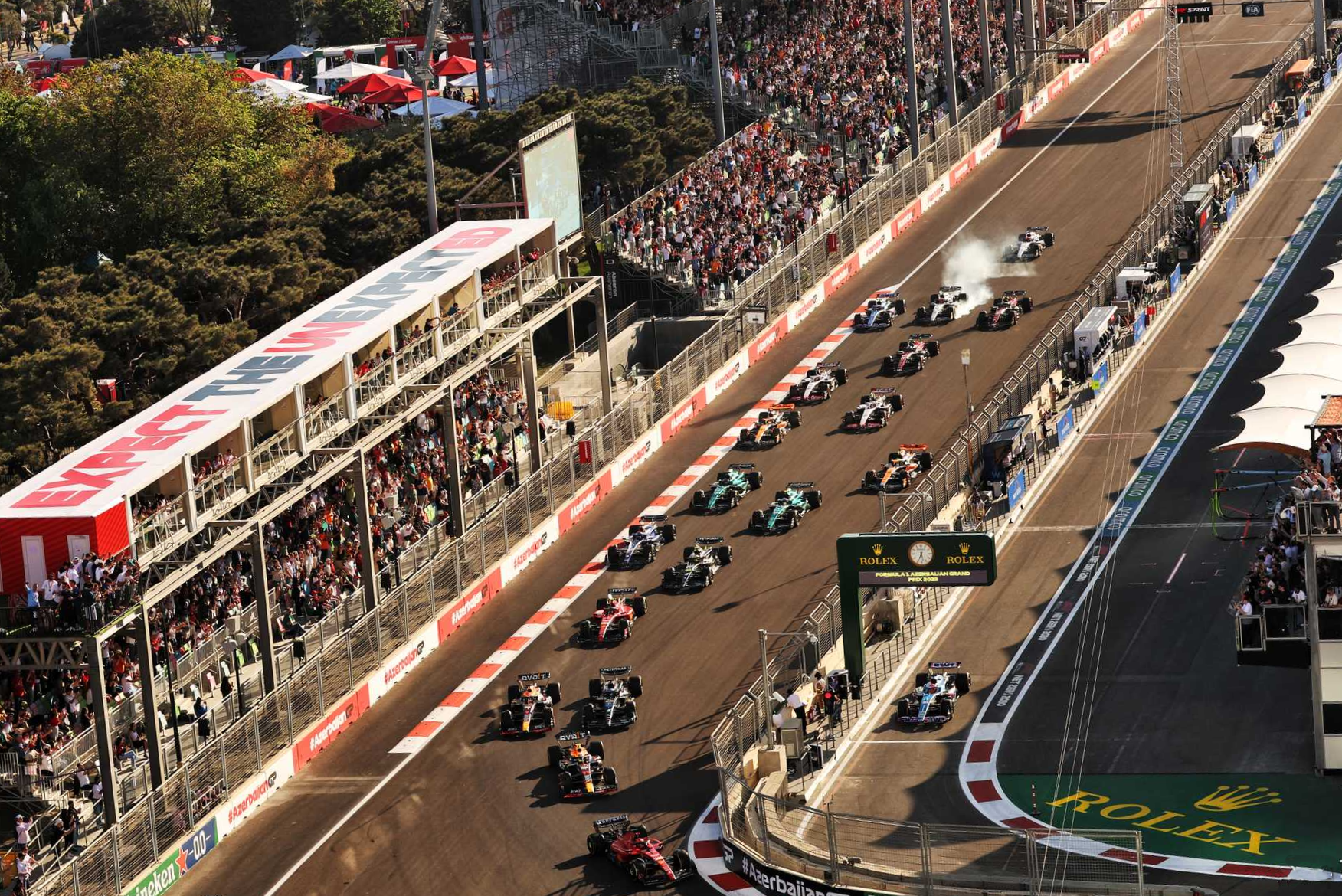
The start of the regular Sunday race during the Formula 1 Sprint weekend in Baku.
Image credit: XPB Images

That didn’t really prove to be the case, though, as the drivers outside of the top eight had very little to fight for and there remained a risk of costly damage – particularly during an era of budget caps – or penalties that could be served on Sunday.

A few new issues also arose.

The structure felt unclear and a little jumbled. The usual, natural crescendo – each session organically building in importance through to Sunday’s grand prix – was no longer present. Going from one qualifying session to another arguably less important one was jarring.

And there were certainly some loopholes to be closed too. We almost saw Lando Norris and Yuki Tsunoda battling it out for P9 on wet tyres in SQ3 due to the fact they had run out of the mandatory option of new softs, but there was no rule to prevent them using the wets.

Overall, a slight improvement, but not enough of one

On balance, despite those concerns, this iteration of a sprint weekend was probably a slight improvement on the previous ones. However, the overriding problems remain unsolved.

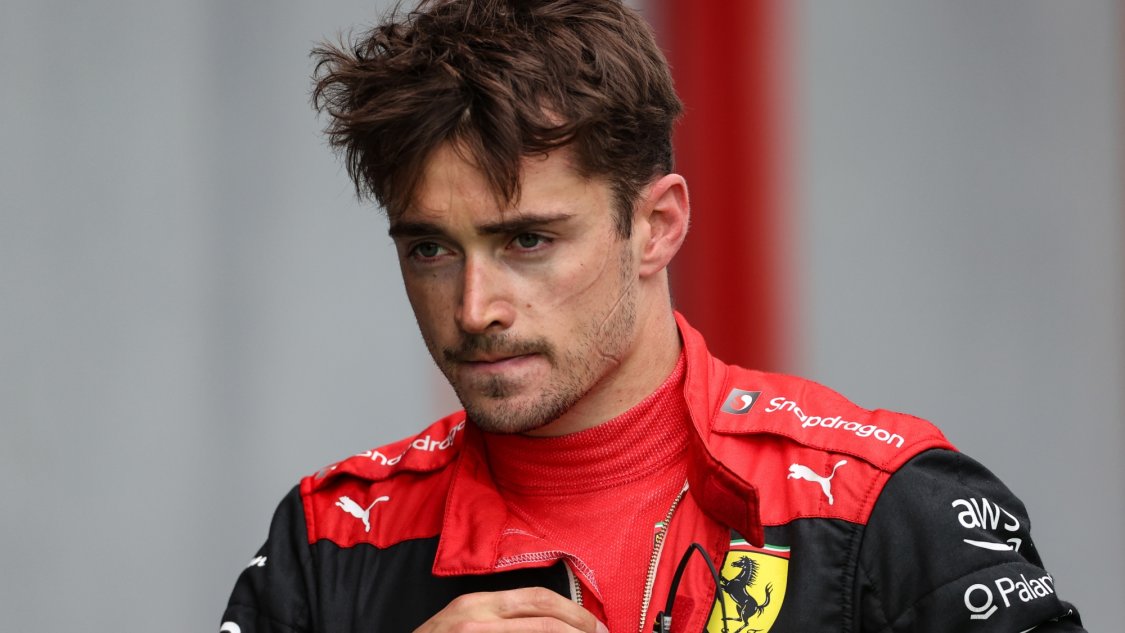
The biggest of those is that a sprint race acts as an effective spoiler for the main race. For example, where normally we’d have gone into the Sunday in Azerbaijan wondering whether Charles Leclerc could take an unexpected fight to the mighty Red Bulls, Sprint Saturday had made it clear that he would stand no chance.
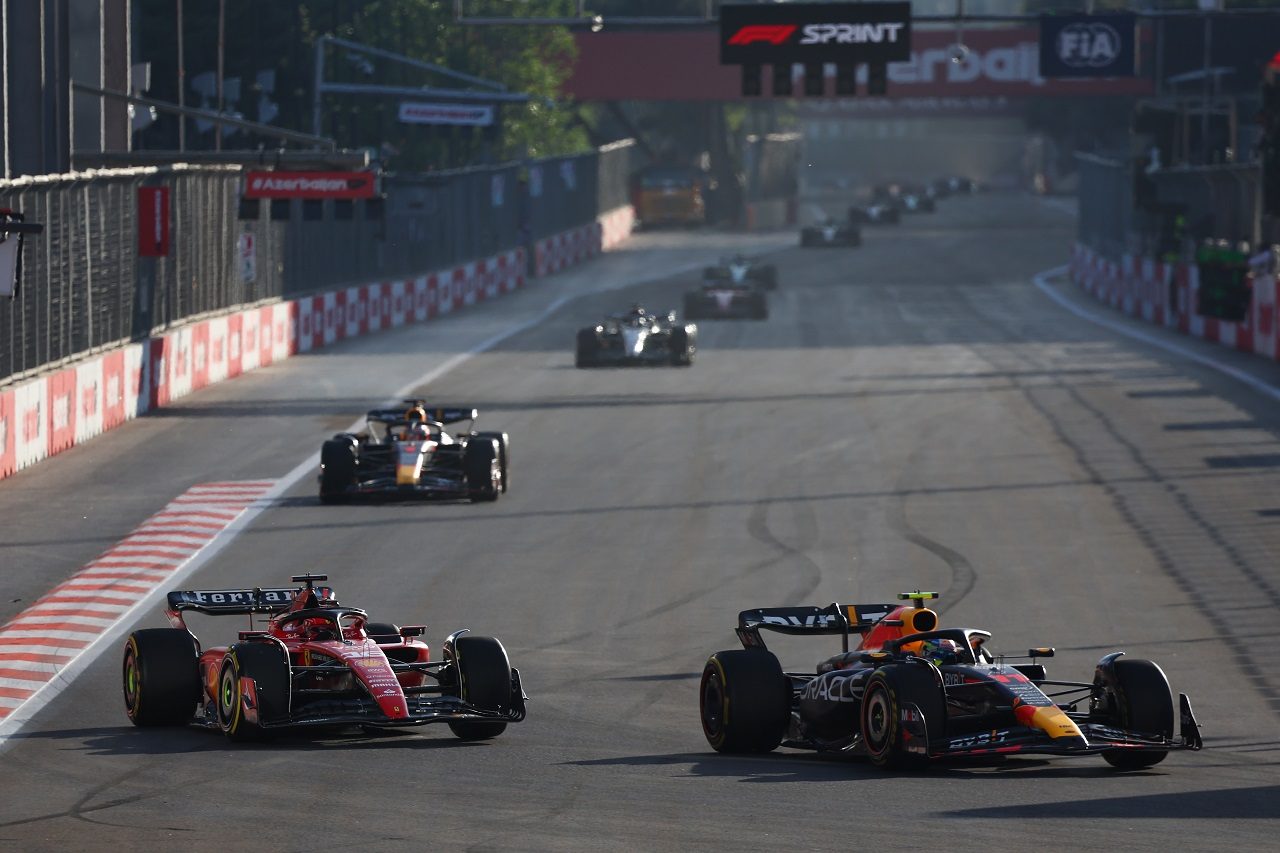
Charles Leclerc being passed by Sergio  Pérez at the Formula 1 Sprint in Baku.
Image credit: XPB Images

And to what end?

After the obvious excitement of a race start – and a bonus safety car restart – there was precious little action. With no scope for strategic calls, the cars will more often than not just follow one another round in a DRS train.

A potential solution

So, if Formula 1 is going to persist with the sprint format, what could be the solution?

The answer – or at least my suggestion – consists of two words: alternate layouts.

Sprint weekends should only feature on tracks where there is the potential for a second track layout. With all the sprint sessions now condensed down to Saturday, it is surely feasible to make the required amendments between the two layouts on Friday and Saturday night.

It would prevent the sprint spoiling what we can expect from the race, whilst also adding variables and excitement. And we know how FOM feels about both of those.

Some examples

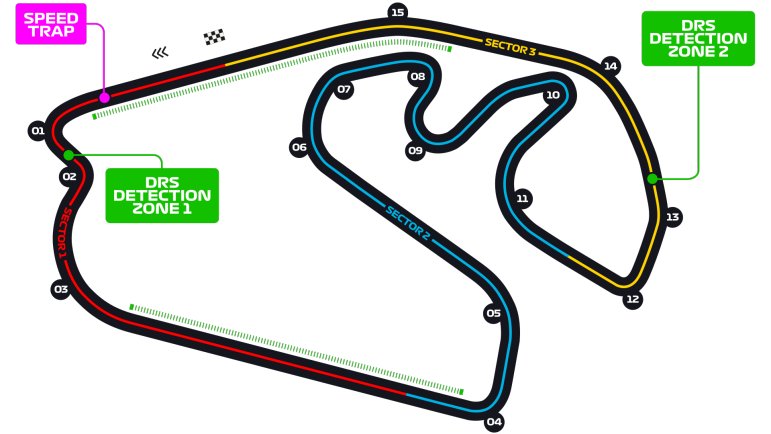
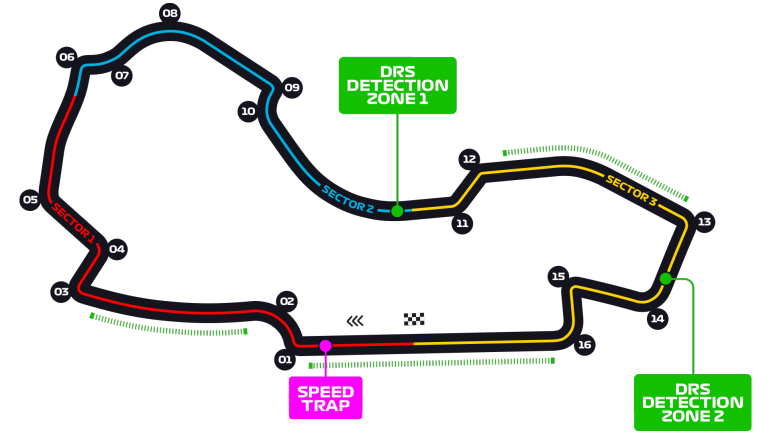
It would make sense to go with short, snappy layouts for a sprint, and there are already plenty of options on the current calendar. Here are just a few…
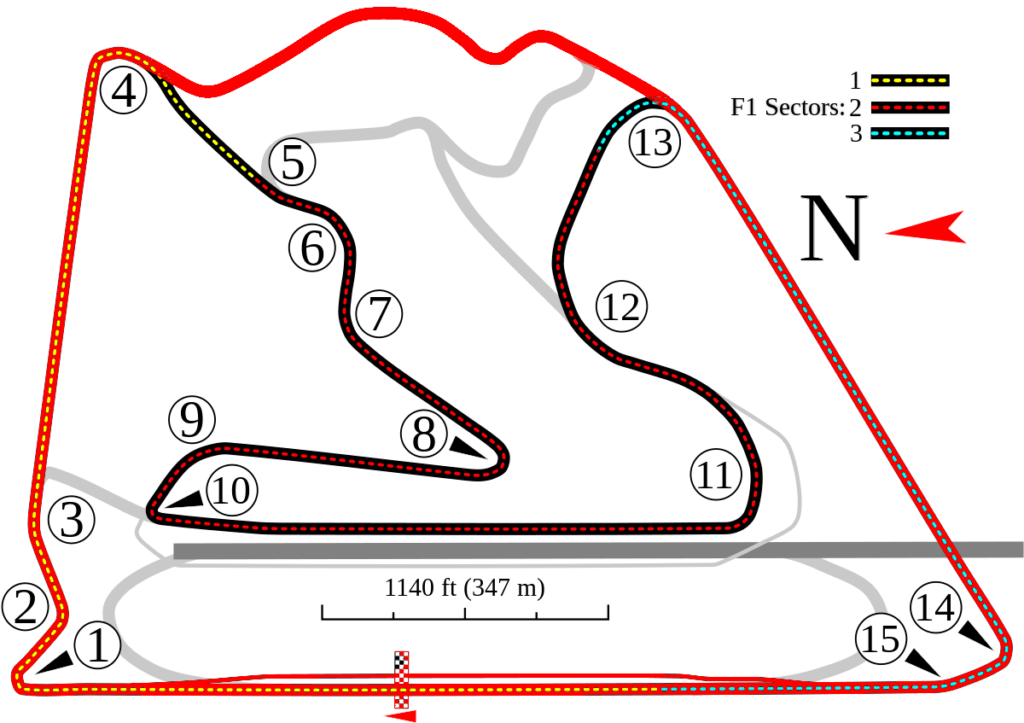
Bahrain

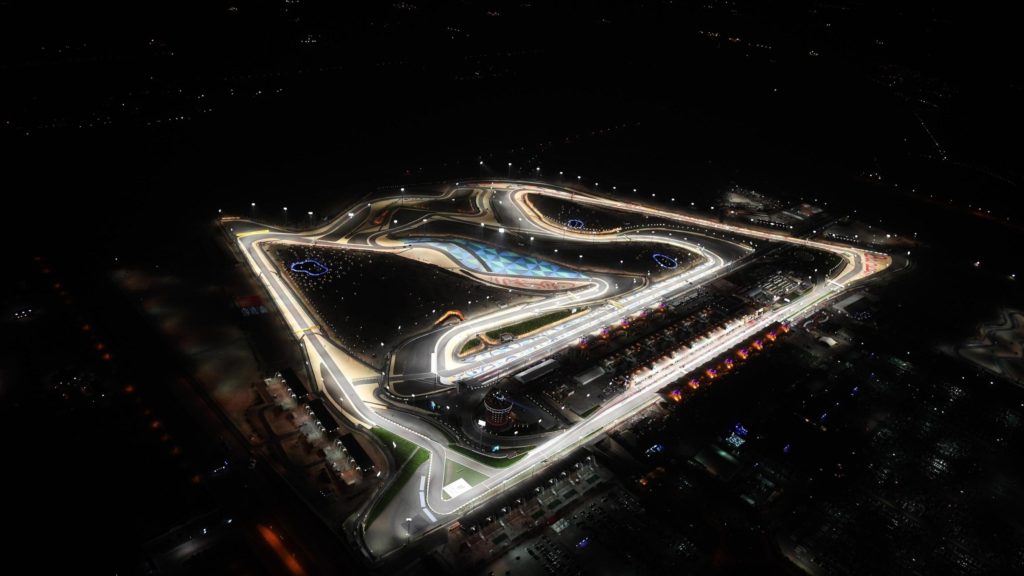
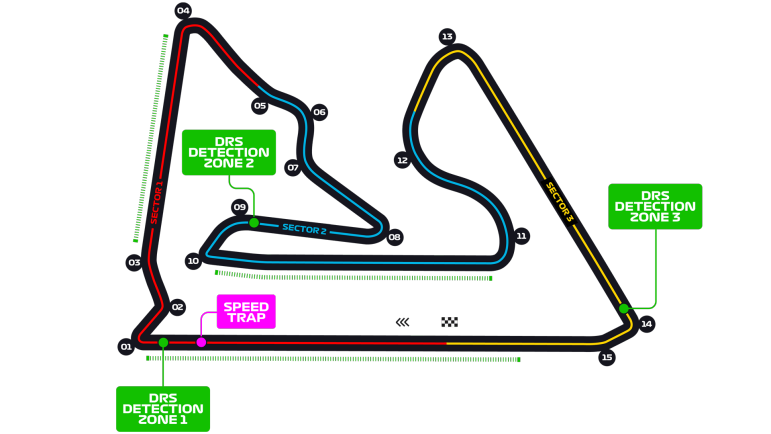
We have already experienced a grand prix around Sakhir’s ‘Outer Circuit’ in 2020.

It proved fairly popular and produced a good amount of action. It would be perfect for a quick blast on a Saturday.
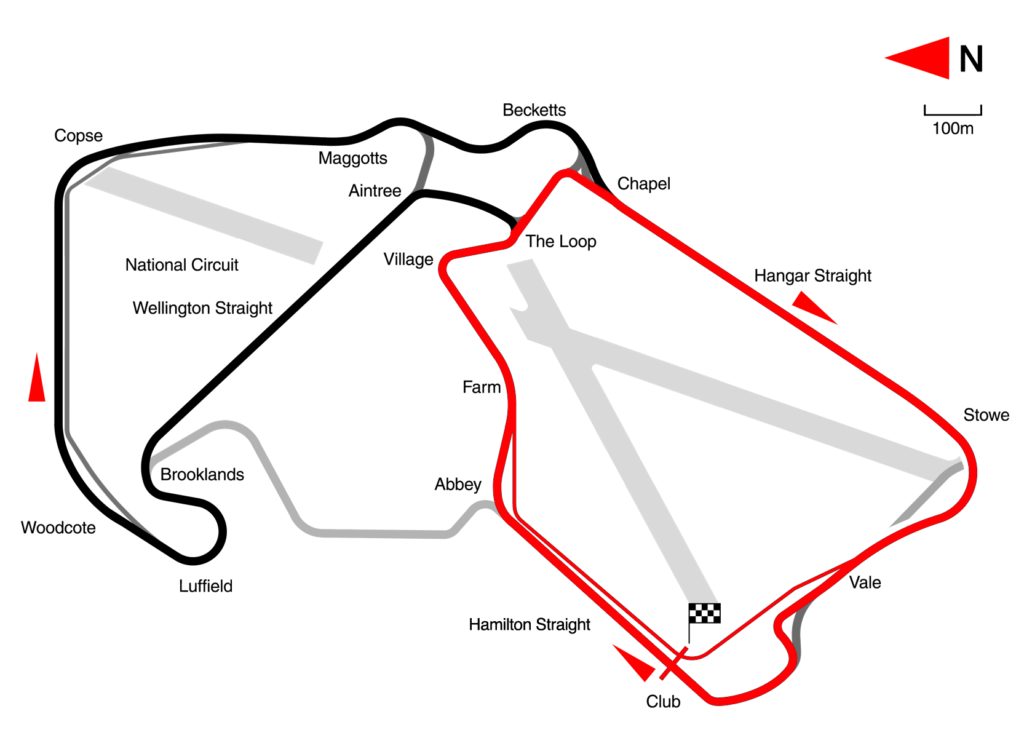
Great Britain

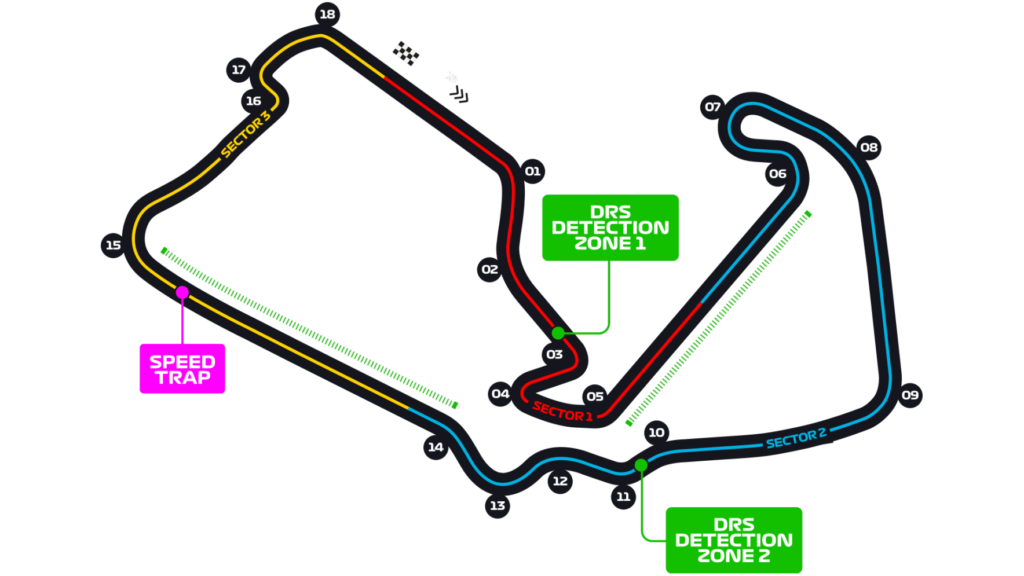
Silverstone’s ‘International Circuit’ could also work well. It retains the Hangar Straight to enable a DRS zone and plenty of passing opportunities.
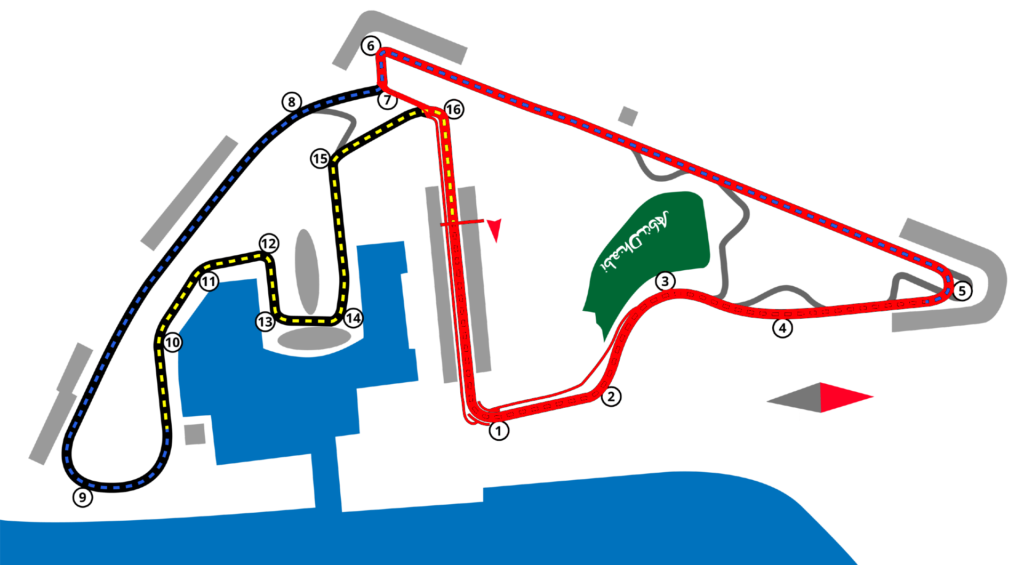
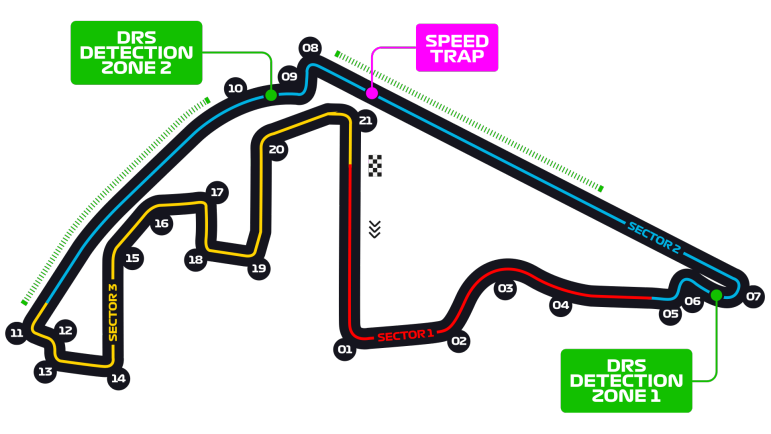
Abu Dhabi

Yas Marina isn’t quite at the levels of Paul Ricard when it comes to numerous layouts, but there are a fair few.

Of course, F1’s resident experts could decide which the best option would be, but at a glance this course looks to be a decent one.
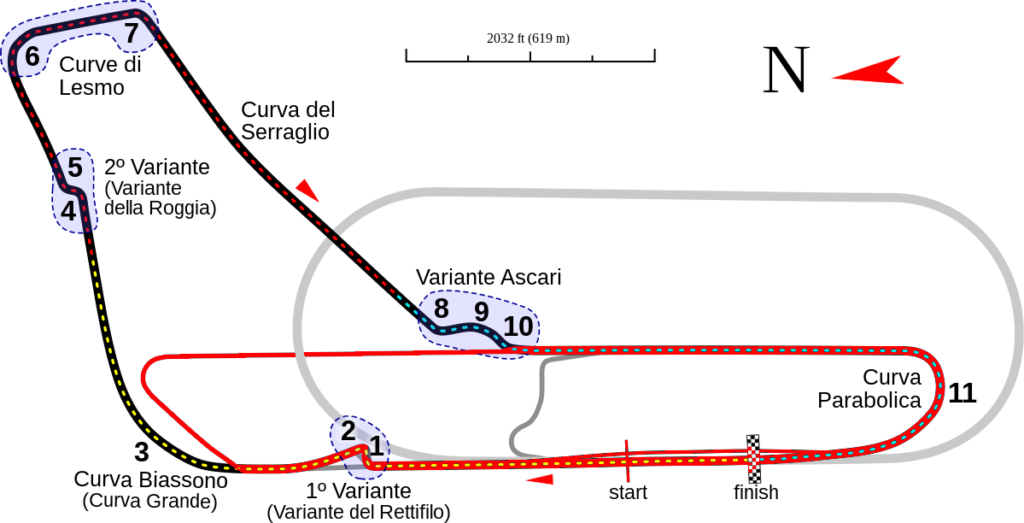
Italy

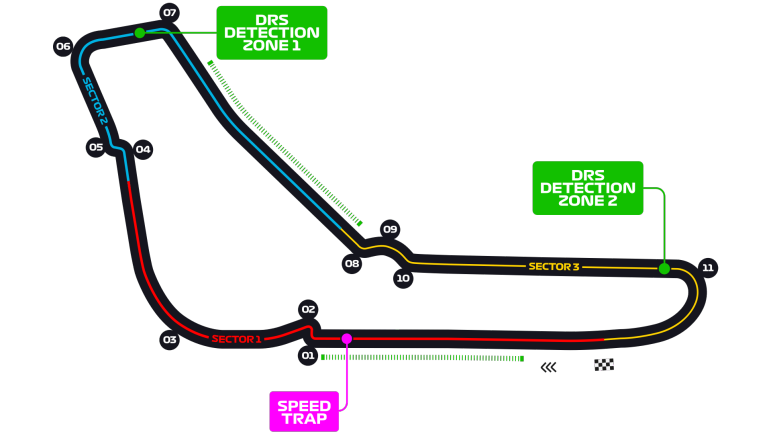
And hey, why not make the Temple of Speed a Temple of Sprint Speed too?

A proper old-school Monza vibe that is basically just an oval with a chicane.

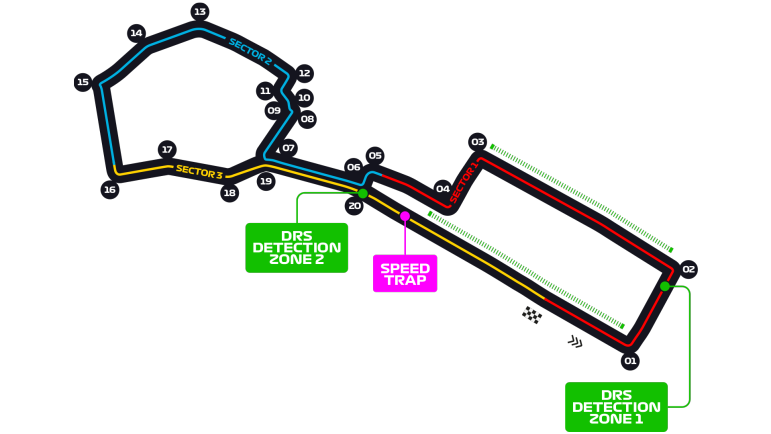
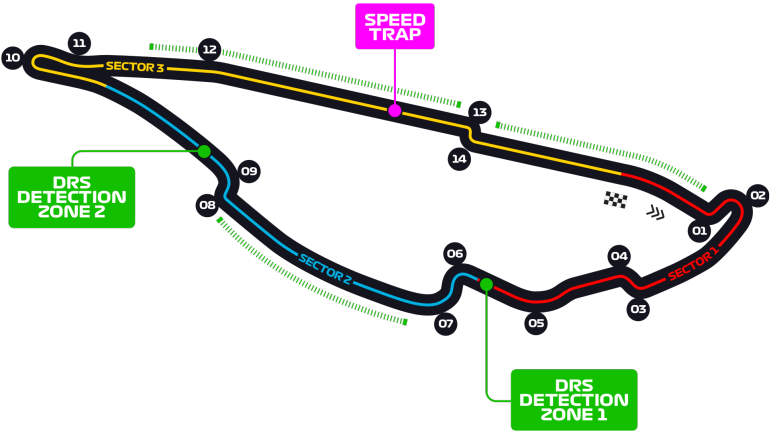
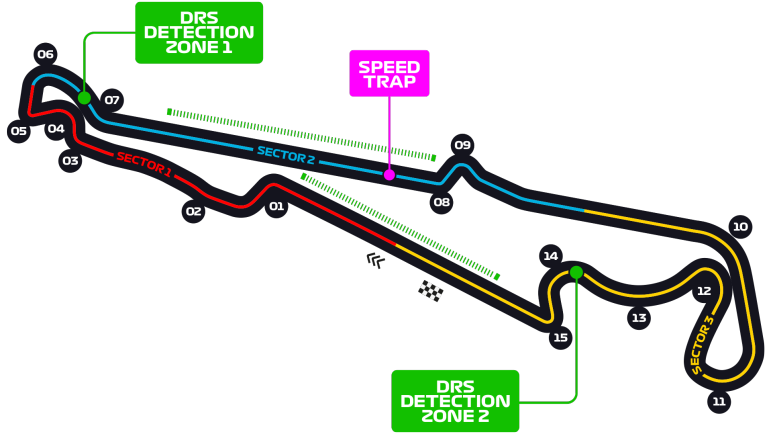
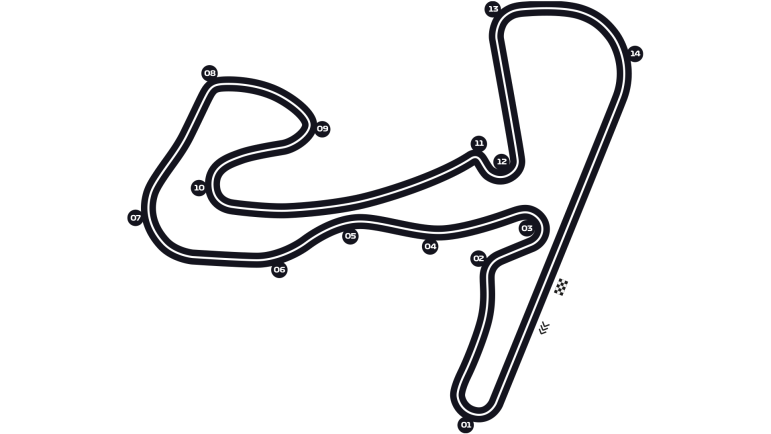
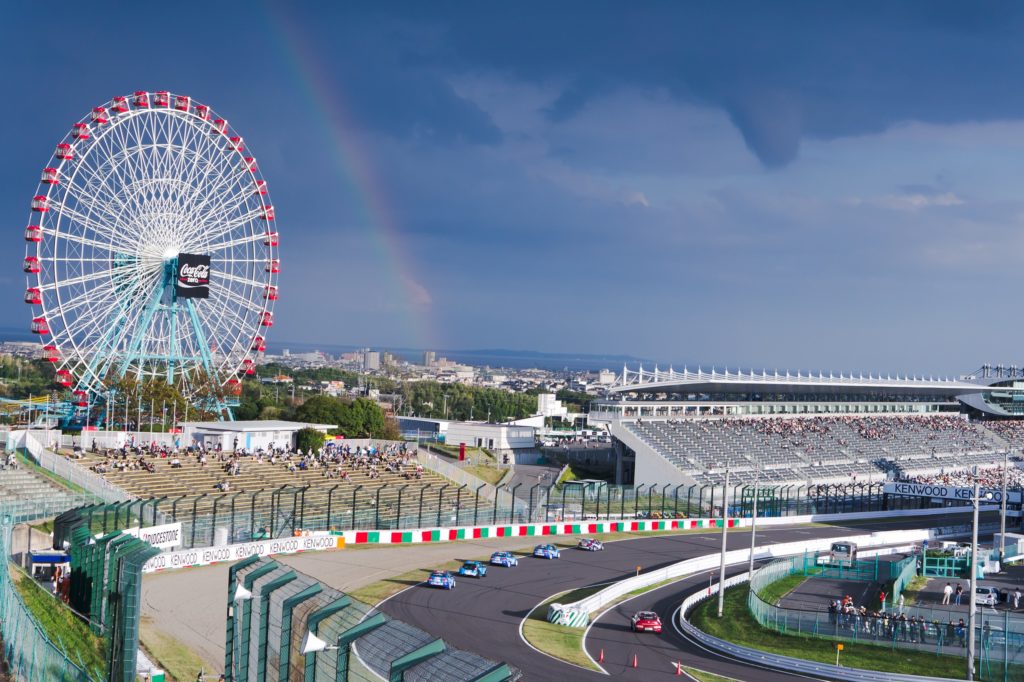
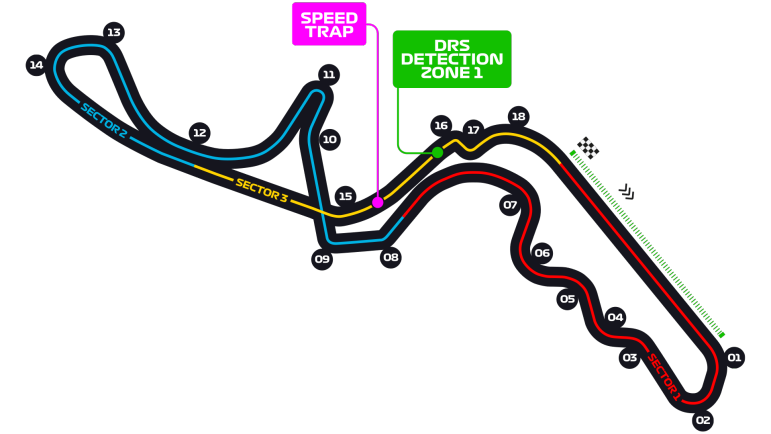
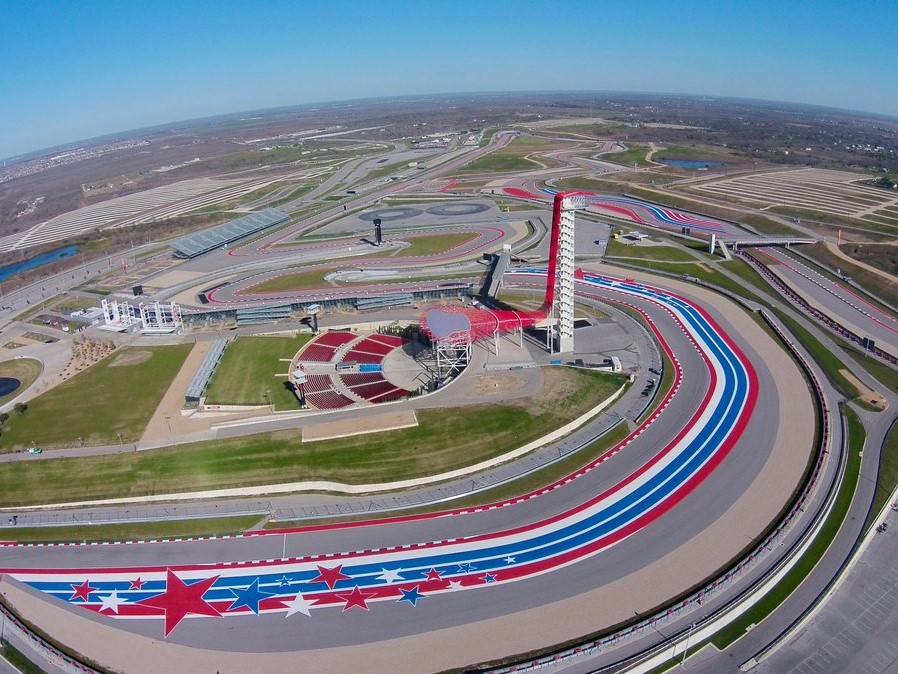
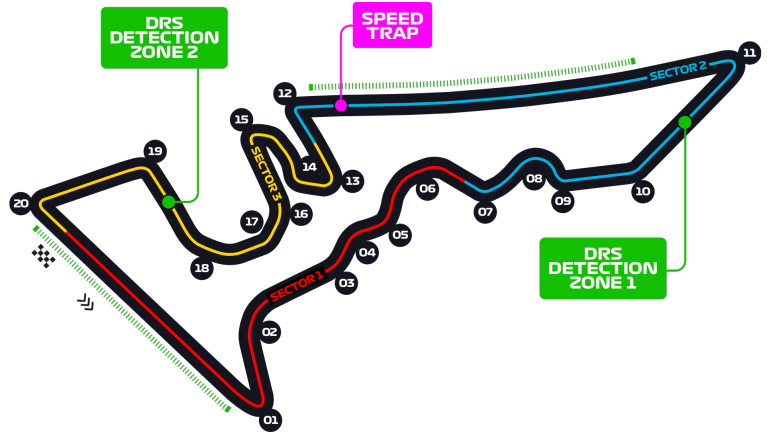
These are just four quick mock-ups of the idea. Zandvoort, Suzuka and COTA all also have existing short-circuit alternatives.

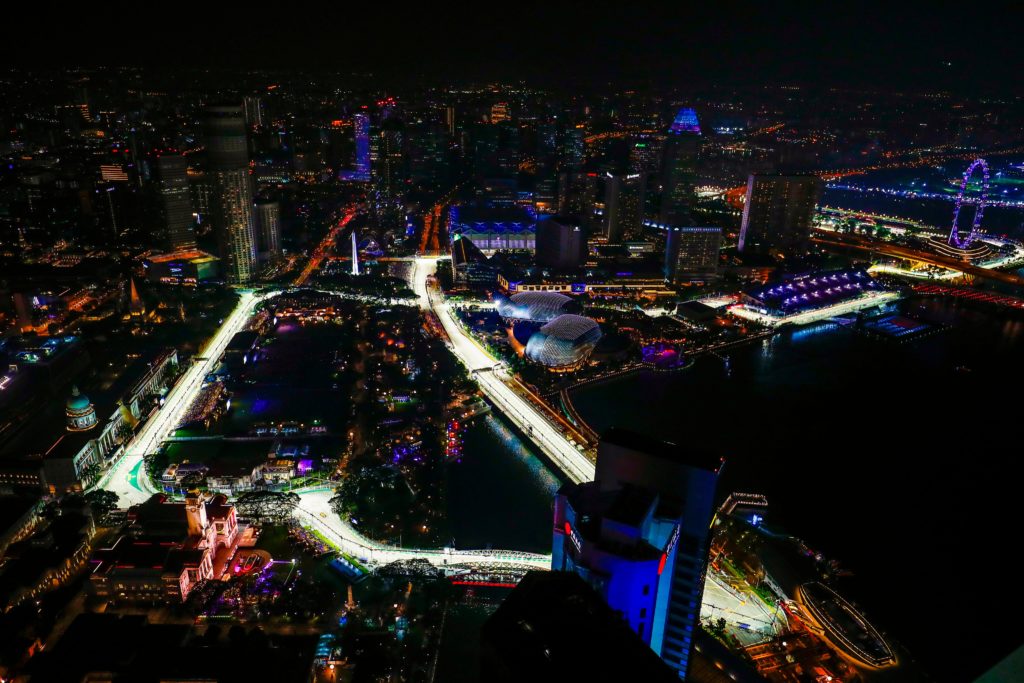
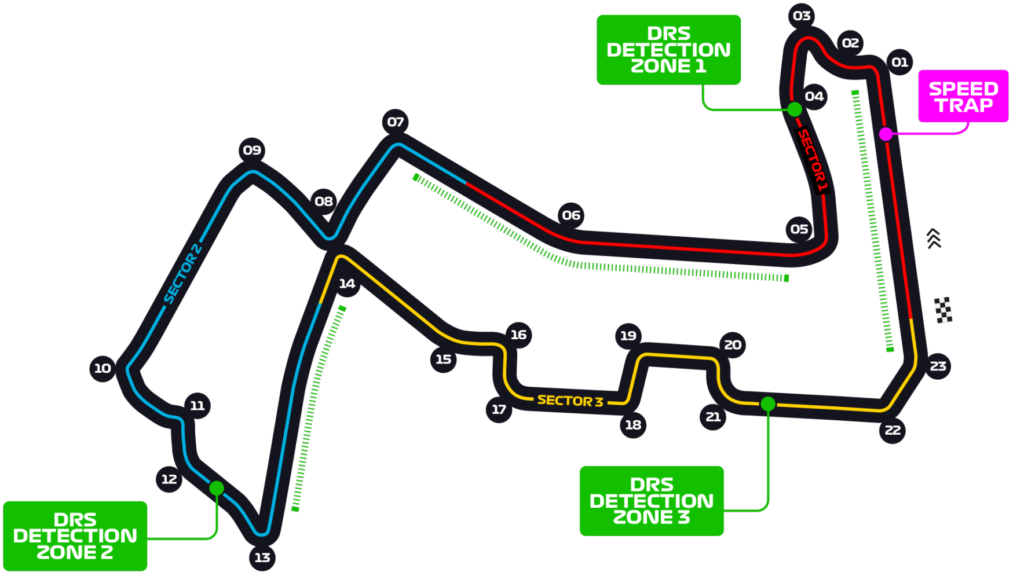
It seems highly likely that Baku and Singapore could provide options with a potential cut-through where two sections of track run parallel to each other and, if called upon, plenty of other venues would surely be able and willing to create options.

If F1 insists on having us Sprint our way through the weekend with constant action, let’s make it a true sprint and at least mix things up with a journey into the unknown that doesn’t ruin the main event on Sunday.
One year on

Everything has changed and yet nothing has changed.

Exactly one year ago today, the 2021 season came to an end.

What had been one of Formula 1’s greatest ever seasons, right up until the penultimate lap of the final race, ended in one of the sport’s most controversial moments.

Senna vs Prost 1989. Senna vs Prost 1990. Schumacher vs Hill 1994. Schumacher vs Villeneuve 1997.

The 2021 Abu Dhabi Grand Prix will join these truly momentous, contentious entries in the F1 annals.

The key difference, though, is that all the previous incidents were brought about by the actions of the drivers. Not those in charge.

Crashgate and the 2005 United States Grand Prix could be thrown into the mix as things that were – and 2021 had its own equivalent in Belgium – but those were not championship-deciding catastrophes.

Formula 1 and the FIA have tried to move on from the controversy that brought the sport into disrepute. The drivers, the teams, the fans have all tried to do so too. So has this writer. But have any of us succeeded?

The Last 12 Months

I wrote the below at the start of the season.

“A Red Bull and Max Verstappen domination was the last thing the sport needed as it headed into its new era.

“With the huge controversy of Abu Dhabi having left a bitter taste in the mouth for many, a runaway championship for the man who earned his maiden title via Michael Masi’s questionable decisions on lap 57 at the Yas Marina Circuit would not have been a good way for F1 to turn over a new leaf.”

The use of the past tense there was due to Ferrari’s strong start to the season. It looked as though we were heading towards another epic, season-long battle.

Of course, that is not how things played out.

Image credit: XPB Images.

As Ferrari floundered and failed to capitalise on their excellent car, Red Bull claimed six wins in a row.

And what little hope was left for a championship fight disappeared as F1 returned from its summer break. A mid-season Technical Directive had clearly hurt Ferrari, and Red Bull were able to sail off into the distance.

Verstappen broke the record for the number of wins in a season – and number of points in a season – as he claimed seven of the remaining nine winner’s trophies.

Another Cloud in a Stormy Sky

What made the dominance even harder to take was the revelation that Red Bull had failed to comply with F1’s inaugural cost cap in 2021.

In a story that rumbled on for weeks – if not months – the 2022 World Champions’ financial indiscretions were eventually laid bare for all to see.

Talk of catering issues were nonsensical and frankly embarrassing.

One cannot simply pick and choose which areas of a budget were the ones to fall outside the limit. If $600,000 of food ended up outside of the budget, it’s because you spent $600,000 you shouldn’t have somewhere else.

Was their overspending the sole cause of Red Bull’s runaway victory? No, of course not.

Adrian Newey did his thesis on ground-effect cars and they have a generational talent behind the wheel who will win 9 times out of 10 when given the best car.

Image credit: Getty Images

Team and driver had such a clear margin over the field in the final standings that they clearly would still have triumphed had they spent a couple of million less.

But that’s not the point.

A sport that was already trying to recover from perhaps its biggest ever sporting mistake, now has another cloud hanging over.

One that, of course, further taints 2021. But will also now cast its shadow over this season and future seasons as the knock-on effects of that overspend continue to grow.

Speaking From Personal Experience

“I have loved F1 since I was about three years old. I want to continue to do so. Please, stop making it so difficult.”

This was how I finished my previous piece, as the rumours began to emerge about the cost cap.

The fact that I haven’t managed to write another article since somewhat tells its own tale.

People love to throw around the term ‘PTSD’ without any real respect for the genuine condition. Let’s be clear – that is not what any Lewis Hamilton fans, Mercedes fans, or just Formula 1 fans have experienced over the last 12 months.

But that’s not to belittle the pain that last season’s finale caused so many people. Myself included.

Yes, full disclosure, I am a Lewis Hamilton fan. I’d like to think that I’ve always managed to deliver my articles without any unfair bias, nevertheless.

Image credit: Getty Images

I did, however, vent my feelings in an open letter late last year, once the dust had begun to settle.

The truth is, some of that dust still seems to be swirling around, refusing to fully dissipate, obscuring our vision and dampening our enjoyment of the sport.

As much as I may support Hamilton, there are many drivers and teams I like and, above all, I always considered myself primarily a fan of Formula 1.

But when something that you love so much hurts you so deeply, it can be difficult to fully process that and reach forgiveness.

Sport is sport. It has its ups and downs. Every fan will have experienced that, but this was something different.

It was a decision and an outcome that made you question everything. All the emotions, all the time you’d invested – which for me has been a lot, as you can see by this website.

And then when you tried to get up and go again…

Imagine that your partner had cheated on you. They’d apologised, promised to change, and you’d tried to move on. But all you saw over the next year was them having a great time with the person who was the cause of those issues.

That is why it has been so hard to move on.

Hopefully 2023 will bring a closer battle at the front and some form of redemption. If it’s simply another tale of controversy, social media toxicity and Red Bull dominance, there likely won’t be another article this time next year.

Gains that could prove to be ill-gotten

Three races, three more wins for Max Verstappen.

Domination Across Europe

Image credit: Red Bull Racing

F1 returned from its summer break with a triple-header in Belgium, the Netherlands and Italy.

There was initially hope that things may close up at the front, courtesy of the new Technical Directive focused on porpoising and the ‘flexi-floors’ which Red Bull and Ferrari were widely expected to have been benefiting from.

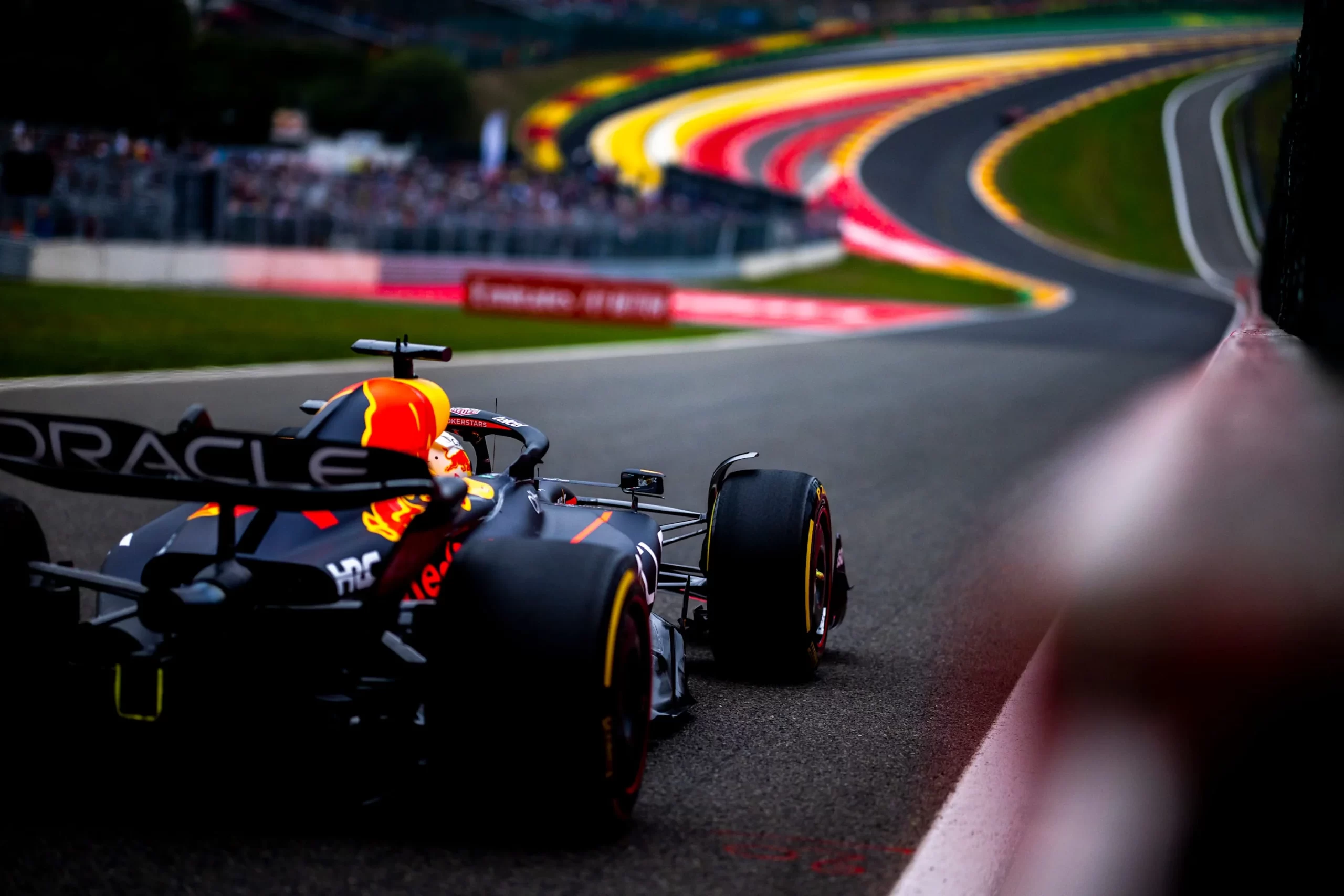
But as soon as Verstappen topped qualifying in Spa by well over half a second, took a grid penalty for a new power unit, and then proceeded to sail through the field and win comfortably from 14th on the grid, it was clear that – if anything – things had spread out further.

Whilst Spa was always likely to be a track that favoured Red Bull, Ferrari have seemingly been hampered more significantly than their former title rivals by the Technical Directive.

A week later at Zandvoort, the Scuderia arguably fell behind Mercedes in the pecking order.

Lewis Hamilton even looked set to challenge for his first victory of the season. On a different strategy, Verstappen looked like he would have to pass the seven-time world champion on track to take the victory.

However, the Safety-Car curse that has plagued Hamilton since Abu Dhabi last year kicked into life again.

A dodgy-looking debacle at AlphaTauri – which sent social media conspiracy theorists into overdrive – and then former teammate Valtteri Bottas’s retirement nullified Hamilton’s advantage.

A questionable strategy call by Mercedes to pit current teammate George Russell subsequently left him with no chance.

Image credit: Red Bull Racing

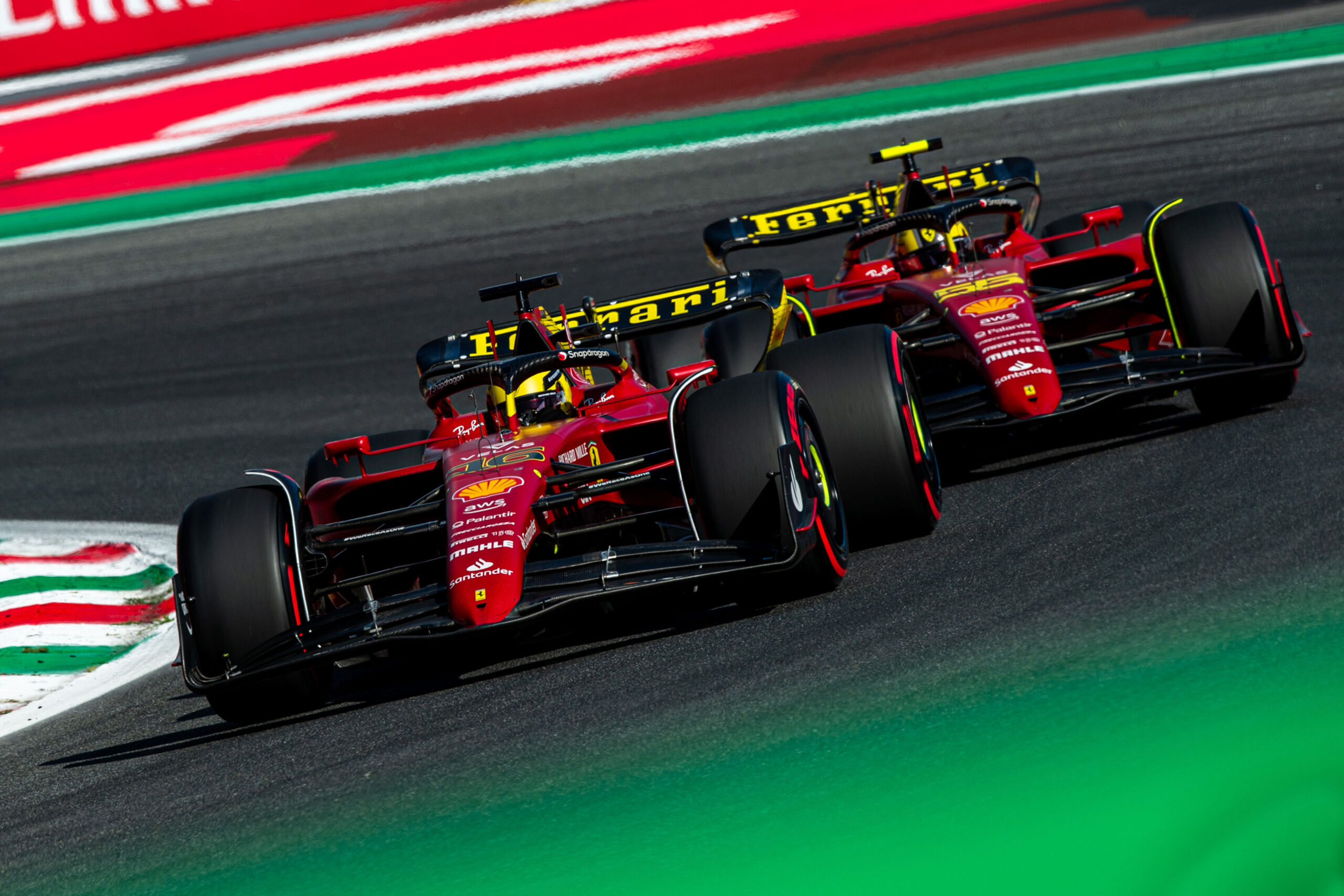
As has so often been the case, Ferrari had iffy strategy calls of their own at both Zandvoort and Monza.

Ultimately, though, Verstappen’s race pace looked too strong, irrelevant of those decisions, and he extended his championship lead to 116 points.

A Painful Dose of Déjà Vu

The Dutchman will now have his first chance to clinch the championship in Singapore. With five races still to come after that.

That is a level of dominance over one season that even Hamilton has never managed in the hybrid era. You have to go back to the years of Michael Schumacher to find something similar.

As I mentioned early in the season, a Verstappen domination was the last thing the sport needed in the wake of the 2021 finale controversy.

There was even a painful reminder of how the race in Abu Dhabi could and should have ended as Verstappen took the chequered flag under Safety Car conditions in Monza.

The Tifosi boos rang out, frustrated that their man – second-placed Charles Leclerc – had been denied the chance of a late battle for the win.

Image credit: Foto Colombo Images

They had a point in that the race direction had once again been somewhat shambolic, the Safety Car erroneously picking up third-placed Russell instead of the leader.

But, considering the position in which they found themselves for the final laps, the decision not to restart the race was the correct one. Or at least it followed the rules as they currently read.

Whether or not they should be amended – perhaps for a default red flag within the last x number of laps – is a debate for another day.

But F1 found itself in another sticky situation – one which unfortunately opened up old wounds.

And there may now be salt on the horizon to apply to those wounds.

A new controversy building

I have tried so hard to fall back in love with Formula 1 this year.

As any long-term reader will have noticed, the regular race previews and reports have morphed into occasional catch-ups.

Whilst I am now busier with other journalism work, in truth it is more due to the rug that was swept from under my feet on 12th December 2021 taking a decent chunk of my passion and enthusiasm with it.

Image credit: Getty Images

The lack of a title battle has certainly made it more difficult to rekindle the F1 fire that once burnt so strongly. Decisions made in Saudi Arabia and for the future have also played their part.

And now, it appears there may be another hurdle on the horizon.

The rumours of Red Bull not complying with the budget cap have been rumbling away for a while. Mattia Binotto has even been uncharacteristically outspoken at times.

But they have really built pace over the last 24 hours.

The truth will – hopefully – become clear in the next week or so regarding Red Bull and Aston Martin‘s alleged indiscretions.

If they do exist, F1 simply has to bring down the hammer.

They have to dissuade others from following suit. If the punishment is financial, the budget cap will become a joke even faster than football’s Financial Fair Play.

F1’s popularity in terms of numbers may be at an all-time high, but the integrity of the sport still feels like it is hanging by a thread.

The increased number of Sprint weekends next year was a disappointing if predictable change. But Stefano Domenicali continues to say more and more worrying things.

I have loved F1 since I was about three years old. I want to continue to do so. Please, stop making it so difficult.

Johnny Herbert’s take on 2022 and the GOAT debate

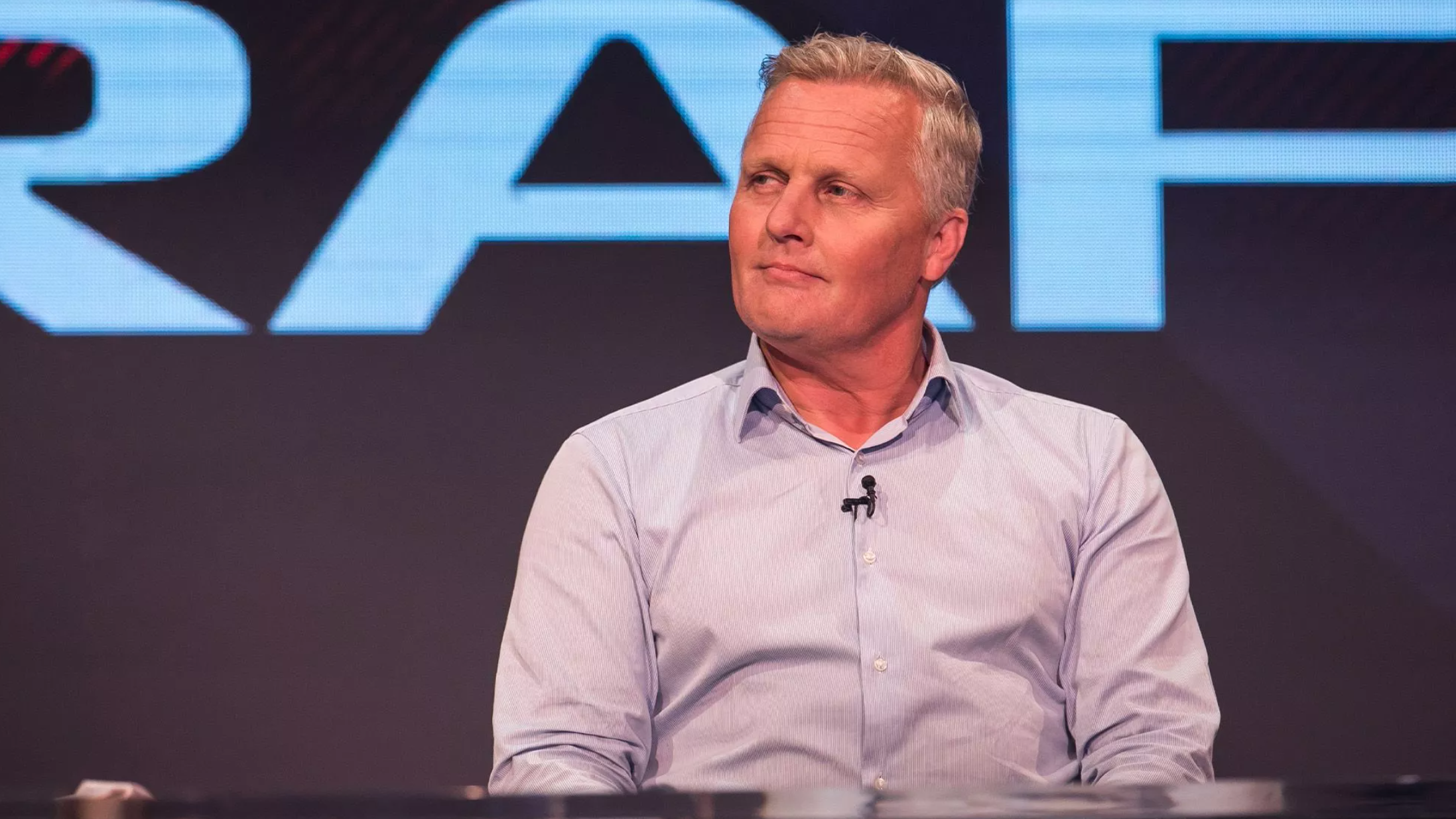
Former F1 race winner, Sky Sports pundit and the paddock’s favourite Essex cheeky chappy Johnny Herbert has had his say on the Abu Dhabi debacle, the future of F1 and the argument regarding who is F1’s GOAT.

In an interview with Betway, Herbert was asked where the sport stands after the controversial end to 2021.

“It was a real shame what happened at the end of last season.

“Formula 1 was in a fantastic place because of the wonderful battle between Lewis [Hamilton] and Max [Verstappen] throughout the season. There was a huge build-up to that final race and the hype around the sport was as big as it has been for a while.

“And then we saw that very strange decision from the race director and I think a lot of people who had been so excited throughout the season suddenly questioned what they’d been watching. It was so disappointing to have built that audience and then for the sport to let itself down like that.”

Whilst many pundits have toed the line or aimed to remain impartial, the former Benetton driver has been one of the most outspoken critics of the now infamous 58th lap of the 2021 Abu Dhabi Grand Prix.

Image credit: Getty Images

Just in case anyone has been living under a rock for the past three months, Michael Masi failed to correctly apply safety-car rules in order to give one final lap of racing, and Verstappen then went on to secure a maiden drivers’ title by passing seven-time world champion Hamilton on the final lap of the final race.

Masi has since been removed from the role of race director amid a personnel reshuffle and changes to the ‘refereeing process’ after the FIA opened an inquiry into events at the Yas Marina Circuit, and Herbert believes that those measures were imperative.

“The drivers’ trust in the race director had to be restored, that’s so important. That trust just didn’t exist and that isn’t a healthy place to be in going into each race.”

With those changes implemented, he is now optimistic for the future, however.

“It’s exciting. The new rules for 2022 mean that there is the potential for things to be a lot closer at the top.

“The good thing with the new rules is that it’s going to be a little bit tougher. The drivers are already saying that they’re having to think a little bit more about it when they’re in the car. That can only be a good thing and hopefully it sets us up for a competitive campaign.”

Image credit: PA

As for the competitive order, Herbert predicted a top four.

“We’re still going to have the normal battle between Mercedes and Red Bull, and I would expect those teams to be at the top again, but I know that fans of McLaren believe that Lando Norris has taken a big step forward and we can probably throw Ferrari into the mix as well.”

The first race seemed to show that McLaren have, in fact, gone in the opposite direction, but Ferrari are more than in the mix, having taken a 1-2 in Bahrain.

Hamilton was the driver to complete the podium – after late mechanical failures for both Red Bulls – but it did not disguise the fact that his Mercedes team have work to do if they are to get back to the front in 2022, having produced a car that has been suffering badly with the returning F1 phenomenon of ‘porpoising’.

If they can rectify those issues, however, Herbert thinks Hamilton will remain“motivated to do the best he can at any given track at any part of the season – he had that hunger in 2007 and he still has it now”.

So, if the 37-year-old can claim the eighth title that was snatched away from him oh so cruelly in December – and move clear of Michael Schumacher in the record they currently share – will that finally settle the debate as to who is Formula 1’s Greatest Of All Time?

Image credit: Reuters

“From my perspective, there are several drivers who could be considered, not just Lewis and Michael. Sterling Moss always said that it was Juan Manuel Fangio.

“One thing that probably gives Lewis the edge, even if he doesn’t win the eighth, is that he has to deal with everything else that comes with being a star now.

“I never thought I’d see any driver match Michael’s championship tally; I just didn’t think that was feasible.

“I think there’s a fair argument that he’s already the best.”

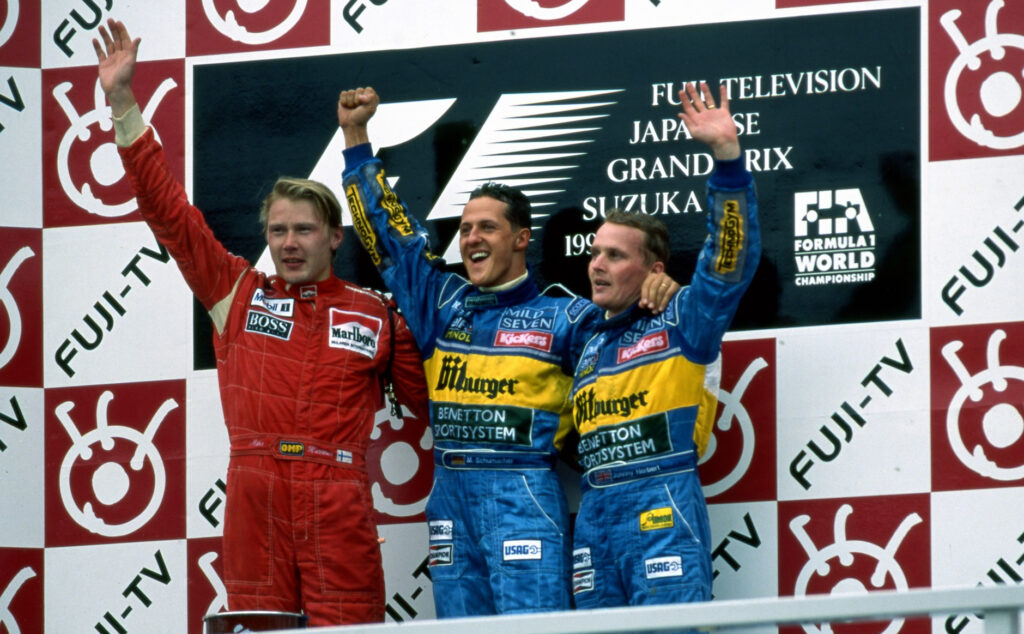
There are few better qualified to wade in on the debate than Herbert, who was paired up alongside Schumacher at Benetton in 1995.

The Briton took two of his three career wins during that season – whilst the German secured his second drivers’ title – but said that the favouritism shown towards the man on the other side of the garage by team boss Flavio Briatore was hard to deal with psychologically.

Image credit: XPB Images

“Realistically, I probably never would have beaten Michael, but I never got given the chance to get myself into the mental state needed to win races and win a championship. I never got given a go.

“Michael was very good at getting the people around him. Ross Brawn and Rory Byrne, the car designer, and a few other people moved to Ferrari and it wasn’t long before they became a winning machine with Michael, too.”

So, put on the spot for one final question, who does Herbert think will claim the 2022 Formula 1 drivers’ crown?

“I think I’m going to go for Lewis because the concept Mercedes have put together looks mighty interesting and the motivation, that burning desire, is still there.”

20/20 vision for 2022

Here is everything you could want to know about the 2022 season…

The Drivers

Lewis Hamilton

Age: 37 | GPs: 288 | Titles: 7 | Wins: 103 | Poles: 103 | Podiums: 182

George Russell

Age: 24 | GPs: 60 | Champ. Best: 15th | Race Best: 2nd | Grid Best: 2nd | Podiums: 1

Max Verstappen

Age: 24 | GPs: 141 | Titles: 1 | Wins: 20 | Poles: 13 | Podiums: 60

Sergio Pérez

Age: 32 | GPs: 213 | Champ. Best: 4th | Wins: 2 | Grid Best: 2nd | Podiums: 15

Carlos Sainz

Age: 27 | GPs: 140 | Champ. Best: 5th | Race Best: 2nd | Grid Best: 2nd | Podiums: 6

Charles Leclerc

Age: 24 | GPs: 80 | Champ. Best: 4th | Wins: 2 | Poles: 9 | Podiums: 13

Lando Norris

Age: 22 | GPs: 60 | Champ. Best: 6th | Race Best: 2nd | Poles: 1 | Podiums: 5

Daniel Ricciardo

Age: 32 | GPs: 210 | Champ. Best: 3rd | Wins: 8 | Poles: 3 | Podiums: 32

Fernando Alonso

Age: 40 | GPs: 334 | Titles: 2 | Wins: 32 | Poles: 22 | Podiums: 98

Esteban Ocon

Age: 25 | GPs: 89 | Champ. Best: 8TH | Wins: 1 | Grid Best: 3rd | Podiums: 2

Pierre Gasly

Age: 26 | GPs: 86 | Champ. Best: 7th | Wins: 1 | Grid Best: 2nd | Podiums: 3

Yuki Tsunoda

Age: 21 | GPs: 22 | Champ. Best: 14th | Race Best: 4th | Grid Best: 7th

Sebastian Vettel

Age: 34 | GPs: 279 | Titles: 4 | Wins: 53 | Poles: 57 | Podiums: 122

Lance Stroll

Age: 23 | GPs: 100 | Champ. Best: 11TH | Race Best: 3rd | Poles: 1 | Podiums: 3

Valtteri Bottas

Age: 32 | GPs: 178 | Champ. Best: 2nd | Wins: 10 | Poles: 20 | Podiums: 67

Zhou Guanyu

Age: 22 | GPs: 0 | Champ. Best: n/a | Race Best: n/a | Grid Best: n/a

Nicholas Latifi

Age: 26 | GPs: 39 | Champ. Best: 17th | Race Best: 7th | Grid Best: 10th

Alexander Albon

Age: 25 | GPs: 38 | Champ. Best: 7th | Race Best: 3rd | Grid Best: 4th | Podiums: 2

Mick Schumacher

Age: 22 | GPs: 22 | Champ. Best: 19th | Race Best: 12th | Grid Best: 12th

Kevin Magnussen

Age: 22 | GPs: 119 | Champ. Best: 9th | Race Best: 2nd | Qual. Best: 4th | Podiums: 1

The Teams

Mercedes-AMG Petronas F1 Team

FIRST GP: 1954 | GPS: 249 | Titles: 17 | WINS: 124 | POLES: 135 | PODIUMS: 264

Oracle Red Bull Racing

FIRST GP: 2005 | GPS: 325 | Titles: 9 | WINS: 75 | POLES: 73 | PODIUMS: 206

Scuderia Ferrari

FIRST GP: 1950 | GPS: 1030 | Titles: 31 | WINS: 238 | POLES: 231 | PODIUMS: 778

McLaren F1 Team

FIRST GP: 1966 | GPS: 902 | Titles: 20 | WINS: 183 | POLES: 156 | PODIUMS: 493

BWT Alpine F1 Team

FIRST GP: 2021 | GPS: 22 | Champ. Best: 5th | Wins: 1 | Grid Best: 3rd | Podiums: 2

Scuderia AlphaTauri

FIRST GP: 2020 | GPS: 39 | CHAMP. BEST: 6th | Wins: 1 | Grid BEST: 2nd | Podiums: 2

Aston Martin Aramco Cognizant F1 Team

FIRST GP: 1959 | GPS: 27 | CHAMP. BEST: 7th | RACE BEST: 2nd | Grid BEST: 2nd | Podiums: 1

Williams Racing

FIRST GP: 1977 | GPS: 783 | Titles: 16 | WINS: 114 | POLES: 128 | PODIUMS: 313

Alfa Romeo F1 Team Orlen

FIRST GP: 1950 | GPS: 170 | CHAMP. BEST: 6TH | WINS: 10 | POLES: 12 | PODIUMS: 26

Haas F1 Team

FIRST GP: 2016 | GPS: 122 | CHAMP. BEST: 5TH | RACE BEST: 4TH | Grid BEST: 5TH

The Grands Prix

Bahrain

SAKHIR | 18-20 MAR | LAPS: 57 | LENGTH: 5.412 KM | LAP RECORD: 1:31.447 (de la Rosa)

Saudi Arabia

Jeddah | 25-27 Mar | Laps: 50 | Length: 6.174 KM | Lap Record: 1:30.734 (Hamilton)

Australia

Melbourne | 08-10 Apr | Laps: 58 | Length: 5.303 km | Lap Record: 1:24.125 (Schumacher)

Emilia Romagna

Imola | 22-24 APR | LAPS: 63 | LENGTH: 4.909 KM | LAP RECORD: 1:15.484 (Hamilton)

Miami

Miami | 06-08 May | LAPS: 57 | LENGTH: 5.410 KM | LAP RECORD: n/a

SPAIN

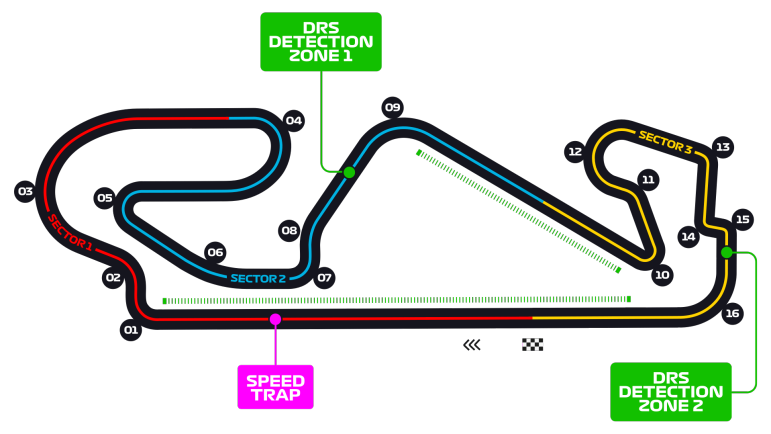
BARCELONA | 20-22 MAY | LAPS: 66 | LENGTH: 4.675 KM | LAP RECORD: 1:18.149 (Verstappen)

Monaco

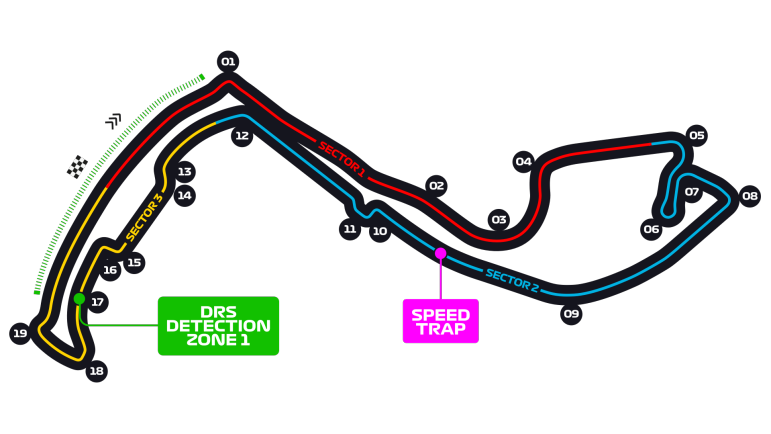
MONACO | 27-29 MAY | LAPS: 78 | LENGTH: 3.337 KM | LAP RECORD: 1:12.909 (Hamilton)

AZERBAIJAN

BAKU | 10-12 June | LAPS: 51 | LENGTH: 6.003 KM | LAP RECORD: 1:43.009 (leclerc)

CANADA

MONTRéAL | 11-13 JUN | LAPS: 70 | LENGTH: 4.361 KM | LAP RECORD: 1:13.078 (Bottas)

GREAT BRITAIN

SILVERSTONE | 01-03 JUL | LAPS: 52 | LENGTH: 5.891 KM | LAP RECORD: 1:27.097 (Verstappen)

AUSTRIA

SPIELBERG | 08-10 JUL | LAPS: 71 | LENGTH: 4.318 KM | LAP RECORD: 1:05.619 (Sainz)

FRANCE

LE CASTELLET | 22-24 Jul | LAPS: 53 | LENGTH: 5.842 KM | LAP RECORD: 1:32.740 (Vettel)

HUNGARY

Mogyoród | 29-31 JUL | LAPS: 70 | LENGTH: 4.381 KM | LAP RECORD: 1:16.627 (Hamilton)

BELGIUM

Stavelot | 26-28 AUG | LAPS: 44 | LENGTH: 7.004 KM | LAP RECORD: 1:46.286 (Bottas)

NETHERLANDS

ZANDVOORT | 02-04 SEP | LAPS: 72 | LENGTH: 4.259 KM | LAP RECORD: 1:11.097 (Hamilton)

ITALY

MONZA | 09-11 SEP | LAPS: 53 | LENGTH: 5.793 KM | LAP RECORD: 1:21.046 (Barrichello)

SINGAPORE

SINGAPORE | 30 Sep-02 Oct | LAPS: 61 | LENGTH: 5.063 KM | LAP RECORD: 1:41.905 (Magnussen)

JAPAN

SUZUKA | 07-09 OCT | LAPS: 53 | LENGTH: 5.807 KM | LAP RECORD: 1:30.983 (Hamilton)

UNITED STATES

AUSTIN | 21-23 OCT | LAPS: 56 | LENGTH: 5.513 KM | LAP RECORD: 1:36.169 (Leclerc)

MEXICO CITY

MEXICO CITY | 28-30 Oct | LAPS: 71 | LENGTH: 4.304 KM | LAP RECORD: 1:17.774 (Bottas)

BRAZIL

São Paulo | 11-13 NOV | LAPS: 71 | LENGTH: 4.309 KM | LAP RECORD: 1:10.540 (Bottas)

ABU DHABI

ABU DHABI | 10-12 Dec | LAPS: 55 | LENGTH: 5.281 KM | LAP RECORD: 1:26.103 (Verstappen)

The Changes

Drivers

George Russell replaces Valtteri Bottas at Mercedes.

Alexander Albon replaces George Russell at Williams.

Valtteri Bottas replaces Kimi Räikkönen at Alfa Romeo.

Zhou Guanyu replaces Antonio Giovinazzi at Alfa Romeo.

Kevin Magnussen replaces Nikita Mazepin at Haas.

Regulations

The cars have been fundamentally redesigned in an attempt to level the playing field and increase the drivers’ ability to follow closely and race wheel to wheel.

Wheel diameter has increased from 13 inches to 18 inches.

Michael Masi has been removed as race director after an inquiry into the 2021 Abu Dhabi Grand Prix, with Niels Wittich and Eduardo Freitas now sharing the role in a restructured race control.

The FIA have also introduced a new Virtual Race Control System, much like VAR in football, as well as a ban on team communications that lobby race officials.

Changes have been made after the controversy of the 2021 Belgian Grand Prix, including no points being awarded unless a minimum of two laps have been completed under green flag conditions.

Drivers are no longer required to start the race on the tyres they used to set their fastest time in Q2.

How losing the championship may have improved Hamilton’s claim to the GOAT throne

With 6,417 of the 2021 season’s 6,423 kilometres covered, Lewis Hamilton looked set for a record-breaking eighth World Drivers’ Championship.

But then Michael Masi decided he fancied one more lap of racing, and we all know what happened next.

An unprecedented eighth title would have secured Hamilton’s position as Formula 1’s ‘GOAT’ – Greatest Of All Time for the uninitiated – in many people’s eyes, but perhaps the circumstances around his loss are an even more compelling argument.

The accolade of GOAT is thrown around far too often and far too casually nowadays – in every sport, not just Formula 1.

It has been the recent presence and unparallelled excellence of all-time greats such as Lionel Messi and Cristiano Ronaldo in football, Roger Federer and Serena Williams in tennis, Usain Bolt in athletics, Tiger Woods in golf, and Tom Brady in American football – to name but a few – that has sparked the never-ending conversations.

Whilst technology has progressed in football since the days of Pelé and in golf since the days of Jack Nicklaus, in no other sport is the change as marked as it is in Formula 1.

The cars of the present day are almost incomparable to those of the 50s: stick Juan Manuel Fangio in a Mercedes W12 and he would probably be unable to get the thing moving.

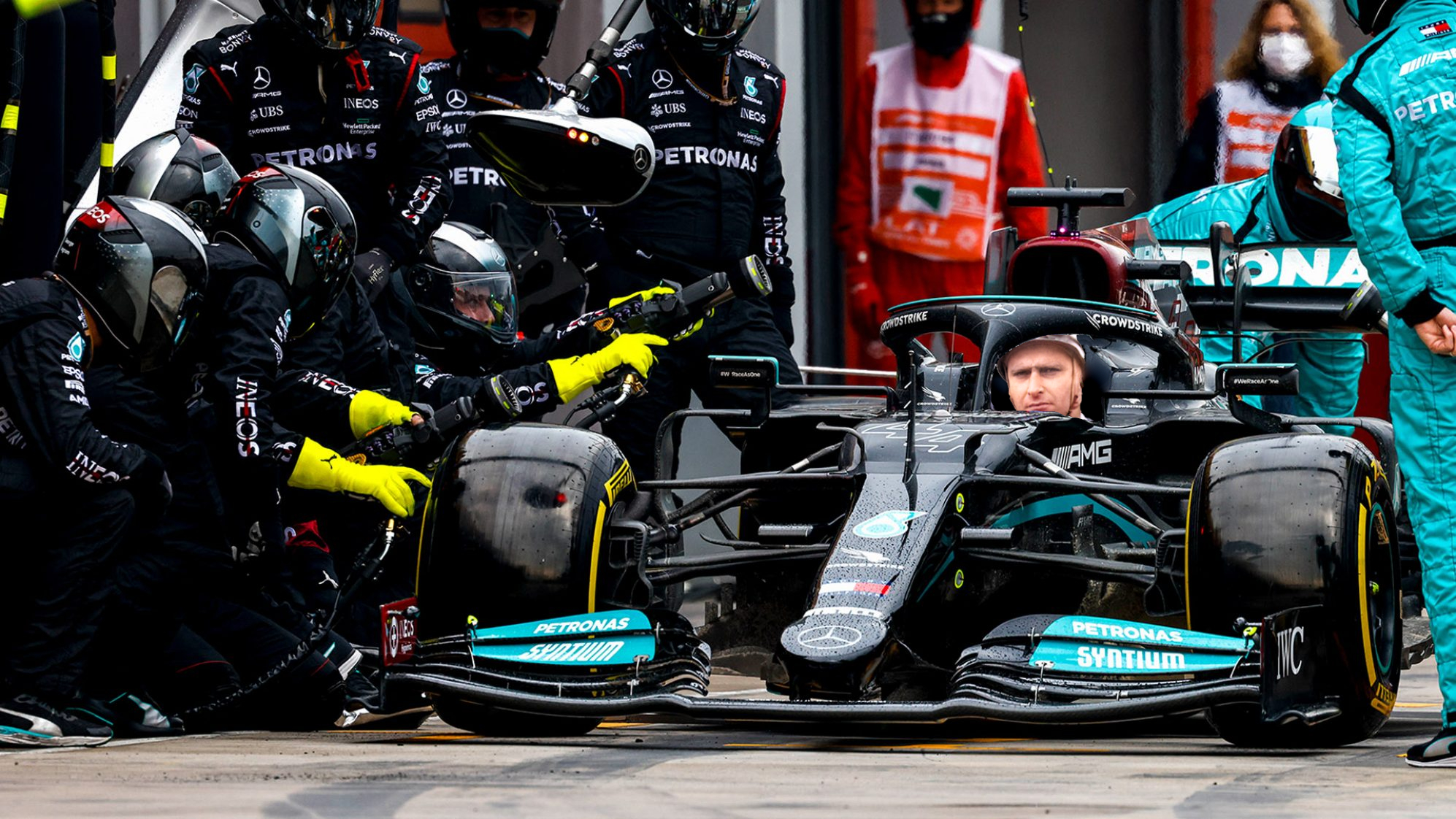
Another potential GOAT of F1 - Juan Manuel Fangio - in the W12 belonging to Lewis Hamilton.
Image credit: Mercedes-AMG (plus a questionable photoshop job)

F1 GOAT even more complicated than in other sports, and maybe we are best separating it into modern Formula 1 and – for want of a better term – historical Formula 1.

The candidates for the ‘historical GOAT’ would likely be Fangio, Jim Clark and perhaps Alberto Ascari. (That is a debate I’ll save for another day.) As for the ‘modern GOAT’, most seem to accept it now boils down to Ayrton Senna, Michael Schumacher and Lewis Hamilton. With Alain Prost unfortunate not to make the cut.

So, how did Hamilton missing out on his eighth title increase his claim for the throne? Well, it was the manner in which he lost.

The three men are all, of course, incredibly fast. They are also famously relentless in their pursuit of perfection, leaving no stone unturned. All are very technically minded and each built a hugely successful team around them – McLaren, Ferrari, and Mercedes respectively.

Where they differ is in their view of fair play and how far they are willing to go to win.

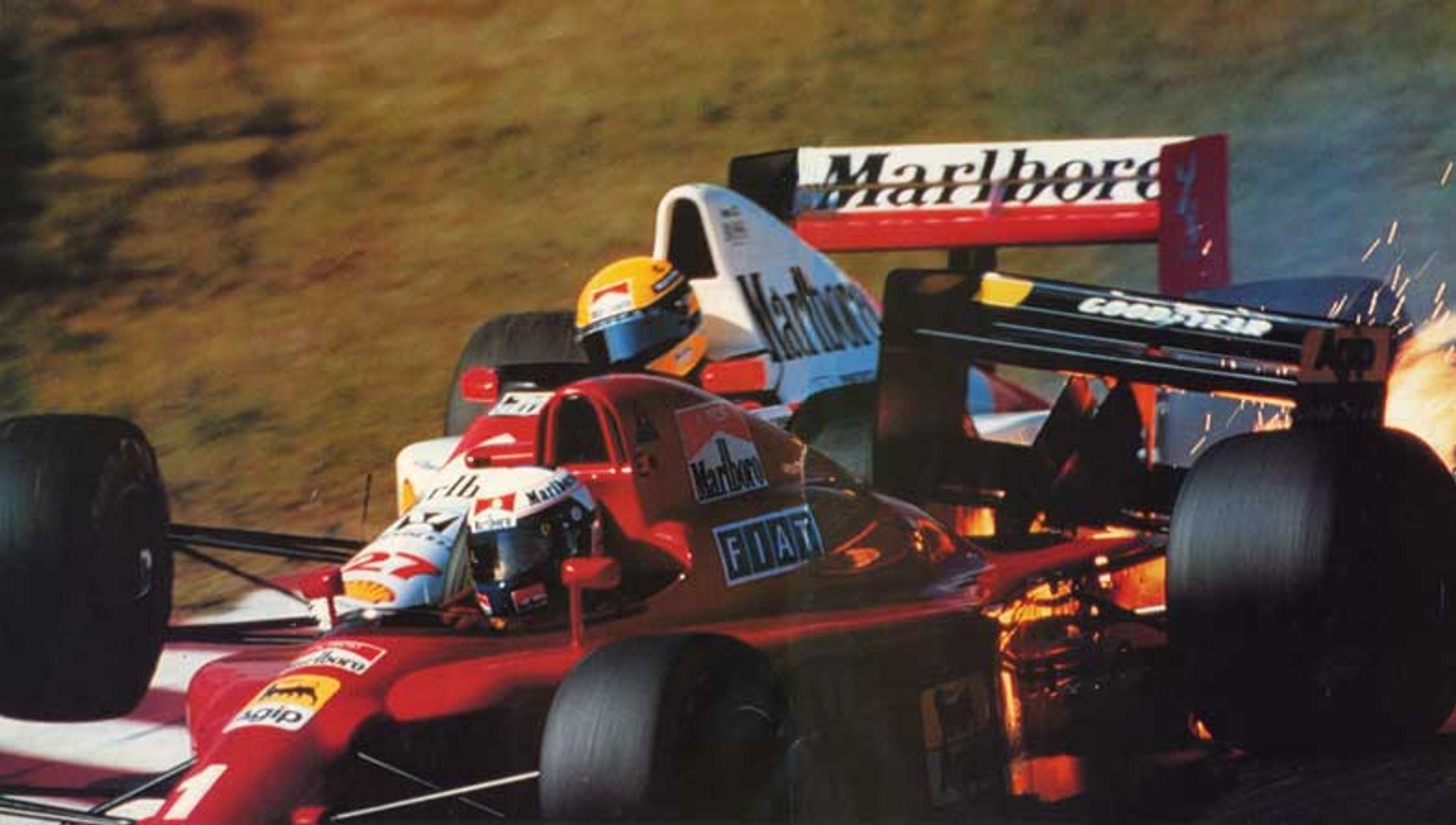
There is undoubtedly a level of ruthlessness required to become a champion. But there is also a line, and Senna and Schumacher crossed that line on multiple occasions, most famously during the 1990 Japanese Grand Prix and the 1997 European Grand Prix.

Image credit: Norio Koike

Whilst Senna’s infamous crash with Prost can be understood to some extent when you hear the full story of the politics with then-FIA President Jean-Marie Balestre, he still intentionally crashed into another driver to win the title, in an era of much-reduced safety.

Senna’s intensity and unflappable self-belief often resulted in uncompromising driving to the very edge of acceptability and, on more than one occasion, beyond it. It was part of what made him so great, but he sometimes went too far and that has to be seen as a negative.

Schumacher has an unfortunately long string of misdemeanours. His attempts – one successful and one unsuccessful – to take out a Williams in the title decider were two of the biggest blots on his copybook. He was disqualified from the entire 1997 season for his actions but escaped unpunished with his championship intact in 1994.

There were plenty more to come. Another notable transgression came when he parked his car at Rascasse during qualifying for the 2006 Monaco Grand Prix in an attempt to prevent Fernando Alonso claiming pole position, which led to a disqualification from the session.

And even upon his return to the sport in 2010, he very nearly put his former teammate Rubens Barrichello into the wall at high speed in Hungary, the Brazilian describing it as, “the worst piece of defensive driving I have ever seen”.

These varying forms of misconduct are something we have rarely, if ever, seen from Hamilton.

Of course, there has been the odd drama. Off the track, there was ‘lie-gate‘ – where he was instructed to lie to the stewards by his Sporting Director at McLaren – and his tweeting of sensitive telemetry. But these were reasonably minor indiscretions and, on track, Hamilton generally falls under the category of firm but fair.

Even during his prickly relationship with former teammate Nico Rosberg, as the German set about all-out psychological warfare, he would push his wheel-to-wheel racing to the limit but never beyond.

And that was on full display again this season as he went toe to toe with Max Verstappen.

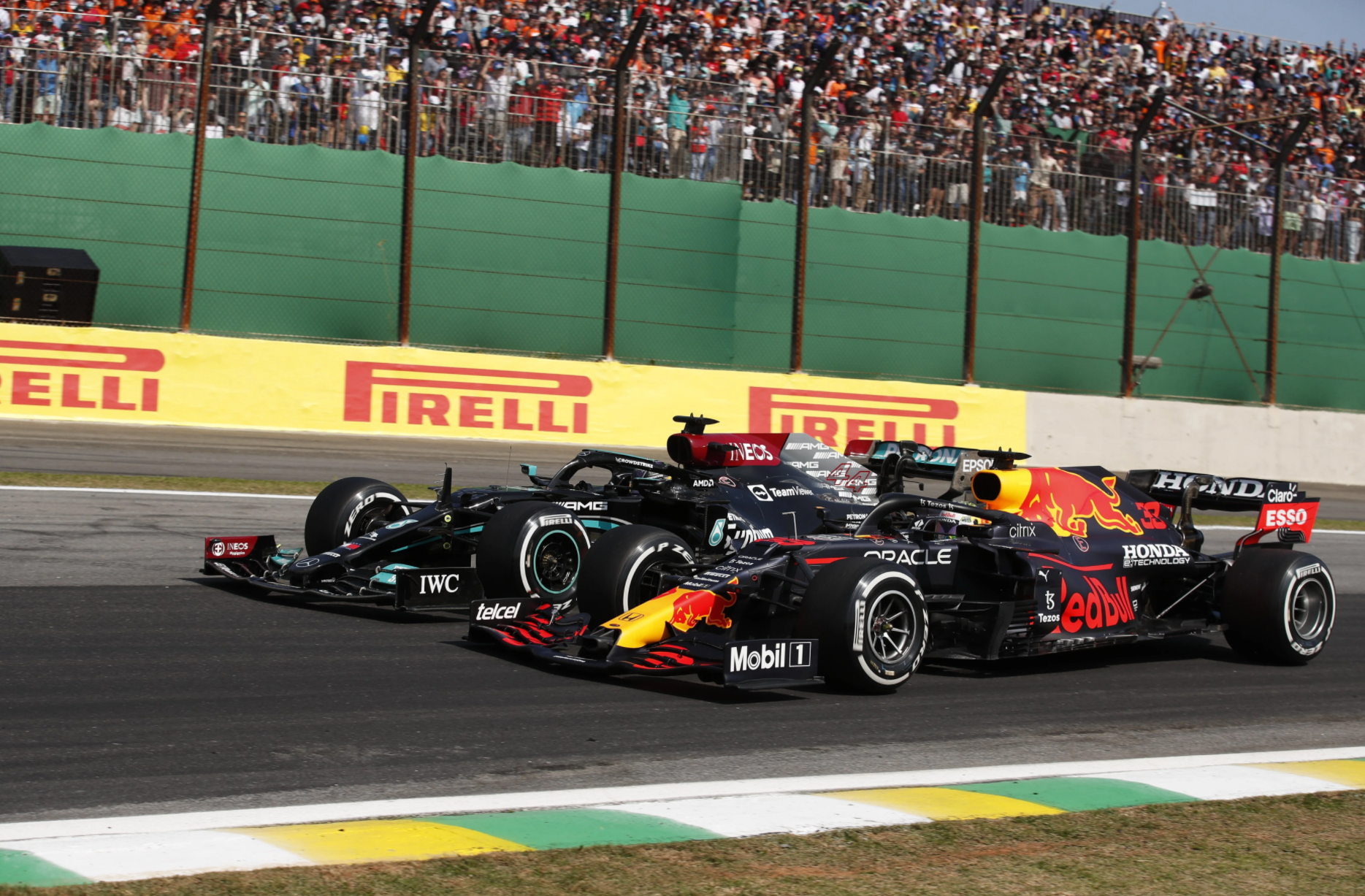
Lewis Hamilton during his GOAT-like recovery drive in Brazil.
Image credit: LAT Images

The pair’s clash at Silverstone was highly contentious and divisive, but – putting to one side the odd outrageous statement during the aftermath from Christian Horner or Helmut Marko claiming Hamilton tried to murder the Dutchman – with the benefit of hindsight, was a racing incident in which the seven-time world champion was arguably more culpable and certainly fortunate to escape without considerable damage.

Throughout the rest of the season, Hamilton repeatedly avoided contact with his title rival and showed what perhaps sets him apart from Senna and Schumacher – he has that steel and a relentless will to win, but he is also truly committed to winning the right way and – as he often points out was instilled in him from a young age by his father – doing his talking on the track.

Yes, he may complain over the radio, but that is something every single driver on the grid does. Hamilton’s radio is just broadcast far more than that of anyone else.

And then, even when he was robbed of the world championship by one of the most controversial decisions in Formula 1 history, he displayed the utmost sportsmanship and the epitome of class.

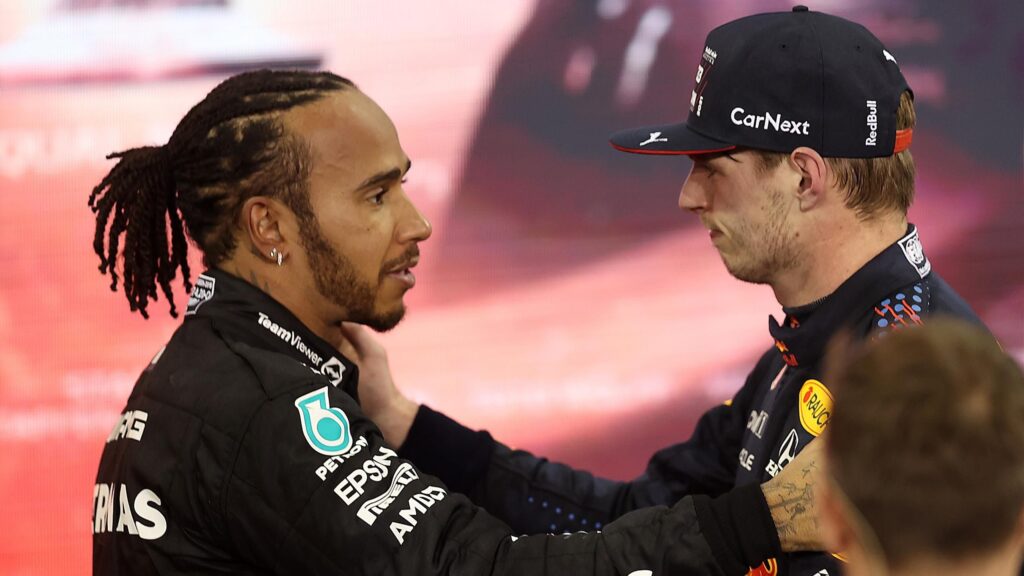
No mention of the controversy in his post-race interview – just a handshake with Verstappen, a congratulatory message for the new champion, and a thankyou to his team and the fans.

Image credit: Getty Images

The recovery drive from the back of the grid in São Paulo was a performance for the ages – perhaps even at the very top of a stellar list compiled over the last 15 years – and one that would have been a worthy defining moment in a record-breaking achievement.

Would the two other great champions have been able to match that as a performance? You certainly wouldn’t put it past them.

But would they have been able to lose with as much style as Hamilton? That is very much up for debate.

Nico Hülkenberg: F1’s unluckiest driver or serial underachiever?

With just one spot left on the grid next season and races running out this year for him to pick up a now-trademark, last-minute ‘super sub’ appearance, have we seen the last of Nico Hülkenberg in Formula 1? Is a career that promised so much over without a single trophy after a decade of near-misses?

Nico Hülkenberg looking pensive in his Renault days.
Image credit: Getty Images

A blonde-haired, blue-eyed, baby-faced German entered the paddock for the 2010 Bahrain Grand Prix, seemingly with the world at his feet.

Having produced a prodigious junior career that could rival any of the top F1 talents, Hülkenberg was described by manager Willi Weber as “an unbelievable talent” that reminded him of his other long-term client – a certain seven-time world champion named Michael Schumacher.

The Hulk’s debut in Sakhir featured a spin whilst running in a promising position. His second race lasted just five corners as Kamui Kobayashi’s front wing failed, sending the Sauber into the barriers and subsequently the path of a helpless Hülkenberg.

And thus the tone was set for a career of mishaps and misfortune.

That is not to say there have not been special moments. There was a shock pole position in mixed conditions at Interlagos during his rookie season, and two years later he found himself fighting for victory at the same track. As would often prove to be the case, a combination of poor luck and judgment would put paid to his chances, though.

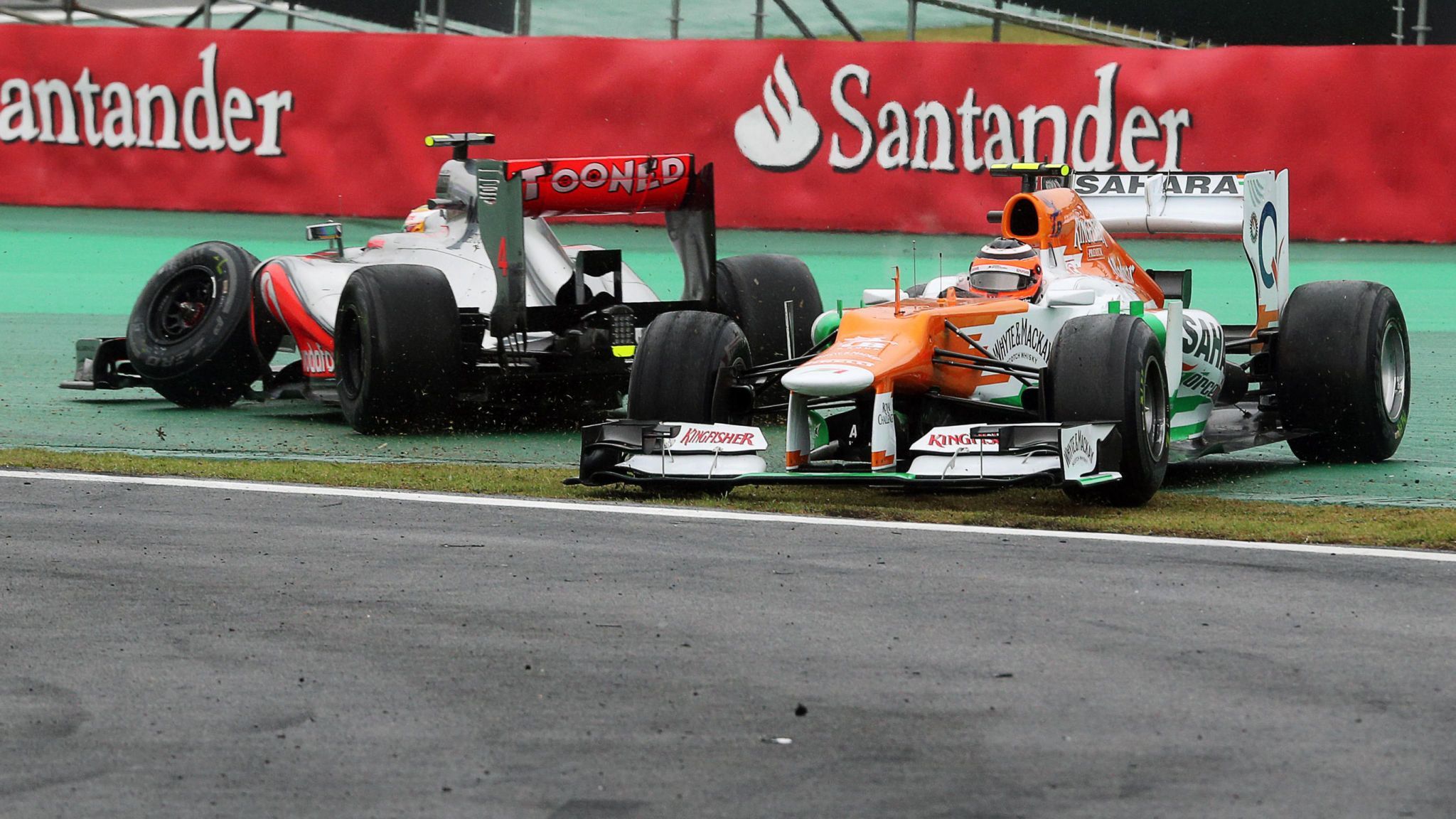
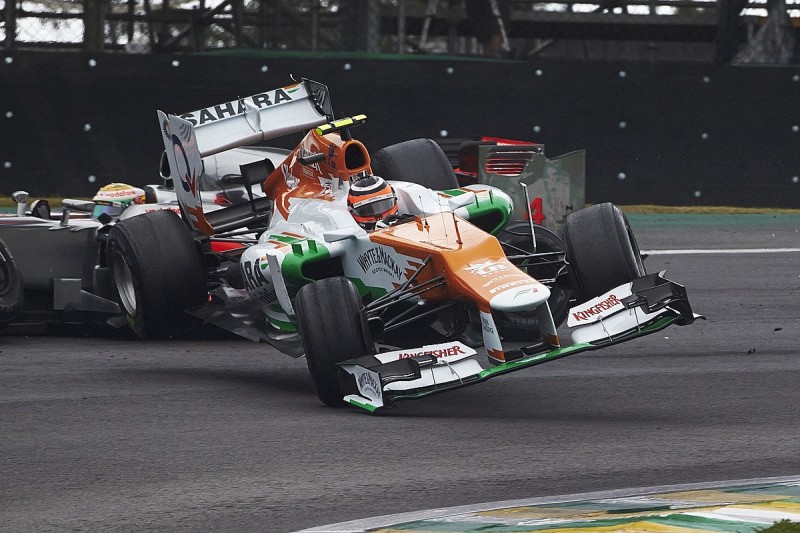
With the chaotic mixed conditions that Brazil so often provides present once again, Hülkenberg – along with Jenson Button – took the decision not to pit as rain started to fall. It proved to be the correct one and left the pair with a lead of over a minute and the German in first place. However, a safety car removed their safety net and, with just over 20 laps remaining, Lewis Hamilton passed Hülkenberg when he briefly lost control of his Force India.

Nico Hülkenberg and Lewis Hamilton collide at the 2012 Brazilian Grand Prix.
Image credit: LAT Photographic

Six laps later, Hülkenberg was back on the tail of the McLaren, but again lost control on the slippery surface and this time slid into Hamilton, taking the Briton out of the race and earning himself a drive-through penalty which would see him ultimately reach the chequered flag in fifth.

A first golden chance of a podium – if not a win – had slipped through his fingers, but surely there would be plenty more opportunities to come…

His single season at Sauber in 2013 was one of his best: dragging an uncompetitive car into points-paying positions and even keeping Hamilton behind him on his way to an impressive fourth place in Korea.

Then followed three years back at Force India with Sergio Pérez as his teammate. He was only narrowly outscored by the Mexican over that period, but Pérez managed to notch up four podiums to Hülkenberg’s zero. Whenever the chance of an unlikely result arose, he somehow contrived to be in the wrong place at the wrong time.

In 2016 alone, a podium finish escaped him on four separate occasions: in Monaco, getting caught in traffic after his pit stop ruined what had been a legitimate third place; in Baku, he spun during qualifying when the Force India was truly competitive with Pérez earning a visit to the podium; in Austria, he qualified second but produced a poor start; and in Brazil, he picked up a puncture whilst running in what would have become a net third.

Nico Hülkenberg slithers off in the rain at the 2019 German Grand Prix.
Image credit: Sutton Images

The trend continued in subsequent years. He would crash out of chaotic races such as Azerbaijan 2017 and Germany 2019 when in with a great shout of a top-three finish and, if he did keep it on the road as in Singapore 2017, lady luck would find some way to ensure that strategy and/or bad timing kept him off the podium.

Hülkenberg clearly has speed. He was the unofficial champion of ‘Formula 1.5‘ on two separate occasions, has earned three fourth places and nine fifth places, and his win at Le Mans shows that he has a winning mentality (and is not totally cursed). But, for whatever reason, it has never quite come together for him in F1.

As the old adage goes, you make your own luck and, in that sense, Hülkenberg is far from a master craftsman. Whilst he has certainly experienced more than his share of bad luck, he has also removed himself from numerous situations where he could finally have broken his duck and earned a place up on the rostrum.

“I won’t be the next Michael Schumacher or whatever. When I get to Formula One, if I do get there, I want to be the first Nico Hülkenberg.”

Hülkenberg claims to have missed out on a Ferrari seat “by an inch” and, according to Ross Brawn, was the next choice for Mercedes if Hamilton had not signed. If either of those timelines had come to pass, this would likely be a very different article. That is the fine line between success and failure in Formula 1.

On the initial Schumacher comparison, Hülkenberg said: “I won’t be the next Michael Schumacher or whatever. When I get to Formula One, if I do get there, I want to be the first Nico Hülkenberg.”

Whether or not he ever returns to the grid, he has certainly succeeded in that.

The greatest ever Monaco Grands Prix

“Driving around this track is like riding a bike around a living room”, said Nelson Piquet. COVID-19 meant that the world’s most advanced ‘bikes’ were unable to traverse the world’s most expensive ‘living room’ last year, but this week finally sees the return of the Monaco Grand Prix.

The 2021 season has thus far served up four highly entertaining battles between seven-time world champion Lewis Hamilton and the heir to this throne, Max Verstappen. Whilst races at Monaco can often be a somewhat mundane affair – more rush hour than Rush – when they are good, they tend to be very good.

Here are the best of the 77 grands prix to this point. Let’s hope that number 78 will be able to compete with them.

1965

Graham Hill at the 1965 Monaco Grand Prix.
Image credit: Stuart Heydinger

Graham Hill completed a hat-trick of victories in Monte Carlo and cemented his position as ‘Mr. Monaco’ after a stunning comeback drive in 1965.

After having secured pole position and then opened up a comfortable lead, Hill spun whilst trying to overtake backmarker Bob Anderson on lap 25 and found himself down an escape road. At a time when reverse gear wasn’t available in F1 cars, the Briton was forced to climb out and push his car back onto the track.

Over the following 40 laps, Hill steadily but surely clawed back the 30-second deficit to the leaders and then picked them off one by one. He withstood a late charge from reigning champion John Surtees to take the chequered flag and earn the third of his five victories in Monaco.

1970

Jochen Rindt at the 1970 Monaco Grand Prix.
Image credit: Corbis

Jochen Rindt and Colin Chapman had many a disagreement regarding the safety of the Lotus cars and, after a huge accident in Spain, Rindt refused to use the latest Lotus 72 at the 1970 Monaco Grand Prix.

Despite that, the Austrian made steady progress through the field from eighth on the grid – aided by numerous retirements in front of him – and found himself in second place with 19 laps remaining. Jack Brabham’s appeared to have a comfortable 15-second lead but it gradually decreased and, after being held up twice by backmarkers, it was down to four seconds on the penultimate lap.

Rindt blitzed the lap record and was suddenly within touching distance. Under pressure at the final hairpin, Brabham went off-line to lap Piers Courage and slithered off into the barrier, leaving Rindt to inherit his sole Monaco triumph and the last ever victory for the famous Lotus 49.

1982

The field climb the hill to Massenet.
Image credit: LAT

The 1982 Monaco Grand Prix was a race which, it appeared, nobody wanted to win.

Alain Prost appeared favourite after his pole-sitting teammate, René Arnoux, had spun on lap 15. But with three laps remaining and rain starting to fall, Prost himself spun out and handed the lead to Riccardo Patrese, only for the Italian to spin as well during the following lap. That left Didier Pironi in the lead, but his car ran out of fuel on the final lap. Andrea de Cesaris would have inherited the lead but had also run out of fuel and Derek Daly – the next man down the road – had just retired with a gearbox failure.

As James Hunt put it, “we’ve got this ridiculous situation where we’re all sitting by the start-finish line waiting for a winner to come past, and we don’t seem to be getting one”. Patrese had managed to restart his car, though, and eventually came through to take his maiden victory.

1984

The master at work, for the first time.
Image credit: Getty Images

Two years later, another wet race saw Ayrton Senna announce himself as a superstar in the making.

At the request of Niki Lauda, Bernie Ecclestone used his power to have the tunnel flooded, as oil from prior use had “turned it into a fifth gear skid pad” when the cars came racing in carrying the spray from their tyres. Pole-sitter Prost was passed on lap nine by Nigel Mansell, to lead a grand prix for the first time, but the Briton crashed six laps later after sliding on a painted white line.

Prost reassumed the lead and, on lap 29, began waving to the stewards to signal the race should be stopped, with Senna – who had started the race 13th in an uncompetitive Toleman – closing in rapidly. The red flag was duly shown at the end of lap 32. Senna passed Prost’s slowing McLaren before the finish line but, as per the rules, the positions were counted from the last lap completed by every driver and Prost retained the victory. Nonetheless, Senna had emphatically displayed the wet weather skills that would become infamous over the next decade.

1992

Nigel Mansell stalks Ayrton Senna at the 1992 Monaco Grand Prix.
Image credit: LAT Images

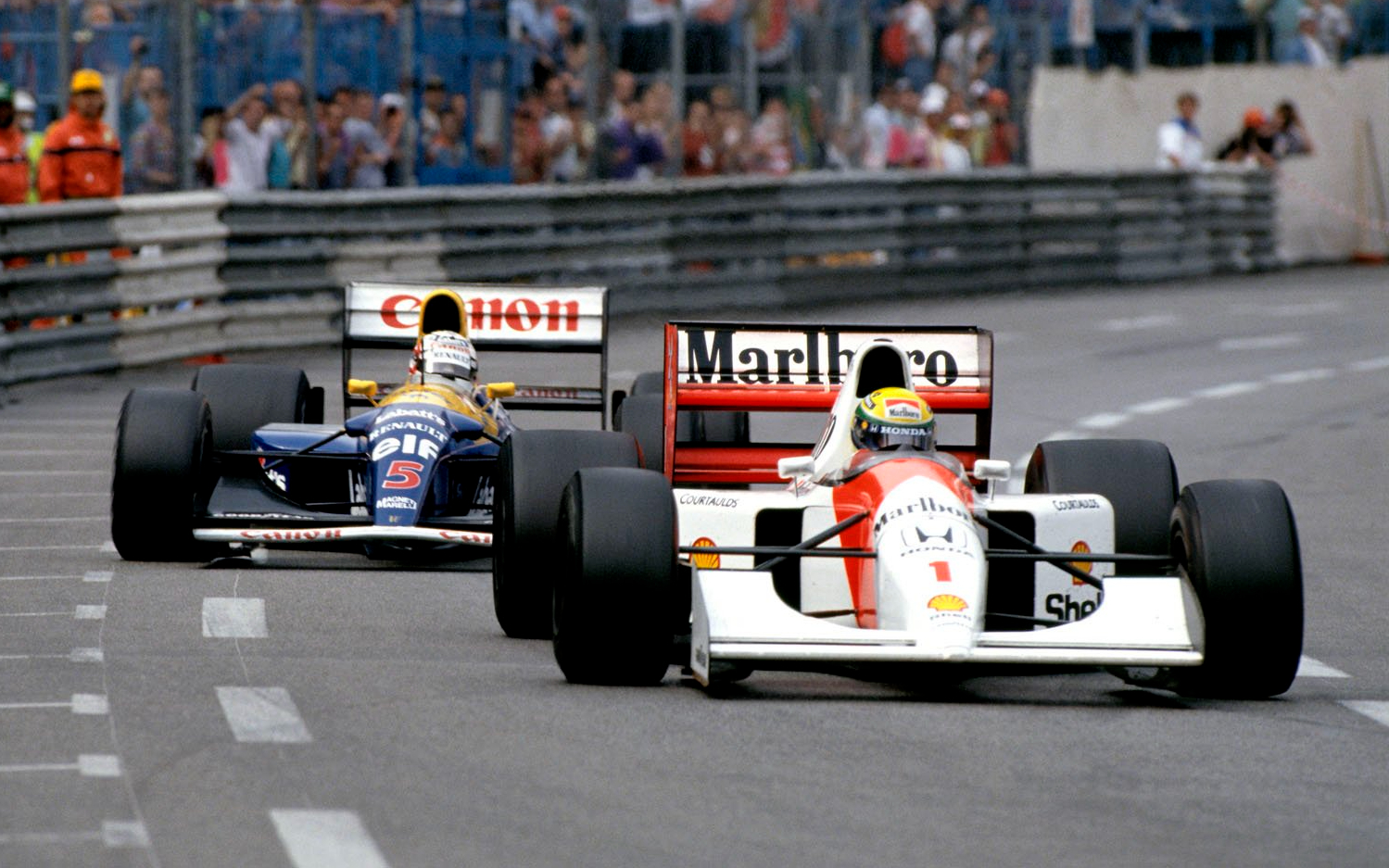
1992 saw another Senna Monaco masterclass; this time, though, in defensive driving.

That season’s Williams was one of the most dominant in the history of the sport, Mansell taking the championship at a canter and winning a then-record 9 of 16 races. In Monaco, however, a late puncture in a race he had been dominating saw him emerge from the pits seven seconds behind Senna’s McLaren.

That gap had disappeared in just a lap and a half. Senna was still sporting the same tyres on which he had started the race, but was not about to let his rival through in a hurry. Mansell darted left and right for the remaining five laps but to no avail as the Brazilian positioned his car perfectly and remained utterly resolute. The Master of Monaco was not to be denied that day and took his fourth consecutive victory in the Principality.

1996

A pre-race downpour in 1996 saw a fraught start during which five drivers – including Michael Schumacher – retired from the race on the first lap. Another four had gone before lap 10.

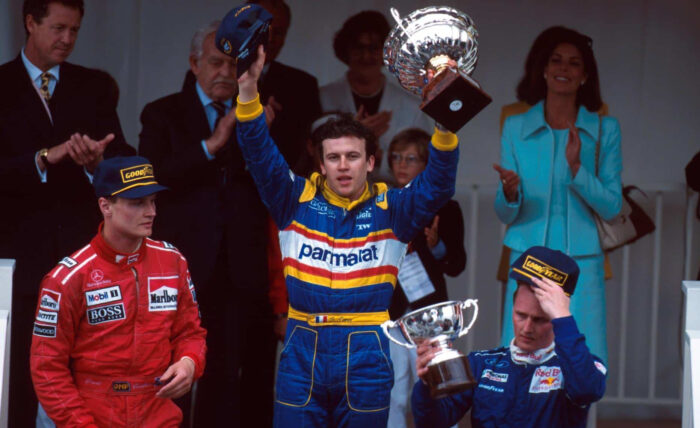
Amid the chaos, a certain Olivier Panis had moved up from 14th on the grid to run eighth at the halfway point. With the rain clouds having moved on, the Frenchman instructed his Ligier team to monitor the first driver pitting for slicks and report on their progress. That would prove to be Damon Hill, whose instant speed convinced Panis to pit on the following lap.

Others weren’t as quick to respond and Panis moved up to fourth. He quickly dispatched Eddie Irvine – into the wall, to be specific – and, when Hill and Jean Alesi suffered mechanical failures up ahead, found himself in the lead. A lack of fuel threatened the Frenchman’s maiden victory, but he clung on from the chasing David Coulthard and was the first of just three drivers to reach the chequered flag. It would prove to be his only win. But, if you’re only going to get one, it’s not a bad one to have.

2008

Lewis Hamilton at the 2008 Monaco Grand Prix.
Image credit: EFE

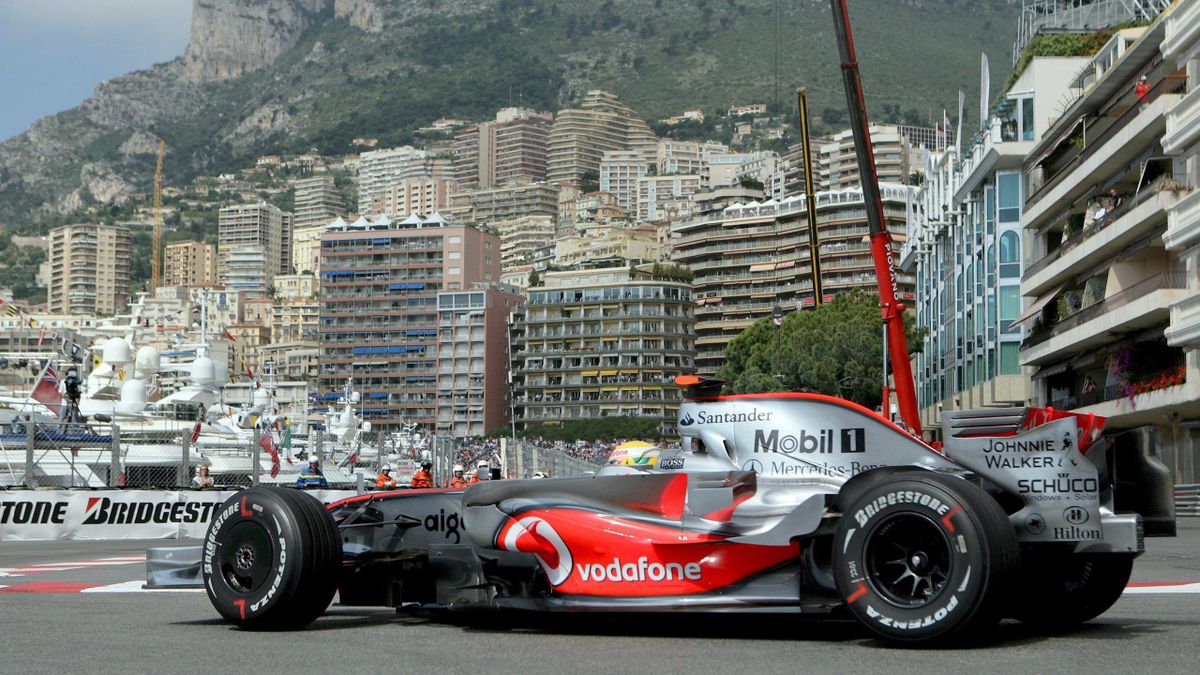
Small mistakes have huge consequences in the tight confines of the Circuit de Monaco. Those consequences are almost always bad but, in 2008, a small mistake ultimately led to a victory for Lewis Hamilton.

Once again, rain played a major part in an eventful Monaco Grand Prix. Hamilton had passed Kimi Räikkönen for second place on the opening lap, but on lap 6, with the conditions worsening, he fractionally misjudged his exit from Tabac and tapped his right-rear wheel against the barrier, popping the tyre off the rim. That led Hamilton and his team to take a risk, fitting intermediate tyres and fuelling for a long second stint.

It proved to be inspired. The rain ceased, a dry line emerged, and Hamilton took the lead. When the time came for his next stop, conditions had reached the point for a transition to slicks and Hamilton maintained his lead to the chequered flag, despite a late safety car. Behind him, Adrian Sutil had been running in an unlikely, career-best fourth place, only to be taken out of the race by Räikkönen with just eight laps to go.

2016

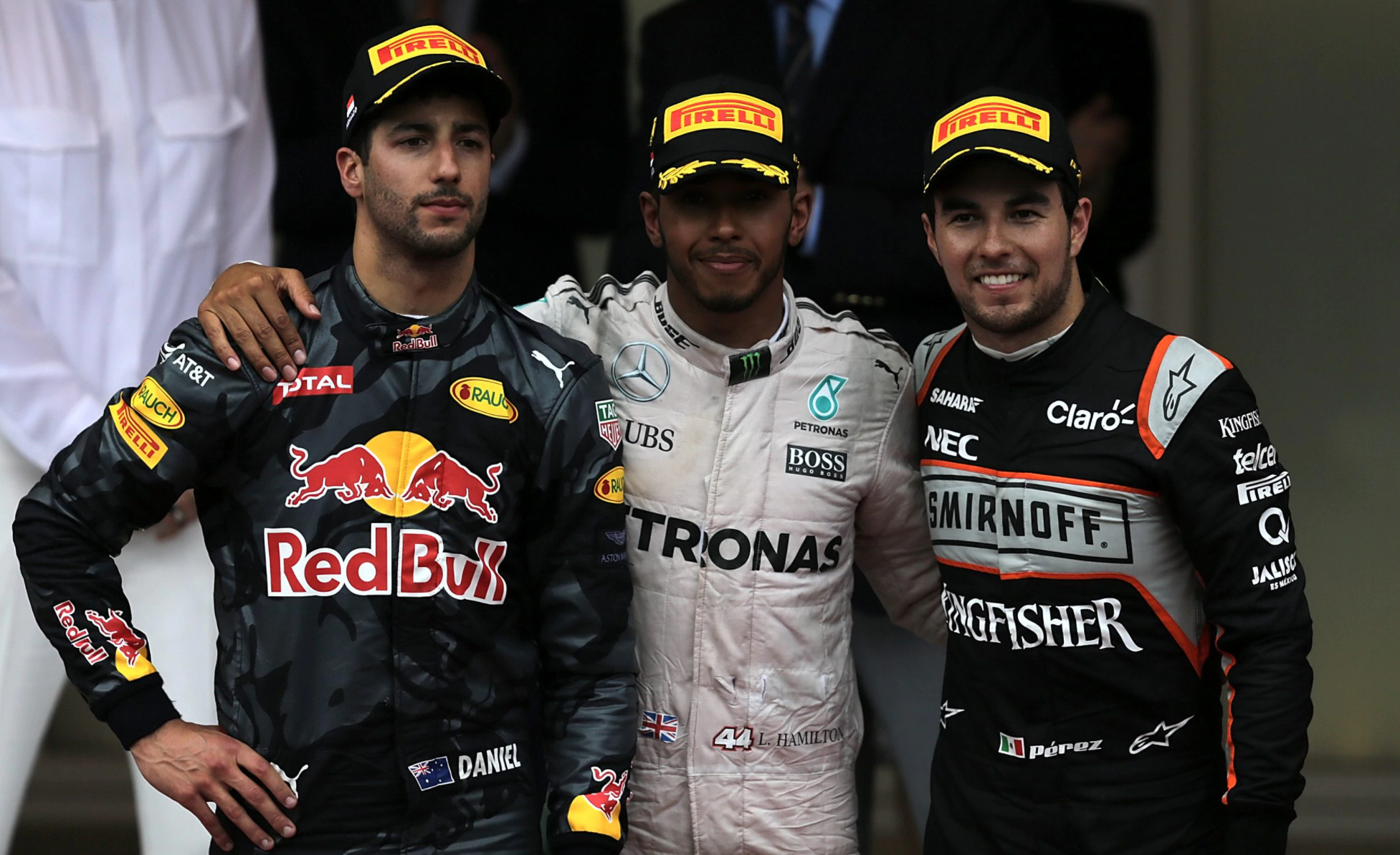
Contrasting emotions in the 2016 Monaco top three.
Image credit: The Telegraph

2016 saw another wet race and another Hamilton win, but in very different circumstances.

Daniel Ricciardo led away from pole, followed by the Mercedes pair of Nico Rosberg and Hamilton. The two Silver Arrows were on best behaviour – after their infamous crash in Spain two weeks beforehand – and, after struggling with the conditions in the early laps, Rosberg obeyed a team order to allow his teammate through.

Out front, Ricciardo had built a comfortable lead but, when the time came for his change to slicks, the Red Bull pit crew weren’t ready. Mechanics fumbled for the right tyres and Hamilton agonisingly swept by when Ricciardo eventually reached the end of the pit lane. Over the course of the remaining 45 laps, Hamilton produced a defensive display akin to Senna in 1992 as a frustrated Honey Badger bit at his heels.

It felt like redemption for Hamilton who had suffered a similar fate 12 months earlier when an erroneous call to pit lost him a certain victory. And Ricciardo himself would right the wrongs in 2018, claiming an impressive win after an engine issue left him down on power and defending for his life for most of the race.

How lucky is Lewis Hamilton?

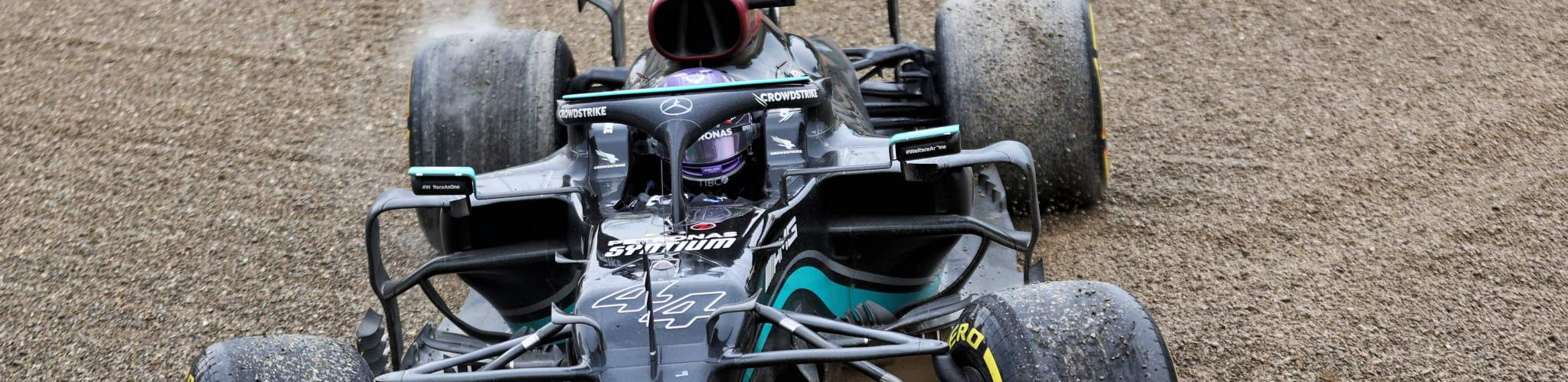
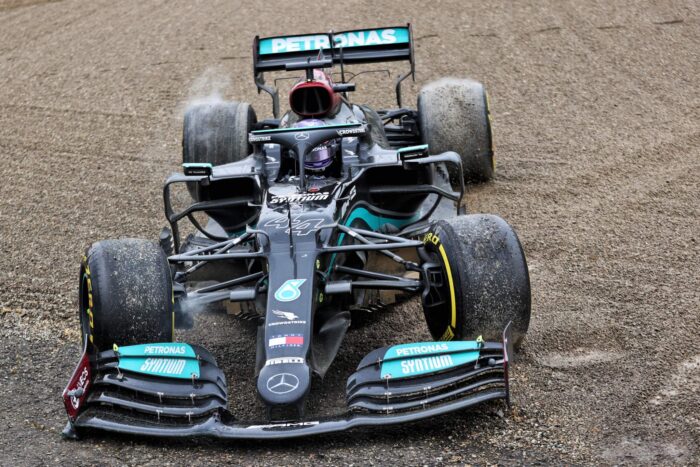
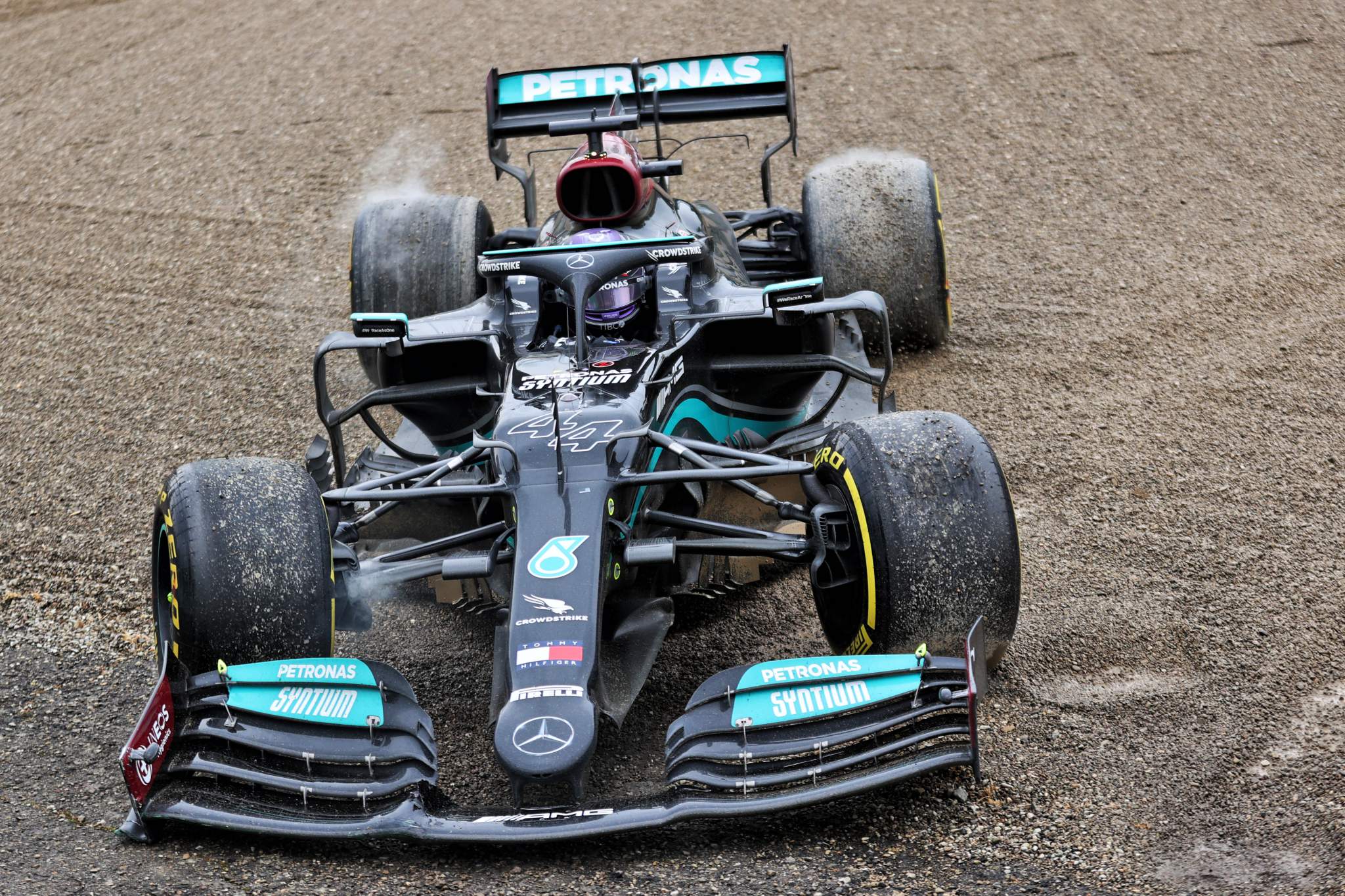
Lewis Hamilton is lucky to escape this trip into the gravel at Imola.
Image credit: XPB Images

A lucky break involving a fortunately timed red flag at Imola led to many claims on social media that Lewis Hamilton is the luckiest driver ever to have raced.

So, how lucky is he exactly? Let’s investigate.

The Good

The Briton has certainly caught a lucky break from time to time.

Imola has been especially kind to him over the last 12 months. In addition to the red flag which rescued him this year, he received a helping hand at the 2020 race from a well-timed Virtual Safety Car. Hamilton was able to pit during the VSC period, allowing him to gain a net 10 seconds and steal the lead from teammate Valtteri Bottas.

A similar situation benefitted him at Silverstone and Sochi in 2019, both races ending with that familiar combination of the British and German national anthems.

Earlier that year, the controversial decision to penalise Sebastian Vettel at the Canadian Grand Prix propelled Hamilton to the top step of the podium, even if he wasn’t parked next to the number 1 board… And more problems for the Scuderia – this time a mechanical failure for Charles Leclerc – helped him clinch what had appeared an unlikely victory in Bahrain.

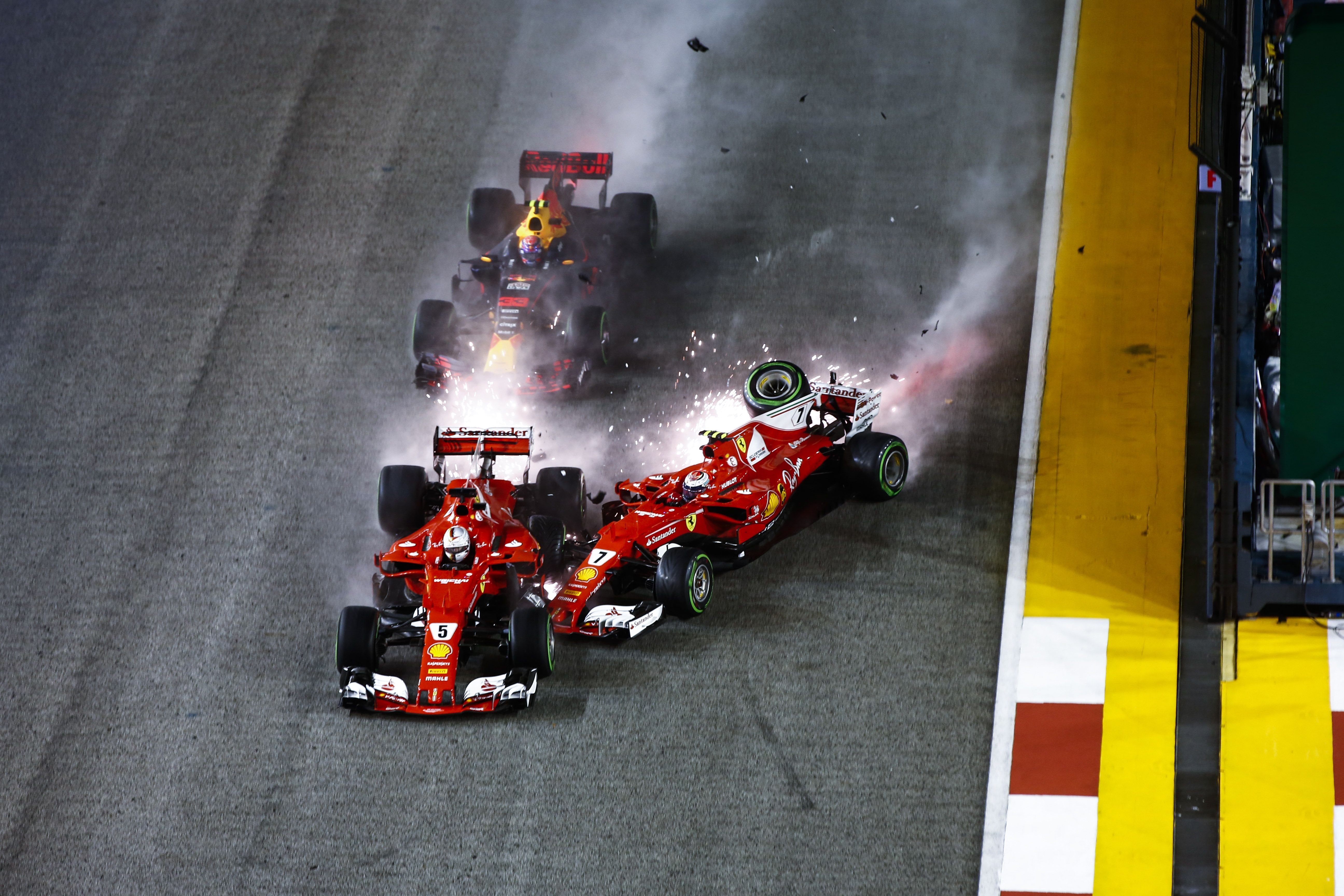
The Ferraris and Max Verstappen collide at the 2017 Singapore Grand Prix.
Image credit: Sutton Images

Whilst we’re talking of Ferrari calamities, Hamilton also obviously reaped the rewards from the disastrous run to the first corner at Singapore in 2017 and Vettel’s costly error in Germany a year later – both massive moments that swung the title battle in his favour. But whether mistakes by one party can be considered luck for their opponent is up for debate.

Obviously, over the years, there are many other times when retirements to others have seen him claim victory. Bottas was unlucky at the 2018 Azerbaijan Grand Prix, suffering a tyre blow-out with just three laps remaining. Mechanical failures put an end to battles between Hamilton and arch rival Nico Rosberg in Russia in 2015 and Britain in 2014.

The relentless consistency of the Hamilton-Mercedes partnership means that he is often there to capitalise when others falter, for whatever reason.

The Bad

Earlier in his career, Hamilton was not the polished article we see scooping up championship after championship today. He had a reputation for doing things the hard way, either from self-inflicted obstacles or external factors conspiring against him.
Even in 2014, Bleacher Report described him as “a three- or four-time world champion trapped in the career of a one-title wonder, with luck – more often than not – at the root of his failure to scoop more accolades.”

Lewis Hamilton in 2014.
Image credit: Getty Images

And whilst that was the year in which he finally scooped that elusive second title, Lady Luck still made him work for it. The number 44 Mercedes retired with an engine problem just two laps into the season-opening Australian Grand Prix, immediately leaving him with a 25-point deficit to teammate Rosberg.

He won the next four races to claw back the gap and take the lead, only to lose it again in Monaco where, if we are to believe the German, it was purely bad luck to blame for his notorious trip down the escape road

Further mechanical failures in Canada, Germany and Hungary – along with a race-ending puncture courtesy of Rosberg in Belgium – ultimately weren’t enough to deny him the championship, but they certainly didn’t make it easy.
And, if his second title was dramatic, it was nothing on his first. Of course, he infamously passed Timo Glock at the very final corner to regain that crucial fifth place, but a sudden deluge with five laps remaining when Hamilton had been in a comfortable position for the title certainly couldn’t be described as lucky.

After three seasons without a championship – and a particularly trying campaign in 2011 – Hamilton vowed to return stronger than ever in 2012. He followed through on that promise – seven pole positions over the course of the year demonstrating the speed that was clearly there – but forces beyond his control would derail his title bid at an alarming rate.

Lewis Hamilton and Nico Hülkenberg following their crash at the 2012 Brazilian Grand Prix.
Image credit: Sky Sports F1

There were mechanical failures from the lead in Singapore and Abu Dhabi, and further issues in China, Germany, Japan and Korea. McLaren also suffered a series of catastrophic pit stops, which ruined Hamilton’s races in Bahrain, Monaco and Valencia.

Nico Hülkenberg took him out of the race whilst battling for the lead in Brazil. Romain Grosjean and Pastor Maldonado caused two further retirements. And a fuel irregularity saw him demoted from pole to the back of the grid in Spain – but did give us a shock victory for a certain Venezuelan.

The Ugly

Hamilton has experienced two especially damaging pieces of misfortune that are the difference between him being a seven- and nine-time world champion.

First, in his rookie season, fate conspired to erase a 17-point advantage in the space of two races. The incident that saw him stuck in a Chinese gravel trap boils down to an error; arguably more so at the hands of the team, who left him out driving on tyres which were worn down to the canvas, but an error nonetheless. He was blameless, though, as his title aspirations crumbled in Brazil.

Despite that mishap in China, a young Hamilton still held an advantage of four points over teammate Fernando Alonso and seven points over Kimi Räikkönen. On lap 8, however, he suffered a gearbox problem and watched most of the field overtake him as he crawled up towards Ferradura. After about 30 seconds, he managed to reset his car’s computer and get going again but had fallen to 18th.

His recovery to an eventual seventh was not enough and he had somehow missed the chance to become the first-ever driver to secure the title in his rookie season.

Kimi Räikkönen celebrates sealing the 2007 drivers' title.
Image credit: Eurosport

Nine years later, he was to be cruelly denied again.

The 2016 season was a tale of incredible consistency by Rosberg and horrendous reliability for Hamilton. Early in the season, two engine failures during qualifying – and being taken out at the first corner by future teammate Bottas – left Hamilton with a deficit to claw back, but by the summer break he had done just that.

However, those failed engines also meant he had to start from the back of the grid at the next race in Belgium. After that, and a hydraulics fault in Singapore, he had lost the lead once again, but was looking good for a crucial win in Malaysia when we heard that fabled radio call of “Oh no, no” as Hamilton’s hopes went up in flames.

From there, Rosberg didn’t put a foot wrong and did all that was required of him to cling on to the title by five points, despite Hamilton’s best efforts to make life as hard as possible for him at the finale.

Lewis Hamilton can't believe his bad luck as his engine blows up at the 2016 Malaysia Grand Prix.
Image credit: Sky Sports F1

So, How Lucky is He?

There is, of course, the old adage that you make your own luck. Many times in recent years we have seen Hamilton avoiding unnecessary risk and taking as little out of the car as possible, clearly more interested in the long game and focused on the championship. That perspective has come with experience – the younger Hamilton fought tooth and nail for every position and it often got him into trouble.

Hamilton can appear especially lucky because he is in the spotlight and, thus, every break that goes his way is highlighted. Many fans are desperate for any result other than a Hamilton win after such a period of dominance, so when he lucks into a win or escapes a bad result, it can seem as though it’s just another case of ‘lucky old Lewis’.

But then occasions like Monza in 2020 – where Hamilton was unlucky with the timing of a safety car and being erroneously called into the pits lost him a certain win – are somewhat forgotten because Pierre Gasly‘s fairy-tale victory is (rightly) the main focus.

After all, how many drivers would be accused of having luck on their side as they crawled around on three tyres after a blow-out on the final tour, having led the entire race?

Ironically, it was Hamilton’s year of appalling luck in 2012 that led him to take the leap to Mercedes. So, considering the unparalleled success he has achieved as a result of that move, could it be argued that the bad luck was, in fact, good luck?

Fortune is a fickle mistress and one which is very hard to define.

20/20 vision for 2021

It’s nearly time! So, here is everything you could want to know about the 2021 season…

The Drivers

Lewis Hamilton

Age: 36 | GPs: 266 | Titles: 7 | Wins: 95 | Poles: 98 | Podiums: 165

Valtteri Bottas

Age: 31 | GPs: 156 | Champ. Best: 2nd | Wins: 9 | Poles: 16 | Podiums: 56

Max Verstappen

Age: 23 | GPs: 119 | Champ. Best: 3rd | Wins: 10 | Poles: 3 | Podiums: 42

Sergio Pérez

Age: 31 | GPs: 191 | Champ. Best: 4th | Wins: 1 | Qual. Best: 3rd | Podiums: 10

Daniel Ricciardo

Age: 31 | GPs: 188 | Champ. Best: 3rd | Wins: 7 | Poles: 3 | Podiums: 31

Lando Norris

Age: 21 | GPs: 38 | Champ. Best: 9th | Race Best: 3rd | Qual. Best: 3rd | Podiums: 1

Sebastian Vettel

Age: 33 | GPs: 257 | Titles: 4 | Wins: 53 | Poles: 57 | Podiums: 121

Lance Stroll

Age: 22 | GPs: 78 | Champ. Best: 11TH | Race Best: 3rd | Poles: 1 | Podiums: 3

Fernando Alonso

Age: 39 | GPs: 312 | Titles: 2 | Wins: 32 | Poles: 22 | Podiums: 97

Esteban Ocon

Age: 24 | GPs: 67 | Champ. Best: 8TH | Race Best: 2nd | Qual. Best: 3rd | Podiums: 1

Charles Leclerc

Age: 23 | GPs: 59 | Champ. Best: 4th | Wins: 2 | Poles: 7 | Podiums: 12

Carlos Sainz

Age: 26 | GPs: 118 | Champ. Best: 6th | Race Best: 2nd | Qual. Best: 3rd | Podiums: 2

Pierre Gasly

Age: 25 | GPs: 64 | Champ. Best: 7th | Wins: 1 | Qual. Best: 4th | Podiums: 2

Yuki Tsunoda

Age: 20 | GPs: 0 | Champ. Best: n/a | Race Best: n/a | Qual. Best: n/a

Kimi Räikkönen

Age: 41 | GPs: 330 | Titles: 1 | Wins: 21 | Poles: 18 | Podiums: 103

Antonio Giovinazzi

Age: 27 | GPs: 40 | Champ. Best: 17th | Race Best: 5th | Qual. Best: 7th

Mick Schumacher

Age: 22 | GPs: 0 | Champ. Best: n/a | Race Best: n/a | Qual. Best: n/a

Nikita Mazepin

Age: 22 | GPs: 0 | Champ. Best: n/a | Race Best: n/a | Qual. Best: n/a

George Russell

Age: 23 | GPs: 38 | Champ. Best: 18th | Race Best: 9th | Qual. Best: 2nd

Nicholas Latifi

Age: 25 | GPs: 17 | Champ. Best: 21st | Race Best: 11th | Qual. Best: 15th

The Teams

Mercedes-AMG Petronas Formula One Team

FIRST GP: 1954 | GPS: 227 | Titles: 16 | WINS: 115 | POLES: 126 | PODIUMS: 236

Red Bull Racing Honda

FIRST GP: 2005 | GPS: 303 | Titles: 8 | WINS: 64 | POLES: 63 | PODIUMS: 183

McLaren F1 Team

FIRST GP: 1966 | GPS: 880 | Titles: 20 | WINS: 182 | POLES: 155 | PODIUMS: 488

Aston Martin Cognizant Formula One Team

FIRST GP: 1959 | GPS: 5 | CHAMP. BEST: N/C | RACE BEST: 6TH | QUAL. BEST: 2nd

Alpine F1 Team

FIRST GP: 2021 | GPS: 0 | Champ. Best: N/A | Race Best: N/A | Qual. Best: N/A

Scuderia Ferrari Mission Winnow

FIRST GP: 1950 | GPS: 1008 | Titles: 31 | WINS: 238 | POLES: 228 | PODIUMS: 773

Scuderia AlphaTauri Honda

FIRST GP: 2020 | GPS: 17 | CHAMP. BEST: 7th | Wins: 1 | QUAL. BEST: 4th | Podiums: 1

Alfa Romeo Racing Orlen

FIRST GP: 1950 | GPS: 148 | CHAMP. BEST: 6TH | WINS: 10 | POLES: 12 | PODIUMS: 26

Uralkali Haas F1 Team

FIRST GP: 2016 | GPS: 100 | CHAMP. BEST: 5TH | RACE BEST: 4TH | QUAL. BEST: 5TH

Williams Racing

FIRST GP: 1977 | GPS: 761 | Titles: 16 | WINS: 114 | POLES: 128 | PODIUMS: 312

The Grands Prix

Bahrain

SAKHIR | 26-28 MAR | LAPS: 57 | LENGTH: 5.412 KM | LAP RECORD: 1:31.447 (de la Rosa)

Emilia Romagna

Imola | 16-18 APR | LAPS: 63 | LENGTH: 4.909 KM | LAP RECORD: 1:15.484 (Hamilton)

Portugal

Portimão | 30 Apr-02 May | LAPS: 66 | LENGTH: 4,653 KM | LAP RECORD: 1:18,750 (Hamilton)

SPAIN

BARCELONA | 07-09 MAY | LAPS: 66 | LENGTH: 4.675 KM | LAP RECORD: 1:18.183 (Bottas)

Monaco

MONACO | 20-23 MAY | LAPS: 78 | LENGTH: 3.337 KM | LAP RECORD: 1:14.260 (Verstappen)

AZERBAIJAN

BAKU | 04-06 MAY | LAPS: 51 | LENGTH: 6.003 KM | LAP RECORD: 1:43.009 (leclerc)

CANADA

MONTRéAL | 11-13 JUN | LAPS: 70 | LENGTH: 4.361 KM | LAP RECORD: 1:13.078 (Bottas)

FRANCE

LE CASTELLET | 25-27 JUN | LAPS: 53 | LENGTH: 5.842 KM | LAP RECORD: 1:32.740 (Vettel)

AUSTRIA

SPIELBERG | 02-04 JUL | LAPS: 71 | LENGTH: 4.318 KM | LAP RECORD: 1:05.619 (Sainz)

GREAT BRITAIN

SILVERSTONE | 16-18 JUL | LAPS: 52 | LENGTH: 5.891 KM | LAP RECORD: 1:27.097 (Verstappen)

HUNGARY

Mogyoród | 30 JUL-01 AUG | LAPS: 70 | LENGTH: 4.381 KM | LAP RECORD: 1:16.627 (Hamilton)

BELGIUM

Stavelot | 27-29 AUG | LAPS: 44 | LENGTH: 7.004 KM | LAP RECORD: 1:46.286 (Bottas)

NETHERLANDS

ZANDVOORT | 03-05 SEP | LAPS: 72 | LENGTH: 4.259 KM | LAP RECORD: 1:16.538 (Prost)

ITALY

MONZA | 10-12 SEP | LAPS: 53 | LENGTH: 5.793 KM | LAP RECORD: 1:21.046 (Barrichello)

RUSSIA

SOCHI | 24-26 SEP | LAPS: 53 | LENGTH: 5.848 KM | LAP RECORD: 1:35.761 (Hamilton)

SINGAPORE

SINGAPORE | 01-03 Oct | LAPS: 61 | LENGTH: 5.063 KM | LAP RECORD: 1:41.905 (Magnussen)

JAPAN

SUZUKA | 08-10 OCT | LAPS: 53 | LENGTH: 5.807 KM | LAP RECORD: 1:30.983 (Hamilton)

UNITED STATES

AUSTIN | 22-24 OCT | LAPS: 56 | LENGTH: 5.513 KM | LAP RECORD: 1:36.169 (Leclerc)

MEXICO CITY

MEXICO CITY | 29-31 Oct | LAPS: 71 | LENGTH: 4.304 KM | LAP RECORD: 1:18.741 (Bottas)

BRAZIL

São Paulo | 05-07 NOV | LAPS: 71 | LENGTH: 4.309 KM | LAP RECORD: 1:10.540 (Bottas)

Australia

Melbourne | 19-21 Nov | Laps: 58 | Length: 5.303 km | Lap Record: 1:24.125 (Schumacher)

Saudi Arabia

Jeddah | 03-05 Dec | Laps: 50 | Length: 6.175 KM | Lap Record: N/A

ABU DHABI

ABU DHABI | 10-12 Dec | LAPS: 55 | LENGTH: 5.554 KM | LAP RECORD: 1:39.283 (Hamilton)

The Changes

Drivers

Sergio Pérez replaces Alexander Albon at Red Bull

Daniel Ricciardo replaces Carlos Sainz at McLaren

Sebastian Vettel replaces Sergio Pérez at Aston Martin

Fernando Alonso replaces Daniel Ricciardo at Alpine

Carlos Sainz replaces Sebastian Vettel at Ferrari

Yuki Tsunoda replaces Daniil Kvyat at AlphaTauri

Mick Schumacher replaces Romain Grosjean at Haas

Nikita Mazepin replaces Kevin Magnussen at Haas

Teams

Racing Point are rebranded as Aston Martin

Renault are rebranded as Alpine

Regulations

A budget cap of $145 million per year has been introduced

The floor of the cars will be ‘clipped’ in order to reduce downforce

Slots on the edge of the floor will be removed, brake duct winglets will be narrowed by 40 mm and diffuser fences will be narrowed by 50 mm to further reduce downforce

DAS has been banned

Teams will be required to allow a driver who has competed in fewer than two grands prix to replace one of their race drivers in a Friday practice session

Drivers using mixed compound sets or using sets allocated to another driver on their cars will be permitted to complete two laps before the driver must pit to correct the error before facing a penalty

Cars will be under parc fermé conditions following the end of free practice three instead of qualifying

All of Thursday’s events (media, promotions, scrutineering) will be moved to the Friday morning with the times between Friday’s activities being reduced

The Burning Questions

Can Lewis Hamilton make the record for the most world championships his own by taking an eighth title?

Will anyone be able to challenge him? Can Red Bull produce a car capable of doing so? Can Valtteri Bottas upgrade again to 4.0 or whatever model we’re up to?

Can Ferrari improve on their calamitous 2020 season and move back towards the front?

Will Pérez be able to compete with Max Verstappen?

Ditto Sainz with Charles Leclerc?

How much will Mercedes power help McLaren?

Will Alonso still be the same driver that left the sport in 2018?

Can Vettel rediscover his mojo at Aston Martin?

Will we see races being cancelled due to the virus?

How long until the first Kimi bwoah?