Damage limitation for Hamilton as the title lead swings again.
Image credit: Daimler AG
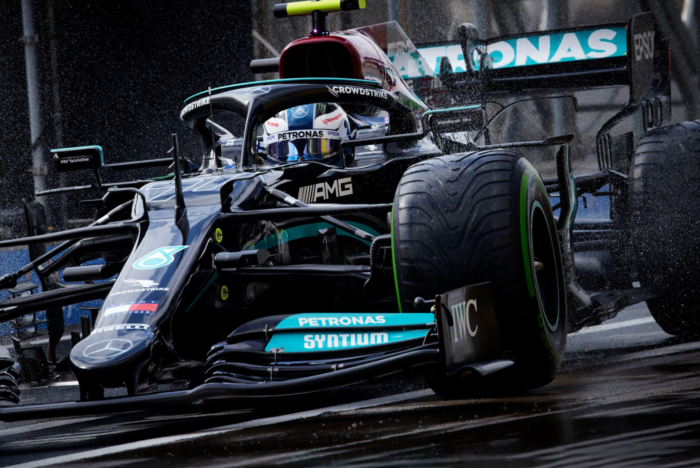
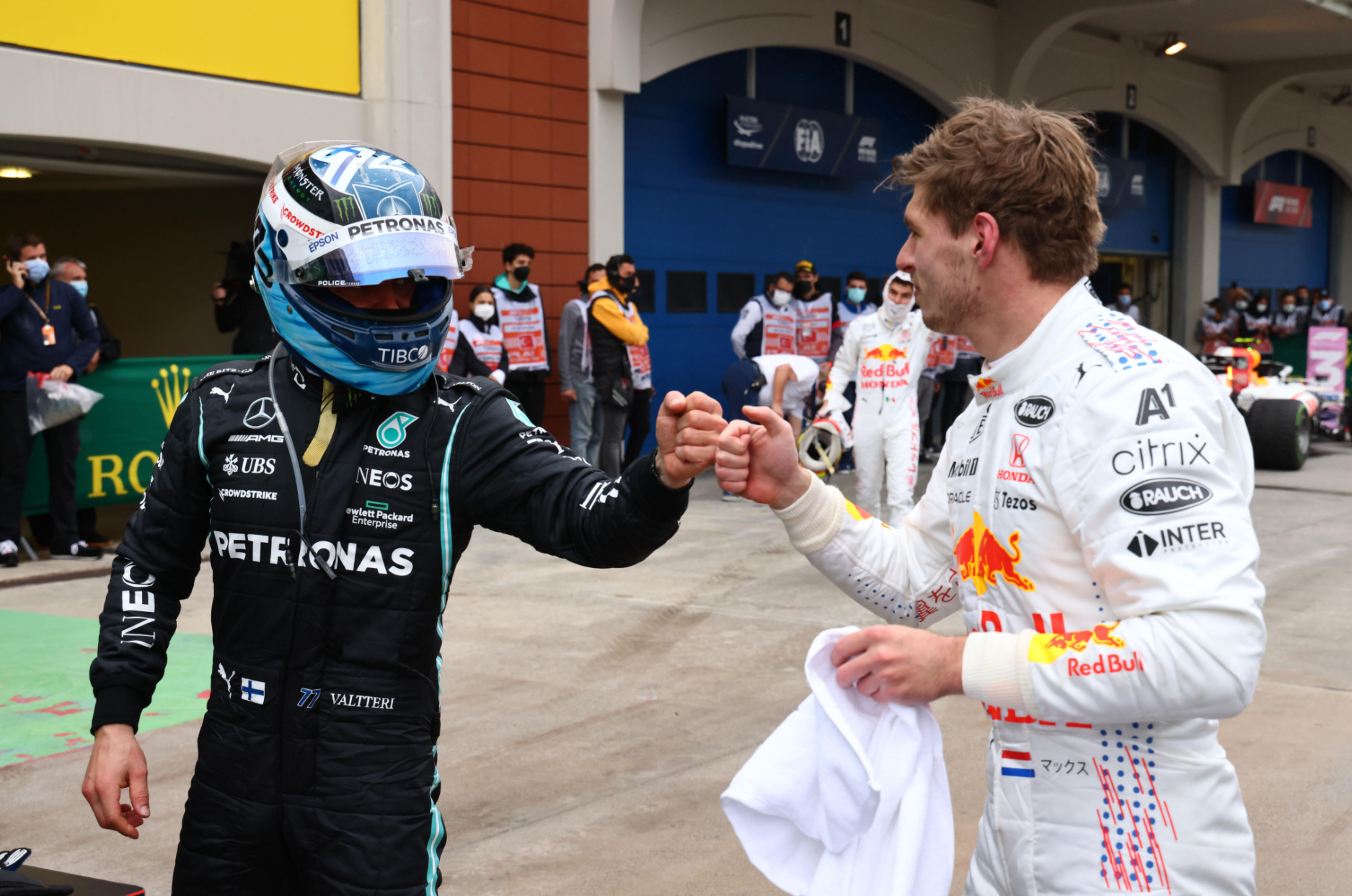
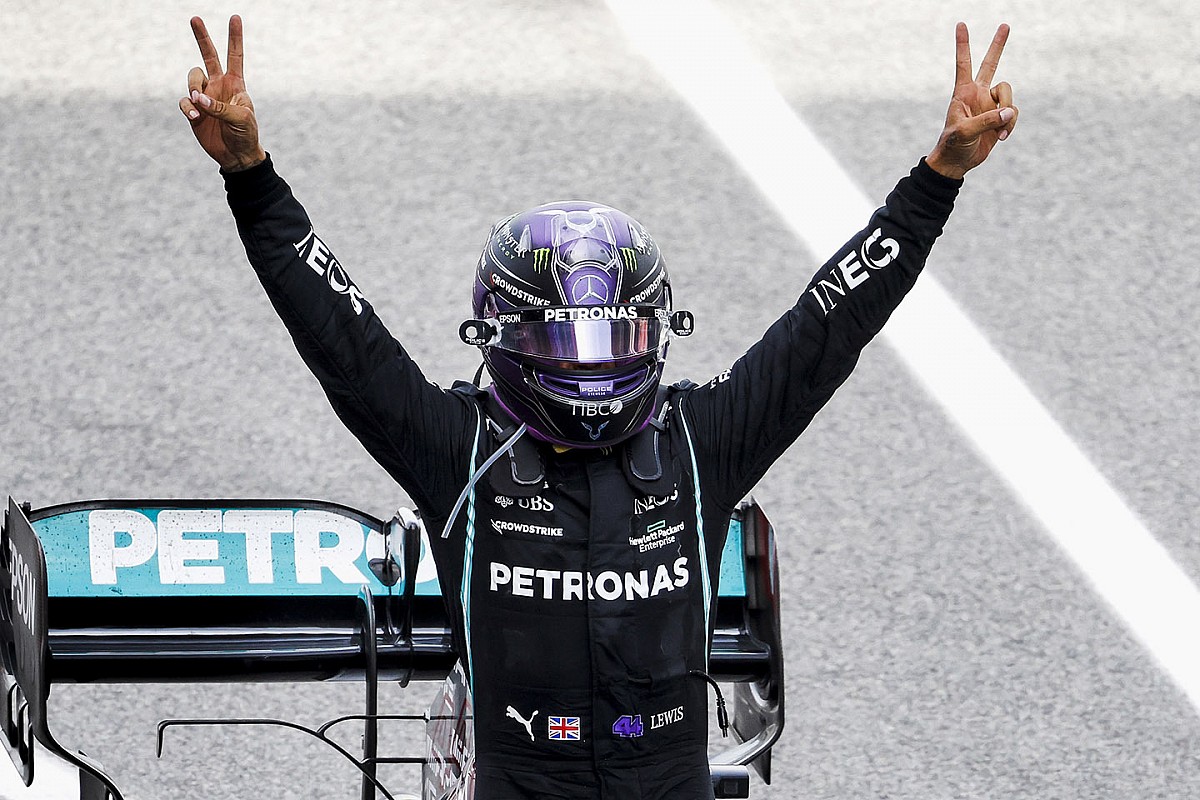
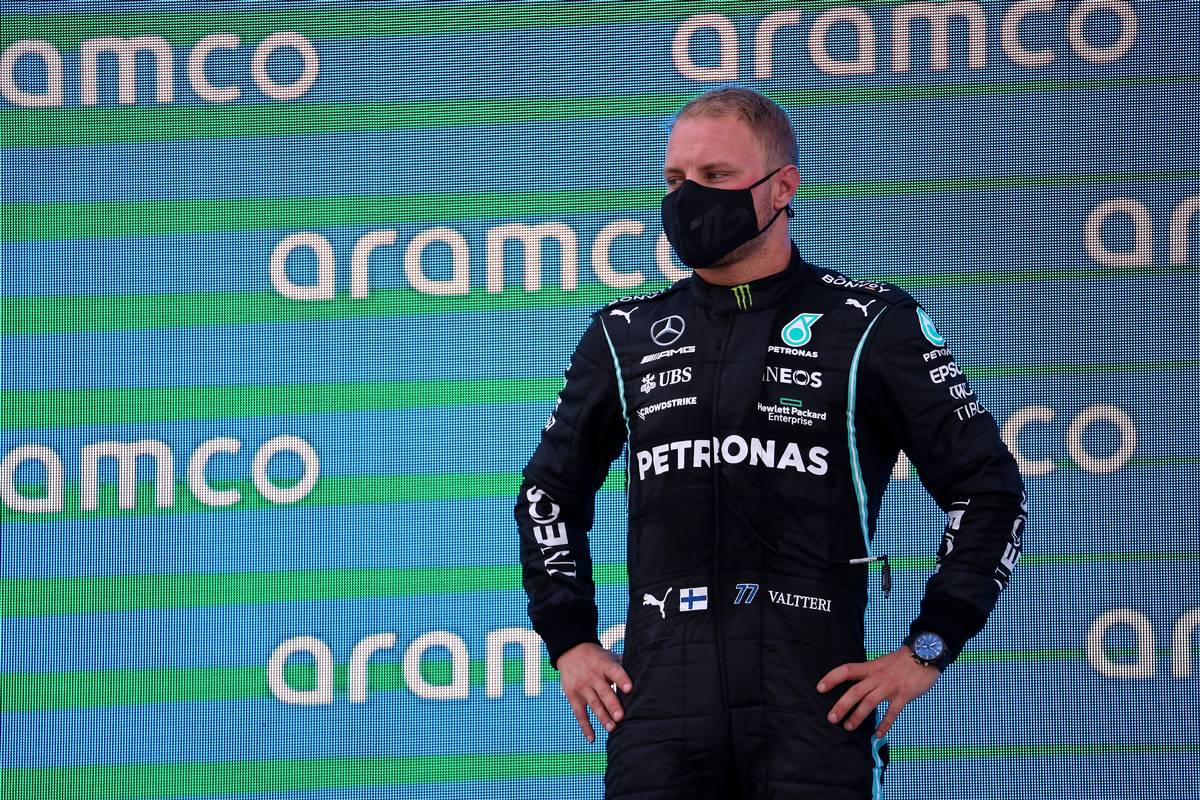
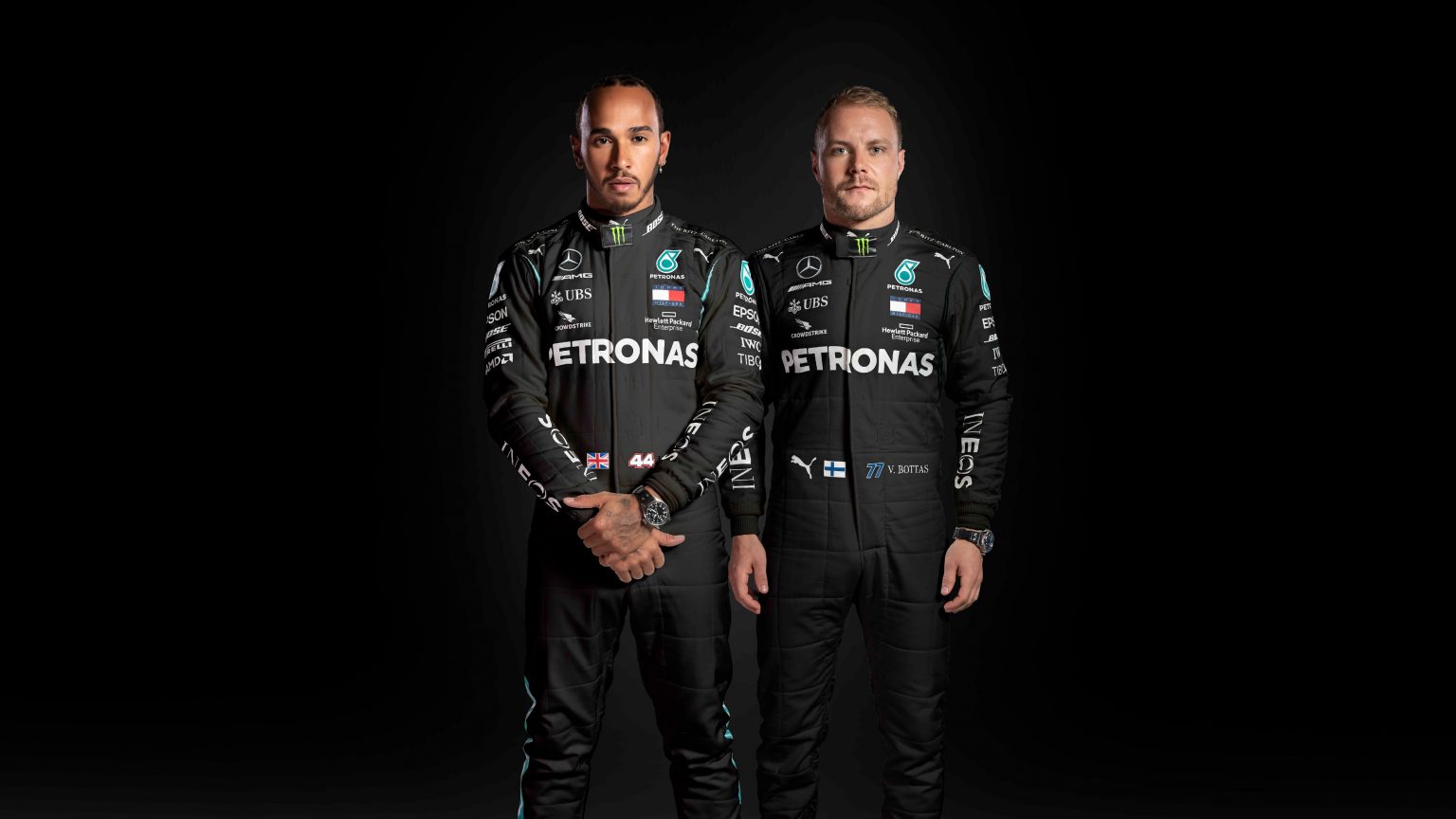
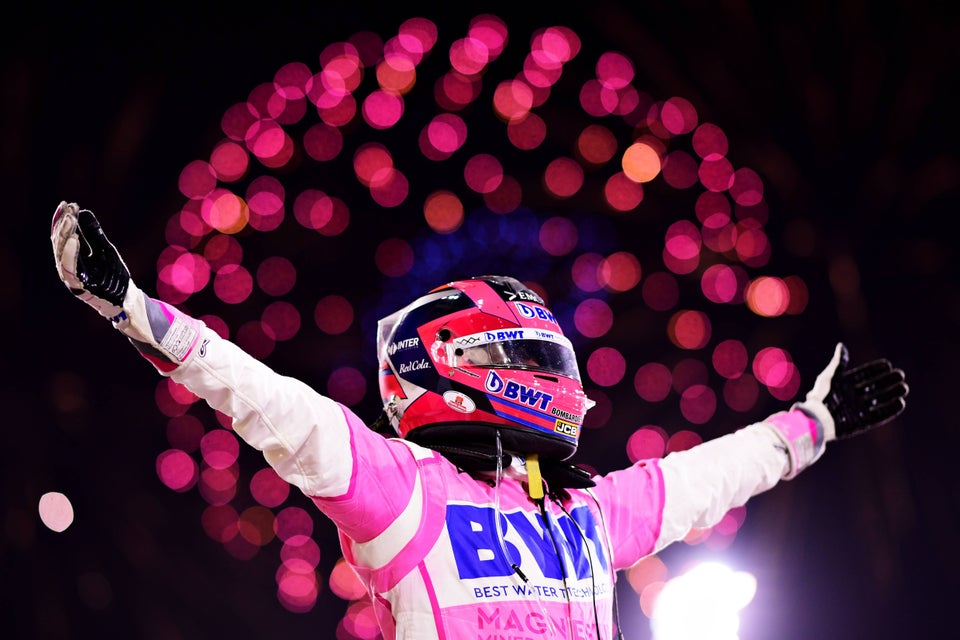
Valtteri Bottas took his first win of the season at a wet Turkish Grand Prix and successfully limited the damage to Mercedes teammate Lewis Hamilton‘s title challenge.
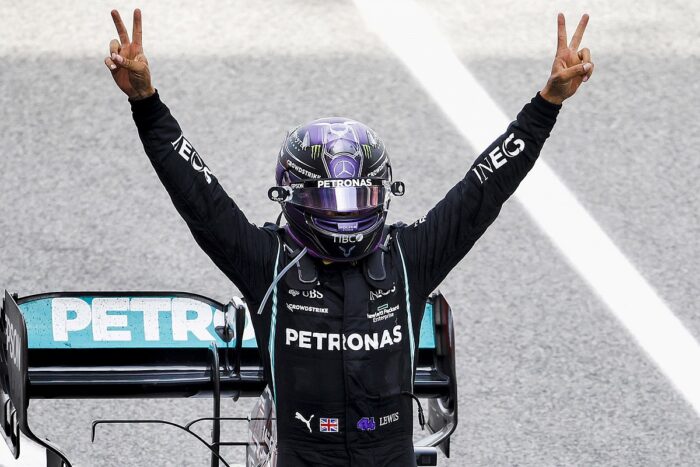
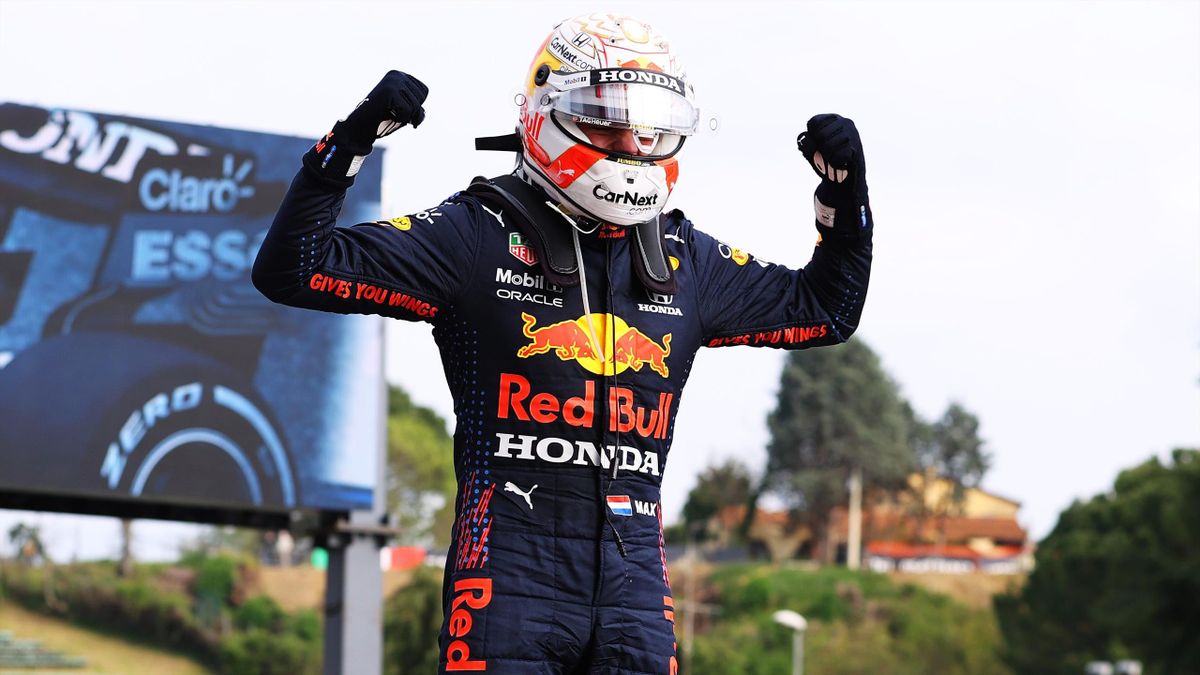
It was a lonely day for the Dutchman – during which he apparently struggled to stay awake – but one which saw him reclaim the championship lead as Hamilton could only recover to fifth after having taken a 10-place grid penalty for a new engine.
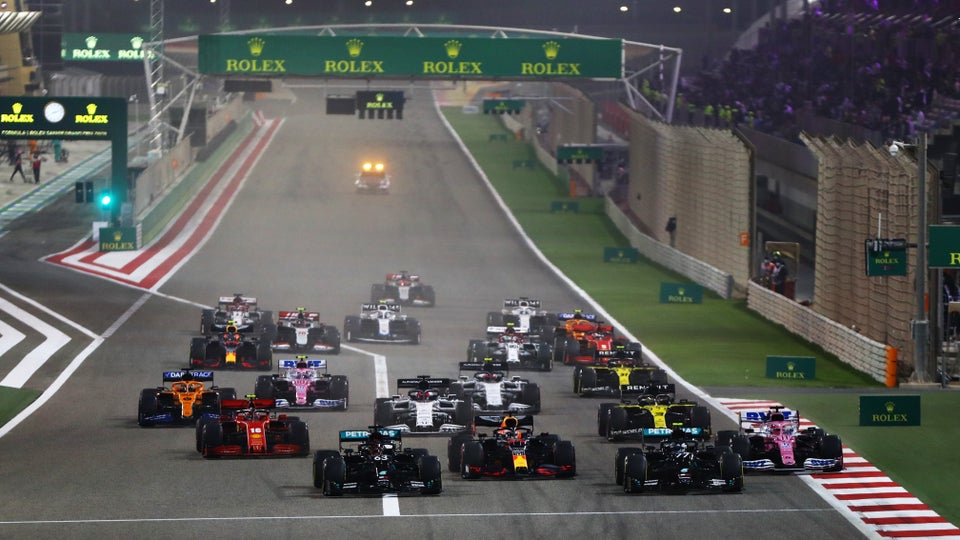
The seven-time world champion survived the potential first corner carnage in the middle of the field – unlike Fernando Alonso, who was spun by the understeering and sandwiched Pierre Gasly – and made fairly quick progress through the bottom half of the top 10.
AlphaTauri driver Yuki Tsunoda – perhaps predictably in the sister Red Bull team – put up the most convincing fight, but Hamilton eventually found his way past with a nice move around the outside of Turn 3 and then picked off Lance Stroll, Lando Norris and Gasly to find himself up to fifth by lap 15.
Image credit: Daimler AG
Sergio Pérez proved a far tougher challenge, though, and impressively kept car number 44 behind after a thrilling wheel-to-wheel battle through the end of lap 34, with Red Bull bringing in their other car for a new set of tyres shortly after.
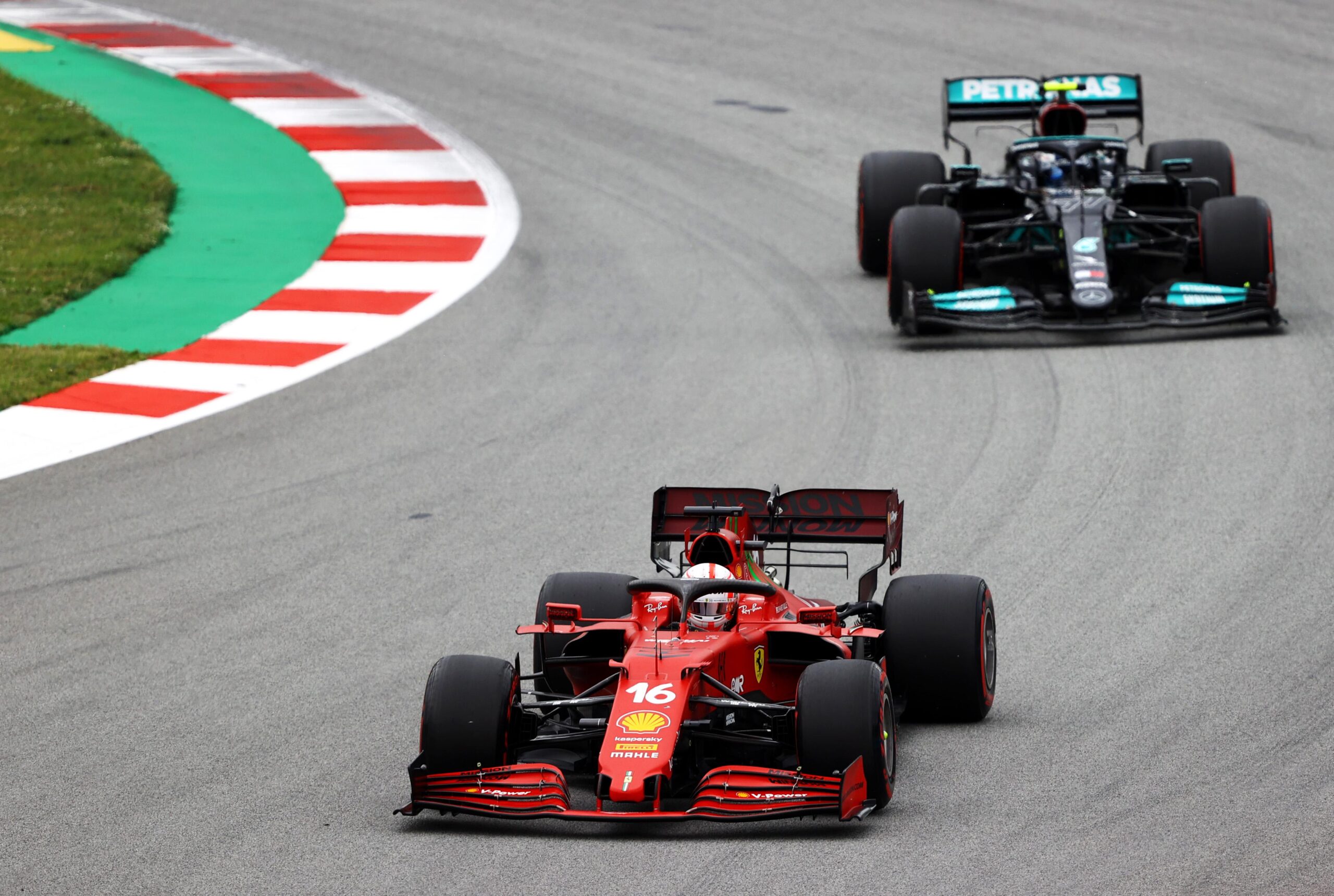
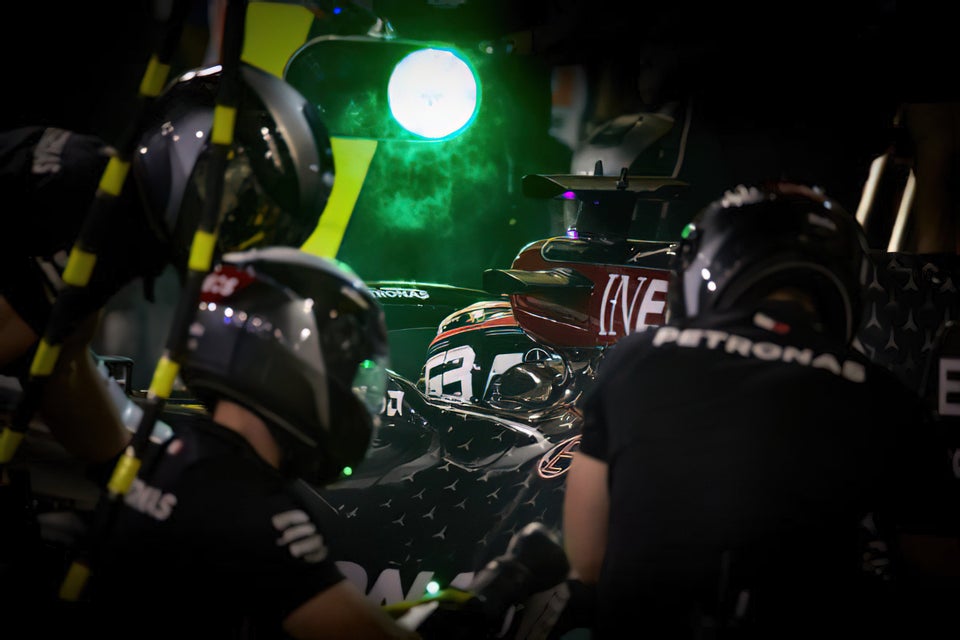
Mercedes covered that off with Bottas and called Hamilton into the pits a few laps later, but their driver was unconvinced and elected to stay out – perhaps thinking of his successful call to do exactly that at last year’s grand prix – as did Ferrari‘s Charles Leclerc. The Monegasque had been running in an impressive third throughout but spotted a chance of an unlikely win.
It would ultimately prove to be the wrong call for both drivers.
Having lost the lead to Bottas with 11 laps to go, Leclerc admitted defeat and pitted, with Hamilton also doing so three laps later as his team informed him that it was his last chance to remain ahead of Gasly.
The two drivers struggled with graining issues on their new tyres. The other leading drivers had already passed through this phase and were now much faster, with Pérez passing Leclerc for the final podium spot and an unhappy Hamilton having to defend from Gasly.
Out front, it was plain sailing for Bottas, though, who secured his 10th F1 victory – and his first for over a year – with a commanding performance and reached the chequered flag with a gap of almost 15 seconds back to Verstappen.
Image credit: Daimler AG
Carlos Sainz earned Driver of the Day for his charge through the field from 19th to eighth and Esteban Ocon, who did run to the end on his original set of intermediate tyres, narrowly held on for the final points position.
Having taken the engine penalty, Hamilton and Mercedes likely would have settled for an eight-point swing in the title fight if it had been offered to them at the start of the weekend, but they will be aware that it could have been reduced further on the day with a better-executed strategy.
They will now head to the United States Grand Prix in a fortnight determined to wrestle back the championship lead with a win and will be hoping that the pace they showed in Turkey – where they had a few tenths on Red Bull throughout the weekend – is permanent rather than track-specific.
Strategy Woes for Hamilton
Hamilton and his team found themselves in a strategic no man’s land with a gamble that did not quite pay off on Sunday.
Ironically, the 36-year-old was perhaps a victim of his past successes. He is famed for his ability to preserve tyres and his decision to overrule the team at the same grand prix 12 months ago was inspired and earned him the victory which secured his seventh world title.
On this occasion, though, the team should have pulled rank far sooner.
Image credit: Honda Racing F1
With Hamilton behind Verstappen even after the Red Bull driver had pitted, the risk they chose to take outweighed the reward. The Briton only stood to gain a position on Pérez, who he was battling with before the pit window and surely would have passed given another 20 or laps.
In clean air, Hamilton was the fastest man on track despite having used more of his tyre life working his way through the field. Of course, hindsight is 20/20 but he likely would have secured a podium and perhaps even could have challenged Verstappen had he pitted earlier.
The tyres that came off the Mercedes on lap 50 – and Ocon’s plummet during the final laps on a tyre with a visible hole in – probably justified their decision not to allow Hamilton to risk going to the end, despite his initial frustrations. They, more so than Alpine, could not risk a disastrous blowout.
The team were hoping for another Hamilton tyre preservation miracle or the emergence of a dry line suitable for a late change to dry tyres, but Sebastian Vettel‘s failed experiment had already showed that was unlikely in the humid conditions and Mercedes were ultimately punished for their indecisiveness.
The Turkish Grand Prix in 60 Seconds
Answering the Burning Questions
With rain forecast over the weekend, will we get a repeat of last year’s thrilling race? The rain came but the thrills and spills were lacking, at least compared to last year and recent races.
How will Lewis Hamilton recover from, at best, 11th on the grid? It started well but the wheels came off – or rather did not – towards the end.
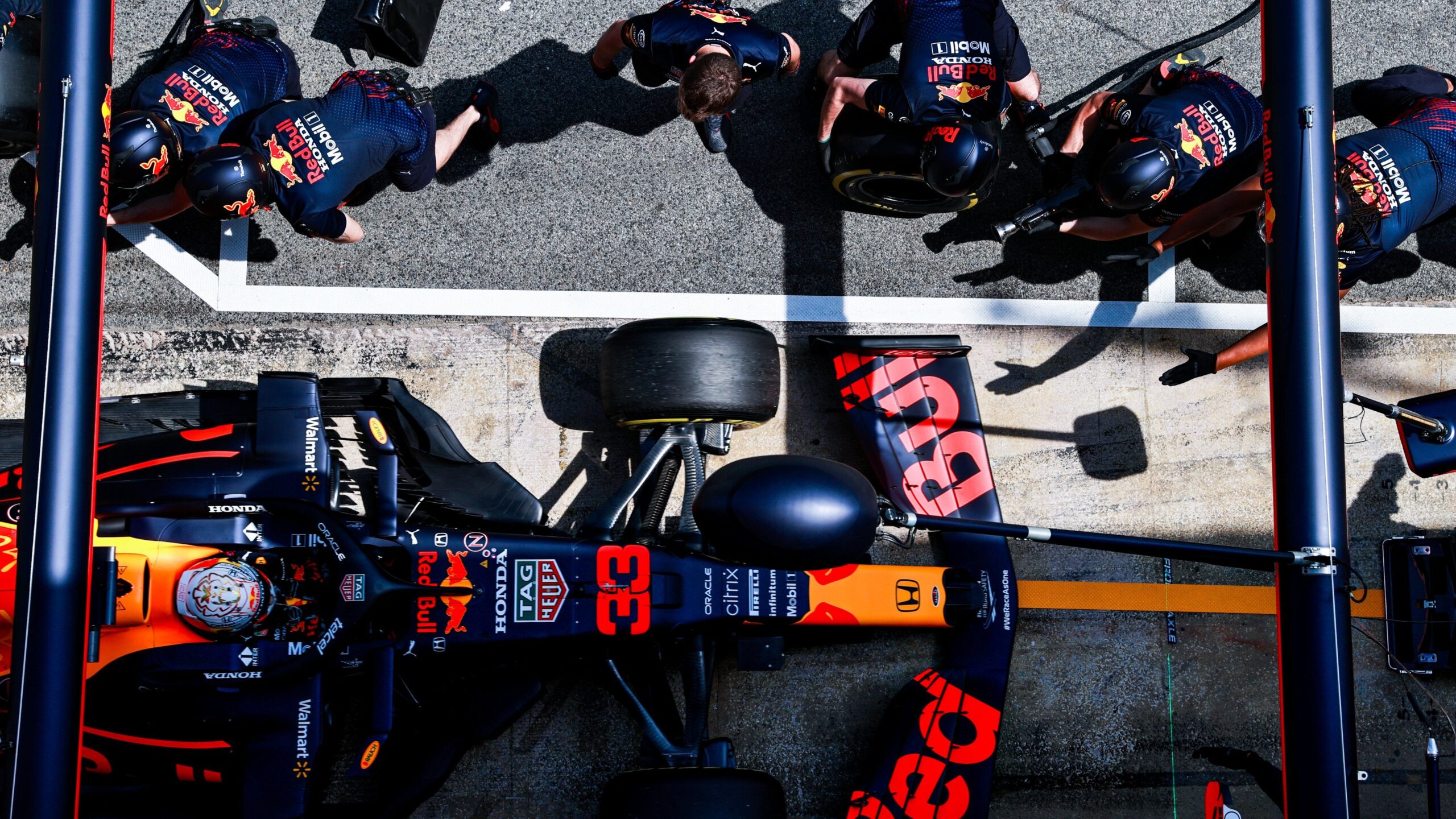
Will Red Bull be struck by the special livery curse? No, it was a solid double podium for the one-off, Honda-themed livery.
What had been threatening to become a trademark soporific Spanish Grand Prix was reignited by a Mercedes strategy gamble, which paid off in the form of a fifth consecutive victory for Lewis Hamilton at the Circuit de Barcelona-Catalunya.
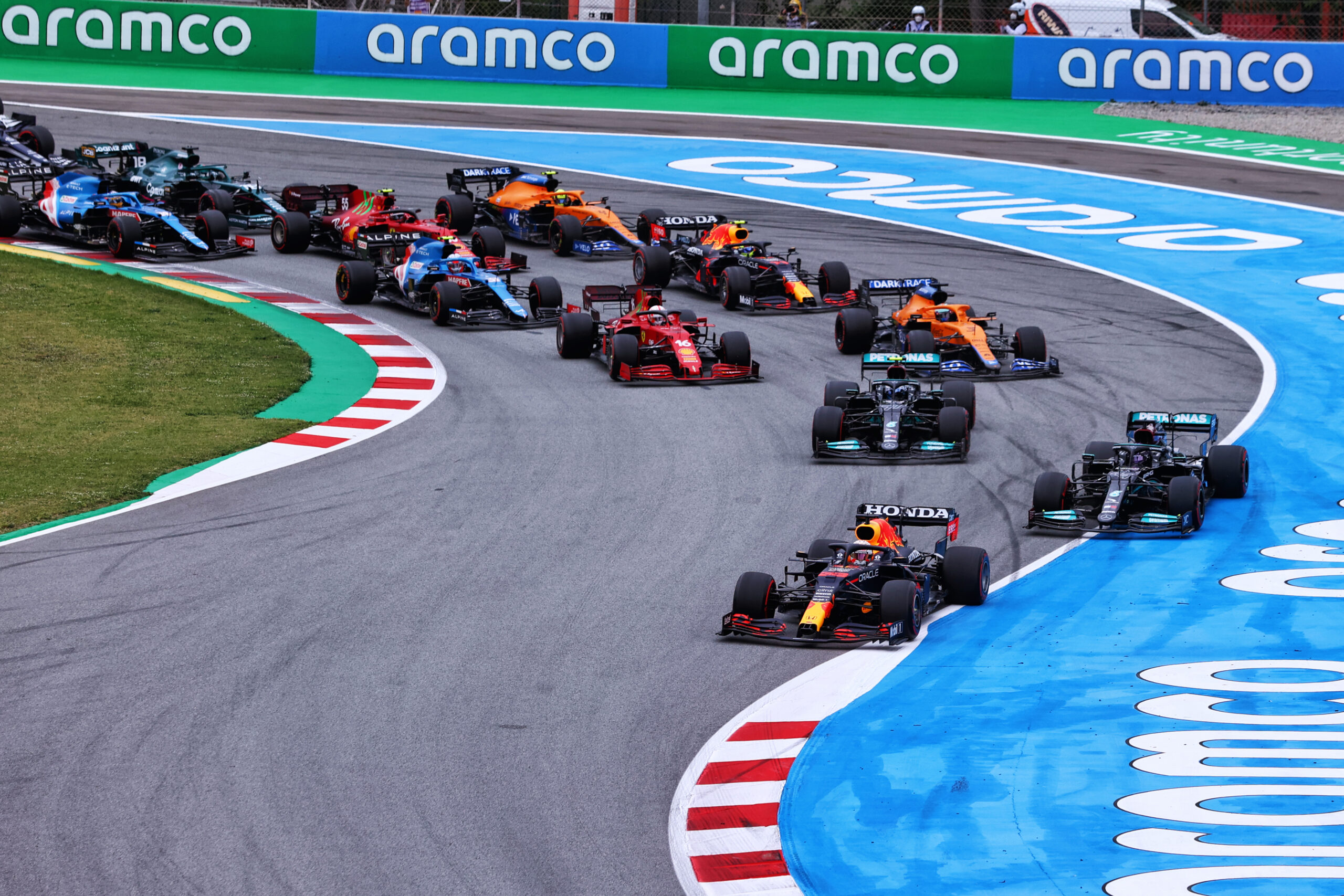
Saturday saw Hamilton claim his 100th pole position in Formula 1 – a simply mind-boggling achievement – and many assumed he would move one step closer to a century of wins on Sunday. But that assumption was immediately brought into question thanks to a bullish move into the first corner by Max Verstappen.
The two title rivals got away fairly evenly – the Dutchman aided by an unusual level of rubber on the normally dirty side of the track – and, with the Red Bull in his blind spot, Hamilton felt unable to move over and claim the inside line. Verstappen is not a driver that requires more than one invitation. He braked very late and, not for the first time this season, got his elbows out at the first corner, leaving Hamilton nowhere to go on the outside.
Verstappen and Hamilton streaked away at the front, the Mercedes driver hounding his rival but never getting quite close enough to threaten a pass. With Sergio Pérez too close behind for Mercedes to attempt an undercut, it was Verstappen who pitted first.
It was unscheduled – Verstappen sensing Hamilton was about to pass him on the straight – and resulted in an uncharacteristically slow Red Bull pit stop. That offered Mercedes an opportunity, but they declined – they had a different plan in mind…
Hamilton extended his stint a further four laps, rejoining a little over five seconds behind Verstappen. But, with the Mercedes clearly well-suited to the medium tyre, Hamilton was once more closely inspecting his rival’s rear wing within a few laps.
As ever, the Circuit de Barcelona-Catalunya provided little in the way of passing opportunities, though – especially since the recent reprofiling of Turn 10 – and it appeared likely that we would watch Hamilton follow on the brink of the DRS window for the next 45 minutes.
But this is when Mercedes produced their surprise.
Hamilton darted into the pits on lap 42 to fit another set of medium tyres. This had been in Mercedes’ thoughts throughout the weekend and they were the only team to have kept two fresh sets of the medium compound for the race. So, it was to be a repeat of the 2019 Hungarian Grand Prix, as Hamilton set about closing down a gap of more than 20 seconds in just over 20 laps.
The Red Bull computers predicted that Hamilton would catch their driver on the last lap, but that would prove to be an optimistic forecast as Hamilton took nearly two seconds per lap out of the gap. Despite not getting much help from his teammate – more on that later – the Briton was on the back of Verstappen by lap 59.
The Red Bull weaved along the start-finish straight, desperately trying to break the tow he was providing, but the pass was an inevitability, Verstappen later describing himself as a “sitting duck”. Hamilton used the extra grip from his much younger tyres to brake later and comfortably claimed the lead as they entered Turn 1.
Image credit: XPB/PA
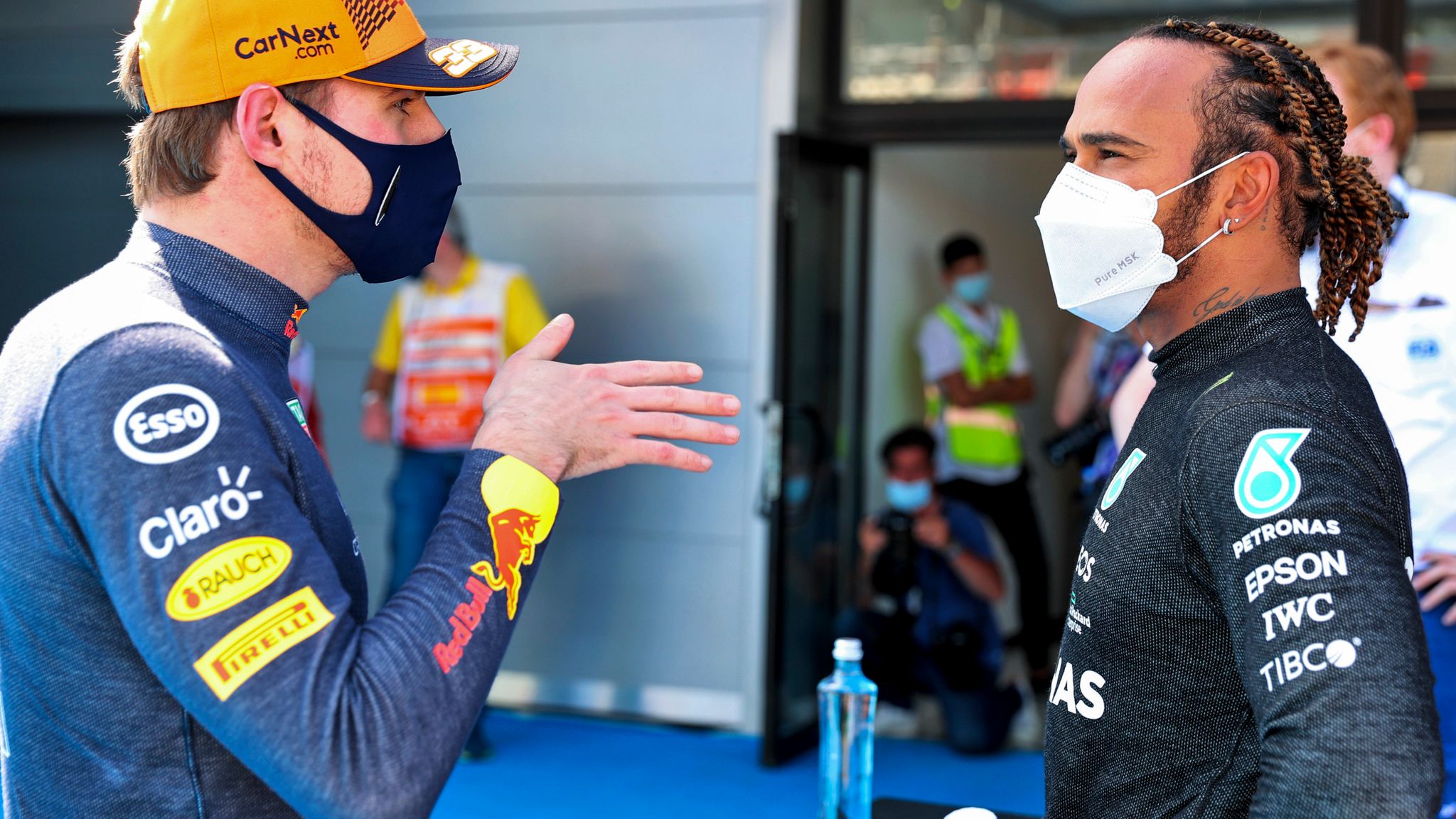
Behind them, Bottas had pitted in an attempt to claim the fastest lap, but in doing so allowed Verstappen to do the same. There was to be no repeat of his mistake in Portugal this time and the Dutchman took the extra point with ease. It was Hamilton who took the chequered flag, however, and extended his lead in the championship to 14 points.
Is the Mercedes Now the Fastest Car?
It has only been six weeks since Verstappen took pole by four tenths in Bahrain and the F1 status quo appeared to have been turned on its head. And yet now, without us really noticing, Hamilton has equalled his best ever start to a season. Three wins and one second place were also his results during the first four races of 2015 – a season that would prove to be one of his most dominant – so are we kidding ourselves that there is such an exciting title battle?
In a word, no.
But for some small yet costly mistakes – and some luck on Hamilton’s part – Verstappen would be the one leading the championship. Bahrain was his race to lose, but he did. Hamilton was very fortunate to recover to second in Imola, and the complexion of the race in Portugal would likely have been different had Verstappen not lost pole position due to a track limits violation. These are the minute differences that can swing a championship one direction or another, and Mercedes are very experienced in ensuring that they swing their way.
Image credit: Honda Racing
However, in terms of pure speed, the Red Bull looks a genuine match for them this year. Spain has always been a Mercedes circuit – that’s five wins in a row for Hamilton – but Red Bull were right there with them, three hundredths of a second behind in qualifying and leading for 90% of the race.
Monaco in two weeks time will be a very different challenge. The Mercedes car has looked strong in slow corners – of which Monaco, obviously, has many – but it also has a very long wheelbase and Red Bull have performed well through the streets of the Principality in recent years. The circuit provides such a unique test of a Formula 1 car that there’s no way of knowing who will do well until the cars are being driven in anger, millimetres from those infamous walls.
Hamilton may have the edge right now, but this title battle remains very much in the balance.
The Best of the Rest
Leclerc had another excellent weekend. He qualified in fourth for the third time in four attempts this year and the predictable combination of Ham-Ver-Bot is almost now extendable to Ham-Ver-Bot-Lec.
Image credit: Getty Images
After his excellent early pass, he kept the far superior Mercedes of Bottas behind for the first stint and eventually finished a comfortable 10 seconds ahead of Pérez to move to just one point behind Lando Norris in the standings.
Norris himself was a little anonymous this weekend on his way to eighth and, for the first time in 2021, was legitimately beaten by teammate Daniel Ricciardo. The Honey Badger’s trademark smile was very much back on his face as he finished a solid sixth, holding off Carlos Sainz in the final laps.
Alpine initially appeared to have picked up where they left off in Portugal with Esteban Ocon qualifying an excellent fifth but, on Sunday, their strategy was lacking and their pace disappeared. Ocon clung onto a points finish in ninth, but Fernando Alonso tumbled back through the field in the dying laps and eventually finished behind a Williams in 17th. There is still work to do for the French team.
Pierre Gasly recovered from a clumsy five-second penalty, for parking his AlphaTauri beyond his allocated spot on the grid, to earn the final point for 10th. But it was the rookie on the other side of the garage who made the headlines on Saturday. One of his infamous, expletive-ridden radio messages was followed up by an interview where he questioned whether he had the same car as his teammate. Undoubtedly, Team Principal Franz Tost will have had some very stern words with the youngster, who it appears has some growing up to do.
The Bottas ‘Block’
Image credit: XPB Images
As previously mentioned, Hamilton’s pursuit of Verstappen late in the race was made a little harder by his teammate. As the World Champion approached, Bottas was told by his engineer, “Don’t hold Lewis up”. But he did just that. Hamilton followed closely for the best part of a lap – losing at least a second to Verstappen – before somewhat having to force a pass into Turn 10.
“I definitely could have let him by earlier,” Bottas said after the race. “But I was doing my own race. I’m not here to let people by, I’m here to race.” He said at the start of this season that he would be more selfish and single-minded; it would appear he is following up on that promise.
Does his mindset reveal anything about Mercedes’ plans for next year? Is this a man who knows his time is up and, thus, is now going to do everything in his power to take the title in what would likely be his last ever chance? That is just conjecture for the moment. But, whether he likes it or not, Bottas has held onto his seat at Mercedes by being the ideal driver for their second seat. One that is fast enough to keep Hamilton on his toes and help with strategic battles during the race, but one that is also compliant when required.
If he ceases to be that driver, his chances of remaining with the team beyond 2021 look slim at best.
The Spanish Grand Prix in 60 Seconds
Answering the Burning Questions
Can Verstappen strike back in the title battle? Not quite, despite a valiant effort.
How will the teams fare without having had their usual pre-season testing at Barcelona? There was no noticeable difference and just the one retirement.
Can Alpine continue their good form from Portugal? On Saturday, yes. On Sunday, not so much.
Will the Aston Martin updates bring them back towards the front of the midfield? Nope, they still have quite a bit of work to do.
When the lights did go out, it was Verstappen who made a flying start from third on the grid. He had the racing line into the first corner and was able to run his main rival, Lewis Hamilton, out of road and claim the lead. Hamilton bounced over the raised kerbs and damaged his front wing but held onto second. Further round the first lap, Nicholas Latifi spun his Williams and then, upon rejoining, put himself into the wall after leaving Nikita Mazepin nowhere to go on the run down towards the Variante Alta.
That produced a safety car and (you’d expect) a moment of calm… But no, Mick Schumacher overcooked it whilst warming his tyres and pitched himself into the wall at the pit exit. The German rookie was able to recover but would have to drive round minus a front wing for a couple of laps as the pit lane was closed, ironically, to clear the debris from his crash. Sergio Pérez then ran wide into the gravel and earned himself a penalty by passing two cars to reclaim his position under safety car conditions.
Image credit: Formula 1
Verstappen controlled the restart well and the leading pair dropped the rest of the pack. Leclerc – running in an impressive third – was already 15 seconds behind when Verstappen pitted on lap 28. Hamilton responded a lap later but a slow stop ruined any chances of him jumping the Dutchman and he rejoined a few seconds behind.
The World Champion appeared to be more comfortable on the dry tyres, though, and was closing the gap as the two drivers worked their way through the backmarkers. However, on lap 31, Mercedes‘ race imploded.
George Russell slowed to allow his fellow countryman past as they approached the Tosa hairpin, but stayed on the racing line. Force to overtake on the wet part of the track, Hamilton slithered off into the gravel and ultimately the wall, as the appalling turning circle of a modern Formula 1 car was laid bare. After some trouble, he engaged reverse gear and excruciatingly back-pedalled over the gravel and onto the track, but with a damaged front wing. And things were about to go from bad to worse in the Mercedes camp.
As Hamilton limped back to the pits, the other Mercedes driver and the Mercedes protégé came together in a massive way. After a poor qualifying had seen Bottas start from eighth, his struggles had continued come the race and he unbelievably found himself defending against a Williams. At full speed on the start-finish straight, Russell pulled alongside the Mercedes but put a wheel on the grass and immediately speared across into the Finn, both drivers going straight on and smashing into the barriers. With debris all over the track, the race was red-flagged.
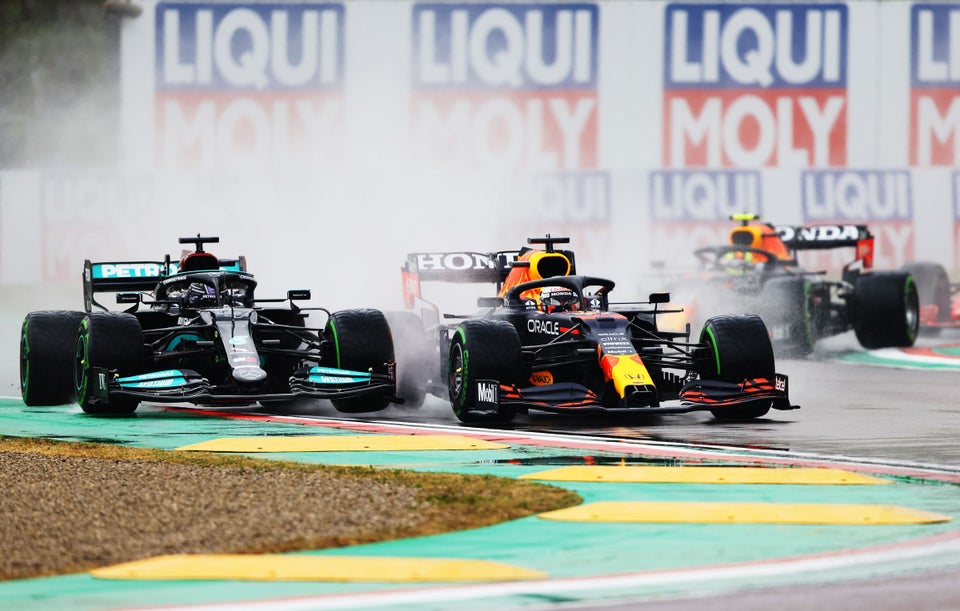
After a brief stoppage, the drivers rejoined the track for a rolling restart. Ironically, the Mercedes disaster had actually aided Hamilton, who found himself in ninth, no longer a lap down, and with a repaired car. Verstappen then got lucky himself as he lost the car whilst backing the pack up for the restart, but was just about able to save the situation and Leclerc politely remained behind.
When he did successfully get the race back underway, the McLaren gamble to fit soft tyres saw Lando Norris pass Leclerc for second and briefly put pressure on the leader. Yuki Tsunoda passed Hamilton into the first corner but immediately spun and a lap later Pérez also found himself pointing the wrong direction in the gravel. A tale of hero to zero for the Mexican who had been the first teammate to outqualify Verstappen since Daniel Ricciardo left the team.
Two drivers may have removed themselves as obstacles, but Hamilton still had a lot of work to do if he was to recover to the podium. But recover he did. Slowly but surely, he got to within a second of each of the cars in front and executed a move into Tamburello. Norris put up an excellent fight on what were now very worn soft tyres, but eventually ceded his position with three laps remaining. He would hold off the chasing Ferraris for third, though, and claimed a very well-earned podium – the second of his career.
Ricciardo took sixth but – after earlier having to move aside for his teammate – admitted he still has a lot of work to do as he tries to acclimatise to his new, papaya machine. Late penalties for Lance Stroll and Kimi Räikkönen saw Pierre Gasly promoted to seventh and Alonso claim his first point since returning to the sport, despite never looking especially comfortable in the car.
Image credit: Getty Images
Out front, it had all been plain sailing for Verstappen since his minor blunder at the restart and he had built up a comfortable 20-second lead. Hamilton snatched the fastest lap late on, which keeps him one point ahead in the drivers’ standings, but the title fight is very much on.
A Damaging Day for Bottas and Russell
Now that the field has closed up so dramatically on the Silver Arrows, when Bottas has one of his off-days in qualifying, it is far more brutally exposed. He was a little under half a second shy of his teammate’s pole time and whilst, in the past, that would often still have seen him on the front row, in Imola it left him in an embarrassing eighth place.
And yet, Sunday was arguably worse. Surprisingly, considering his heritage and love of rallying, driving in the wet does not appear to be a strong suit for the Finn – just look at his performance in Turkey last year… He fell back a further two places at the start and then spent 28 laps stuck behind the Aston Martin of Stroll. That is what put him into a situation where he could be crashed into by an arguably overexcited Russell.
If you are expecting that to reflect well on Russell’s chances of replacing him next year, however, you’d be wrong. Whilst qualifying saw another performance worthy of his ‘Mr. Saturday’ moniker and the incident with Bottas itself could have been excusable, it was his reaction during the aftermath that left a bitter taste in the mouth.
Image credit: Getty Images
First, Russell stormed up to the smoking wreckage that contained Bottas, lambasted him for “trying to kill them both” and gave him a smack on the helmet for good measure. As Bottas emerged visibly winded from his car and was then being examined at the medical centre, Russell was already Tweeting his criticisms and claiming that Bottas would have defended differently if it were another driver.
Whilst his initial, heat-of-the-moment reaction was understandable, he really should have thoroughly examined the footage before going to see the media as it seems pretty clear to most that it was somewhere between a racing incident and Russell’s fault. Mercedes Team Principal Toto Wolff described it as 60:40 in terms of blame and was left fairly unimpressed.
This comes not long after the young Briton crashed behind the safety car whilst also chasing points at Imola last year. There is no denying that he has talent – and he obviously cannot have any blame attributed to him for what happened in Bahrain last year – but, if he is not careful, he could gain himself a reputation for choking when opportunities come his way. And throwing his toys out of the pram in the process.
The Emilia Romagna Grand Prix in 60 Seconds
Answering the Burning Questions
With a very different location to the last race, will Red Bull still have the fastest car? It was hard to say. It looks like Mercedes have certainly at least closed the gap.
Can Max Verstappen make amends for his near miss last time out? Very much so!
Will any of the teams have brought significant upgrades for the first European race after a three-week gap? Ferrari’s new floor appears to have given them a performance boost.
How will the midfield shape up? Can Alpine or Aston Martin improve on their disappointing performances in the desert? A little but the midfield order appeared pretty similar.
Will we see some challenging conditions with cold temperatures and a fair chance of rain? We will!
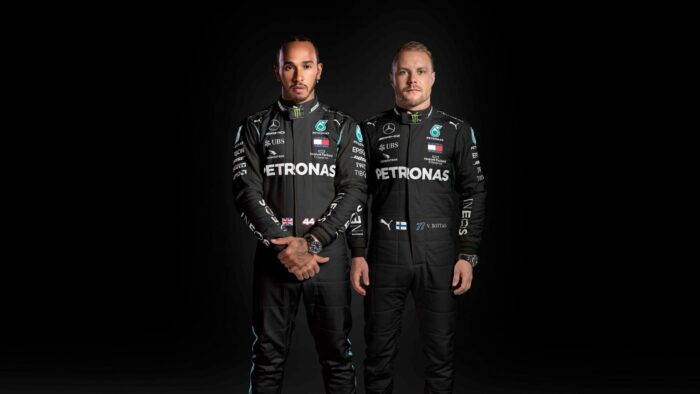
If Valtteri Bottas is to become a world champion, he faces the unenviable task of beating Lewis Hamilton, in the same machinery, over the course of a season. That is something that the seven-time world champion’s varying teammates have achieved just twice, from 14 attempts; Jenson Button in 2011 and Nico Rosberg in 2016.
Fernando Alonso tied on points with a rookie Hamilton in 2007 during their fractious single season together at McLaren but technically lost out, courtesy of having achieved fewer wins.
So, how did Button and Rosberg achieve it?
2011
Image credit: LAT Photographic
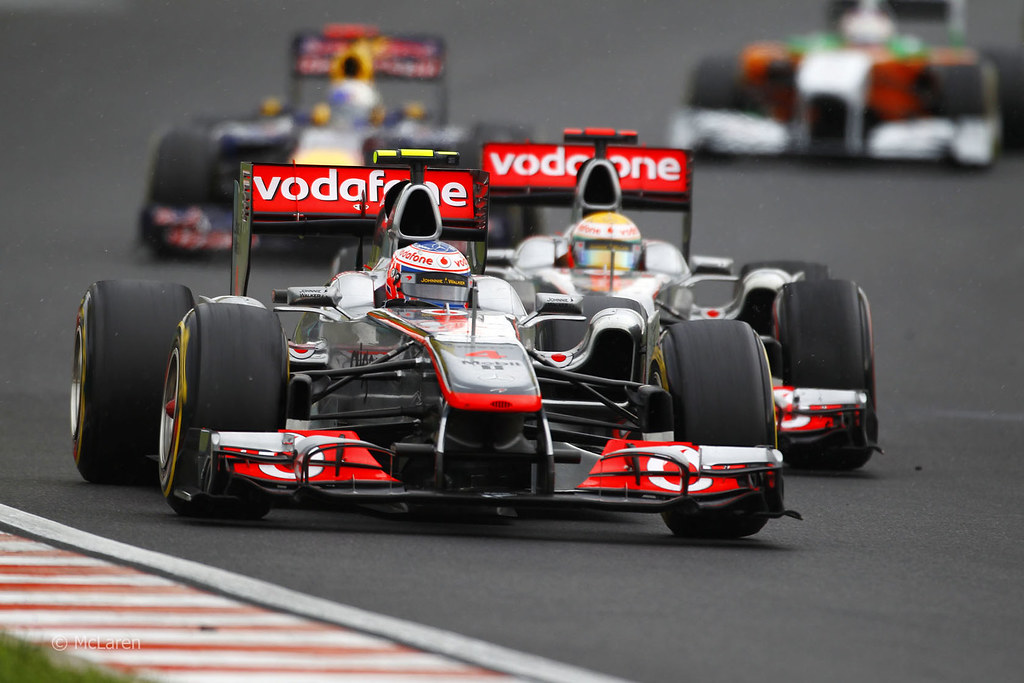
2011 was something of an annus horribilis for Hamilton, during which he allowed multiple issues in his personal life to affect his performance on the track. There were tensions with then-girlfriend Nicole Scherzinger and, even more so, with his father.
Anthony Hamilton had managed his son’s career since the age of eight but, during 2010, the driver decided that he would rather have an independent manager who would allow him more freedom. It would take father and son several years to fully repair their relationship.
These stresses and strains manifested themselves mostly in the form of erratic driving and Hamilton suffered an error-filled season. He and Felipe Massa were practically inseparable on track; not in the sense that they were closely matched as much as that they managed to have no fewer than five collisions during the season.
That’s not to discredit Button, who had an excellent season and was clearly ‘best of the rest’ behind a runaway Sebastian Vettel. It was arguably his best year in the sport, even including his title win in 2009, and featured the truly epic, four-hour Canadian Grand Prix where Button came from last place to steal the victory from Vettel on the final lap.
It was a clear dip in form for Hamilton, though, compared to 2010 and 2012 when he was held back more by McLaren’s lack of reliability and operational issues.
Hamilton has clearly matured greatly in the decade since and is now generally able to keep any personal troubles away from the track. Bottas will need to do more than rely on some off days.
2016
Image credit: Zak Mauger/LAT/Rex/Shutterstock
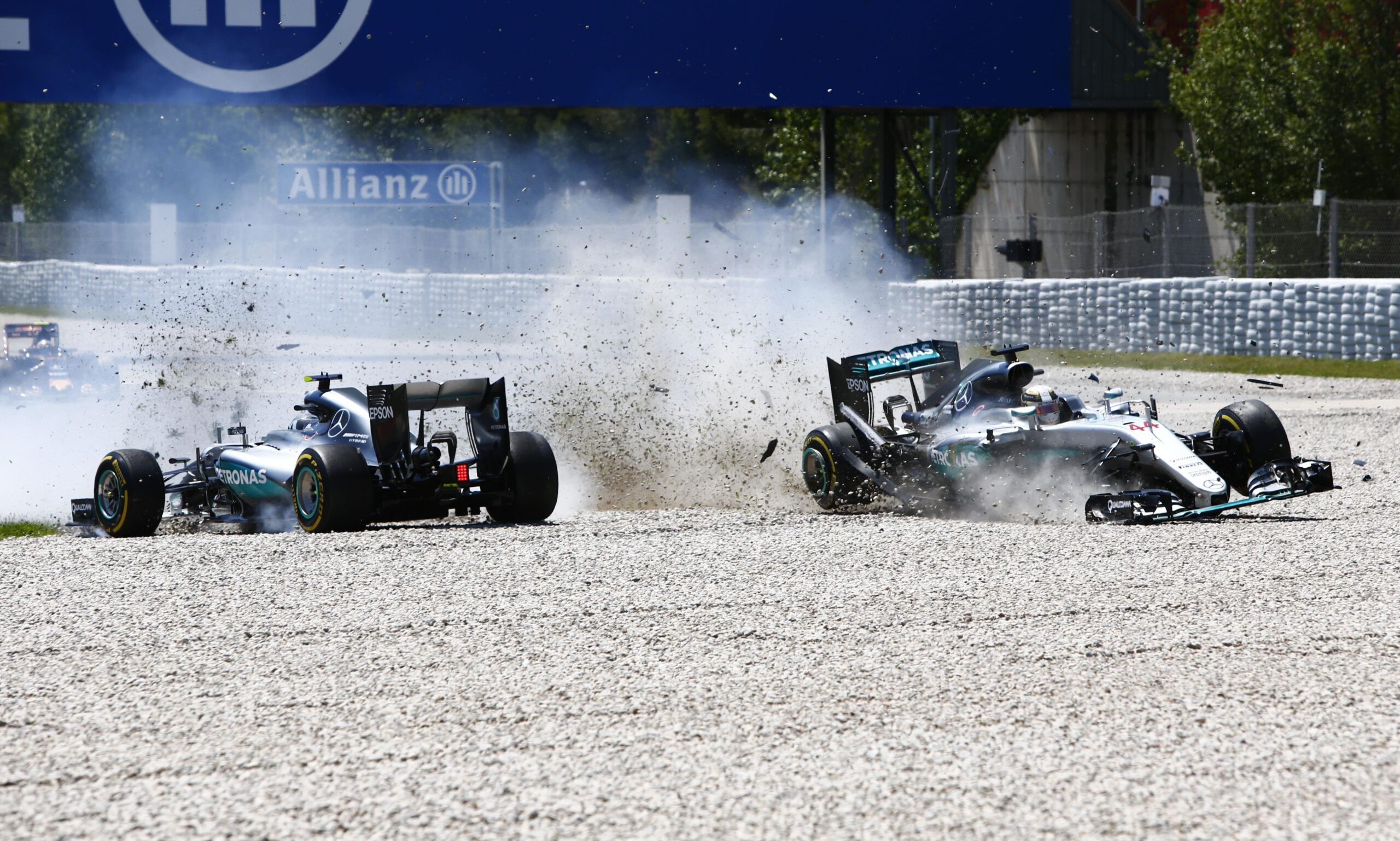
Hamilton versus Rosberg was the ultimate friends-turned-foes story of the early hybrid era. Rosberg spent years trying to gain a psychological advantage over his rival but, having fallen short in 2014 and 2015, realised he needed to focus more on himself.
The start of the season went very much Rosberg’s way, with a string of issues blighting Hamilton – he was hit by Bottas at the start in Bahrain, before consecutive power unit failures left him far down the grid at the next two grands prix. He came back strongly, however, and – despite starting from last in Belgium after serving a penalty for having used too many power units – was leading at the summer break.
At a time when driver weight was still a critical factor, Rosberg decided to stop cycling in an attempt to lose weight from his legs during the break and succeeded in losing one kilogram. That translates to around four hundredths of a second per lap and Rosberg took pole from Hamilton in Japan by just two hundredths. It is those kind of marginal gains that can make all the difference in a season of fine margins.
Ultimately, another engine failure from the lead of the Malaysian Grand Prix would prove to be too much for the Briton to make up in the final races of the year – despite winning all of them – and, whilst Hamilton’s shocking reliability was undeniably a crucial factor in 2016, Rosberg had to be there to take every opportunity presented to him and he unfailingly was.
2021?
Image credit: Mercedes
So, what have we learnt?
That Bottas will likely need to extract every ounce of his ability, go to extreme lengths to enhance his performance wherever possible, make almost no mistakes, and could probably do with a decent slice of luck. But hey, stranger things have happened.
He has started the last two seasons strongly with a controlled win at the opening grand prix, before falling back as Hamilton builds up momentum and he – understandably – struggles to match the most successful driver of all time.
He will have to find a way to keep up the challenge in 2021, however, as it looks like it could well be his final season with Mercedes. George Russell proved he could, at the very least, match the Finn without any preparation at last year’s Sakhir Grand Prix and, once again, Bottas has only been given a one-year contract.
He seems to be in a great place in his life right now; whilst it was unknown to most, he was going through a divorce in 2019, but is now in a new relationship and seems content and motivated.
Will we see Bottas 3.0 or 4.0 or whatever software update he’s up to now this year? Could we get yet another Finnish world champion? And maybe one that would even break into a smile?!
He’ll need his coffee and his porridge, that’s for sure.
The man who finished the opening lap in last place somehow ended up taking a maiden victory. And that sums up a crazy night under the lights at the Sakhir Grand Prix.
In the absence of Lewis Hamilton – who is isolating after testing positive for Covid-19 – Mercedes protégé George Russell was given a shot in the champion’s car, narrowly managing to squeeze his 6’2″ frame and size 11 feet into the cockpit. Over the course of three days, he made quite an impression.
Whilst there were mitigating circumstances for Valtteri Bottas on Friday, such as a damaged floor and deleted lap times, the young Briton immediately found himself at the top of the charts during the first two practice sessions. Bottas recovered to claim pole position on Saturday but only by the smallest of margins. And when the lights went out, he was on the back foot again.
Despite his fears of unfamiliarity with the Mercedes clutch and start systems, Russell got away the better of the Mercedes pair and passed his vastly more experienced teammate into Turn 1.
Image credit: Getty Images
As was the case seven days ago, the run through Turns 3 and 4 produced much incident. Kimi Räikkönen spun through a full 360° towards the back but carried on. Charles Leclerc – after a stunning qualifying lap had seen him start fourth – made an ambitious dive up the inside of Sergio Pérez but hit the Racing Point and broke his own front-left wishbone in the process. Max Verstappen attempted to avoid the spinning Pérez but, in doing so, found himself in the gravel and on an unavoidable trip to the wall.
This brought out the safety car, allowing Pérez to pit and rejoin at the back of the pack. Russell aced the restart and opened out a two-second lead, which he would maintain comfortably for the entirety of the first stint.
Once Russell had pitted on lap 45, Bottas extended for a further four laps and came out nine seconds behind his new teammate but, crucially, with fresher tyres. The Finn started to close the gap. It had come down to four seconds by lap 61 and we appeared to be in for a titanic inter-team scrap for the win, with Bottas looking desperate on a weekend where his credibility had taken quite a hit. But then came the incident that changed the race.
Debutant Jack Aitken clipped the barriers and lost his front wing at the exit of the final corner. The abandoned chunk of Williams was sitting on the racing line and, with no clear gap in the traffic for a marshal to retrieve it, a safety car was called. Mercedes chose to do a ‘safety stop’ and bring both cars in, wary of being followed by cars on fresher, softer tyres in the final laps.
But nothing about these pit stops was safe. A last-second panic led to Bottas’s tyres being fitted to Russell’s car. In scenes reminiscent of the shambolic Hamilton pit stop in Germany last year, mechanics ran around as they realised the correct tyres were missing and, after nearly 30 seconds stationary, eventually fitted the old tyres Bottas had arrived on back onto his car. Russell was then forced to come in again for the correct tyres and found himself in fifth, immediately behind Bottas.
Mercedes are so often infallible, but when they mess up…it’s usually calamitous.
Bottas struggled with his old tyres for the rest of the grand prix and Russell soon pulled off an excellent move around the outside of Turn 6. The chance of a stunning victory was still on. It was not long before Lance Stroll and Esteban Ocon – in third and second respectively – were dispatched and Russell then set about catching Pérez who, astonishingly, was in the lead.
The Mexican had expertly driven back through the field whilst looking after the tyres in his signature style and was now coaxing a set of hards to the chequered flag. So, which fairy tale was it to be: the youngster winning during his stand-in appearance for Mercedes or the veteran of 190 grands prix finally getting his first win after many an opportunistic podium?
The answer came on lap 78 as Pete Bonnington radioed Russell to say that he had a slow puncture and would have to pit once again. Heartbreak for the 22-year-old as he trundled down the pit lane for a fourth time and rejoined in 15th. He fought bravely and would at least recover to ninth to gain his first ever points, but that will be scant consolation when he could taste a victory in the most extraordinary of circumstances just a few minutes earlier.
Whilst one fairy tale had turned into a nightmare, the other was unfolding perfectly. Pérez extended his lead over the remaining laps and came home to become the first Mexican winner in F1 for half a century. He also now holds the record for the most races contested before a maiden grand prix victory.
Image credit: Motorsport Images
The paddock – whilst clearly gutted for Russell – was overjoyed for ‘Checo’, who struggled to hold back tears as he stood on the top step of the podium and heard his country’s national anthem ring out. It was also joy for Ocon, taking a maiden podium, and Racing Point who – with Stroll also holding onto third – have reclaimed the high ground in the battle with McLaren and Renault for third in the constructors’ standings.
A truly fitting result for the man who was instrumental in saving the team just a couple of years ago.
Uncomfortable Questions to Answer for Bottas
It was a messy weekend for Bottas. He never looked totally at ease with the car around Sakhir’s tricky, bumpy ‘Outer Circuit’ and questions will surely be asked when a stand-in driver from Williams is able to come in and perform at least as well as an established team member of nearly four years.
It appeared that the pressure was getting to Bottas. He always does his best to project the ‘unflappable Finn’ stereotype but we have often seen, when it really counts, he fails to deliver.
Russell clearly did an exceptional job, but Bottas will likely now be secretly hoping that Hamilton is unable to return for Abu Dhabi next weekend so he can have a shot at redemption. With the 2022 Mercedes seat very much available, and Russell surely running out of patience at Williams, those in charge will have some big decisions to make next year. And the young man from King’s Lynn just gave them something to think long and hard about.
Image credit: LAT Images
He may not have got the win he deserved this weekend, but he certainly increased his chances to be competing for many more in the future.
The Sakhir Grand Prix in 60 Seconds
Answering the Burning Questions
Will George Russell seize his chance to impress in the Mercedes? Could he beat Valtteri Bottas?! Absolutely!
How will Pietro Fittipaldi and Jack Aitken fare on their F1 debuts? Both did a solid job throughout the weekend, aside from Aitken’s one mistake, which ironically proved very costly to the man whose car he was borrowing…
With such a short lap, how will qualifying play out? It was surprisingly uneventful.
Will any of the drivers take the ‘regular’ Turn 4 out of habit?.. Sadly not.
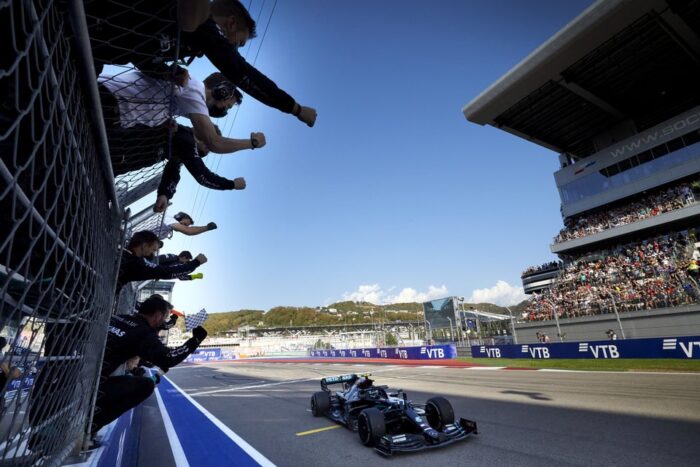
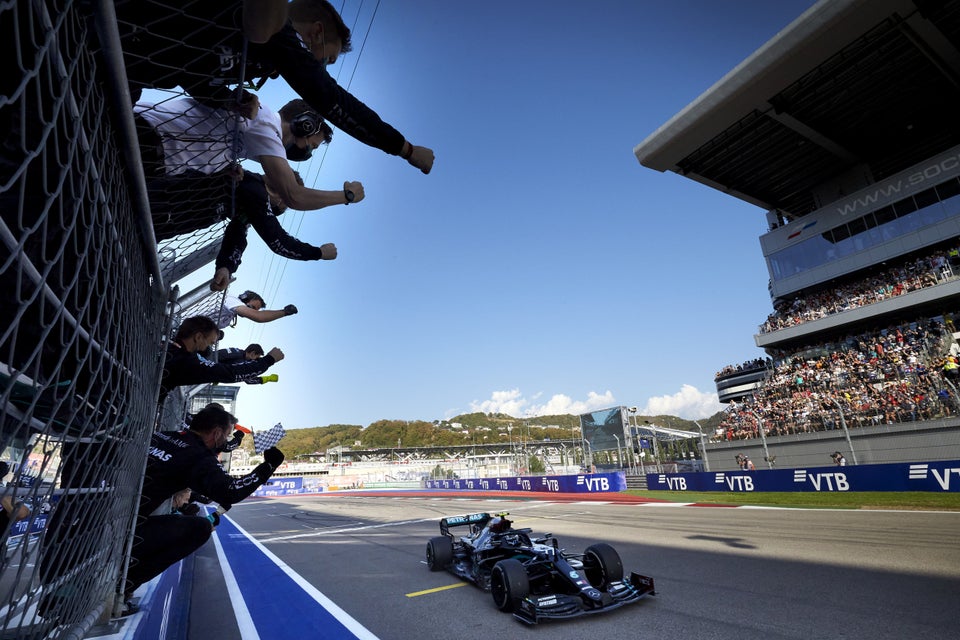
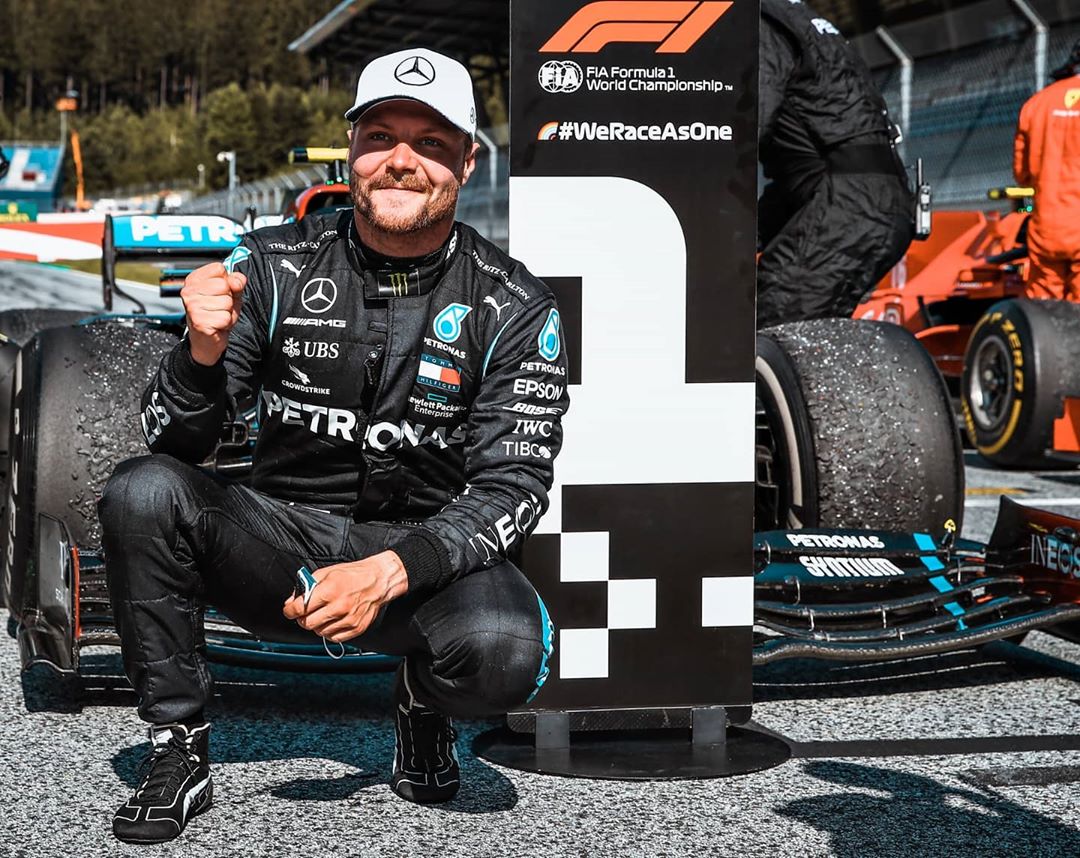
Valtteri Bottas finally took his second victory of the 2020 season at the Russian Grand Prix, as Lewis Hamilton suffered a weekend plagued by drama.
Things began to unravel for the championship leader during Q2 on Saturday. He ran wide during his first lap, which led to his time being deleted, and was just about to complete his second attempt when a Sebastian Vettel crash brought out a red flag. That led to a mad dash as most of the field attempted to get round and start a final lap in the two minutes remaining.
Hamilton passed the line with one second to spare and scraped through into final qualifying. His pole lap was characteristically emphatic – over half a second clear of Verstappen and Bottas – but he was always aware he would now have a fight on his hands in the race, as he had been forced to set his Q2 lap on the lesser-fancied soft tyre.
His problems would worsen before the lights even went out, however.
https://www.youtube.com/watch?v=nq-n9K7TxY4
He asked his team whether he was able to do his practice starts further down the pit lane as there was a lot of discarded rubber at the usual spot. The team confirmed – seemingly unaware of just how far down he meant – but the stewards saw it as an infringement and Hamilton was eventually given two five-second time penalties – one for each illegal practice start.
This, combined with his unfavourable tyre strategy, effectively removed him from the battle for the win and reduced the race at the front to a procession. Bottas didn’t put a foot wrong and claimed a comfortable victory, slightly narrowing the gap to Hamilton in the championship standings. He repeated his ‘open letter to his critics’ from Australia 2019 over the radio after the chequered flag but, frankly, there is only so much you can boast about a weekend where you qualified seven tenths behind your teammate and then profited from him receiving a penalty in the race.
Max Verstappen put two tough races in Italy behind him and resumed his M.O. this year of outperforming his Red Bull, miles clear of his teammate, and occasionally picking off a faltering Mercedes when the opportunity presents itself. Hamilton was never able to close in on the Dutchman, as he nursed his hard tyres for almost 40 laps and had to settle for third.
More First-Lap Chaos
Image credit: Reuters
Picking up where Mugello left off, there were plenty of incidents during the opening lap at Sochi. Carlos Sainz suffered a quite embarrassing retirement as he drove clean into the wall whilst attempting to navigate the bollards on the outside of Turn Two, hampering his teammate in the process as he bounced back onto the track. And a couple of corners later, Charles Leclerc clumsily understeered into Lance Stroll, pitching the Racing Point into the wall and out of the race. That brought out an early safety car.
Once the race was back underway, Sergio Pérez got himself into fourth with a bit of trademark tyre preservation and comfortably held that position to the flag. An ungainly piece of synchronised swimming between the Renaults resulted in Daniel Ricciardo picking up a five-second time penalty, but he had enough pace to extend a gap from Leclerc and hold onto fifth, whilst teammate Esteban Ocon kept the fast-finishing Daniil Kvyat – on a contra strategy at his home race – at bay to complete a decent haul of points for the yellow cars.
It was another tough weekend for Alexander Albon. More than a second slower than Verstappen on Saturday – and seemingly flummoxed as to why – he qualified 10th, was then given a five-place grid penalty for a gearbox change and ended up at the back of the pack after the first lap mêlée. Red Bull gambled on switching him to the hard tyres under the safety car but getting to the end on them was always going to be an impossible task and, after another stop, he would eventually recover to 10th and a single point, behind the AlphaTauri pair.
Image credit: Getty Images
Breaking the Rules
So, is it more a case of drivers breaking the rules…or that the rules themselves are broken?
I feel like a broken record, having to speak about stewarding once again, but here we are. With controversy currently surrounding Hamilton, Leclerc and the bollards at Turn Two, the Russian Grand Prix became a story of rules as much as racing.
The Sochi track has never been a popular one – neither amongst drivers nor fans – and Turn Two has become a particular point of contention. George Russell describes it as “one of the worst corners of the calendar” and even proposed an alteration to it in a drivers briefing earlier this year.
It is just a poorly-designed corner – it’s as simple as that. It should be the main passing opportunity on a lap consisting mostly of dull 90-degree corners, but the way it narrows makes that difficult and, in past years, has led to much cutting of the kink which immediately follows. The attempts to counter that with strict measures such as time penalties is somehow worse though.
It really does feel like the FIA has lost its way when it comes to stewarding. We are now in a situation where Ricciardo – and later Albon – can receive five-second penalties for a tiny mistake, running slightly wide and in the process actually losing time, but Leclerc can take another driver out of the race and get away scot-free because it is the first lap of the race.
The alternative for Ricciardo and Albon was to attempt to get over to the bollards that define the accepted re-entry to the track, but those were criminally close to the wall and arguably less safe than rejoining in the normal manner. Whilst it was an undeniably humiliating crash for Sainz, it was on the cards. If you totally abandoned the corner – à la Verstappen on the first lap – then navigating the bollards was easy enough. But if you genuinely attempt the corner and end up that little bit wide, it’s practically impossible to get over to the bollards in time, as demonstrated by Romain Grosjean, who smashed through them in his attempt to follow the rulebook and brought out a VSC whilst they were replaced.
https://www.youtube.com/watch?v=P8N-UWbt4is
It is like the bigger picture has been totally abandoned by the FIA and its stewards.
Similarly, we had the penalties for Hamilton. A minor discretion in a “grey area of the regulations” – as described by Mark Webber and David Coulthard – before the race led to a significant in-race penalty. Hamilton was also awarded two penalty points on his licence, but they were later rescinded when the stewards determined that the team was at fault rather than the driver.
Why that’s the case here but not in Monza, where Hamilton also received penalty points for following a team order to pit, isn’t clear. Neither is it clear why it took so long for the stewards to change their mind, considering the radio of Hamilton being told he could perform the practice starts there were broadcast on the global feed immediately. And I won’t even get into the current conspiracy theories doing the rounds regarding steward Mika Salo and the Finnish commentary team receiving word on the penalties 15 minutes before they were announced…
Coulthard sums it up nicely when he says, “we’re just being bogged down by stewards getting in the way of allowing a sporting contest to play out”. This is needless micromanagement that has lost all sense of perspective. The stewarding process needs to be ripped apart and rebuilt from the ground up.
The Russian Grand Prix in 60 Seconds
Answering the Burning Questions
Can Lewis Hamilton match Michael Schumacher’s win record this weekend? Not this time.
Or will Valtteri Bottas continue his good form of past years at the Sochi track? …Kind of.
Or could a team other than Mercedes win the Russian Grand Prix for the first time?! Of course not.
Can Alexander Albon push on now that he’s claimed that first podium? Nope.
Who will top the midfield battle? Sergio Pérez in terms of a driver, Renault in terms of a team.
It may have been an agonising 217 days since the chequered flag in Abu Dhabi but the much-delayed opening Austrian Grand Prix of the 2020 season managed to be worth the wait.
By the end of qualifying, the main stories were clear – the dominance of Mercedes and the struggles of Ferrari. Mercedes look pretty mean in their new, black livery and their speed is just as menacing; they appear to have a half second advantage over the rest of the field, which looks ominous for the remainder of the season. Meanwhile, their former main rivals have seemingly slipped back into the midfield, with Sebastian Vettel knocked out in Q2 and his teammate only just surviving to ultimately manage seventh on the grid.
The drama on Sunday started early. Having originally avoided a penalty for not slowing under yellow flags during his final qualifying run, Hamilton was given a three-place grid penalty less than an hour before the race after Red Bull had questioned the stewards’ original decision.
It would not slow him down too much though. By lap 10, Hamilton was ready to inheret second place when Max Verstappen’s Red Bull decided it was done for the day. A massive disappointment for the Dutchman, who seemed to be in a strong position after Red Bull’s gamble in Q2 resulted in him starting on harder tyres than those around him.
He would prove to be far from the only retirement, though, with just 11 cars actually reaching the chequered flag.
Hamilton had closed up rapidly to his teammate after Verstappen’s retirement but a combination of safety cars and orders from the garage to take things easy – as engineers panicked about gearbox issues caused by the aggressive kerbs – meant he never managed to attempt an overtake.
After the third and final safety car, Mercedes found themselves in something of a predicament – they had not stopped for new tyres, whilst a string of cars behind them had done so. Immediately after the restart, Alexander Albon was all over the back of Hamilton and, within a few corners, we had a déjà vu of Brazil last year as they collided and Albon was left pointing in the wrong direction.
Hamilton received a five-second time penalty and would also be denied a spot on the podium as young Lando Norris – fresh from his best ever qualifying result – stormed through with the fastest lap of the race to finish 4.8 seconds behind the world champion and become the third youngest F1 podium finisher ever.
Image credit: LAT Images
Charles Leclerc took an unlikely 2nd considering Ferrari’s pace this weekend – thanks to some daring but clinical overtaking late on – and Carlos Sainz completed the top five. The Spaniard may currently be questioning his decision to switch to the Scuderia next year, with McLaren on an upward trajectory and Ferrari going in the opposite direction.
Bottas begins this season as he did last year’s, with a win, but can he keep it up this time and really take the fight to Hamilton? The 2020 season is already looking like it could be a two-horse race.
Leclerc Spares Ferrari’s Blushes
It was a chastening weekend for those in red, but Leclerc did, at least, manage to salvage something positive for them with an unlikely podium, albeit one which required a fair slice of luck.
Whilst all the noises coming out of Ferrari since pre-season testing have been clear in tempering expectations, nobody could have foreseen quite how far they have fallen; Leclerc’s qualifying time was a little under a second slower than his pole time at the same circuit last year.
Image credit: Foto Colombo Images
This has reminded people of the elephant in the room – namely, the private settlement reached between Ferrari and the FIA regarding their engine last year. It surely cannot be a coincidence that all three Ferrari-powered teams are suddenly struggling and that the factory team are no less than 0.7 seconds down on the straights alone… Whatever trick they were pulling last year, they are clearly no longer able to perform it and it has starkly exposed their 2020 car’s deficiencies; it has a severe amount of drag and, if you watch Sebastian Vettel’s onboard footage, is just a real handful.
Those wondering whether Vettel – with the knowledge that he will be out of the team come next year – would be out to prove a point and back to his best, had an early hint towards a potential answer as he clumsily ploughed into the back of Sainz early on. The four-time world champion is beginning to look disillusioned with the sport – can he find his mojo again with a new project or is this the end?
A Messy Weekend for the World Champion
It was not the ideal start to Hamilton’s quest for a record-equalling seventh world championship. The Briton dominated the practice sessions but was pipped by his teammate when it mattered in qualifying and would eventually be handed a penalty after Red Bull continued their tirade against Mercedes, having already lodged a protest against the Silver Arrows’ DAS system.
Once back up to second, he would endure a frustrating spell stuck behind his teammate, with those in the garage nervous of gearbox issues and desperate for their drivers to stop pushing, before his chances of taking the lead were further scuppered by numerous safety cars. Mercedes then made a mistake by not pitting for new tyres during the final safety car period, which led to the collision with Albon.
The Red Bull driver stormed around the outside of Hamilton at Turn 4, only for the pair to connect front and rear wheels on the exit. Hamilton took full responsibility for their uncannily similar accident at Interlagos last year, but this one was a little more complex.
There has been much debate as to whether the five-second penalty was deserved. Some – mostly in the Red Bull camp, obviously – have said that he got off lightly, whilst some have called it a racing incident. It was mostly just unfortunate.
Albon, in hindsight, perhaps should have been more patient – he had far better traction and would surely have been able to pass Hamilton in a less risky situation within a lap or so. Putting himself on the outside of a car on cold, worn, hard tyres at a downhill corner always had the potential to end in tears. Hamilton was something of a passenger as he understeered wide and then Albon’s overspeed effectively drove him into Hamilton’s front left tyre.
Equally, though, whilst he was slightly behind on corner entry, Albon was almost a car length ahead by the exit of the corner. Would a more-experienced driver have left just that extra few centimetres of room, knowing that the other car was likely to run wide? Maybe, but daring manoeuvres like this are why Albon is in the Red Bull; he will get there. Ultimately, it was the outcome that resulted in the penalty for Hamilton – if Albon had been bumped wide slightly and recovere to maybe 4th, there would likely have been no action taken. For a neutral driver’s perspective, check out Marcus Ericsson’s tweet.
Once Hamilton’s penalty was confirmed, Mercedes could potentially have swapped the drivers to help him cling on to a podium place, but that was not done either.
However you look at it, this is not how Hamilton would have envisaged his campaign starting and he already has a 13-point deficit to make up on a reduced calendar.
The Austrian Grand Prix in 60(ish) Seconds
Answering the Burning Questions
How will the new socially-distanced F1 play out? Will it have a significant impact? Not particularly – it’s easy to forget that there is no crowd and the McLaren garage didn’t exactly observe social distancing whilst celebrating their podium.
Who has the fastest car? Mercedes, it would appear emphatically.
Will anyone have made any dramatic changes since pre-season testing? Not to the untrained eye as yet, but Ferrari may do by next weekend.
Can Max Verstappen and Red Bull continue their winning streak in Austria? Nope.
How will Sebastian Vettel approach his final season at Ferrari? About the same as the last two years so far, unfortunately.
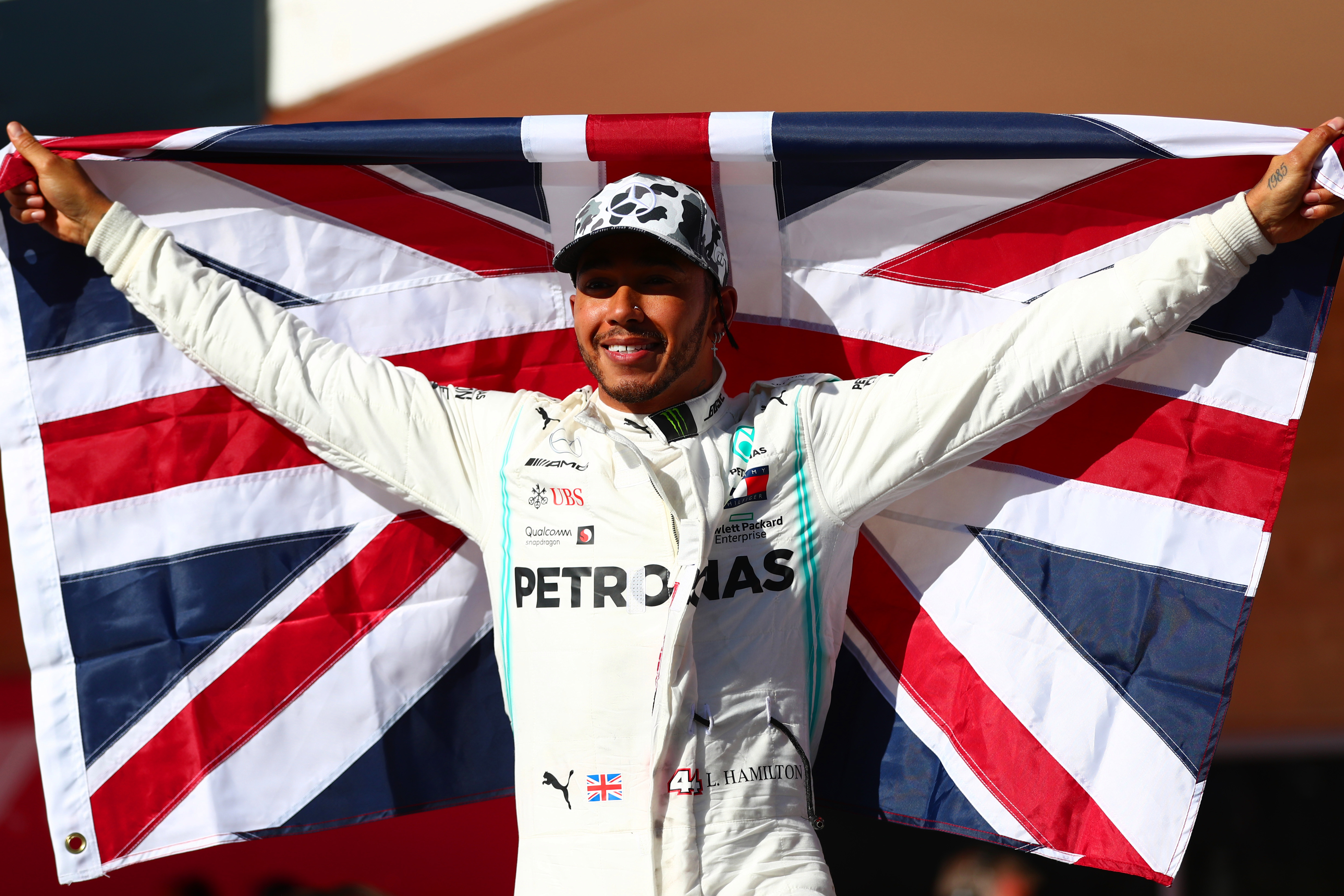
A fine drive from Valtteri Bottas meant he took his seventh victory in Formula 1 at the 2019 United States Grand Prix but it wasn’t enough to deny Lewis Hamilton his sixth world championship.
After a poor Saturday – certainly by his high standards – Hamilton started fifth on the grid but produced a champion’s performance on race day. Clearly determined to make amends, Hamilton had passed both Ferraris within a matter of seconds as they struggled to turn on their tyres, including a particularly impressive move around the outside of Sebastian Vettel through Turn Eight. Bottas held a comfortable lead throughout the first stint with Max Verstappen and Hamilton a few seconds back.
Red Bull triggered the first pit stops with an attempted undercut on lap 13 and Mercedes responded with Bottas, both drivers now on a likely two-stop strategy. This left Hamilton to go long and attempt another now-somewhat-trademark ‘tyre whisperer’ massage session in order to make a one-stop work. He stopped on lap 24, leaving him 32 laps to eke out of his hard tyres.
Bottas pitted on lap 35 and rejoined six seconds behind Hamilton. He initially closed on his teammate quickly but, when the tyre differential had reduced slightly and backmarkers began to come into play, the drivers appeared to be in something of a stalemate. With the remaining laps ticking down, it looked as though Hamilton was on the verge of repeating his feat from a week ago in Mexico and making a contra strategy work perfectly. But in the end Bottas’s fresher tyres were enough and, after a good battle with some strong defence from Hamilton, the Finn took the lead with four laps to spare. Verstappen, who had also been steadily closing in, was foiled by yellow flags from Kevin Magnussen’s stricken Haas in the last couple of laps and was unable to pass.
Bottas took the chequered flag to claim his fourth victory of the year and, in doing so, showed that he can maintain some momentum after the summer break, where in years gone by his challenge has faded. But it was still not enough and Hamilton took second place and an unbelievable sixth World Championship with two races to spare.
Image credit: Formula 1
Further back, Vettel’s rear suspension had dramatically failed early on; the German doing well to keep his suddenly three-wheeled Ferrari pointing in the right direction before pulling over in a convenient spot. His teammate, Charles Leclerc, had a slightly better afternoon but a pretty lonely one and came home a distant fourth. Sceptics – including Max Verstappen, who was even quoted as saying “that’s what happens when you stop cheating” – are already suggesting that the recent FIA clarification of technical rules regarding power units has impacted Ferrari’s performance.
One race is too early to make those of kind of sweeping assumptions. This was not a track layout that ever looked to particularly favour Ferrari’s package and there main issue appeared to be with the tyre temperatures. The next race in Brazil will likely be similar so let’s all try and reserve judgement until the season finale in Abu Dhabi. If their clear straight-line speed advantage has disappeared there, then maybe we can all consider grabbing our pitchforks and/or tin foil hats.
Alexander Albon recovered well to fifth after a first corner incident. We have still barely seen the Anglo-Thai in a straight fight with teammate Verstappen since his swap to Red Bull but he has continued to put in solid performances in the unenviable position of joining a team mid-way through your rookie season and being matched up against the flying Dutchman.
Image credit: DPPI
Behind him, Daniel Ricciardo narrowly held off a charging Lando Norris for sixth place after the young Briton had taken a late pitstop and charged back through the field from 10th. It was a better weekend for McLaren – with Carlos Sainz following his teammate home in seventh – after Mexico where a pit stop error cost Norris and there was the mystery of Sainz’s lack of pace on the hard tyre.
Also, a quick mention for Sergio Perez who claimed a points-paying position having started in the pit lane, even with Daniil Kvyat producing another desperate final lap divebomb just seven days after doing the same to Nico Hülkenberg. This one earned him a penalty too. The Torpedo is back to torpedo-ing. Is he costing himself a seat at Toro Rosso next year? Sorry, make that Alpha Tauri…or whatever they’re called.
Lewis Hamilton: Six-Time World Champion
Image credit: Getty Images
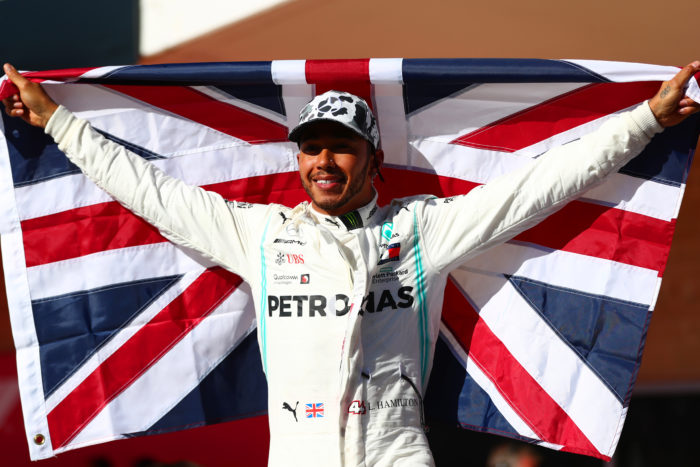
Hamilton was already undeniably in the pantheon of the greats. But he is now closing in on staking a strong claim to be the best driver in the history of the sport.
A sixth world championship moves him clear of the great Juan Manuel Fangio and just one behind the record seven titles of Michael Schumacher. He is also now closing in on most of Schumacher’s various other records. 83 wins compared to Schumacher’s 91, 150 podiums compared to 155. If all seasons are converted to having the current points system, Hamilton is now at 3788 with Schumacher having taken a total of 3961. These are records that could easily change hands in the next 12 months.
The world champion’s prowess over a single lap in qualifying has long been known and he already stands far out on his own when it comes to the record for pole positions. But more recently, and particularly this season, he has shown he is just as good on a Sunday. As previously mentioned, he is now infamous for his tyre management. Mercedes Technical Director James Allison, who has worked with many greats including Schumacher himself, described Hamilton’s “instinctive ability” when it comes to the subtle technicalities of racing – such as tyre management and fuel conservation – as “remarkable” and has spoken of the “metronomic consistency of his race performances all year”.
Hamilton really does have very few – if any – weaknesses these days. After the season, I plan to do a post truly comparing him to the previous greats but, for the moment, let’s just appreciate that we have seen a fantastic driver further cement his legend and move closer to what had previously appeared to be unassailable records.
Congratulations, Lewis. The lad from Stevenage done good.
The United States Grand Prix in 60 Seconds
Answering the Burning Questions
Can Hamilton wrap up the title? Of course he did.
…When Hamilton wraps up the title, will there be any impressive theatrics from the Americans/Liberty? There was a parking spot but that was about it. Maybe the champion being lifted up to the podium last weekend in Mexico would have been more fitting.
With its varied layout, which car will COTA suit the best? Red Bull gave a good charge but Mercedes appeared to just have the edge for most of the weekend.
Can Verstappen stop his recent run of mishaps? There was a small bit of contact at the first corner, and later on with a kerb, that caused minor damage but it was a strong weekend overall.
Some questionable strategy but, nevertheless, Mercedes are champions.
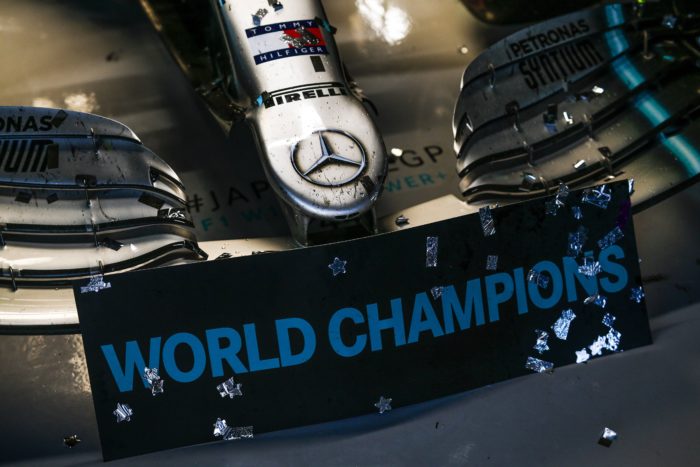
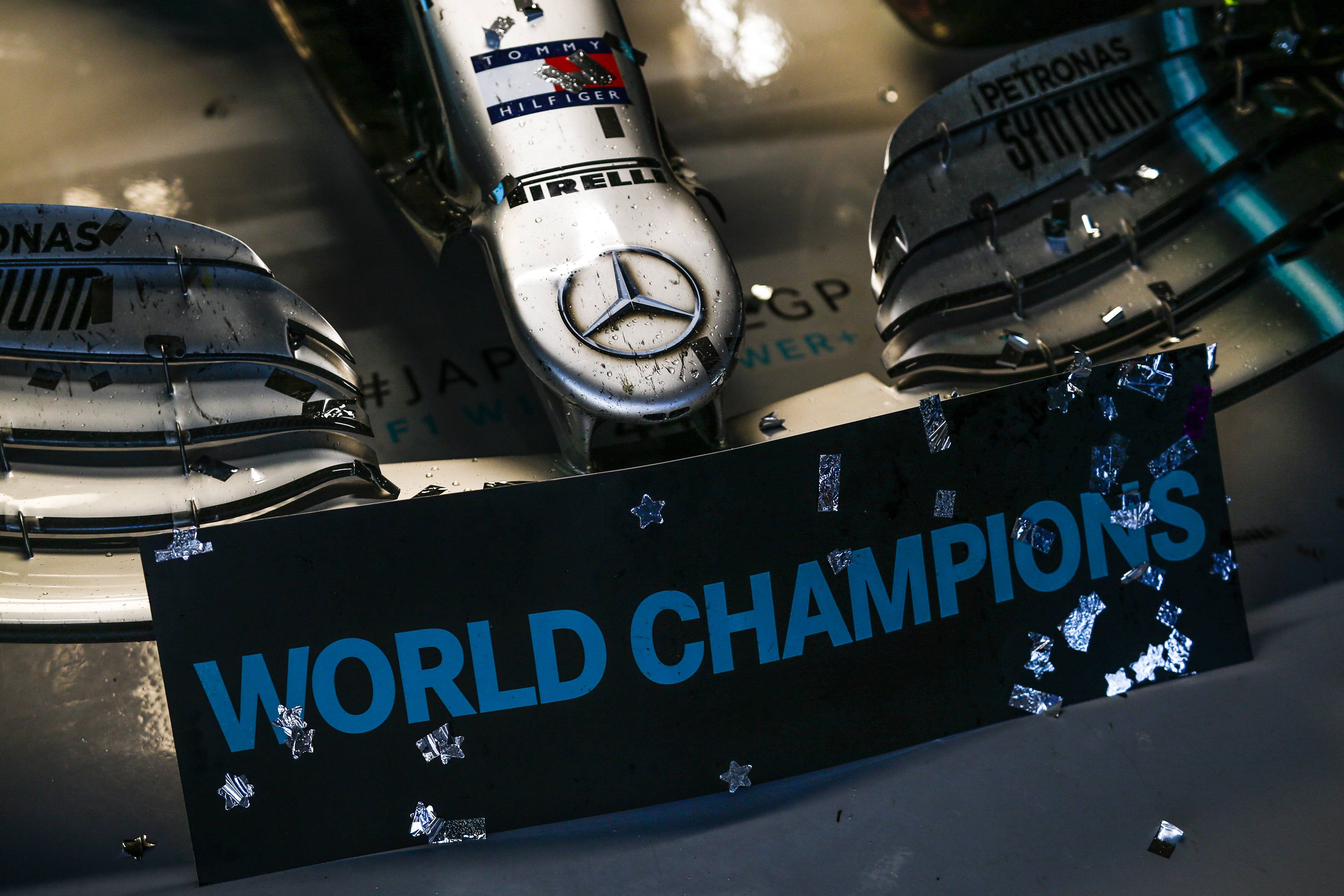
With Ferrari finding new and ever more inventive ways to capitulate, Valtteri Bottas came home a comfortable winner at the 2019 Japanese Grand Prix and sealed the Constructors’ Championship for Mercedes. The result also confirmed that only Bottas or his teammate, Lewis Hamilton, can now win the Drivers’ Championship so that is a record six consecutive world championship doubles for the Silver Arrows.
Whilst some may be tired of the recent domination within the sport, you have to admire the consistency with which the team operate. It is worth remembering that we are witnessing history in the making. In the future, people will surely point back to arguably now the greatest team the sport has ever known. The efficiency with which the German marque is renowned came to the fore at the beginning of the hybrid era in 2014 and the relentless Mercedes machine has rumbled on ever since, crushing all in its path.
It is a shame that Niki Lauda is not around to see them break the record as he was so instrumental in that success. He played a crucial role in convincing Hamilton to join the team and, together with team principal Toto Wolff, formed a fantastic management team. Touchingly, Lauda was remembered by his infamous red cap in the celebratory photos.
As for the race itself, there is a fair amount to discuss.
Typhoon Hagibis swept through the area on Saturday and produced the rarity of a Sunday morning qualifying session. Having looked considerably off the pace in Friday’s practice sessions, Ferrari produced a surprise front row lock-out, with Sebastian Vettel outqualifying his teammate, Charles Leclerc, for the first time since June to take pole position.
However, Ferrari’s joy was to be short-lived as three hours later, at the race start, everything rapidly fell apart.
Image credit: Getty Images
Vettel produced what appeared to be a false start. It would eventually prove to be legal, due to the peculiarities of the regulations and the sensors. Despite moving before the lights went out, Vettel stayed within the confines of his grid slot and, because he braked instantly, was stationary when they did. Thus, it was a legal start.
But not a good one.
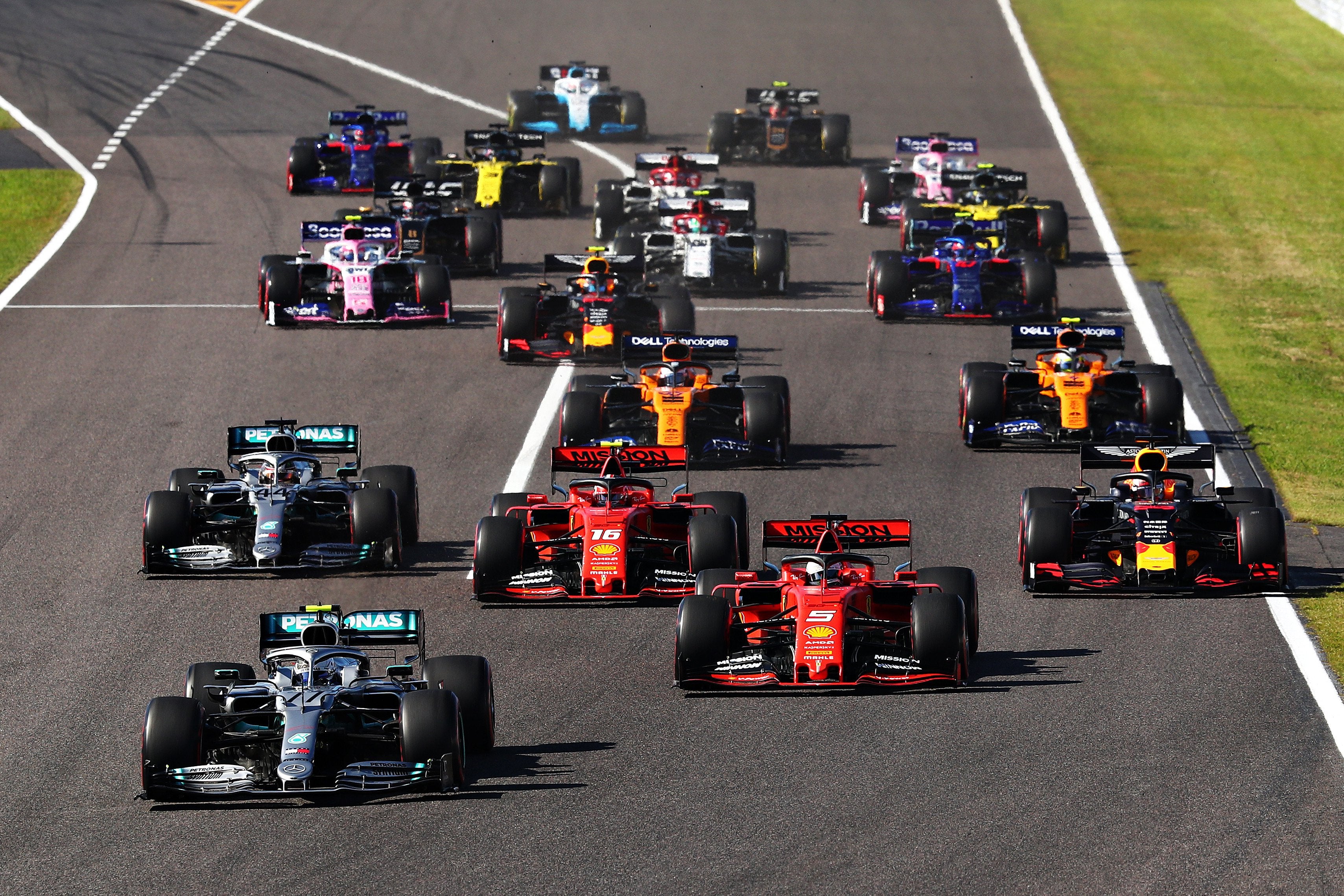
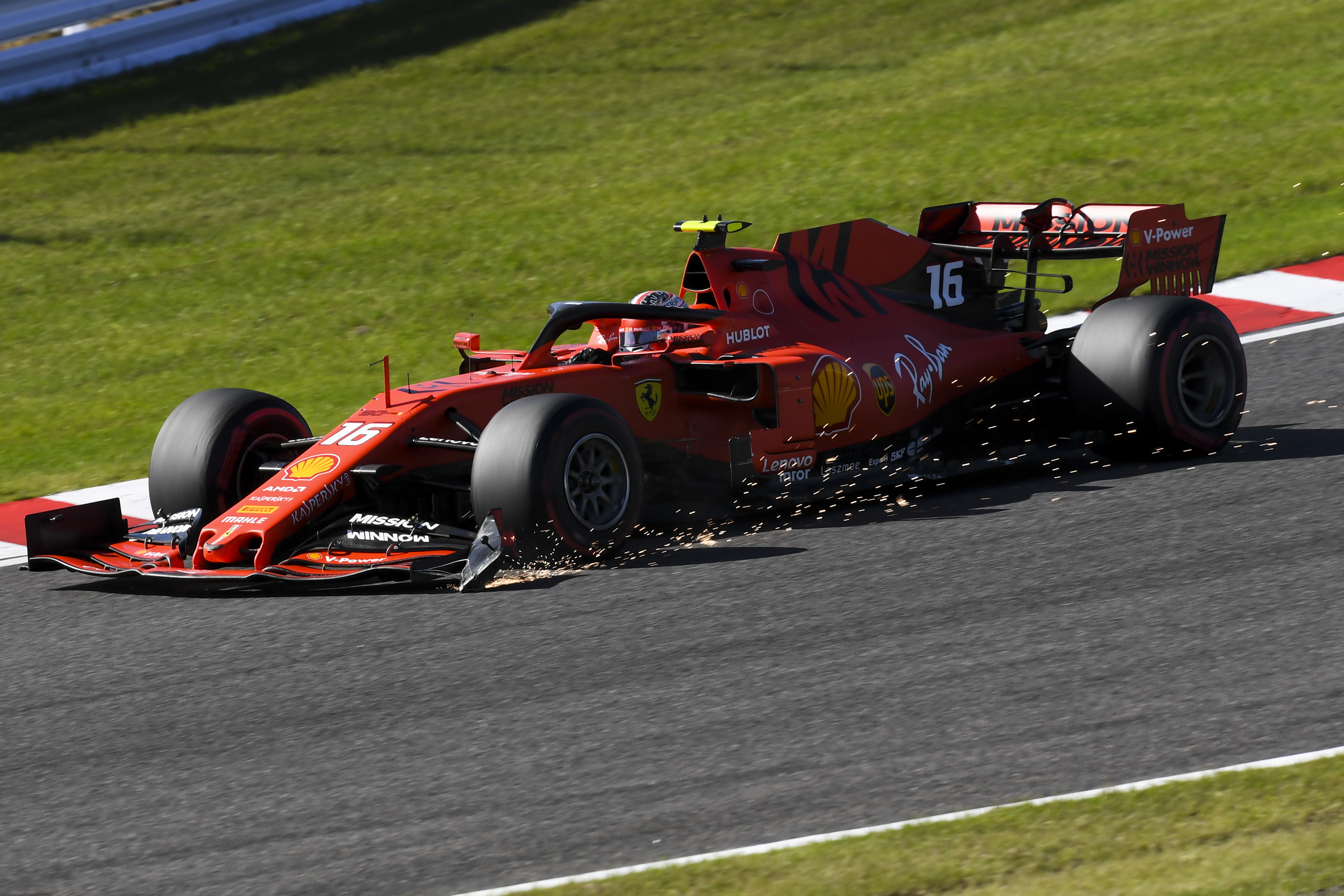
Whether distracted by this teammate or not, Leclerc also got away poorly and Bottas was comfortably leading by the first corner. Hamilton had nowhere to go but Max Verstappen had his eyes on third and set about storming around the outside. Leclerc, however, understeered into him and wrecked the Dutchman’s race – he would retire from the damage on lap 17. Leclerc survived but with damage to his front wing. He pitted on Lap 3, after showering those behind him with bits of carbon fire, and spent the rest of the race fighting back through the field.
The front three of Bottas, Vettel and Hamilton broke away from the pack and it became apparent that strategy would be key. The Ferraris had been suffering with their tyres more and expected to two-stop, whilst Mercedes were aiming for just the one.
Vettel was first to blink on lap 16 and Mercedes responded by pitting Bottas the following lap. Hamilton was left out with the intention of one-stopping but this was always going to be tricky as Saturday’s typhoon had washed the track clean of rubber and left it very ‘green’. The tyres, already damaged by following Vettel, degraded quickly and Hamilton found himself almost a pit stop behind Bottas in the space of a few laps; the world champion was soon on the radio, agitated and confused by his strategy.
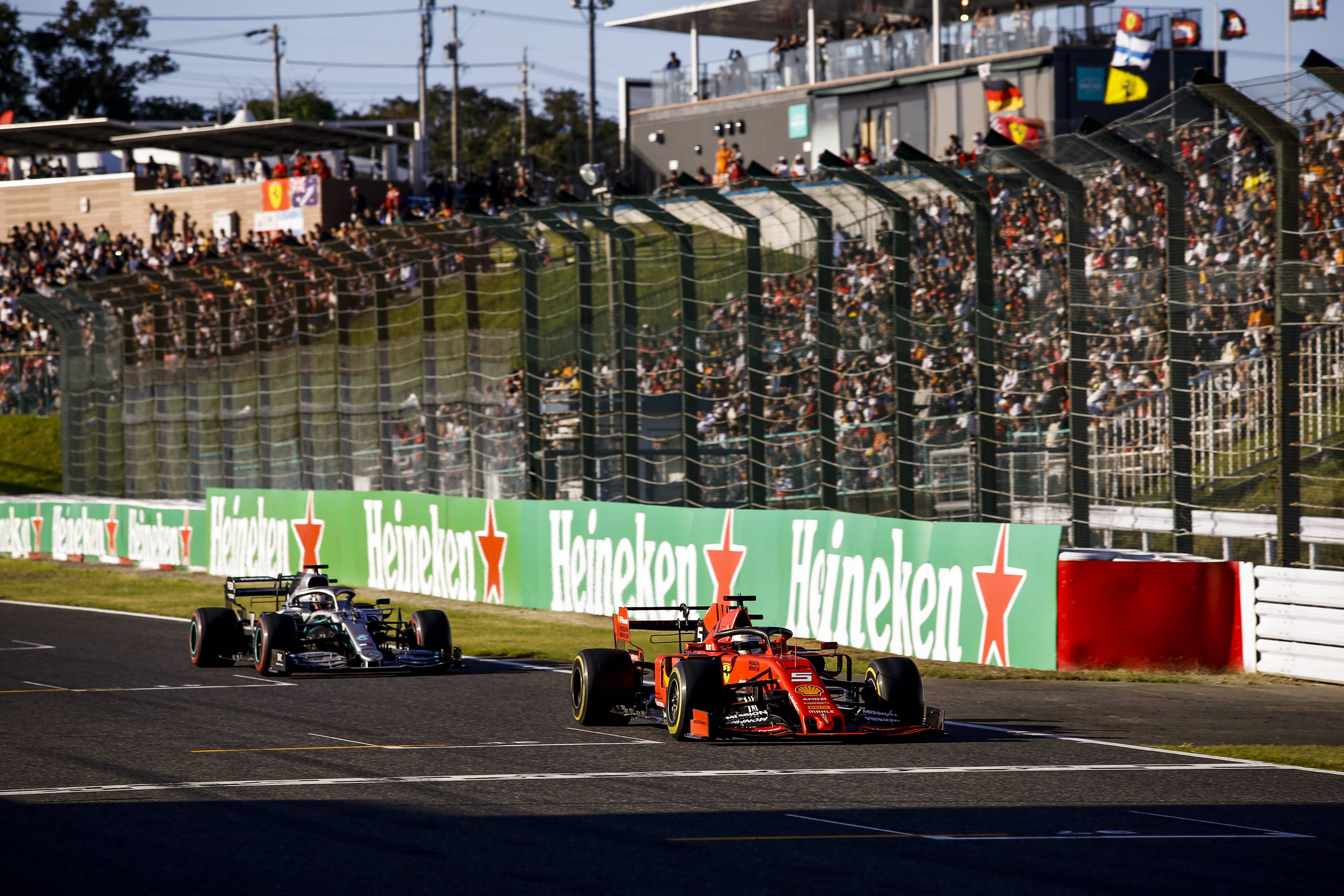
The particularly confusing decision by Mercedes, however, was when they bailed out of the one-stop and pitted Hamilton with 10 laps remaining. Passing the Ferrari of Vettel – with its significant straight-line speed – combined with the layout of Suzuka, was always going to be a tall order, even with fresh tyres. And so it proved to be as he closely followed Vettel home but never truly challenged him.
Image credit: DPA Picture Alliance
Hamilton has shown his expertise when it comes to managing degrading tyres and defending positions many times in the past and would surely have been better off attempting that. The worst case scenario there would be that both Bottas and Vettel pass him and then Hamilton would have pitted anyway as there was well over a pit stop’s time back to Alexander Albon in fourth.
This obsession Mercedes appear to have with the overcut – certainly when it comes to Hamilton – is quite strange considering its lack of success. In this instance, it looks a bit like they were wary of Hamilton and Bottas fighting on track and so removed him from the situation. You get the sense that the Mercedes strategy team may have been a bit flattered by the dominance of their car in recent years.
Either way, Bottas didn’t put a foot wrong out front and picked up a deserved victory – his first since Baku in April.
More Points for Sainz, More Bad Luck for Norris
It was another strong drive for Carlos Sainz and another fifth place come the chequered flag. That moves him up to sixth in the Drivers’ Championship and moves McLaren another step closer to sealing fourth in the Constructors’ Championship. The Spaniard really is showing his full ability now, after a difficult year at Renault in 2018, and is potentially making Red Bull question their decision to release him. Whilst obviously far more experienced, he is only actually 18 months older than Albon and Pierre Gasly…
His teammate, Lando Norris, on the other hand, reverted back to form. That form being a promising race ruined by bad luck and factors beyond his control. The teenager was following his teammate comfortably in sixth for the first few laps but then collected some shrapnel from Leclerc’s disintegrating car in his brake duct, which began to overheat.
Image credit: Getty Images
To add insult to injury, just as he was about to take an early pit stop to have the debris removed, Albon launched an overambitious divebomb into the final chicane and clumsily punted his friend off the track. Norris recovered to the pit lane, his brake now on fire. He returned to the track and fought gallantly for the remainder of the race, finishing 13th, but it was another haul of points lost.
By rights, Norris should be close behind Sainz in the championship. It has been an impressive debut season for an immensely likeable character and, with some better luck and a bit more experience – particularly when it comes to race starts – the young man from Somerset could really challenge in the next couple of years.
Is Michael Masi Producing Problems?
Speaking of Albon’s overambitious divebomb, which went unpunished, it feels like F1’s stewarding and regulations are suffering from something of an identity crisis.
Michael Masi was a fairly popular replacement when we sadly lost Charlie Whiting on the eve of this season. He was stepping into some particularly large shoes and, for the first few races, he went mostly unnoticed – ergo, he was doing a fine job. But since the backlash caused by Vettel’s – in my opinion justified – penalty in Canada, Masi and co decided to change their tact somewhat and allow harder racing.
I brought up some potential issues after the Italian Grand Prix, when Masi announced that they would now be using the black and white flag more often, which I’m fine with in principle, and that Leclerc would have received a penalty had he made contact with Hamilton, which I think is somewhat ridiculous considering Hamilton had to leave the track to avoid said contact. Read that Grand Prix’s report for a more detailed analysis.
Since Verstappen’s move in Austria, the drivers have started to push the limits, finding out just how much they can get away with. And the answer appears to be a lot.
Hard racing, for me, is two drivers on the very edge but not quite making contact. Think Albon-Kvyat in Hungary this year or, particularly, Hamilton-Alonso in Mexico 2017. That’s surely the kind of racing we want to see.
But suddenly, in the space of a few races, it seems that clumsily throwing your car at the apex – Albon didn’t appear in a position to even make the corner without using Norris as a stopper – and knocking another car out of the way is apparently now okay.
This looks ridiculous when driving the wrong side of a bollard, as per Kevin Magnussen in Russia, gets you a time penalty. The lines are becoming too blurred and the stewards are losing authority. I just hope it doesn’t take a massive incident to provide perspective about what is and isn’t acceptable.
Japan was a sloppy weekend all round when it came to stewarding.
The casual viewer would struggle to understand why Vettel did not receive a penalty for what was a very visible jump start – we had expert analysts guessing at the minutiae, attempting to justify the decision – especially as Kimi Räikkönen received a penalty for an almost identical error at the very last race. It also took the best part of half the race for the stewards to reach their decision.
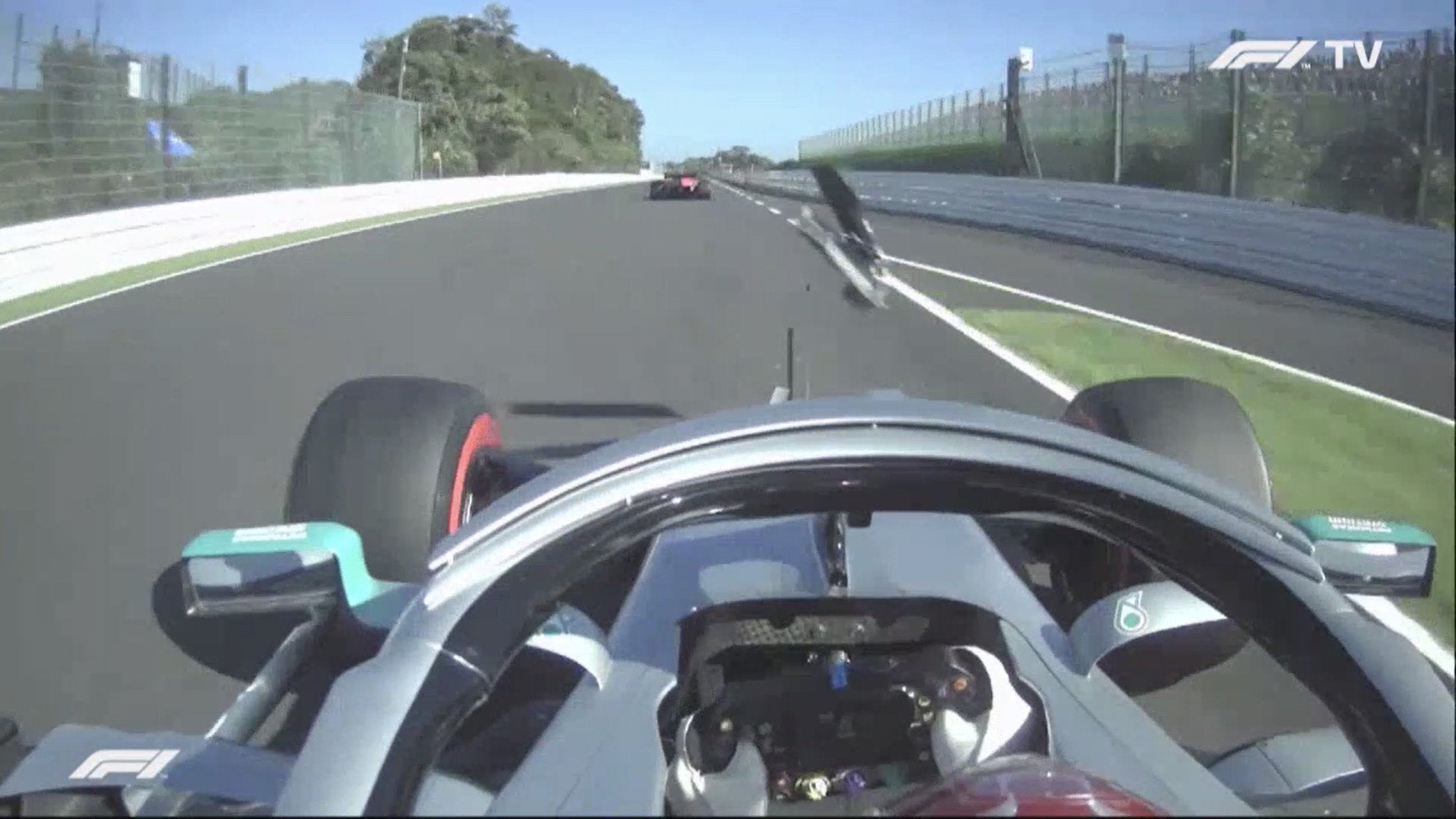
Then there was the fiasco with Leclerc’s damaged car. The blame appears to be shared by Leclerc, Ferrari and the FIA. Firstly, Ferrari called Leclerc in but he ignored the request and responded “Why?!” after having passed the pit entry. One lap later, just after the endplate had flown dangerously close to Hamilton, Ferrari told Leclerc not to come in. But the simple fact is Leclerc should immediately have been shown the black and orange flag and forced to come in by Race Control. Apparently Ferrari ‘promised that they would bring him in on the second lap’, only to go back on their word when the endplate fell off. But who is running the sport again?..
Image credit: Motorsport Images
So much time and effort has gone into safety in recent years and yet we have cars allowed to drive round at full racing speed, leaving a slew of sharp carbon fibre in their wake. That endplate sliced Hamilton’s wing mirror off; I can’t imagine it would have been pleasant had it struck him, just a few inches to the left. We have seen similar incidents in the last decade that resulted in a coma for Felipe Massa and the tragic death of Justin Wilson.
It was plainly obvious that Leclerc’s wing would not survive long and that it would most likely give up at the fastest part of the track. He also had a loose wing mirror which broke off later in the race. No one from Race Control even seemed to acknowledge that.
Leclerc and Ferrari were eventually given five and ten second penalties for the Verstappen incident and then not pitting respectively after the race. But, regardless of the fact that they are quite lenient penalties, why did the decision take so long? The first penalty seemed an absolute slam dunk – it was particularly bizarre that the initial decision was ‘no further action’ before it was then reopened – and five seconds after the race is considerably different to five seconds early in the race with traffic to navigate.
Image credit: Formula 1
Drivers with dangerous damage such as this should be shown the black and orange flag and forced to return to the pits at a reduced speed. It’s as simple as that for me.
And finally, to top things off, the new virtual chequered flag, which officially ends the race, was somehow produced one lap early. This actually changed the race result as Sergio Pérez’s last-lap retirement from eighth place was undone. Imagine if Hamilton had dramatically passed Vettel in the final few corners…
This is the very highest echelon of motorsport and it should feel as such. Right now, it doesn’t.
The Japanese Grand Prix in 60 Seconds
Answering the Burning Questions
Will there be more drama at Ferrari? Of course. But at least there was no drama between the drivers this time.
What effect will the Mercedes upgrade have? Hard to say. On Friday, it looked massive but then the Ferraris locked out the front row.
Are we going to have (lots of) rain with a typhoo heading for Suzuka? Yep. But it was all on the one day and didn’t affect a single session with the Saturday cancellation.
Can Mercedes wrap up the Constructors’ Championship? They can!
Which enthusiastic Japanese fan will have made the best hat? Got to be this one for me.
Apparently Azerbaijan used up its quota of carnage on Friday and Saturday.
Image credit: Steve Etherington
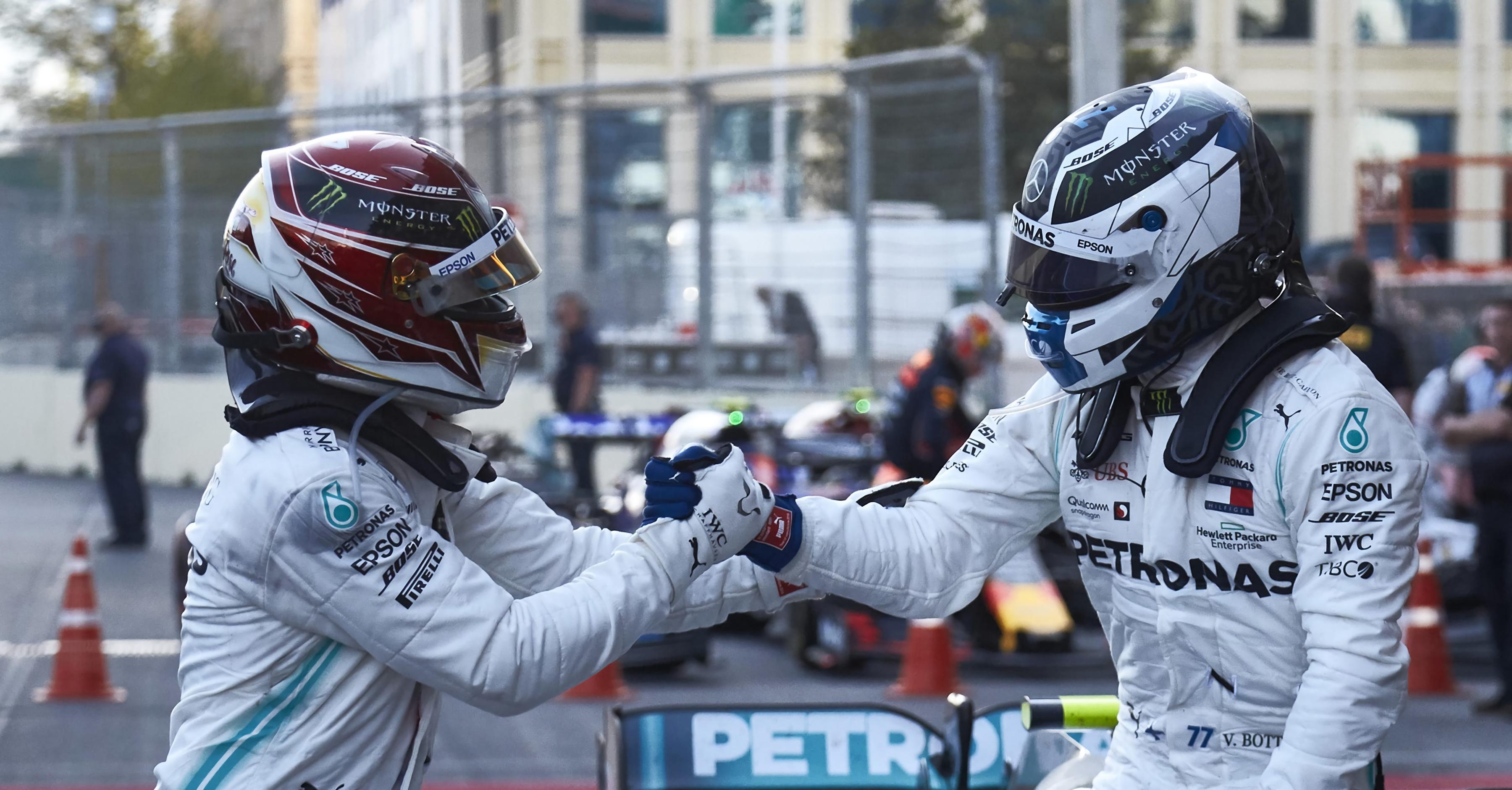
Valtteri Bottas took his second win of the season and the championship lead after an impressive performance at a surprisingly uneventful 2019 Azerbaijan Grand Prix.
After an impressive start to the season with a dominant victory at Melbourne (albeit with Lewis Hamilton having suffered floor damage), the supposed rebirth of Bottas in 2019 as much more than just a ‘wingman’ had seemed to stutter. He was nowhere in Bahrain and, after taking pole in China, was beaten off the line by Hamilton and never really threatened for the remainder of the race. But the Finn was near enough flawless in Baku, grabbing what looked an unlikely pole position, holding his own in the first few corners and then not putting a foot wrong on his way to victory and the lead of the championship.
Hamilton will have regrets though. He had been the stronger Mercedes driver through the practice sessions and the earlier parts of qualifying. He produced an excellent first lap in Q3 but on the second runs, after Mercedes had successfully thrown Ferrari and Sebastian Vettel a dummy, they got their timings a bit wrong. Both drivers were at the back of a queue of drivers trying to get space for their runs. Hamilton was worst affected, losing a lot of tyre temperature which caused him to lose three tenths in the first sector and he couldn’t quite claw that back through the rest of the lap. He got the better start on Sunday but, as he put it, was “a little bit too kind”, giving his teammate a lot of space as they ran wheel-to-wheel. From there, despite following closely throughout, he never really got another chance.
You get the sense that the world champion still feels pretty comfortable that he has Bottas covered. Or maybe it’s just that he genuinely gets on with the Finn and is enjoying an honest fight after all the psychological warfare with Nico Rosberg. Either way, Bottas 2.0 still has a long way to go. He should have been leading the championship at this point last year too but for a dramatic puncture. The European season was where Hamilton started to pull away and he is infamously strong in the latter part of the year, as the tension builds. Maintaining the fight will be far from easy for Bottas but, if Ferrari continue to falter, hopefully he can do so for the sake of a competitive championship. Speaking of which…
Are Ferrari Actually Fast?
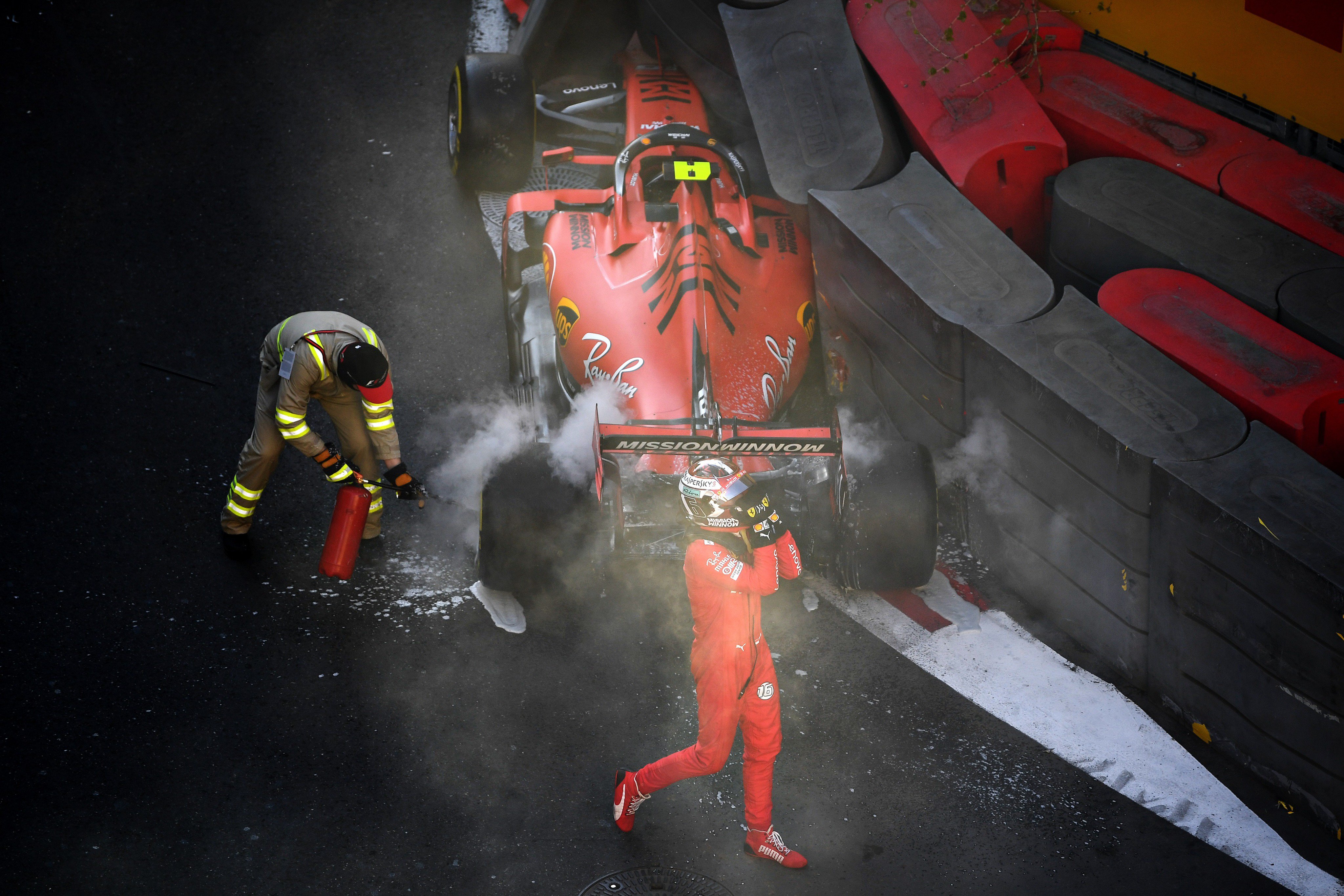
Another race and another missed opportunity for the Scuderia. At what point though do we actually start to question the speed of the car? In Bahrain, they were clearly quickest, certainly in the hands of Charles Leclerc. In China, Mercedes regained the upper hand. Through practice in Azerbaijan, they were miles ahead – over a second in Practice 3 – and it looked like we might have another season where certain tracks are more suited to each of the two leading teams and a title battle that would swing to and fro.
Image credit: Getty Images
But it all unravelled after Leclerc’s crash in qualifying and here we are with a record-breaking fourth consecutive 1-2 finish from the start of the season for Mercedes. How much of that is down to the ongoing operational issues that have hindered Ferrari over the past few years and how much of it is just a lack of pace? Qualifying would appear to be down to the former but then Vettel didn’t really look like threatening the Mercedes at any point during the race. Or is it just those Mercedes sandbags out in force again? At least it meant they didn’t have to deal with team orders…
Barcelona will be key. People were referring to the race in Azerbaijan as a must-win for the red cars; Barcelona is far more of one in this writer’s opinion. Testing at Barcelona was what had fans, pundits and the media alike convinced that Ferrari were the team to beat this year. If they get comfortably beaten there too, that could be it. Last year, Mercedes had built a wild animal of a car but learnt how to tame it. This year, it seems they are the ones with the more consistent machine and Ferrari have built the wild animal…but have no ringmaster to do the taming.
What Happened to the Baku Mayhem?
Well, it all happened too early really. A Chuckle Brothers-esque start to the weekend saw a loose manhole cover thankfully not cause any harm to George Russell but cause a lot of damage to his car a few minutes in. Then the rescue truck that came to pick up the Williams promptly crashed into a bridge and proceeded to leak hydraulic fluid on the car. Talk about insult to injury. Practice 1 was cancelled as they checked the bridge and 300 manhole covers around the circuit.
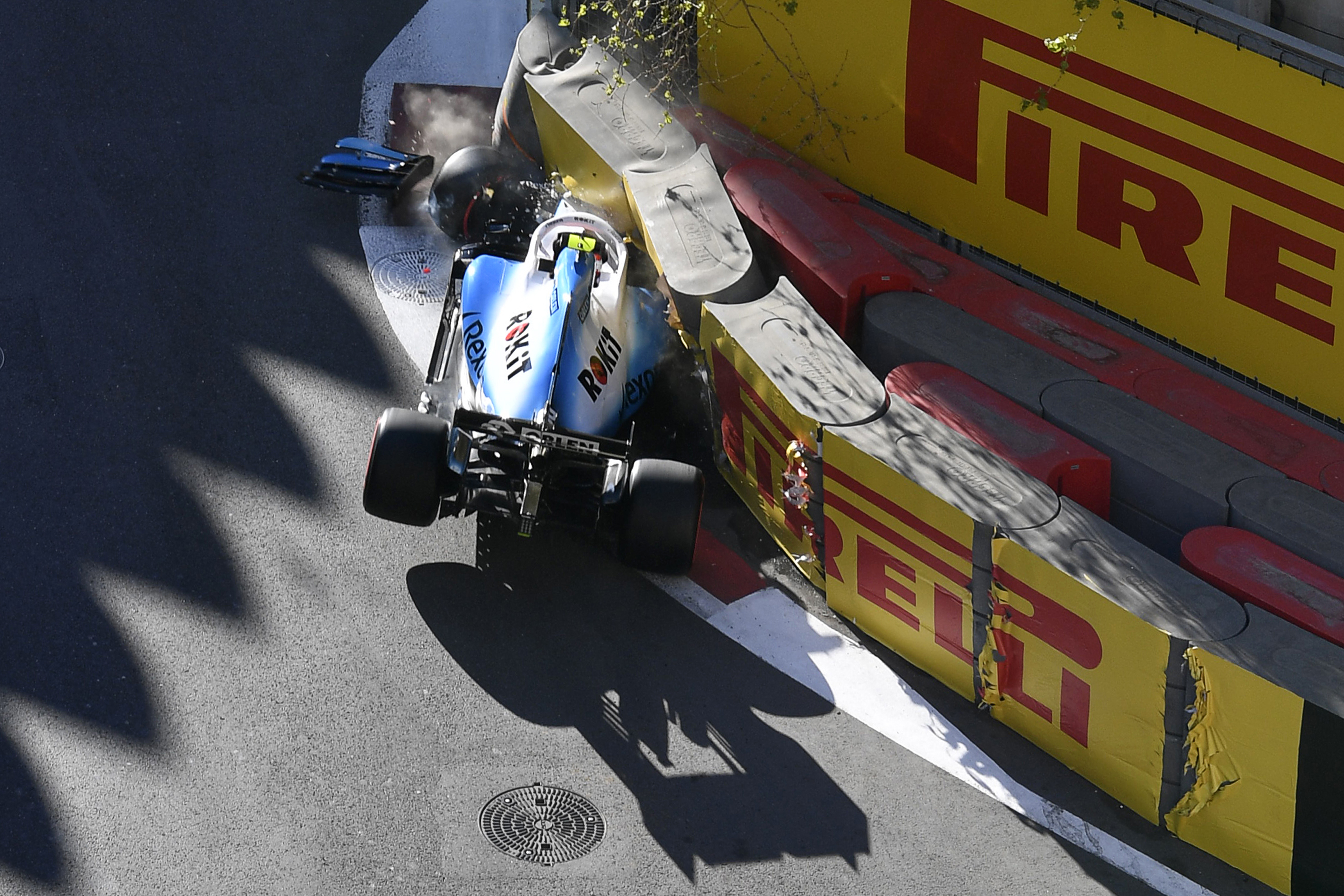
Saturday was all about Turn 8. First Robert Kubica and then, more dramatically, Leclerc’s Ferrari ended up in the barriers there, each causing long delays whilst it was repaired. But sadly, in terms of a spectacle at least, Sunday passed mostly without incident. Except for Daniel Ricciardo bizarrely reversing into his former teammate, Daniil Kvyat, after the Australian had outbraked himself in an overtaking attempt and forced them both down an escape road.
Another Draining Weekend for Williams
Yes, that’s a drain pun. No, I’m not sorry.
If people thought things couldn’t get worse for the Williams team, they were proven thoroughly wrong by the weekend’s events in Baku. First there was the drain cover incident, destroying the floor of Russell’s car and damaging the chassis severely enough that it had to be replaced. Claire Williams put the damage in the hundreds of thousands and stated she would be “taking it up with race control”.
Image credit: AFP via Getty Images
And then Kubica binned the sister car in Q1 on Saturday. Some feared Williams wouldn’t have the spare parts to rebuild another car after having to use the spare chassis for Russell, but fortunately they did and at least both cars were able to compete on Sunday. Not without one more kick in the teeth though. Kubica received a drive-through penalty for ‘pit lane irregularities’, with the team apparently confused as to what they had done wrong. It transpired that, with this being their first pit lane start since the race times shifted to 10 past the hour, Williams hadn’t clocked (no pun intended this time) that you’re supposed to bring the car to the exit 20 minutes before the race start time as opposed to 20 minutes before the hour…
It feels that Williams could, and should, be learning from McLaren. In coming to the realisation that their way of working was outdated and to then basically strip everything apart and rebuild from scratch. Zak Brown has done that for the more recent of the two British former champions and they are now pushing on and regaining dignity and competitiveness, with a solid double-points finish in Baku. But as things stand, it appears that Williams are too proud. And if they’re not careful, that could be their downfall.
The Azerbaijan Grand Prix in 60 Seconds
Answering the Burning Questions
Will there be more team orders at Ferrari? Leclerc’s crash removed that specific elephant from the room.
Can either Ferrari or Red Bull’s upgrades take them to the front? It looked like that could be the case for Ferrari on Friday but by Sunday normal service seems to have resumed.
Will Azerbaijan keep up its so far 100% record of producing highly dramatic races? No.
Will any of the midfield teams stake a claim for being best of the rest? Racing Point and McLaren had strong races but overall it’s still certainly in the balance.