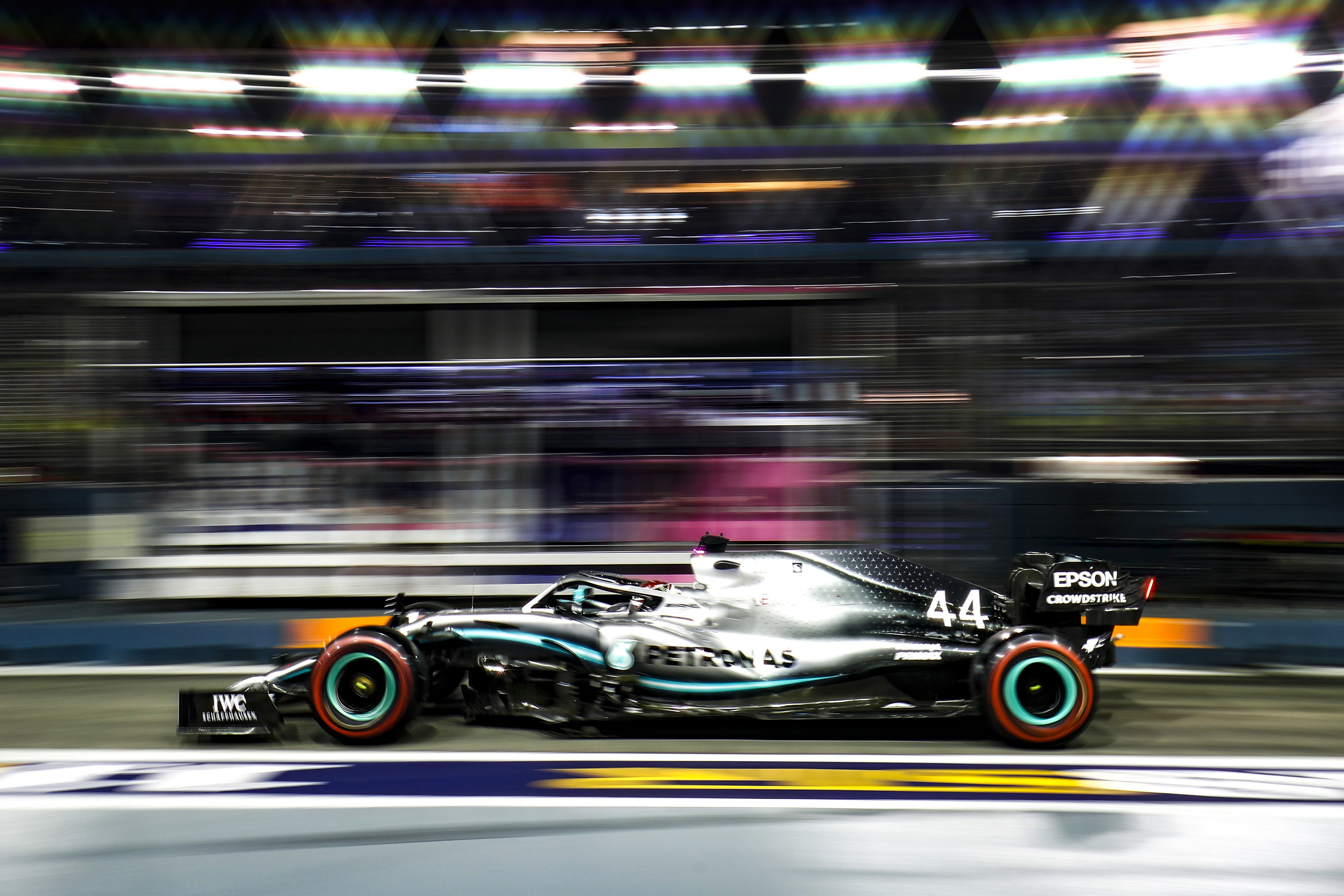
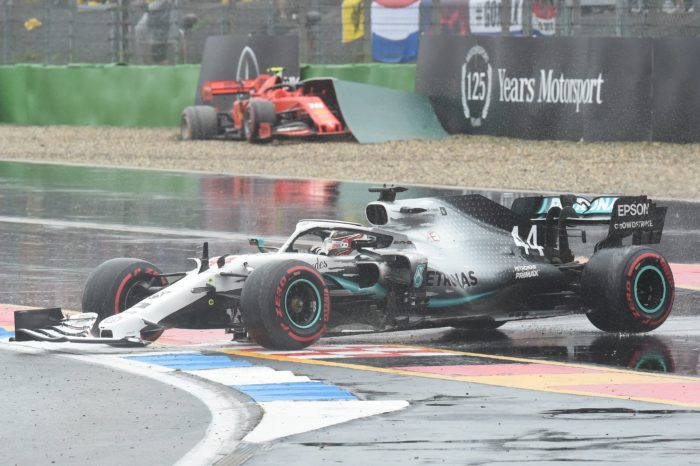
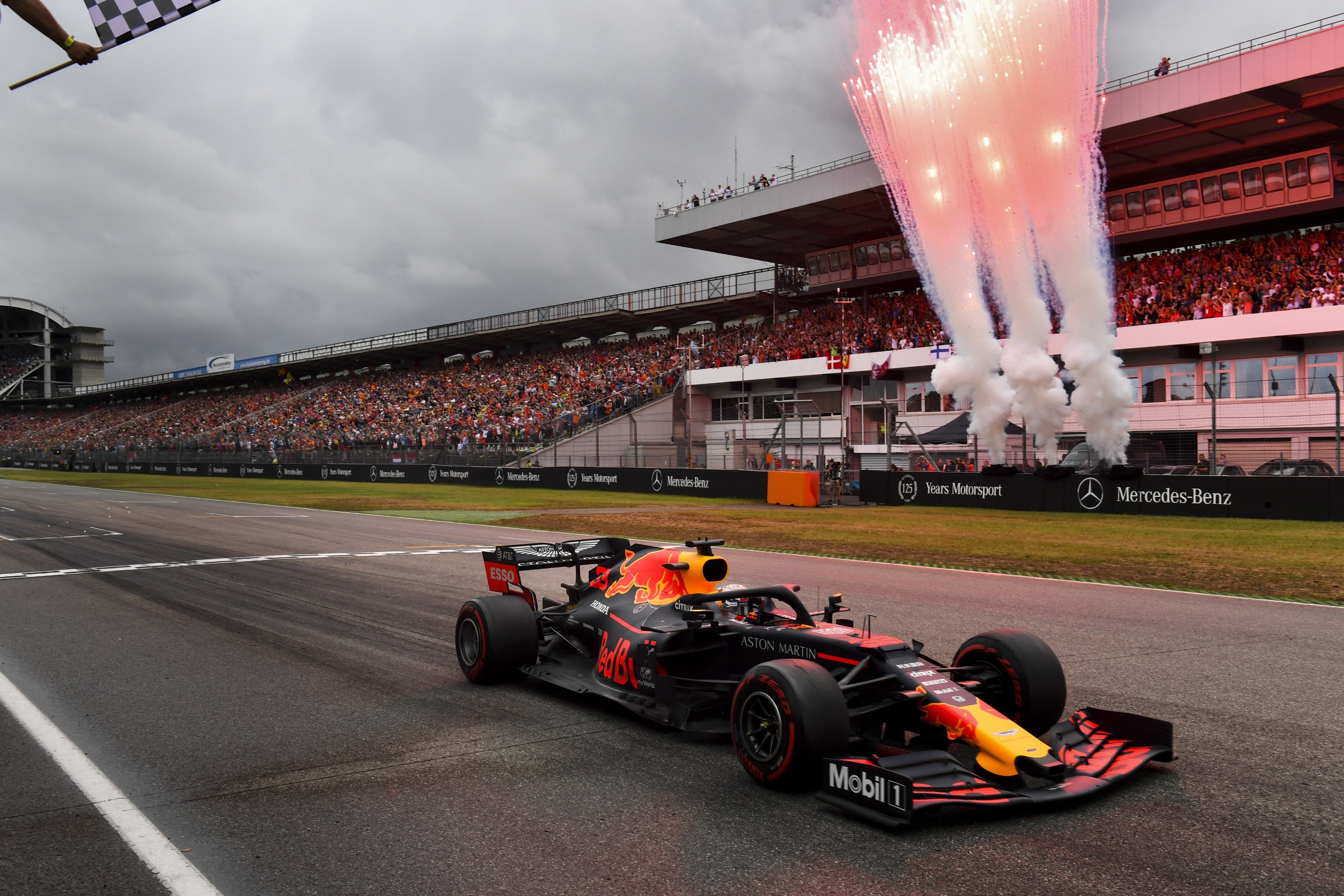
Damage limitation for Hamilton as the title lead swings again.
Image credit: Daimler AG
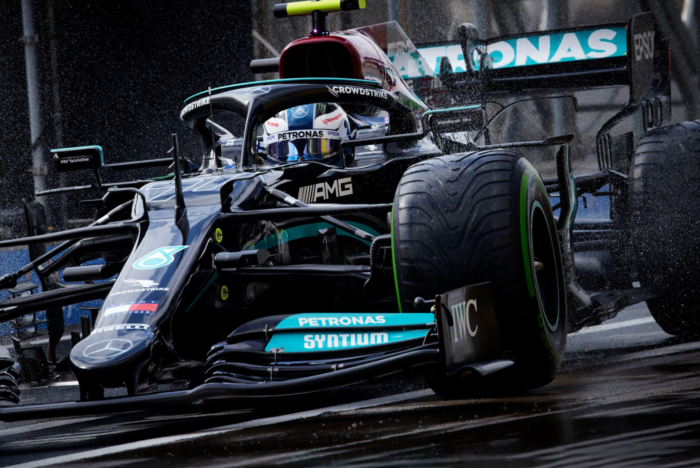
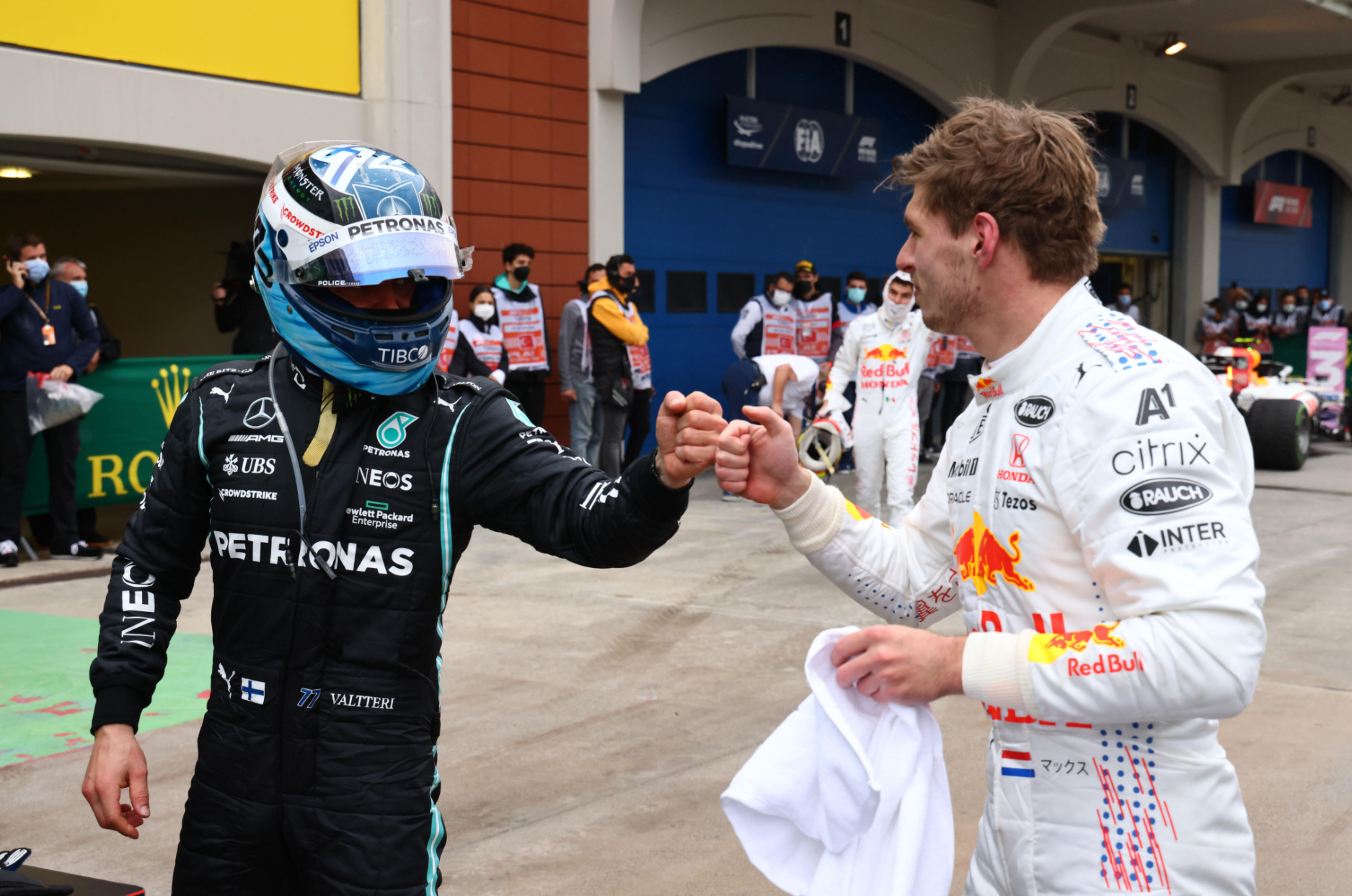
Valtteri Bottas took his first win of the season at a wet Turkish Grand Prix and successfully limited the damage to Mercedes teammate Lewis Hamilton‘s title challenge.
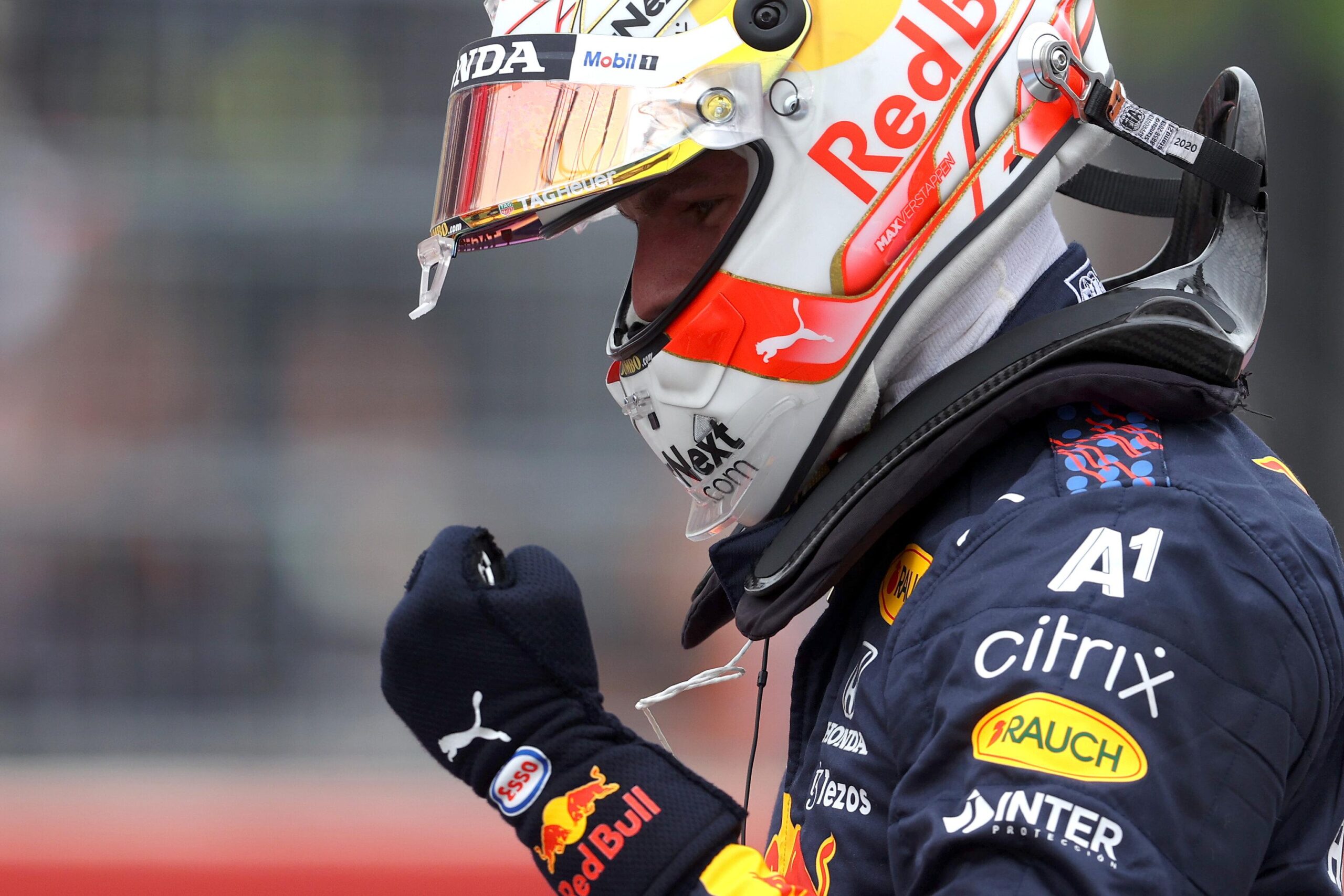
It was a lonely day for the Dutchman – during which he apparently struggled to stay awake – but one which saw him reclaim the championship lead as Hamilton could only recover to fifth after having taken a 10-place grid penalty for a new engine.
The seven-time world champion survived the potential first corner carnage in the middle of the field – unlike Fernando Alonso, who was spun by the understeering and sandwiched Pierre Gasly – and made fairly quick progress through the bottom half of the top 10.
AlphaTauri driver Yuki Tsunoda – perhaps predictably in the sister Red Bull team – put up the most convincing fight, but Hamilton eventually found his way past with a nice move around the outside of Turn 3 and then picked off Lance Stroll, Lando Norris and Gasly to find himself up to fifth by lap 15.
Image credit: Daimler AG
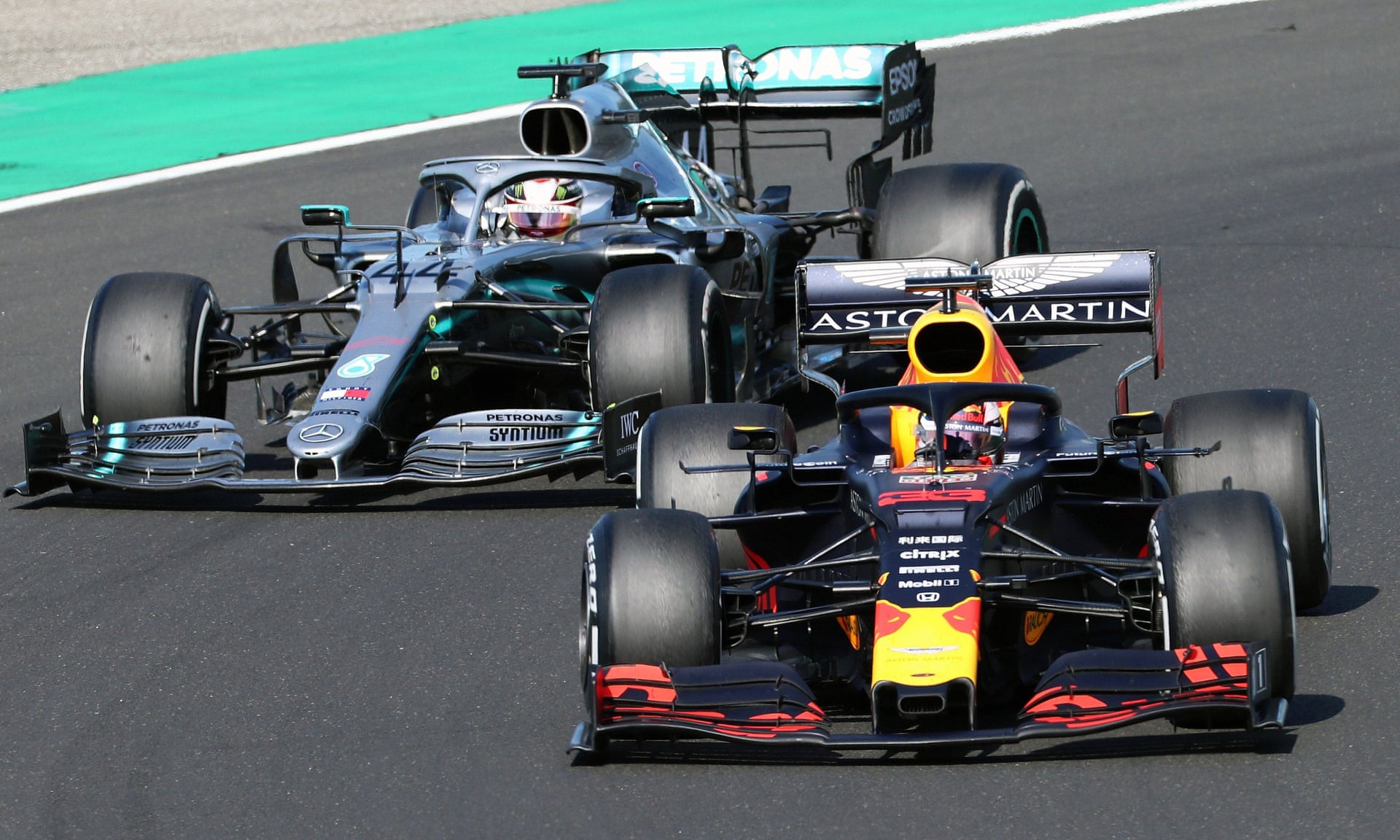
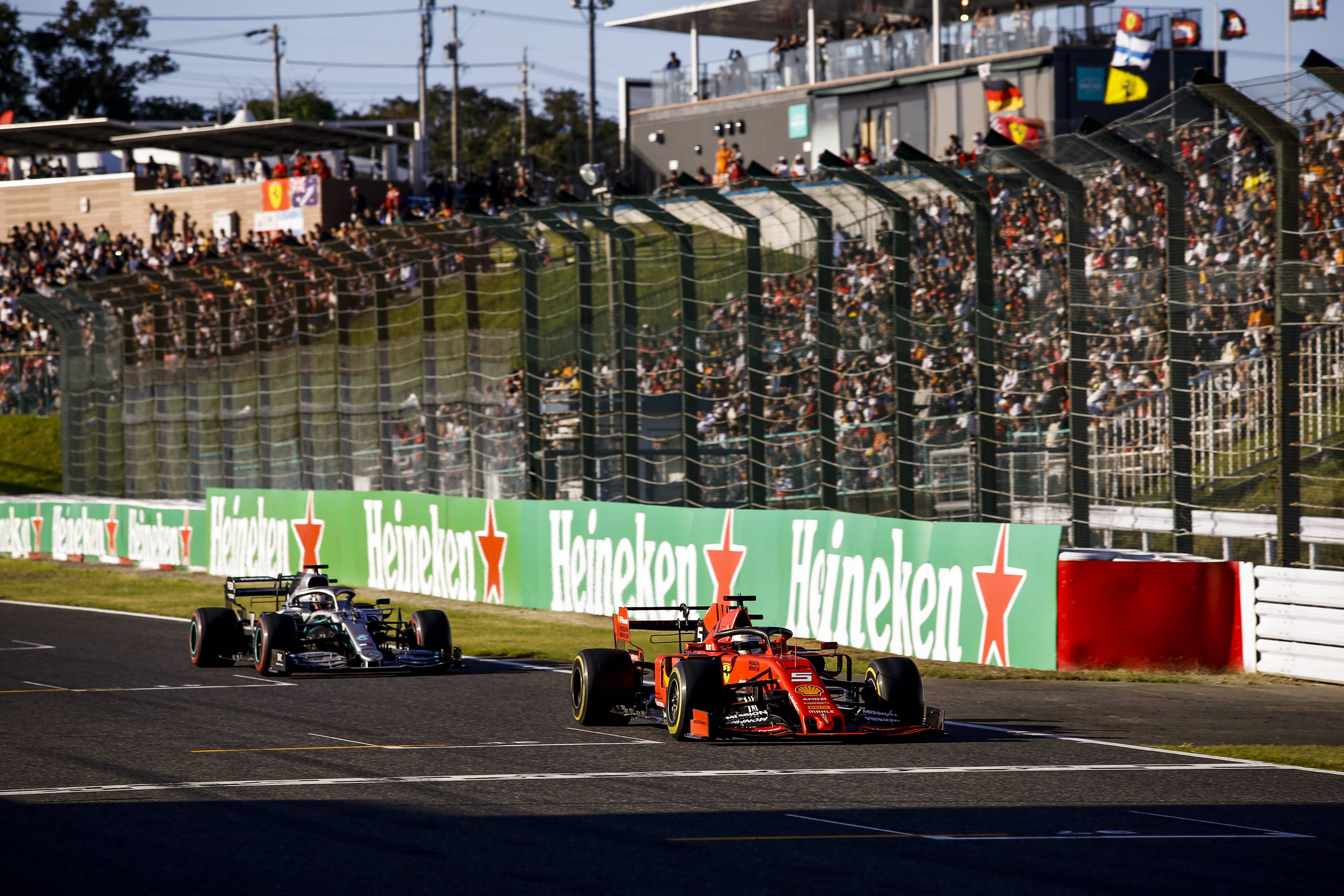
Sergio Pérez proved a far tougher challenge, though, and impressively kept car number 44 behind after a thrilling wheel-to-wheel battle through the end of lap 34, with Red Bull bringing in their other car for a new set of tyres shortly after.
Mercedes covered that off with Bottas and called Hamilton into the pits a few laps later, but their driver was unconvinced and elected to stay out – perhaps thinking of his successful call to do exactly that at last year’s grand prix – as did Ferrari‘s Charles Leclerc. The Monegasque had been running in an impressive third throughout but spotted a chance of an unlikely win.
It would ultimately prove to be the wrong call for both drivers.
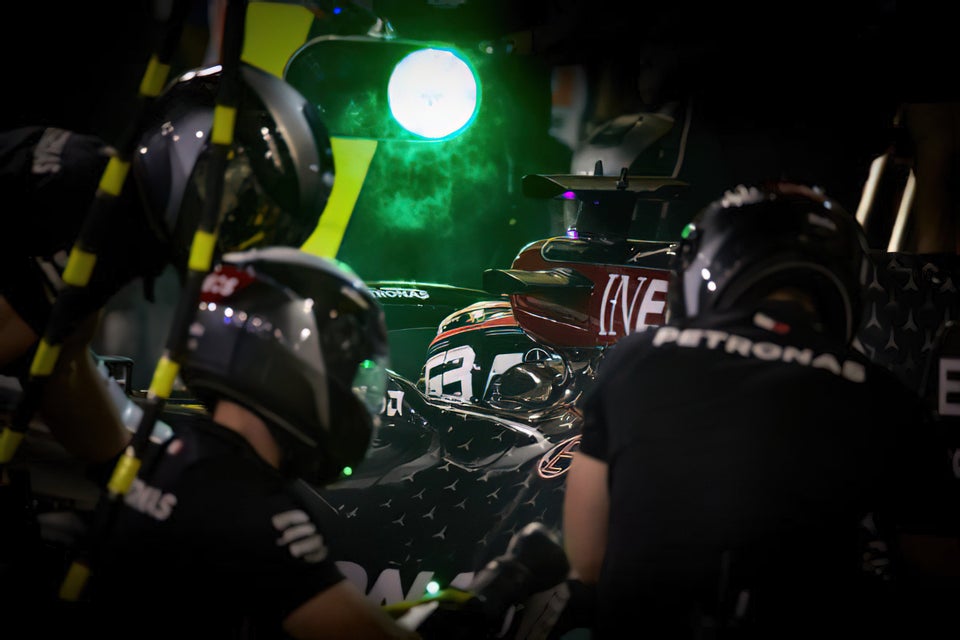
Having lost the lead to Bottas with 11 laps to go, Leclerc admitted defeat and pitted, with Hamilton also doing so three laps later as his team informed him that it was his last chance to remain ahead of Gasly.
The two drivers struggled with graining issues on their new tyres. The other leading drivers had already passed through this phase and were now much faster, with Pérez passing Leclerc for the final podium spot and an unhappy Hamilton having to defend from Gasly.
Out front, it was plain sailing for Bottas, though, who secured his 10th F1 victory – and his first for over a year – with a commanding performance and reached the chequered flag with a gap of almost 15 seconds back to Verstappen.
Image credit: Daimler AG
Carlos Sainz earned Driver of the Day for his charge through the field from 19th to eighth and Esteban Ocon, who did run to the end on his original set of intermediate tyres, narrowly held on for the final points position.
Having taken the engine penalty, Hamilton and Mercedes likely would have settled for an eight-point swing in the title fight if it had been offered to them at the start of the weekend, but they will be aware that it could have been reduced further on the day with a better-executed strategy.
They will now head to the United States Grand Prix in a fortnight determined to wrestle back the championship lead with a win and will be hoping that the pace they showed in Turkey – where they had a few tenths on Red Bull throughout the weekend – is permanent rather than track-specific.
Strategy Woes for Hamilton
Hamilton and his team found themselves in a strategic no man’s land with a gamble that did not quite pay off on Sunday.
Ironically, the 36-year-old was perhaps a victim of his past successes. He is famed for his ability to preserve tyres and his decision to overrule the team at the same grand prix 12 months ago was inspired and earned him the victory which secured his seventh world title.
On this occasion, though, the team should have pulled rank far sooner.
Image credit: Honda Racing F1
With Hamilton behind Verstappen even after the Red Bull driver had pitted, the risk they chose to take outweighed the reward. The Briton only stood to gain a position on Pérez, who he was battling with before the pit window and surely would have passed given another 20 or laps.
In clean air, Hamilton was the fastest man on track despite having used more of his tyre life working his way through the field. Of course, hindsight is 20/20 but he likely would have secured a podium and perhaps even could have challenged Verstappen had he pitted earlier.
The tyres that came off the Mercedes on lap 50 – and Ocon’s plummet during the final laps on a tyre with a visible hole in – probably justified their decision not to allow Hamilton to risk going to the end, despite his initial frustrations. They, more so than Alpine, could not risk a disastrous blowout.
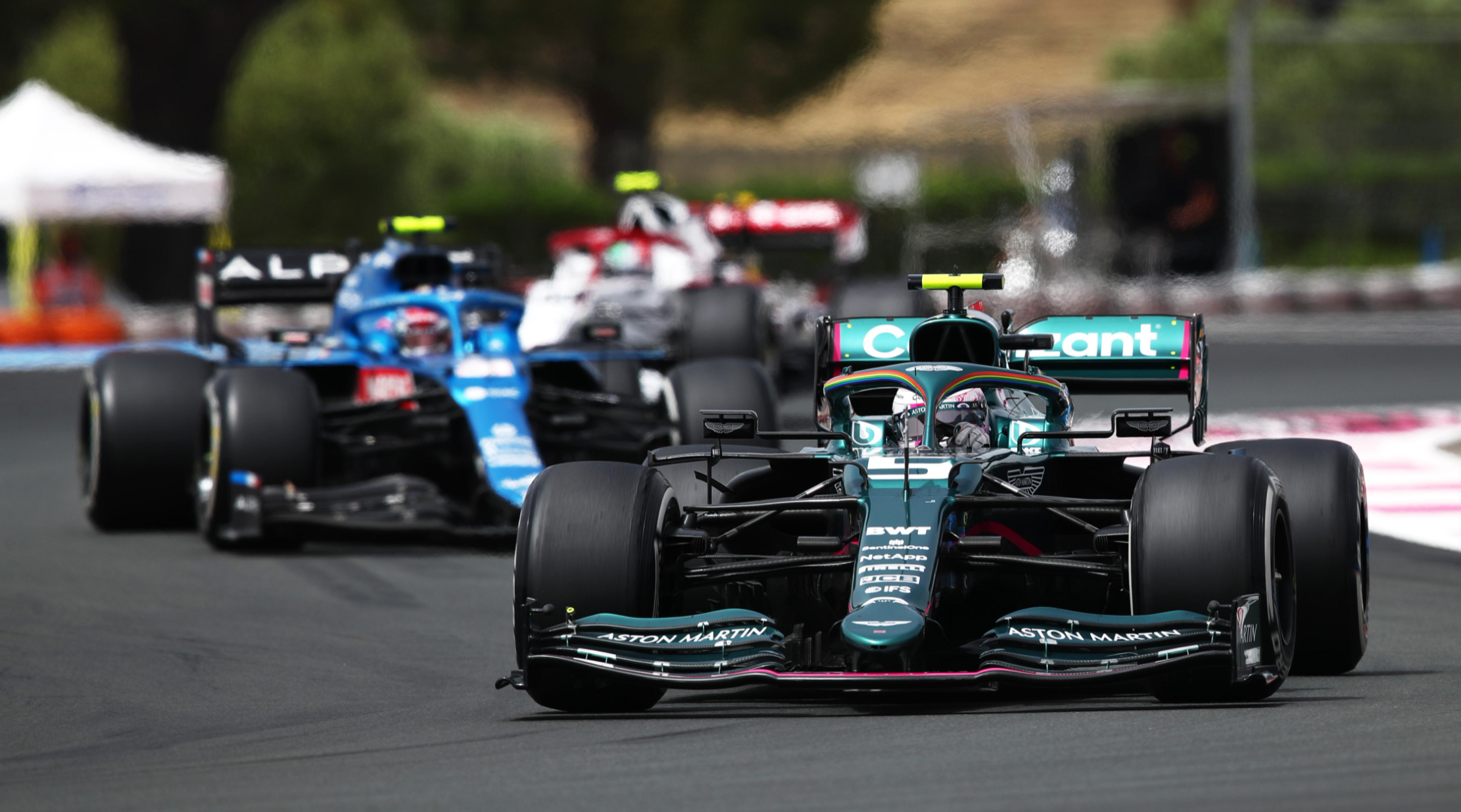
The team were hoping for another Hamilton tyre preservation miracle or the emergence of a dry line suitable for a late change to dry tyres, but Sebastian Vettel‘s failed experiment had already showed that was unlikely in the humid conditions and Mercedes were ultimately punished for their indecisiveness.
The Turkish Grand Prix in 60 Seconds
Answering the Burning Questions
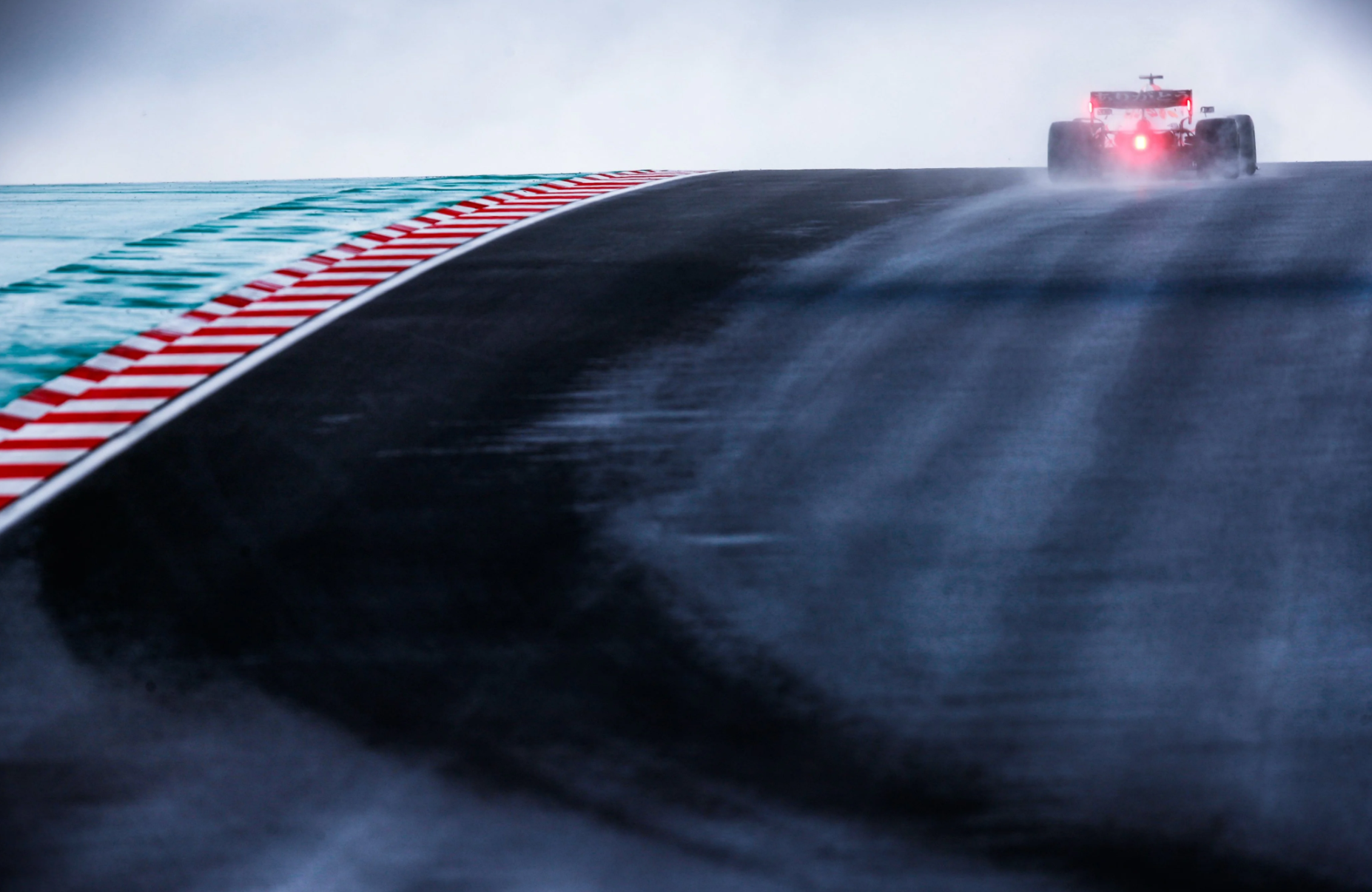
With rain forecast over the weekend, will we get a repeat of last year’s thrilling race? The rain came but the thrills and spills were lacking, at least compared to last year and recent races.
How will Lewis Hamilton recover from, at best, 11th on the grid? It started well but the wheels came off – or rather did not – towards the end.
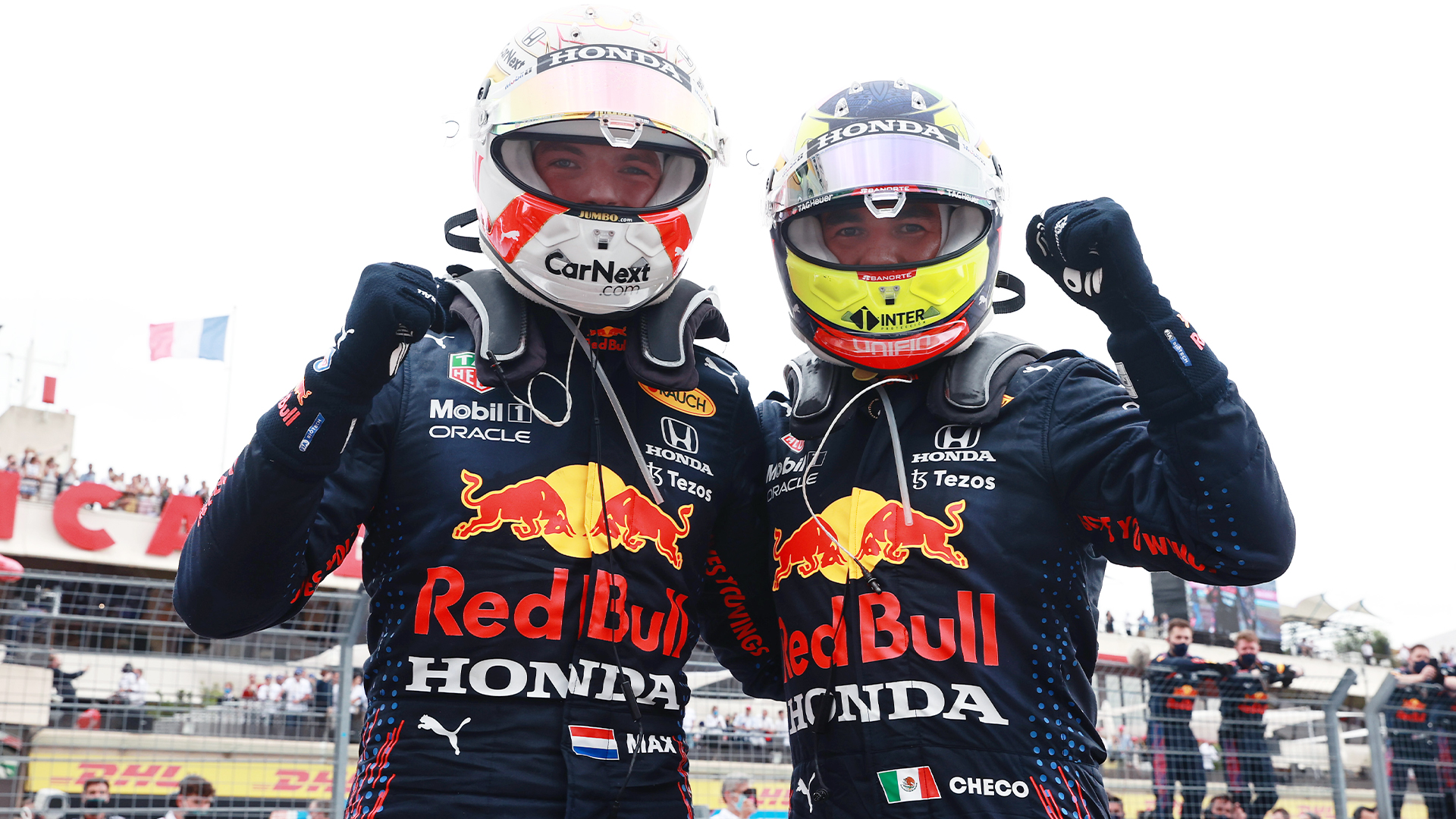
Will Red Bull be struck by the special livery curse? No, it was a solid double podium for the one-off, Honda-themed livery.
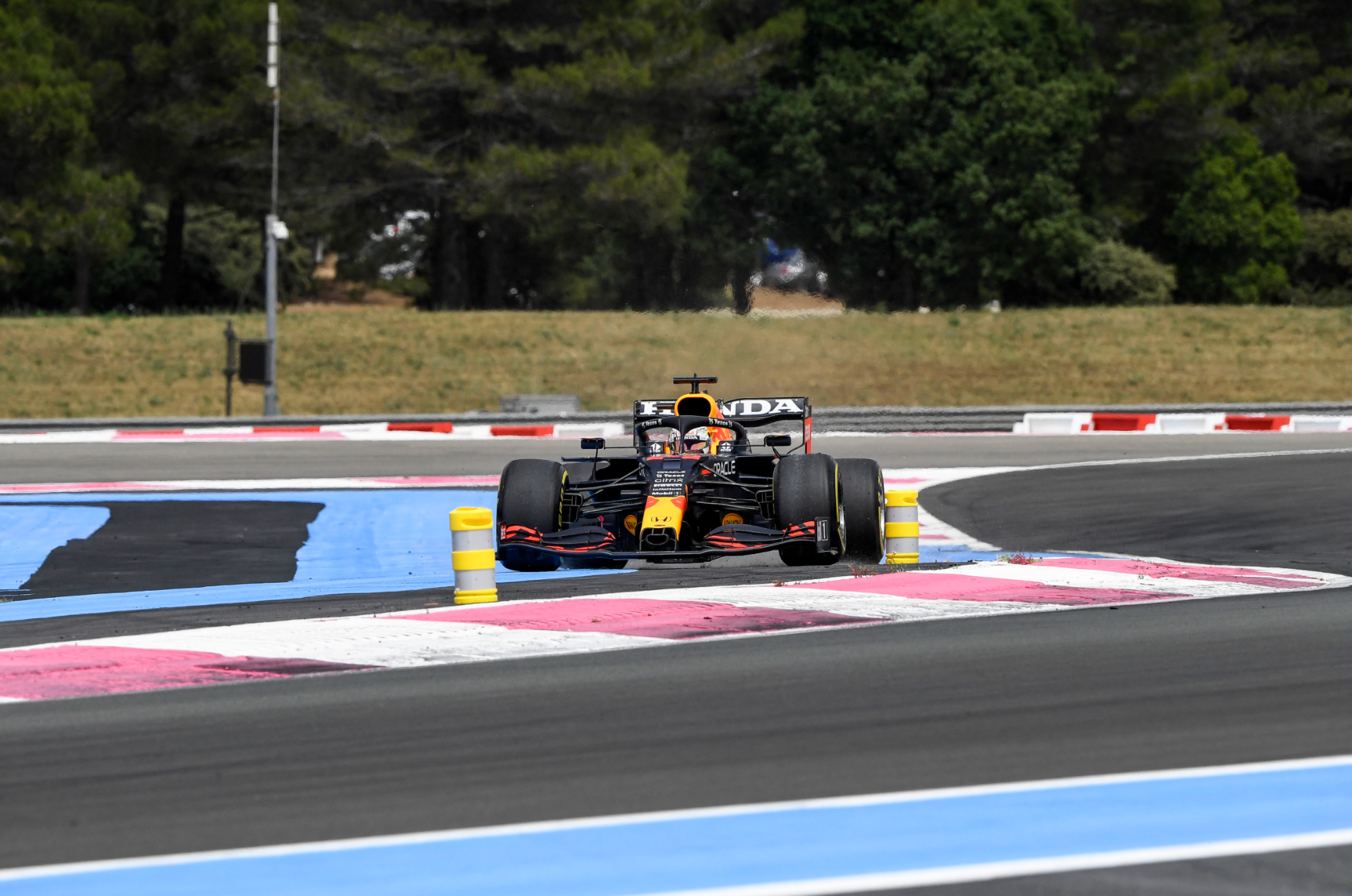
Max Verstappen and Red Bull bested their title rivals in a strategic rollercoaster at the French Grand Prix.
Paul Ricard had historically been a Mercedes track – Lewis Hamilton comfortably winning both races since it returned to the calendar in 2018 – but Red Bull were immediately on the front foot this weekend.
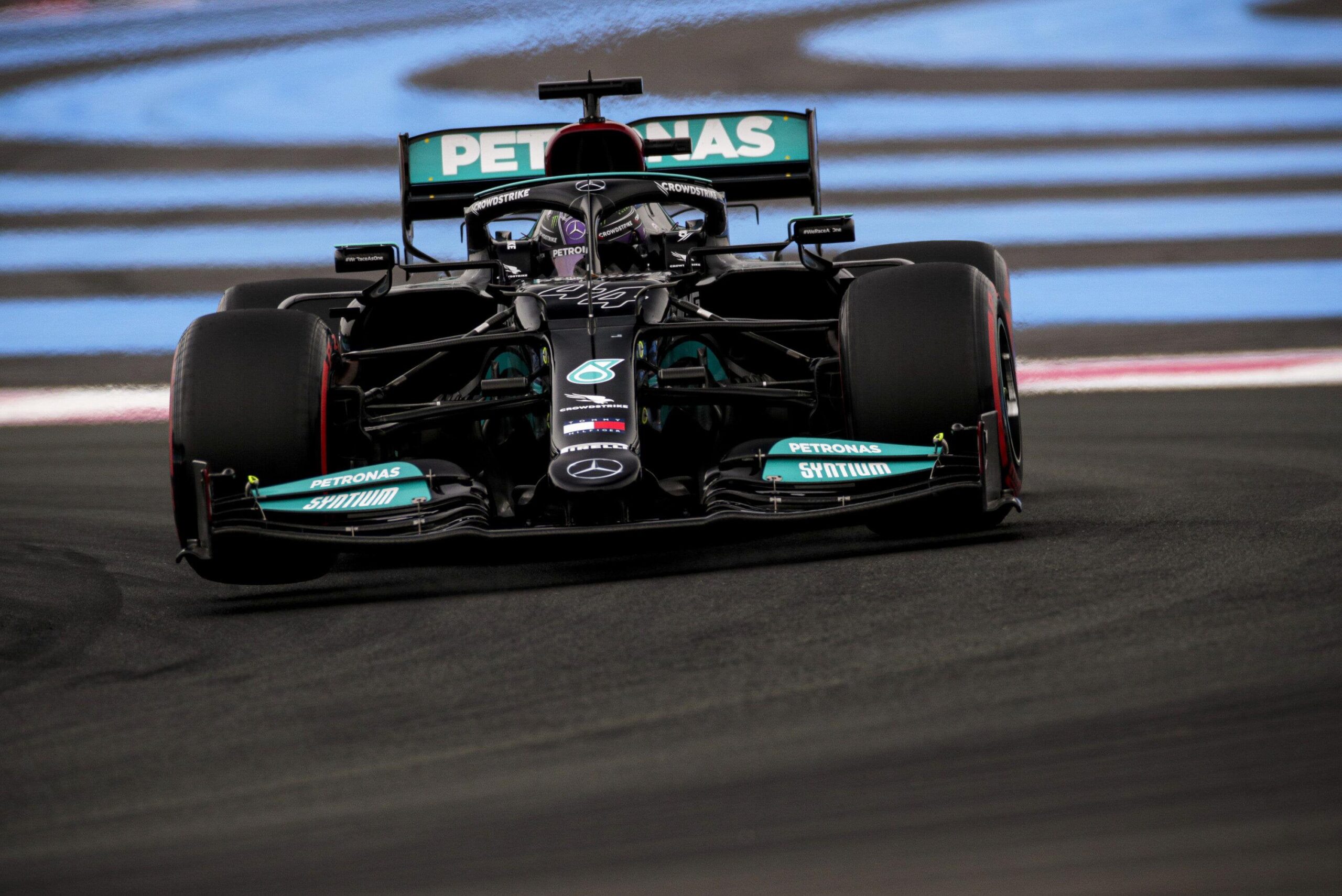
Mercedes, and Hamilton in particular, once again struggled to find a setup for their car. But the World Champion did what he so often does and produced the goods when it really mattered to join Verstappen on the front row.
And that front row soon became the lead when Verstappen was caught out by a tailwind into the first corner; the Dutchman running wide and handing the advantage to his rival.
Image credit: AFP
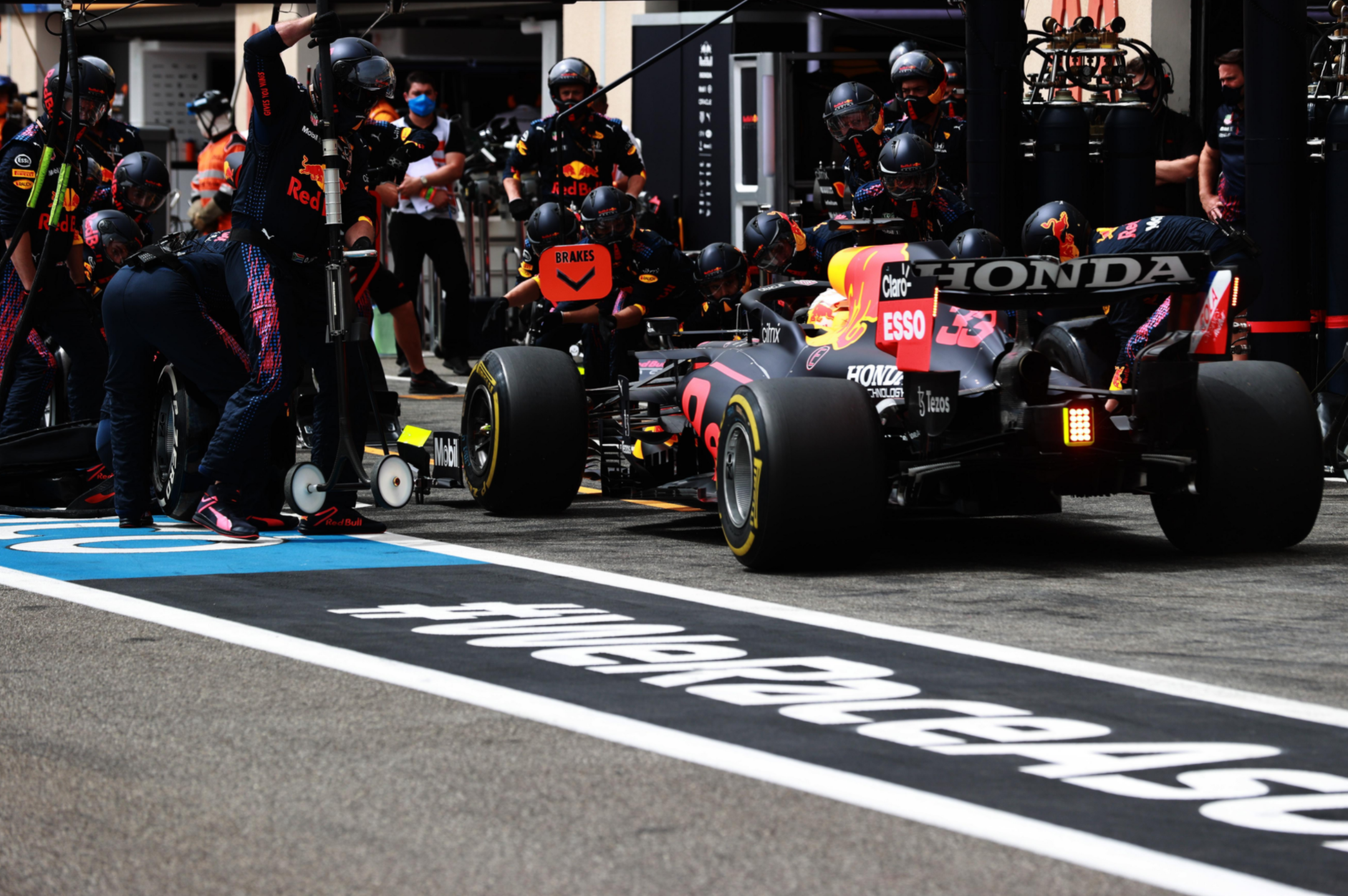
Hamilton held that lead through the first stint and had extended his advantage to around three seconds when Mercedes triggered the front-running pit stops by bringing in Valtteri Bottas. Red Bull responded a lap later to protect against the undercut but Mercedes, crucially, left Hamilton out.
When car number 44 stopped on the next lap, it became evident that the Mercedes strategists had severely underestimated the power of the undercut. Verstappen swept by into the first corner with the helpless Hamilton left frustrated as his team apologised over the radio, saying they “didn’t really know what had happened there”.
Hamilton channelled his frustration into an immediate attack. The Mercedes pair stalked Verstappen, following within two seconds in an attempt to force him to use up his tyres. It worked, but it ultimately forced Red Bull into a race-winning call.
Wary of another situation like Spain this year or Hungary 2019, Red Bull decided to make what Team Principal Christian Horner later described as a “ballsy call” to pit Verstappen from the lead. The Dutchman emerged with an 18-second gap to chase down in 20 laps.
Image credit: Getty Images
But chase them down he did. The gap initially reduced at a rate of two seconds per lap, and Bottas failed to slow him down on tyres which were now well past their best. But Hamilton had done his trademark tyre whispering and for a brief moment the gap appeared to be holding steady at around five seconds as they navigated through backmarkers.
Once in clear air, however, Verstappen upped his speed and Hamilton was once again helpless as the Red Bull dived to his inside to reclaim the lead with a little over a lap remaining. A crucial 14-point swing in the drivers’ standings which leaves the Dutchman with a healthy lead heading to Red Bull’s home track in Spielberg.
Behind the leading pair, Sergio Pérez had been easier on his tyres and passed Bottas for the final spot on the podium. The McLarens had also shown excellent race pace to move up to fifth and sixth, Lando Norris leading home Daniel Ricciardo on a far stronger weekend for the Honey Badger.
It was a shocking day for the Scuderia as the red cars fell from fifth and seventh on the grid to finish outside the points in 11th and 16th. Ferrari got their strategy all wrong and have now lost third in the standings to McLaren.
More Mercedes Mistakes
Speaking of strategy… The Mercedes strategists are on a horrible run of form.
First, they undercut when they should have overcut in Monaco. That lost Hamilton two places on a circuit where strategy is of the utmost importance and condemned him to seventh place. In Azerbaijan, another undercut and a sluggish pit stop saw Hamilton fall from first to third. And now, in Le Castellet, they were mugged twice by a far sharper Red Bull team.
The power of the undercut was evident. Before the front-runners had pit, Ricciardo undercut both Gasly and Carlos Sainz when his team had only been attempting to jump the former. But Mercedes inexplicably chose to leave their leading man out for an extra lap, overly confident in his three-second cushion.
And to what end? Tyres which were one lap younger than those of Verstappen?
Image credit: Mercedes
Once the first mistake had been made, there was still a chance to make amends. The other thing that had been clear to see during the race was that tyre degradation was far higher than expected. But it was again Red Bull who reacted more quickly, bringing in Verstappen and forcing Mercedes to attempt to make it to the end. The usually cool Bottas vented his frustration over the radio that his pleas for a two-stop had been ignored.
Is this just a few bad races, or is Mercedes’ strategy actually the most significant chink in their armour?
For years, the seven-time World Champions have been described as a well-oiled machine, but their superiority over the field has often masked their strategic deficiencies. It doesn’t particularly matter when you mess up if the only competition is your other car…
In a genuine title battle, they have been exposed before.
Image credit: Getty Images
During their fight with Ferrari in 2018, there were numerous mistakes. They miscalculated the VSC delta in Australia, losing Hamilton a win. In China, they failed to pit him under a Safety Car. The same thing happened in Austria. They kept him out too long at the US Grand Prix and handed Kimi Räikkönen a win. The list goes on.
Even in such a dominant march to the title as 2020, there were many operational errors. Be it failing to see that the pit lane was closed in Italy, advising Hamilton he could do a practice start in the wrong place in Russia, or the pit stop debacle in Sakhir.
Red Bull, on the other hand, come across as ruthlessly efficient at the moment. And they also appear to have the slightly faster car.
So, if Mercedes want to stand a chance of winning either title this year, they will have to make sure these issues are ironed out sharpish. Even with Hamilton to occasionally flatter their decisions.
Image credit: Getty Images
The French Grand Prix in 60 Seconds
Answering the Burning Questions
Can Mercedes recover from two tough weekends? It was better, but Red Bull completed their hat-trick nonethless.
Will we see any more tyre dramas? No explosions thankfully, but the degradation spiced things up.
Will the new wing tests have a noticeable effect on the competitive order? Not really. That whole drama has basically been forgotten about already.
Lewis Hamilton and Mercedes have come to an agreement on a new contract for the seven-time world champion. But it’s only for 2021…
After a year of speculation – albeit with the general acceptance that the two parties would get things sorted eventually – the deal is finally done. From the outside, there seemed little reason to break up a winning combination. Arguably the most successful combination in the history of the sport.
Hamilton’s contract negotiations have often dragged on in recent years, since he took control of the process himself and has also moved into a powerful position as Formula 1’s most eminent figure. This one has been especially lengthy, though.
That is likely in part due to complications regarding the pandemic. It would appear that, in the past, Hamilton and Mercedes Team Principal Toto Wolff have often met up for dinner and hammered out the bulk of the agreement. That is obviously not so easily done currently.
But there have also been rumours regarding other sticking points. Some have mentioned a ‘Verstappen Clause’, which revolved around Hamilton being able to have a say on his teammate for 2022. Despite the name, that was not necessarily focussed directly on Max Verstappen, but the Dutchman is the most likely threat to Hamilton’s dominance in the sport and Wolff is known to have been keeping tabs on him for years. Mercedes even tried to sign him as a 16-year-old, but weren’t able to match Red Bull‘s promise of an immediate drive.
Image credit: Getty Images
However, Verstappen is contracted to Red Bull until the end of 2023 and Mercedes know all too well the pitfalls of having two ‘alpha’ drivers, both determined to lead the team, from their volatile years with the pairing of Hamilton and Nico Rosberg.
The more likely option for 2022 and beyond is surely George Russell. He is a junior Mercedes driver who demonstrated his considerable potential when given his one surprise opportunity at Sakhir and Daimler chairman Ola Kallenius wants Russell to be the team’s number one after Hamilton. The young Briton’s contract with Williams is up at the end of 2021 – as is that of current Mercedes driver Valtteri Bottas – so it would appear that there are three Mercedes drivers in competition for the two 2022 seats.
There is also talk of Hamilton’s new contract containing an option for a second year, though.
It is hard to know how much longer he wants to continue. From one race to the next he will often go from sounding like he is on the verge of announcing his retirement to discussing his excitement for the new regulations in 2022.
The 36-year-old is certainly aware that he is entering the twilight of his F1 career and has many passions outside the sport – his music, his fashion, his new XE team and his fight for equality – but you can see how intensely that competitive desire still burns every race weekend.
He has also utilised Formula 1 as a springboard for his various campaigns and, indeed, this new contract contains a ‘joint commitment for greater diversity and inclusion’. Perhaps he will take stock at the end of this year – when there is a good chance he will have become the outright most successful driver in history with an eighth title – and decide if he does want to continue.
Image credit: LAT Images
If the answer is yes, Mercedes would surely keep him on, and it would then most likely boil down to a battle between Russell and Bottas for the second seat. Mercedes would need to weigh up the pros and cons of consistency through a regulation change versus giving a deserved opportunity to their future star, who surely can only wait so long for his promotion.
If the answer is no, would they embrace change and swoop for Verstappen? A Verstappen and Russell pairing would likely be thrilling and very fast, but it would have undeniable parallels with a certain driver pairing at McLaren in 2007. And we all know how that one worked out…
Lewis Hamilton took what had at one point seemed an unlikely victory at the 2020 Emilia Romagna Grand Prix, as his Mercedes team wrapped up a record-breaking seventh consecutive World Constructors’ Championship.
The World Champion was beaten to pole by teammate Valtteri Bottas on Saturday, later describing his lap as “piss poor”, and was then passed by Max Verstappen on the run to the first corner. The narrow Imola circuit proved very difficult to pass on, with the two-metre-wide behemoths of modern Formula 1, and the front three appeared to have formed an orderly queue that may well last the entire race.
However, it would transpire that Bottas had collected some Ferrari shrapnel on the second lap which was significantly affecting his aero performance. Red Bull pitted Verstappen on lap 19 and Mercedes immediately responded with a pit stop for Bottas to cover off the Dutchman. This released Hamilton who suddenly started producing a succession of fastest laps. His medium tyres seemed to be holding up well and Mercedes decided to extend his first stint with the potential to fit the soft tyre at the end.
As it became apparent just how much time Bottas was losing, Hamilton defied his aging tyres and increased his lead to almost the exact length of a pit stop. It would all become academic, however, as a Virtual Safety Car on lap 29, brought about by yet another mechanical retirement for Esteban Ocon, handed the lead to Hamilton on a plate. He re-emerged five seconds ahead of his teammate and Bottas was now forced to switch his attention to keeping Verstappen behind him.
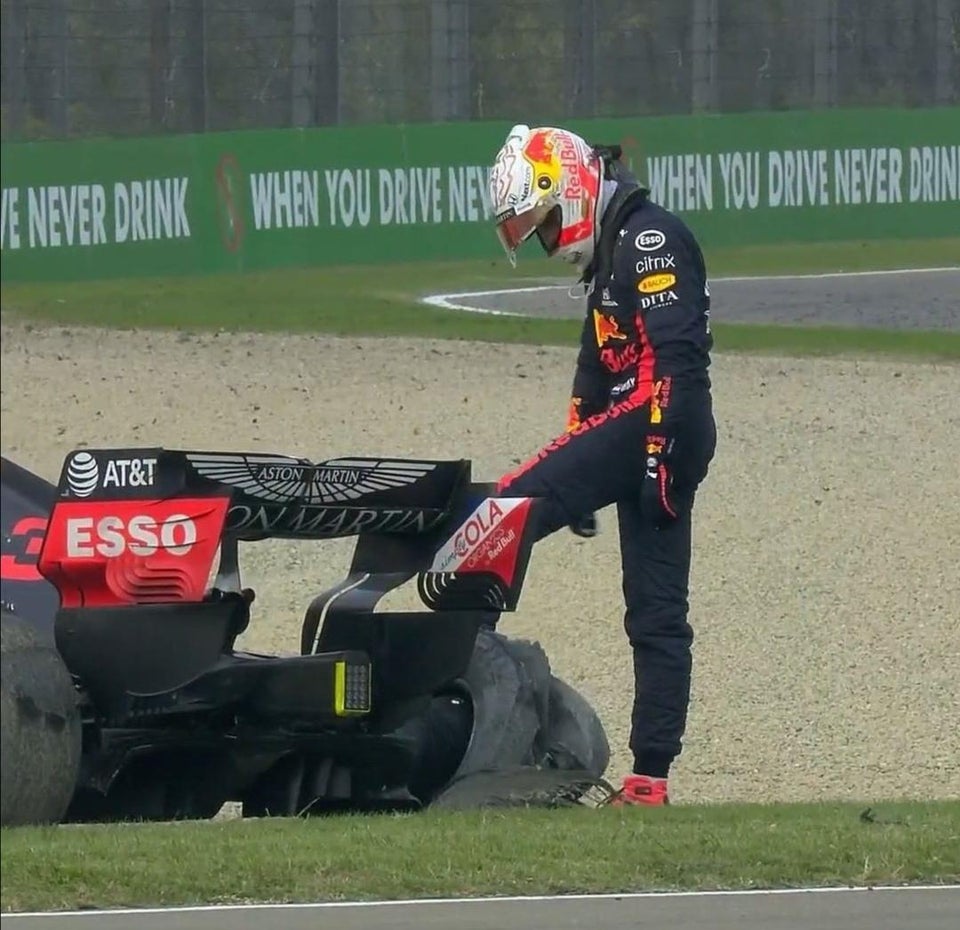
After a couple of close calls, a lock-up into Rivazza allowed Verstappen to pull right up to the gearbox of the Mercedes and he snatched second on the run down to Tamburello. Once again, it appeared as if the order had settled in for the remainder of the race, but there was one more twist in the tail. On lap 51, Verstappen’s right-rear tyre suddenly let go and left him stranded in the gravel trap.
Image credit: Formula 1
That brought out a full safety car. Both Mercedes drivers pitted without incident – the team able to remove the piece of Ferrari from Bottas’s bargeboards – and, surpisingly, so did Sergio Pérez, who was due to inherit that provisional podium position after having made excellent progress from 11th on the grid. Those behind him did not, though, and the Racing Point driver found himself behind Daniel Ricciardo, Charles Leclerc and Alexander Albon.
This was the second of two crucial weekends for Albon and he once again failed to produce. It is looking more and more likely that he will not be retained for 2021 and, with F2 driver Yuki Tsunoda being strongly linked to the second seat at AlphaTauri, Albon is now fighting desperately for his F1 career – let alone the Red Bull seat.
Out front, Hamilton comfortably extended his gap to Bottas and sealed the extra point for fastest lap on the final tour. Ricciardo just about held off Kvyat for his second podium in three races and, behind them, Pérez was unable to pass Leclerc for fifth. The final points positions went to the McLarens and the Alfa Romeos, with Kimi Räikkönen frustrated that he had finally taken his only pit stop one lap before the safety car was called.
Mercedes wrapping up the constructors’ title with a few races to go has become the norm for many years now and, with many fans thoroughly bored of the dominance, it is possible to forget what an incredible achievement it is that we are witnessing.
With a seventh consecutive Constructors’ Championship, Mercedes have surpassed the record set by the dominant Ferrari team of the Schumacher-Brawn-Todt era. This is now arguably the greatest team in the history of the sport. As we all know, they nailed the hybrid engine regulations in 2014 and gave themselves a massive head start for those first three years. Dominating one set of regulations is not rare – Red Bull, Williams, McLaren and Ferrari have all done it in the past – but 2017 brought about another major change in the cars and Mercedes simply aced that too.
Smaller changes since then – even the ones introduced specifically to target them, such as this year’s ban on ‘qualifying modes’ – have done little harm to the Silver Arrows’ supremacy either. Would anybody honestly be surprised if they do the best job on the 2022 regulations too?
Their biggest threat appears to come from the two most respected members of the team – Hamilton and Team Principal Toto Wolff – seemingly considering their positions, as both have been openly pondering how much longer they will continue. Time will tell on that front, but Hamilton himself is usually the first to point out that he is just the last link in a very long, particularly well-oiled chain.
Admittedly, as ‘last links’ go, Hamilton is maybe the greatest of all time – the same could be said for Wolff – but there will be more drivers and more team principals in the years to come and, assuming Mercedes stick to their relentlessly efficient principles, they will be at the forefront of the sport for a long, long time.
The Emilia Romagna Grand Prix in 60 Seconds
Answering the Burning Questions
How will a condensed two-day weekend affect the teams? There certainly seemed less prepared, particularly in terms of the behaviour of the tyres.
Can Mercedes wrap up a record seventh consecutive title? Of course they can.
How will Alexander Albon fare on a crucial weekend for his F1 future? Not well, sadly.
Which of the teams battling for third in the Constructors’ Championship will have the best weekend? Renault had marginally the best weekend and are now a single point ahead of their two rivals.
Will Kimi Räikkönen gain an advantage as the only driver to have previously raced at Imola? The veteran Finn had an excellent race and, with a safety car appearing one lap earlier, could have grabbed a large haul of points.
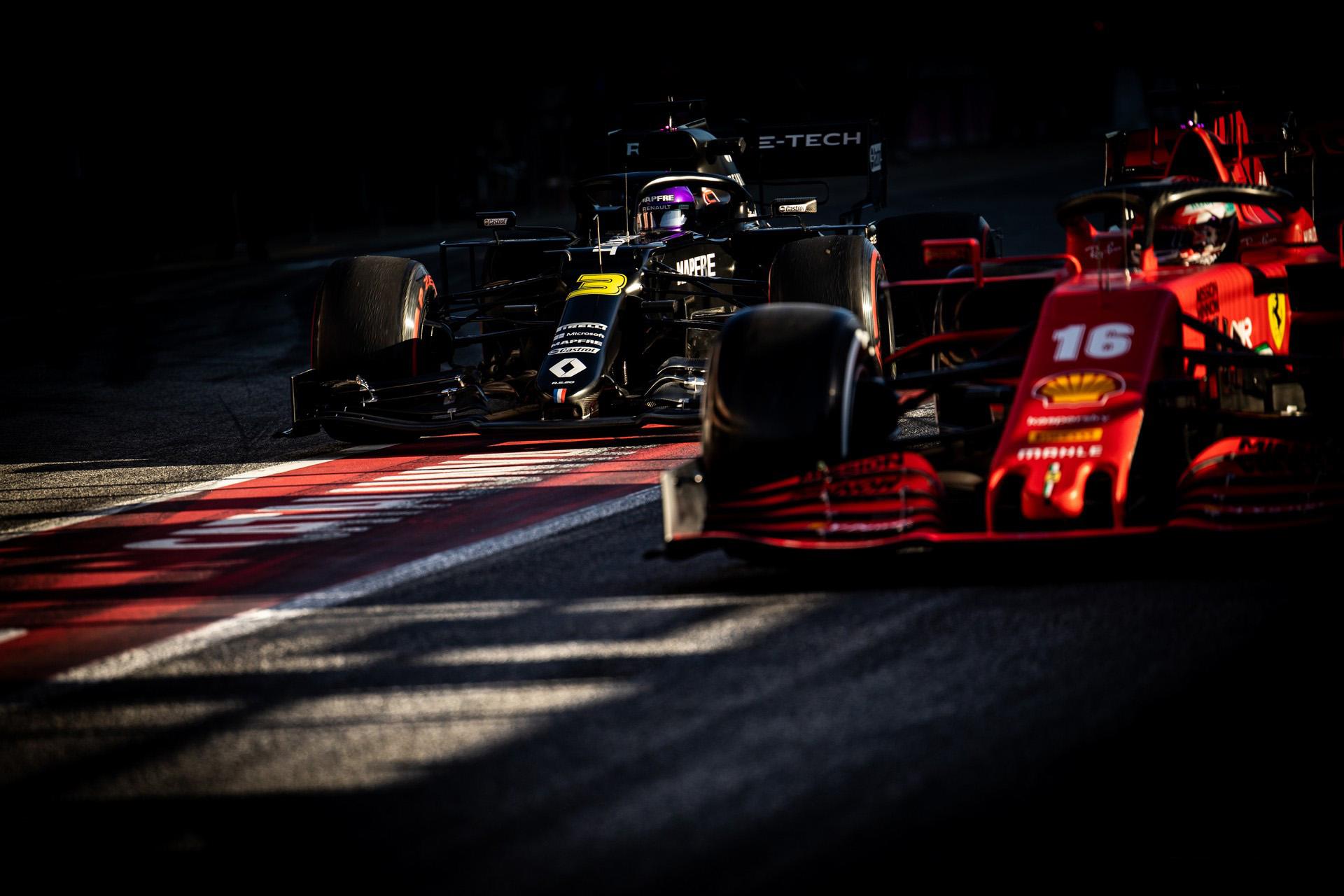
The teams have packed up in Barcelona and now prepare for the long haul to Melbourne for the season-opener. Meanwhile, the rest of us try to figure out who was ‘sandbagging’, who was doing ‘glory runs’, who’s worried about their reliability and who’s quietly confident.
Let me pose some questions.
A Few Worries for Mercedes?
Image credit: Getty Images
Mercedes continued their fine form from the first week of testing for the most part, but it wasn’t all plain sailing. Reigning world champion Lewis Hamilton missed most of the penultimate day after an oil pressure anomaly caused a precautionary shutdown of the power unit. There had been a couple of other more minor engine-related issues prior to that and Williams, who are an engine customer of Mercedes, had similar problems.
Could this be an Achilles heel for the six-time world champions? We’ve seen the impact having to run on reduced power has had on the team in the past; at high altitude and with high temperatures in Austria last year, they suffered with engine overheating and were not on the level of Ferrari or Red Bull. Have they pushed their new engine too far in trying to catch up to the possibly illegal (more on that later) power achieved by Ferrari last year? Time will tell. But at least they have discovered the issues now. Better in testing than in qualifying or the race in Melbourne.
You can be sure that they will leave no stone unturned back at Mercedes HQ and the Silver Arrows certainly still head into the season as the team to beat. But maybe this development will have given some hope to those in the two garages next door. Speaking of which…
Can Red Bull and/or Ferrari Really Challenge This Year?
Having kept their heads down for the first week of testing, the other two members of the ‘big three’ started to show their hand a little more as they entered the final couple of days.
Ferrari spent the first week insisting that they were in trouble, that they were not sandbagging and that they may well even be battling with the midfield this year. But there was always a hint of the-Italian-lady-doth-protest-too-much about it. And it could be seen from an impressively fast and consistent long run by Charles Leclerc on the final day that they have been keeping their true pace under wraps.
The car was still very slow on the straights, however. How much of that is down to conservative power modes and how much is due to their focus on increasing downforce levels in slower corners will probably only become apparent during Q3 in Australia.
After last year’s pre-season testing promised far more than the season ended up delivering for the Scuderia, they have been maybe too self-deprecating this time round.
Red Bull have taken a similarly reserved approach, with even the notoriously outspoken Dr Helmut Marko not producing anything especially headline worthy. They have been producing solid lap times throughout the test, however, and look like they could pose a real threat to Mercedes. Max Verstappen did suffer a surprisingly high number of spins which raised suspicions about whether the new car has issues with stability on corner entry. The Dutchman dismissed these rumours with talk of the weather conditions and “finding the car’s limits”.
If there is nothing substantial to those rumours then Red Bull are looking in pretty good shape to take the fight to the world champions. Verstappen’s fastest time was only half a second down on that of Valtteri Bottas – who achieved the best lap for Mercedes during the first week – and was completed on a harder tyre. Watch this space.
Who Will Be Best of the Rest?
Image credit: XPB Images
Assuming that Ferrari’s talk of being comparable with those in the midfield is simply a case of tempering expectations, the fight for fourth place and ‘best of the rest’ is looking mighty tight.
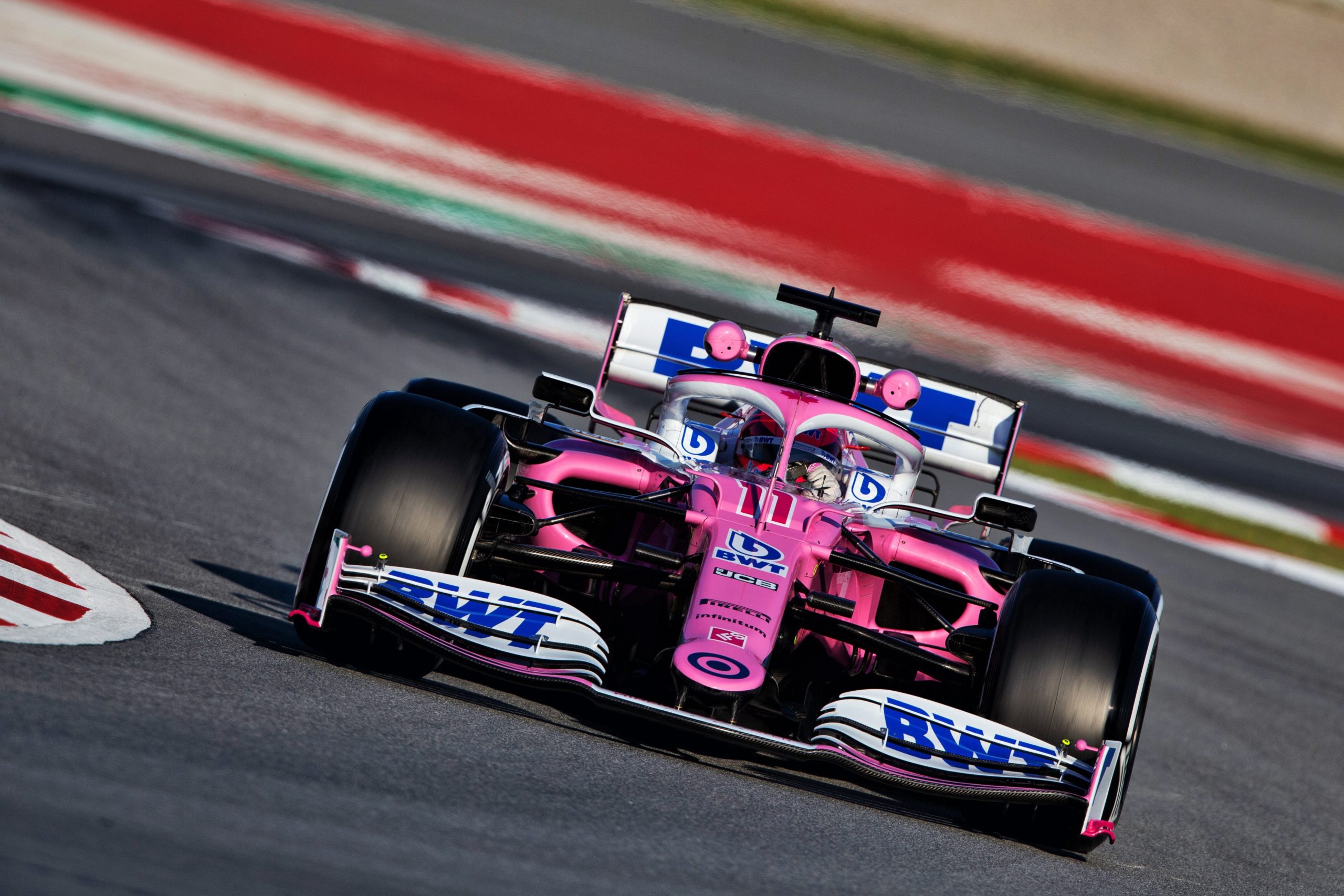
Racing Point have caused many a raised eyebrow with their new car thanks to its striking resemblance to last year’s Mercedes; particularly once it had gone nearly as fast as the championship-winning car. Their two drivers – Sergio Pérez and Lance Stroll – spent large periods of testing in the top three and Pérez struggled to hide his glee during every interview, describing this year’s challenger as “the best car I’ve had in pre-season“.
The more established heads of the midfield – McLaren and Renault – pride themselves on making all their own parts and will be very bitter if they are beaten by a “Pink Mercedes“. But it all seems quite logical when technical director Andrew Green says they simply “copied the quickest car from last year”. He also pointed out that they had not had the budget to do so in the past but, with Lawrence Stroll’s investment, they can now achieve great things. And, in fairness, this is a team that has perennially punched above its weight.
McLaren and Renault aren’t looking too bad themselves though.
Image credit: XPB Images
Last year’s ‘Formula 1.5‘ champions have produced another handsome papaya and blue machine which, whilst they don’t appear to have been doing glory runs, looks like it will be there or thereabouts come Melbourne. It has produced some impressive long runs and the team seem very content with their work so far.
Renault, after a very disappointing 2019, have seemingly ripped up their former blueprints and started from scratch. A visibly different car, with a far thinner (and uniquely rounded) nose and reprofiled sidepods and airbox, looks like it could propel them back to the front of the midfield. Daniel Ricciardo’s lap, which left him top of the timings on the penultimate day, looked fast and a lot of their last car’s issues seem to have been solved.
Whilst those three are the favourites to fight for fourth, the others are not far behind. AlphaTauri, Alfa Romeo, Haas and even Williams have looked to be in the mix at varying points throughout the two weeks and the general consensus is that the midfield, as a whole, has closed the gap to the top three.
Image credit: James Moy
All this makes for the prospect of some great racing in the final year of these regulations. And, whilst we all agree that the new regulations were necessary for the health of the sport, it is ironic that the best racing always seems to happen at the end of a set of regulations, once all the teams have figured out what works best, copied each other a fair bit, and the pack has levelled out.
A Couple of Other Points of Order
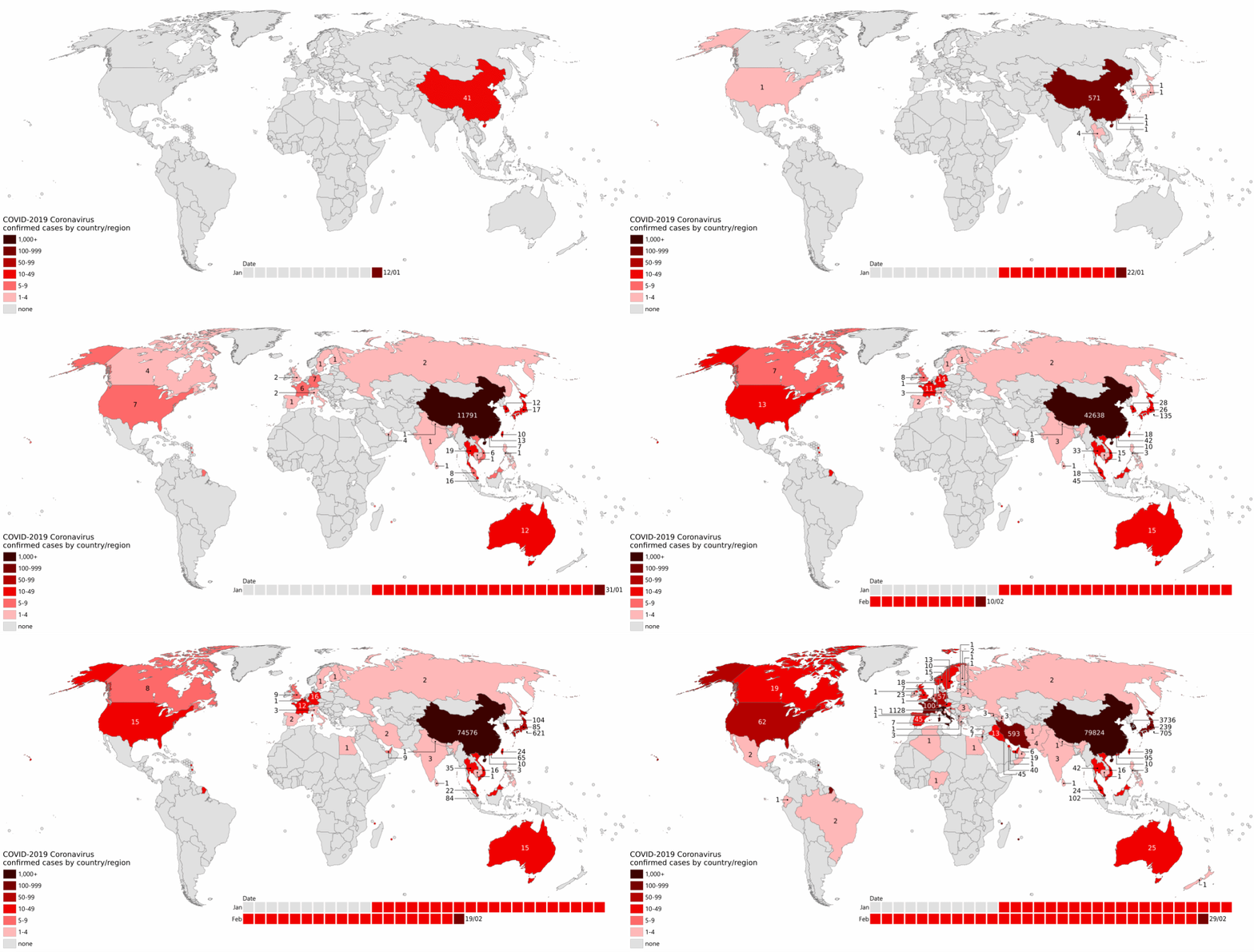
The two other pressing issues in the sport right now are the FIA ruling regarding Ferrari’s engine last year and, as with most of the world, the Coronavirus.
The FIA revealed on Friday – conveniently just as pre-season testing was concluding – that they had “reached a settlement” with Ferrari after a “thorough technical investigation” into last year’s engine but would be keeping the specifics of said settlement between the two parties.
The opacity and underhandedness of this decision has shocked and infuriated the other teams. The term “settlement” certainly appears to imply wrongdoing on Ferrari’s part but, if that is the case, then why such leniency? Especially considering that would mean the team were using an illegal engine for most of the season.
The announcement was clearly timed to avoid lots of talk in the paddock through testing but you can be sure that the teams will not have forgotten by Melbourne. The drama here is far from over as Ferrari’s competitors “consider their next steps”.
Barring some kind of mass protest by those teams, the Australian Grand Prix does, at least, look likely to go ahead…
Some of the others remain very much in the balance. The Chinese Grand Prix has inevitably been postponed – and it will be a challenge for them to find a spot in the calendar for it later in the year – whilst Bahrain and Vietnam especially are looking pretty iffy. Both Grands Prix are instigating special measures, including a 14-day quarantine on travellers from countries where outbreaks are the most severe. That includes Italy.
Obviously, Italy is the home of Ferrari, but also AlphaTauri, some members of Haas and tyre supplier Pirelli. Whilst authorities in Bahrain are planning an expedited process for F1 personnel, Vietnam’s arrangements are less concrete at this point. There would always likely have been teething problems for a country hosting its ever first Grand Prix and the Coronavirus outbreak will have made thing considerably harder for them.
Ross Brawn has said that a race would not be held in a country that denies access to any team to ensure that the competition remains fair. The irony there, considering the controversial FIA/Ferrari settlement, will likely not have been lost on the teams.
Some questionable strategy but, nevertheless, Mercedes are champions.
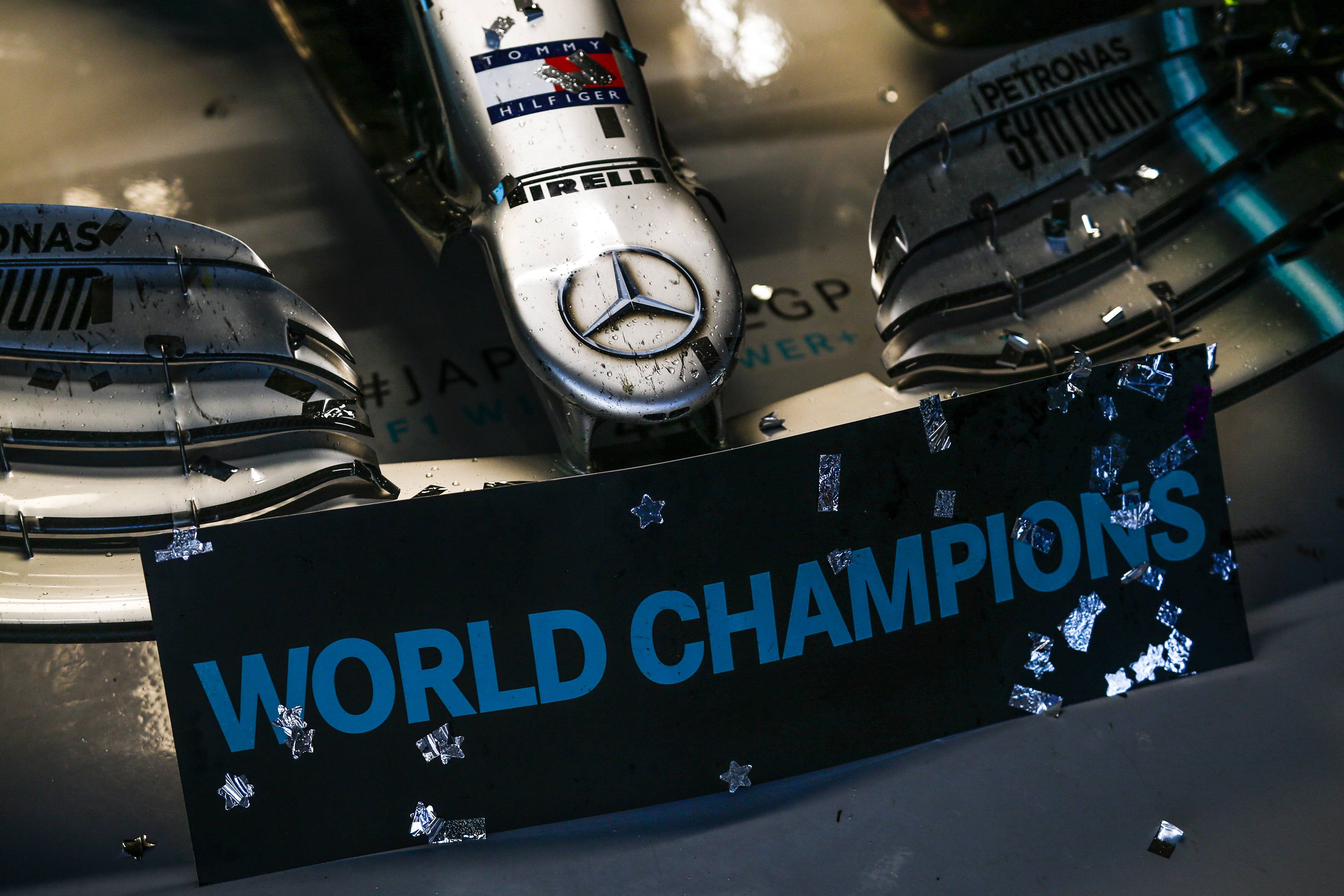
With Ferrari finding new and ever more inventive ways to capitulate, Valtteri Bottas came home a comfortable winner at the 2019 Japanese Grand Prix and sealed the Constructors’ Championship for Mercedes. The result also confirmed that only Bottas or his teammate, Lewis Hamilton, can now win the Drivers’ Championship so that is a record six consecutive world championship doubles for the Silver Arrows.
Whilst some may be tired of the recent domination within the sport, you have to admire the consistency with which the team operate. It is worth remembering that we are witnessing history in the making. In the future, people will surely point back to arguably now the greatest team the sport has ever known. The efficiency with which the German marque is renowned came to the fore at the beginning of the hybrid era in 2014 and the relentless Mercedes machine has rumbled on ever since, crushing all in its path.
It is a shame that Niki Lauda is not around to see them break the record as he was so instrumental in that success. He played a crucial role in convincing Hamilton to join the team and, together with team principal Toto Wolff, formed a fantastic management team. Touchingly, Lauda was remembered by his infamous red cap in the celebratory photos.
As for the race itself, there is a fair amount to discuss.
Typhoon Hagibis swept through the area on Saturday and produced the rarity of a Sunday morning qualifying session. Having looked considerably off the pace in Friday’s practice sessions, Ferrari produced a surprise front row lock-out, with Sebastian Vettel outqualifying his teammate, Charles Leclerc, for the first time since June to take pole position.
However, Ferrari’s joy was to be short-lived as three hours later, at the race start, everything rapidly fell apart.
Image credit: Getty Images
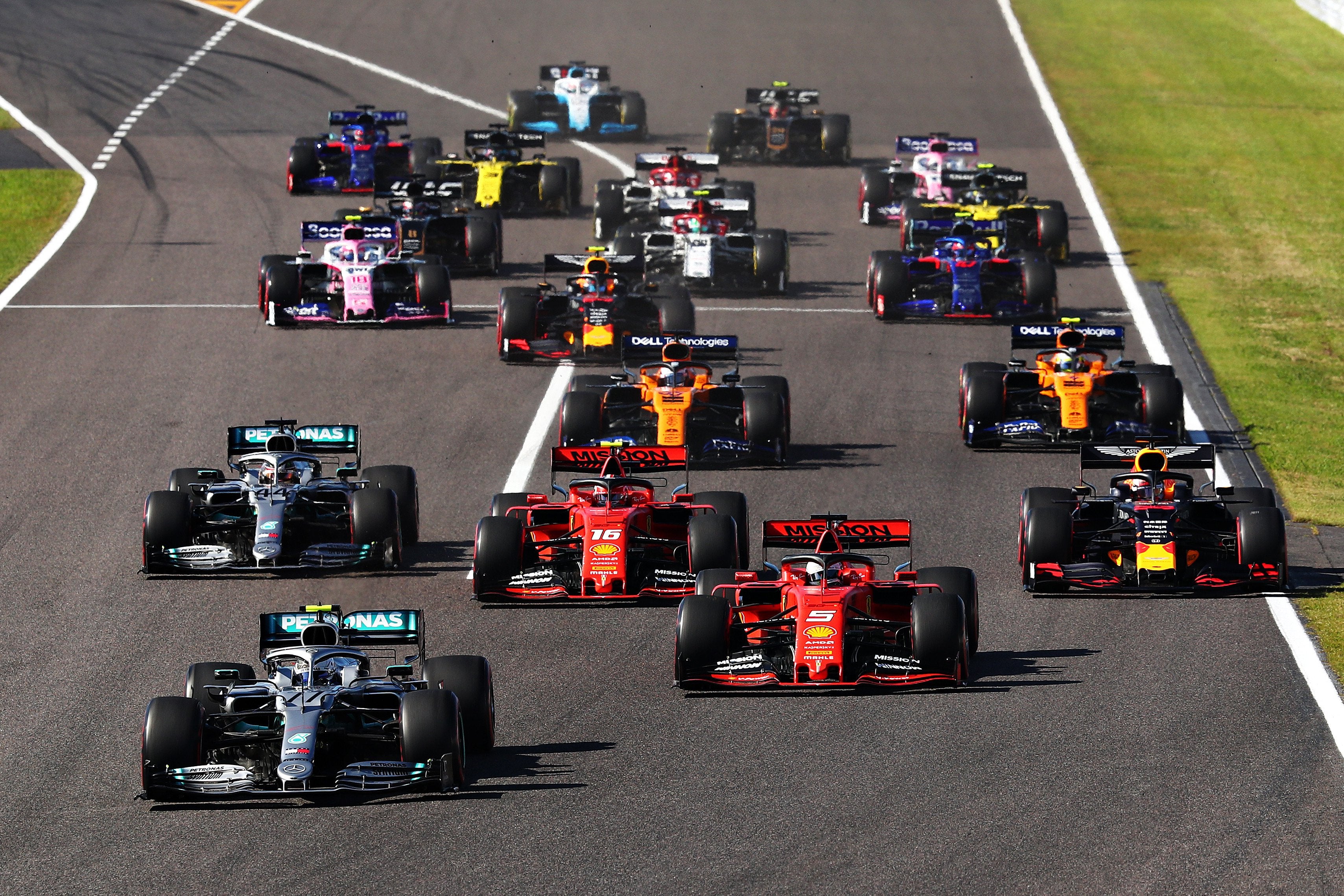
Vettel produced what appeared to be a false start. It would eventually prove to be legal, due to the peculiarities of the regulations and the sensors. Despite moving before the lights went out, Vettel stayed within the confines of his grid slot and, because he braked instantly, was stationary when they did. Thus, it was a legal start.
But not a good one.
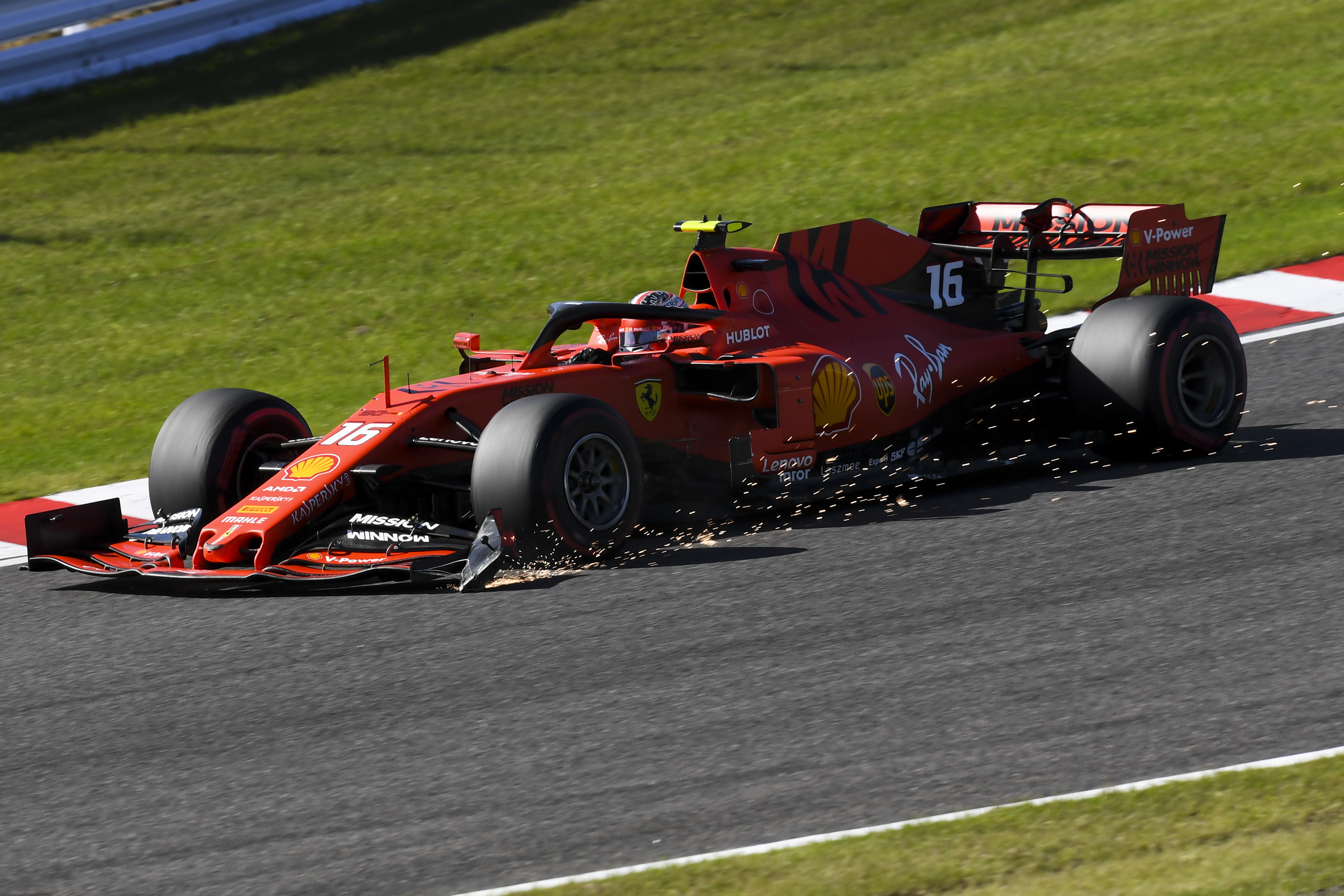
Whether distracted by this teammate or not, Leclerc also got away poorly and Bottas was comfortably leading by the first corner. Hamilton had nowhere to go but Max Verstappen had his eyes on third and set about storming around the outside. Leclerc, however, understeered into him and wrecked the Dutchman’s race – he would retire from the damage on lap 17. Leclerc survived but with damage to his front wing. He pitted on Lap 3, after showering those behind him with bits of carbon fire, and spent the rest of the race fighting back through the field.
The front three of Bottas, Vettel and Hamilton broke away from the pack and it became apparent that strategy would be key. The Ferraris had been suffering with their tyres more and expected to two-stop, whilst Mercedes were aiming for just the one.
Vettel was first to blink on lap 16 and Mercedes responded by pitting Bottas the following lap. Hamilton was left out with the intention of one-stopping but this was always going to be tricky as Saturday’s typhoon had washed the track clean of rubber and left it very ‘green’. The tyres, already damaged by following Vettel, degraded quickly and Hamilton found himself almost a pit stop behind Bottas in the space of a few laps; the world champion was soon on the radio, agitated and confused by his strategy.
The particularly confusing decision by Mercedes, however, was when they bailed out of the one-stop and pitted Hamilton with 10 laps remaining. Passing the Ferrari of Vettel – with its significant straight-line speed – combined with the layout of Suzuka, was always going to be a tall order, even with fresh tyres. And so it proved to be as he closely followed Vettel home but never truly challenged him.
Image credit: DPA Picture Alliance
Hamilton has shown his expertise when it comes to managing degrading tyres and defending positions many times in the past and would surely have been better off attempting that. The worst case scenario there would be that both Bottas and Vettel pass him and then Hamilton would have pitted anyway as there was well over a pit stop’s time back to Alexander Albon in fourth.
This obsession Mercedes appear to have with the overcut – certainly when it comes to Hamilton – is quite strange considering its lack of success. In this instance, it looks a bit like they were wary of Hamilton and Bottas fighting on track and so removed him from the situation. You get the sense that the Mercedes strategy team may have been a bit flattered by the dominance of their car in recent years.
Either way, Bottas didn’t put a foot wrong out front and picked up a deserved victory – his first since Baku in April.
More Points for Sainz, More Bad Luck for Norris
It was another strong drive for Carlos Sainz and another fifth place come the chequered flag. That moves him up to sixth in the Drivers’ Championship and moves McLaren another step closer to sealing fourth in the Constructors’ Championship. The Spaniard really is showing his full ability now, after a difficult year at Renault in 2018, and is potentially making Red Bull question their decision to release him. Whilst obviously far more experienced, he is only actually 18 months older than Albon and Pierre Gasly…
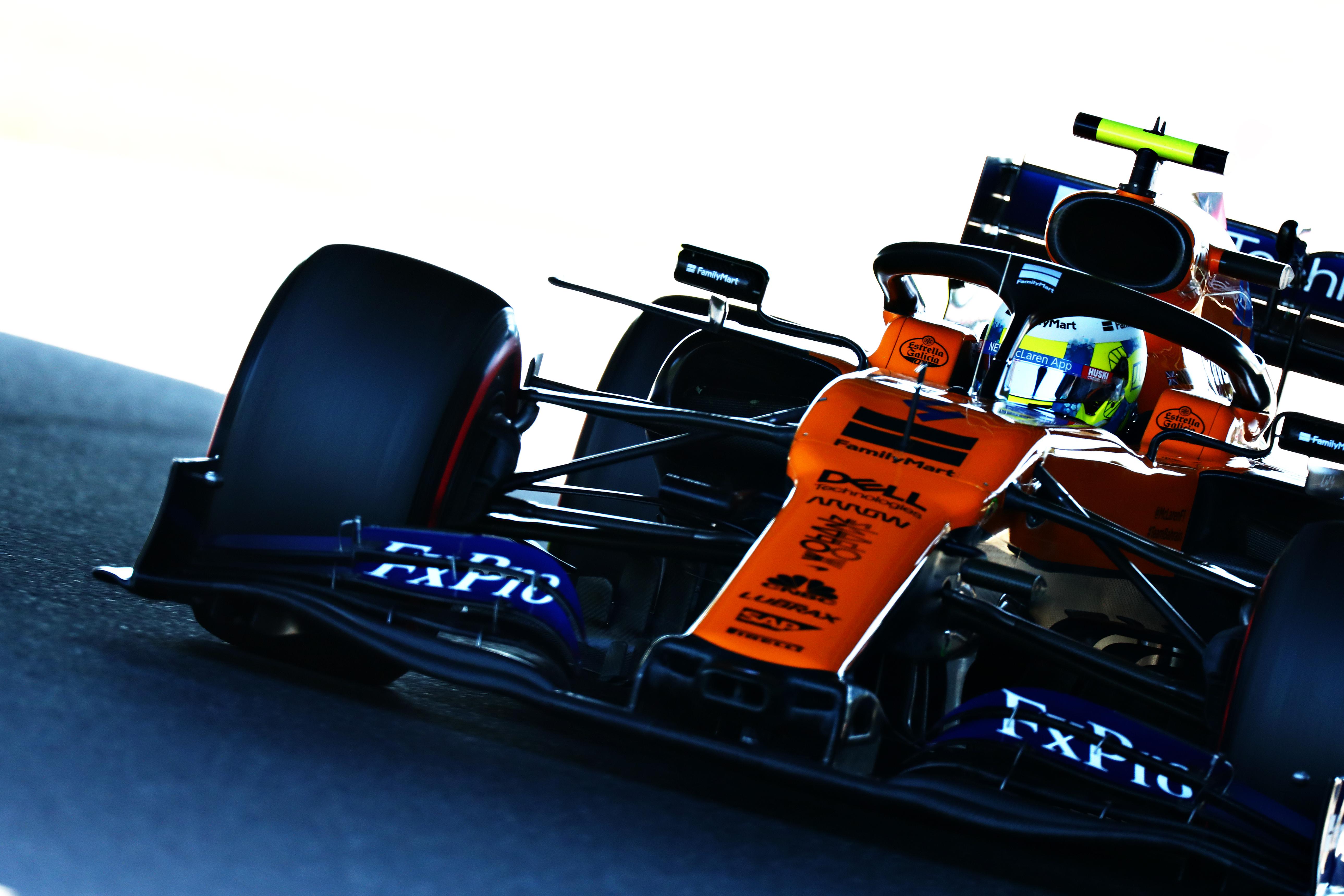
His teammate, Lando Norris, on the other hand, reverted back to form. That form being a promising race ruined by bad luck and factors beyond his control. The teenager was following his teammate comfortably in sixth for the first few laps but then collected some shrapnel from Leclerc’s disintegrating car in his brake duct, which began to overheat.
Image credit: Getty Images
To add insult to injury, just as he was about to take an early pit stop to have the debris removed, Albon launched an overambitious divebomb into the final chicane and clumsily punted his friend off the track. Norris recovered to the pit lane, his brake now on fire. He returned to the track and fought gallantly for the remainder of the race, finishing 13th, but it was another haul of points lost.
By rights, Norris should be close behind Sainz in the championship. It has been an impressive debut season for an immensely likeable character and, with some better luck and a bit more experience – particularly when it comes to race starts – the young man from Somerset could really challenge in the next couple of years.
Is Michael Masi Producing Problems?
Speaking of Albon’s overambitious divebomb, which went unpunished, it feels like F1’s stewarding and regulations are suffering from something of an identity crisis.
Michael Masi was a fairly popular replacement when we sadly lost Charlie Whiting on the eve of this season. He was stepping into some particularly large shoes and, for the first few races, he went mostly unnoticed – ergo, he was doing a fine job. But since the backlash caused by Vettel’s – in my opinion justified – penalty in Canada, Masi and co decided to change their tact somewhat and allow harder racing.
I brought up some potential issues after the Italian Grand Prix, when Masi announced that they would now be using the black and white flag more often, which I’m fine with in principle, and that Leclerc would have received a penalty had he made contact with Hamilton, which I think is somewhat ridiculous considering Hamilton had to leave the track to avoid said contact. Read that Grand Prix’s report for a more detailed analysis.
Since Verstappen’s move in Austria, the drivers have started to push the limits, finding out just how much they can get away with. And the answer appears to be a lot.
Hard racing, for me, is two drivers on the very edge but not quite making contact. Think Albon-Kvyat in Hungary this year or, particularly, Hamilton-Alonso in Mexico 2017. That’s surely the kind of racing we want to see.
But suddenly, in the space of a few races, it seems that clumsily throwing your car at the apex – Albon didn’t appear in a position to even make the corner without using Norris as a stopper – and knocking another car out of the way is apparently now okay.
This looks ridiculous when driving the wrong side of a bollard, as per Kevin Magnussen in Russia, gets you a time penalty. The lines are becoming too blurred and the stewards are losing authority. I just hope it doesn’t take a massive incident to provide perspective about what is and isn’t acceptable.
Japan was a sloppy weekend all round when it came to stewarding.
The casual viewer would struggle to understand why Vettel did not receive a penalty for what was a very visible jump start – we had expert analysts guessing at the minutiae, attempting to justify the decision – especially as Kimi Räikkönen received a penalty for an almost identical error at the very last race. It also took the best part of half the race for the stewards to reach their decision.
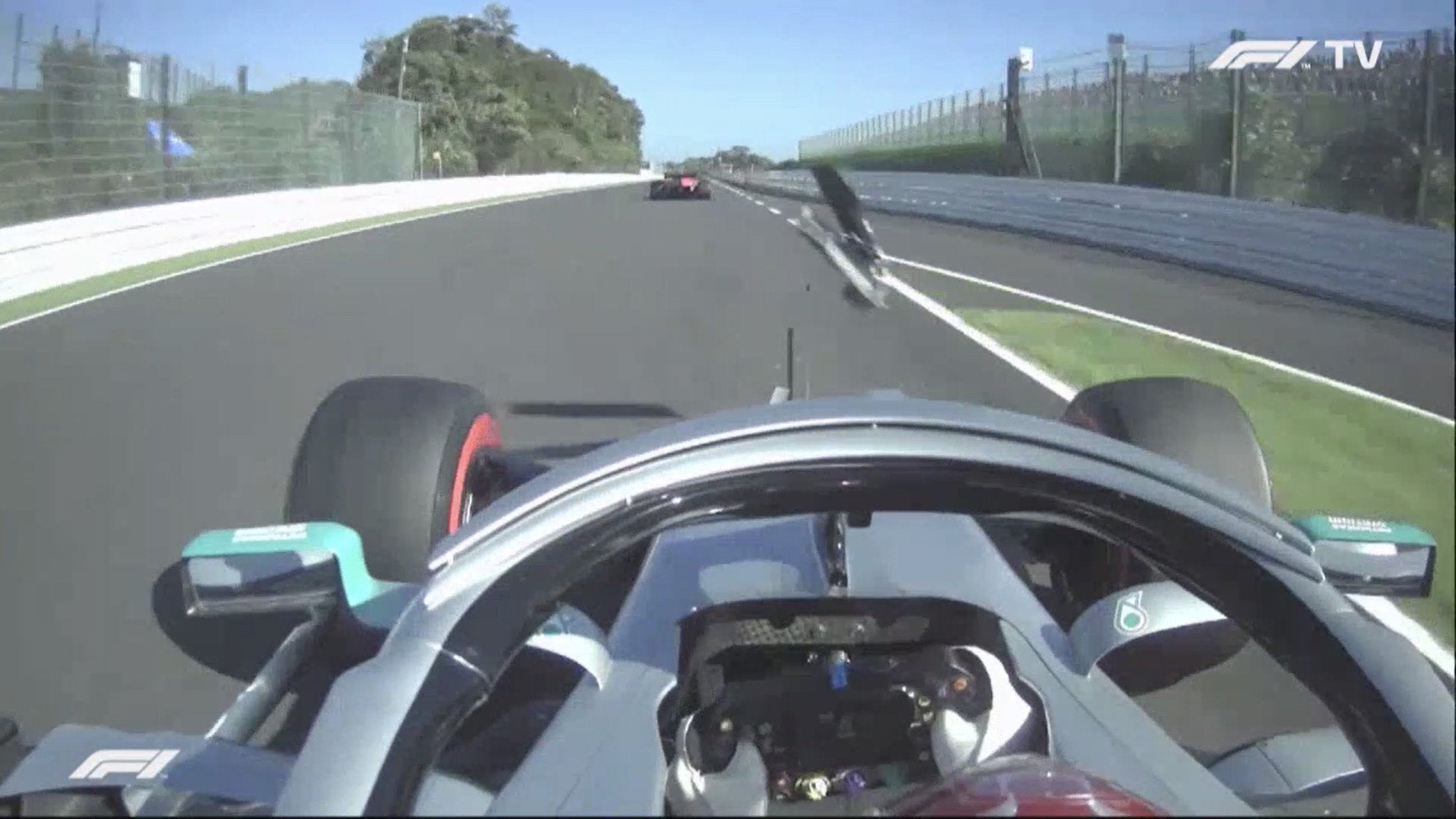
Then there was the fiasco with Leclerc’s damaged car. The blame appears to be shared by Leclerc, Ferrari and the FIA. Firstly, Ferrari called Leclerc in but he ignored the request and responded “Why?!” after having passed the pit entry. One lap later, just after the endplate had flown dangerously close to Hamilton, Ferrari told Leclerc not to come in. But the simple fact is Leclerc should immediately have been shown the black and orange flag and forced to come in by Race Control. Apparently Ferrari ‘promised that they would bring him in on the second lap’, only to go back on their word when the endplate fell off. But who is running the sport again?..
Image credit: Motorsport Images
So much time and effort has gone into safety in recent years and yet we have cars allowed to drive round at full racing speed, leaving a slew of sharp carbon fibre in their wake. That endplate sliced Hamilton’s wing mirror off; I can’t imagine it would have been pleasant had it struck him, just a few inches to the left. We have seen similar incidents in the last decade that resulted in a coma for Felipe Massa and the tragic death of Justin Wilson.
It was plainly obvious that Leclerc’s wing would not survive long and that it would most likely give up at the fastest part of the track. He also had a loose wing mirror which broke off later in the race. No one from Race Control even seemed to acknowledge that.
Leclerc and Ferrari were eventually given five and ten second penalties for the Verstappen incident and then not pitting respectively after the race. But, regardless of the fact that they are quite lenient penalties, why did the decision take so long? The first penalty seemed an absolute slam dunk – it was particularly bizarre that the initial decision was ‘no further action’ before it was then reopened – and five seconds after the race is considerably different to five seconds early in the race with traffic to navigate.
Image credit: Formula 1
Drivers with dangerous damage such as this should be shown the black and orange flag and forced to return to the pits at a reduced speed. It’s as simple as that for me.
And finally, to top things off, the new virtual chequered flag, which officially ends the race, was somehow produced one lap early. This actually changed the race result as Sergio Pérez’s last-lap retirement from eighth place was undone. Imagine if Hamilton had dramatically passed Vettel in the final few corners…
This is the very highest echelon of motorsport and it should feel as such. Right now, it doesn’t.
The Japanese Grand Prix in 60 Seconds
Answering the Burning Questions
Will there be more drama at Ferrari? Of course. But at least there was no drama between the drivers this time.
What effect will the Mercedes upgrade have? Hard to say. On Friday, it looked massive but then the Ferraris locked out the front row.
Are we going to have (lots of) rain with a typhoo heading for Suzuka? Yep. But it was all on the one day and didn’t affect a single session with the Saturday cancellation.
Can Mercedes wrap up the Constructors’ Championship? They can!
Which enthusiastic Japanese fan will have made the best hat? Got to be this one for me.
A Singapore Ferrari 1-2…just as everybody predicted…
Image credit: Motorsport Images
Sebastian Vettel completed a hat-trick of victories for Ferrari with an unexpected turn of speed under the lights at the 2019 Singapore Grand Prix. Coming into the weekend, the drivers, the team and their competitors were writing off their chances – even the ever-pessimistic Toto Wolff said early in the weekend he expected Max Verstappen to be their only competitor.
But, from Saturday morning, the red cars showed a sudden improvement after a seemingly very successful aerodynamic upgrade was fitted. Charles Leclerc claimed a stunning pole position, on the ragged edge of adhesion, and in doing so stole it away from his teammate Vettel, who had produced a great first run but failed to improve on his second attempt. Come Sunday, however, it would be Vettel returning the favour in the race as he benefitted from an accidental undercut on his teammate to take the victory.
Behind the two prancing horses out front, Verstappen grabbed what had seemed an unlikely podium thanks to a strategic error from Mercedes dropping Lewis Hamilton from second to fourth. The champion’s teammate, Valtteri Bottas, followed him home in fifth with Alexander Albon just behind.
What could have been a thrilling finale, with the Mercedes closing in on fresher tyres, somewhat petered out thanks to a string of late safety cars which gave the Ferraris the breathing space – certainly in regards to tyre life – they required. However, the sight at each of the numerous restarts of two Ferraris and Verstappen heading into Turn 1 at Singapore probably set off some PTSD in a fair few Ferrari fans…
Behind the big three teams, Lando Norris put his recent run of bad luck behind him to claim ‘best of the rest’ and Pierre Gasly will have quietened some critics with a strong run to eighth place. The last points were collected by Nico Hülkenberg, who completed a decent recovery drive after a somewhat overambitious move on Carlos Sainz on the first lap, and Antonio Giovinazzi.
How Did Vettel End Up Ahead?
Leclerc led away from pole and controlled the first part of the race, as the front-runners crawled round Singapore’s abundance of turns painfully slowly, attempting to conserve their tyres. This slow pace meant the field remained close together though and produced some head-scratching amongst the strategy teams as the gap usually created between the top six and the rest of the field was not there for the leaders to emerge into after their stops.
Hamilton called for an undercut on Leclerc but Mercedes didn’t oblige and so Ferrari pitted Vettel to attempt the undercut on Hamilton himself. It was very effective – as it turned out, arguably, too effective. They expected Vettel to make up a second or two but, even with a pretty average pit stop, he made up well over three seconds and when Leclerc emerged from the pits a lap later, he was narrowly behind his teammate.
The young Monegasque was understandably perplexed and irked. He repeatedly came on to the radio asking what had happened, why it had happened and what was going to happen next. No particularly enlightening answers were forthcoming and, try as he might, he could not fashion even a sniff of an overtake and came home a discontented second.
Image credit: LAT Images
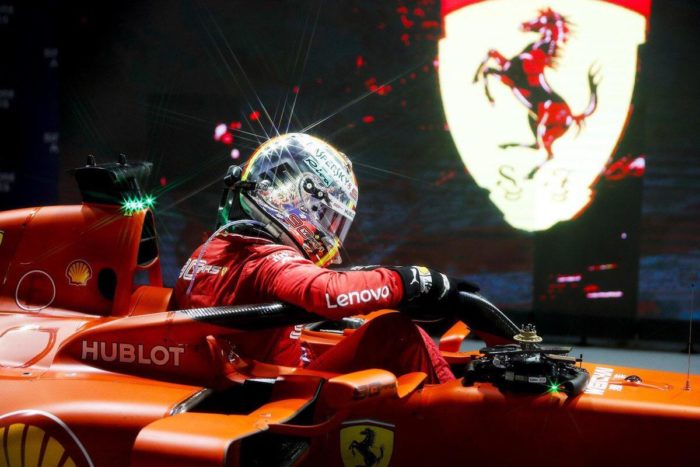
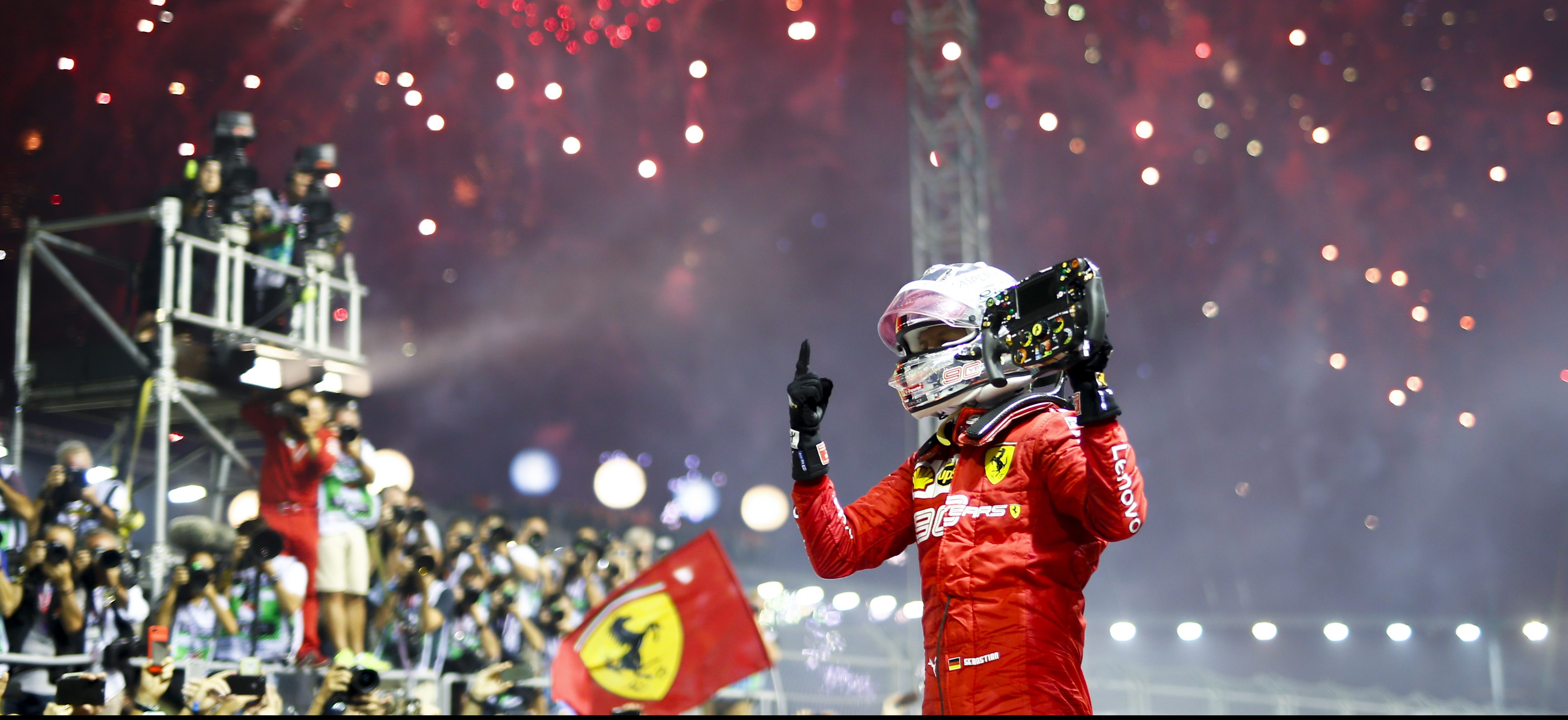
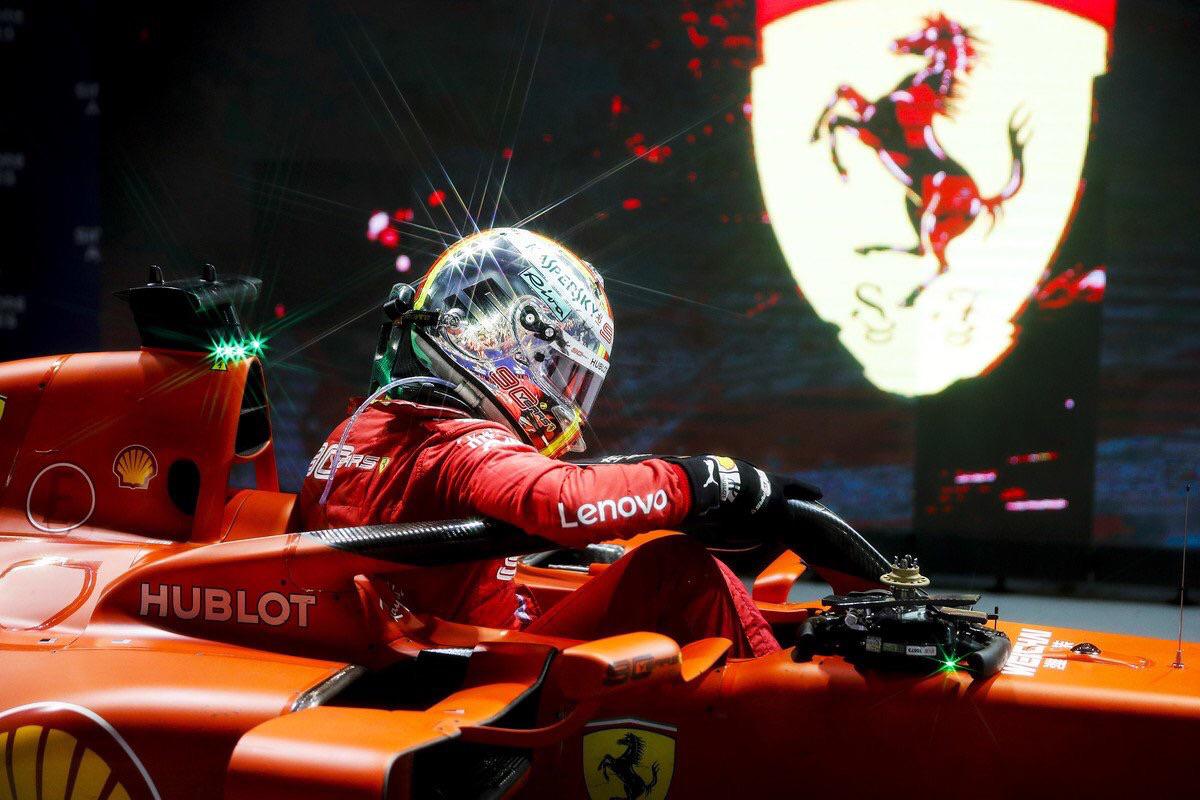
Vettel didn’t let the fortunate circumstances dampen his enjoyment of a long-awaited victory and brought out the old one-digit-salute for the first time in over a year. He also likely felt that this was justice for whatever precisely went on during that messy and controversial Italian Q3. Leclerc, after calming down somewhat, did mostly toe the company line and showed maturity in his reaction to missing out on the win through no fault of his own.
Could they have swapped the drivers? Potentially – and apparently that idea was discussed – but Vettel’s excellent out lap put him in the position to inherit the lead. Being told to relinquish a win, after the season he has had and the controversies in Canada and Italy, would surely have crushed him. It was probably the right call.
This will only serve to further increase tensions within the team, though. Imagine if Ferrari had been this competitive earlier in the year…
And How Did Mercedes Get It So Wrong?
We are all used to Mercedes as a no-nonsense, well-oiled machine in the hybrid era but there have been a few slip-ups (no oil pun intended) recently.
Obviously, whilst clearly a chastening weekend for all involved at Mercedes, the German Grand Prix was something of a lottery and they were far from the all only team to be caught out. Here, however, their call to keep Hamilton out seemed clearly foolish to most armchair strategists watching on. The driver’s call to undercut Leclerc would likely have seen him win the race but, once Mercedes had missed their chance to do so, they decided to gamble on going long.
A safety car in the time that Hamilton was still out would most likely have done the job. But this high-risk approach seems to go against the normal Mercedes sensible, efficient ethos – you don’t leave your strategy calls in the lap of the gods, hoping for a miracle. Without that kind of intervention, they were reliant on the out-of-position cars, that hadn’t stopped, holding up the defacto leaders and the world champion’s tyres were always likely to cry ‘enough’ before then.
Image credit: Daimler AG
And so it was that Mercedes had to bail out of the gamble and awkwardly ask Bottas – who is supposedly in a fight with Hamilton for the title, remember – to slow down dramatically so he didn’t pass his teammate and drag Albon through with him. James Vowles even worked it beautifully for the memers of the world by using his infamous ‘Valtteri, it’s James’ line again…
Any hope the team had of salvaging something from the situation by utilising the fresher tyres was then dashed by that series of late safety cars.
Is this a case of complacency from the Silver Arrows, with the title all but wrapped up halfway through the season? Are they now focusing on a bigger update for the start of next year so as not to reveal their latest secrets to their rivals? Or have they just been a bit unlucky in the last three races? Whatever the true answer, if they don’t win in Russia next weekend, it will be the longest winless run for Mercedes since the start of the hybrid era.
A Rollercoaster for Ricciardo
Daniel Ricciardo seemed in high spirits (not that that’s exactly noteworthy) coming to Singapore off the back of a great fourth place in Monza and he then followed that up by sealing a solid seventh position on the grid. It was not to last though as he was disqualified from the qualifying session for a technical infringement.
Ricciardo and Renault clearly took umbrage with the penalty but had no option other than to except it and move on, even if it was later revealed to be “after he benefitted from an advantage measured at one microsecond [0.000001s] due to a kerb hit that caused his MGU-K to over-rev on his slowest lap of Q1.” Unfortunately, rules are rules. If you give the teams an inch they will take a mile and if you give them a microsecond they will probably find a way to take a second.
So come Sunday, the Aussie unsurprisingly decided to go for it. He was doing an excellent job of carving through the field, if pushing his luck at points, and looked to have put himself in a net points-paying position but a clumsy move on Giovinazzi left him with a puncture and left him back near where he started.
It was a shame to see. Whilst clearly an excellent driver, at points you have to wonder whether Ricciardo earned his reputation for overtaking by ‘licking the stamp and sending it’ to drivers who would rather just get out of the way of what was normally a faster Red Bull.
Either way, the Honey Badger will leave Singapore, reset and come back fighting again in Sochi.
Answering the Burning Questions
Can Sebastian Vettel recover from a crushing weekend in Monza? He can!
Will the Mercedes or Red Bull be the best car around Marina Bay? Or maybe even Ferrari?! It was mostly just great to see such a fight between all three but seemingly the Ferrari did have an unexpected edge.
How will Alexander Albon cope in his first true head-to-head test against Max Verstappen? It was a solid performance on a very difficult and unforgiving track. But he will need to build on it and close the gap further.
Will Verstappen get through the first corner unscathed this weekend? Yes.
Can Renault keep up the momentum from their strong result in Italy? The car had promising speed but a minor technical glitch and a couple of crashes got in their way.
Max Verstappen came home to take a popular victory at the 2019 German Grand Prix after an incredibly eventful race which was dominated by ever-changing weather conditions. The race started under a safety car but, after it came in, we experienced the first post-safety-car standing start. And from there, the madness never really stopped.
Strap yourself in: this might be a long write-up.
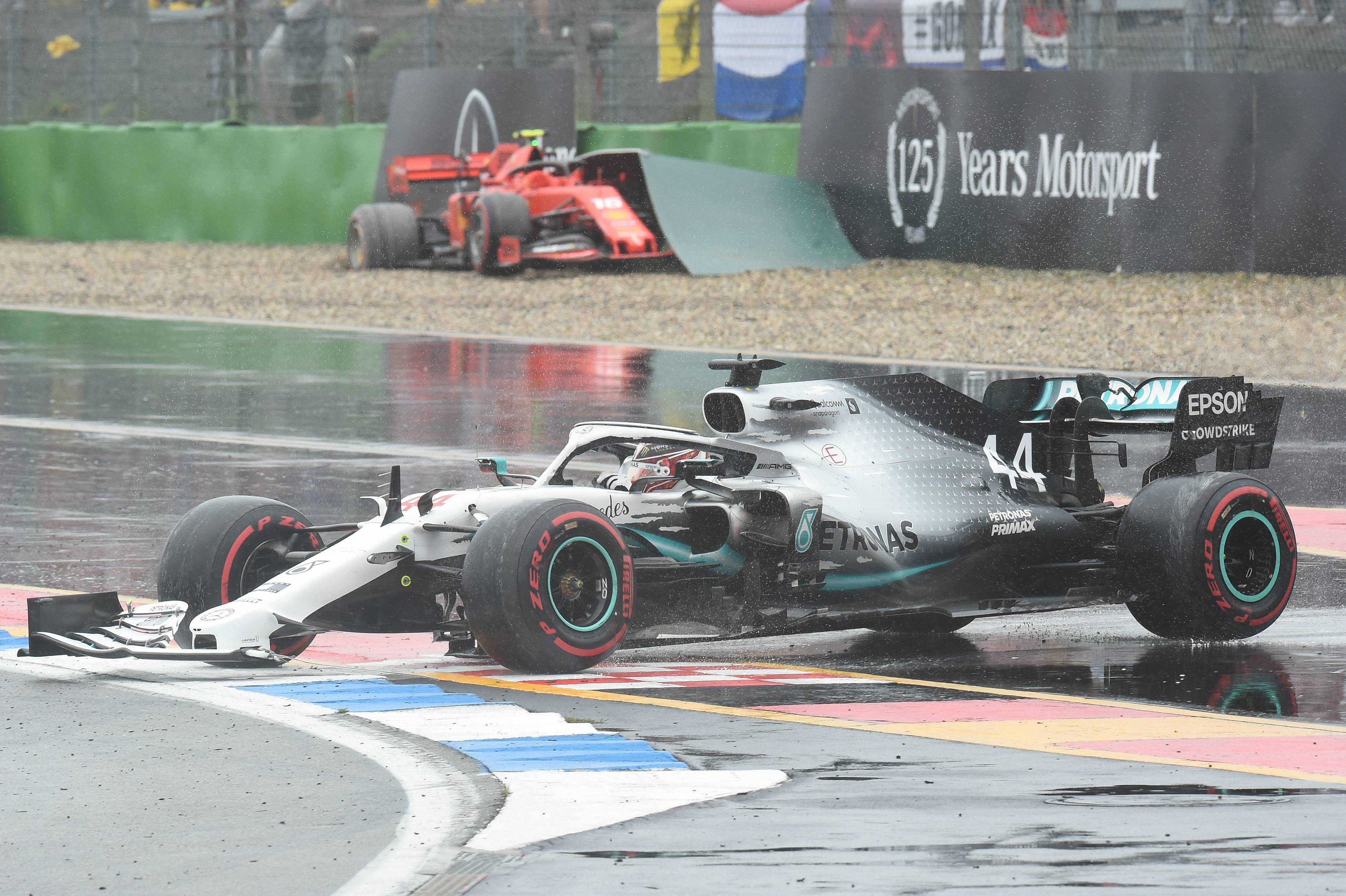
Lewis Hamilton led away from pole but Verstappen, alongside him on the front row, suffered severely with wheelspin and dropped back behind Valtteri Bottas and the Alfa Romeo of Kimi Räikkönen. There was normally a car in a run-off area during the next few laps as the drivers struggled with cold tyres and a slippery track. Räikkönen held on to his impressive 3rd place for a couple of laps but was passed by Verstappen just before Sergio Pérez became the first casualty of the race, spinning his very jittery Racing Point and being collected by the wall. That brought out the first safety car of the day and the first wave of pit stop panic. Most cars came in for intermediate tyres and, in the pandemonium, Ferrari were punished with a fine for an unsafe release having sent Charles Leclerc out directly into Romain Grosjean’s path.
The rain stopped and the track began to dry up, but teams suspected more was on the way and were instructing their drivers to try and take care of their tyres. Daniel Ricciardo experienced an all-too-familiar Renault engine blow-up on Lap 15 and Leclerc used the ensuing Virtual Safety Car for a cheap pit stop. Suddenly he was the fastest car on track by two seconds a lap and rapidly closing in on the front three. A bit more rain had begun to fall but Kevin Magnussen and then Sebastian Vettel – who had started the race from the back of the grid – took the gamble of pitting for dry tyres; after initially sliding around, they began to set fastest sectors and those in front decided to follow suit.
Red Bull fitted the mediums to Verstappen, which take longer to heat up than the soft tyres. The Dutchman span – but survived with a neat 360 – and berrated his team over the radio for not giving him the softs. Another Renault engine blow-up – this time for the luckless Lando Norris – brought out another VSC on Lap 28. The race was about to turn on its head.
Leclerc benefitted again, pitting for soft tyres and leapfrogging Bottas for 2nd place. Hamilton, who had been controlling the race superbly from the front up to this point, then also pitted for softs. This top two would not last long however as Leclerc ran wide on to the slippery drag strip on the outside of the final corner and aquaplaned into the barriers and out of the race. Moments later, with a safety car already called, Hamilton suffered a near carbon copy of the incident but just about managed to keep the car moving, having bounced off the barriers. He had lost his front wing though and would need to pit.
Image credit: AFP
This meant, firstly, he had to go the wrong side of the bollard at pit entry – which would earn him a five second penalty – and, secondly, that his engineers were not ready. Thus ensued a fairly comedic 50-second pit stop with engineers bumping into each other as they tried to replace the nose and changed their mind on which tyres to fit. Hamilton did eventually re-join in 5th; some blushes spared by the gap he had held and the safety car. In the meantime, most had now changed back to inters and the new top 5 was Verstappen, Nico Hülkenberg, Bottas, Alexander Albon, Hamilton.
The Mercedes cars worked their way back into the top 3 within a few laps and then, with that elusive podium in sight, agonisingly, Hülkenberg recreated the Leclerc/Hamilton incidents but with the Leclerc result of bogging down in the gravel and retiring. This brought out yet another safety car. Verstappen and Vettel pitted but the Mercedes did not. Just three laps after the restart, all the drivers came in for dry tyres and Racing Point’s gamble to fit them to Lance Stroll’s car during the safety car period meant that he was suddenly, unbelievably leading the race.
It didn’t take long for Verstappen to retake the lead of the race but we were left with a provisional podium of Verstappen, Stroll and the Toro Rosso of Daniil Kvyat. Then another uncharacteristic error from Hamilton saw him spin at turn 1 on Lap 54, whilst chasing down. The championship-leader narrowly kept it out of the barriers but was forced to pit for new tyres and rejoined in last place. And then, just when Mercedes thought things couldn’t get any worse, Bottas – whilst chasing Stroll for 3rd – recreated Hamilton’s spin from a couple of laps prior but couldn’t keep it out of the barriers. He hit the wall, about as hard as Toto Wolff’s hand hit his desk, and was out of the race too. The safety car made its fifth appearance.
It returned to the pits on Lap 59, leaving a five-lap sprint race to the end. The race still had time for one more retirement as Pierre Gasly drove into the back of Albon whilst battling for 6th; a poorly-timed mistake from the under-fire Frenchman, with excellent performances from both the Toro Rosso drivers that are eyeing up his seat. Verstappen finished the job and sealed an almost flawless victory – his second of the season. Meanwhile Vettel, who had been steadily working his way through the field at various points of the race, sent the home fans wild by passing Stroll and then Kvyat for an unlikely 2nd place.
Behind Verstappen and Vettel, Kvyat took the final place on the podium – Toro Rosso’s second ever podium. Stroll held on to 4th, Sainz – who had at one point spun out and had to put it in reverse – claimed 5th, and Albon 6th. After the race, the two Alfa Romeos – who had finished 7th and 8th on the road – were given 30 second time penalties for driver aid infringements. This promoted the Haas drivers of Romain Grosjean and Kevin Magnussen, who had conspired to crash into each other once again during the final laps, along with Hamilton to 9th and Robert Kubica to 10th. In a season where he has perenially been running in last place, the least likely of points scorers to cap the least likely of races.
And breathe.
Redemption in Red
Image credit: Ferrari
A year on from his title-swinging, gut-wrenching crash in the rain at Hockenheim, Sebastian Vettel produced an inspired fight through the field to finish 2nd, having started the race at the very back of the grid.
It was not only a tale of the difference a year can make for Vettel, but also the difference 24 hours can make. For the second time in three races, he experienced a technical issue in qualifying as his Ferrari developed a turbo problem and he was unable to set a competitive time. Last place on the grid with rain forecast for Sunday always felt like a chance for redemption and that’s exactly how it played out.
Vettel, who was born just half an hour’s drive down the road from Hockenheim, got straight down to business. He was up to 10th by Lap 5; 7th by Lap 8. For the most part of the race he was then generally running in the low end of the top 10 – changing surprisingly little despite the madness going on around him. But he came alive towards the end of the race, using the straight line speed of the Ferrari and some tactical nous to pass cars before and after the final safety car period and collecting a well-deserved 2nd place.
It is a much-needed result for himself and his team. And particularly fitting that it occurred on the effective anniversary of his lowest point, in Germany last year. For a team that has been much-criticised for their strategic calls in recent years, Ferrari barely put a foot wrong in such a manic race and made up numerous positions for both cars with opportunistic pit stops.
Will this prove to be a turning point for team and driver? Time will tell. But it’s certainly a step in the right direction.
A Miserable Anniversary for Mercedes
For a team that had won nine of the first 10 races this season, one would imagine that this was just another weekend. But no, this one really mattered to the dominant force of recent F1 history that is Mercedes-Benz: it was one of their two home Grands Prix; they were celebrating (complete with special livery and fancy dress) the 125th anniversary of motorsport and their 200th Grand Prix; this was the one race they had given access to the Netflix crew of Drive to Survive. So for things to have gone this way will have especially hurt them.
In fairness, there were few truly major errors; it was mostly a domino effect from a few small ones. They dominated the first half of the race. Particularly so Hamilton, despite still suffering from illness, but that ended with the first switch to dry tyres. In hindsight, it was a bad call. Hamilton had a very comfortable lead and was saying that he didn’t think the switch was the right call – it was still raining after all. Could they have waited for a lap or two to see how things were progressing? Yes, but of course that is easy to say now. Either way, the call was made, Hamilton ran wide and then brought about an embarrassing pit stop as he was forced to pit immediately whilst the team had been waiting for Bottas with different tyres. The whole episode made the fancy dress element of their celebrations seem suddenly very clownish.
A few laps later, they were back running 2nd and 3rd but this is where the wheels were really about to fall off – literally in the case of Bottas. Again, in hindsight, they probably should have pitted Hamilton under the safety car and were overly wary of the five-second time penalty dropping him too far back when the drying track was about to make that issue far worse. But the drivers were about to outdo the strategists in terms of their mistakes with synchronised spins at Turn 1.
Hamilton rescued his but Bottas did not and his was far more costly. Hamilton does not present his competitors with an opportunity to claw back that many points in the title race very often. And for it to happen just as the Mercedes hierarchy is about to decide on their driver line-up for 2020 and beyond is particularly unfortunate. You have to wonder if Bottas will mentally recover from this setback.
It seemed Toto Wolff had decided after the race that they would not be making such a song and dance about any celebration in the future: “It shows that you shouldn’t fool around with stuff – you should concentrate on the job, we are not superstitious, but we should focus on the job at hand.”
The German Grand Prix in 90 Seconds (It needed the Extra 30)
Answering the Burning Questions
Will the run of great races continue? Oh yeah. And then some.
Can Bottas can do anything to claw back some of Hamilton’s championship lead? He had the opportunity but fluffed his lines.
Will Leclerc and Verstappen have another epic battle? Not this time. Verstappen battled with Bottas, Leclerc battled with the slippery drag strip.
Can Gasly continue the progress he made at Silverstone? No. He crashed badly during practice and drove into the back of the sister car of Albon.
There are a few updates this weekend. Whose will have the biggest impact? Hard to tell in the rain but judging by earlier in the weekend, Racing Point seemed to have made a big jump.
Could we actually have a wet race?? We could and did. And it was great.
An end to the Mercedes domination…and what a way to end it.
Image credit: Getty Images
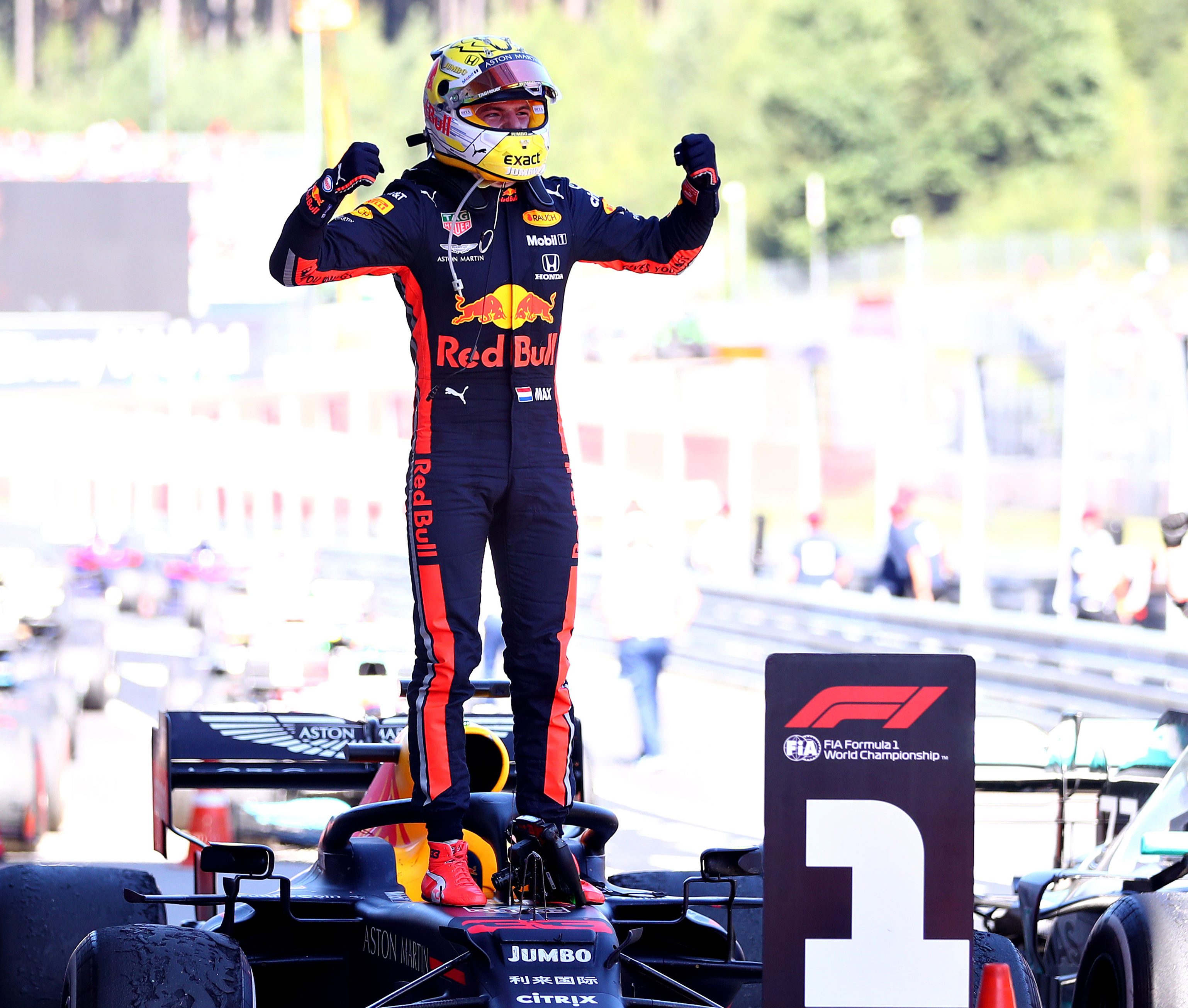
Many criticised the sport in the wake of an uneventful race in France but, just seven days later, Formula 1 reminded the world of the drama it can produce with an action-packed 2019 Austrian Grand Prix, a last-gasp pass for the win and obviously some controversy to boot.
The youngest ever front row promised excitement into the first corner but, after Max Verstappen got away horribly, Charles Leclerc was left unchallenged and all the drama unfolded behind him with Lando Norris even momentarily passing Lewis Hamilton for 3rd. The following laps produced some good racing as Hamilton, Verstappen and Sebastian Vettel worked their way past the slower cars, before the usual top five started to break away from the pack and the race somewhat settled down.
Leclerc appeared comfortable at the front but was forced to pit slightly early to cover off Bottas – something that would prove decisive later on. Hamilton and Verstappen aimed to go long in their first stint but the Briton put paid to his chances by clipping one of the many unforgiving kerbs around the Spielberg track and damaging his front wing. The younger man in the Red Bull made no such mistake however and re-emerged in 4th with tyres 10 laps fresher than those ahead of him.
Verstappen then set about chasing Vettel, passing him with about 20 laps remaining and suddenly the masses of orange in the crowd realised there was the chance of an unlikely victory. Bottas proved easy to dispatch – the Mercedes had been short of power throughout as they struggled with cooling – and he was right on Leclerc’s tail with four laps to go. On Lap 68, Verstappen dived down the inside into Turn 3, allowing Leclerc a Ferrari’s width on the outside and they drag raced along the back straight with Leclerc coming out on top. One lap later, Verstappen made the same move but this time did not leave the room, taking the lead and then the victory – the first for a Honda engine since Jenson Button in 2006.
“Hard Racing” or “Not the Way You Overtake
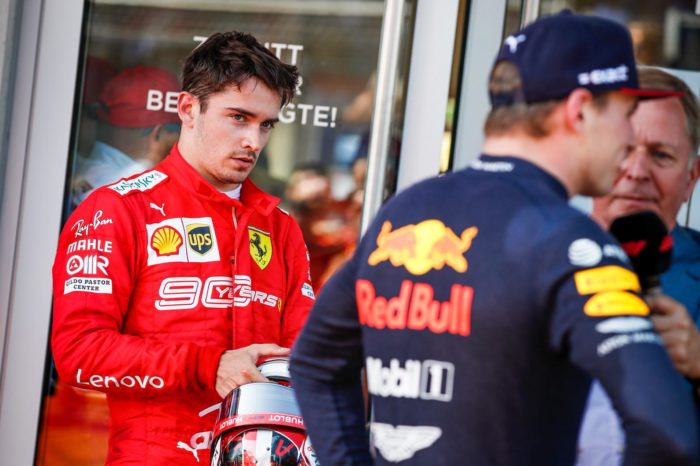
As you would expect, Verstappen and Leclerc had very different views on the overtake. They both immediately came on the radio; Verstappen claiming Leclerc had turned in on him and Leclerc asking “what the hell is that?”
Image credit: DPPI
The stewards decided to investigate, with the result only being confirmed as a Verstappen victory three hours after he had taken the chequered flag. And so the conversation of what the rules should be and how they should be enforced reared its ugly head once more.
It is very easy to see why Ferrari and their fans could feel aggrieved. There have been two fairly similar incidents in which they have somehow lost out on both occasions, despite being on opposite sides of the two. Vettel was penalised for not leaving Hamilton a car’s width in Canada and the obvious differences between there and here are that Verstappen was fully in control of his vehicle and that Leclerc was fully alongside his rival. Both of which you could reasonably expect to further cement a penalty.
Personally, whilst I’m glad the result stood – the sport didn’t need another overturned win fiasco and Leclerc deserves a better maiden victory than being told three hours after the fact – I can’t help feeling that Formula 1 has contradicted itself. After the Vettel penalty, there was a lot of talk of ‘the letter of the law’ and so on, but now it’s about ‘the way to interpret the rules’. I refer back to my post after the Canadian Grand Prix and my opinion that the stewards should be a consistent panel of respected figures who are accountable and explain exactly how and why they have come to their decisions. There is no point having thousands of regulations if they are not airtight and leave so many situations that are open to interpretation – that has been the case in the three most recent races and they all appear to have been dealt with differently. It is obviously far easier said than done but a reasonable number of more iron-clad rules and a stable stewarding presence is surely the answer.
Whatever your opinion on the incident though, it could well turn out to be an infamous moment that defines the beginning of an intense rivalry. One that could even dominate the sport for the next decade.
McLaren Prosper Whilst Mercedes Faulter
McLaren continued their good run of form and excellent progress this season with 6th and 8th place finishes. Both impressive drives in very different circumstances. Norris showed his star potential again by qualifying 5th and then mixing it with the front-runners for a few laps before settling into a very solid 6th and holding off the other Red Bull of Pierre Gasly – yet another disappointing performance from the under-pressure Frenchman. Meanwhile, Carlos Sainz fought admirably from the back of the grid to end up 8th.
Image credit: DPA
To have had two great races back-to-back on such different tracks as Paul Ricard and the Red Bull Ring shows how much progress McLaren have made and, for all his undeniable talent, there is a distinct freshness to the team since Fernando Alonso’s departure. They are enjoying the challenge of their revival without the pressure that Alonso puts on a team. There are no politics; it’s just racing. And they continue to punch above their weight, or at least their weight of recent years.
Mercedes, however, finally had an off-week.
It’s unlikely to prove a huge turning point, as the unique combination of high temperatures and altitute, twinned with a very short track, meant they had cooling issues throughout the weekend. Their engines were not at full power and they were even having to do a considerable amount of ‘lift and coast’ during the race, where the drivers lift off the throttle up to 400m before the corner.
But certainly it bodes well for some more competitive races whilst temperatures are likely to be higher in the summer.
Lewis Hamilton dominated at the 2019 Spanish Grand Prix as Mercedes secured yet another 1-2.
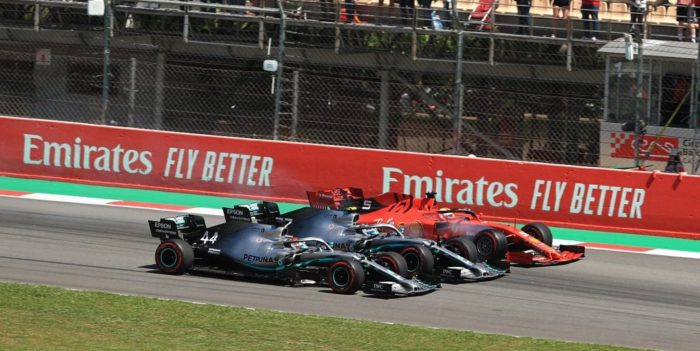
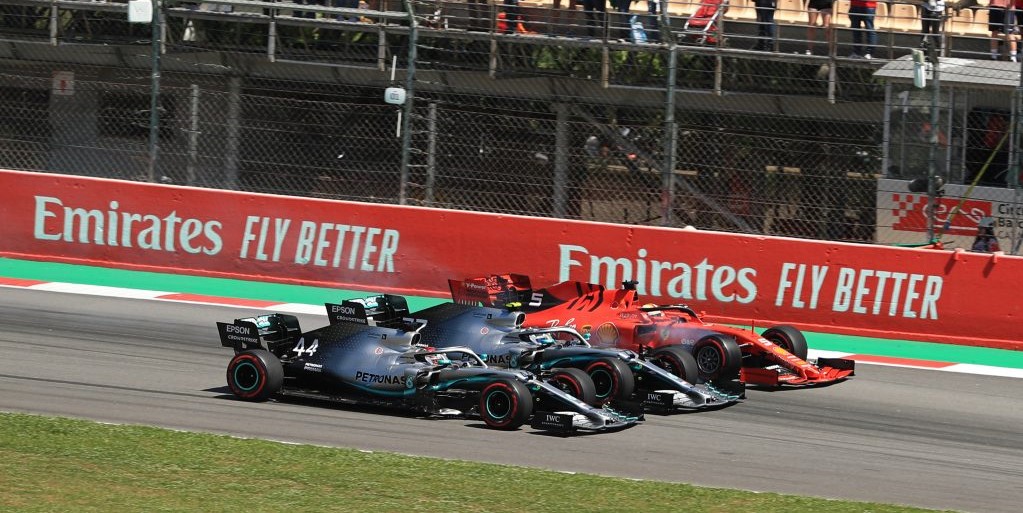
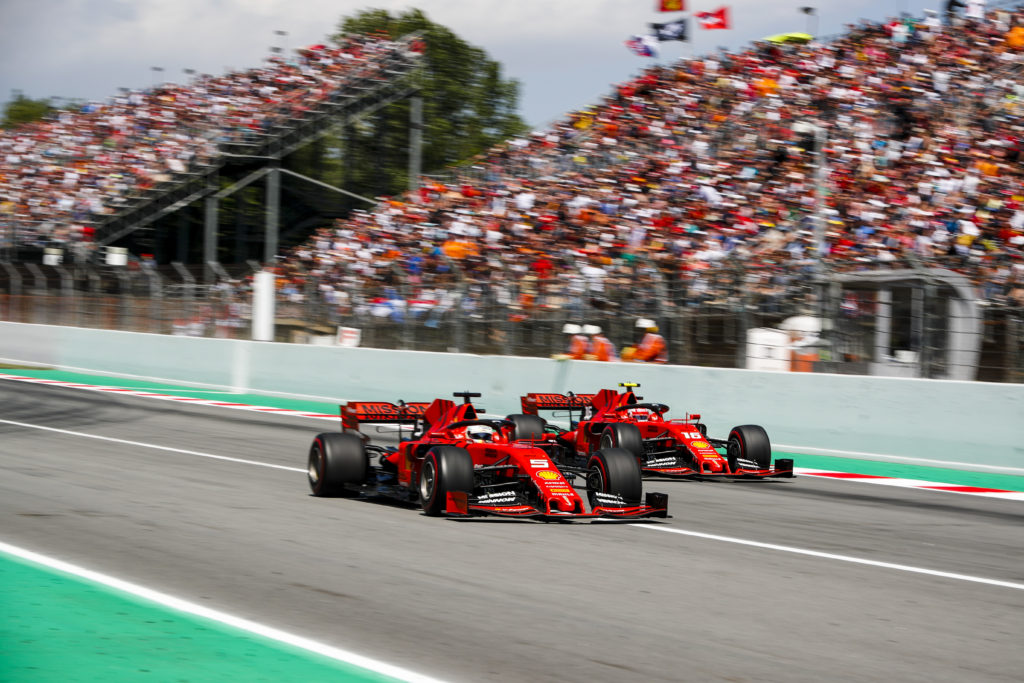
On Saturday, Valtteri Bottas, in full Bottas 2.0 mode, produced a stunning qualifying lap to take pole from his teammate, Hamilton, by 0.6 seconds. People don’t tend to do that to Hamilton… The reigning champion said he “just didn’t put the laps together” but was determined to make amends come race day. And that he did. Good starts from Hamilton and the Ferrari of Sebastian Vettel, combined with another poor one from Bottas, led to all three racing into the first corner side by side. Bottas found himself the filling in that sandwich and had to back out but Vettel, desperate to be the latest on the brakes, locked up and ran wide, handing second place back to the Finn. And from there, the remainder of the race turned out to be something of a formality.
Bottas believes his poor start was due to a mechanical issue rather than any failure on his part, saying “I had a strange behaviour on the clutch; biting, releasing, biting, releasing. I’ve never had it before. So I lost it there. I’m keen to find out why the start was so bad and why the issue happened.”
A late safety car, caused by a collision between the two youngest drivers on the grid in Lando Norris and Lance Stroll, closed the pack up but produced no further action at the front and Mercedes further extended their latest record, with a fifth consecutive 1-2 from the start of the season. Max Verstappen continued to impress with an excellent drive to take the final step on the podium, navigating the first corner with maturity and nous before flawlessly executing a move around the outside of both Ferraris when the chance presented itself.
Next up is the Monaco Grand Prix, where Mercedes have struggled in recent years. But judging by their performance in sector three at Barcelona – a sequence of slow corners, similar to the Monte Carlo track – where they were generally more than half a second faster than the Ferraris, another 1-2 is far from out of the question. It is beginning to look like Bottas 2.0 could be the only thing that keeps this championship interesting.
The Debate is Emphatically Over: Ferrari Are Just not Fast Enough
A result in Barcelona would have kept some hopes alive of the Scuderia taking the fight to Mercedes this year. But this was – along with the opening race in Melbourne – the most resounding defeat yet. Throughout pre-season testing, at the very same track, Ferrari had given the impression that they were the team to beat, but just over two months later the Silver Arrows were in a class of one. And to make it worse, their drivers’ squabbling for position arguably cost Ferrari third place to Verstappen.
Vettel’s daring attempt around the outside at the first corner ultimately ended in him running wide and, upon rejoining the track, he put his car very much in the way of Charles Leclerc. thus allowing Verstappen to sail around the outside of both red cars. From there, they never really challenged the Dutchman and instead got caught up again with whether to use team orders. Firstly, with Leclerc stuck behind Vettel, who was suffering with a flat spot from his first corner lock-up, and then the reverse when Vettel caught Leclerc with the young Monegasque on old, hard tyres. Hearing the two drivers’ team radios, it becomes clear that their respective race engineers were on different pages. In the situation where Leclerc was the driver in front, his engineer was somehow unaware that the two drivers were on different strategies. These are basic errors.
This was supposed to be Ferrari’s season. But, after missing out on potential victories in Bahrain and Azerbaijan through a combination of mechanical, operational and driver errors, they now find themselves 96 points behind Mercedes after just five races. Along with the obligatory aero update for Spain, a new power unit was rushed through and fitted two races earlier than planned. But the aero upgrade that Mercedes brought is believed to have been worth three to four tenths on its own and thoroughly trumped whatever improvements Ferrari had managed. It is starting to look like the Italian team are more likely battling Red Bull for second place than Mercedes for first, with team principal Matteo Binotto going as far as saying that the problem was “maybe even car concept”. If so, that is not going to be fixable during the season.
The Last Spanish Grand Prix?
The rumours are that this will be the last Spanish Grand Prix, for the time being at least and almost certainly with Barcelona as its venue. Spain is one of five races without contracts for next year, along with Great Britain, Mexico, Italy and Germany. The organisers for the Italian Grand Prix have agreed a deal in principle and Silverstone looks likely to follow. But there is apparently a good chance the other three could all fall off the calendar.
I would hope as a fairly recent addition, and with a clearly very passionate following, Mexico can figure something out. But Spain and Germany feel perhaps in need of a change. There have been few notable races in Barcelona’s 28-year history – barring Pastor Maldonado’s extraordinary victory in 2012 – and crowds this year have visibly reduced, most likely due to Fernando Alonso’s departure from the sport. Germany has been struggling for a while now, briefly alternating between the Hockenheimring and the Nürburgring, before the latter proved unable to host a Grand Prix any longer. And then having the event cancelled altoghether in 2015 and 2017. Spain and Germany are major European countries with a history of motorsport though so it would be good to see them reinvigorated and returned to the calendar in some way.
Image credit: Formula 1
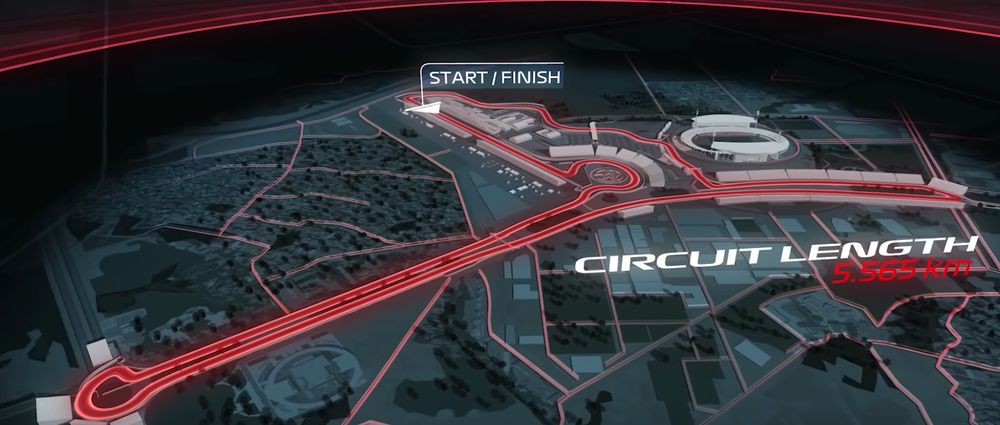
Whether as direct replacements or not, there will be the brand new Vietnamese Grand Prix and – expected to be confirmed on Tuesday – a return to Zandvoort for the Dutch Grand Prix. We will have to see how these work out. Vietnam is yet another new location in Asia without any significant motorsport heritage and will be another Hermann Tilke-designed circuit. Zandvoort is in need of a significant upgrade in the next 12 months to be ready for F1. Both in terms of infrastructure and the track itself.
Maybe the Regulations Have Worked
Whilst there was little to no action at the front, the midfield teams all continued to duke it out for the positions around the fringes of the top 10. And that’s on a track where passing has always been difficult. Romain Grosjean’s Haas seemed to spend more time in the run-off area around turns one and two than on the track, after wheel-banging moments with his teammate, amongst others. Scenes that I’m sure led to a few more coins entering Guenther Steiner’s swear jar.
Throughout Formula 1.5, there was a decent amount of battling so, whilst nobody seems to be particularly discussing it, maybe the stop-gap regulation changes for this year have helped somewhat when it comes to the on-track action. That bodes well for the major regulation changes in 2021. We live in hope.
The Spanish Grand Prix in 60 Seconds
Answering the Burning Questions
Can anyone stop Mercedes and will Bottas 2.0 keep it up? An emphatic no to the first part and a tentative yes to the second. Bottas on Saturday was exceptional but Hamilton had him covered on Sunday.
With updates everywhere, will the pecking order change noticeably? Not particularly. Although Haas appear to have fixed their tyre issues and moved up the field.
Who will be the faster Ferrari driver this time? In terms of pure results, Vettel. But it was mostly strategy and a small error from Leclerc on Saturday that saw to that.
Will the Williams updates restore some credibility to the team? They were slightly closer to the pack – at least in the hands of George Russell – but there’s a fair way to go still.
Will anyone pull a Pastor Maldonado? That will be a no.