Everything has changed and yet nothing has changed.
Exactly one year ago today, the 2021 season came to an end.
What had been one of Formula 1’s greatest ever seasons, right up until the penultimate lap of the final race, ended in one of the sport’s most controversial moments.
Senna vs Prost 1989. Senna vs Prost 1990. Schumacher vs Hill 1994. Schumacher vs Villeneuve 1997.
The 2021 Abu Dhabi Grand Prix will join these truly momentous, contentious entries in the F1 annals.
The key difference, though, is that all the previous incidents were brought about by the actions of the drivers. Not those in charge.
Crashgate and the 2005 United States Grand Prix could be thrown into the mix as things that were – and 2021 had its own equivalent in Belgium – but those were not championship-deciding catastrophes.
Formula 1 and the FIA have tried to move on from the controversy that brought the sport into disrepute. The drivers, the teams, the fans have all tried to do so too. So has this writer. But have any of us succeeded?
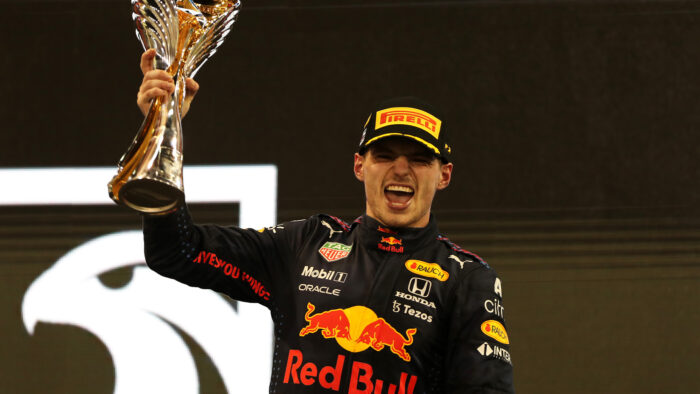
“A Red Bull and Max Verstappen domination was the last thing the sport needed as it headed into its new era.
“With the huge controversy of Abu Dhabi having left a bitter taste in the mouth for many, a runaway championship for the man who earned his maiden title via Michael Masi’s questionable decisions on lap 57 at the Yas Marina Circuit would not have been a good way for F1 to turn over a new leaf.”
The use of the past tense there was due to Ferrari’s strong start to the season. It looked as though we were heading towards another epic, season-long battle.
And what little hope was left for a championship fight disappeared as F1 returned from its summer break. A mid-season Technical Directive had clearly hurt Ferrari, and Red Bull were able to sail off into the distance.
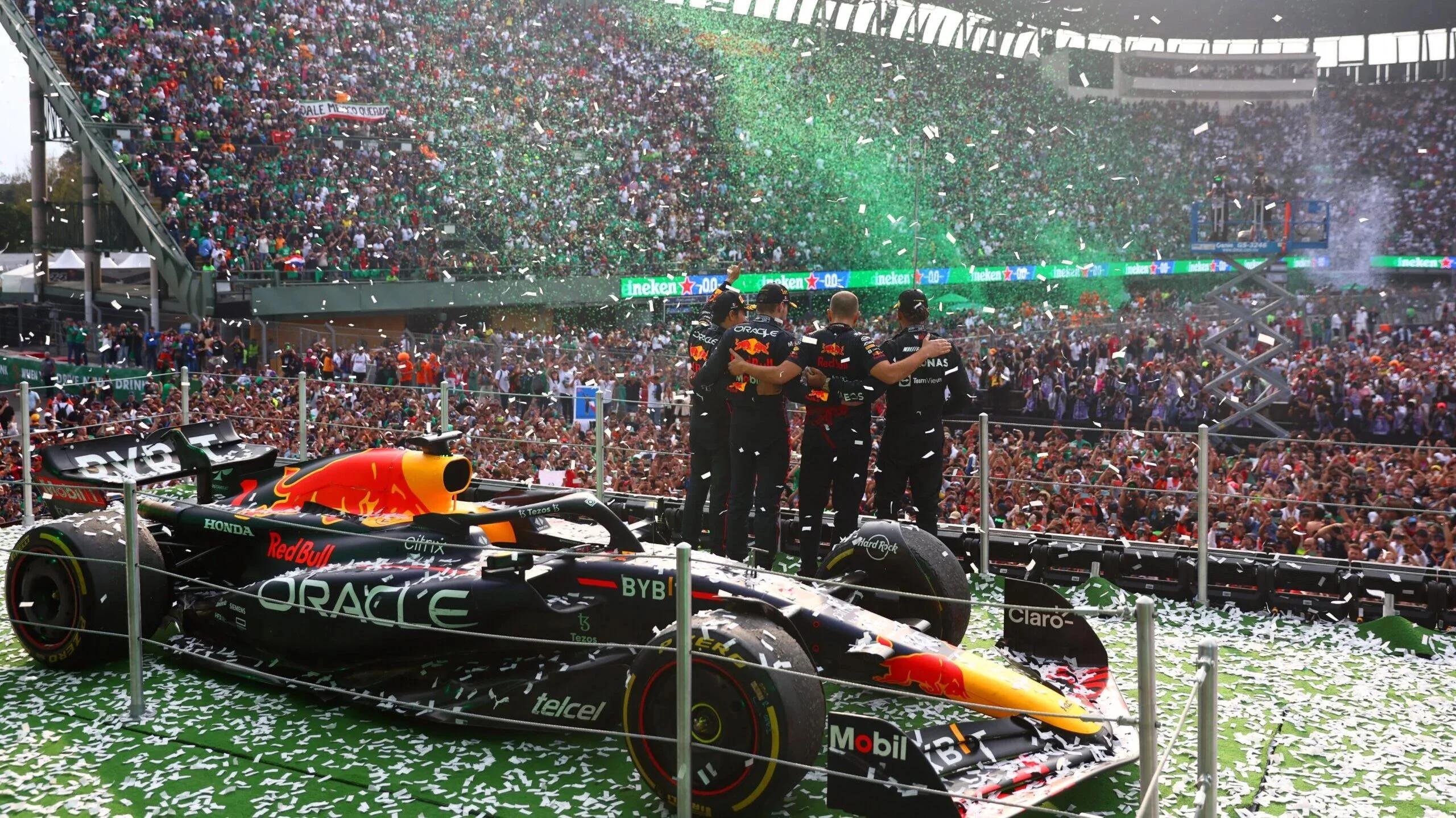
Verstappen broke the record for the number of wins in a season – and number of points in a season – as he claimed seven of the remaining nine winner’s trophies.
Another Cloud in a Stormy Sky
What made the dominance even harder to take was the revelation that Red Bull had failed to comply with F1’s inaugural cost cap in 2021.
In a story that rumbled on for weeks – if not months – the 2022 World Champions’ financial indiscretions were eventually laid bare for all to see.
Talk of catering issues were nonsensical and frankly embarrassing.
One cannot simply pick and choose which areas of a budget were the ones to fall outside the limit. If $600,000 of food ended up outside of the budget, it’s because you spent $600,000 you shouldn’t have somewhere else.
Was their overspending the sole cause of Red Bull’s runaway victory? No, of course not.
Adrian Newey did his thesis on ground-effect cars and they have a generational talent behind the wheel who will win 9 times out of 10 when given the best car.
Image credit: Getty Images
Team and driver had such a clear margin over the field in the final standings that they clearly would still have triumphed had they spent a couple of million less.
But that’s not the point.
A sport that was already trying to recover from perhaps its biggest ever sporting mistake, now has another cloud hanging over.
One that, of course, further taints 2021. But will also now cast its shadow over this season and future seasons as the knock-on effects of that overspend continue to grow.
Speaking From Personal Experience
“I have loved F1 since I was about three years old. I want to continue to do so. Please, stop making it so difficult.”
This was how I finished my previous piece, as the rumours began to emerge about the cost cap.
The fact that I haven’t managed to write another article since somewhat tells its own tale.
People love to throw around the term ‘PTSD’ without any real respect for the genuine condition. Let’s be clear – that is not what any Lewis Hamilton fans, Mercedes fans, or just Formula 1 fans have experienced over the last 12 months.
But that’s not to belittle the pain that last season’s finale caused so many people. Myself included.
Yes, full disclosure, I am a Lewis Hamilton fan. I’d like to think that I’ve always managed to deliver my articles without any unfair bias, nevertheless.
Image credit: Getty Images
I did, however, vent my feelings in an open letter late last year, once the dust had begun to settle.
The truth is, some of that dust still seems to be swirling around, refusing to fully dissipate, obscuring our vision and dampening our enjoyment of the sport.
As much as I may support Hamilton, there are many drivers and teams I like and, above all, I always considered myself primarily a fan of Formula 1.
But when something that you love so much hurts you so deeply, it can be difficult to fully process that and reach forgiveness.
Sport is sport. It has its ups and downs. Every fan will have experienced that, but this was something different.
It was a decision and an outcome that made you question everything. All the emotions, all the time you’d invested – which for me has been a lot, as you can see by this website.
And then when you tried to get up and go again…
Imagine that your partner had cheated on you. They’d apologised, promised to change, and you’d tried to move on. But all you saw over the next year was them having a great time with the person who was the cause of those issues.
That is why it has been so hard to move on.
Hopefully 2023 will bring a closer battle at the front and some form of redemption. If it’s simply another tale of controversy, social media toxicity and Red Bull dominance, there likely won’t be another article this time next year.
F1 returned from its summer break with a triple-header in Belgium, the Netherlands and Italy.
There was initially hope that things may close up at the front, courtesy of the new Technical Directive focused on porpoising and the ‘flexi-floors’ which Red Bull and Ferrari were widely expected to have been benefiting from.
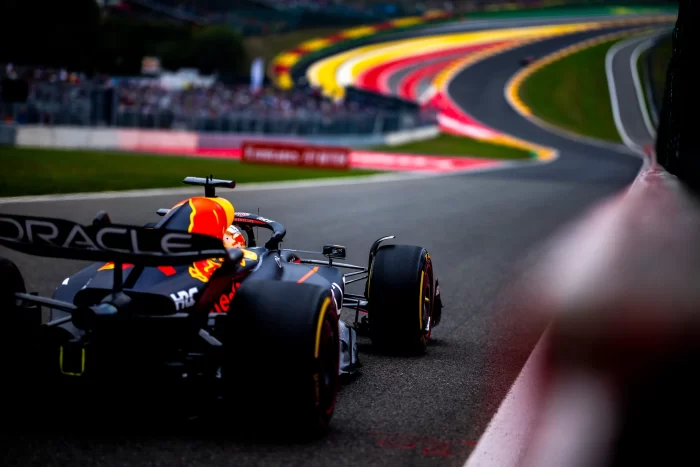
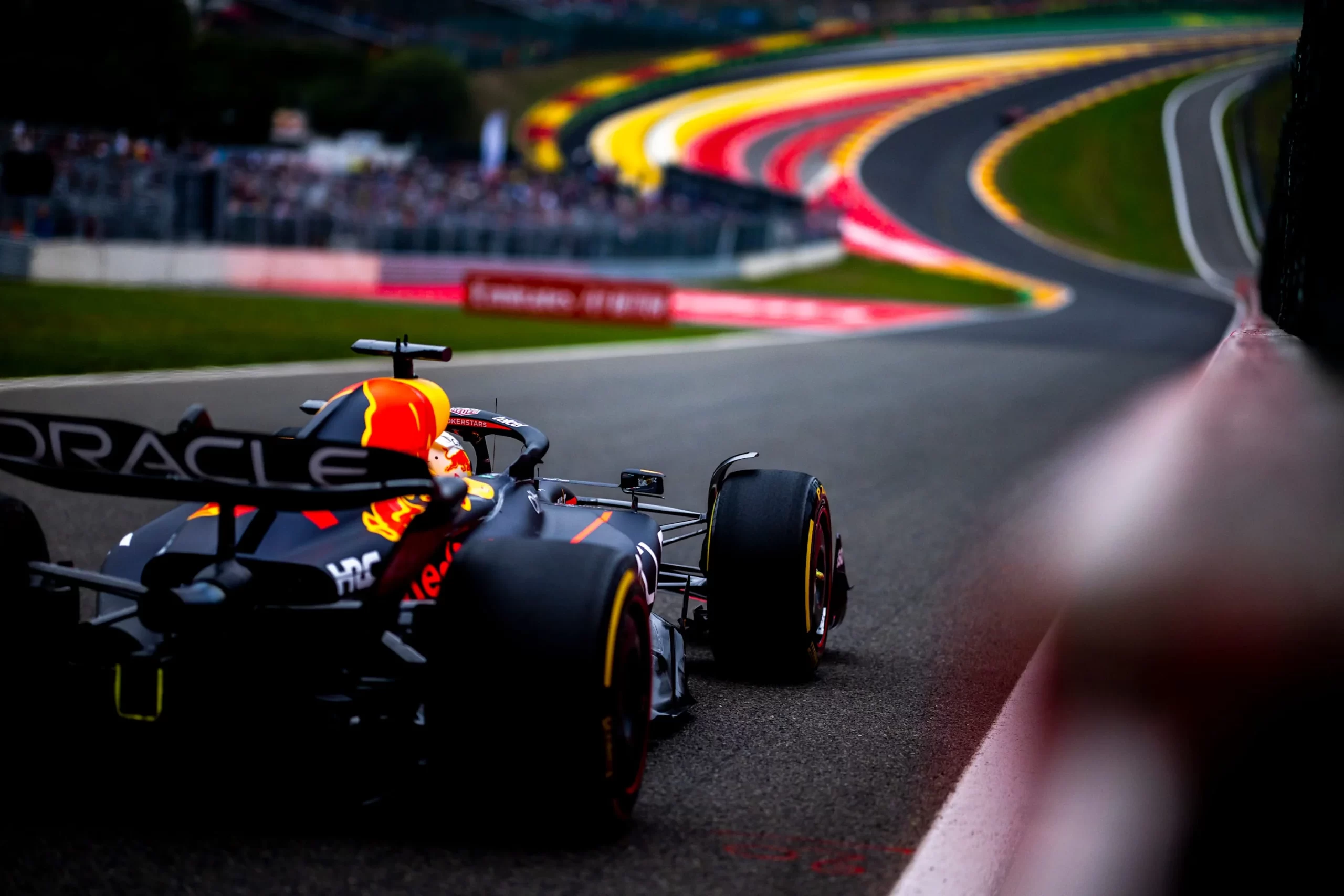
But as soon as Verstappen topped qualifying in Spa by well over half a second, took a grid penalty for a new power unit, and then proceeded to sail through the field and win comfortably from 14th on the grid, it was clear that – if anything – things had spread out further.
Whilst Spa was always likely to be a track that favoured Red Bull, Ferrari have seemingly been hampered more significantly than their former title rivals by the Technical Directive.
A week later at Zandvoort, the Scuderia arguably fell behind Mercedes in the pecking order.
Lewis Hamilton even looked set to challenge for his first victory of the season. On a different strategy, Verstappen looked like he would have to pass the seven-time world champion on track to take the victory.
However, the Safety-Car curse that has plagued Hamilton since Abu Dhabi last year kicked into life again.
A dodgy-looking debacle at AlphaTauri – which sent social media conspiracy theorists into overdrive – and then former teammate Valtteri Bottas’s retirement nullified Hamilton’s advantage.
A questionable strategy call by Mercedes to pit current teammate George Russell subsequently left him with no chance.
Image credit: Red Bull Racing
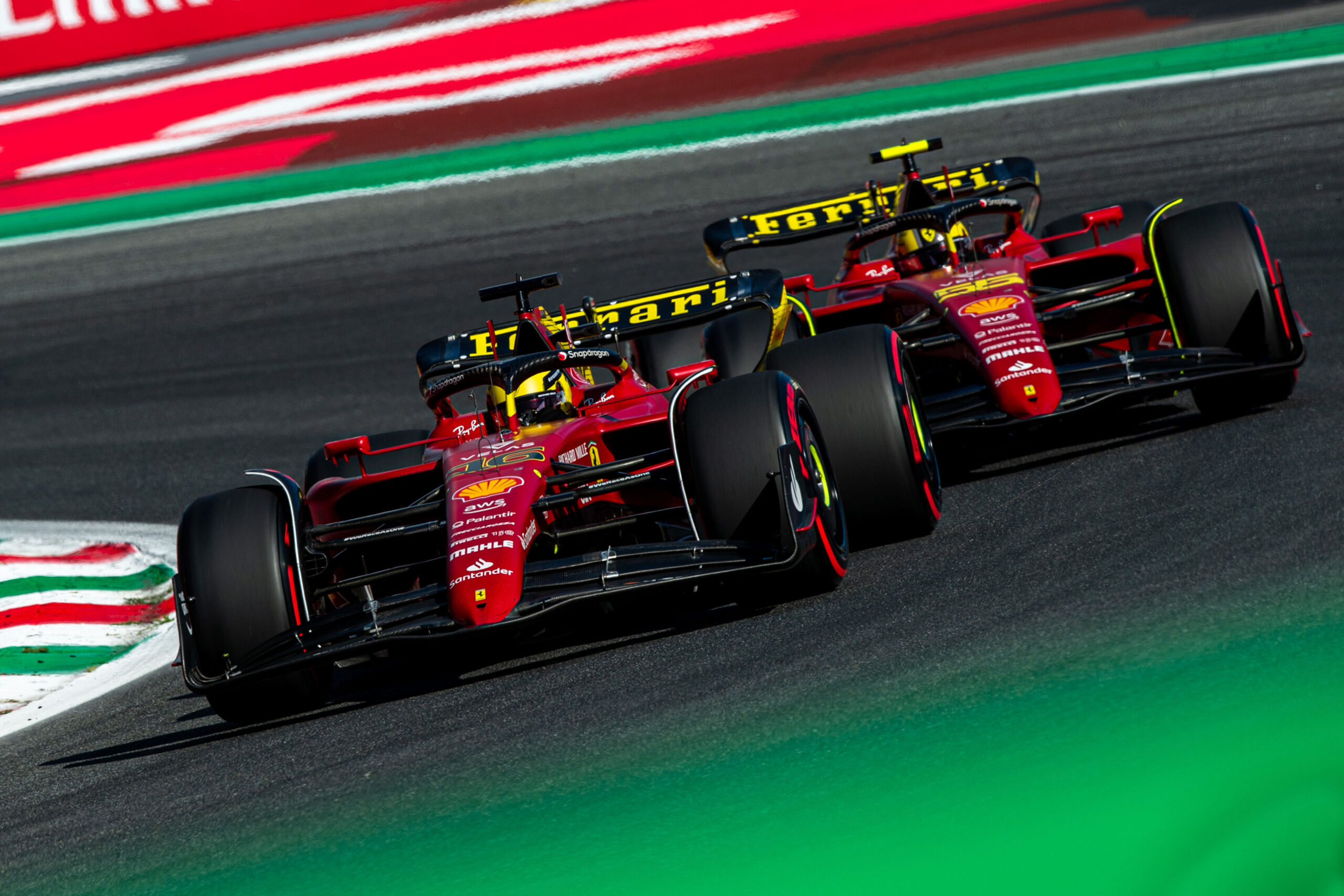
As has so often been the case, Ferrari had iffy strategy calls of their own at both Zandvoort and Monza.
Ultimately, though, Verstappen’s race pace looked too strong, irrelevant of those decisions, and he extended his championship lead to 116 points.
A Painful Dose of Déjà Vu
The Dutchman will now have his first chance to clinch the championship in Singapore. With five races still to come after that.
That is a level of dominance over one season that even Hamilton has never managed in the hybrid era. You have to go back to the years of Michael Schumacher to find something similar.
As I mentioned early in the season, a Verstappen domination was the last thing the sport needed in the wake of the 2021 finale controversy.
There was even a painful reminder of how the race in Abu Dhabi could and should have ended as Verstappen took the chequered flag under Safety Car conditions in Monza.
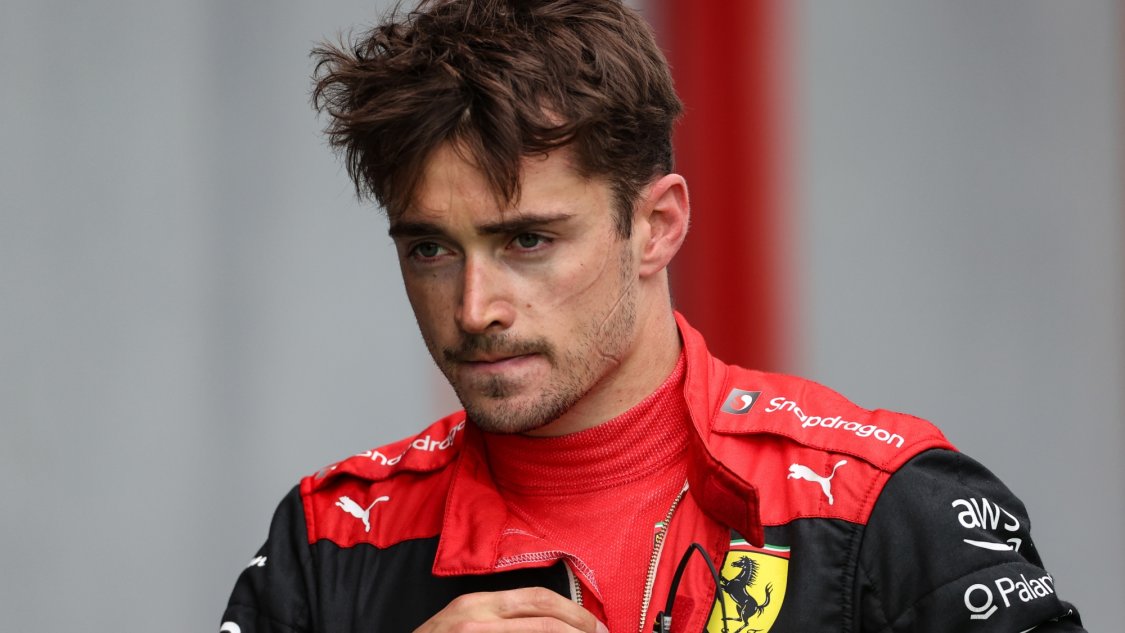
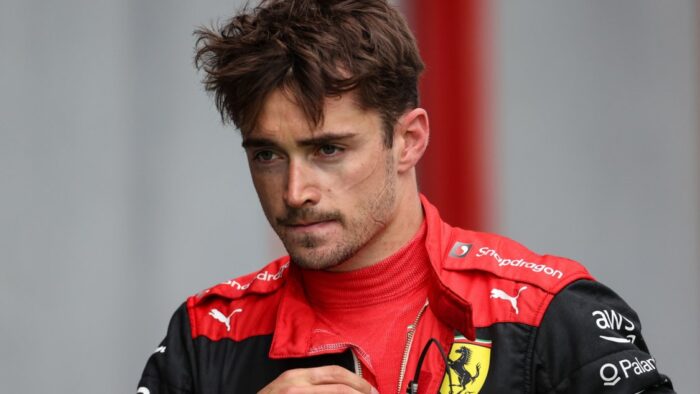
The Tifosi boos rang out, frustrated that their man – second-placed Charles Leclerc – had been denied the chance of a late battle for the win.
Image credit: Foto Colombo Images
They had a point in that the race direction had once again been somewhat shambolic, the Safety Car erroneously picking up third-placed Russell instead of the leader.
But, considering the position in which they found themselves for the final laps, the decision not to restart the race was the correct one. Or at least it followed the rules as they currently read.
Whether or not they should be amended – perhaps for a default red flag within the last x number of laps – is a debate for another day.
But F1 found itself in another sticky situation – one which unfortunately opened up old wounds.
And there may now be salt on the horizon to apply to those wounds.
A new controversy building
I have tried so hard to fall back in love with Formula 1 this year.
As any long-term reader will have noticed, the regular race previews and reports have morphed into occasional catch-ups.
The lack of a title battle has certainly made it more difficult to rekindle the F1 fire that once burnt so strongly. Decisions made in Saudi Arabia and for the future have also played their part.
And now, it appears there may be another hurdle on the horizon.
The rumours of Red Bull not complying with the budget cap have been rumbling away for a while. Mattia Binotto has even been uncharacteristically outspoken at times.
But they have really built pace over the last 24 hours.
The truth will – hopefully – become clear in the next week or so regarding Red Bull and Aston Martin‘s alleged indiscretions.
If they do exist, F1 simply has to bring down the hammer.
They have to dissuade others from following suit. If the punishment is financial, the budget cap will become a joke even faster than football’s Financial Fair Play.
F1’s popularity in terms of numbers may be at an all-time high, but the integrity of the sport still feels like it is hanging by a thread.
The increased number of Sprint weekends next year was a disappointing if predictable change. But Stefano Domenicali continues to say more and more worrying things.
I have loved F1 since I was about three years old. I want to continue to do so. Please, stop making it so difficult.
The 2022 season has reached the summer break, but it very much feels like the remainder will be a cruise to the finish for Max Verstappen.
After three races, some fans and pundits were fearing the championship was already over on account of Charles Leclerc’s 46-point advantage over Verstappen.
But fast-forward less than four months and the situation could not be much more different.
A series of calamities – mostly mechanical and strategic – have seen that 46-point deficit for Verstappen turn into an 80-point lead heading into F1’s summer holidays.
Image credit: Philip Platzer/Red Bull Content Pool
It was redemption on two counts for Leclerc at the Red Bull Ring.
Firstly, making amends for a frustrating Sprint Race on Saturday where the two Ferrari drivers fought amongst themselves to the extent that Verstappen was able to get away.
But more importantly, it was revenge for the 2019 Austrian Grand Prix. A race that looked set to become Leclerc’s maiden victory, only for Verstappen to controversially snatch the lead away in the dying stages courtesy of a particularly impolite pass on the Monegasque.
On this occasion, Leclerc would be the one doing the passing, overtaking his title rival no fewer than three times as they ran differing strategies.
He then clung on commendably despite a late clutch issue to narrow the gap to Verstappen to 38 points and spark hope of a comeback.
Pain in France
That hope would all come crashing down a fortnight later, however.
Yet another Leclerc pole position preceded what looked set to be a fascinating battle between the season’s two main protagonists.
Verstappen had followed Leclerc closely in the early stages before fading slightly, prompting Red Bull to attempt an undercut.
Image credit: XPB Images.
We would never find out whether or not that would work, though, as Leclerc made the biggest mistake of his season – if not his career – thus far, spinning out from the lead and ending up in a barrier.
There have been rumours and suspicions about a throttle issue contributing to the accident, but these are unproven and Leclerc publicly took responsibility.
Verstappen went on to take a comfortable win and extended his lead to 63 points – an advantage from which nobody has ever lost the title.
Another Ferrari Disasterclass To Round Off Part 1
The heat was immediately taken off Leclerc with another strategic blunder by his team in Hungary, though.
Having passed George Russell for the lead and with Verstappen recovering from 10th on the grid, Leclerc had the chance to keep his ever-so-slim title hopes alive heading into the summer break.
But Ferrari would be having none of that.
A bizarre decision to put their lead man on the hard tyre – and then later the soft – had the top three of Verstappen, Lewis Hamilton and Russell laughing in the cool-down room.
It dropped him from the lead to sixth and allowed Verstappen to win, despite having spun shortly after passing the helpless Leclerc.
Speaking of Mercedes, that makes back-to-back double podiums for the Silver Arrows and five in a row for Hamilton.
Image credit: Getty Images
They appear finally to be gaining an understanding of their new car and – depending on the impact of the new Technical Directive at the Belgian Grand Prix – could truly fight for wins in the remainder of the season.
Something which would be most welcome to prevent the season petering out in total Verstappen dominance.
And Finally, the Silliest of Silly Seasons
Within 48 hours of the Hungarian Grand Prix, the F1 driver conveyor belt had gone into meltdown.
With Sebastian Vettel having announced his upcoming retirement in Hungary, Fernando Alonso shocked the paddock on Monday by announcing he would be filling the vacant Aston Martin seat.
That led Alpine to announce Oscar Piastri’s promotion… Only for Piastri – after a couple of hours of deafening silence – to totally denounce said announcement.
I understand that, without my agreement, Alpine F1 have put out a press release late this afternoon that I am driving for them next year. This is wrong and I have not signed a contract with Alpine for 2023. I will not be driving for Alpine next year.
As things stand at the time of writing, it would appear that he will be replacing compatriot Daniel Ricciardo at McLaren next season.
The Honey Badger star that once shone so brightly is now flickering and in danger of being totally extinguished.
It would appear his only hope is returning to the Alpine seat – albeit Renault at that point – which he abandoned at the end of 2020, and perhaps rediscovering some form there.
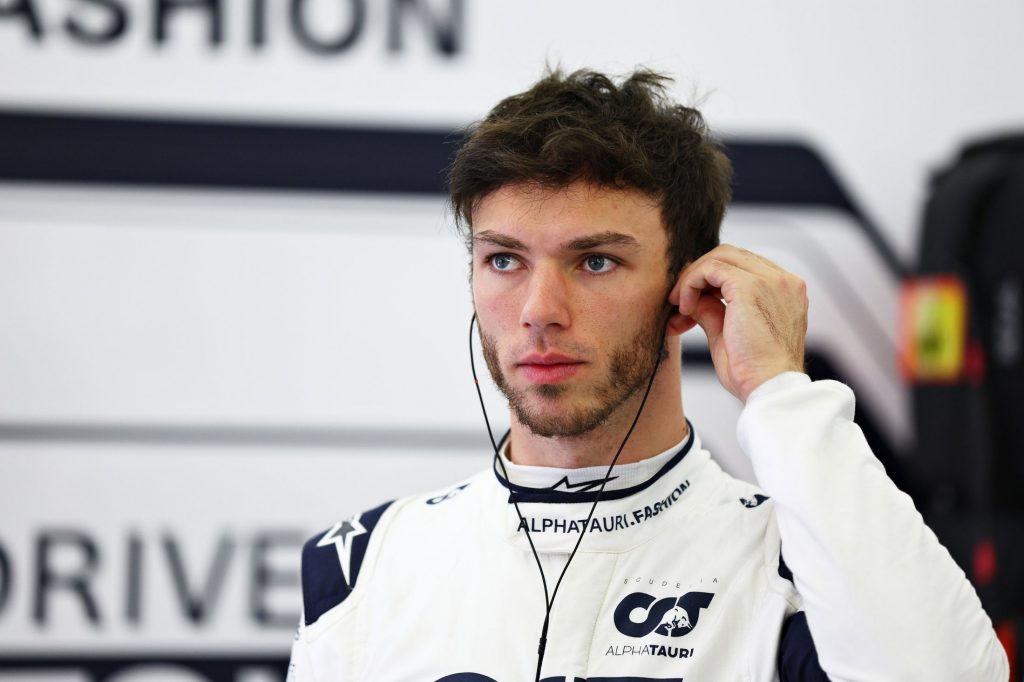
There is also talk of the French marque going for an all-French line-up, however, with Esteban Ocon being joined by Pierre Gasly.
Image credit: Getty Images
Gasly supposedly has an exit clause in his contract that allows him to leave for a team who are higher in the standings than AlphaTauri – which is currently most teams – and surely can’t be content stagnating in a Red Bull feeder system from which he will almost certainly never gain a promotion again.
Nicholas Latifi is expected to leave the sport, with Formula E champion Nyck de Vries and Williams academy driver Logan Sargeant seemingly the frontrunners to replace him.
Zhou Guanyu looks reasonably likely to retain his seat at Alfa, despite the promising Théo Pourchaire waiting in the wings and fighting for the Formula 2 title.
And as for Haas, it would surely only be a desperate Ricciardo – on a significantly lower wage – that could usurp Mick Schumacher.
Apologies again for the lack of activity – work has been crazy, but a highlight being my namecheck from Crofty on Sky F1…
Anyway, I’m back for another multiple-races-into-one report!
Last time it was three for the price of one. This time it’s six! And they’ve all been Red Bull wins…
The tide begins to turn in Imola
Really testing my memory here but let’s take a crack at a summary of the Emilia Romagna Grand Prix.
Having taken his first pole of the year, Max Verstappen got off the line poorly in the first Sprint Race of the year and was jumped by Charles Leclerc. He would make amends, though, reclaiming the lead on the penultimate lap.
Meanwhile, the title rivals’ respective teammates – Sergio Pérez and Carlos Sainz – fought their way through the field to third and fourth respectively, having started seventh and 10th after a chaotic, wet qualifying session which also saw the Mercedes caught out by a red flag and eliminated in Q2.
Image credit: Getty Images
The rain returned on Sunday and this time it was Leclerc with the poor getaway, dropping behind Pérez and Lando Norris.
All of Sainz’s hard work during the Sprint was undone immediately as he was punted out at the first corner by an understeering Daniel Ricciardo.
Leclerc reclaimed third from Norris but was never quite able to pass either Red Bull and then made his first mistake of the season as he desperately tried to catch Pérez.
A bad day for the onlooking Tifosi got worse as Leclerc spun at the Variante Alta chicane.
He recovered to sixth – and the fastest lap – after a pit stop for a broken front wing but saw his title lead shrink as the Red Bulls picked up their first 1-2 since the 2016 Malaysian Grand Prix, with Norris taking McLaren‘s only podium of the year so far.
Further back, George Russell made a great recovery drive to fourth, but teammate Lewis Hamilton was less fortunate on the opening lap and found himself stuck in a DRS train for the next 90 minutes.
Welcome to Miami
Will Smith references perhaps became a little less palatable thanks to a certain slap a month or so earlier, but the above was somewhat inevitable as F1 headed to Florida for the inaugural Miami Grand Prix.
In a race that appeared to want to be America’s version of Monaco, celebrities came from far and wide for a look at some F1 cars and a dip – or perhaps not – in the infamous fake marina.
Image credit: Reuters
On track, Ferrari locked out the front row for the first time in over two years but Verstappen would have them split by the first corner.
And eight laps later, he would have the lead.
The next hour or so was largely dull until a somewhat bizarre clash between Norris and Pierre Gasly brought out the Safety Car.
Leclerc gave it his all in the closing laps but Verstappen had enough to hold onto the lead, with Sainz also holding off Pérez for the final spot on the podium.
After a poor performance in qualifying, Russell got lucky with the timing of the Safety Car – not for the first time this season – allowing him to continue his run of top-five finishes, whilst Mick Schumacher threw away a chance of his first points with a clumsy lunge on hero and mentor Sebastian Vettel.
The Pain in Spain Falls Mainly on Leclerc
Having waited over five years for their last 1-2, Red Bull wouldn’t even have to wait five weeks for their next one.
Image credit: Motorsport Images
This time, though, it was not on merit.
Leclerc picked up another pole and proceeded to sail away at the front as Sainz and Verstappen behind him each took a trip into the gravel at Turn Four thanks to a couple of rogue gusts of wind.
That dropped the Dutchman behind Russell and Pérez. Whilst his teammate was predictably easy to pass, the Mercedes would prove far trickier – Verstappen spending almost half the race staring at the INEOS-branded rear wing as the DRS flap on his own rear wing developed a fault.
Their battle became one for the lead when Leclerc suffered an engine failure, his despairing calls over the radio reminiscent of those at Sakhir in 2019.
Red Bull decided to mix things up with a three-stop strategy for Verstappen and it paid off.
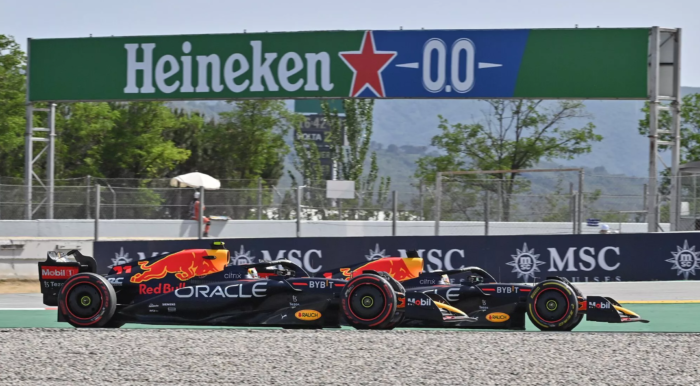
However, that was in some part due to the team asking Pérez to let him through, the displeased Mexican saying “that’s very unfair, but okay”.
Russell would take a second podium of the season, whilst his teammate provided arguably the performance of the day.
Hit by Kevin Magnussen on the opening lap, Hamilton had fallen to the very back of the pack but produced a stellar drive through the field to fourth, before a late engine issue saw him fall back behind Sainz.
Toto Wolff said he believed a 104th win would have been possible for the seven-time world champion without the early incident. Signs of life from the Silver Arrows?
The Leclerc Monaco Curse Strikes Again
Image credit: Getty Images
F1 returned to the setting of its favourite real marina in late May, with Leclerc surely standing the best chance to end his run of horrible luck on home soil.
And things looked even better once he’d secured the all-important pole position around the streets of Principality.
In terms of admin and organisation, it was a pretty shocking weekend for the under-pressure event.
A downpour and a local power cut saw a delay to the start of the race that was equal parts embarrassing and confusing, whilst the TV direction was once again poor at the only race on the calendar that insists upon having its own local director.
By the time the race finally got going, most of the rain had disappeared and Leclerc appeared comfortable out front.
Then came the Ferrari strategy blunder, though.
An erroneous stop for intermediate tyres put Leclerc in trouble; a belated call to stay out sealed his fate.
The end result was a top-four order of Pérez, Sainz, Verstappen and then Leclerc.
A nasty-looking crash that ripped Schumacher’s car in two brought out a red flag – as well as adding further pressure to the young German – and gave the leading cars a choice to make.
The Red Bulls chose the medium tyre for the final 45 laps of the race whilst the Ferraris went with the hard.
Ultimately it proved to be a moot point as passing was shown to be impossible once again on the tight streets, even when Pérez’s tyres were well past their best.
Image credit: Getty Images.
So, a third career win for the popular Mexican and one that almost brought him to tears on the podium.
A Definitive Swing in the Title Battle?
A fortnight later and the F1 circus headed to its often-far-more-chaotic street race in Azerbaijan.
It was yet another pole for Leclerc – his sixth in eight races – after a stunning final Q3 lap, but once again things would unravel on race day.
He was passed into the first corner by Pérez, but had been holding Verstappen at bay when teammate Sainz trundled into an escape road with a hydraulic issue.
The Spaniard’s painful 2022 season continues, but his misfortune did allow his team to take a strategy risk and bring Leclerc in for a cheap pit stop under the ensuing Virtual Safety Car.
Despite Verstappen having been tucked up behind his title rival, it was Pérez whose tyres were struggling and he was soon caught by his teammate.
The team informed the Mexican that there should be “no fighting” and car number one sailed past on the start-finish straight.
The race appeared to be heating up nicely with Leclerc retaking the lead on his alternate strategy as the Red Bulls pitted, but the weekend was about to get yet more painful for the Scuderia.
The cameras cut to a plume of smoke emerging from the back of the remaining prancing horse of Leclerc, who pulled into the pits to retire.
Image credit: Formula 1
From there it was a comfortable run to the chequered flag for Verstappen, with Pérez and Russell equally at ease in second and third.
If there was one thing that the weekend wasn’t for many of the drivers, however, it was comfortable.
The new regulations’ bouncing and porpoising issues hit new heights – both metaphorically and literally – with Hamilton barely able to get out of his car at the end of the race due to severe back pain.
F1 Finally Returns to Canada
After three years away, the sport finally made its return to the popular setting of Montreal, and the Circuit Gilles Villeneuve showed F1 what it had been missing.
Another eventful wet qualifying session saw Verstappen secure pole, with Fernando Alonso on the front row for the first time in over a decade and Leclerc starting at the back with an engine penalty.
It was Pérez suffering an early mechanical failure this time and bringing out a Virtual Safety Car under which Verstappen and Hamilton pitted.
Once things had shaken out it was a clear front three of last year’s title rivals either side of Sainz.
With 20 laps remaining, Yuki Tsunoda embarrassingly slid straight into the barriers at the pit exit, bringing out a first full Safety Car of the race.
On fresher tyres, Sainz hounded Verstappen to the end but the Red Bull’s superior traction meant he was always able to stay just out of reach in the DRS zones.
Image credit: Getty Images.
So close, yet so far once again for the Spaniard, who now has 11 podiums without a victory and is closing in on Nick Heidfeld’s unwanted record.
After two painful weekends – in every sense – on street circuits, Hamilton and Mercedes showed signs that they might be able to challenge on upcoming smoother tracks, whilst Mr-Saturday-turned-Mr-Consistency Russell continued his impressive record of finishing in the top five at every race.
F1 fans feared that Red Bull’s early-season mechanical woes would ruin the title battle as Leclerc dominated.
With a sixth consecutive race win for the Austrian team and now a 49-point margin to Leclerc in the championship, it appears that it may, in fact, be the other way round.
For a variety of reasons, including a lot of work and a trip to Mexico, I haven’t been able to write race reports for the first three grands prix this season.
There was also the issue of my falling out of love with F1 at the end of last year, which left me short on motivation.
However, the first race of the year did a lot to counter that.
A Positive Start in Bahrain
Image credit: Scuderia Ferrari
After pre-season testing, I was wary of a season of Red Bull and Max Verstappen domination. All allegiances aside, that really was the last thing the sport needed as it headed into its new era.
With the huge controversy of Abu Dhabi having left a bitter taste in the mouth for many, a runaway championship for the man who earned his maiden title via Michael Masi’s questionable decisions on lap 57 at the Yas Marina Circuit would not have been a good way for F1 to turn over a new leaf.
Whilst Mercedes have faltered, as their dramatic sidepod – or lack thereof – design seemingly left them suffering worse than most with the returning phenomenon known as ‘porpoising’, Ferrari have fortunately returned to the front to give us a title battle.
And armed with a truly frontrunning car, Charles Leclerc has been reminding the world exactly what he is capable of.
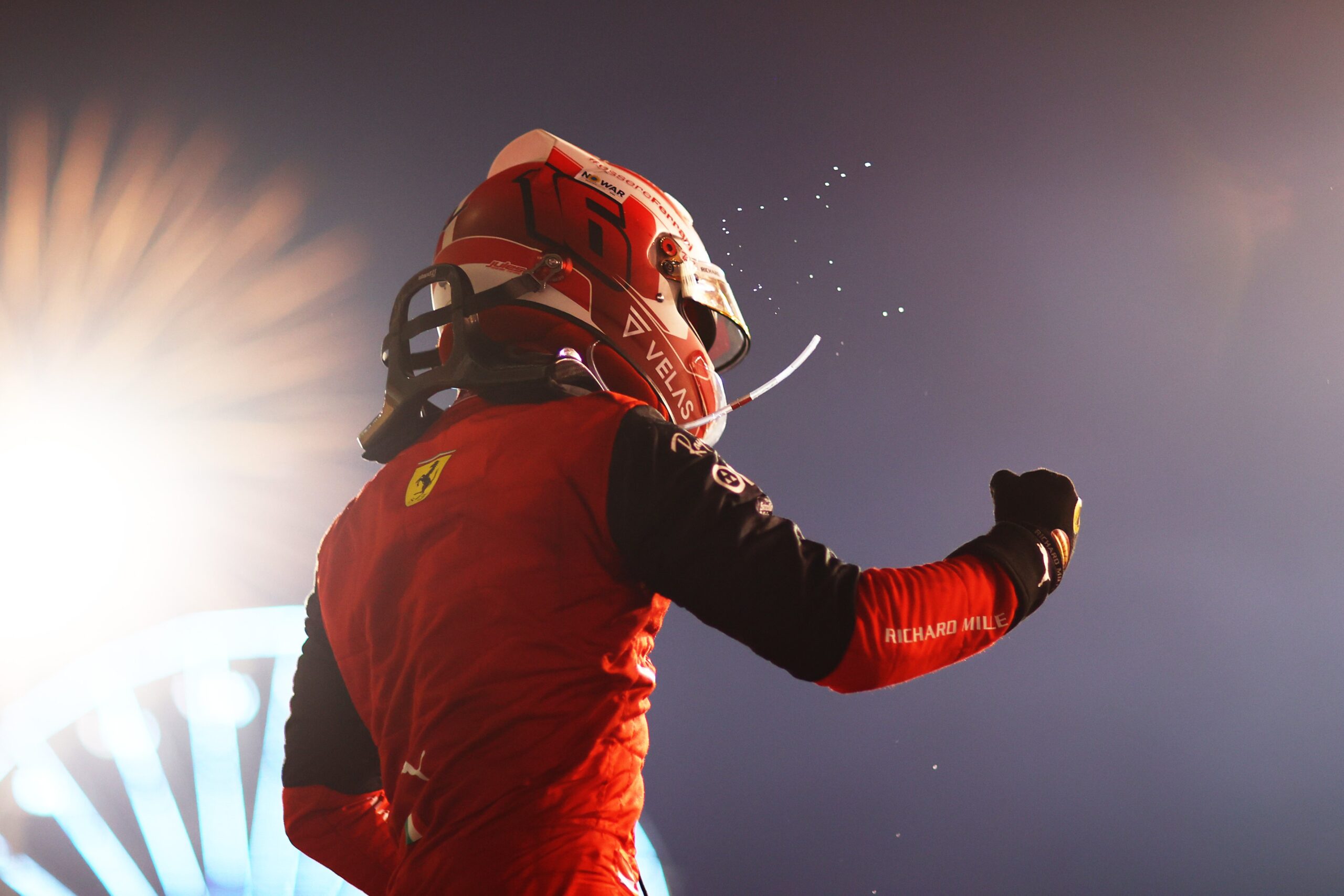
A thrilling battle with Verstappen at the season-opener in Bahrain ended up with the Ferrari man on top, the pair having gone wheel to wheel for a number of laps, but Leclerc using the DRS zones smartly and then building a gap to take his first victory since delighting the Tifosi at Monza in 2019.
Image credit: Getty Images
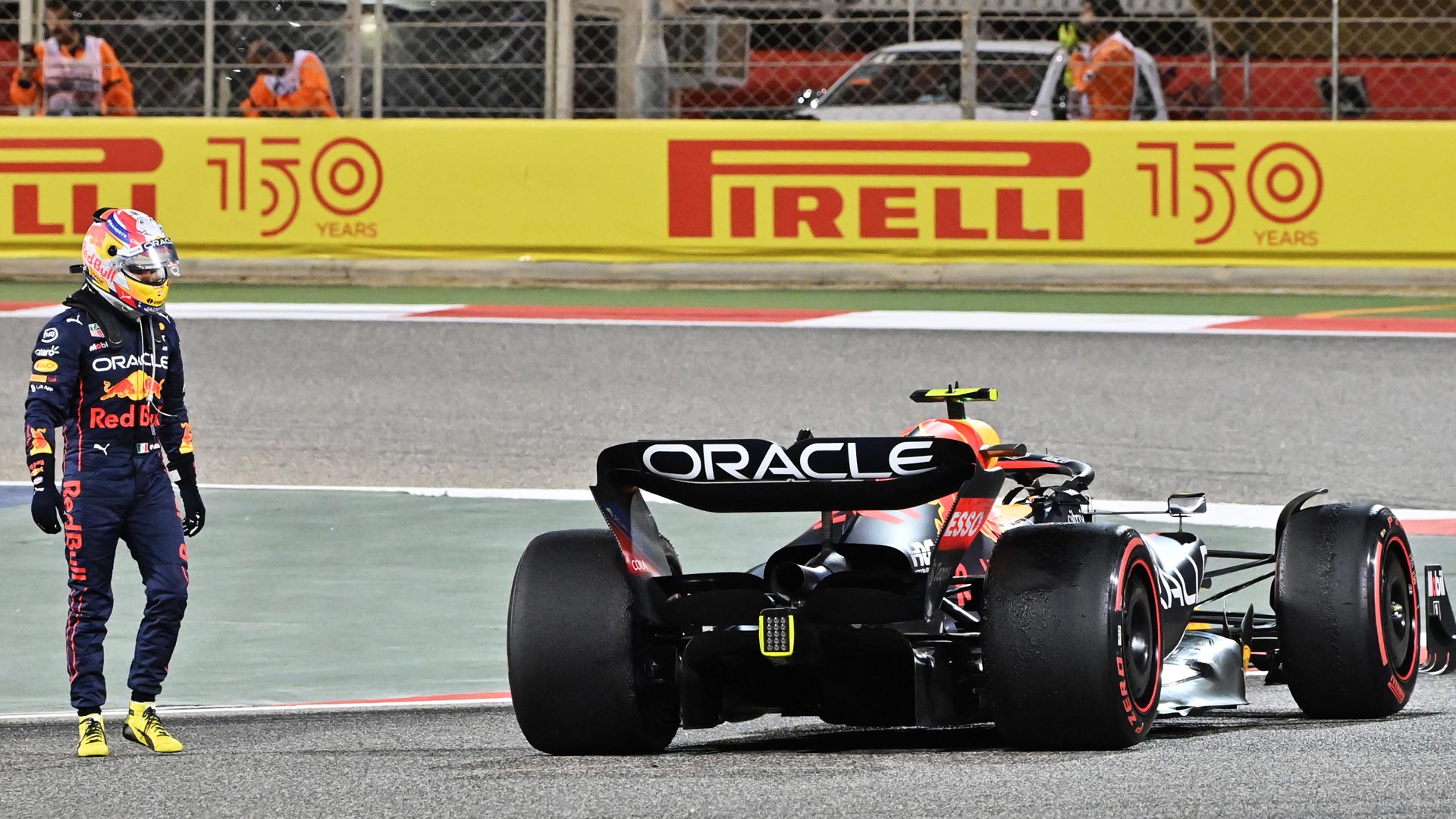
Things fell apart for the Red Bulls late on – Verstappen was forced to pull into the pits and retire just three laps from the end with a lack of fuel pressure, and teammate Sergio Pérez then suffered the same issue two laps later.
An exciting fight for the win – that hinted towards an exciting fight for the title – culminating in late drama, a Ferrari 1-2 and a surprise Lewis Hamilton podium – how many years has it been since those words would make sense together?.. – meant that the start of this season did a decent job of starting to make amends for the end of the previous one.
The Wrong Kind of Drama in Jeddah
The two drivers – who have been rivals since their karting days – were back at it again a week later in Saudi Arabia.
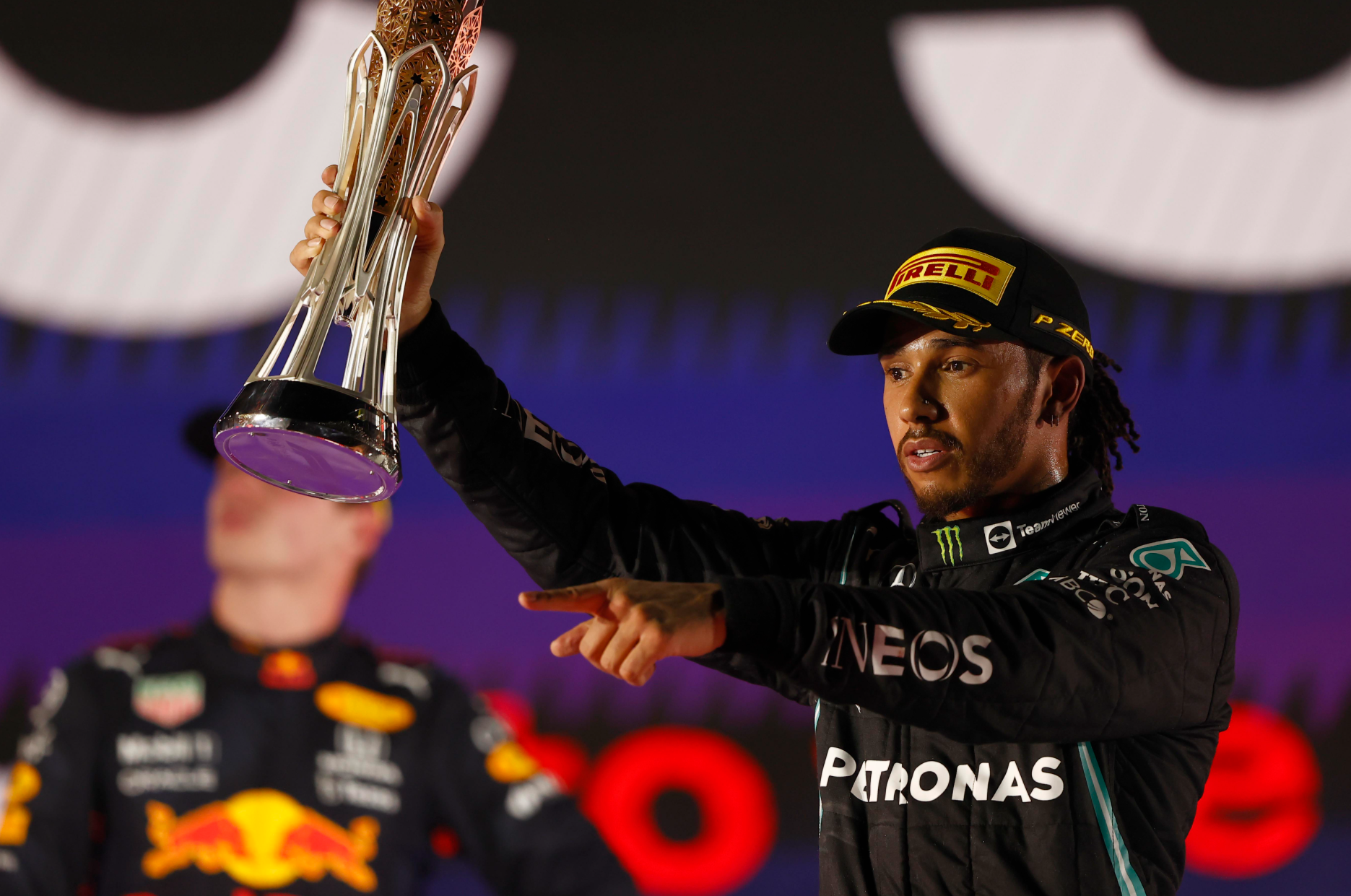
The scene of perhaps Verstappen’s most contentious performance during the title battle with Hamilton last year, this time the Dutchman kept it clean and ultimately took the win.
Image credit: XPB Images
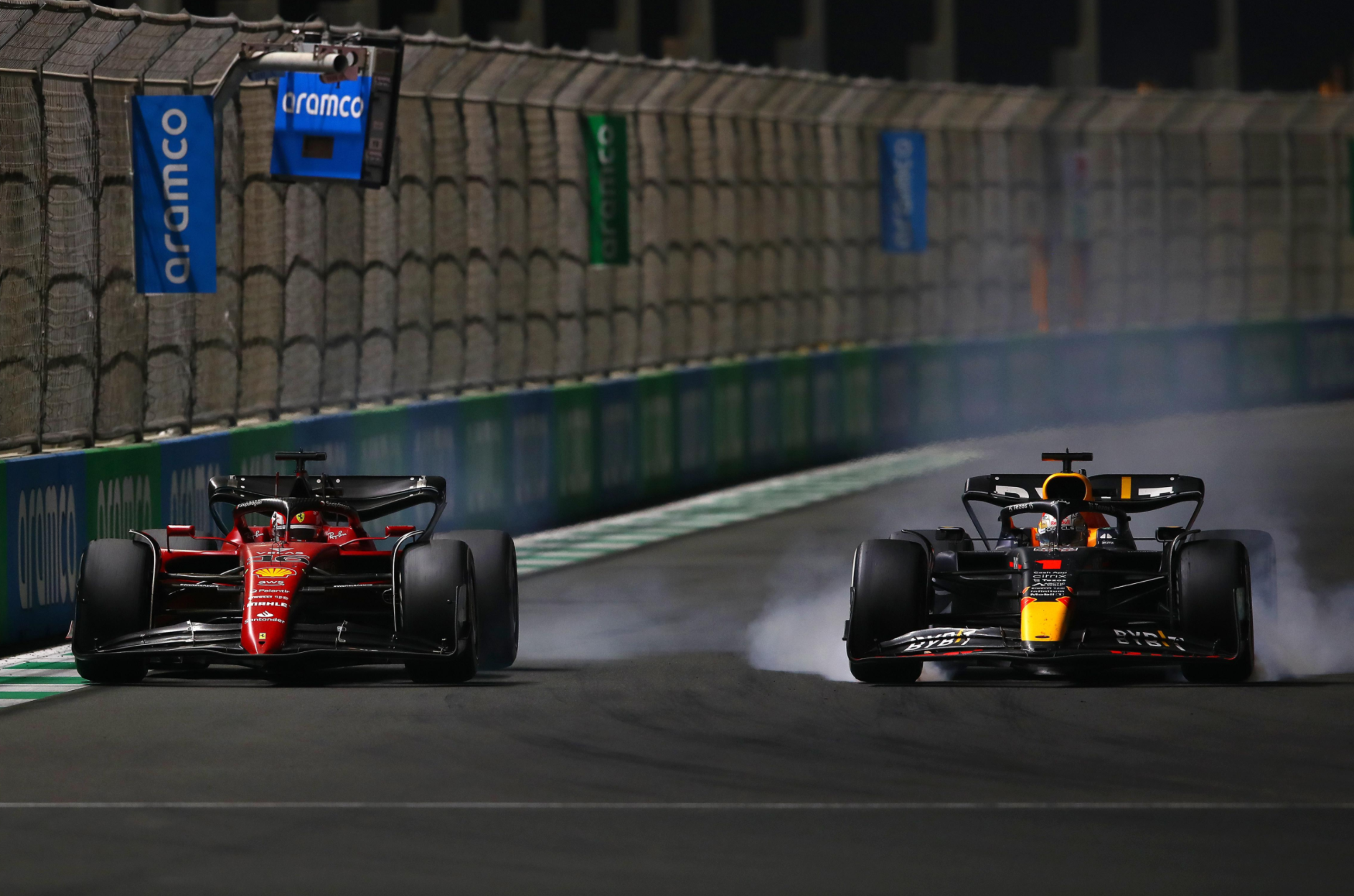
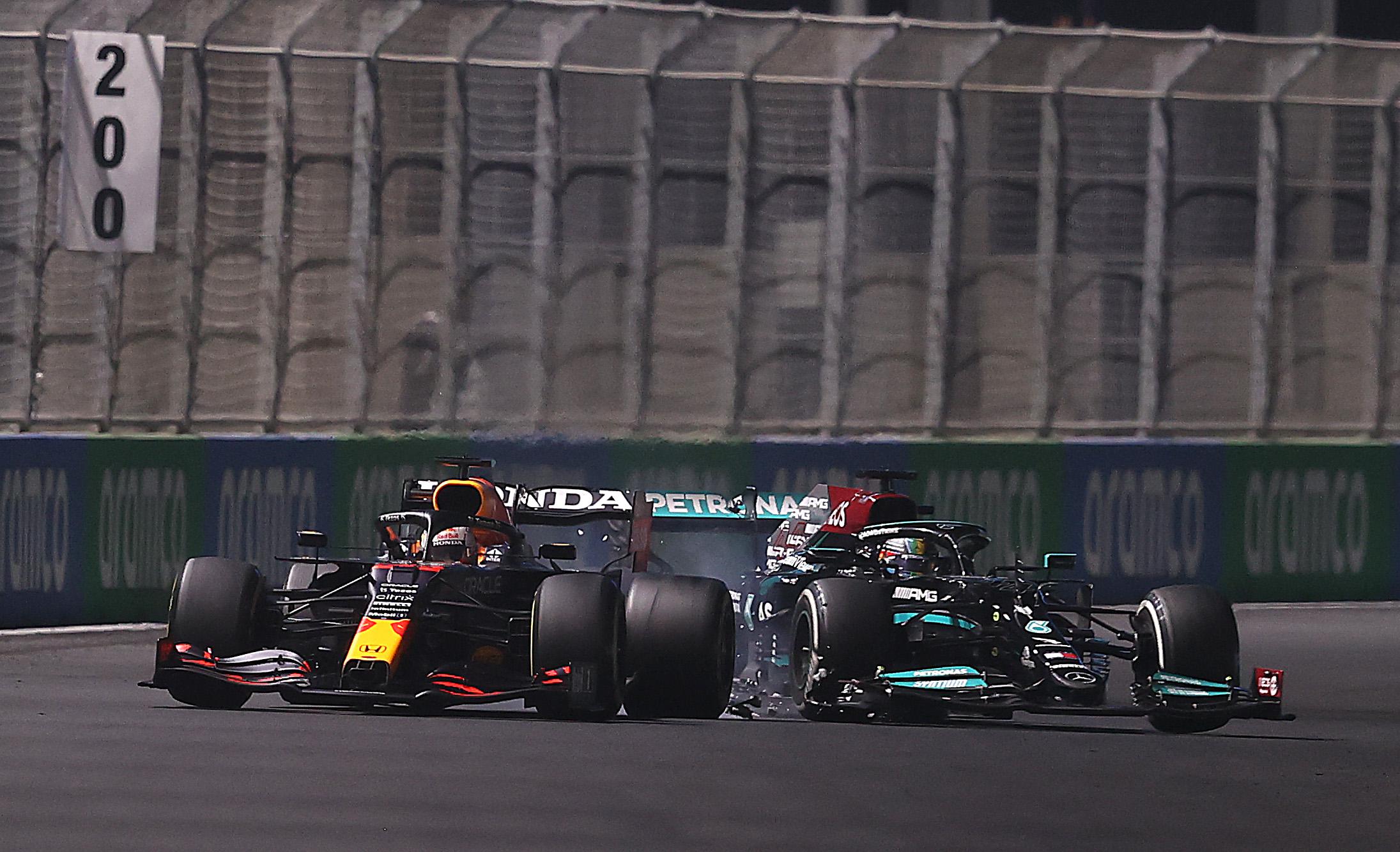
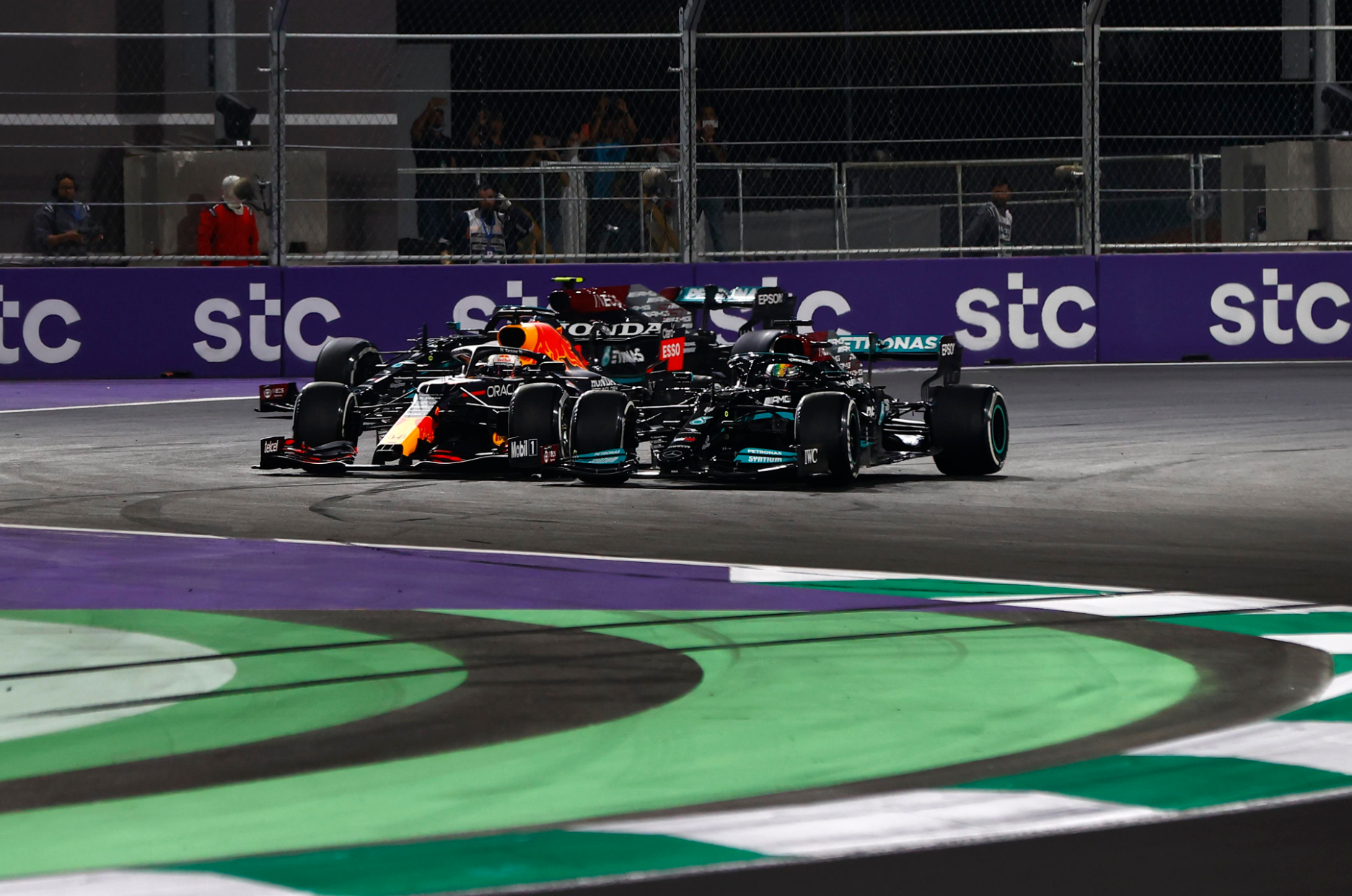
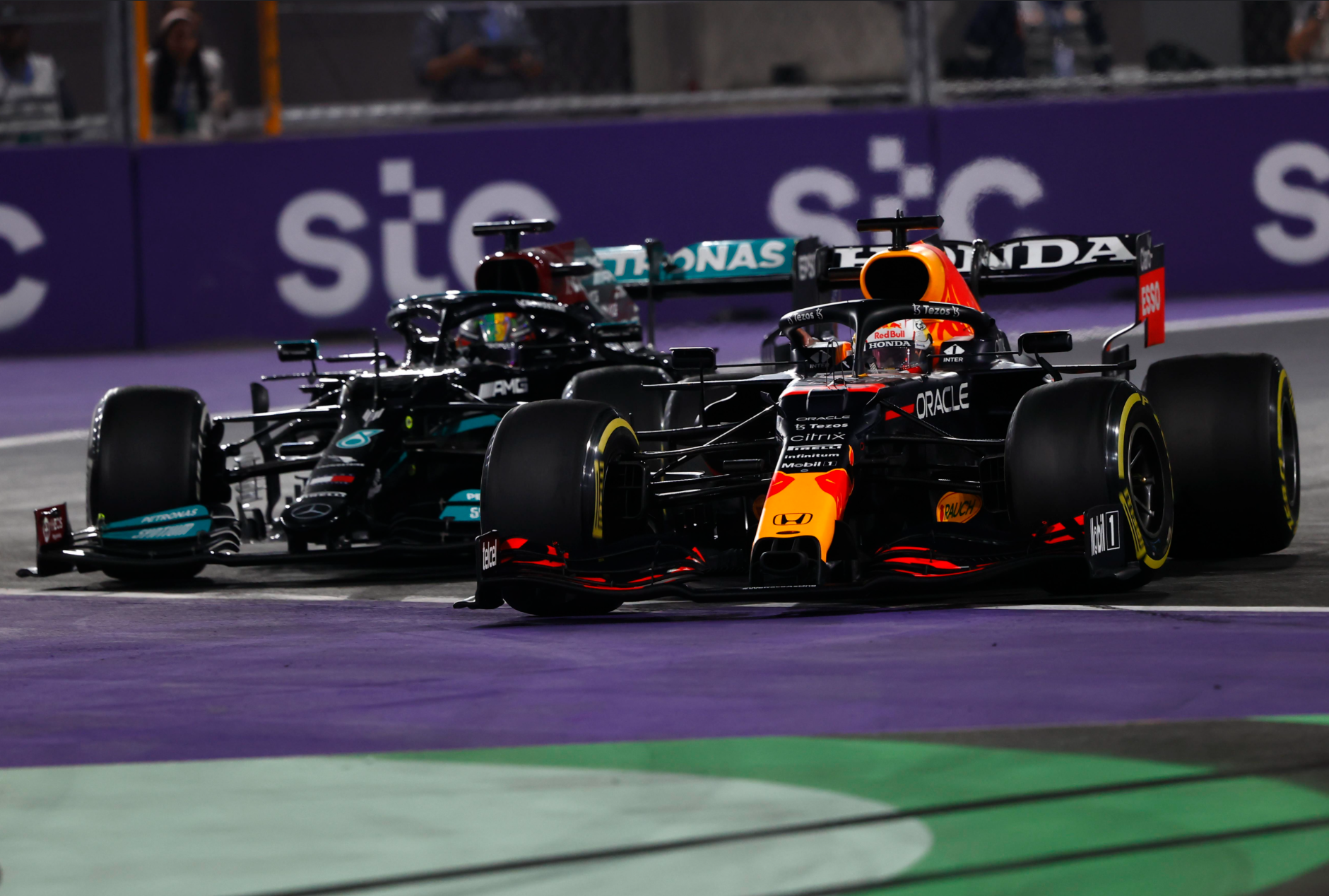
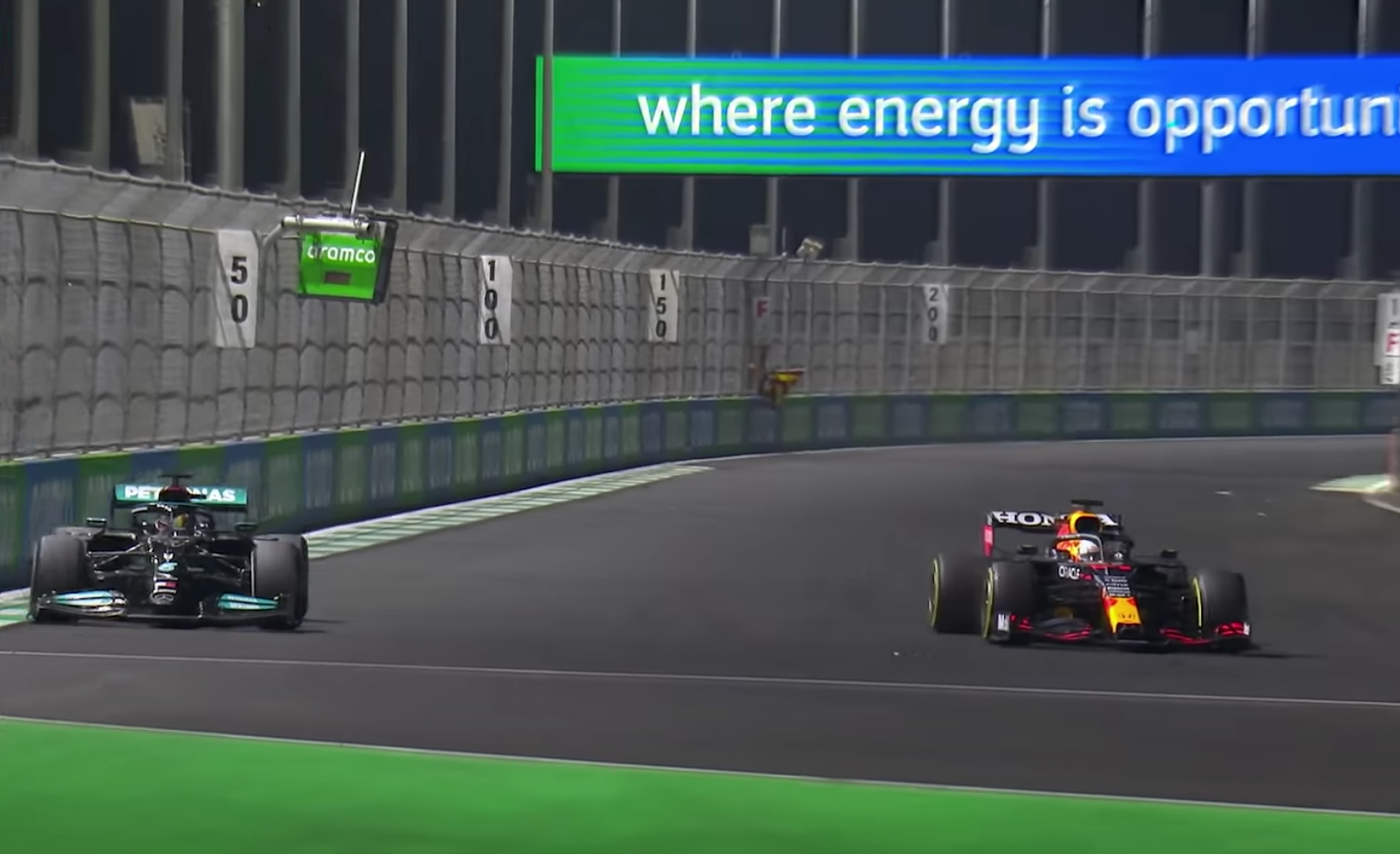
Another battle revolving around the strangely placed DRS zone before Jeddah Corniche Circuit’s final corner produced what could become an iconic photo as both drivers locked up whilst trying not to cross the detection line first.
This time, happily, there was no contact made and we avoided another brake-test-gate like in 2021.
Verstappen eventually found his way into the lead with just four laps remaining in what was probably the marginally quicker car over the course of the weekend, but was actually fortunate to be the leading Red Bull.
Pérez had finally taken his first ever pole position on Saturday – at the 215th time of asking – and was leading the race until he was scuppered by a poorly timed Safety Car.
Although the on-track action was largely entertaining, this was not a good weekend for Formula 1, and on a personal note, undid a lot of the work the race in Sakhir had done in rebuilding my faith in the sport.
Putting aside the questions about whether F1 should be in Saudi Arabia at all, there were plenty more questions to be raised.
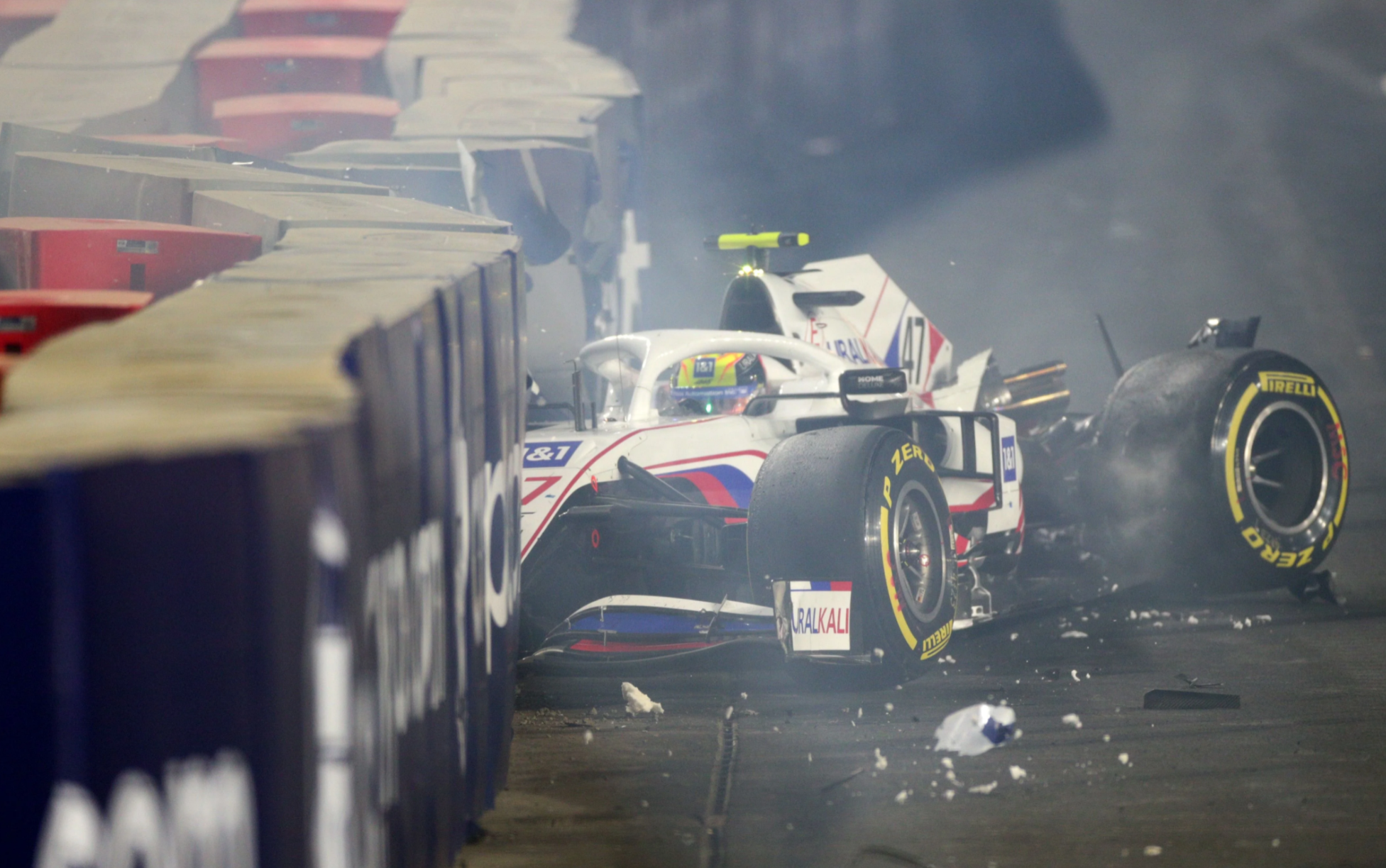
The ‘world’s fastest street circuit’ produced a horrible crash for Mick Schumacher. Luckily, the young German escaped mostly unharmed, but the incident solidified the feeling of many that the track is not truly fit for racing.
The fastest street circuit tag was simply a USP for the Saudi Arabian owners, and there is a reason that F1 cars had not previously been forced to fly through 300 km/h+ sections of consecutive blind corners at any point in its 70-year history.
Image credit: Getty Images
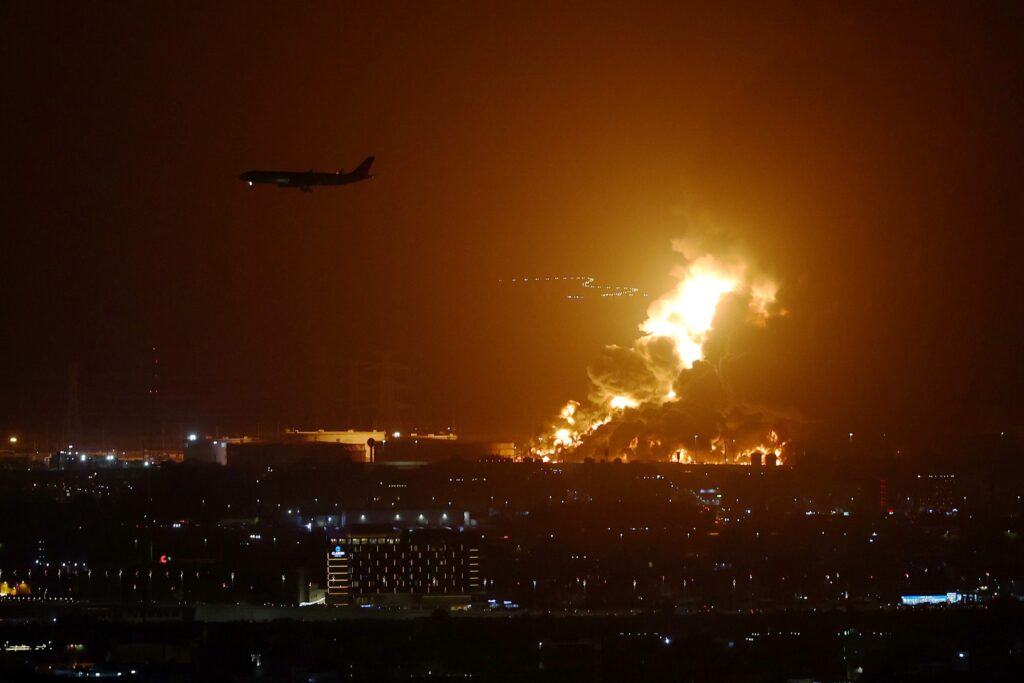
And, of course, there was also the missile attack on the Aramco oil plant just 10 kilometres from the circuit.
The drivers were clearly not okay with racing, and held talks with the various bigwigs deep into the early hours of Saturday morning before eventually agreeing to race.
Paddock rumours swirled about drivers and teams being forced to race, with the threat of ‘having a difficult time leaving the country’ if they did not.
Whether or not there was any truth to them, one thing is clear – the race should not have happened.
The irony of pushing on with the weekend in what was an effective warzone mere days after the Russian Grand Prix was cancelled and the drivers had held up ‘no war’ signs in Bahrain was obvious to all and uncomfortable to behold.
Moving onto Melbourne
A fortnight or so later, Formula 1 finally returned Down Under.
At the track where everything fell apart in March 2020, and at a time when the world appears to be moving past COVID, it felt like things had come full circle.
In terms of the F1 season, things also felt somewhat cyclical.
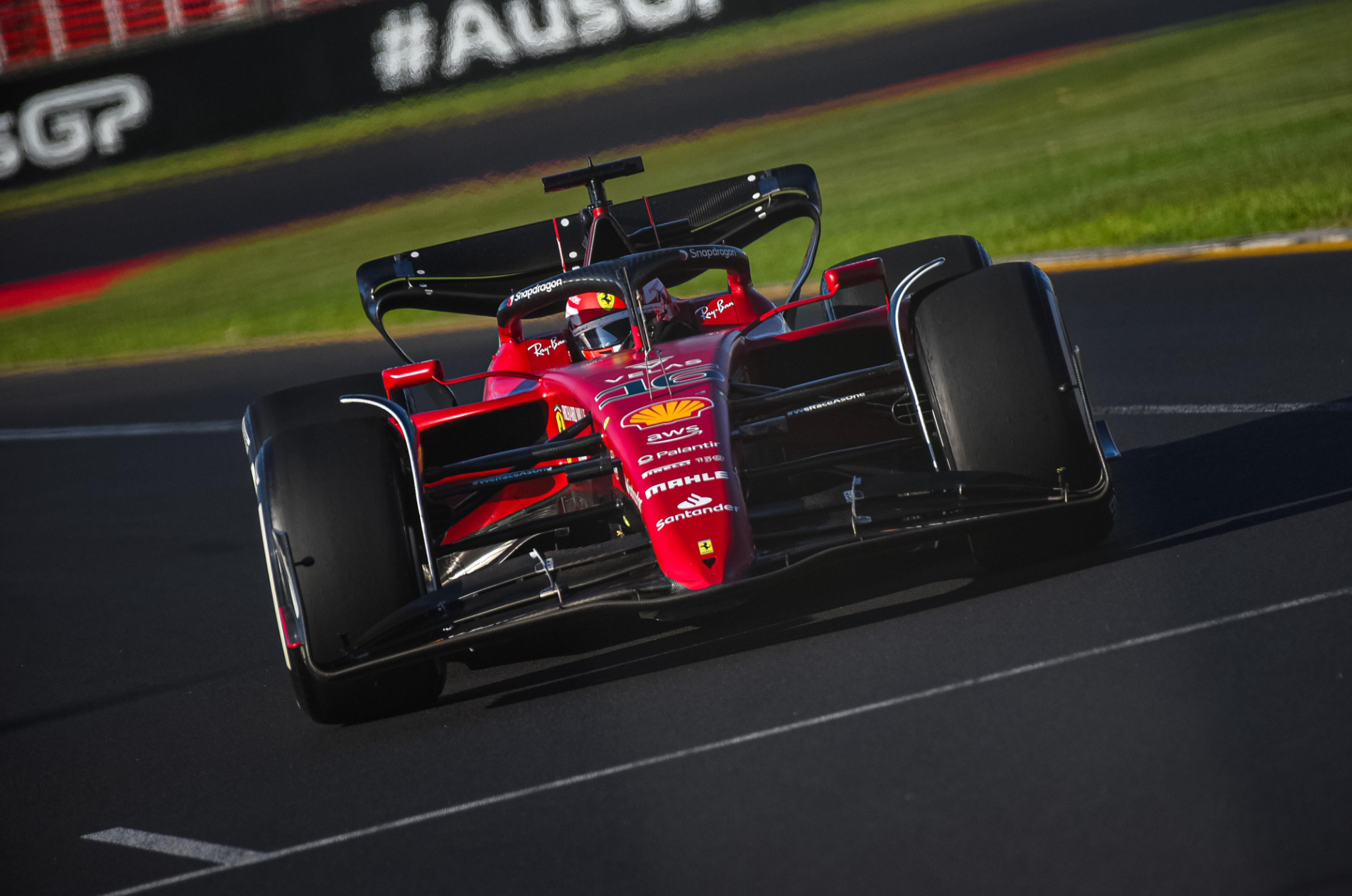
After a – this time very brief – battle with Verstappen, Leclerc dominated the race, if not the weekend, achieving his first ever grand chelem.
Image credit: Foto Colombo Images
He also extended his lead in the drivers’ standings to a mammoth 34 points as Red Bull suffered more reliability trouble and Verstappen had to pull over with a fuel leak.
The 46-point gap between the Dutchman and the Monegasque is far more than anything Hamilton or Verstappen had to overcome at any point during their battle last year, and it feels like the championship battle we all expected is already slipping away.
Of course, there are still 19 or 20 rounds to go and plenty of twists and turns to come.
Mercedes could well solve their problems and return to the battle at the front; there appears to be a lot of potential within the car.
McLaren also showed huge signs of improvement in Melbourne after a painful start to the season and Alpine have been hinting at a challenge at times.
With so much scope for development at this early stage of the new regulations, the playing field has the potential to change dramatically from race to race.
So, who knows? We could yet even end up with a four- or five-team fight at certain grands prix.
A guy can dream… And after the 2021 Abu Dhabi Grand Prix, an optimistic outlook at F1 is pretty much crucial for this writer.
Enough drama and controversy for an entire season.
Image credit: Daimler AG
Lewis Hamilton eventually took a crucial victory at a highly eventful Saudi Arabian Grand Prix, to set up a final showdown with rival Max Verstappen at Abu Dhabi.
After two red flags, three standing starts, numerous Virtual Safety Cars and even more flashpoints, Hamilton took the chequered flag ahead of Verstappen meaning they will head to the final race level on points.
The drama started on Saturday when the Dutchman, having reached the final corner of his final qualifying lap with a 0.2-second advantage and set for pole, hit the barrier and was forced to settle for third behind Hamilton and his Mercedes teammate Valtteri Bottas.
When the lights went out, all three leading drivers got away evenly and settled into a holding pattern. The first 10 laps, if anything, were actually quite dull.
But then Mick Schumacher hit the overworked tyre barrier at Turn 22, bringing out the Safety Car and setting up the first piece of controversy for the day.
The leading Mercedes pair pitted for hard tyres. Red Bull decided to roll the dice and leave Verstappen out on his aging mediums.
Image credit: FIA
Their gamble paid off as three laps later the red flag was produced, giving the championship leader a free change of tyres.
The race would restart from a standing start again and Hamilton, feeling a little hard done by, used all the tricks at his disposal to ensure his tyres were warmer than those of his rival.
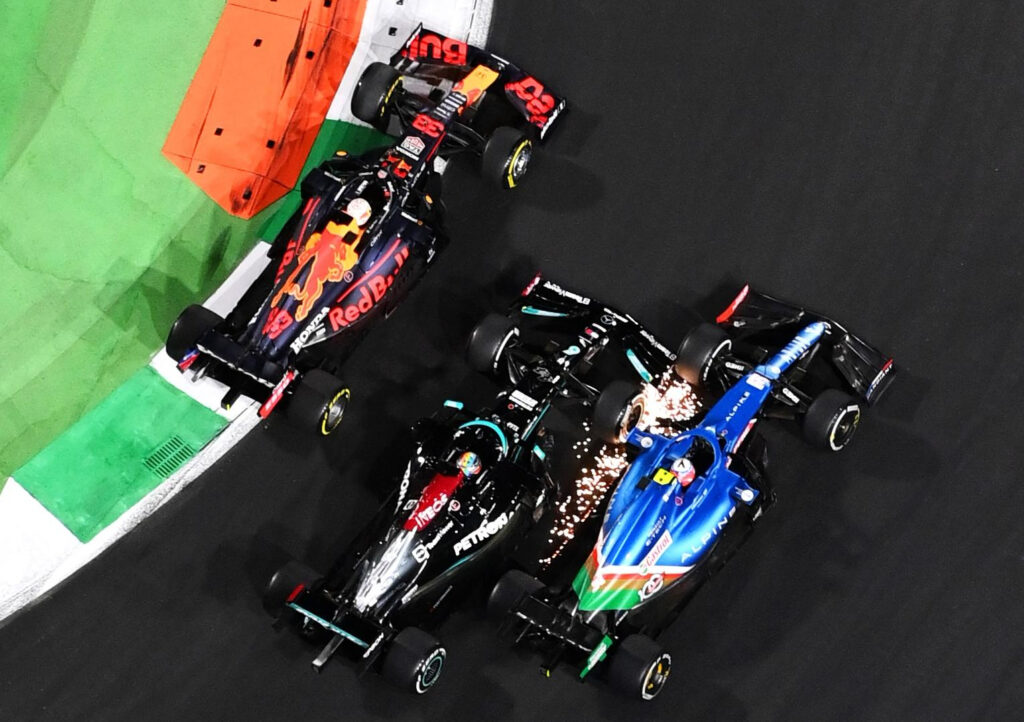
His plan worked and he got a far better start, clearly past Verstappen as they approached the first corner. But, with characteristic bloody-mindedness, the Red Bull driver tried to hang it out around the outside, leaving the track and rejoining in Hamilton’s path.
An opportunistic Esteban Ocon, who had started fourth, took advantage to briefly lead before being almost immediately re-passed by Verstappen.
Only Leclerc’s car survived and Race Director Michael Masi showed another red flag.
During the pause, a bizarre situation ensued where Masi came over the radio to offer Red Bull a particular spot on the grid – initially second place as he seemingly forgot Ocon existed, before clarifying that he meant third, behind Ocon and Hamilton.
They accepted and the drivers lined up for a third time – having ticked off just 16 laps – with Ocon on pole position.
Red Bull decided to gamble again, fitting Verstappen with the medium tyres and again it worked – at least in the short term – as he used his extra grip to make a brave lunge down the inside and lead out of the first corner.
Image credit: The Guardian
Hamilton made slight contact with Ocon as he avoided the Red Bull but survived and regained second place at the end of the lap.
And so, we were faced with the prospect of yet another Hamilton-Verstappen scrap for the lead. They are rarely dull.
For a number of laps, car number 44 got agonisingly close to the DRS window but was never quite able to break into it and was frequently interrupted by a VSC to allow marshalls to pick up debris.
Eventually, as they started lap 37, Hamilton broke the one-second barrier and used DRS to fly past on the straight. As we could all have predicted, however, Verstappen wasn’t going to just sit back and take it.
With shades of Turn Four at Interlagos, he braked very late and failed to make the corner, forcing both drivers off the track. Things were about to get even sillier, though.
Red Bull radioed Verstappen, telling him to give the place back, but to do so “strategically”. He obliged, slowing as they approached the DRS detection point.
Hamilton, however, had had not yet been informed he was about to be handed the place. The pair slowed together and bizarrely made contact, Verstappen then driving off in the lead as Hamilton was left with a damaged front wing.
Image credit: Red Bull Racing
With the incident still under investigation, Verstappen let Hamilton past at the same spot five laps later, but immediately dived back down the inside to reclaim the lead.
At the same time, the 24-year-old received a five-second penalty for ‘leaving the track and gaining advantage’, seemingly for the initial Turn One incident, although at this point it was hard to keep up.
Either way, at the end of the lap, Hamilton again passed Verstappen on the run to the final corner – this time, seemingly without the Red Bull slowing to allow it – and made sure he stayed ahead by running his rival wide.
With Verstappen’s medium tyres finally having given up, Hamilton was able to streak off into the distance and set the fastest lap despite his broken wing. The gap back to the battle for third wasn’t sufficient for Red Bull to bring their man in for a new set of tyres to respond.
That battle for third was between Ocon and the recovering Bottas.
The Frenchman held off the faster Mercedes commendably in the dying laps, but was cruelly denied his third career podium as the Finn outdragged him to the line on the final lap, finishing just one tenth ahead.
But far up the road, it was an eighth victory of the season for Hamilton and the 103rd of his career, astonishingly leaving both championship protagonists on precisely 369.5 points, almost rendering the first 21 races pointless.
Even more incredibly, the total time for the two drivers in the races in which they have both finished now looks like this:
More than a solid day of racing over more than 5,000 kilometres and they are separated by mere seconds.
To put that in perspective, they have raced a little less than the distance from London to New York – more than 1/8th of the way around the entire planet – and arrived nine seconds apart.
Breaking Down the Controversies
So, where to start?
At the beginning, I suppose.
Lap 10-13: The Safety Car/Red Flag Drama
Image credit: Getty Images
Whilst it is understandable for Hamilton and Mercedes to feel a bit hard done by, there was no FIA conspiracy to give Verstappen the championship here.
Perhaps the call for the red flag could have come earlier, but it is far from unprecedented for one to be called after a period behind the Safety Car.
After all, Schumacher’s stricken Haas had to be removed from the barrier before its condition could be assessed.
The bigger question from this situation was why tyres are still allowed to be changed under red flag conditions. It was perfectly clear after the 2020 Italian Grand Prix that it effectively creates a lottery which punishes drivers at random.
Maybe now that it has (nearly) produced significant implications for the title fight, it will be addressed.
Lap 15: The First Turn-One Drama
Image credit: LAT Images
This one is pretty clear cut.
As the lights went out for a second time, Hamilton got the better start and was clearly ahead going into the first corner. Verstappen was then run out wide – as he himself has done to Hamilton numerous times this season – but rejoined in the Briton’s path and kept the position.
Although the manner in which it happened was quite bizarre, Red Bull were subsequently offered the option of produced allowing Hamilton back past, just on the grid, after the second red flag of the day had been called.
They accepted, and the drivers lined up on the grid for a third time.
Lap 37: The Second Turn-One Drama
Image credit: LAT Images
Having finally broken into the DRS window after 20 laps trying to do so, Hamilton got a run on Verstappen down the start-finish straight and, once again, arrived at Turn One ahead of his rival.
Verstappen braked very late and failed to make the corner, forcing both drivers off the track, before once again continuing on with the lead.
The post-race Red Bull narrative that only Verstappen was punished despite both drivers leaving the track is frankly a bit embarrassing, as they know full well that Hamilton was left with nowhere else to go and was clearly on a line to comfortably make the corner.
Whilst the goalposts were moved by the stewards’ inaction in Brazil – and the waters seemingly muddied in the discussions thereafter – this should be a simple case of either allowing the other driver past or taking a five-second penalty.
The Red Bull pit wall clearly acknowledged that on this occasion and radioed Verstappen to allow Hamilton through, thus leading onto…
Lap 37, Part Two: The Slowing to Pass Drama
Image credit: Getty Images
Now, this is probably the most complex of the race’s many controversies.
In his message to Verstappen telling him to give the place back, Race Engineer Gianpiero Lambiase told the Dutchman to do so “strategically”. Verstappen obliged, slowing as they approached the DRS detection point.
Hamilton slowed behind him, though, and with Verstappen now approaching a crawl in third gear, 200 km/h down on the usual speed at that area of the track, the pair collided.
Verstappen’s goal here was pretty clear – to ensure his rival passed him before the DRS detection so he could attempt to get back past immediately, whether or not that would have been legal (more on that later).
Hamilton’s part in the situation is a little more complicated. He was informed that Verstappen would be letting him past around a second after the contact.
Was he genuinely confused and wary of passing? Or was he aware of the situation and also trying to ensure that he didn’t reach the detection zone first?
With all the yellow flag dramas we have seen recently, there is certainly the chance that he was fearful of picking up a penalty for passing illegally.
But one would suspect it was more the latter. Hamilton surely knew that it was likely Verstappen would be asked to give the place back, and has been around long enough to know the game that his opponent was playing.
Verstappen was eventually given a 10-second time penalty and two points on his licence after the race for “braking suddenly (69 bar) and significantly, resulting in 2.4G deceleration.” So, it would appear Hamilton was correct in saying that he had been ‘brake-checked’ and Helmut Marko’s protestations that Verstappen had not braked at all were proven to be, well, characteristically unfounded.
The generally unbiased and analytical Karun Chandhok agrees with the stewards’ decision, saying “it’s quite clear he deviates (wrongly) from the racing line to the middle of the track and brakes unexpectedly”.
Either way, Verstappen drove off, Hamilton carried on minus a bit of front wing, Toto Wolff slammed his headphones to the floor, and the saga continued.
Lap 42: The Re-passing Drama
Image credit: Formula 1
As previously mentioned, Verstappen then let Hamilton past at the same spot five laps later, before immediately diving back down the inside to reclaim the lead.
This one was somewhat forgotten about in the grand scheme of things, with so much to already decipher and – more importantly – Hamilton finally getting the job done one lap later.
If he had not done so, the stewards would surely have been forced to intervene once more.
There are pretty clear rules about allowing a reasonable time before attempting to re-pass a car, with a precedent, in fact, set by an incident involving Hamilton some 13 years ago.
Verstappen is surely aware of this and it is hard to know exactly what his plan was by passing mere seconds after having ceded the position, but it was rendered moot when Hamilton successfully passed on lap 43.
In one final bit of drama, the seven-time world champion was warned for the manner in which he did so, Masi letting the Mercedes pit wall know that it was ‘almost a black-and-white flag’.
Image credit: Getty Images
And so, the two rivals head to the final race tied on points, and with Verstappen having shown he will do whatever it takes to win.
One can’t help but feel that we haven’t yet seen the final moment of controversy in this titanic championship battle.
The Saudi Arabian Grand Prix in 60 Seconds
Answering the Burning Questions
So, does round 21 go to Lewis Hamilton or Max Verstappen? It was a fight that packed some punches but Hamilton took it in the end.
Will Mercedes or Red Bull prove to have the stronger package around the world’s fastest street circuit? Until Verstappen’s error it looked like Red Bull on Saturday, but the Mercedes seemed to have the edge on race pace.
Can McLaren do anything to keep their fight against Ferrari for third alive? They narrowed the gap very slightly but not enough.
From first to last to first, with plenty of controversy along the way.
Image credit: Daimler AG
Lewis Hamilton produced an incredible performance at the São Paulo Grand Prix, moving from the very back of the grid at the start of Saturday’s Sprint Race to eventually take victory.
Mercedes had upset the form book by proving to be the class of the field as the weekend progressed, allowing Hamilton to top qualifying on Friday evening during Formula 1’s third and final Sprint Race weekend of the season.
The drama and controversy started early as the rear wing on car number 44 failed a post-qualifying inspection and was impounded for further investigation, only for Hamilton’s title rival Max Verstappen to then also be called to the stewards having illegally touched the offending rear wing in parc fermé.
Well over 12 hours later, the punishments were eventually dished out. Verstappen received a 50,000 euro fine, whilst Hamilton was disqualified and sent to the back of Saturday’s grid.
Thus, the stage was set for a masterclass.
The Sprint Race saw Hamilton’s teammate Valtteri Bottas jump Verstappen at the start and hold him off for the win, whilst the other Mercedes rose from 20th to fifth, passing 15 cars in just 24 laps.
Hamilton would be forced to take a further penalty ahead of the main race, however, having stuck yet another motor in the back of his Mercedes for this event, and lined up up 10th on Sunday.
Image credit: Getty Images
As the lights went out, Verstappen returned the favour to Bottas, beating him to the first corner and, as Bottas slid wide at Turn Four, it was suddenly a Red Bull 1-2. Hamilton, meanwhile, had wasted no time once again, moving up to seventh as he went around the outside of Pierre Gasly at Ferradura.
He had been helped by the absence of Lando Norris, who was the victim of an excellent getaway – passing Carlos Sainz immediately for what would likely have been third place, but drifting left slightly too early and picking up a puncture as their wheels touched.
Hamilton then picked off Sebastian Vettel, Sainz and Charles Leclerc in the next three laps, and was suddenly into a podium position after Bottas followed team orders to let his fellow Silver Arrow through at the start of lap 5.
Much of the next 10 laps was spent under Safety Car or Virtual Safety Car conditions – following clashes between first Lance Stroll and Yuki Tsunoda, and then Mick Schumacher and Kimi Räikkönen – but when racing resumed, Hamilton found his way past a stubborn Sergio Pérez at the second attempt.
The prospect of another Hamilton-Verstappen wheel-to-wheel battle had gone from incomprehensible to imminent in the space of 24 hours.
The reigning champion closed the gap to the championship leader and then went for the undercut on lap 26 to further reduce the deficit.
Image credit: Formula 1
A second VSC gave Bottas a cheap pit stop and allowed him to jump Pérez, but all eyes were now fixed on the front two.
Hamilton got to within a couple of seconds but, suffering in the dirty air of his rival, was unable to get close enough to make a move. Red Bull then triggered the second round of pit stops themselves on lap 40 to protect against an undercut.
Mercedes brought Hamilton in three laps later and, with a fresh set of hard tyres, he was very quickly onto the back of Verstappen, and this time able to get much closer.
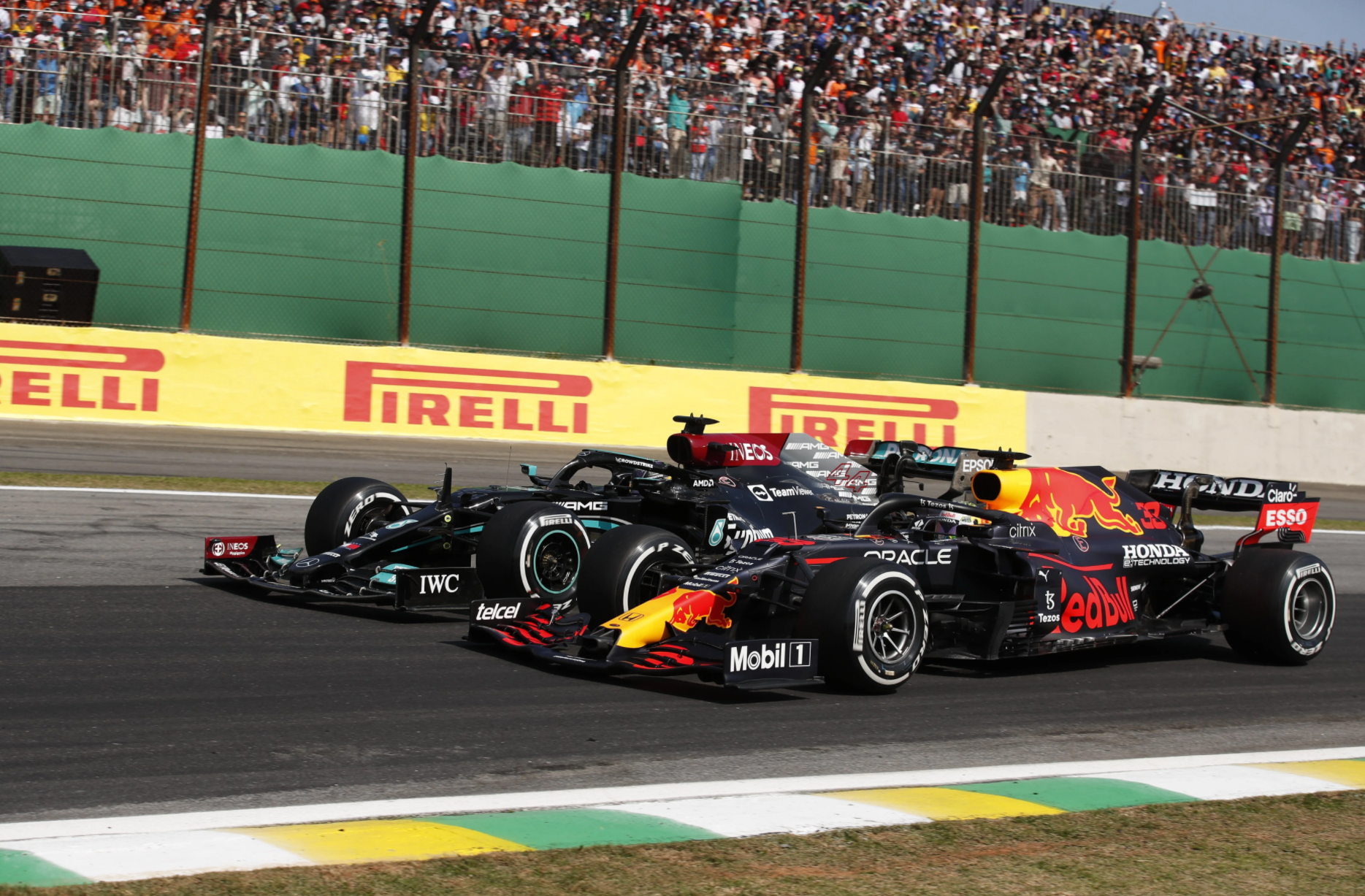
His first attempt at an overtake came on the run to Turn Four on lap 48, the Briton getting alongside and then in front, only for Verstappen to make a desperate dive. Both cars were forced well off the track and returned with the Red Bull in front. (More on that later.)
The two pit walls predictably complained and defended in calls to Race Director Michael Masi, with the decision coming back shortly after that no investigation was necessary. “Of course”, came the sarcasm-laden reply from Hamilton.
10 laps later Verstappen did receive a cautionary black-and-white flag for weaving, with Hamilton unable to pass once again.
It was third time lucky for Hamilton on the next lap, though, as he swept past Verstappen on the same stretch of track before even reaching Turn Four.
Image credit: LAT Images
And that was that. The Mercedes pulled away into the distance, ultimately finishing over 10 seconds down the road with Bottas closing onto the back of Verstappen but running out of laps and settling for third.
Pérez, with a comfortable gap back to Leclerc in fifth, pitted to steal the point for fastest lap away from Hamilton, but it will have done little to dampen the 36-year-old’s mood on a day that will go down as one of the greatest drives in an incomparable career not exactly lacking in that department.
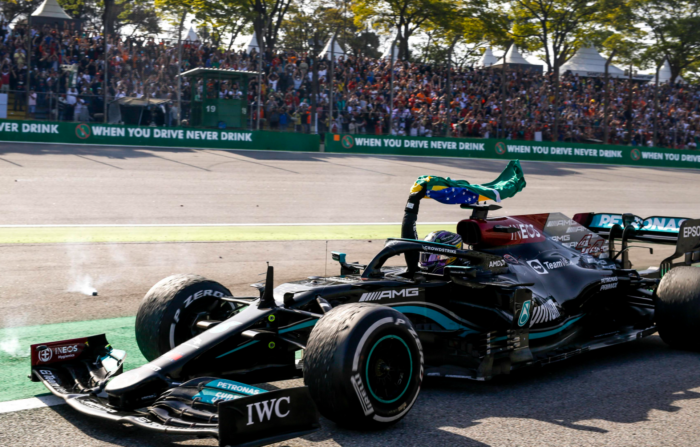
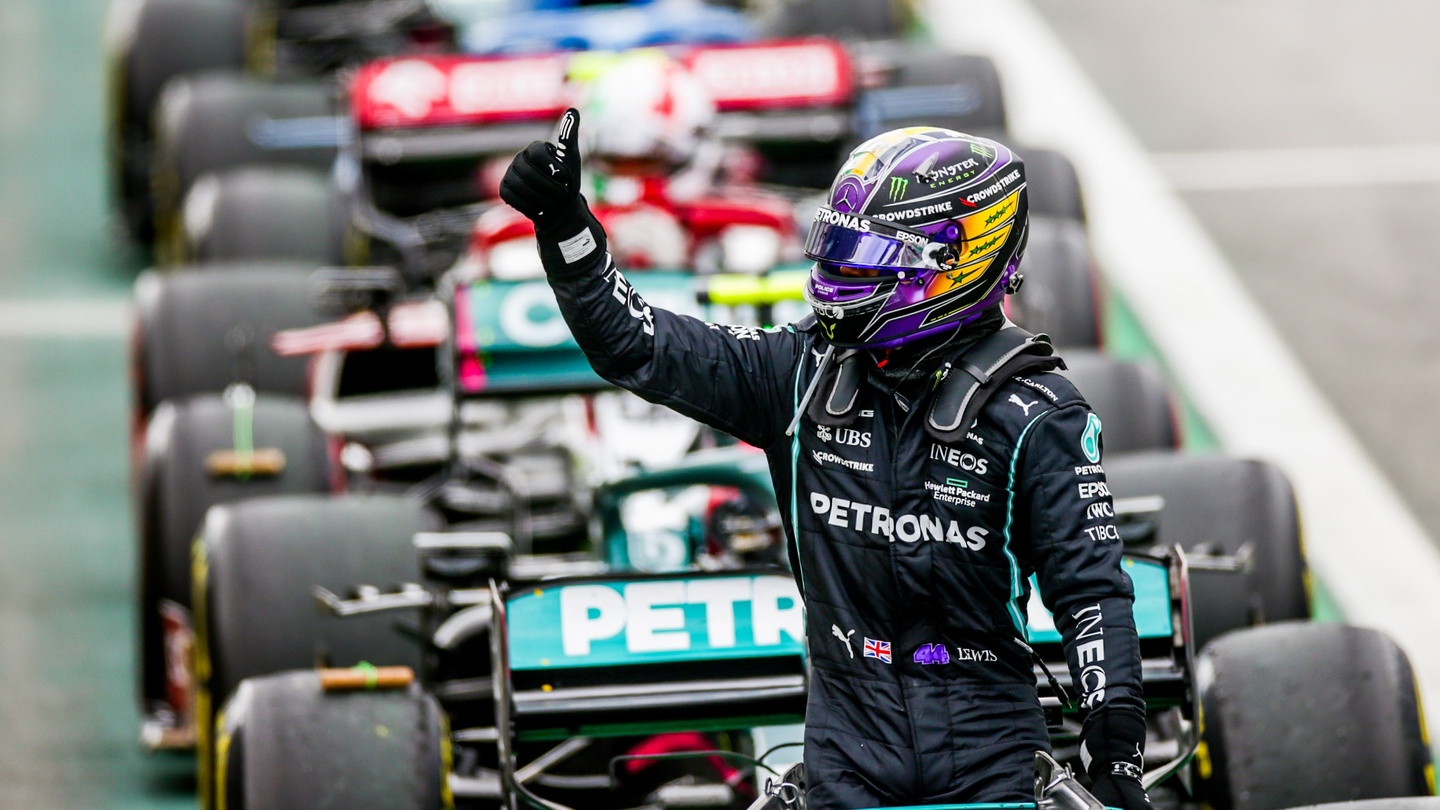
Hamilton waved a Brazilian flag to the adoring crowds – taking one final penalty in the shape of a fine for unbuckling his seat belt to do so – amid a febrile Brazilian atmosphere, as he closed the gap at the top of the standings to 14 points.
The title battle, which many declared over upon the news of Hamilton’s disqualification on Saturday, is very much back on heading into the final three races.
Ferrari Tighten Their Grip on Third
Image credit: Foto Colombo Images
The Prancing Horses finishes line astern, with Sainz following his teammate home in sixth, which sees Ferrari extend their advantage over McLaren in the Constructors’ Championship to 31.5 points.
Norris recovered impressively from his puncture, with a bit of help from that early Safety Car, to take a consolatory point for 10th, whilst Daniel Ricciardo retired with a power-loss issue.
Since their engine upgrade, the Scuderia have made a clear step forward at the same time that McLaren have struggled for pace and failed to take advantage of their opportunities when they did have some. Norris’s agonising near-miss in Russia now seems even more painful as the red cars disappear off into the distance, both on the track and in the standings.
It looks a big ask for the team from Woking to recover such a large gap, but as we’ve seen on numerous occasions this season, the tide can turn very quickly – particularly at two unknown venues.
Another Robust Verstappen Defence
As the camera panned around Turn Four on lap 48, it looked very much like we were about to see the two title protagonists make it three out of three for collisions on a Sprint Race weekend.
As it was, they survived to fight another day – or rather another lap – despite emerging from the corner a good 10 metres wide of the track’s edge.
Image credit: Getty Images
It was another Michael Schumacher or Ayrton Senna-esque defensive manoeuvre from Verstappen – a ‘you move or we crash’ dive. He was clearly behind Hamilton here and, through sheer desperation and characteristic bloody-mindedness, braked so late that he was never going to make the corner, leaving Hamilton with two options: to make contact or to stay right of him and take to the run-off area as well.
I mentioned in the Italian race report that, for all his undeniable speed and talent, these incidents bring a question to Verstappen’s wheel-to-wheel ability.
The instances of him forcing drivers off the road outnumbers his on-the-edge battles at an increasing rate. He surely has the ability and spatial awareness required, but whether he chooses to do so is the bigger issue.
Thanks to Hamilton’s eventual overtake and victory, the furore surrounding the decision that no investigation was necessary has been lessened, but the inconsistency has not escaped drivers, teams or viewers.
This further solidifies a dangerous precedent. Under Masi’s management, F1 has increasingly allowed the driver on the inside to simply run their competitor on the outside off the track. Apart from during the Austrian Grand Prix for some reason, where Norris and Pérez were penalised a total of three times.
This was an even more extreme example. Verstappen surely gained a lasting advantage by leaving the track and the decision to allow that was seemingly reached by the stewards without the onboard footage from the Red Bull, which at the time of writing is still yet to be released…
This has been one of the best title battles in years, if not decades. But it would be nice if the two superstars at the front were able to battle wheel-to-wheel rather than it being a case of Hamilton deciding whether or not he is willing to back out on this occasion and, ergo, whether or not the battle will end in a crash.
The São Paulo Grand Prix in 60 Seconds
Answering the Burning Questions
Will Red Bull continue to hold an advantage at another track that should suit them? No they won’t!
With the potential for rain over the weekend, will Interlagos produce its trademark levels of drama? Who needs rain for drama at Interlagos?
Can McLaren do anything to bounce back as their fight with Ferrari looks to be getting away from them? Nope, although it could have been very different if Norris had moved over a metre or so later.
Max Verstappen held off a late charge from title rival Lewis Hamilton to win the United States Grand Prix in Texas.
Fears of a Mercedes domination – after an ominous performance in Practice 1 – proved to be unfounded as the Red Bull developed into the slightly faster car over the course of the weekend.
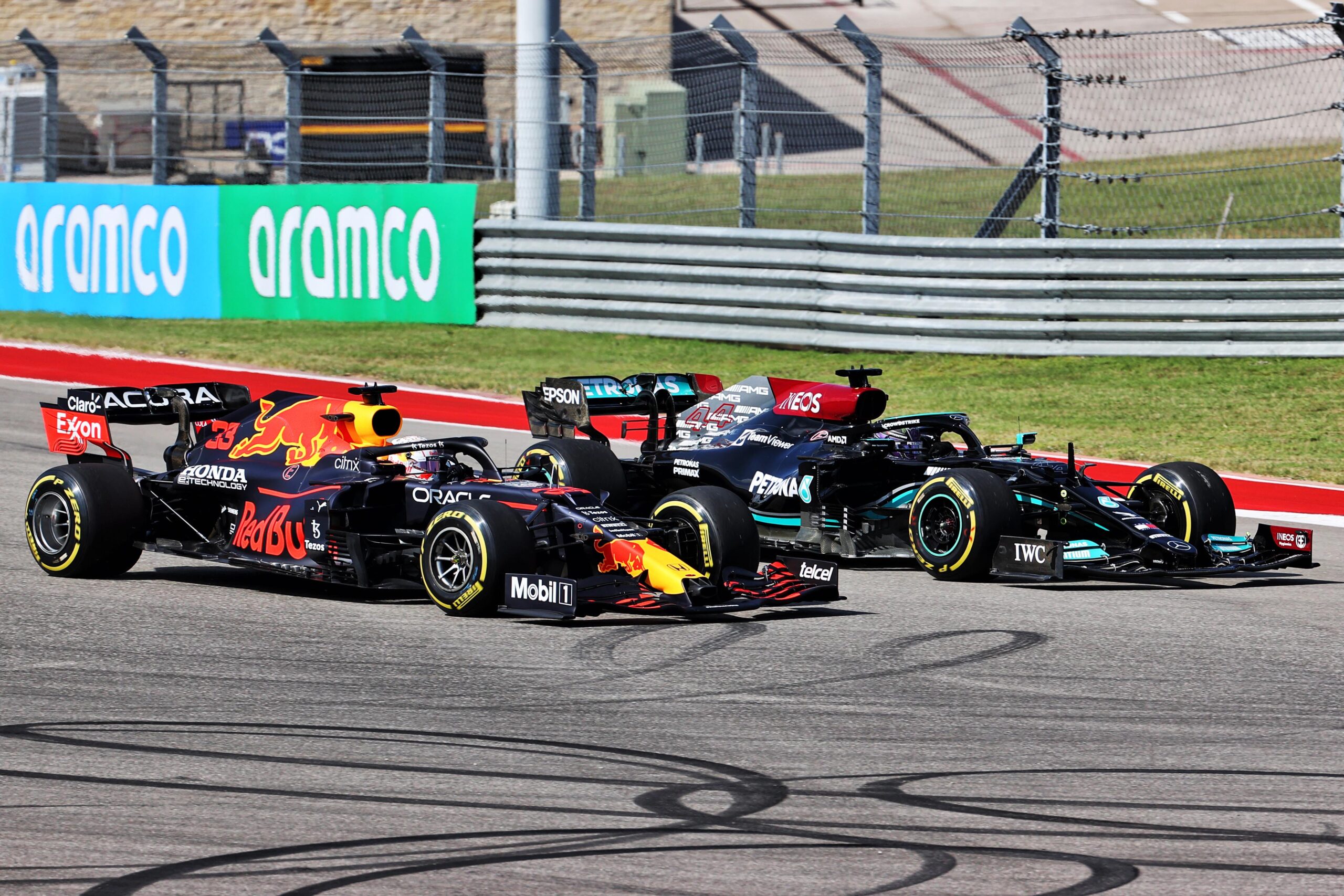
Verstappen had secured pole position in an exciting battle during qualifying on Saturday, but was beaten off the line by the seven-time world champion starting next to him. The Dutchman ran car number 44 to the very edge of the track, with plenty of heartbeats rising amid visions of the pair coming together once again when they reached the first corner.
They successfully navigated it, however, with Hamilton emerging in front.
It quickly became apparent that it would not be a comfortable day at the front for the Briton, with his rival able to follow comfortably within one second throughout the first stint – denied only from passing by the prodigious straight-line speed of the Mercedes.
Image credit: Getty Images
Red Bull therefore chose to go for an aggressively early undercut on lap 10. With the Austrian team for once having a two-on-one advantage, thanks to Sergio Pérez in third, Hamilton was unable to go long and pitted three laps later, rejoining eight seconds behind Verstappen.
The two drivers endured a stint of pace management in the middle of the race but, when Verstappen pitted for a second time, with his team wary of Hamilton having worked his way to undercut territory, the pair had opened up a sufficient gap to Pérez that Hamilton was this time able to extend.
He eventually pitted on lap 37, eight laps after his rival, and set about closing down a nine-second gap in 19 laps.
After a period of gently bringing in the tyres, Hamilton put his foot down and the gap began to reduce rapidly, with the 400,000-strong crowd realising they were going to see the winner decided in the final few laps.
Hamilton got to within two seconds but his progress then stalled, as is often the case, when his car hit the dirty air of the leading Red Bull. The Silver Arrows’ inability to follow another car is a real weakness – one which was not overly exposed during the previous two seasons at the front, but it is now costing them in a tight championship battle.
The World Champion finally broke into the DRS window on the final lap but it was too late and Verstappen came home to complete a measured drive under intense pressure and extend his championship lead to 12 points.
Pérez held on to take the final step of the podium – the Mexican finding some form at the perfect time for his team – ahead of the excellent Charles Leclerc, who started and finished an impressive fourth.
Further down the road, Fernando Alonso showed he has lost none of his fire – nor his penchant for double standards – during a battle with the Alfa Romeos. First, accusing old foe Kimi Räikkönen of passing off the track, after he had forced him there, and then complaining of hypocrisy when he outbraked himself at the end of the back straight and stayed ahead of Antonio Giovinazzi by not really taking the corner.
This led to an entertaining snippet of radio with Alpine Sporting Director Alan Permane dealing out a healthy dose of passive-aggressive sarcasm to Michael Masi.
Just think of all the gold we have missed in past years before these team radio broadcasts were introduced.
A Decisive Blow in the Title Battle?
COTA always looked likely to be a track that would suit both the leading teams evenly and produce a closely fought battle.
Image credit: Getty Images
The next two races, however, look very much like Red Bull tracks.
The thin air at the high altitude of Mexico City’s Autódromo Hermanos Rodríguez has hampered the Mercedes engine since it returned to the calendar in 2015. Verstappen took back-to-back victories in 2017 and 2018 in a comparatively far-weaker Red Bull and Hamilton’s victory at the last running in 2019 was down to some tyre-whispering mastery and a questionable Ferrari strategy.
Red Bull have also historically been strong at the Brazilian Grand Prix – which follows seven days later as part of a triple-header also featuring the maiden Qatar Grand Prix – with Verstappen winning at the last race, also in 2019.
Of course, these are considerably different cars to two years ago, with different aerodynamic traits, and anything could happen – especially at Interlagos, as we know alltoowell.
But if the flying Dutchman and his team come good on their potential at those two events, they could well be more than a win’s worth of points ahead of Hamilton with just three races remaining.
The United States Grand Prix in 60 Seconds
Answering the Burning Questions
Will Mercedes or Red Bull be on top around COTA? It was close but Red Bull appeared to have a slight edge.
Can Ferrari continue their good form and close the gap to McLaren in the Constructors’ Championship? They can – getting mighty close now!
Will there be any major announcements over the weekend? Nope, although rumours around the Andretti takeover of Sauber are building momentum.
It’s shoeys all round…except for the title rivals.
Image credit: Getty Images
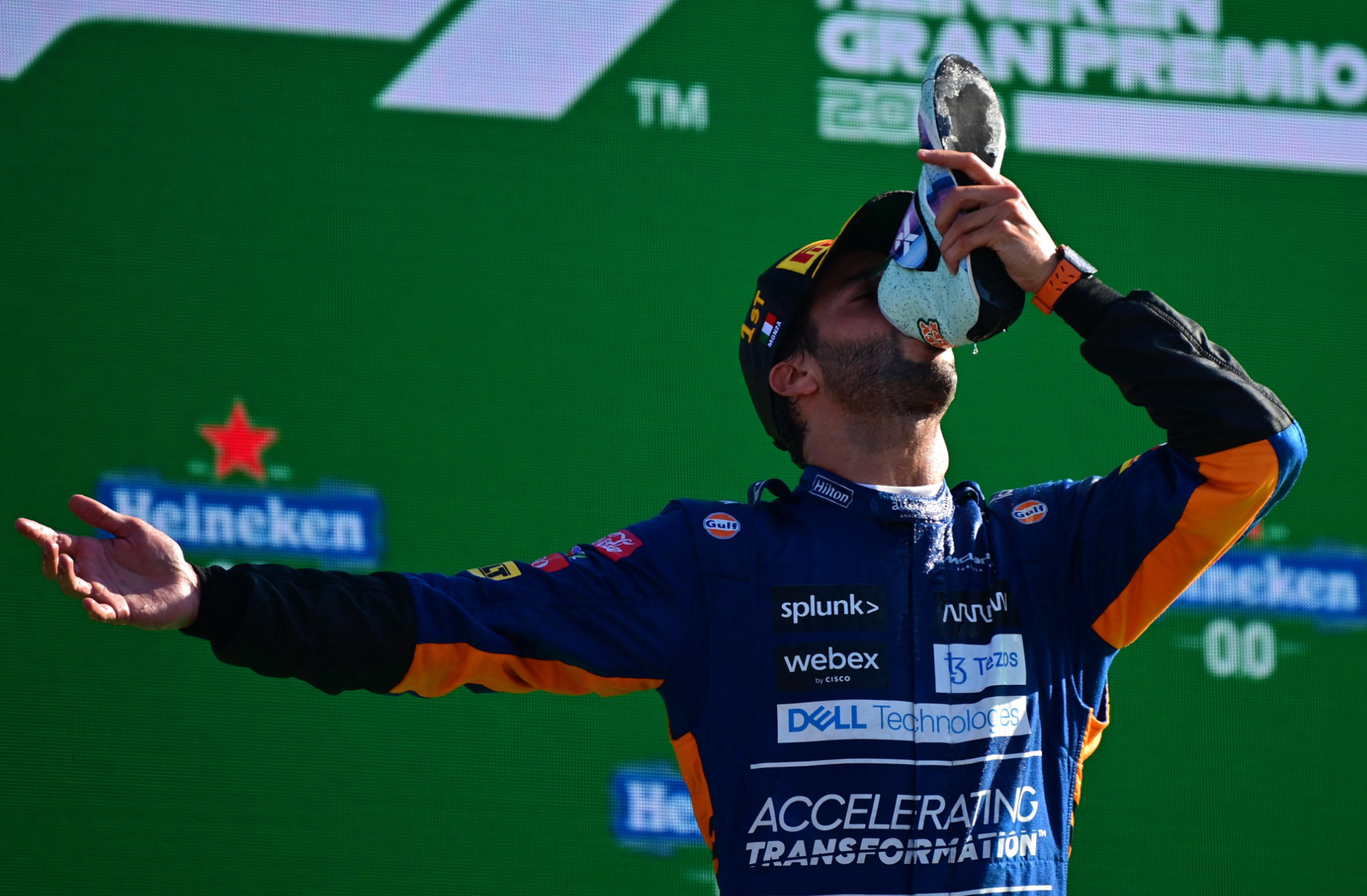
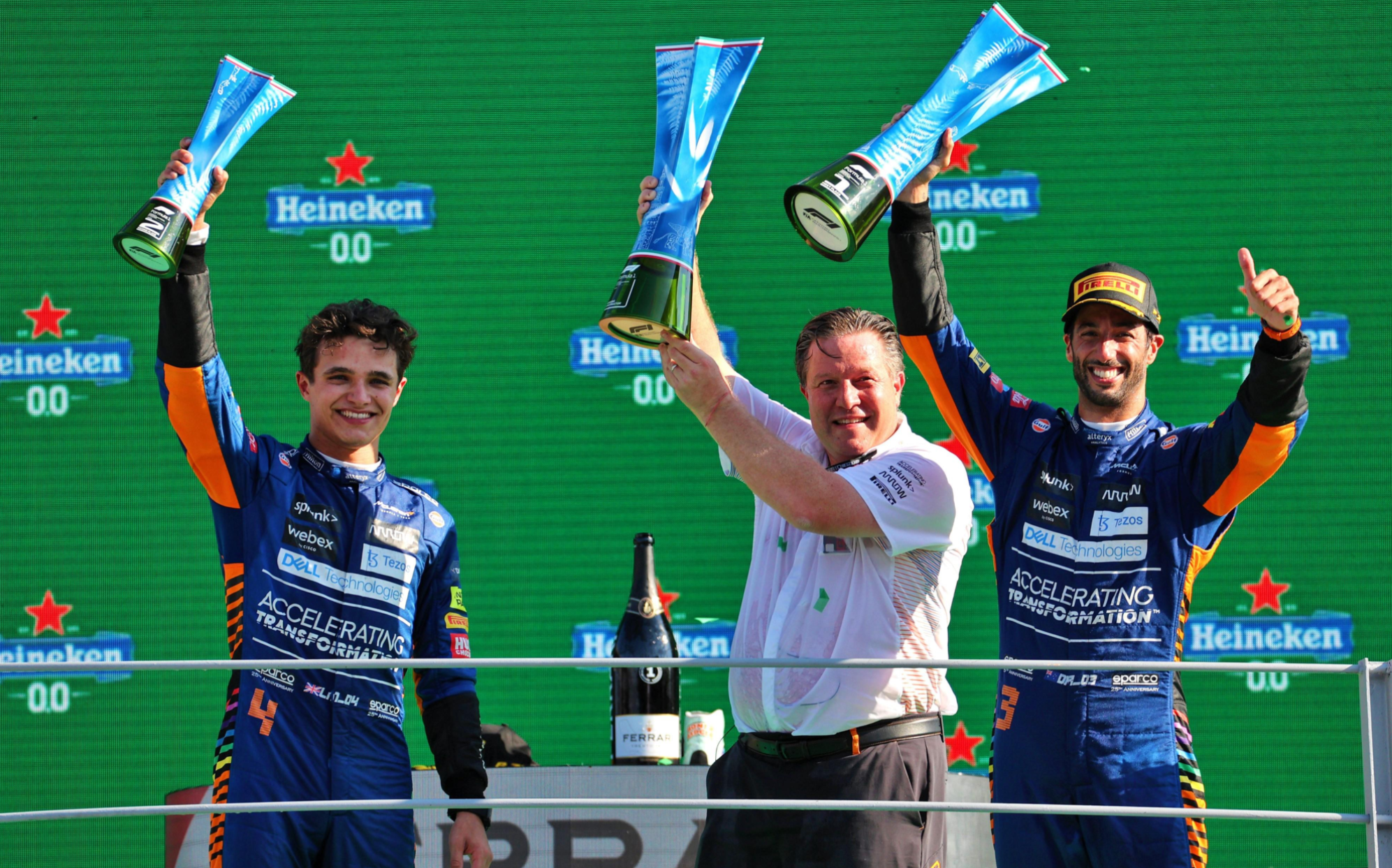
Daniel Ricciardo won his first race since leaving Red Bull in 2018 on an extraordinary Italian Grand Prix weekend.
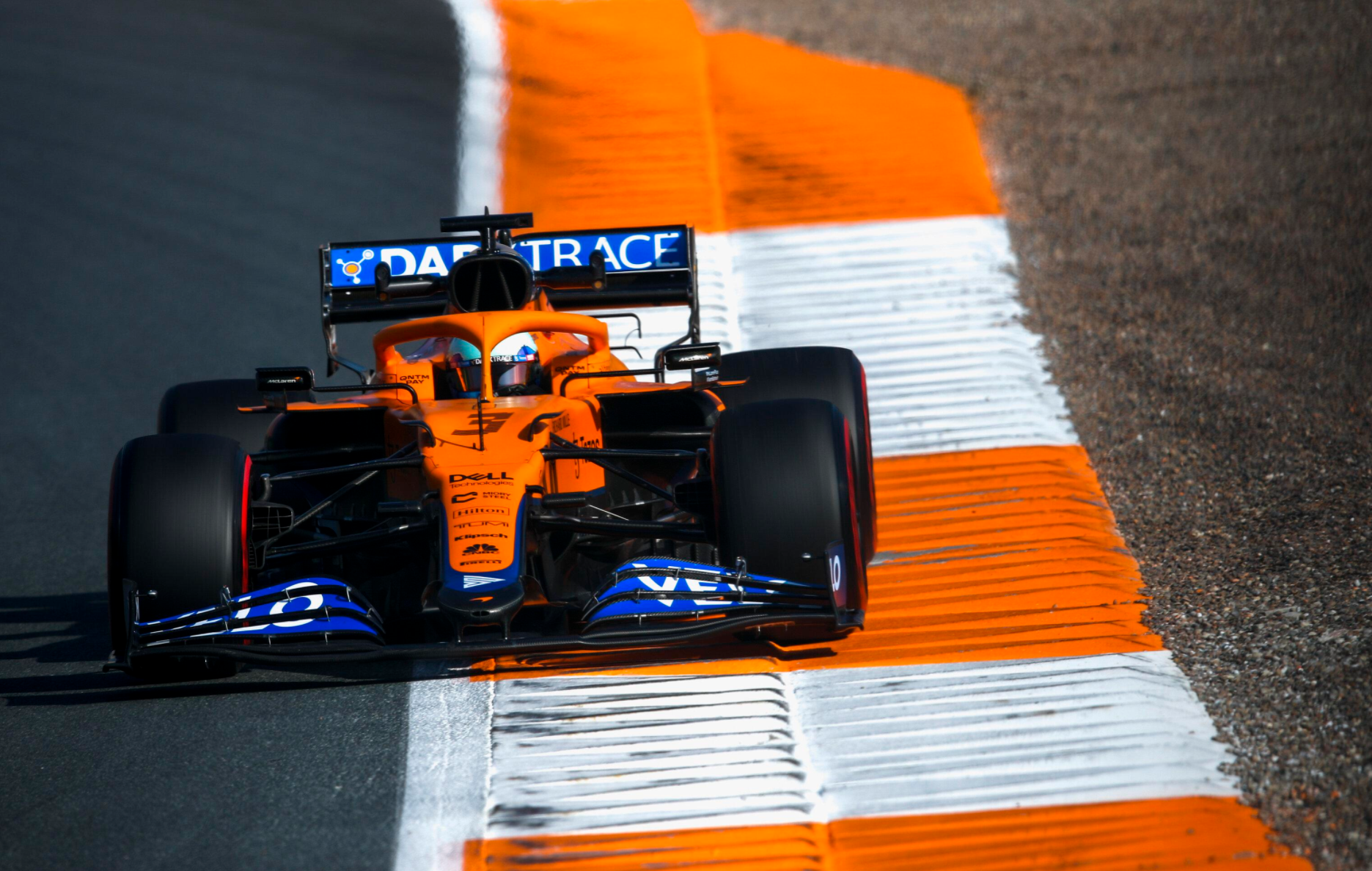
McLaren were legitimate challengers in Monza and took advantage of the leading teams’ messy weekends to claim a first victory since 2012, with Lando Norris making it a 1-2 for the papaya team.
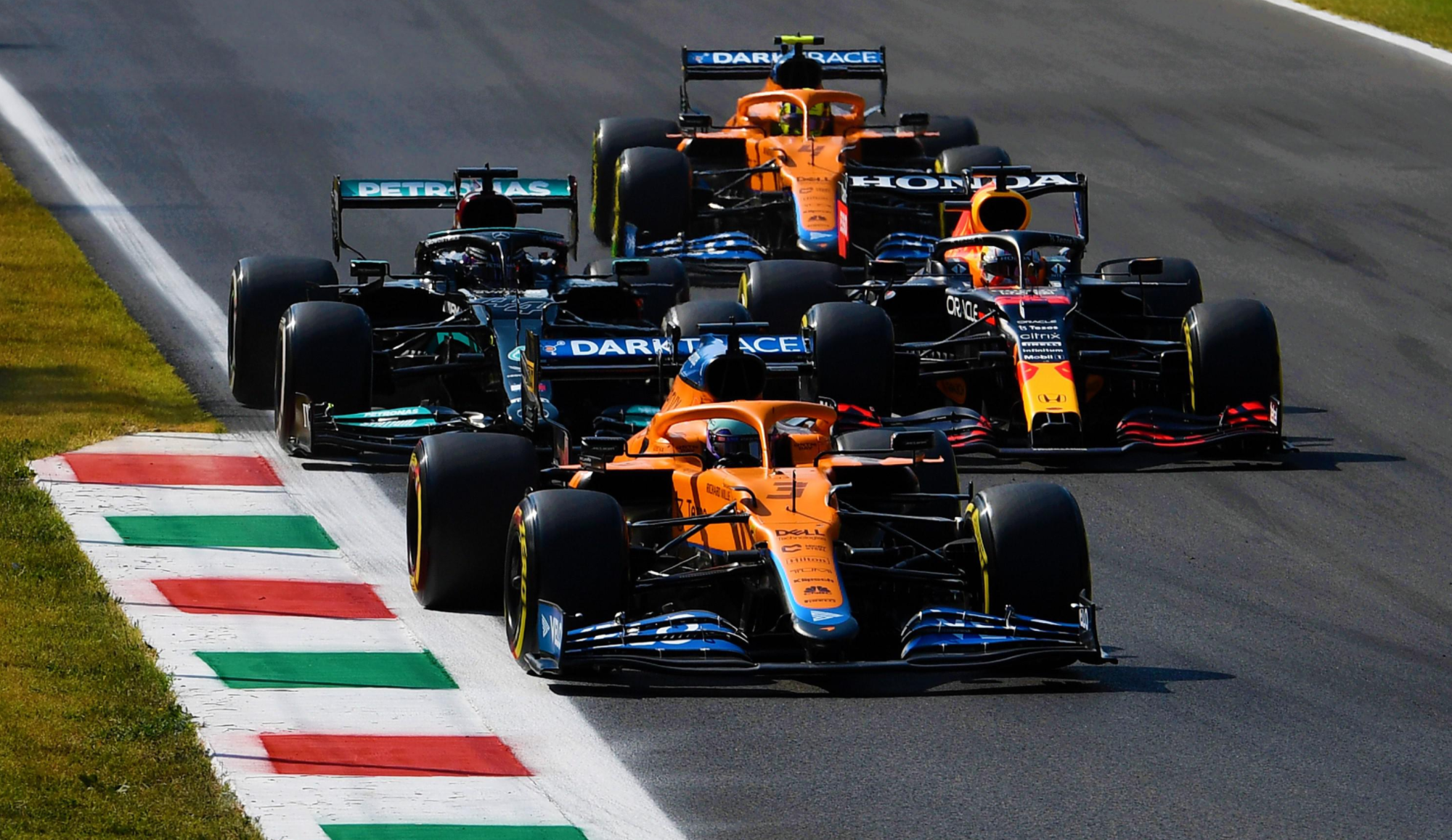
After a poor start in the sprint race, Lewis Hamilton found himself fourth on the grid and, with teammate Valtteri Bottas starting at the back after taking a new engine, it was Max Verstappen and Ricciardo who lined up on the front row.
The Honey Badger nailed his getaway and comfortably beat the Red Bull to the first corner. From there, he never looked back.
Hamilton also got a good start, passing Norris for third and then challenging Verstappen into the second chicane of Variante della Roggia. The reigning champion got himself alongside the Red Bull but – not for the first time this season – was run out of road on the outside and rejoined the track behind Norris.
Image credit: Getty Images
It would not be the rivals’ final meeting on track.
The first stint of the race was a tale of the two title contenders failing to pass the McLaren in front of them, largely thanks to their excellent straight-line speed and strong traction out of the final corner.
Ricciardo triggered the sole round of pit stops when he came in on lap 23, but the series of events leading to the biggest moment of the weekend began when Verstappen responded one lap later.
The usually flawless Red Bull pit crew suffered a sensor issue which led to a painful, 11-second stop for the championship leader and saw him fall behind Norris.
Mercedes – despite Hamilton having started on the harder tyre compound – knew this was their chance to jump Verstappen and brought car number 44 in two laps later. It was another poor stop, however – at a little over four seconds – and saw Hamilton rejoin right between Norris and Verstappen.
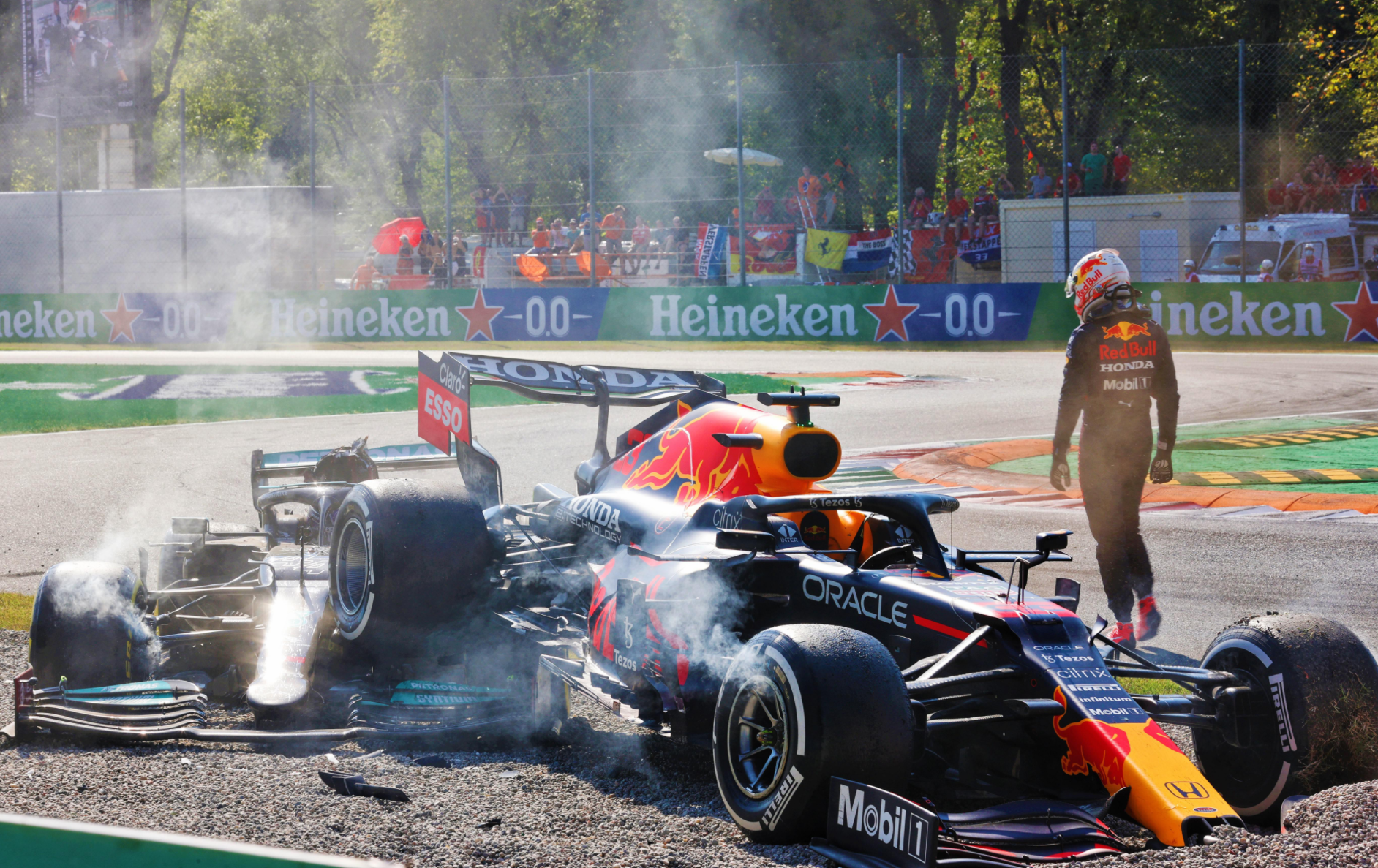
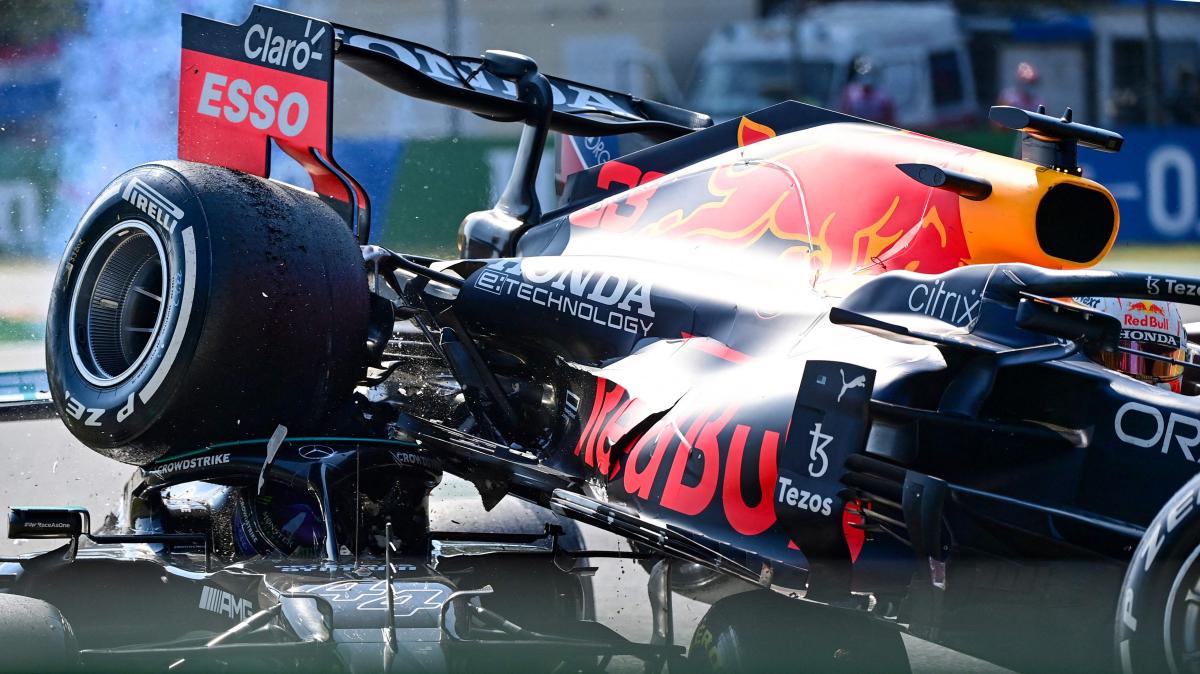
The Dutchman tried to stick it out around the outside of Turn One but ran out of road and bounced over the sausage kerbs. That sent him straight on into Hamilton and, as his right rear rode over the left rear of the Mercedes, he suddenly found himself sitting on top of his rival’s car.
Image credit: GPblog NL
Despite Hamilton’s efforts to reverse out from underneath the Bull which had so rudely mounted him, both were out of the race and the Safety Car was called.
The race restarted on lap 30 with Charles Leclerc delighting the Tifosi by having moved up into second with a cheap pit stop during the Safety Car period.
Not for long, though, as Norris bravely kept his foot in at almost 200 mph with two tyres on the grass through Curva Grande to retake the position from the Ferrari.
After a brief challenge on his teammate for the lead, McLaren decided to call the race off and focus on securing a scarcely believable 1-2.
Behind them, Bottas continued his inspired charge through the field. The Finn had topped qualifying on Friday and won the Sprint on Saturday but started at the back for the main event after taking on a new engine.
He fought his way up to fourth on the road, which became a podium once Sergio Pérez was hit with a five-second time penalty for overtaking off the track. The Mexican also recovered well from a disappointing qualifying but would ultimately claim fifth – splitting the two Ferraris – once the penalty was applied.
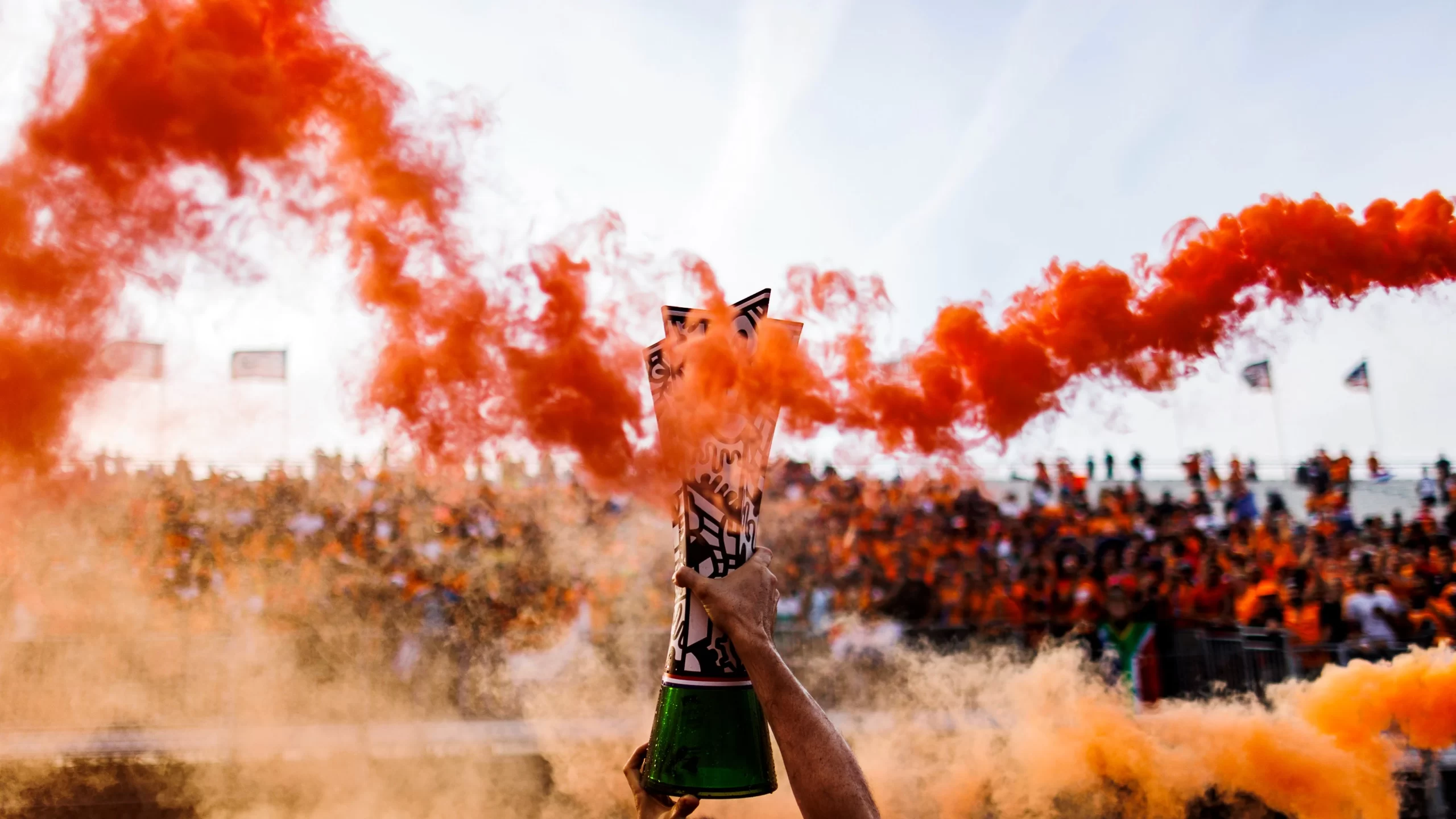
Out front, though, it was all about the McLarens, who completed another wave of of orange celebrations – after Verstappen’s win at home seven days before – as they crossed the line in first and second.
What a tale of redemption for the team and their Aussie driver, who had struggled so badly to adapt to his new car in the first part of the season.
Image credit: AFP
He appears to have succeeded in mentally resetting over the summer break and his eighth F1 victory will perhaps be the most satisfying of his career to date.
Now we wait to see what the Woking team can do with the regulations reset for next season. If they continue on their current trajectory, they could well be fighting for victories on a far more regular basis.
Breaking Down the Latest Hamilton-Verstappen Incident
Just as the battle at the front was becoming more amicable once again – with Hamilton appearing genuinely please for his rival’s home success – we get another flashpoint.
There was much debate over the culpability in their dramatic clash at Silverstone, and that will likely be the case again over the next fortnight.
Predictably, the drivers blamed each other. But the stance of Christian Horner – and even the ever-outspoken Helmut Marko – that it was a racing incident shows an effective admission of guilt on this one.
It usually takes just the slightest hint of accountability from Hamilton for them to go on the media warpath, encouraging their followers to raise their pitchforks to the sky.
There was an element or irony in elements of the Red Bull camp’s reaction in Italy. Firstly, Verstappen’s protestations that Hamilton should have left him more space are somewhat hypocritical, considering his approach to a very similar situation with the roles reversed on lap 1.
And, in hindsight, after having made such ridiculous accusations to the extremes of Hamilton having practically committed attempted murder in Silverstone, playing off an incident where their driver’s car struck Hamilton’s helmet as no big deal also seems a little incongruous.
Image credit: AFP
The stewards decided Verstappen was predominantly to blame and have handed him a three-place grid penalty for the next event. Not that it will matter considering the likelihood of Red Bull taking an engine penalty in Sochi.
From this writer’s point of view, the penalty feels about right. The Dutchman entered the chicane behind Hamilton but his overspeed meant that he was probably justified in sticking his car on the outside initially.
However, despite Hamilton leaving just about enough space to do so, it was clear that the trajectory and speed at which Verstappen entered was only going to result in one outcome, unless Hamilton basically parked his Mercedes on the outside of the second corner and waved him through.
That is the point at which most drivers on the grid – including Hamilton himself earlier in the race – would bail out of the move and take to the escape road. But Verstappen is not most drivers.
His sheer bloody-mindedness means that he will almost never back out of a confrontation. Since joining the sport – even as a 17-year-old – he has epitomised the Ayrton Senna ‘back out or we crash’ mantra.
Personally, I would much rather see a hard battle over the course of a series of corners or laps, with two racers battling it out right on the edge.
Image credit: XPB Images
Hamilton and Fernando Alonso demonstrated that in Hungary this year – and many times before – as have plenty of other drivers.
That is surely what we want to see. Whilst these monumental crashes are great for the drama, and will be spoken about for years, it is a shame that the most referenced points of this incredible season will be the leaders ending up in the gravel, rather than battles for the ages like Alonso andMichael Schumacher at Imola in 2005.
It almost brings a question to Verstappen’s wheel-to-wheel ability. The 23-year-old is clearly spectacularly fast, but at what point do we consider him to be poor in wheel-to-wheel combat? The instances of him forcing drivers off the road outnumbers his on-the-edge battles at an increasing rate.
He surely has the ability and spatial awareness required, but whether he chooses to do so is the bigger issue.
There is a very fine line between hard driving and poor driving.
The Italian Grand Prix in 60 Seconds
Answering the Burning Questions
How will the Sprint Qualifying format play out this time around? Once again, we had a crazy weekend – but whether the format was instrumental in that is up for debate.
Will Mercedes dominate on a power-sensitive track? In terms of outright pace, probably. In terms of the race, it was actually a McLaren domination.
Will we get the usual Monza shenanigans in the regular qualifying session on Friday? Yep, as predicted it was all a bit cringeworthy at points.
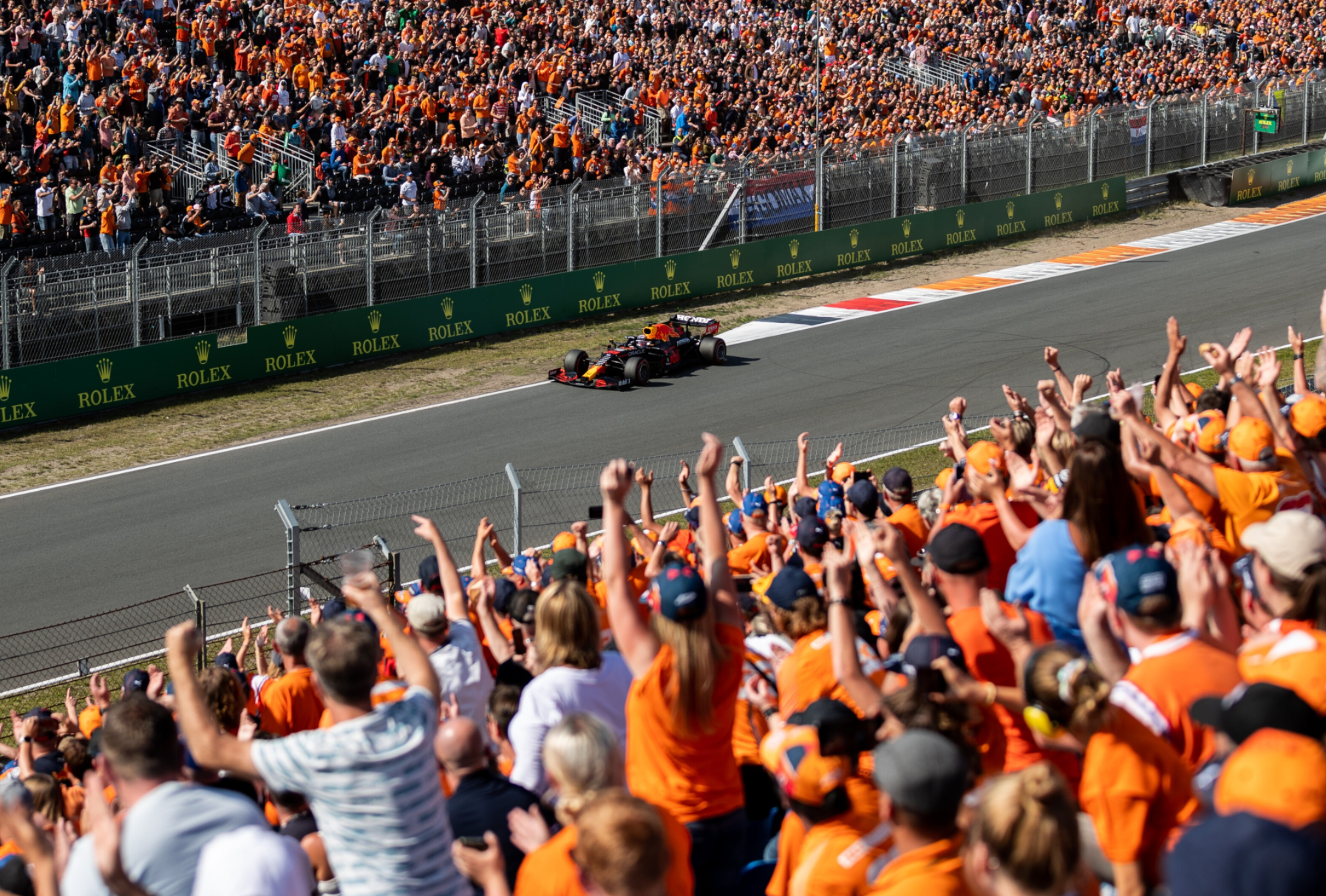
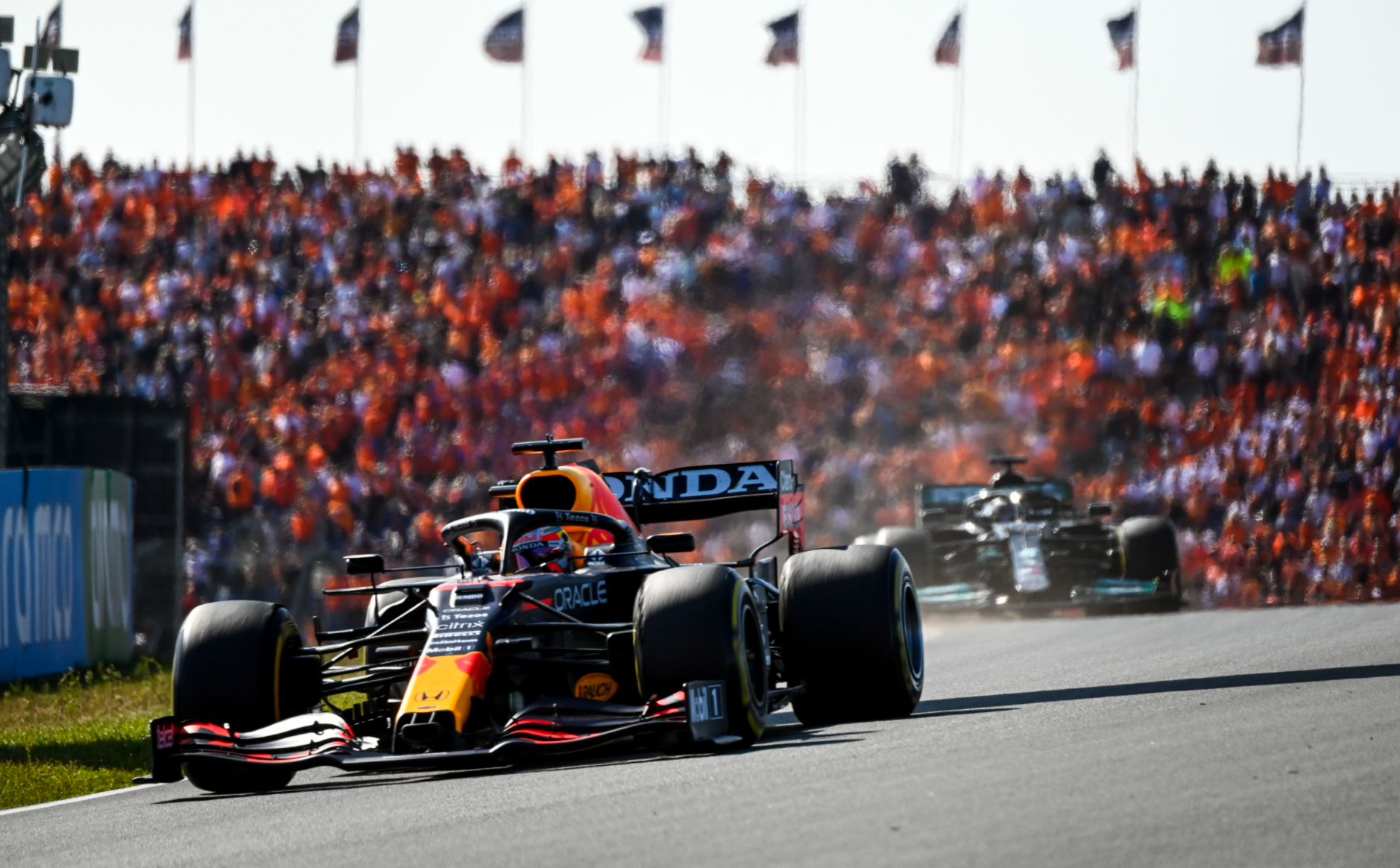
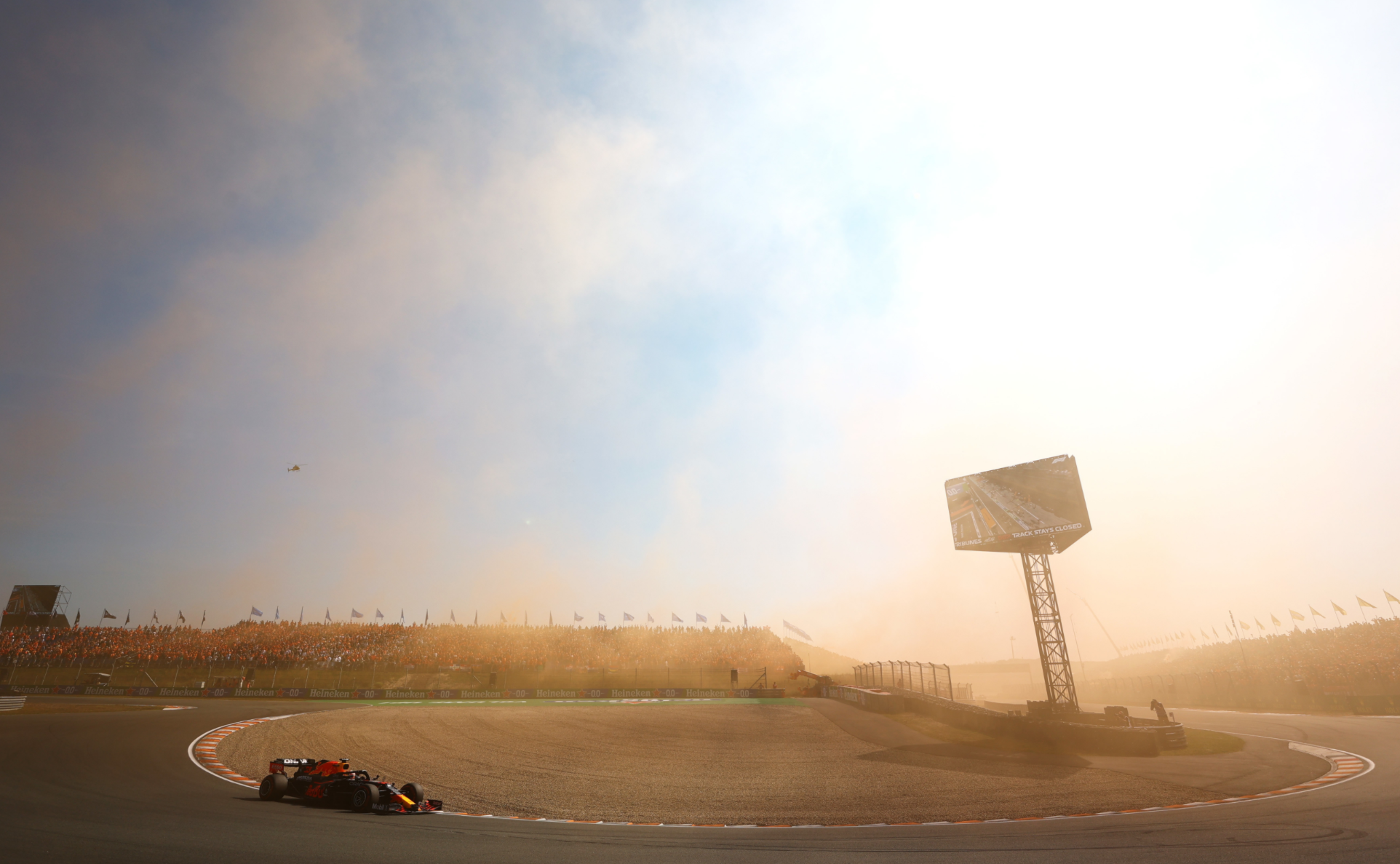
Max Verstappen withstood everything Mercedes threw at him to win the Dutch Grand Prix – his home race – at the first attempt, much to the delight of a sea of orange.
The Red Bull looked the slightly better car over the course of the weekend – at least in the hands of Verstappen – and it was the 23-year-old who narrowly secured pole position on Saturday.
Lewis Hamilton impressively closed to within 0.038 seconds of his title rival, after a tricky weekend where he missed almost all of Practice 2 with an engine issue, but the margin should have been larger with Verstappen’s DRS failing to open after he had also missed fifth gear earlier in the lap.
On Sunday, as soon as the flying Dutchman had successfully navigated the run to the first corner, it was to be a tale of strategy.
Sergio Pérez in the other Red Bull had been caught out in Q1 and would be starting from the back, which left Mercedes able to utilise two-versus-one tactics.
Image credit: Sutton Images
They attempted to take advantage, bringing Hamilton in for an attempted undercut, whilst teammate Valtteri Bottas ran long on a one-stop. The Finn made his Mercedes as wide as possible when Verstappen caught him, but was unable to stop him sailing past after one lap, despite the Zandvoort circuit proving predictably difficult to pass on.
Once again, Mercedes attempted the undercut with Hamilton, pulling the trigger unexpectedly early on lap 39. It was poorly executed, though, with the reigning champion emerging into traffic and Verstappen was easily able to cover him.
From there, it was plain sailing for the home favourite and car number 44 eventually gave up the chase to pit and secure the fastest lap.
A six-point swing in the title battle leaves Verstappen three points ahead in the standings heading to the season’s second sprint-qualifying weekend at Monza. On paper, it is a track that should favour the Silver Arrows. But how often have things followed the script this season?
Image credit: Getty Images
A Tough Weekend for McLaren
Behind the most common podium trio of all time, Pierre Gasly once again excelled in the AlphaTauri, backing up his excellent fourth in qualifying with a lonely but flawless race.
Behind him, the Ferraris finished fifth and seventh – split by Fernando Alonso, who judged his tyre life to perfection to pass Carlos Sainz on the last lap – which sees them open out an 11.5-point gap to McLaren in the Constructors’ Championship.
The crowd may have been wall-to-wall orange, but things did not go the way of the papaya team in the Netherlands.
Unusually, Lando Norris struggled for pace throughout the weekend, and was then caught out by the pair of Williams crashes in Q2, leaving him 13th on the grid. Teammate Daniel Ricciardo did make it through to Q3 but could only manage 10th and, after nearly not starting the race at all, struggled for pace during it.
Norris extended his first stint well and caught the Honey Badger towards the end of the race. Team orders allowed him past but, after a tough battle with the recovering Pérez, Norris would only finish one place in front of a mildly disgruntled Ricciardo to claim the final point.
Image credit: Motorsport Images
Monza will give them an excellent chance to bounce back immediately, however. They are renowned for their straight-line prowess this season and could even find themselves mixing it with the big boys next weekend at the Temple of Speed.
The Dutch Grand Prix in 60 Seconds
Answering the Burning Questions
Will Red Bull or Mercedes come out on top at a track that is somewhere between the Red Bull Ring and the Hungaroring? It was pretty tight, but Red Bull appeared to have a slight edge.
How will the drivers cope with a very unique circuit? They all seemed to love it. Along the lines of Mugello last year – a thrilling rollercoaster but not designed for modern F1 cars to overtake.
Will there be any overtaking? See above. Although Pérez produced some inventive moves to make his way back through the field.