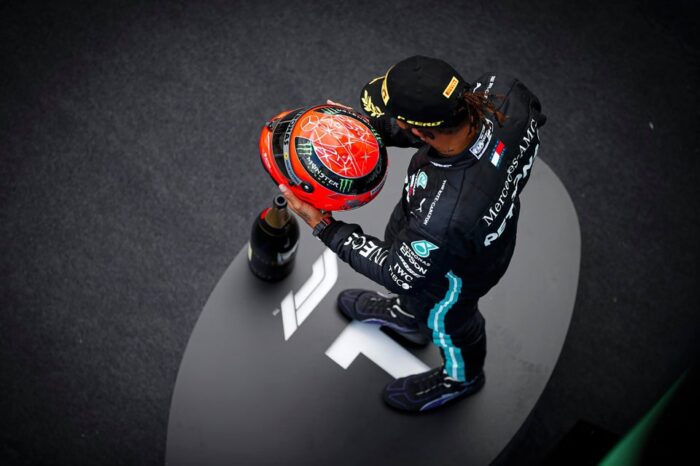
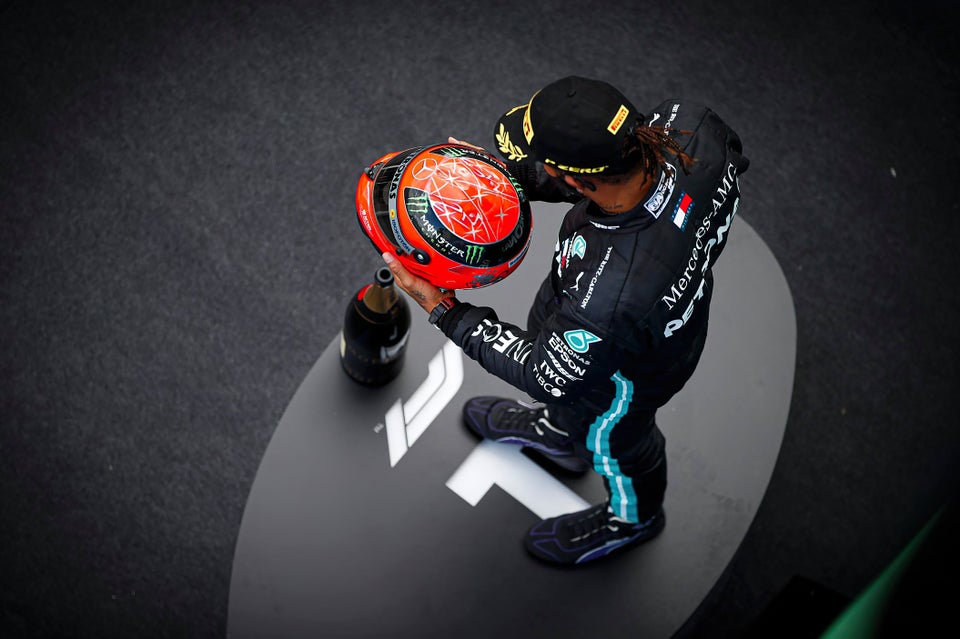
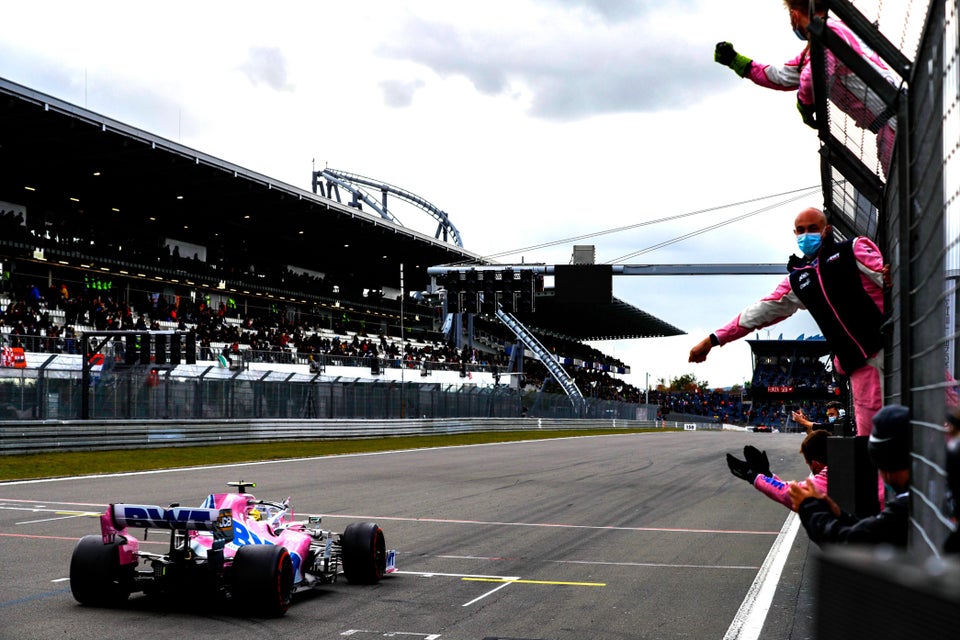
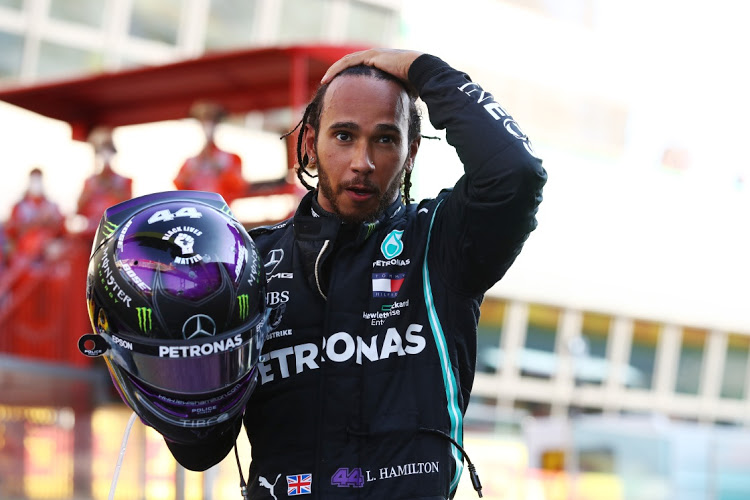
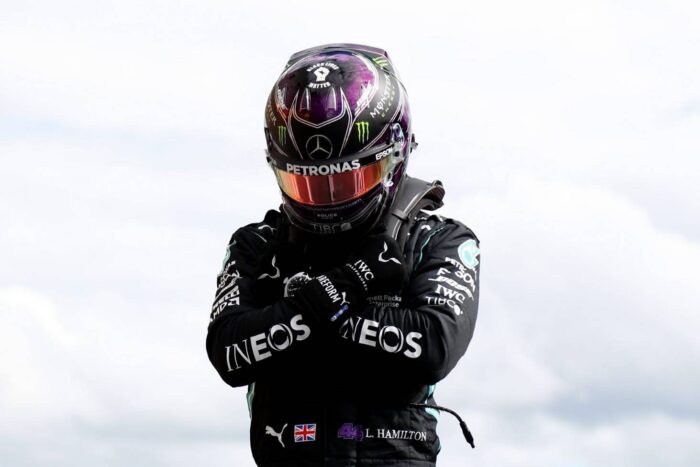
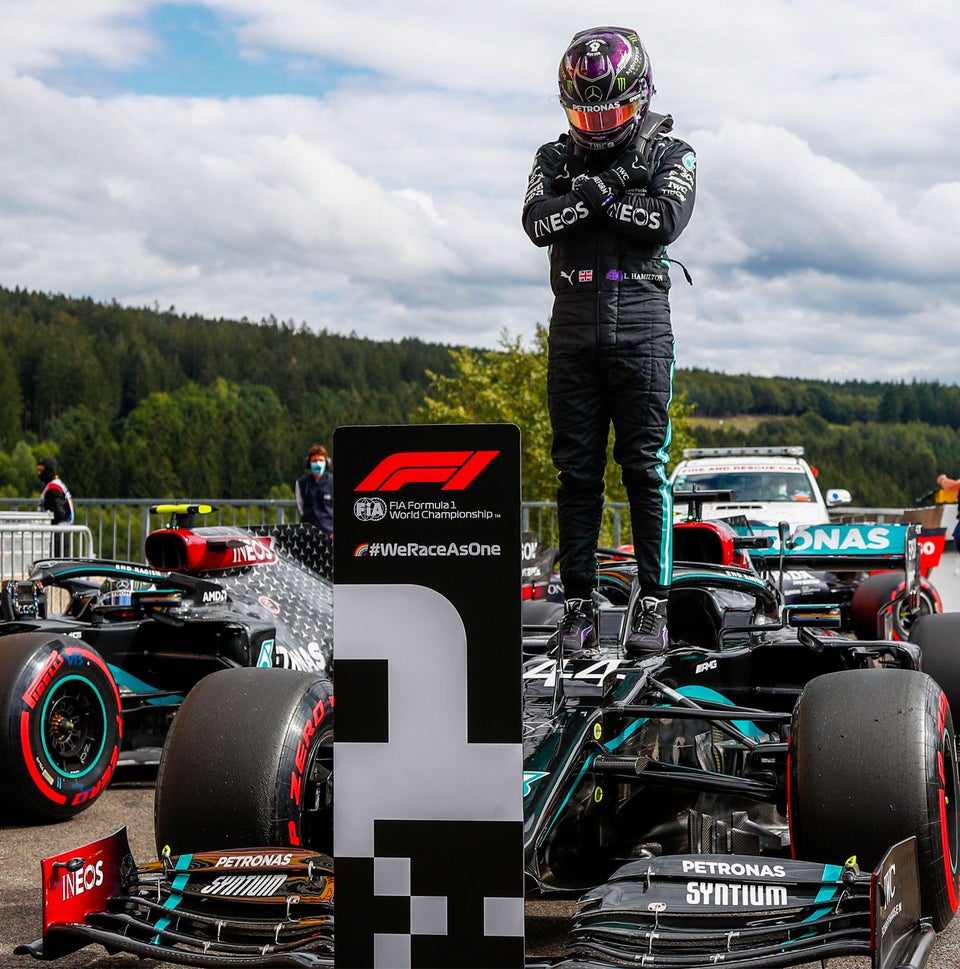
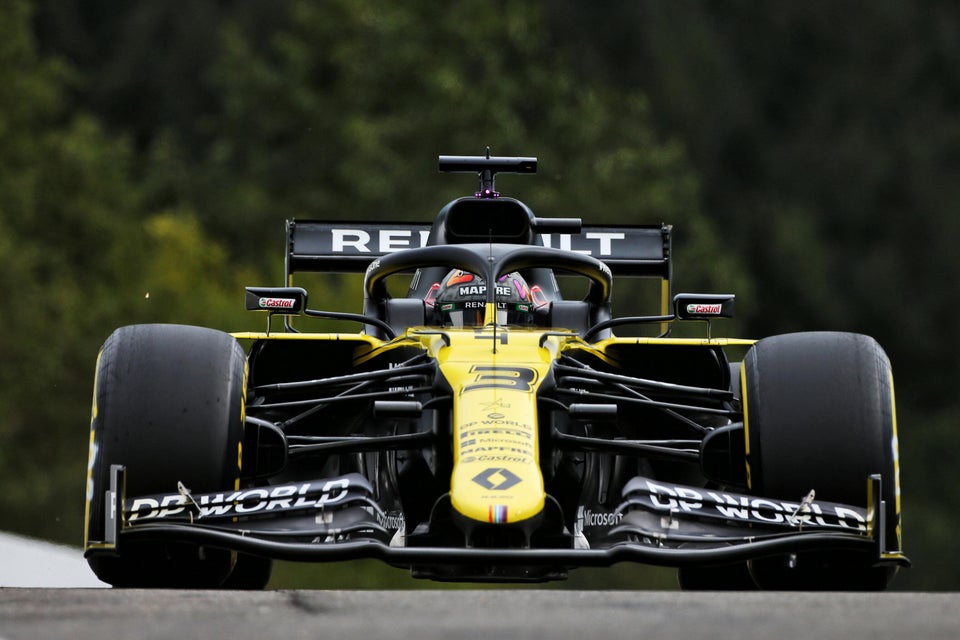
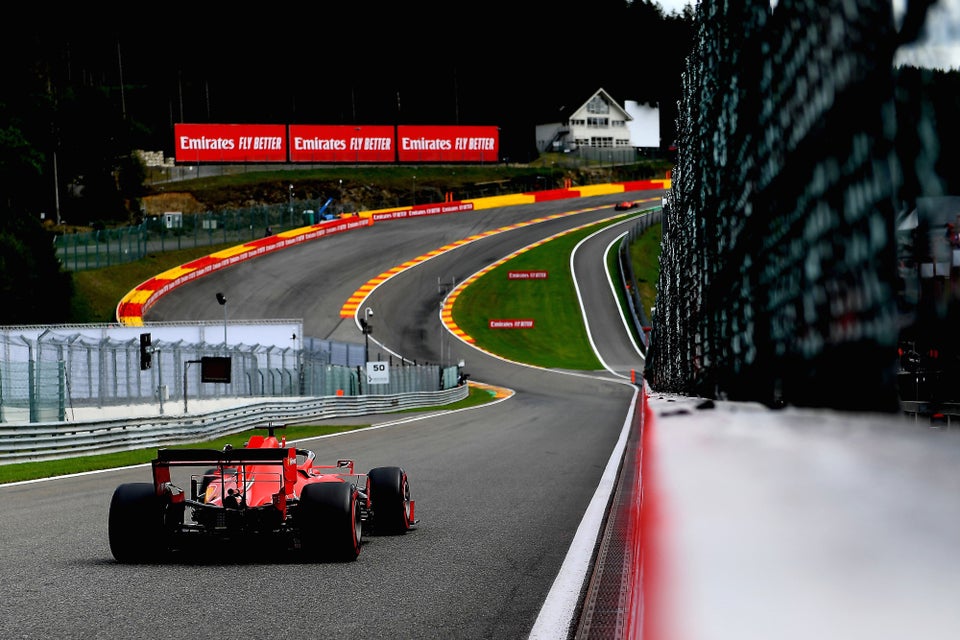
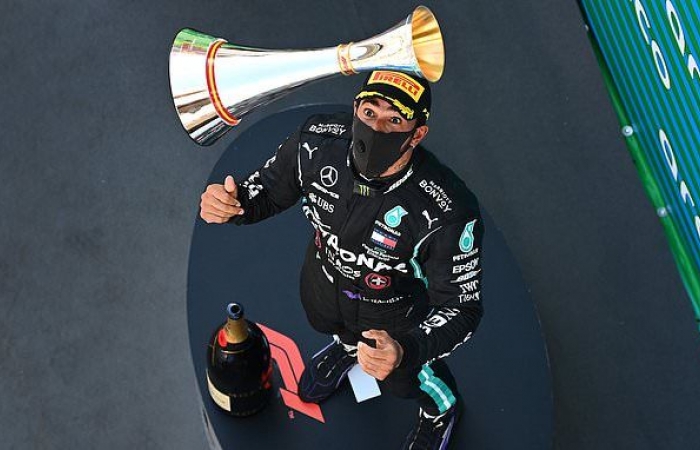
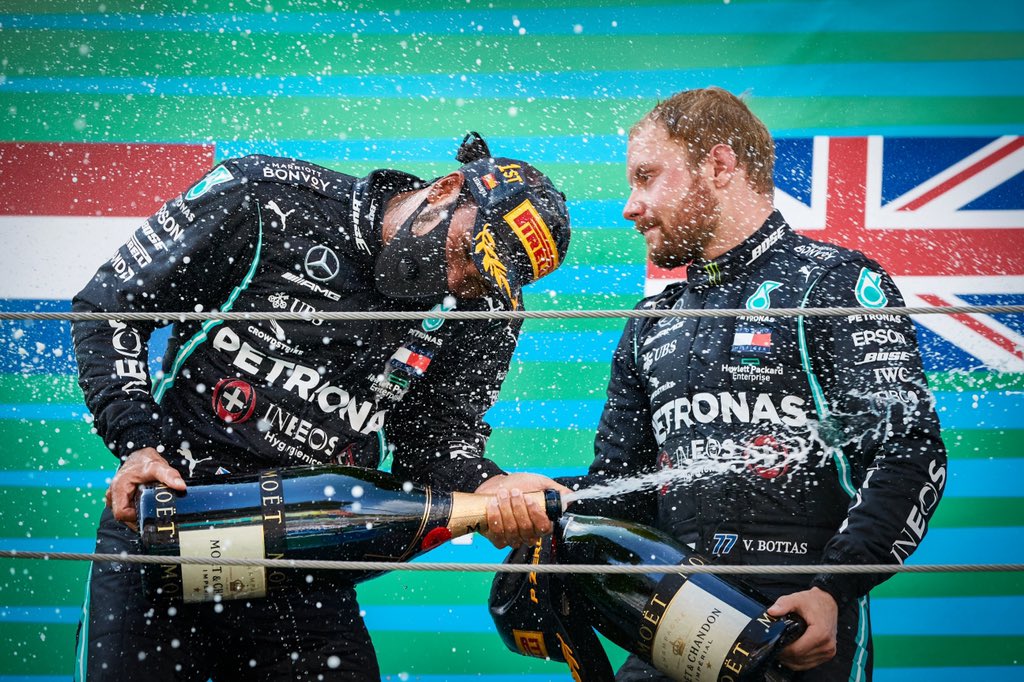
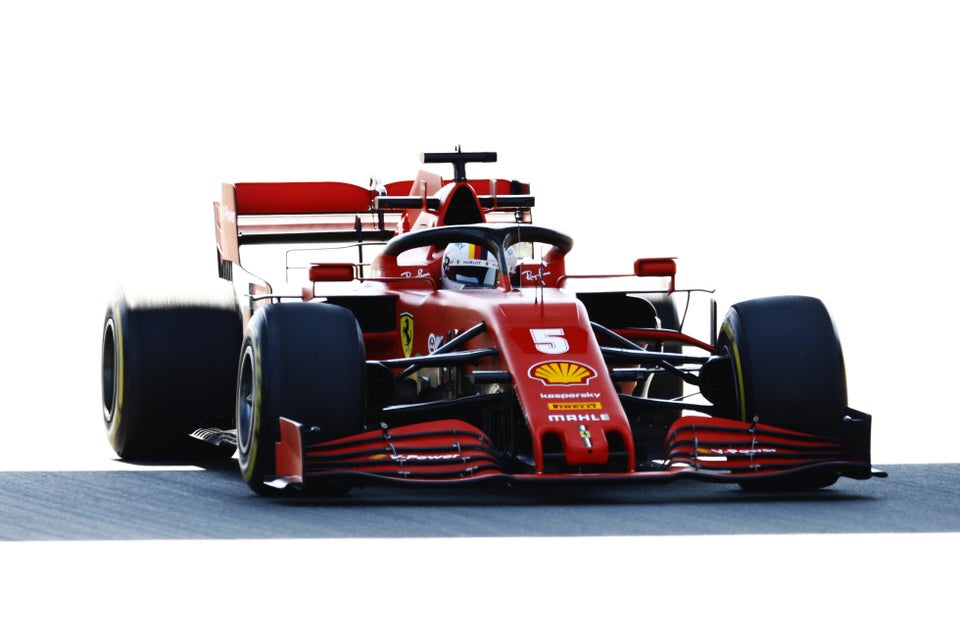
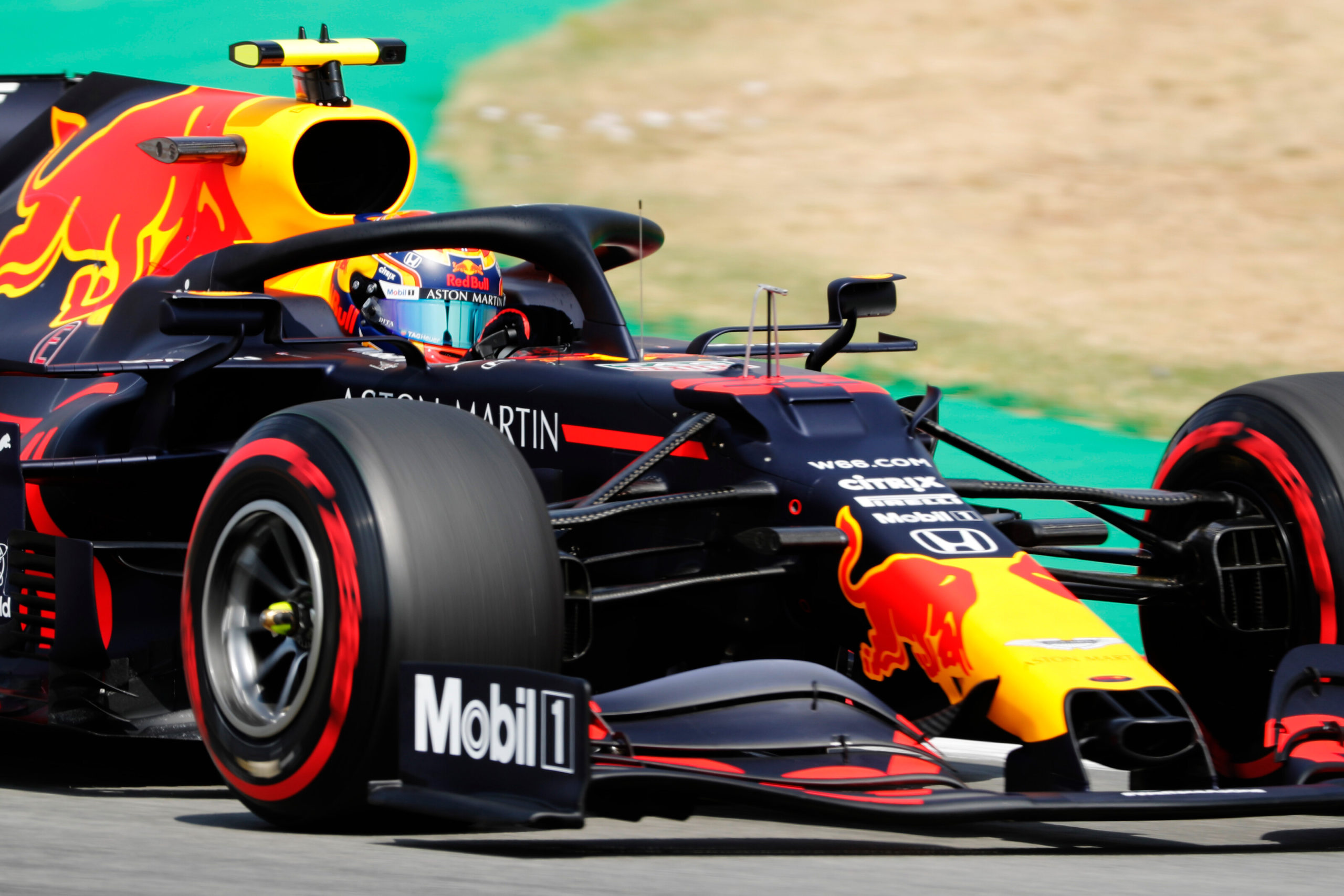
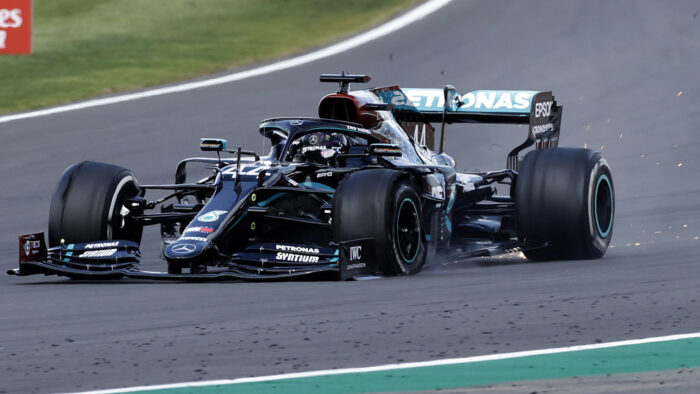
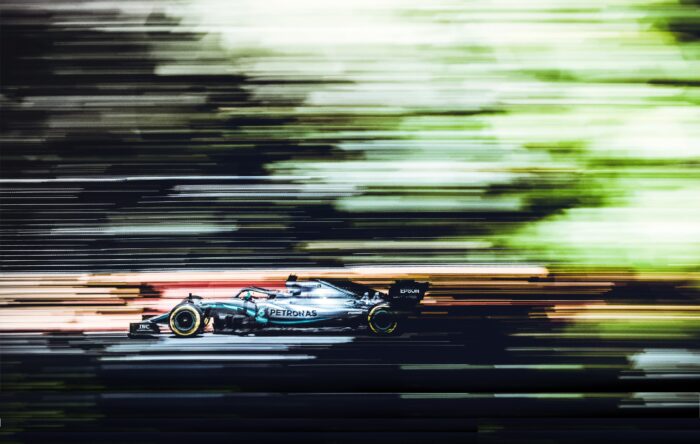
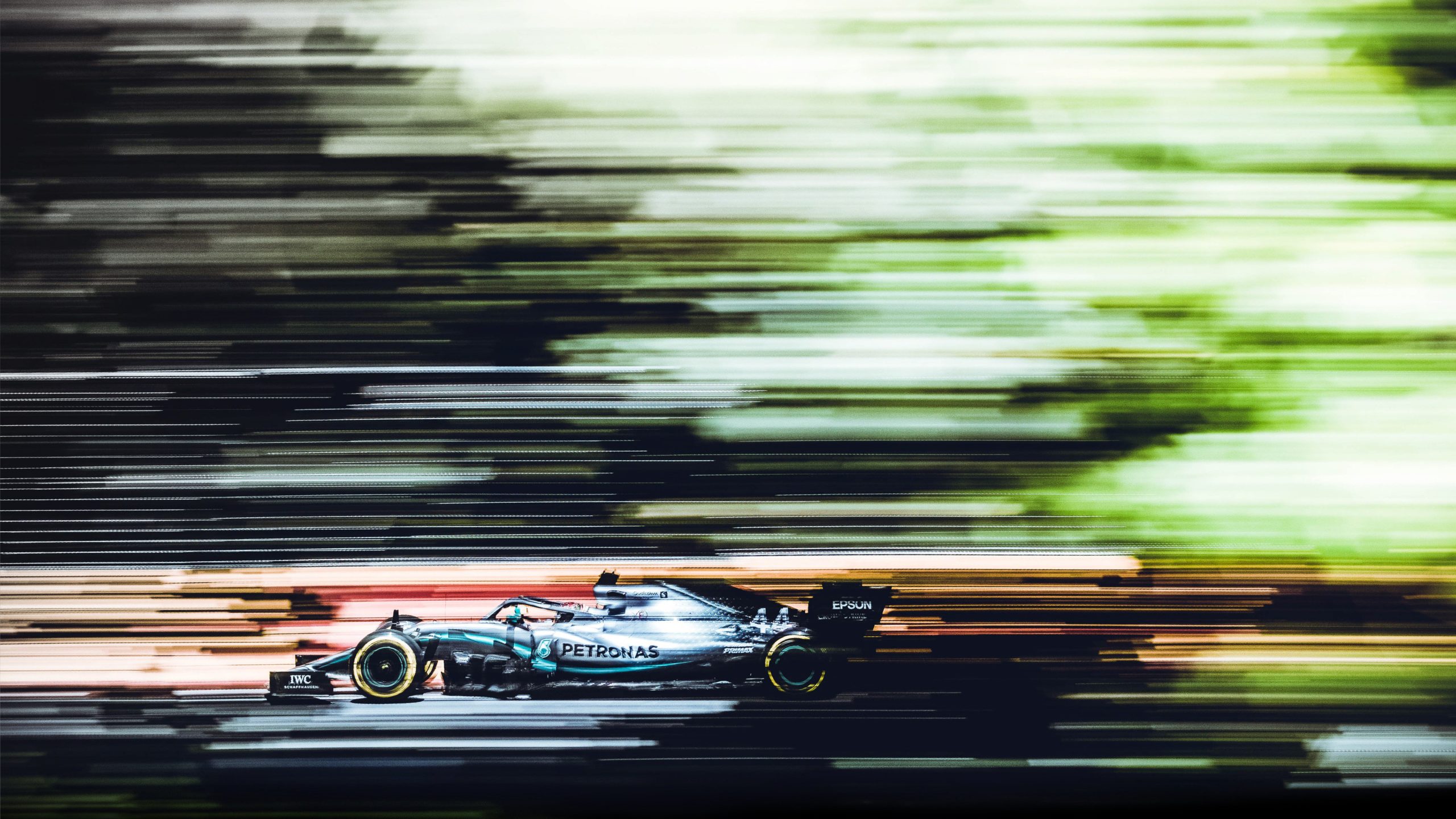
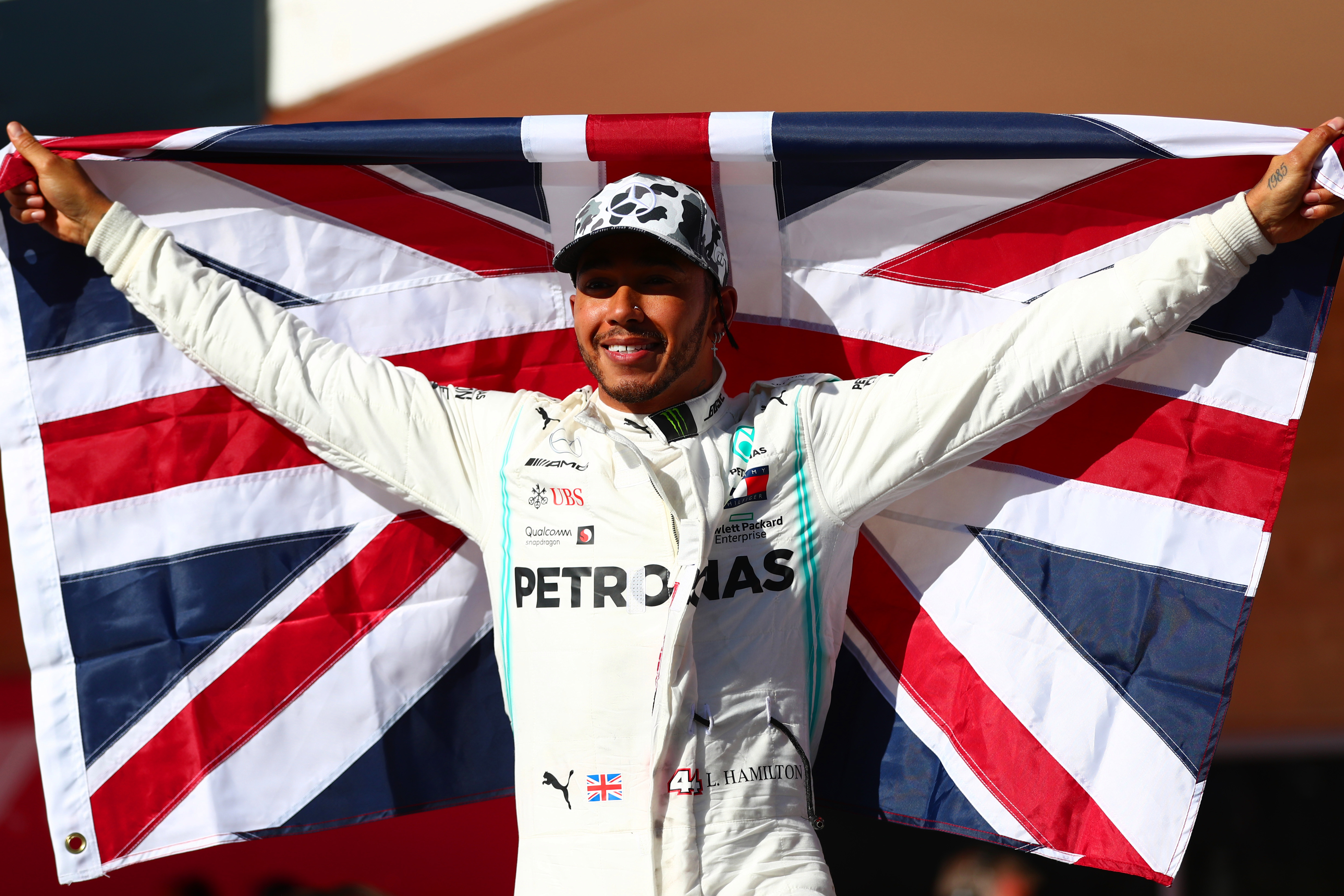
It was a historic day, at a fittingly historic circuit, as Lewis Hamilton won the Eifel Grand Prix at the Nürburgring and, in doing so, matched Michael Schumacher‘s all-time record of 91 race wins. The World Champion had to work for this momentous victory, overcoming an in-form teammate, tricky conditions and a safety car.
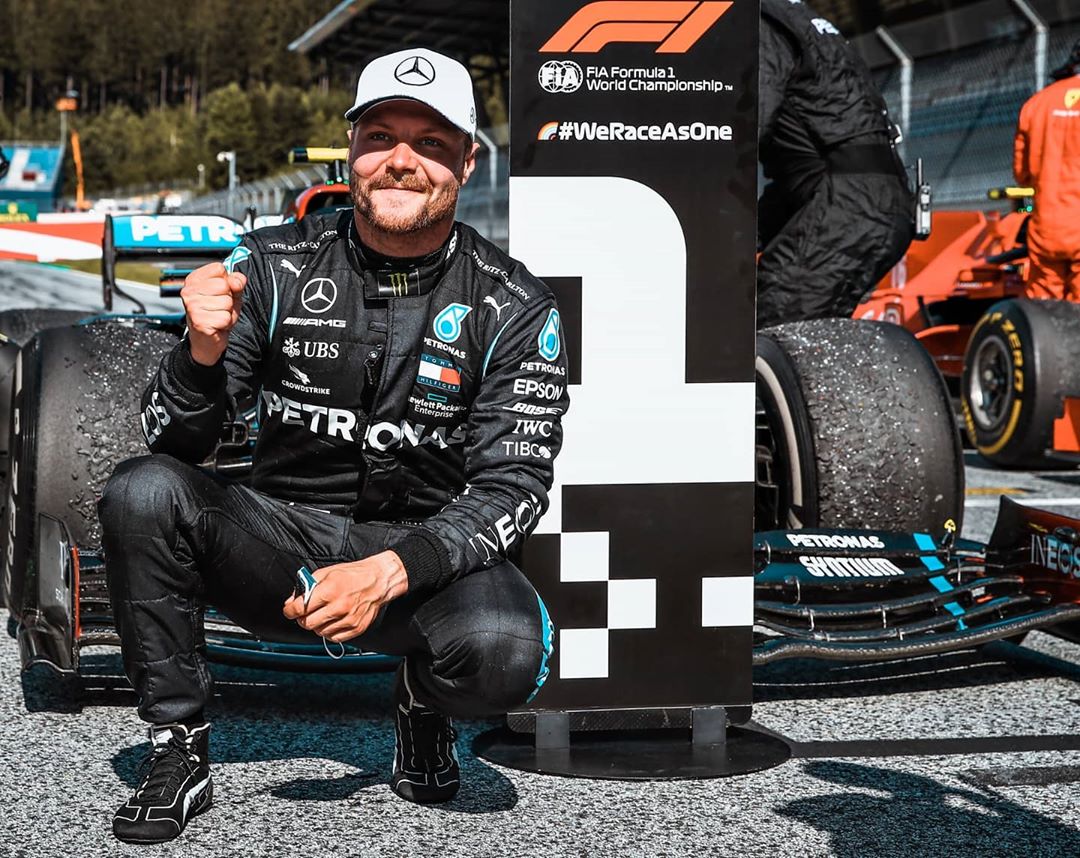
Valtteri Bottas had taken an impressive pole on Saturday and kept up that gutsy approach on Sunday as, after Hamilton had made the better start and taken the inside line at the first corner, he kept his foot in whilst running well wide and somehow held onto the lead. Hamilton later mentioned how much that had impressed him.
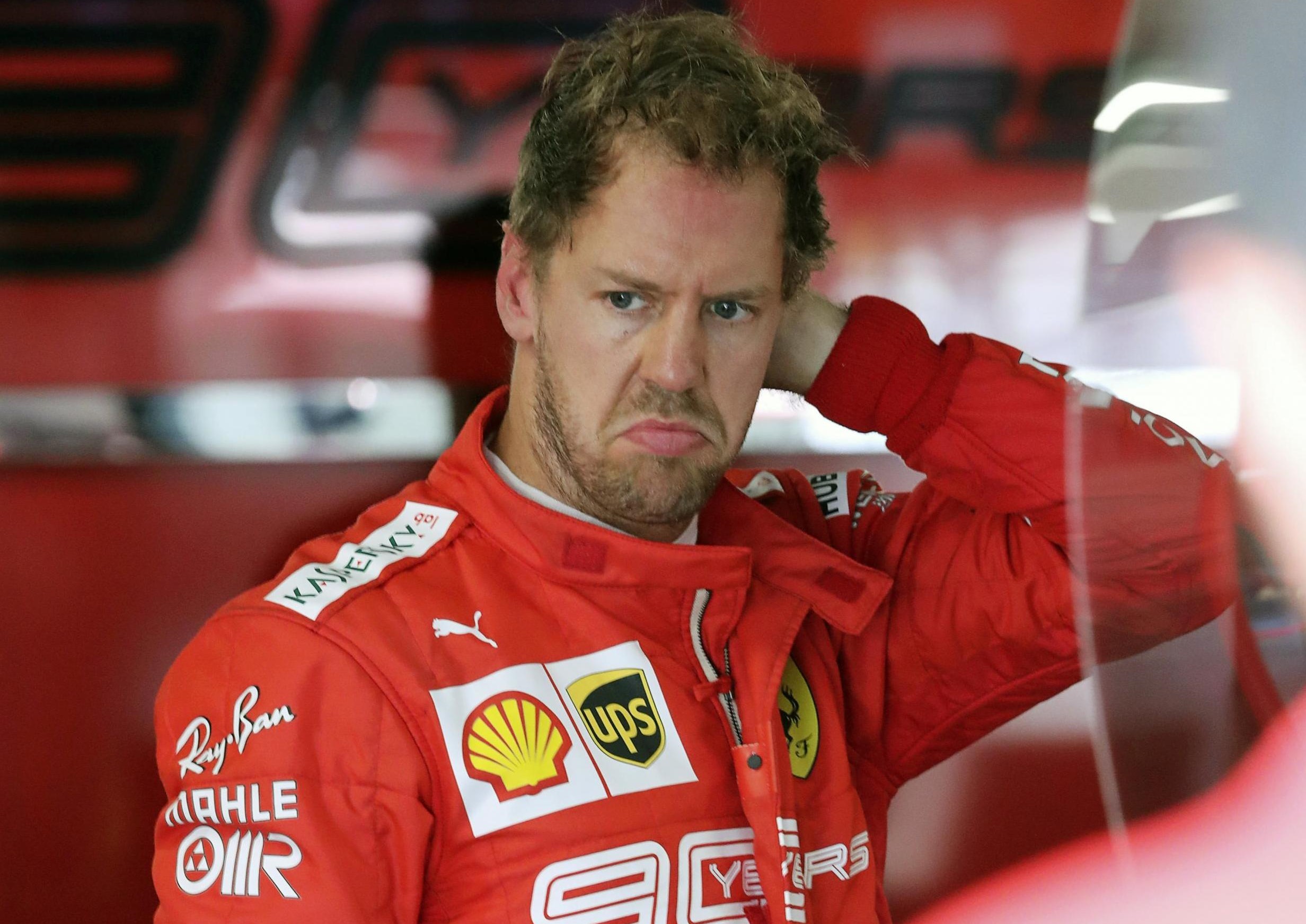
The Finn kept the lead for 13 laps but, as his tyres began to suffer and Hamilton started to exert more pressure, he locked up into the first corner and dropped behind his teammate. The flat spots on his tyres meant he was forced to pit and change to a two-stop strategy. That may well have worked out in his favour, but a VSC after George Russell’s retirement gave Hamilton and Max Verstappen a cheap pit stop and then Bottas’s day went from bad to worse as a suspected MGU-H failure brought about his retirement. A 69-point deficit in the championship standings is now looking fairly insurmountable.
Insurmountable was a word often used about Schumacher’s records, though, and here we are.
https://www.youtube.com/watch?v=naerwOj5chM
Once his teammate had retired, Hamilton set about keeping the feisty Dutchman in the Red Bull at arm’s length and opened out a lead of around 10 seconds, whilst looking likely to lap every other car in the process. That was all cancelled out by a safety car on lap 44, however. It was another debatable call where a VSC would probably have sufficed and, once the lapped cars had been allowed to pass and catch back up to the field, Hamilton and Verstappen were at a significant disadvantage. In the freezing conditions, high up in the Eifel mountains, their tyres were now far too cold, having sat behind the safety car for a needless amount of time.
They would just about hang on at the restart – the Mercedes DAS system being thoroughly utilised for the first time – and, from there, Hamilton’s win looked secure. Behind the two frontrunners, Daniel Ricciardo held off the challenge of Sergio Pérez to finally earn that elusive podium for Renault. It has been a long time coming – Renault’s last podium was nine years ago – but Cyril Abiteboul’s trip to the tattoo parlour can now be booked. In all the excitement, the Aussie even forgot to do a ‘shoey’, much to his horror when this was pointed out later on…
Carlos Sainz found himself in fifth on a weekend where he had struggled with the latest aerodynamic updates, whilst teammate Lando Norris returned to his 2019 levels of luck with an engine issue denying him a shot at the podium. He nursed the problem for a long time before the anti-stall kicked in, leaving him powerless and, ultimately, sat in a deckchair.
Further back, Pierre Gasly took an opportunistic sixth ahead of Charles Leclerc, who once again outclassed teammate Sebastian Vettel all weekend. Nico Hülkenberg earned driver of the day in eighth after getting an even later call than he had for his previous substitute role in Silverstone. Lance Stroll seemingly developed a stomach bug and was unable to participate so the Hulk rushed to the Nürburgring just in time for Q1. He unsurprisingly qualified last with absolutely no practice but recovered incredibly well on race day and made yet another great case for a race seat in 2021.
Image credit: Motorsport Images
Romain Grosjean defied a sore finger to score his first points of the season in ninth and Antonio Giovinazzi held off Vettel for the final point, after having been hampered by the timing of the safety car.
Another Tough Day for Albon
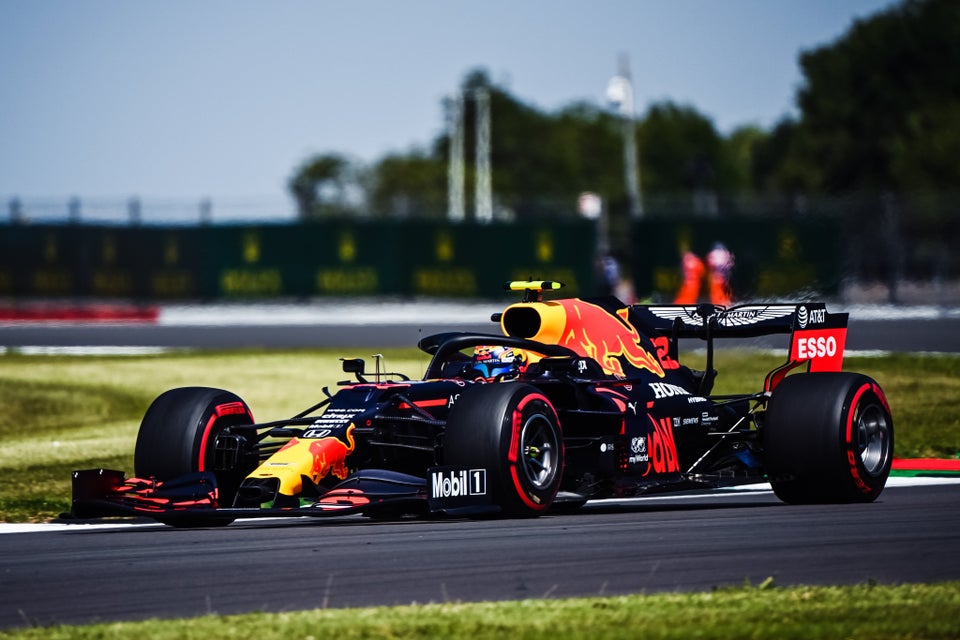
Alexander Albon was slightly closer to Verstappen in qualifying – albeit half a second back and behind the Ferrari of Leclerc – and in a decent position to achieve the minimum that Red Bull really want from him. That is, being in fourth so that they can put more pressure on Mercedes in terms of strategy and potentially pick up the pieces from any misfortune out front.
But again, it was not to be.
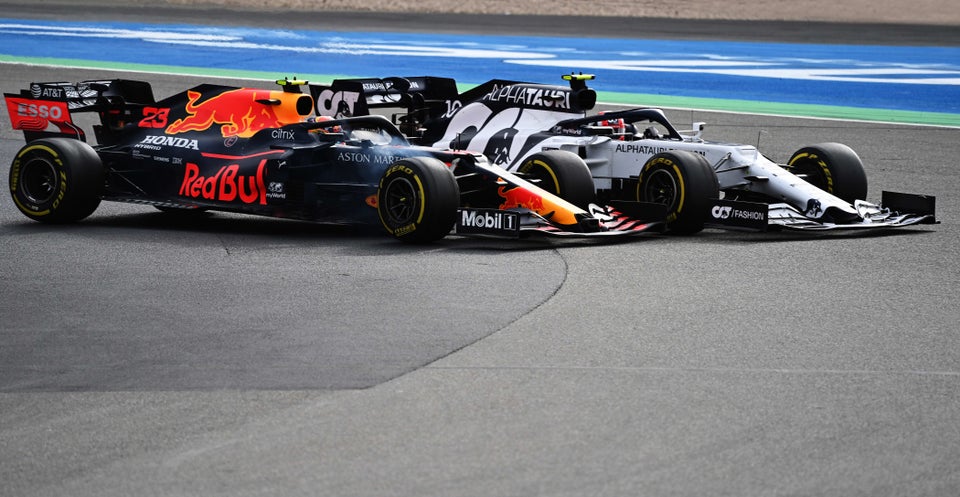
A lock-up on the first lap led to an early first pit stop and, yet again, it would have to be a recovery drive from there. Having made it back into the top 10, he needlessly cut across in front of sister-teammate Daniil Kvyat; that lost the Russian his front wing and earned Albon a five-second penalty. He was very fortunate to escape without a puncture.
A few laps later he caught the other AlphaTauri of Pierre Gasly and, whilst attempting a pass into the first corner, locked-up again, very nearly spearing into the side of the Frenchman and then radioed in saying, “they race me so hard”. Martin Brundle’s retort in commentary of “Welcome to Formula 1” sums it up really.
Image credit: Getty Images
Albon was forced to retire shortly after as apparently a stone had punctured his radiator. The awkward nature of the radio message conveying to him that he would be retiring, combined with the poor race to that point, has led to some theories that he was retired mid-race out of ’embarrassment’ or to be fired.
Whilst that seems highly unlikely, it is not looking good for the Anglo-Thai driver. With Hülkenberg and Pérez both available next year and persistently proving their worth in tricky circumstances, it seems it is only Helmut Marko’s insistence upon hiring strictly from within the Red Bull driver pool that is keeping him in a job.
How High Can Hamilton Go?
With Hamilton now looking more certain than ever to secure a seventh world title by the end of the year and thus match another Schumacher record, how high can he raise the numbers that will be etched next to his name when he leaves the sport?
The next obvious landmark is 100.
100 poles could well happen this year and 100 wins is starting to seem a certainty at some point next year, considering the level of dominance shown by the Silver Arrows and the lack of evolution between this year’s cars and those of 2021. Some even talk of 10 world titles. But the new regulations in 2022 make anything from then a total unknown at this point and Hamilton is yet to officially sign a contract even for next season.
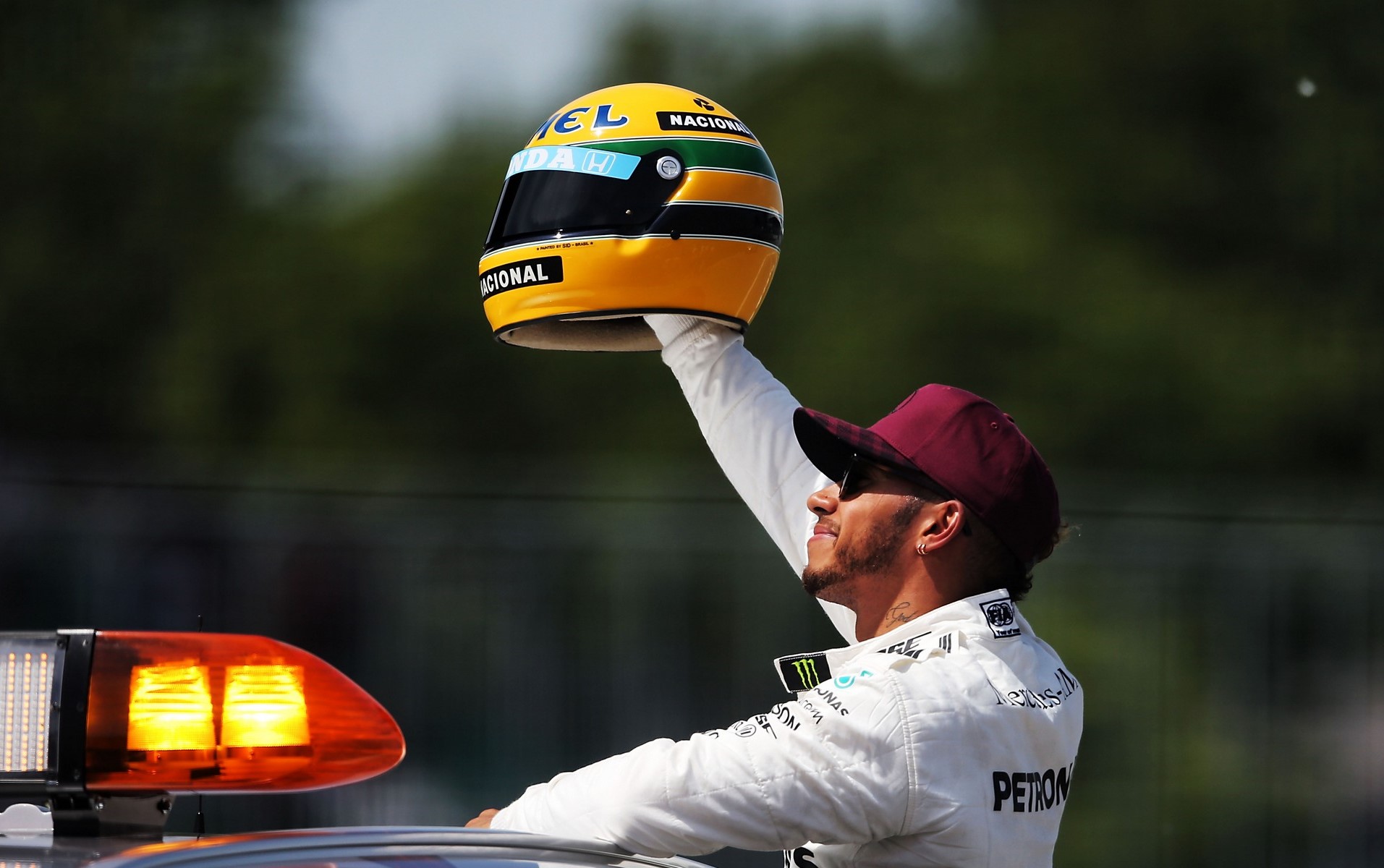
Wherever the high-tide marks settle, they may well look insurmountable as Schumacher’s did before. But, as the great man himself said, “records are there to be broken”. Maybe it could even be his son, Mick, who breaks them. For now, let’s just enjoy that we are witnessing history being made and great moments like Mick handing over a gift from the Schumacher family to Hamilton to honour his achievement.
The Eifel Grand Prix in 60 Seconds
Answering the Burning Questions
Can Lewis Hamilton match Michael Schumacher’s win record this weekend? He can!
Or can Valtteri Bottas push on after his win in Russia? He certainly pushed on in qualifying, but things gradually unravelled in the race.
Will there be any more stewarding or penalty controversies? Not particularly, other than some debate about the safety car.
Can Alexander Albon have a strong weekend and ease some pressure? Not in the slightest.
Will the cold weather throw up any curveballs? Will we get a wet and wild weekend? The cold weather did spice things up a little. But Friday was too wet to the point of no running and then we only got a few drops of rain on Saturday and Sunday. Until the traditional downpour just after the race, obviously…
So, shall we just have all the races in Italy then?..
Image credit: Getty Images
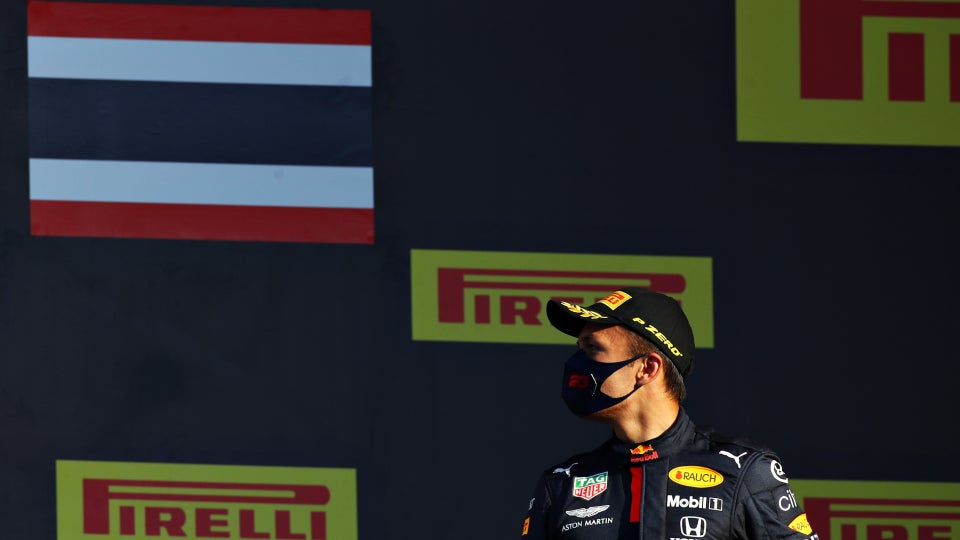
Lewis Hamilton extended his championship lead with a hard-earned victory at the 2020 Tuscan Grand Prix, ahead of teammate Valtteri Bottas and Alexander Albon, who earned his – and Thailand’s – first ever F1 podium.
Whilst it was Bottas who had looked on top for much of the weekend, Hamilton snatched pole position by a few hundredths of a second on Saturday. He got off the line badly, however, and was easily beaten to the first corner by Bottas. He may well have fallen further back in the pack but for Max Verstappen’s engine issues – the Red Bull driver pulled alongside Hamilton but suddenly lost power and caused those behind him to get off the gas.
Things went from bad to worse for Verstappen as – now back in the midfield – he was caught up in one of two crashes at Turn Two. Pierre Gasly found himself sandwiched between Kimi Räikkönen and Romain Grosjean and the now interlocked cars collected the Dutchman with only Räikkönen avoiding the gravel trap. Grosjean somehow escaped back to the circuit, but the race was over for Verstappen – his second successive retirement – and Gasly – from first at Monza to last at Mugello.
Meanwhile, just ahead of that crash, slight contact between Lance Stroll and Carlos Sainz had seen the McLaren spin round and collect the hapless Sebastian Vettel. The pair would at least make it back to the pits whilst the safety car had been deployed.
Mugello’s set of crashes was far from over though.
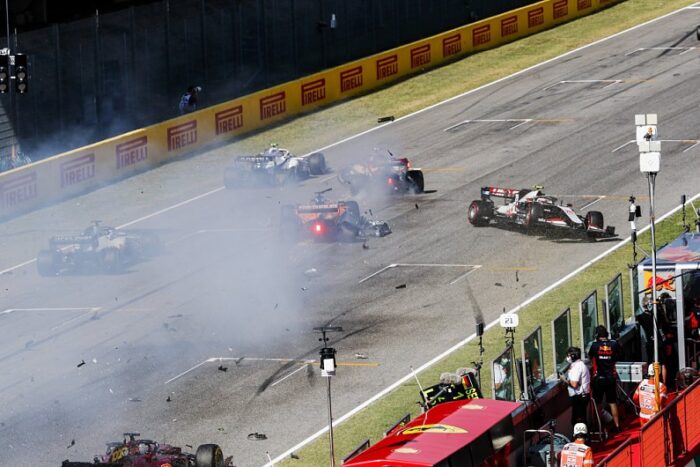
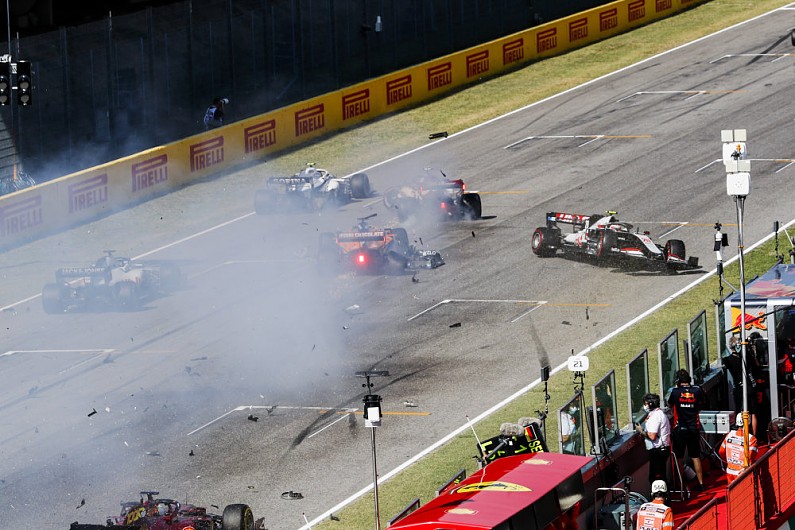
Barely seconds after the safety car had peeled in, there was a massive, multi-car pile-up before most had even crossed the start/finish line. Bottas had not put the pedal to the metal until the last minute – to minimise the slipstream effect for those behind – but confusion reigned behind as drivers saw some in front accelerating. The concertina effect, from drivers realising they had gone too early and braking, led to Antonio Giovinazzi and Sainz slamming into those ahead of them at terrifying speeds.
Image credit: LAT Images
Fortunately, nobody was hurt, but Giovinazzi, Sainz, Kevin Magnussen and Nicholas Latifi were all out the race. Inevitably, this brought out a red flag.
When the drivers lined up for the restart, there were just 13 cars remaining as Esteban Ocon’s Renault had also been forced into retirement with irreparably damaged brakes which had literally been on fire during the safety car period.
As the lights went out for the second time, the Mercedes switched places again, Hamilton getting into the slipstream of his teammate and completing a crucial move around the outside of Turn One. Behind them, Charles Leclerc had got himself up into an unlikely third but would fall back steadily as the Ferrari’s lack of pace became evident at what was turning into a predictably tainted 1000th race for the Scuderia.
Renault successfully executed an undercut at the first stops to get Daniel Ricciardo past Stroll into third place, whilst Albon had recovered from a poor restart and was back up to fifth, behind the Canadian. As the trio navigated the high-speed Arrabbiata corners, Stroll suffered a left-rear failure and crashed heavily, completing the rare event where all three podium finishers from the previous race fail to complete the next. Once again, the driver escaped unscathed and, once again, the red flag was shown.
No red flag for three years and then suddenly three in the space of seven days.
And so, the drivers lined up for their third start of the day, Bottas knowing he just had to repeat his feat from the original start to all but wrap up the race win. He didn’t manage it, though – possibly hampered by the tyre marbles that now adorned the left side of the circuit – and, in fact, fell behind Ricciardo.
He was soon back ahead but could do nothing to close down his teammate, who rubbed salt into the wound with an unerring fastest lap on the penultimate tour. The world champion is now just one win short of Michael Schumacher’s record and seemed quite overwhelmed by the proposition of matching it. “It just doesn’t seem real,” he said, “it’s ultimately a privilege to be in a position and have such a great team and a car to be able to deliver weekend in, weekend out. But I never thought that I would be here, that’s for sure.”
It was once again so near and yet so far for Ricciardo and Renault as Albon banished memories of his former podium near-misses and passed the Australian around the outside of Turn One to finally claim that elusive trip to the rostrum.
Image credit: Red Bull Racing
Hopefully the amiable 24-year-old can use this as a stepping stone to get his season back on track. We’ve seen how good he can be on a Sunday – two instinctive, brave moves earned him this podium finish – but he must improve in qualifying to help cement his position within the team. Red Bull want their second driver to at least be within the pit window of the Mercedes cars and there are rumours beginning to swirl of them considering Pérez or Nico Hülkenberg for next year.
Pérez himself came home a solid fifth – at his first race since discovering he would be replaced at Racing Point by Vettel in 2021 – ahead of Lando Norris, on a surprisingly uncompetitive weekend for McLaren, and Daniil Kvyat.
The Ferraris did at least salvage a double-points finish at their celebratory weekend, but that is not much of an achievement when only 12 cars reach the chequered flag, one of them being a Williams and the other a wounded Haas. They were, at least spared the ignominy of being passed by George Russell for the final point.
Russell was distraught to have missed out on his first F1 points. He had been running a strong ninth when the final red flag was shown and lost out on the restart, but the team are making progress and Russell’s time will come.
Dissecting That Crash
Post-race, 12 drivers were summoned to the stewards and given warnings for their “inconsistent application of throttle and brake, from the final corner along the pit straight”. But when you punish more than half of the grid, surely the rules have to be looked at too.
https://www.youtube.com/watch?v=u900k-obTRs
In the immediate aftermath, Hamilton blamed the incident on the safety car turning its lights off too late. Apparently this is a concern that Mercedes had raised about the restart procedure before the race, given Mugello’s layout, but Bottas claims that “they said basically they’re going to keep doing it because it’s better for the show, I think that was the reply”.
Bottas may well have controlled the pack similarly anyway – it was an approach taken by drivers in the junior formulae – but the fact that the safety car only turned its lights off as it entered the final corner clearly left him with no alternative. Once that was the case, the concertina effect was always likely given the lack of visibility and the astonishing closing speeds in these cars.
This absolutely needs to be addressed by the FIA and the GDPA. Whether it be a case of returning to the safety car lights going out earlier or even a mandatory VSC period immediately after the safety car comes in, there must be a better solution than the one we saw at Mugello.
The Tuscan Grand Prix in 90 Seconds (It Needs the Extra 30)
Answering the Burning Questions
How do you follow the last grand prix?! Well, like that, actually.
Will the drivers manage any overtaking around the Mugello track? Quite a bit, yes. The headwind helped make the DRS zone very effective.
Can Mercedes bounce back from their messy weekend? Of course they can.
Can Ferrari produce anything worthy of the occasion on their 1000th race? Of course they can’t.
It was a fairly sedate race at the front. Hamilton had more than enough to cover anything his teammate threw at him – which was thoroughly demonstrated on Saturday with two stellar qualifying laps, more than half a second faster than Bottas – and Max Verstappen unable to challenge the mighty Mercedes on this occasion.
An early crash by Antonio Giovinazzi, that also collected the helpless George Russell, brought out the safety car on lap 10 and all the front-runners, bar Sergio Pérez and Pierre Gasly, took the opportunity for a cheap pit stop and ran to the end on a set of hard tyres. Whilst things started to get a little uncomfortable towards the end, and Hamilton’s mind clearly flashed back to that puncture in Silverstone, there were to be no late dramas this time and the Briton took his 89th victory – now just two short of Michael Schumacher’s all-time record – again being denied a ‘grand chelem’ only by a fastest lap on the final lap.
He dedicated the win to Chadwick Boseman, best known for his starring role as Black Panther, who sadly passed away over the weekend at the age of just 43. “It’s been an emotional weekend, I want to dedicate this win to Chad and his family, he was such an inspiration and his legacy will live on.”
Renault Find Their Form
The aforementioned fastest lap was set by Daniel Ricciardo as he closed in on an unlikely podium, finishing just three seconds behind Verstappen in the end.
Image credit: XPB
Renault have been steadily improving as this quick-fire season has progressed, but this year’s black-and-yellow machine really came into its own with a low downforce setup at Spa. They were near the top of the timings all weekend; Ricciardo second in Practice Two and teammate Esteban Ocon in the same position in Practice Three.
Come race day, the Renaults fell back from the top three somewhat but, it would become apparent, were far kinder to their tyres and, with a few more laps, the Honey Badger may well have been designing a tattoo for Team Principal Cyril Abiteboul…
The 44 laps of the Belgian circuit were enough for Ocon, though, who held off the late charge of Lando Norris and successfully passed the Red Bull of Alexander Albon on the final lap for fifth place. 23 points for fourth, fifth and the fastest lap, is Renault’s best points haul at a single race ever. And things bode well for next week’s trip to Monza, where an even lower downforce setup could well see Abiteboul sweating once more.
An Emotional Weekend, Especially for Gasly
A minute’s silence was held before the race in memory of Anthoine Hubert, the F2 driver who was tragically killed at last year’s Belgian Grand Prix. Many of the young, French drivers grew up with Hubert but Gasly, in particular, considered the young Renault protégé one of his very best friends.
So, it was excellent to see the AlphaTauri driver continue his good form this weekend and come home with some more points in eighth place. He made up a number of positions in the opening laps, despite starting on the hard tyre, and showed incredible bravery as he passed Pérez into Raidillon, the Mexican squeezing him to a dangerous degree.
The safety car fell unkindly for Gasly and his counterstrategy, but he fought back through the field excellently, after switching to the medium compound on lap 26, and felt he had done enough to make his former roommate proud come the chequered flag. The fans voted him the Driver of the Day.
Thank you guys for electing me Driver of The Day on such a day. It was a tough weekend emotionnaly. Today was a very important race personnaly, and I gave everything I had. I wanted to do very well for Anthoine, and honored him the best possible way. (1/2) pic.twitter.com/w4RNUH66vj
Ferrari did not expect much coming into this weekend, but they may well have managed to underdeliver, nonetheless. The deficiencies of the SF1000 were brutally exposed and its lack of straight-line speed was particularly evident in the first and third sectors of the lap in Belgium.
There were fears that Ferrari would struggle to progress through Q1, after Practice Three left Charles Leclerc in 17th and four-time world champion Sebastian Vettel plumb last. They did narrowly avoid that particular embarrassment, but 13th and 14th on the grid was a long way from locking out the front row before a maiden victory for Leclerc at the same circuit last year.
My personal suspicion is that the team overly focussed on an especially downforce-heavy car for this season due to their superiority on the straights in 2019. But, once the engine rules had been clarified and severely hampered them, it was too late to dramatically change the philosophy of the 2020 design.
Whatever the reason for their shortcomings, it is probably a good thing that there will be no Tifosi at next weekend’s Italian Grand Prix, as it will likely be the lowest downforce setup of the year and their problems will only multiply.
Nil points at Spa is humiliating, but nil points at Monza…
There is certainly a big hill to climb for those in red.
Image credit: Foto Colombo Images
The Belgian Grand Prix in 60 Seconds
Answering the Burning Questions
Can anyone (well, Max Verstappen) challenge the Mercedes? They haven’t won here since 2017… Nope, they have now not won here since 2020…
Will a better result in Spain help motivate Sebastian Vettel? It must have been hard to find any motivation in this Ferrari at this track.
Or will Ferrari just struggle terribly around the power-sensitive Spa track? Yes.
Will the pressure increase further on Alexander Albon? It was another okay race and Helmut Marko has come out and backed him. For now, at least.
Could we have a wet and wild Spa weekend? *sigh* No.
Lewis Hamilton took a dominant victory at the 2020 Spanish Grand Prix and moved one clear of Michael Schumacher to claim the outright record for the most podiums in F1 history with his 156th visit.
There were hopes in the paddock of another closely fought race, after last week’s 70th Anniversary Grand Prix exposed a potential Achilles’ heel for the champions as they struggled with their rear tyres and Max Verstappen snatched an unlikely win. But those hopes were quickly extinguished when Hamilton “pulled the pin”, as Martin Brundle put it, and built a gap of almost ten seconds to the Red Bull in preparation for his first pit stop.
The usual Mercedes 1-2 in qualifying had been broken up by a poor start from Valtteri Bottas, the Finn suffering from a lack of a slipstream on the long run to the first corner and being passed by Verstappen and the opportunistic Lance Stroll. The Finn recovered to third quickly enough but spent the rest of the grand prix failing to get close enough to Verstappen in order to mount a real attack. Even on soft tyres towards the end of the race, he just didn’t seem to have the requisite pace and crossed the line 44 seconds behind his teammate, after making a late stop to claim the fastest lap.
It was a chastening weekend for Bottas, who is seeing his title aspirations crumble once again. “I have no idea what the points difference is,” he said, “but it is way too big and I can see again the championship drifting away. I will always bounce back, but right now I want to be somewhere else other than this.”
During the latest triple-header, the championship has transformed from a two-horse to a three-horse race and he is looking increasingly like the third horse.
Behind the front three, the Racing Points were ‘best of the rest’. Stroll continues to defy his critics and is really starting to cement his position as more than just a ‘rich boy driving for his dad’s team’; the Canadian took fourth ahead of teammate Sergio Pérez after the Mexican received a five-second penalty for ignoring blue flags.
Carlos Sainz completed the top six with a strong drive at his home grand prix, seemingly having solved the overheating issues that have plagued his McLaren recently.
A Little Redemption in Red
Sebastian Vettel made the best of another bizarre Ferrari strategy to salvage seventh, impressively making a set of soft tyres last 36 laps and holding off a train of faster cars towards the end.
The incompetency of the Ferrari strategists has become a running joke at this point and they continued to add fuel to the fire here. A bizarre radio exchange played out for the world to hear as Vettel was ignored, then told to push, then told to go to the end, and finally had to tell his team the sums they needed to do for him.
Image credit: Reuters
The tension between the four-time world champion and his team is palpable and it feels as though both parties are just waiting for the season to be over.
Ferrari may also find themselves in hot water as it has now transpired that Charles Leclerc drove for two laps without his safety harnesses secured after his engine had cut out and spun him at the final chicane on lap 36. A massive lapse in common sense and safety that the FIA may feel the need to make an example of.
Pressure Continues to Increase on Albon
In the break before racing at Spa-Francorchamps last season, despite all the team’s previous reassurances, Pierre Gasly was replaced at Red Bull by Alexander Albon. But, as we head to this year’s Belgian Grand Prix, the team find Albon arguably underperforming as badly as the Frenchman was 12 months ago.
Red Bull are desperate for their second car to get, at least, reasonably close to Verstappen’s pace to aid their strategy options when attempting to outsmart Mercedes. Albon has certainly showed promise at times, but there is surely only so long people can continue to make excuses for him.
The London-born Thai driver is averaging a deficit of over half a second to his teammate in qualifying and, whilst he has often produced great recovery drives on a Sunday, that is still only getting him back into a position that would be the least expected of him.
Image credit: Getty Images
This weekend, he did improve his qualifying slightly – if only to sixth on the grid – but was hampered in the race as Red Bull possibly used him as a guinea pig to test out the hard tyre for his teammate out front. That put him back into the many ‘DRS trains’ forming through the midfield and he only managed fight back to eighth place.
The fact is, however, that if he had shown the pace to get past the Racing Points into fourth earlier in the race, Red Bull would likely not have taken the gamble to switch to the hard tyres.
It was apparently Gasly being lapped by Verstappen in Hungary last year that was the final straw for the Red Bull bosses, so one wonders what must have been going through Albon’s head as he moved aside for his teammate here in Spain.
The Spanish Grand Prix in 60 Seconds
Answering the Burning Questions
Will Mercedes experience issues with their tyres again? Nope.
And can Red Bull then challenge for another win? Also nope.
Will Sebastian Vettel leave his Silverstone troubles behind him? To some extent, yes. A rightful driver of the day.
How will Sergio Pérez deal with the strain of driving an F1 car post-virus? He coped fine, seemingly. Even with it being one of the hottest races in years.
What had been a fairly processional race suddenly exploded into life – literally, in the case of three drivers’ Pirelli tyres – with a couple of laps remaining at the 2020 British Grand Prix.
The Mercedes pair had led comfortably throughout, despite a couple of early safety cars after crashes for Kevin Magnussen and Daniil Kvyat, but had been pushing each other quite hard on tyres that had done nearly 40 laps. Then Valtteri Bottas suddenly started to fall back and, just as he started lap 50 of 52, his front-left tyre decided it was done for the day.
With an entire lap to do, the Finn fell back down the order and Red Bull decided to pit Max Verstappen – who had been running a lonely race in third place – in an attempt to take the fastest lap. The drama was far from over, however, as Carlos Sainz’s front-left followed suit from fourth place and then – with a little over half a lap remaining – so did race leader Lewis Hamilton’s.
The 30-second gap back to Verstappen was reducing rapidly and it looked briefly as though Hamilton was about to have the win snatched away from him in the most excruciating manner. The world champion managed the situation perfectly, though, and scraped over the line with about five seconds to spare. Neither Bottas nor Sainz would manage to recover into the top ten after pitting, which has a huge impact on the championship standings – Hamilton now has an ominous 30-point lead over his teammate.
Some have questioned Red Bull’s decision to pit Verstappen, arguing that he would have won otherwise, but hindsight is 20/20 and all the tyres were on a knife-edge by the end, so there’s nothing to say the same would not have happened to the Dutchman.
Charles Leclerc profited from the drama to secure an unlikely second podium of the season in the uncompetitive Ferrari. It was an excellent performance, made all the clearer as his four-time world champion teammate, Sebastian Vettel, struggled throughout and eventually managed a single point for 10th.
Pirelli are conducting investigations into the failures – Kvyat’s earlier retirement was eventually proven to be a tyre failure also – ahead of another grand prix at the punishing Silverstone track next week, where temperatures are due to be higher and the tyres were planned to be a step softer.
More Midfield Action
Image credit: Motorsport Images
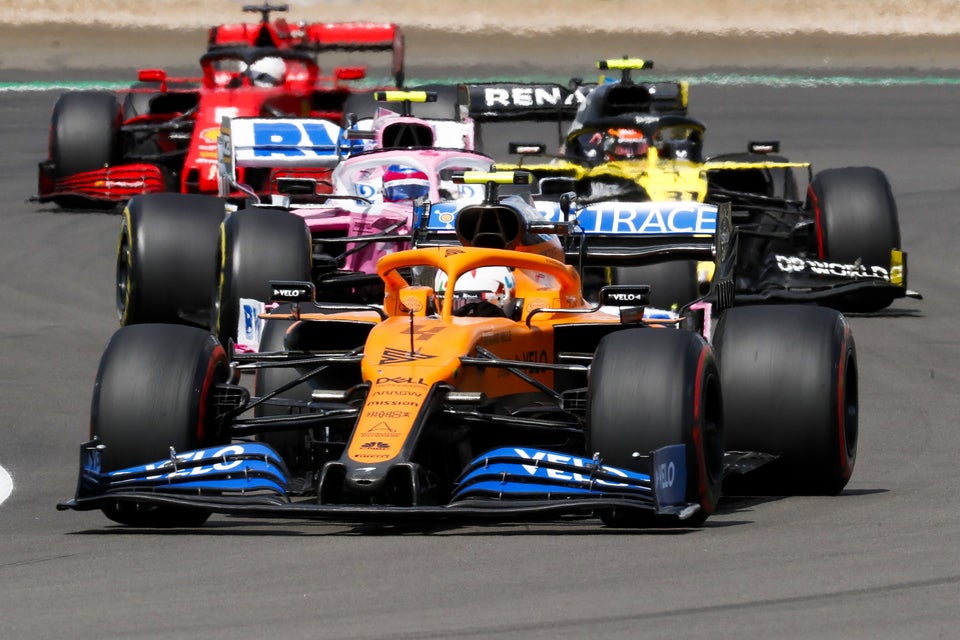
Whilst it was pretty serene out front for the most part, there was plenty of action, once again, in the midfield. The McLarens of Sainz and Lando Norris – sporting a simply excellent special helmet design, produced by six-year-old competition-winner Eva – swapped positions repeatedly with Renault’s Daniel Ricciardo and the Racing Point of Lance Stroll. Even Romain Grosjean in the Haas was involved after not pitting during the safety car period and jumping from 14th to 5th. The struggles of the American team continue, but Grosjean was able to hold on to the pack surprisingly well for a good 15 laps. He did, however, produce some controversy with his defensivemanoeuvres during that period.
Late jolts to one side at the end of the straight were reminiscent of those performed by Verstappen in his early days – which briefly brought about the ‘Verstappen rule’ banning them – and resulted in complaints over the radio by Sainz and Ricciardo. He received a black-and-white flag as a driving-standards warning but no penalty.
As the chairman of the GPDA, Grosjean should be setting an example. Mark Webber was cutting in his criticism, saying that the Haas driver has a “gross misunderstanding of modern grand prix racing” and is “borderline out of his depth in this category”. Ricciardo said that this “on-the-edge” driving would be raised during the drivers’ briefing ahead of the next race. Oh, to be a fly on the wall in that room…
Pressure Continues to Mount on Albon
It was another troubling weekend for Alexander Albon. A fairly big crash during Practice 2 on Friday set the tone as Albon struggled again to get to grips with this year’s very sensitive car and he then missed much of the final practice session with a battery problem. Qualifying went no better as he failed to progress from Q2; an attempt to get through on the medium tyres proved too ambitious and he failed to improve on the soft tyre, leaving him 12th on the grid.
Image credit: LAT Images
Magnussen made an excellent start and was ahead of the Red Bull by the end of the first lap. He made an error into the final chicane, though, and was compromised on the exit, presenting a tempting opportunity to Albon. The Anglo-Thai got himself somewhat alongside the Haas but – realising the gap was closing – tried to back out of the move, left it too late, and pitched Magnussen off into the barriers.
That earned him a five-second penalty and made his job harder still. As has often been the case, he did then produce a decent recovery drive and – once all the late tyre dramas had played out – found himself at least with four points for eighth place.
Tongues are beginning to wag, though, as he gets no closer to Verstappen’s level of performance and continues to make costly errors. Meanwhile, Pierre Gasly – the man he replaced last year – is excelling back in the AlphaTauri and managed to finish ahead of Albon here, with a commendable run to seventh.
The British Grand Prix in 60 Seconds
Answering the Burning Questions
Who will replace Sergio Pérez at Racing Point after his positive test?! Only Nico Hülkenberg!
If it is The Hulk, surely he won’t finally get his podium in the ultimate redemption arc?!?! …No…He didn’t even start the race. The man is cursed.
Can anyone challenge Mercedes? Only Pirelli seemingly.
With a very different layout to the first three grands prix, will any teams suddenly prosper at Silverstone? Renault appeared a bit stronger, but there were no major changes in the pecking order.
Will Alexander Albon have a better weekend with a new race engineer? …Also no… Hopefully he’s not as cursed as The Hulk has proven to be, but it’s starting to look a bit that way.
Hamilton is the hero again, but no more so than the Red Bull mechanics.
Image credit: LAT Images
Lewis Hamilton took a commanding victory at the 2020 Hungarian Grand Prix, winning in Budapest for the eighth time and, in doing so, matched Michael Schumacher‘s long-standing record for the most wins at one grand prix.
It is looking like the first of potentially a few Schumacher records to fall this year, considering the dominance of Mercedes and Hamilton now being just two podiums and five race wins behind the legendary German’s tallies.
The 86th victory of Hamilton’s career began in tricky conditions, with the track soaking wet from rain earlier in the day but drying out as the sun poked through the clouds and leaving the decision of which tyres to start on as a tight judgement call.
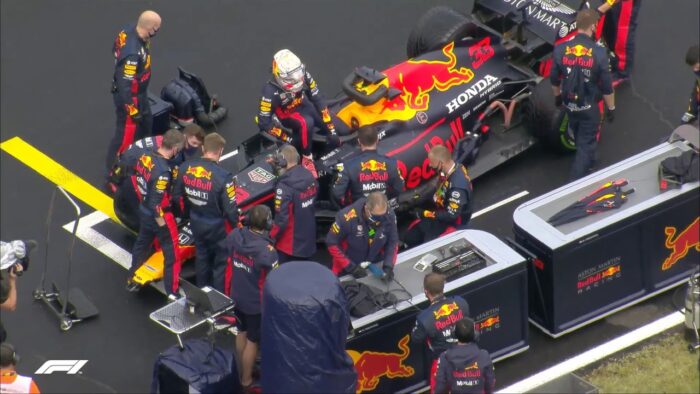
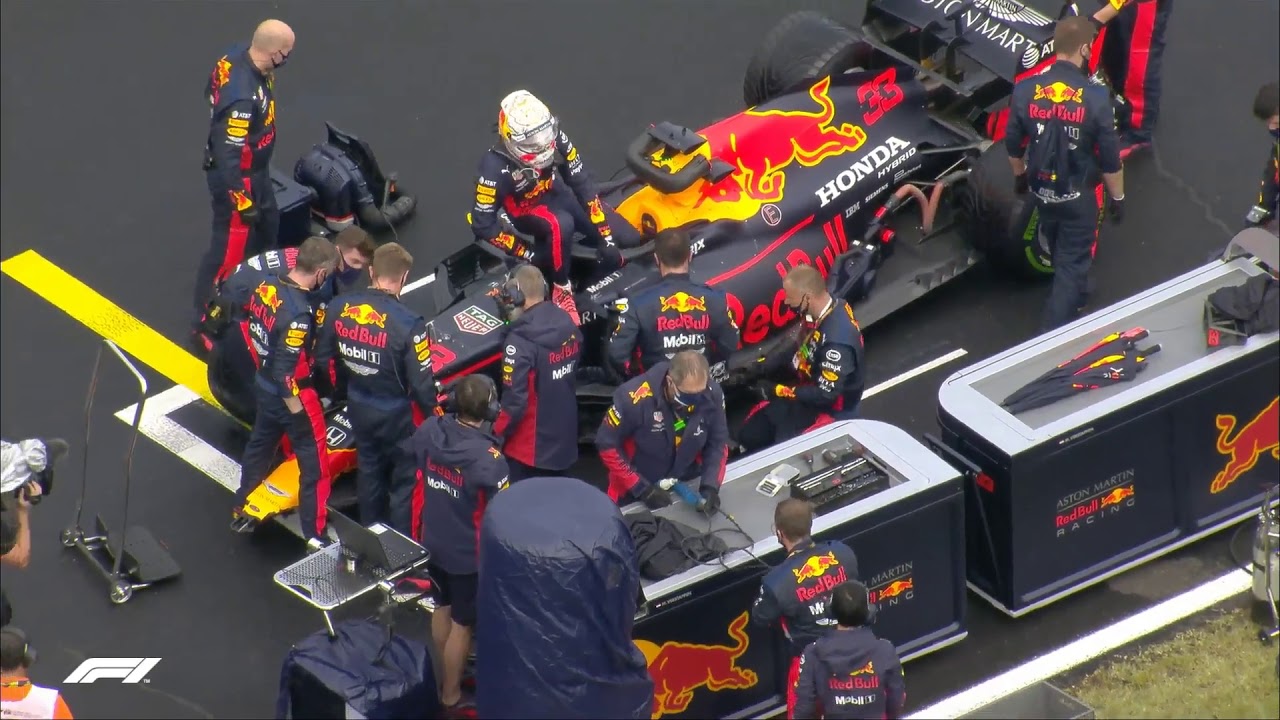
Max Verstappen – generally considered one of the very best in the rain – showed just how precarious the conditions were as he crashed on the way to the grid. Thus ensued a mad rush by the Red Bull mechanics to fix his broken front left push-rod in the remaining 15 or so minutes; they completed the work with 25 seconds to spare.
Image credit: Formula 1
The Dutchman demonstrated his gratitude, firstly over the radio and then on the track, with a stellar performance to take second place, having started seventh, and narrowly holding off the charging Mercedes of Valtteri Bottas in the final laps.
Bottas had got away poorly – he was fortunate not to receive a penalty for jumping the start after initially reacting to lights going out on his dashboard – and dropped back down the order on the run to the first corner. This is not the Bottas 3.0 that fans thought they had seen at the opening grand prix. He has now lost the championship lead to his illustrious teammate and will have to conjure up some renewed fire in his belly if he is to wrestle that lead back as we head for back-to-back races at Silverstone, where Hamilton has won five of the last six events.
And the world champion is showing some great form currently. He used all his wet-weather expertise to open up an eight second lead in the first couple of laps and, by the end, had a significant enough gap to Verstappen that he was able to comfortably pit for soft tyres and secure the extra point for the fastest lap. All in all, another masterclass to add to the collection.
Further back, Alexander Albon made a strong recovery after a disappointing qualifying to finish fifth, just ahead of Sebastian Vettel. Both drivers needed a good result and will surely have got some critics off their respective backs, for a while at least.
Neither came close to challenging Lance Stroll in the Racing Point, however, who coasted to a comfortable fourth position – the second-best result of his career. The ‘Pink Mercedes’ was undoubtedly the second-best car during qualifying and, whilst they faded a little in the race, were impressive enough to raise hackles a little more in the paddock. Renault have now lodged a second protest against the Racing Point car, before even having heard the result of their first one.
Image credit: XPB Images
An inspired call at Haas to pit at the end of the formation lap for dry tyres led to the struggling team running third and fourth in the early stages. They predictably fell down the order, but Kevin Magnussen hung on commendably to finish ninth on the road. They would later receive a penalty for breaching regulations regarding driver aids by instructing the pair to pit on the formation lap, but Magnussen still earned a single point -their first of the season – for 10th, at least.
Meanwhile, Red Bull survived without a penalty despite having clearly been caught drying the track on Albon’s grid spot…
Yet More Stewarding Inconsistency
It is so very hard to predict which way a stewarding decision is going to fall currently; it’s as if they are making it up as they go along. But then I suppose that is not a huge surprise when you have a panel that changes from race to race.
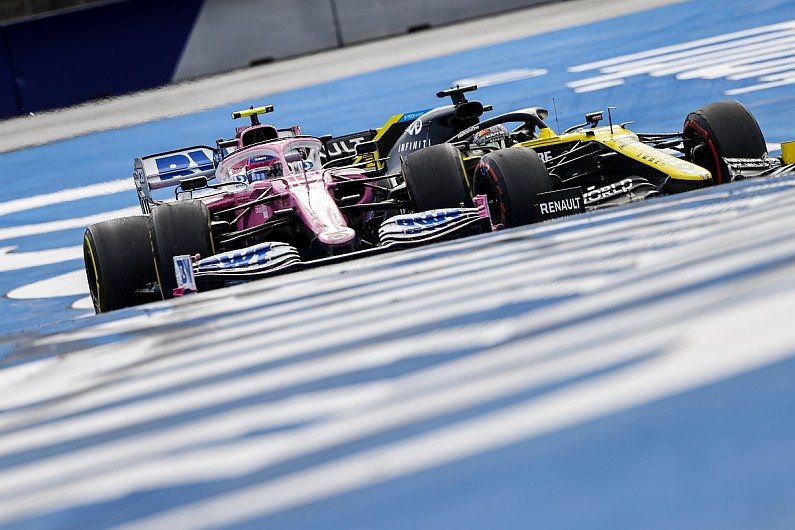
Last week saw the bewildering decision not to penalise Stroll for his attempt to pass Daniel Ricciardo late on in the Styrian Grand Prix. He clearly forced Ricciardo off the track – left the track himself for good measure – and then kept the position. It seemed a ‘slam dunk’ penalty to most of the paddock, thanks to the trifecta of forcing another car off the track, violating track limits and completing an overtake off the track all in one move. As well as, arguably, rejoining in an unsafe manner as he blocked Lando Norris upon his return.
The stewards, however, saw things differently. As is often the case, there was not much of an explanation as to their decision, which deemed it a “racing incident where neither driver was wholly to blame”. Ricciardo said he thought it was “crystal clear” that it should have resulted in a penalty and, considering all he did was avoid a collision, it is difficult to see how the stewards apportioned any blame upon him.
Image credit: LAT Images
This is the crux of the problem; the fans – and even the drivers – are often left bemused by the decisions and no one is there to justify them. I have called for it before, but what we really need is a consistent panel of respected figures who are fully accountable for their decisions and explain exactly how and why they have come to them.
A Crash Back Down to Earth for Lando
After two extraordinary races to open the season for Lando Norris, Sunday saw things go far less smoothly for the 20-year-old. After what he described as “the worst start I’ve ever got in my life”, he fell to the back of the field and, from there, never really recovered.
The Hungaroring is notoriously hard to pass on and the McLaren driver could only recover to finish 13th in the end. Still, with two stellar performances out of three so far, things could be going far worse and I’m sure, if you had offered him fourth in the championship standings at this point before the season started, he would have bitten your hand off.
Can Ferrari make some progress this weekend (and maybe not immediately crash into one another)? It wasn’t all plain sailing but certainly an improvement on the previous two races.
Will Lewis Hamilton match Michael Schumacher’s record for the number of wins at one GP with an 8th triumph in Hungary? Yep.
How will Racing Point respond to the protest about their car? By being ever more in-your-face with their speed, if anything.
Will the interview requested by Sebastian Vettel (with Martin Brundle) prove to be a major announcement? No, but it’s a thoroughly entertaining watch.
With more thunderstorms forecast, could it be another wet and wild weekend? It threatened to pour throughout the weekend, but we only ever got hints of rain when it really counted.
A wet weather masterclass from Hamilton on Saturday. (And Sunday wasn’t bad either.)
Image credit: Getty Images
After last week’s chaos, normal service was resumed at the second event around the Spielberg track, in the shape of a Lewis Hamilton domination, a Mercedes 1-2, an impressive Max Verstappen podium and a Ferrari calamity at the 2020 Styrian Grand Prix.
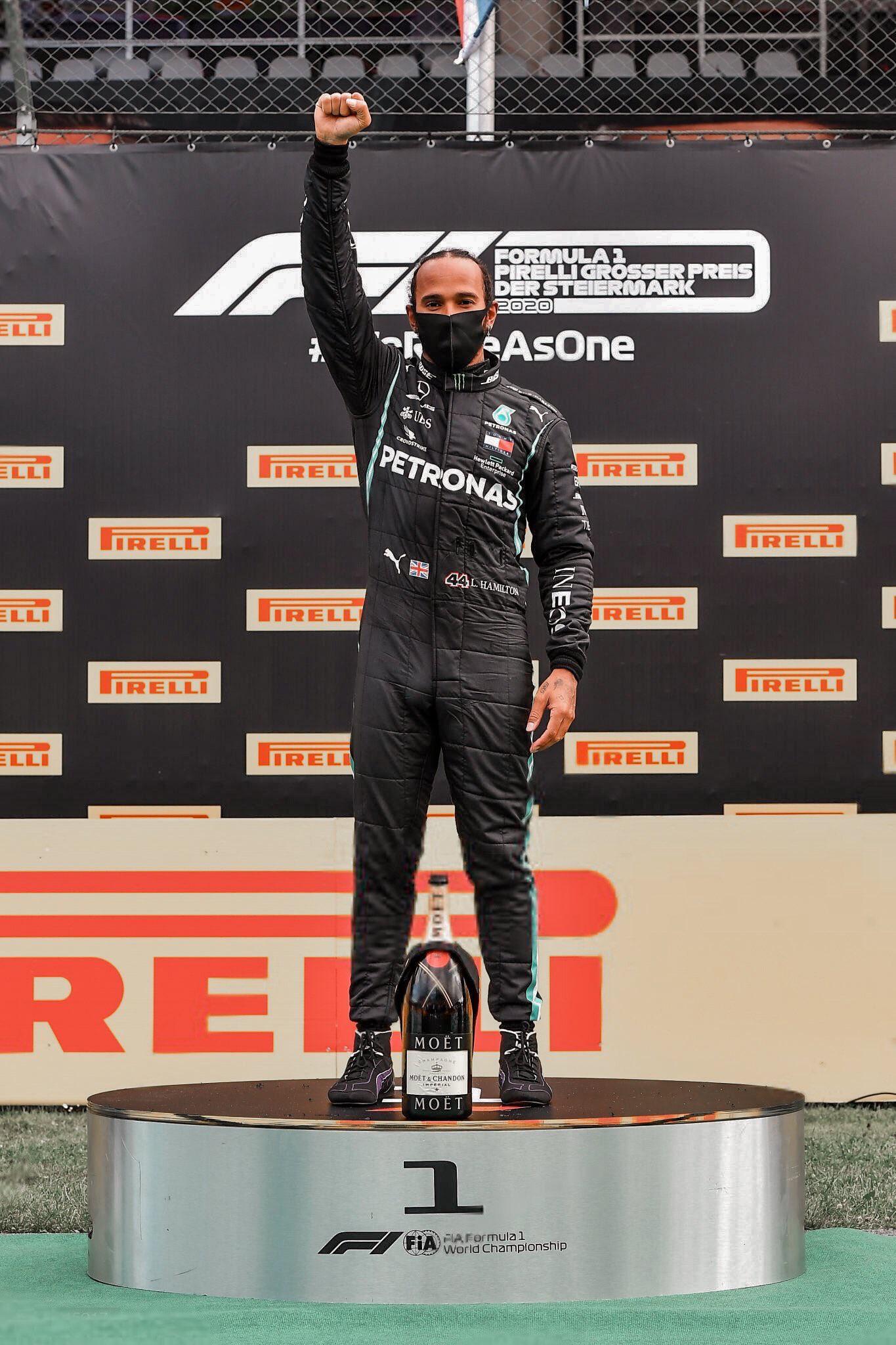
His troubles at the last race led to Hamilton being asked some fairly ridiculous questions as to whether he should focus more on racing than activism. He answered them in emphatic style with one of his very best pole positions – there are 89 of them, remember – and a controlled victory on Sunday. He then doubled down on that response with a black power salute on the podium.
Saturday’s qualifying took place in the wettest conditions for some time and gave the drivers the platform to demonstrate every ounce of their skill and remind any doubters that they are the very best in the world. Hamilton and Verstappen stood out throughout the session, seemingly on another plane to the others. The world champion was not content with that, though, and moved onto another plane again, with a final lap that was 1.2 seconds faster than Verstappen in second; the gap between first and second was larger than the one between second and 10th. Mercedes Team Principal Toto Wolff described the lap as “out of this world” and former driver Mark Webber tweeted “there’s a F1 category and there’s then a F1-plus category. Lewis is/was in a different league”.
There were also starring performances from Carlos Sainz in third, Esteban Ocon in fifth and George Russell, who dragged his Williams out of Q1 for the first time and came within a tenth of Sebastian Vettel’s Ferrari for a place in Q3, eventually lining up 11th on the grid.
Sunday was less eventful for the most part but still an entertaining race. Hamilton led from the front whilst teammate Valtteri Bottas steadily worked his way back up to second, eventually passing Verstappen after an excellent duel in the final few laps. There was plenty of midfield action, with Sergio Pérez recovering from 17th on the grid to even challenge Albon for 4th at the end.
Image credit: Formula 1
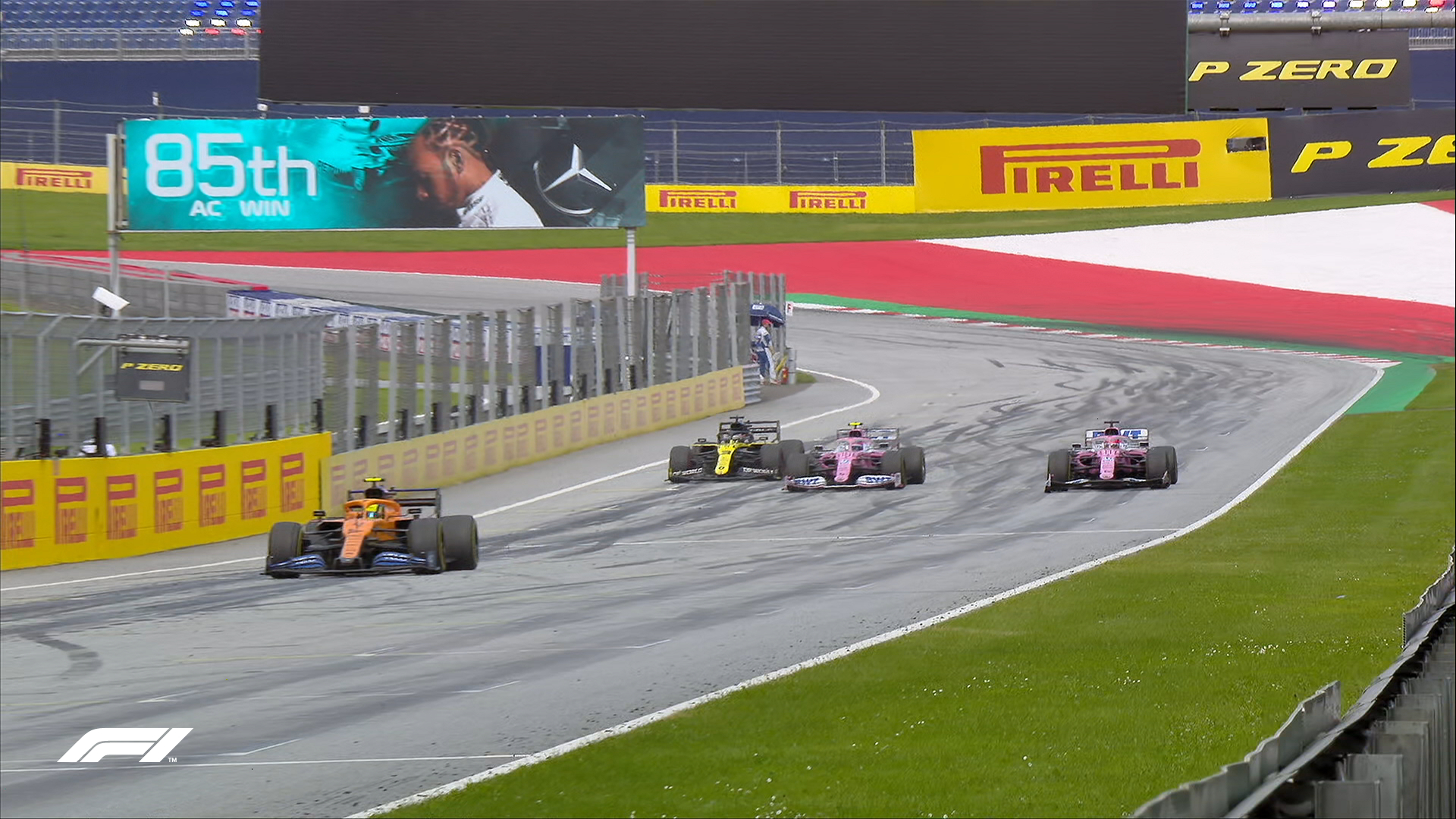
In the process, however, he damaged his front wing and fell back into the clutches of Lando Norris, Lance Stroll and Daniel Ricciardo at the final corner, resulting in a three-way photo finish. It was another storming finish from Norris who, after claiming a last-gasp podium seven days earlier, moved up from ninth to fifth in the dying stages after a long first stint. He remains third in the championship and is really coming into his own in his second season of F1.
Further back, things were going from bad to worse to whatever-is-below-that for the Scuderia.
A Horse Far From Prancing
Ferrari rushed through updates, that had originally been intended for the Hungarian Grand Prix next week, in order to have a direct comparison to the previous weekend’s race on the same track. The drivers reported an improvement during Friday’s practice sessions, but the times didn’t appear noticeably better and, whilst the soaking qualifying conditions will have complicated matters, 10th and 14th on the grid was worse than they had managed the week prior.
But still, they had the race on Sunday to try and make up ground and – at the very least – amass some useful data in their recovery efforts…right?
A clumsy, overambitious move from Charles Leclerc left him bumping over the kerbs and landing on his teammate, Sebastian Vettel. The German returned to the pits with his rear wing hanging off and retired immediately; Leclerc went back out but only managed a further three laps before the damage – mostly to the floor of the car – was pronounced terminal.
Leclerc was, at least, refreshingly contrite when it came to his culpability for the incident, on what was a far-from-smooth weekend for the Monegasque all round. It began with the news that he had returned home to Monaco for the birthday party of his girlfriend’s sister and not adhered to social distancing whilst there. He may have had two tests before returning to the track but risking everything when the sport has put so much effort into its return, was immature and arrogant. He was very lucky to escape with just a warning.
And yet, that is the least of his worries, considering the position his team is now in. The Italian press have been predictably cutting (whilst romantic, of course) in their appraisal of the effective national team’s current predicament. They must hope that the remaining haul of updates, to be delivered in Budapest, will make a significant difference, or this season looks set to become the biggest embarrassment in their recent history.
The ‘Pink Mercedes’ Under the Microscope
Racing Point are yet to fully delivered on their considerable potential this season, thanks to a retirement at the first race and a scrappy qualifying at the second, but it has become increasingly apparent to the paddock that the pink cars are just as quick as they had feared.
This was demonstrated by Pérez’s charge through the field and then cemented by the fact that he was effectively being held up by the second Red Bull towards the end. As Stroll boisterously pointed out, they have “debatably the second fastest F1 car”.
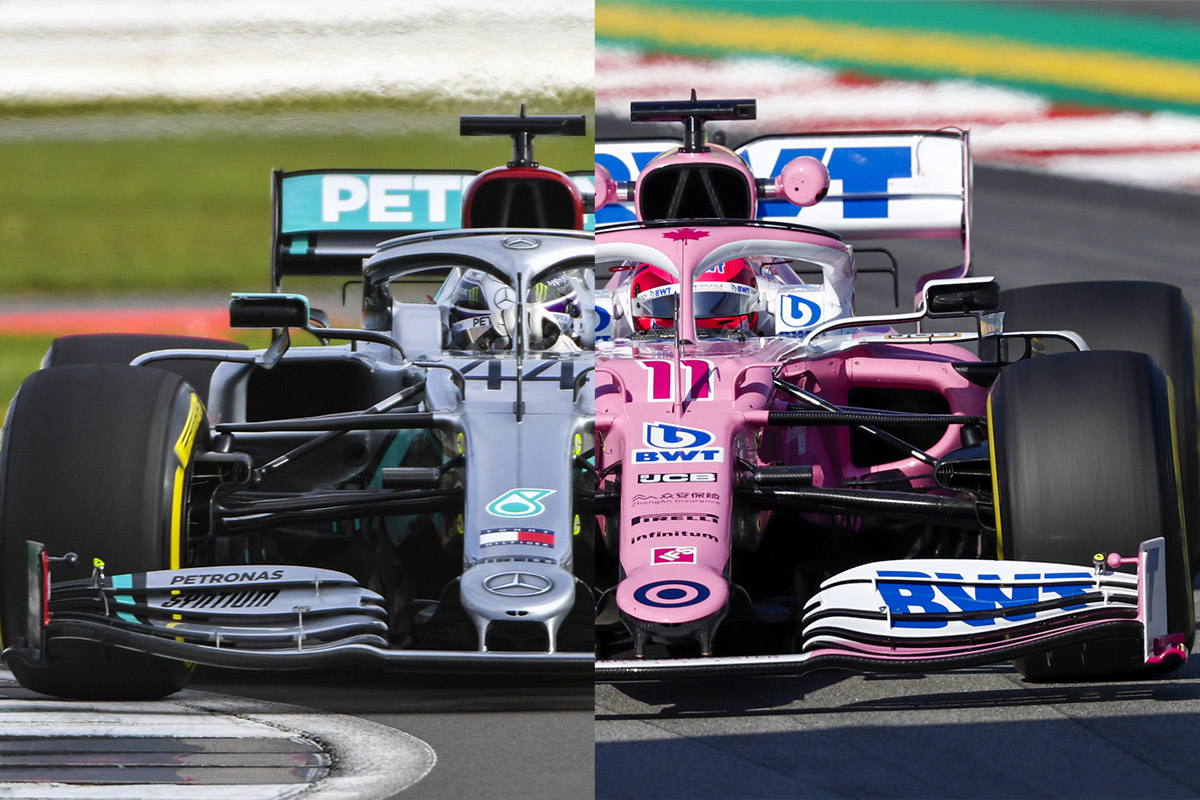
So, Renault – clearly waiting to enact vengeance after Racing Point protested the French team’s best result in Japan last year – have decided to pull the trigger and lodged a protest over the eligibility of the Racing Point brake ducts.
Image credit: LAT Images
The paddock’s suspicions over the similarities between this year’s Racing Point and last year’s championship-winning Mercedes are well-known. The Silverstone-based team have been steadfast in their assertion that they simply copied the best car of last year and did so within the rules.
The stewards have classed the protest as admissible and impounded the brake ducts, whilst also requesting that Mercedes provide parts from last year’s car, but Racing Point remain resolute and say they “expect the FIA to dismiss the misconceived protest”. This will likely trundle on for a fair while.
The Styrian Grand Prix in 60 Seconds
Answering the Burning Questions
Will we see much difference in pace from anyone since the last race? Nothing particularly noticeable.
Can Ferrari bring some updates in time for this weekend? They did, but they didn’t get much use out of them.
Will there be fewer mechanical issues now that the cobwebs are gone? Yep, just one mechanical failure during the race.
Can Lewis Hamilton claw back some ground on his teammate? He can.
With thunderstorms forecast through the weekend, will we have a wet and wild qualifying and/or race? Not during the race, but the qualifying was emphatically wet and wild.
It may have been an agonising 217 days since the chequered flag in Abu Dhabi but the much-delayed opening Austrian Grand Prix of the 2020 season managed to be worth the wait.
By the end of qualifying, the main stories were clear – the dominance of Mercedes and the struggles of Ferrari. Mercedes look pretty mean in their new, black livery and their speed is just as menacing; they appear to have a half second advantage over the rest of the field, which looks ominous for the remainder of the season. Meanwhile, their former main rivals have seemingly slipped back into the midfield, with Sebastian Vettel knocked out in Q2 and his teammate only just surviving to ultimately manage seventh on the grid.
The drama on Sunday started early. Having originally avoided a penalty for not slowing under yellow flags during his final qualifying run, Hamilton was given a three-place grid penalty less than an hour before the race after Red Bull had questioned the stewards’ original decision.
It would not slow him down too much though. By lap 10, Hamilton was ready to inheret second place when Max Verstappen’s Red Bull decided it was done for the day. A massive disappointment for the Dutchman, who seemed to be in a strong position after Red Bull’s gamble in Q2 resulted in him starting on harder tyres than those around him.
He would prove to be far from the only retirement, though, with just 11 cars actually reaching the chequered flag.
Hamilton had closed up rapidly to his teammate after Verstappen’s retirement but a combination of safety cars and orders from the garage to take things easy – as engineers panicked about gearbox issues caused by the aggressive kerbs – meant he never managed to attempt an overtake.
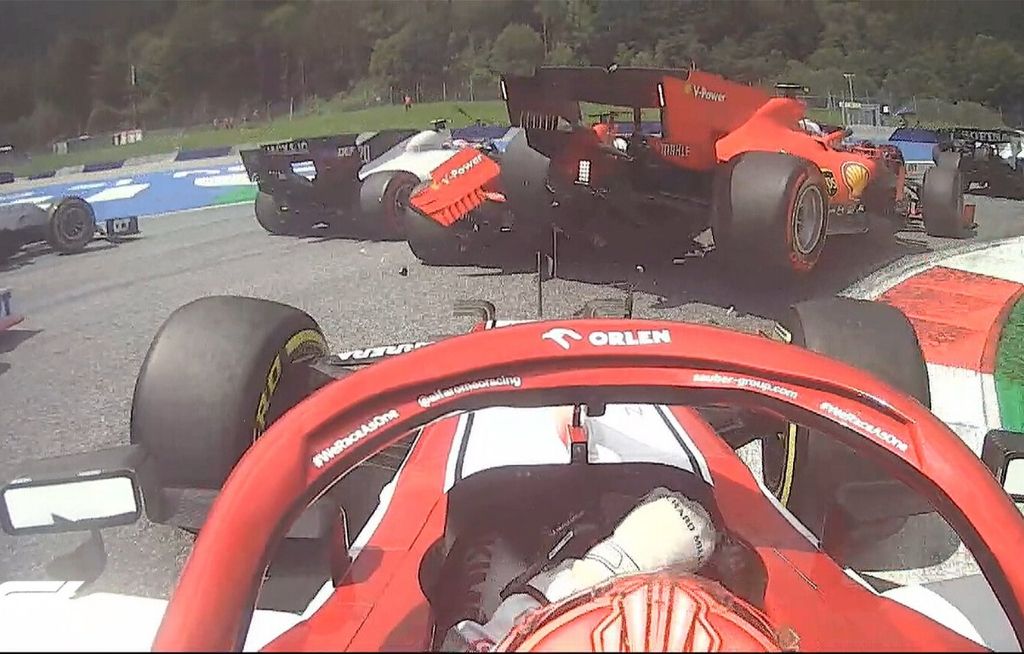
After the third and final safety car, Mercedes found themselves in something of a predicament – they had not stopped for new tyres, whilst a string of cars behind them had done so. Immediately after the restart, Alexander Albon was all over the back of Hamilton and, within a few corners, we had a déjà vu of Brazil last year as they collided and Albon was left pointing in the wrong direction.
Hamilton received a five-second time penalty and would also be denied a spot on the podium as young Lando Norris – fresh from his best ever qualifying result – stormed through with the fastest lap of the race to finish 4.8 seconds behind the world champion and become the third youngest F1 podium finisher ever.
Image credit: LAT Images
Charles Leclerc took an unlikely 2nd considering Ferrari’s pace this weekend – thanks to some daring but clinical overtaking late on – and Carlos Sainz completed the top five. The Spaniard may currently be questioning his decision to switch to the Scuderia next year, with McLaren on an upward trajectory and Ferrari going in the opposite direction.
Bottas begins this season as he did last year’s, with a win, but can he keep it up this time and really take the fight to Hamilton? The 2020 season is already looking like it could be a two-horse race.
Leclerc Spares Ferrari’s Blushes
It was a chastening weekend for those in red, but Leclerc did, at least, manage to salvage something positive for them with an unlikely podium, albeit one which required a fair slice of luck.
Whilst all the noises coming out of Ferrari since pre-season testing have been clear in tempering expectations, nobody could have foreseen quite how far they have fallen; Leclerc’s qualifying time was a little under a second slower than his pole time at the same circuit last year.
Image credit: Foto Colombo Images
This has reminded people of the elephant in the room – namely, the private settlement reached between Ferrari and the FIA regarding their engine last year. It surely cannot be a coincidence that all three Ferrari-powered teams are suddenly struggling and that the factory team are no less than 0.7 seconds down on the straights alone… Whatever trick they were pulling last year, they are clearly no longer able to perform it and it has starkly exposed their 2020 car’s deficiencies; it has a severe amount of drag and, if you watch Sebastian Vettel’s onboard footage, is just a real handful.
Those wondering whether Vettel – with the knowledge that he will be out of the team come next year – would be out to prove a point and back to his best, had an early hint towards a potential answer as he clumsily ploughed into the back of Sainz early on. The four-time world champion is beginning to look disillusioned with the sport – can he find his mojo again with a new project or is this the end?
A Messy Weekend for the World Champion
It was not the ideal start to Hamilton’s quest for a record-equalling seventh world championship. The Briton dominated the practice sessions but was pipped by his teammate when it mattered in qualifying and would eventually be handed a penalty after Red Bull continued their tirade against Mercedes, having already lodged a protest against the Silver Arrows’ DAS system.
Once back up to second, he would endure a frustrating spell stuck behind his teammate, with those in the garage nervous of gearbox issues and desperate for their drivers to stop pushing, before his chances of taking the lead were further scuppered by numerous safety cars. Mercedes then made a mistake by not pitting for new tyres during the final safety car period, which led to the collision with Albon.
The Red Bull driver stormed around the outside of Hamilton at Turn 4, only for the pair to connect front and rear wheels on the exit. Hamilton took full responsibility for their uncannily similar accident at Interlagos last year, but this one was a little more complex.
There has been much debate as to whether the five-second penalty was deserved. Some – mostly in the Red Bull camp, obviously – have said that he got off lightly, whilst some have called it a racing incident. It was mostly just unfortunate.
Albon, in hindsight, perhaps should have been more patient – he had far better traction and would surely have been able to pass Hamilton in a less risky situation within a lap or so. Putting himself on the outside of a car on cold, worn, hard tyres at a downhill corner always had the potential to end in tears. Hamilton was something of a passenger as he understeered wide and then Albon’s overspeed effectively drove him into Hamilton’s front left tyre.
Equally, though, whilst he was slightly behind on corner entry, Albon was almost a car length ahead by the exit of the corner. Would a more-experienced driver have left just that extra few centimetres of room, knowing that the other car was likely to run wide? Maybe, but daring manoeuvres like this are why Albon is in the Red Bull; he will get there. Ultimately, it was the outcome that resulted in the penalty for Hamilton – if Albon had been bumped wide slightly and recovere to maybe 4th, there would likely have been no action taken. For a neutral driver’s perspective, check out Marcus Ericsson’s tweet.
Once Hamilton’s penalty was confirmed, Mercedes could potentially have swapped the drivers to help him cling on to a podium place, but that was not done either.
However you look at it, this is not how Hamilton would have envisaged his campaign starting and he already has a 13-point deficit to make up on a reduced calendar.
The Austrian Grand Prix in 60(ish) Seconds
Answering the Burning Questions
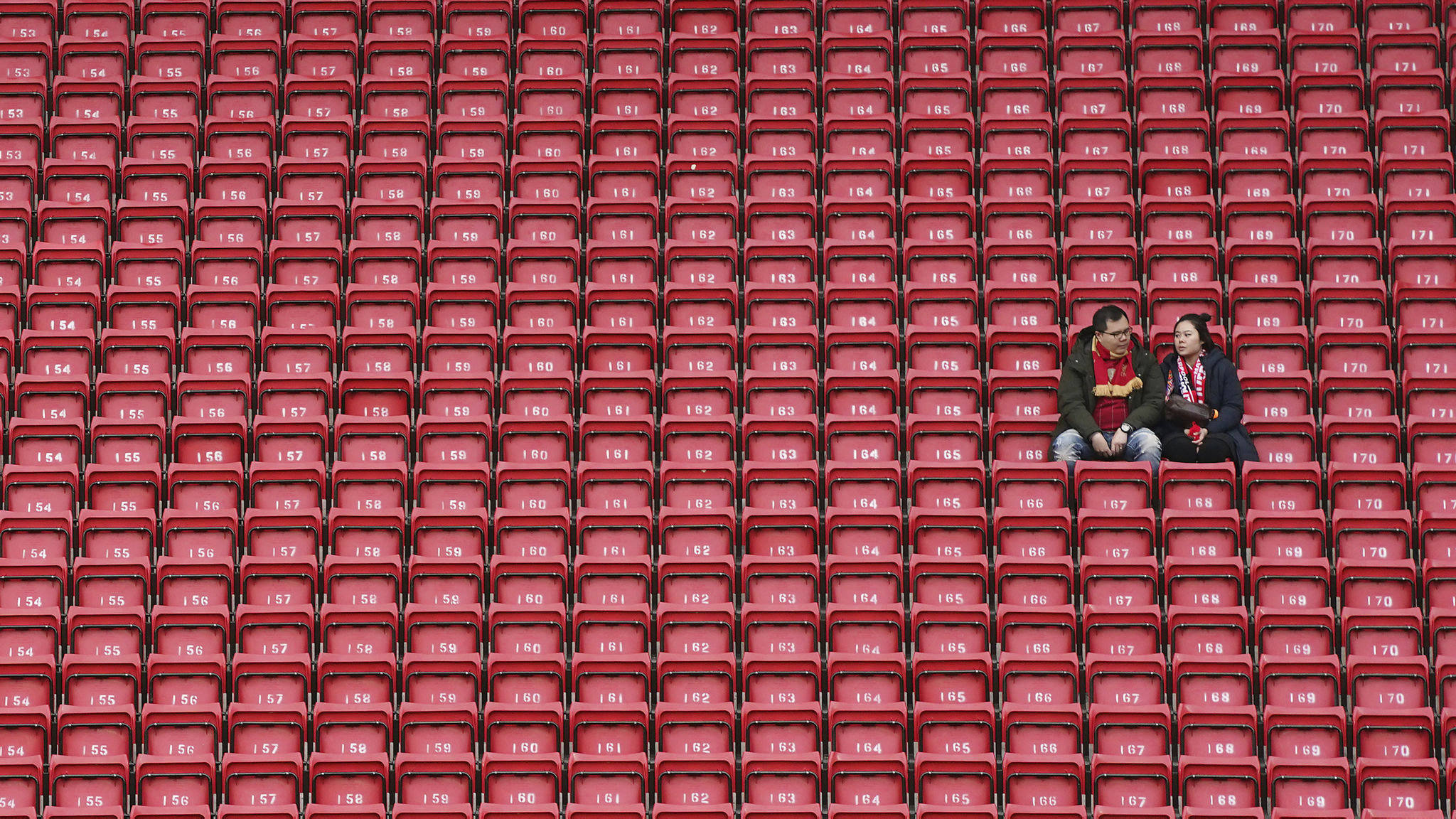
How will the new socially-distanced F1 play out? Will it have a significant impact? Not particularly – it’s easy to forget that there is no crowd and the McLaren garage didn’t exactly observe social distancing whilst celebrating their podium.
Who has the fastest car? Mercedes, it would appear emphatically.
Will anyone have made any dramatic changes since pre-season testing? Not to the untrained eye as yet, but Ferrari may do by next weekend.
Can Max Verstappen and Red Bull continue their winning streak in Austria? Nope.
How will Sebastian Vettel approach his final season at Ferrari? About the same as the last two years so far, unfortunately.
Well, we were in Melbourne, about to start another Formula 1 season…and then the world changed.
It has, in fact, changed beyond all recognition in the space of a few short months. Social distancing is the new normal – masks, gloves, two metre gaps, elbow bumps – and the Black Lives Matter campaign has swept around the globe after the death of George Floyd.
These have been truly unprecedented times, but, as curves have been flattened and lockdowns lifted, the world of sport is slowly, cautiously peering out from the rubble.
Image credit: AP
With cases reducing in most countries and both testing kits and protective equipment now far more readily available, many sporting bodies have decided that, with the correct safety measures in place, it is safe to resume.
Premier League football has now restarted, with players and staff being tested twice a week, a maximum of 300 key people allowed inside the stadium and regular disinfection of equipment.
So, how will F1 look upon its return?
Formula 1’s ‘New Normal’
As sports go, the core elements of F1 are already fairly socially distanced; drivers are in their own cars, in the most advanced protective equipment and, if they get within two metres of their rivals, then they’ve probably crashed into one another…
This means that most of the changes will be aesthetic and/or behind the scenes.
The new regulations have been produced in conjunction with the WHO and feature all the measures with which we have become accustomed recently – two metre distancing wherever possible, PPE throughout and the expectation that “all attendees show responsible measures are being taken”.
There will be a daily questionnaire regarding potential symptoms to be completed by every member of the paddock, in addition to a contract tracing system, daily COVID briefings and an isolation hut on the premises.
What does it mean in terms of the show? Not a huge amount, really.
Image credit: Speedpix
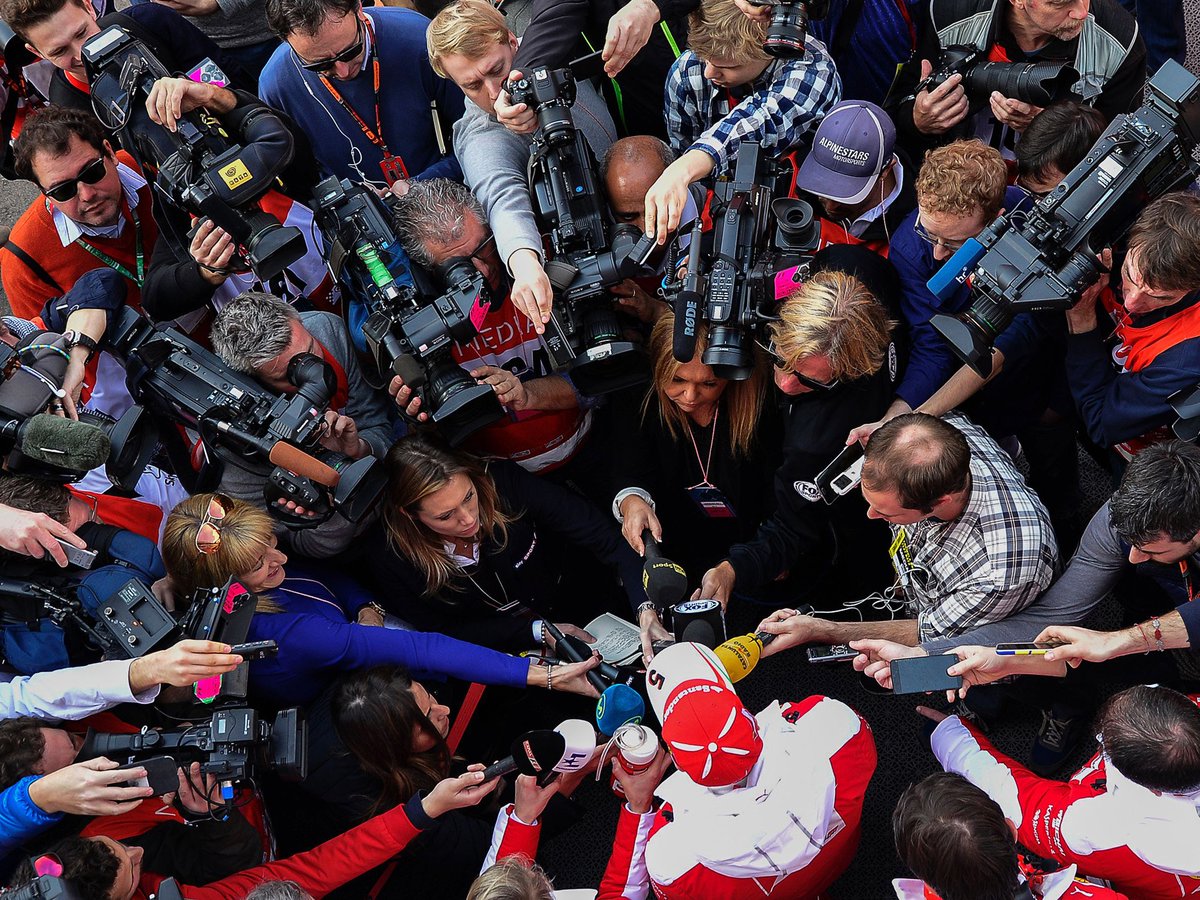
The grid process is to be shortened significantly. Media scrums are obviously a thing of the past; the media’s entry will be limited to mostly video or ‘pool’ interviews – where all outlets’ questions will be asked together. The weighbridge will be disinfected after each car’s visit and the podium celebrations will be moved to the grid, in order to enable two metre spacings between the steps.
There has been no word on the champagne as yet; maybe they’ll spray disinfectant instead.
What Could the Calendar End up Looking Like This Year?
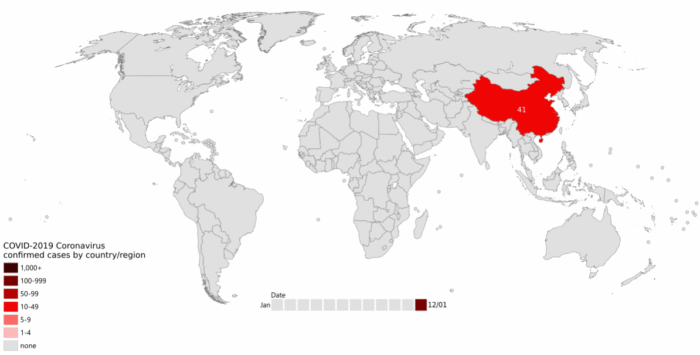
It seems astonishing, in hindsight, that the opening Grand Prix of the year very nearly went ahead. It may well have done, too, but for a member of the McLaren crew testing positive for the virus on the Thursday night.
In the aftermath, grands prix were gradually postponed, with Monaco being the first to fully cancel its 2020 event. The difficulty of assembling the infrastructure necessary for a street race made the event impossible, even with restrictions beginning to relax.
The same obviously applies to the street races in Singapore and Baku, who duly followed suit, and the Australian, Dutch, French and Japanese Grands Prix weren’t far behind, cancelling for a variety of reasons.
The requirement for a season to qualify as a World Championship is a minimum of eight races. The talk of a three continent requirement can be put to bed after Managing Director Ross Brawn confirmed that, in the exceptional circumstances of the COVID-19 crisis, this “recommendation” will not have to be met.
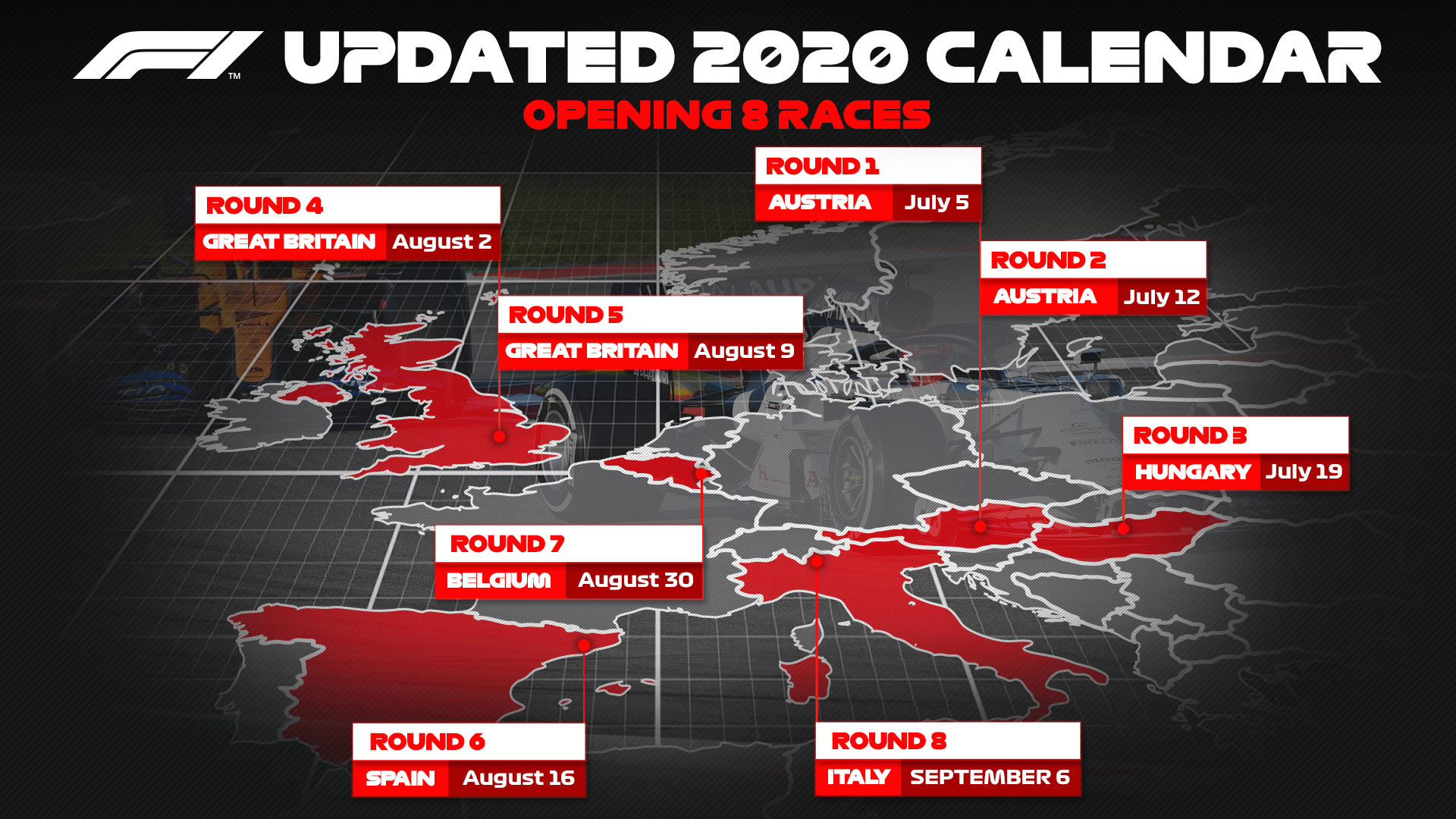
The FIA released a rescheduled calendar in early June, with the first eight races confirmed. They include – for the first time in F1’s history – a second race in both Austria and Great Britain; which have been named the Steiermark GP and the 70th Anniversary GP, respectively. The aim is to hold between 15 and 18 races overall, with the season potentially stretching into early 2021.
Image credit: Formula 1
Beyond this, things remain largely up in the air. The races in Canada and Vietnam continue to be a possibility and there may even be another double-header in China, ironically. Bahrain and Abu Dhabi look fairly solid bets to host at least one race.
The United States is far from over its Coronavirus struggles, whilst Mexico and Brazil appear to be going in the wrong direction, so the prospect of races there seems problematic. However, with Liberty Media waiving race fees and, in fact, paying to rent the facilities, there are some old faces throwing their hats into the ring.
From the more recent past, Hockenheim is looking likely to host a race, having dropped off the calendar for 2020. But blasts from the past such as Imola have been mentioned; both Estoril and Algarve in Portugal (and even Mugello in Italy) are being considered.
It’s hard to say currently how many races we’ll end up with and where they’ll be, but let’s just be glad that we have a championship at all.
Since You’ve Been Gone
So, if you’ve been out of the F1 loop during lockdown, what have you missed? Here are the main headlines…
Silly Season Before the Season Even Began
Image credit: Sky Sports F1
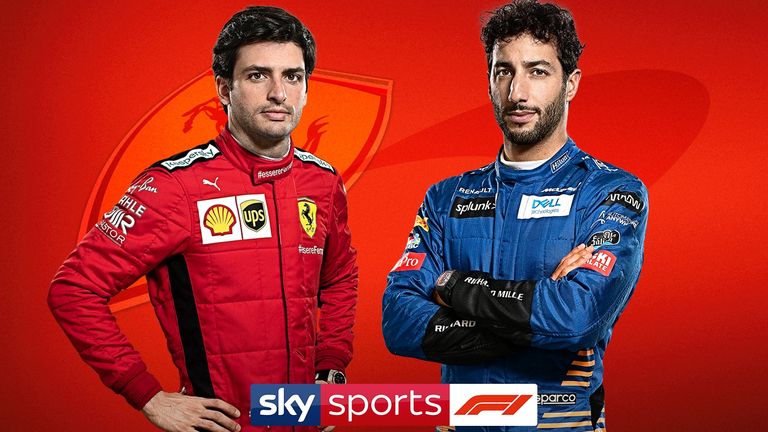
In the space of a couple of days, the F1 merry-go-round suddenly kicked into gear, sparked by Sebastian Vettel‘s announcement that he would be leaving Ferrari at the end of 2020. Within a few hours, Carlos Sainz was confirmed as his replacement and, not long after that, Daniel Ricciardo announced he was swapping the yellow of Renault for the papaya orange of McLaren in 2021.
Vettel stated that “the team and I have realised that there is no longer a common desire to stay together beyond the end of this season”. Was he just burnt out after years of near misses and disappointment with the Scuderia? Or was it the team that have decided they want some fresh blood?
Either way, it can’t have been easy to give up on his dream of emulating his idol, Michael Schumacher, with a championship at Ferrari and his options for 2021 now look limited.
There were initial rumours of a Mercedes seat, but Toto Wolff has all but ruled that out, leaving his best chance at Renault. Will Vettel take a chance on what is currently a midfield team, with former teammate Ricciardo clearly having jumped ship? Or will he retire?
It would be a great shame for the sport to lose a four-time world champion, but you sense recently that his love for F1 has been dwindling a little.
Image credit: The Canadian Press
It is an incredible chance for Sainz, however. Many have seen him as a future de facto number two to Charles Leclerc, but let’s not write him off so soon. It is worth remembering that he largely matched Max Verstappen whilst the pair were at Toro Rosso and a stellar 2019 season refreshed memories of his considerable potential, after an uninspiring spell at Renault.
Ricciardo will be hoping that McLaren can continue their current upward trend and take advantage of the new regulations, which have now been delayed by a year to 2022. Unless he miraculously challenges for the title this year, it will have to be said that his Renault experiment was a failure.
It surely won’t wipe that perpetual smile off his face, though, and a pairing of the Australian and Lando Norris will certainly make 2021 an entertaining season for McLaren, in every sense.
Hamilton Leads the Fight
For once, that headline has nothing to do with Lewis Hamilton‘s dominance on the track.
The world champion has launched ‘The Hamilton Commission’ with the aim of increasing diversity within motorsport. “The time for platitudes and token gestures is over”, wrote Hamilton in a column for The Sunday Times. “Despite my success in the sport, the institutional barriers that have kept F1 highly exclusive persist.”
The 35-year-old has campaigned passionately during the enforced break, with a series of powerful statements on social media and participation in the peaceful BLM protest in Hyde Park.
Went down to Hyde Park today for the peaceful protest and I was so proud to see in person so many people of all races and backgrounds supporting this movement. It was really moving. I’m feeling extremely positive that change will come, but we cannot stop now. #blacklivesmatter ✊🏾 pic.twitter.com/koOTEPOXAh
And F1 has now followed his lead by launching the ‘We Race As One’ initiative, which has the aim to “impact long-lasting change, particularly regarding diversity and inclusion”. All cars will display a rainbow, comprising the colours of the 10 teams, throughout the 2020 season and the sport will also show support for key workers and families amid the fight against COVID-19.
As stated at the top of this article, the world has changed.
As Lewis Hamilton turns 35 years old – and stands on the brink of practically every record the sport has – let’s discuss his standing in the annals of Formula 1.
Credit image: Mercedes
The Greatest of His Generation?
Hamilton burst onto the scene in 2007 and made about as big a mark on the sport as is possible in a rookie season. He had built up some hype through his stellar junior career, but he would be going up against Fernando Alonso – the reigning double world champion and the man who had just dethroned the great Michael Schumacher – as his McLaren teammate. Expectations were that he would be a solid number two driver whilst he gained some experience and learnt the intricacies of Formula 1.
The then 22-year-old should probably have won the championship but for a bizarre moment in China – McLaren leaving him out on tyres that were down to the canvas led to the driver sliding agonisingly into the gravel trap upon entering the pit lane – and some technical gremlins in the last race. But, whilst one point shy of the first rookie title in the sport’s history, Hamilton still finished ahead of his illustrious teammate, who promptly left for Renault.
Hamilton would right some wrongs and claim his maiden title the following year with the infamous ‘Is that Glock?‘ moment but then followed something of a dry spell. Brawn turned the sport on its head in 2009 and the beginning of the 2010s were a tale of Red Bull and Sebastian Vettel dominance.
McLaren provided Hamilton with cars that were fast but often fragile. That, combined with frequent operational errors in the team and an annus horribilis for the driver himself in 2011, meant there was never a sustained title challenge.
Around this time, popular consensus was that Alonso, Hamilton and Vettel were the three biggest talents of their generation. But the order was up for debate.
Then came the hybrid era, however.
Hamilton’s move to the Mercedes team, a year earlier, turned out to be arguably the best career decision in the history of the sport as McLaren – ironically, with Alonso back at the helm – stalled with underpowered Honda engines and Mercedes took up their now perennial position as the class of the field.
Add to that, Hamilton combining his undeniable speed with a new-found maturity and he has become near untouchable in the years since. He has won 62 of the 121 races – a little over 50% – and every world championship bar 2016, when he was denied by a lot of bad luck with mechanical issues and some impressive consistency by then teammate Nico Rosberg.
The 2017 and 2018 seasons were billed as the battle for supremacy between Hamilton and Vettel with Mercedes and Ferrari finally closely matched. In the end, it was the man from Stevenage who consistently landed knockout blows, as Vettel’s challenges faltered and there is now no real debate as to which of the two men is top dog.
Some have pointed to Alonso as the most complete driver, but surely Hamilton has proven his worth in all areas by now. And Alonso’s notoriety when it comes to being hard to work with, along with the path of destruction he has left in his wake throughout his career, must be factored in. There is a point at which career choices are no longer poor by coincidence but that there are reasons for each failure.
Lewis Hamilton is the greatest driver of his generation.
The Greatest of His Nation?
This is where things start to get particularly tricky. It is incredibly difficult to compare drivers across different eras of the sport as Formula 1 today is near unrecognisable when compared to the 60s. The cars, the technology, the safety, the media – it is simply a different beast.
Image credit: Getty Images
The two other obvious contenders for ‘Best Brit’ would be Jim Clark and Sir Jackie Stewart. But then Stewart is quite adamant that Clark was a superior driver to himself so let’s focus on the two-time world champion.
Clark is still frequently referred to as the best ever by some. Even the great Juan Manuel Fangio himself described Clark as “outstandingly the greatest grand prix driver of all time”. We will never know what the Scot could ultimately have achieved, as his life was cut tragically short at 32 with a crash at the Hockenheimring, but he was undoubtedly the phenom of his era.
Out of the car, Clark was an introverted, simple farm boy from Scotland who was notoriously on edge before a race. Jack Brabham recalls that a doctor taking pulses and blood pressures before the race start thought that Clark was “in such a state that he shouldn’t start” But once behind the wheel, he was transformed. Ferociously fast with the deftest of touch; he had an absolute natural ability.
Whilst Clark’s career was obviously far shorter than Hamilton’s, the two men’s statistics are somewhat comparable once converted to percentages. Win percentage is at 34.72% for Clark and 33.60% for Hamilton. Clark has an advantage when it comes to pole position percentage (45.83% to 35.20%) whilst Hamilton has the lead in podium percentage (60.40% to 44.44%).
Ultimately, even those statistics are fairly meaningless as they are intrinsically linked to the subtleties of the sport at that time. For example, Hamilton will claim more podiums through better reliability whilst qualifying held less importance and was given far less attention in Clark’s day. But, nonetheless, they make it clear that both men were the class of their respective fields.
I fall back to my point that it is basically impossible to definitively say whether a driver from the 1960s or 2010s is better, but Hamilton certainly doesn’t fall short of Clark’s incredibly high standards when it comes to piloting a racing car.
The Greatest of All Time?
Image credit: Reuters
G.O.A.T. (or Greatest Of All Time) is a term that is thrown about far too often on the internet these days, to the point that it is now used facetiously about as often as it is genuinely. But is Hamilton actually the G.O.A.T.?
As per the aforementioned point, comparing drivers across 70 years of F1 history and trying to conclusively choose the best ever is basically impossible. Fangio in the 50s was a winning machine and every driver racing today still has the utmost respect for him. Hamilton referred to him as the ‘Godfather’ upon matching his five titles in 2018 and Schumacher partied into the night having surpassed that former record.
Beyond Fangio and Clark, however, the two most commonly proffered names are Schumacher and the late, great Ayrton Senna. Whilst now spanning more than thirty years, all their careers narrowly overlapped – Senna and Schumacher between 1991 and 1994, Schumacher and Hamilton between 2010 and 2012 – and I think this period of time can be considered as modern Formula 1 and thus they are just about comparable…ish. So, let’s give it a shot.
The Numbers
On pure numbers, Schumacher still leads the way in most categories. The conversation obviously extends far beyond numbers, but they are at least a foundation.
The German racked up 91 wins, 155 podiums, 68 pole positions, 77 fastest laps and, of course, seven world championships over the course of 307 grands prix. Those are simply ridiculous numbers and ones that many thought would never be beaten. But then came Hamilton.
The consistency of both Hamilton and his team has been such in the hybrid era that he now stands on the cusp of surpassing all those hitherto unassailable records. He has long since passed the record for pole positions and is now just seven wins and four podiums behind Schumacher. If all seasons are converted to the current points system, Hamilton is 141 points behind. One more season comparable to his recent ones and all those records will be his, along with likely matching Schumacher’s seven world titles.
It is well noted that it is easier to rack up the numbers now as the F1 calendar has expanded and the tally of races per season has gradually increased. But when analysing Schumacher’s numbers, it is also worth considering his consistent status as clear number one driver. Senna experienced this to some extent with Gerhard Berger for a couple of years and Valtteri Bottas has been Hamilton’s ‘wingman’ on a handful of occasions, but Schumacher had outright number one driver privileges throughout basically his entire career at Benetton and Ferrari. Many of his teammates struggled to challenge him anyway but they were certainly not allowed to even on days where they could have.
Senna’s career was another cut tragically short in 1994 – I went into great depth in hypothesising what he potentially would have achieved in a post last year – but once the statistics are converted to percentages, the three drivers are fairly evenly matched. Hamilton probably has a slight edge when looking as a whole, but there is not much in it and obviously his percentages could go either way between now and the end of his career.
Schumacher has been undeniably the greatest driver statistically for over 15 years now. And yet, generally, more people seem to have considered Ayrton Senna the greatest when the debate has arisen. That’s because being the greatest of all time goes far beyond the numbers.
Going Beyond the Numbers
There are two main components to being an incredible racing driver: raw speed and racecraft. There are other attributes, of course, such as technical aptitude, discipline, focus, being able to build a team around you and so on. Senna, Schumacher and Hamilton obviously all excel at these but who comes out on top?
Raw speed is best demonstrated in qualifying; man and machine pushed to the absolute limit over the course of one lap. And this is where Senna and Hamilton are arguably a level above Schumacher. They have both produced laps that are scarcely believable. Senna claiming pole in Monaco in 1988, nearly one and a half seconds ahead of teammate Alain Prost, or Hamilton in Singapore 30 years later, producing a lap faster than the Mercedes computer thought possible. Mercedes Team Principal Toto Wolff described it as “the best lap I have ever seen in a Formula 1 car“.
Some have said that Schumacher’s qualifying record was hindered by the rules that had drivers qualifying with their race fuel in the car during the years when refuelling was a part of the sport, thus making qualifying more strategic and less about outright speed. But that was only the case for 4 of his 19 seasons. Schumacher was just not quite as good in qualifying.
Image credit: XPB Images
Racecraft is something that is tricky to define but – simply put – it is a driver’s ability to manage the entirety of a Grand Prix and everything that may be thrown at them. So that’s measuring their pace and the toll it is taking on the car, wheel-to-wheel racing, strategy calls, etc.
This is where Hamilton and Schumacher perhaps have a slight edge over Senna.
Schumacher’s ability to produce lap after lap at full qualifying pace during the race is well-known and, if he was on pole position, it was very unlikely anyone would be able to find a way past him.
Once again, the goalposts have moved slightly when it comes to racecraft these days. With the current car and tyre designs, drivers are rarely pushing flat-out on a Sunday and it has become predominantly about tyre conservation. Hamilton has transcended his reputation of being blisteringly quick but not quite as smart during races, a decade or so ago, and is now famed for his racecraft; Paddy Lowe describing it as “unparalleled among the F1 greats”.
His ability to eke out the life of his tyres has been demonstrated numerous times recently. Just last season, he had to manage most of a race on ancient tyres in Monaco, Mexico and the US, coming away with two victories and a second place. Sure, he moans all the way but, boy, does he get the job done…
Whilst discussing some of the technical ways in which Hamilton manages his car, Mercedes Technical Director James Allison – a man who has also worked with Schumacher and Alonso – describes his “instinctive ability” as “remarkable”.
When it comes to the other factors, it is hard to separate them. All three are famously relentless in their pursuit of perfection, leaving no stone unturned. It is possibly what sets them aside from the rest of the greats. All are very technically minded and each built a hugely successful team around them – McLaren, Ferrari and Mercedes respectively.
Hamilton, Schumacher and Senna are all incredibly good at basically every aspect of the sport. Of course. But there is something else beyond speed and ability that should be considered.
Going Beyond the Speed
There is undoubtedly a level of ruthlessness that is necessary to become a champion. But there is also a line. Senna and Schumacher crossed that line on multiple occasions, most famously in the two images above.
Whilst Senna’s infamous crash with Prost can be understood to some extent when you hear the full story of the politics with Jean-Marie Balestre, he still intentionally crashed into another driver to win the title, in an era of much-reduced safety. Senna’s intensity and unflappable self-belief often resulted in uncompromising driving to the very edge of acceptability and, on more than one occasion, beyond it. It was part of what made him so great, but he sometimes went too far and that has to be seen as a negative.
Schumacher has an unfortunately long string of misdemeanours. His attempts – one successful and one unsuccessful – to take out a Williams in the title decider were the biggest blots on his copybook. There is no doubt in my mind that both his collision with Damon Hill in 1994 and the one with Jacques Villeneuve in 1997 were fully intentional. He would be disqualified from the entire 1997 season for his actions but somehow escaped unpunished with his world championship intact in 1994.
Off the track, things weren’t squeaky clean either. There were plenty of rumours – some proven – regarding the 1994 Benetton’s legality, Ferrari used every trick in the book (including threatening to end a Sauber driver’s career) to hinder Villeneuve in 1997 and their team orders in the early 2000s brought the sport to its knees.
These varying kinds of misconduct are something we have never really seen from Hamilton.
Of course, there has been the odd drama. Off the track, there was ‘lie-gate‘, where he was instructed to lie to the stewards by his McLaren Sporting Director, and his tweeting of sensitive telemetry. But these were fairly minor discretions and on-track, Hamilton can only ever fall under the category of firm but fair. Even during his prickly relationship with teammate Nico Rosberg, as the German set about all-out psychological warfare, he would push his wheel-to-wheel racing to the limit but never beyond.
Image credit: Getty Images
This is what really sets Hamilton aside from the other two men. He has that steel and the relentless will to win…but he is also truly committed to winning the right way.
So…the Greatest?
Well.
I’m not going to be quite that definitive…not yet anyway. But he is well on his way.
There is a good chance that, by the end of this year, he will hold most of the records the sport has to offer. He is accepted as one of the very fastest ever when it comes to raw speed and has, in recent years, added maturity, technical prowess and experience to create a winning machine.
Wolff says that the media, and people in general, should “recognise the opportunity [to] see maybe the best driver that has ever existed on an exceptional journey”. He has a point. It may be easy to grow tired of seeing the same driver win again and again but it will always be looked back upon with nostalgia and misty eyes. We are witnessing history being made.
It is worth remembering that Hamilton’s story has been something of a fairy tale. From a council estate in Stevenage, he came through the ranks the hard way, funded by his father working multiple jobs, and has now reached the very pinnacle of his sport. He has also broken down barriers as the sport’s first black driver – even having to deal with racist abuse early in his career – and brought F1 to a whole new audience through his numerous extracurricular activities and massive social media presence.
Did anyone expect this when a fresh-faced Hamilton showed up to Melbourne in 2007? Probably not. Although, there is a surprisingly prophetic quote from Schumacher on the eve of Hamilton’s first title the following year.
I will stick by my opinion that defining a clear ‘G.O.A.T.’ is near impossible, but there is nobody I consider to have a better claim than Hamilton anymore.
And there is still more to come. As the man himself says, “I am working on a masterpiece and I haven’t quite finished it yet”. When he has finished, maybe we will have a definitive answer.