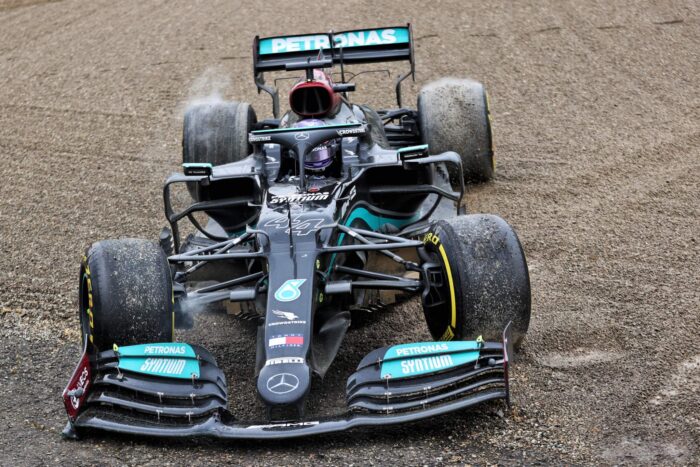
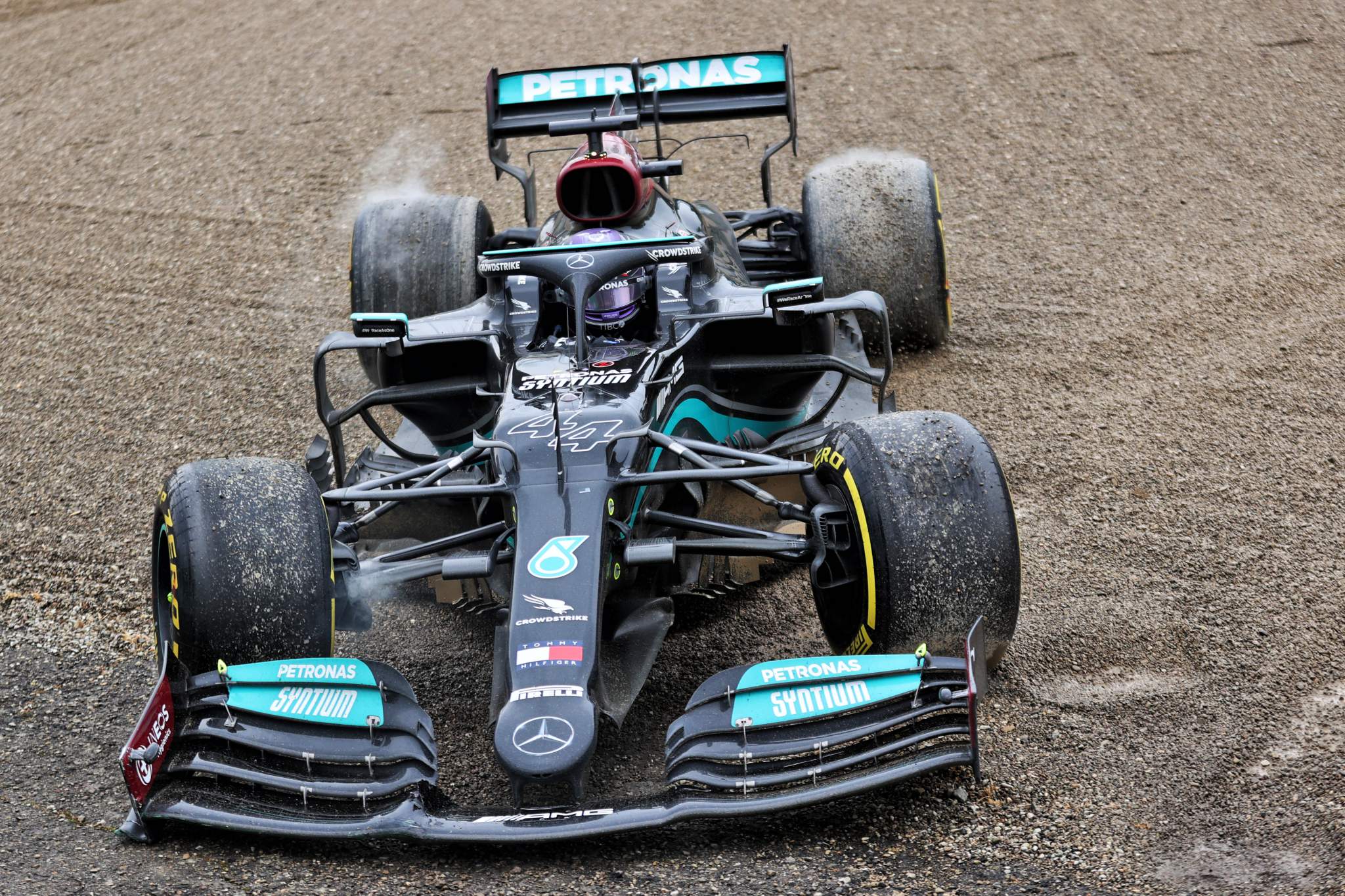
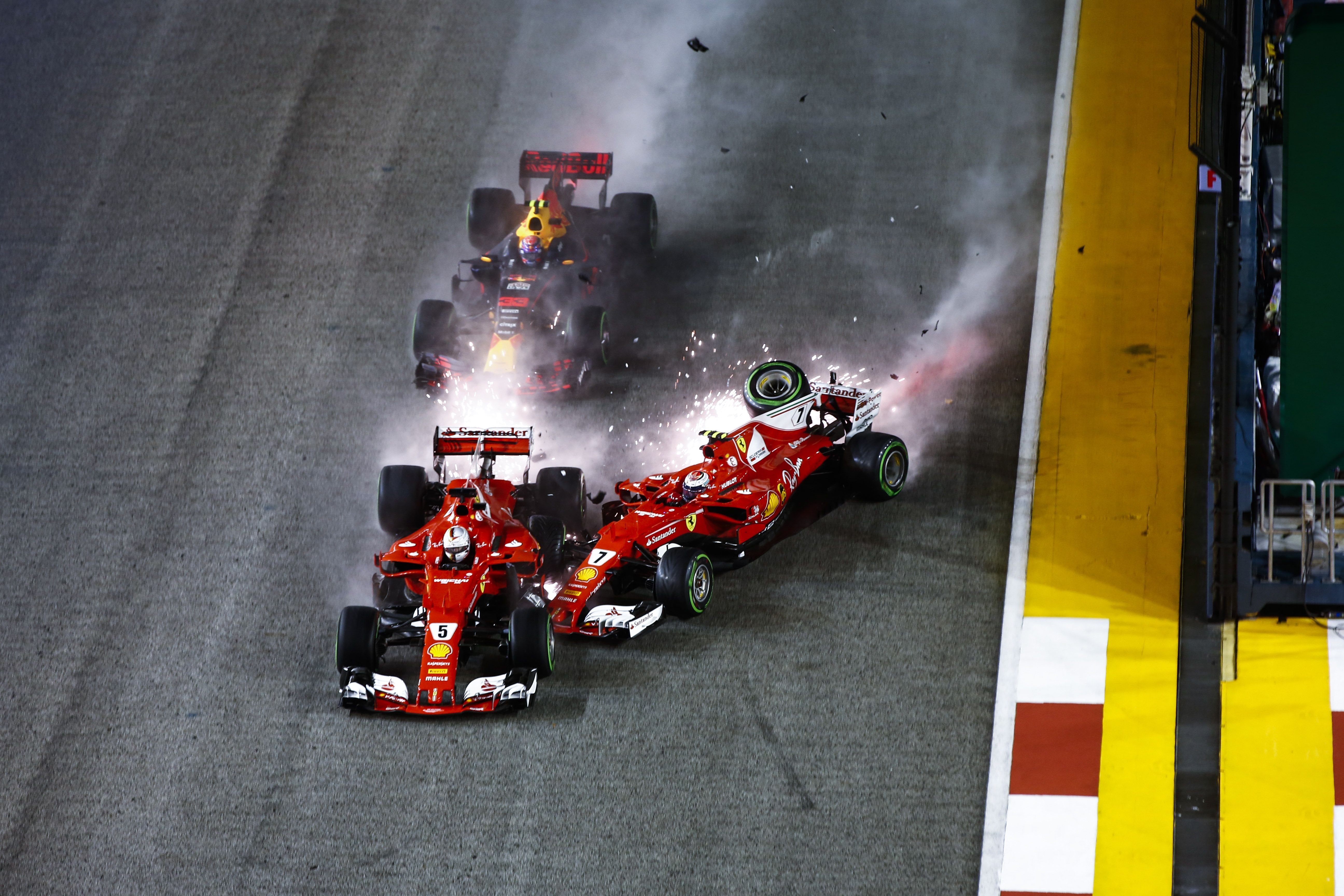
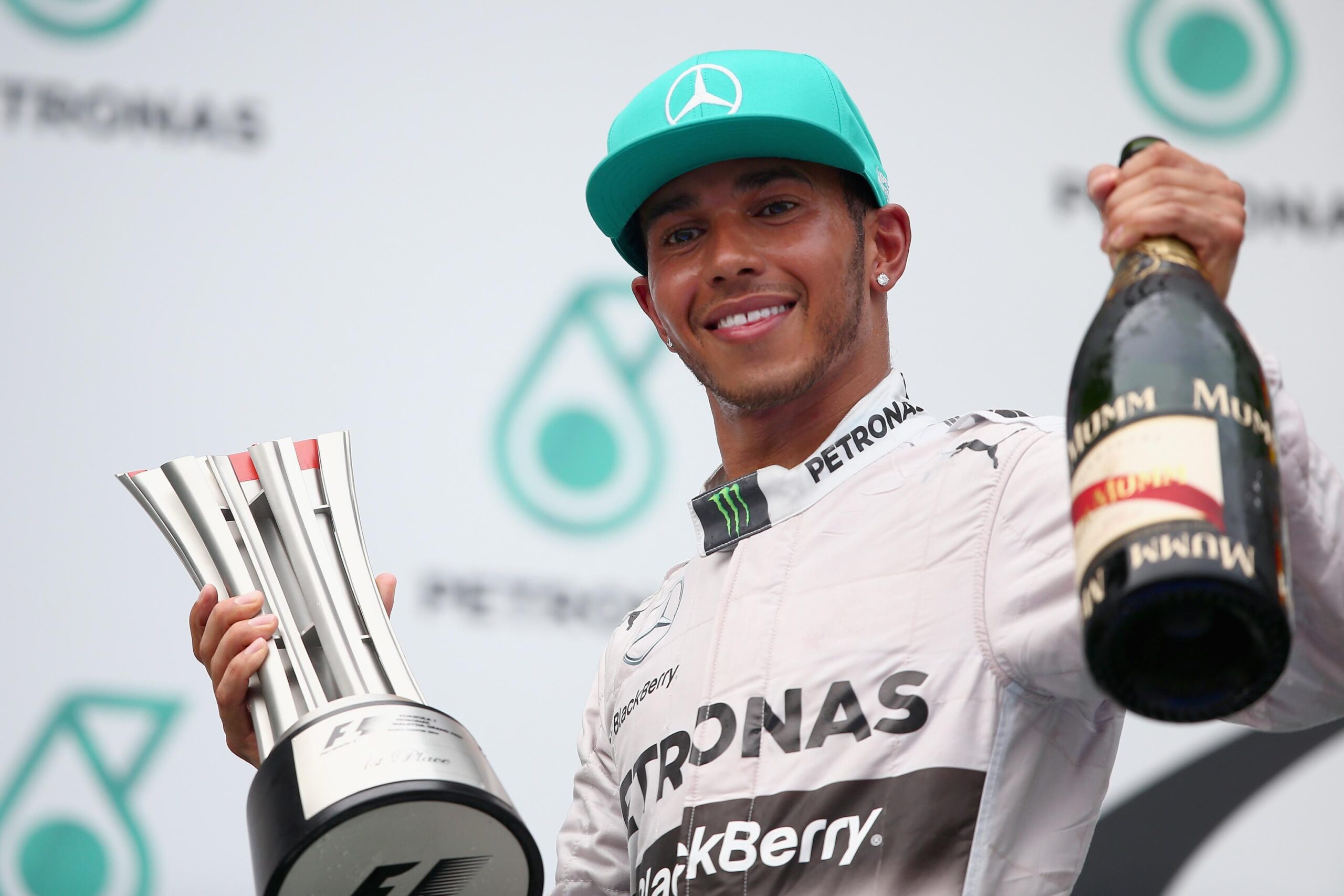
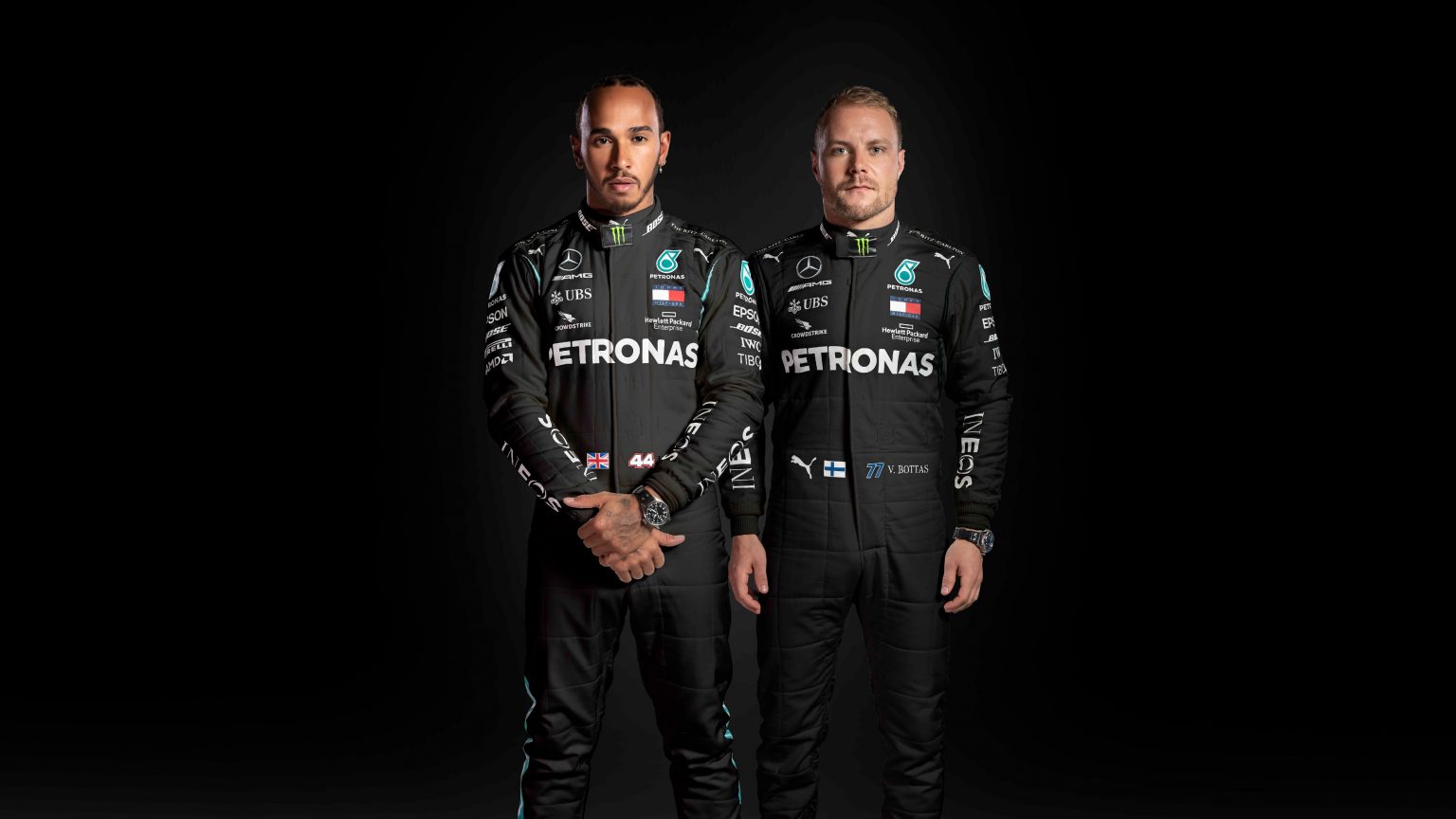
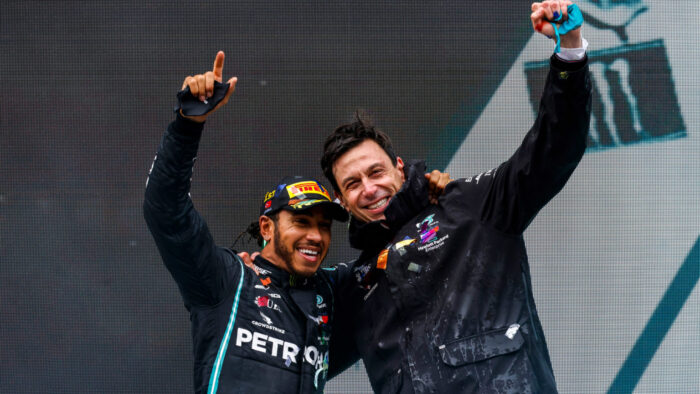
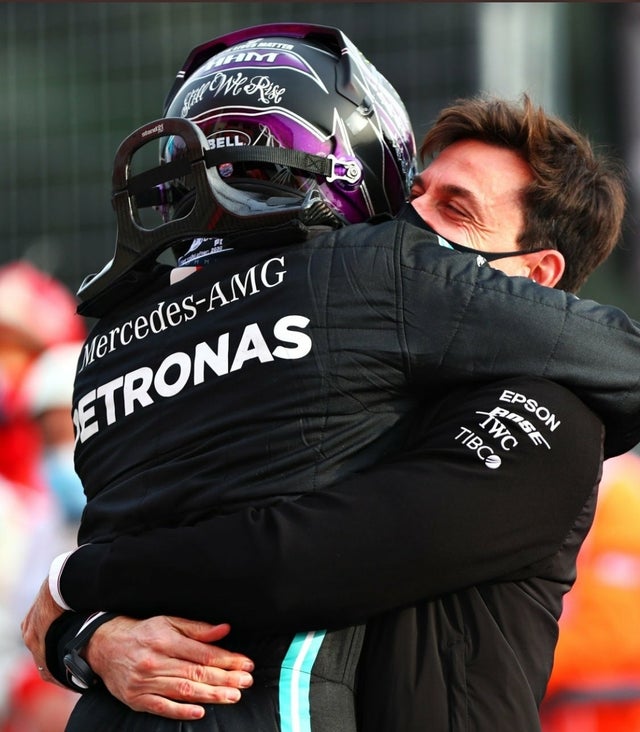
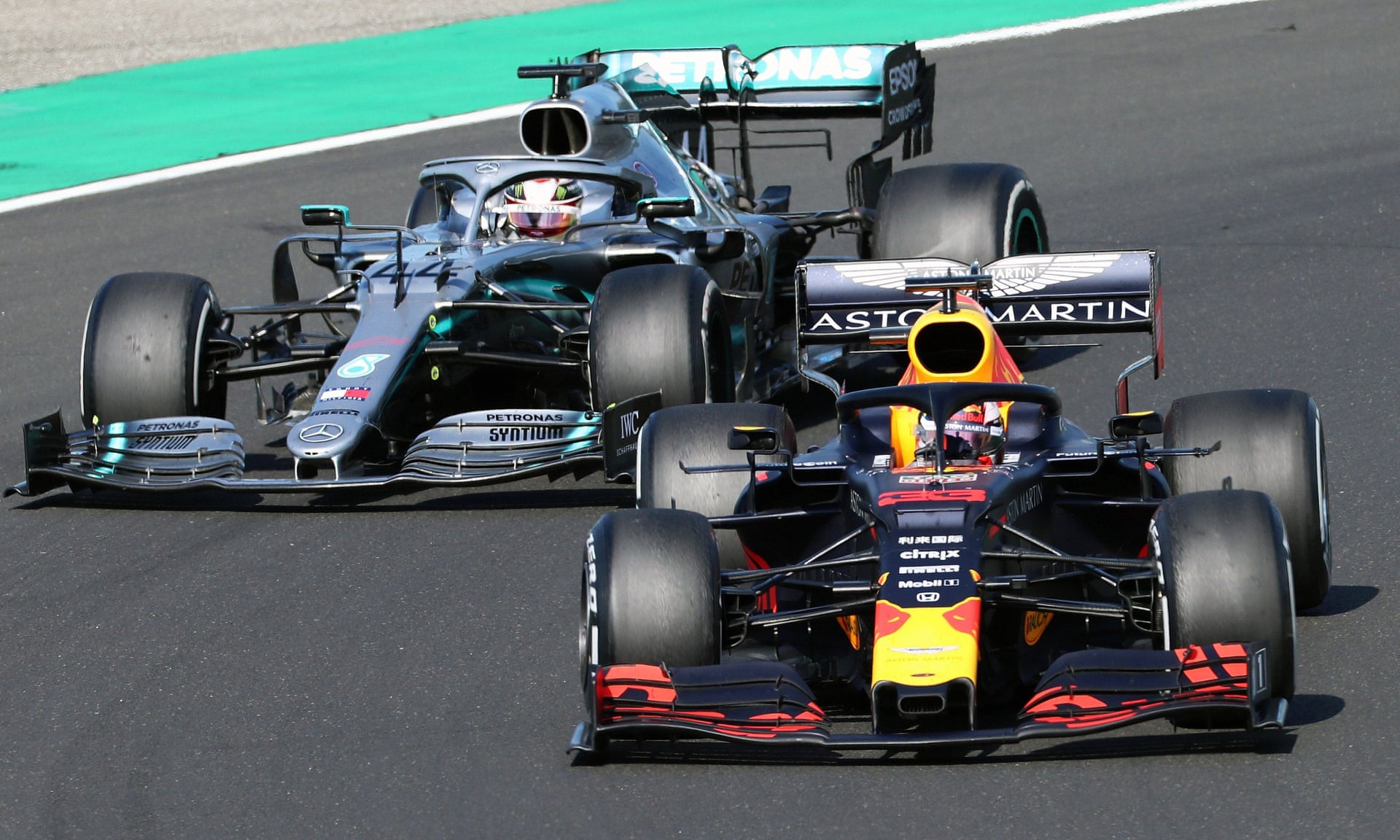
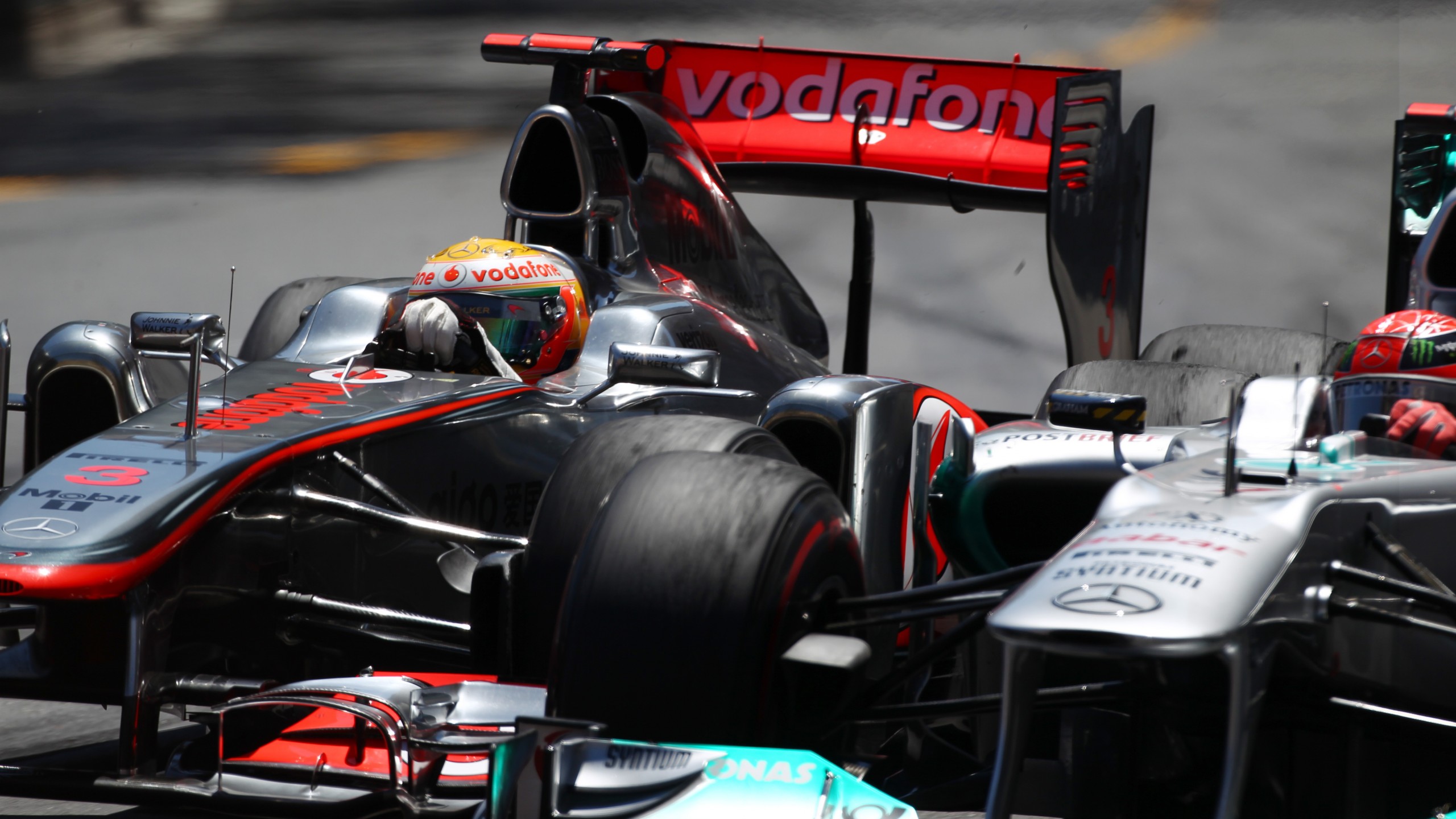
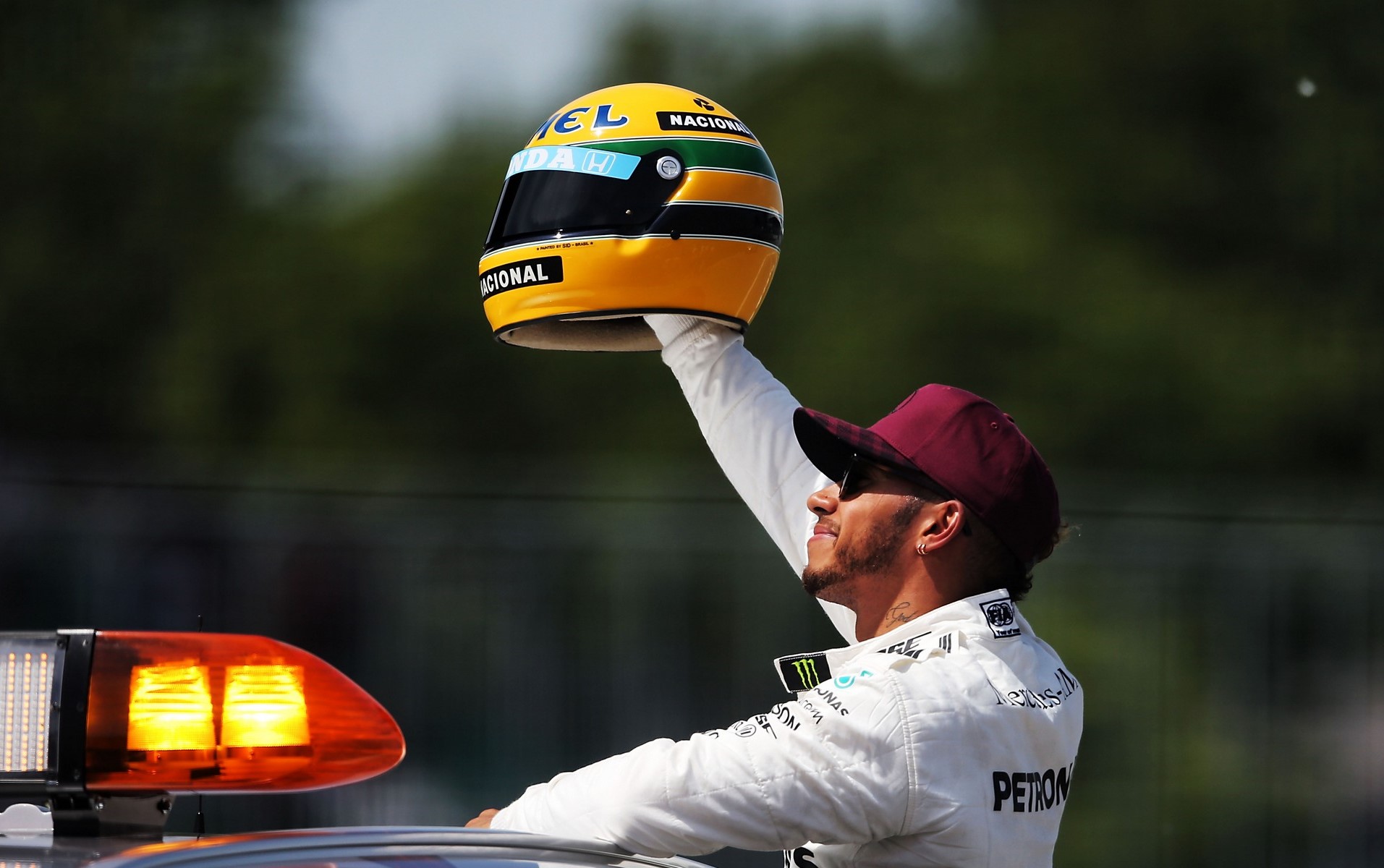
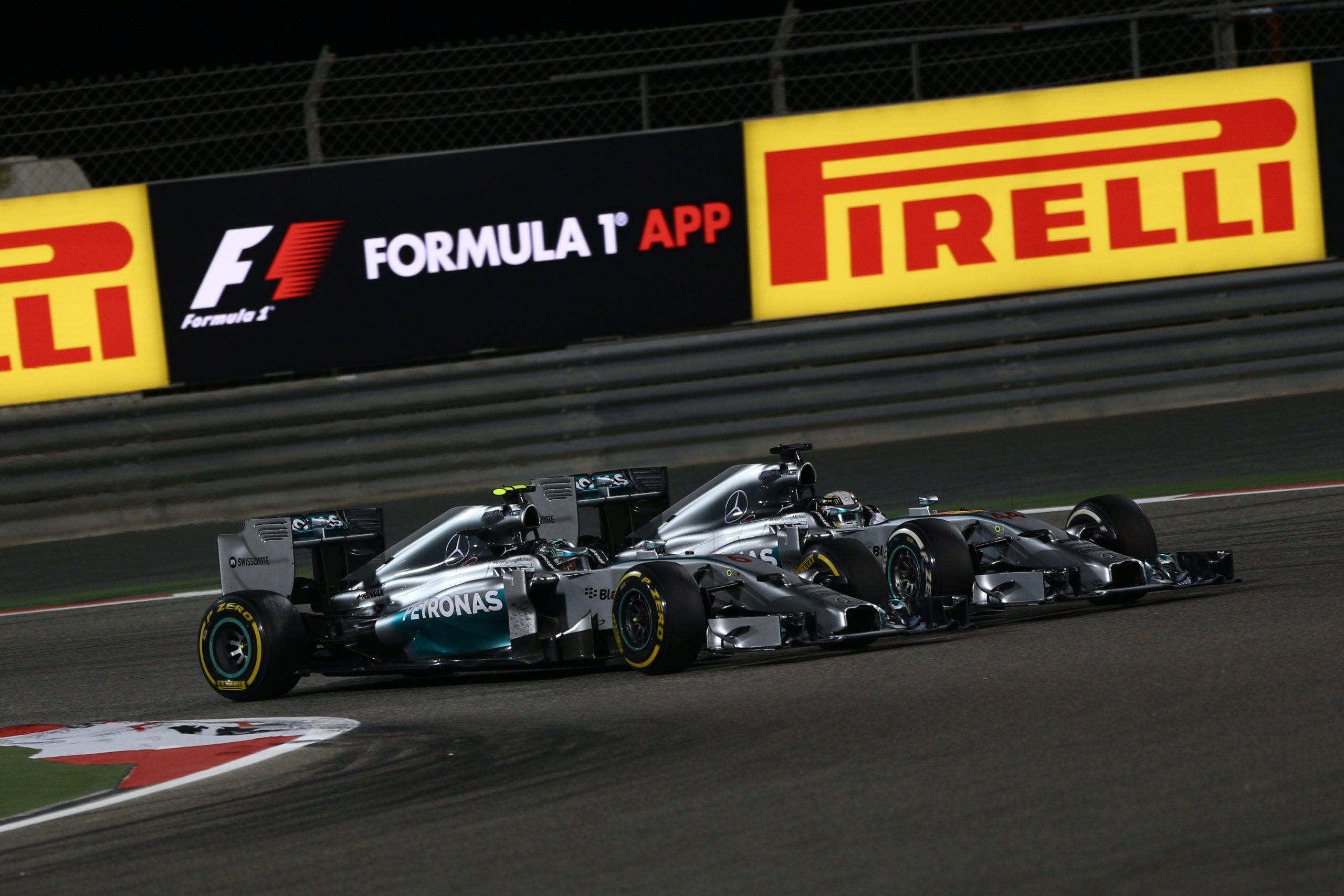
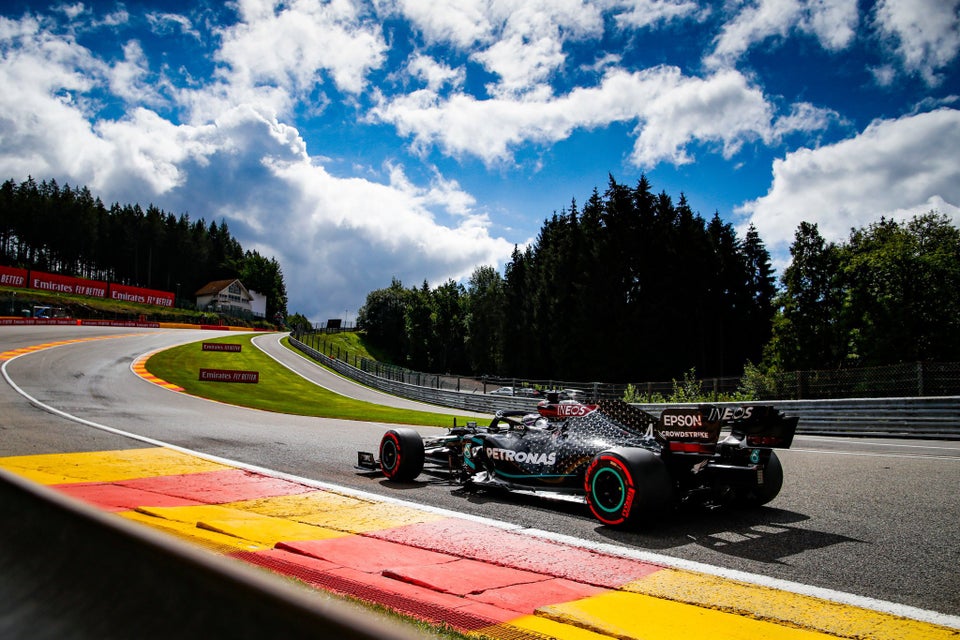
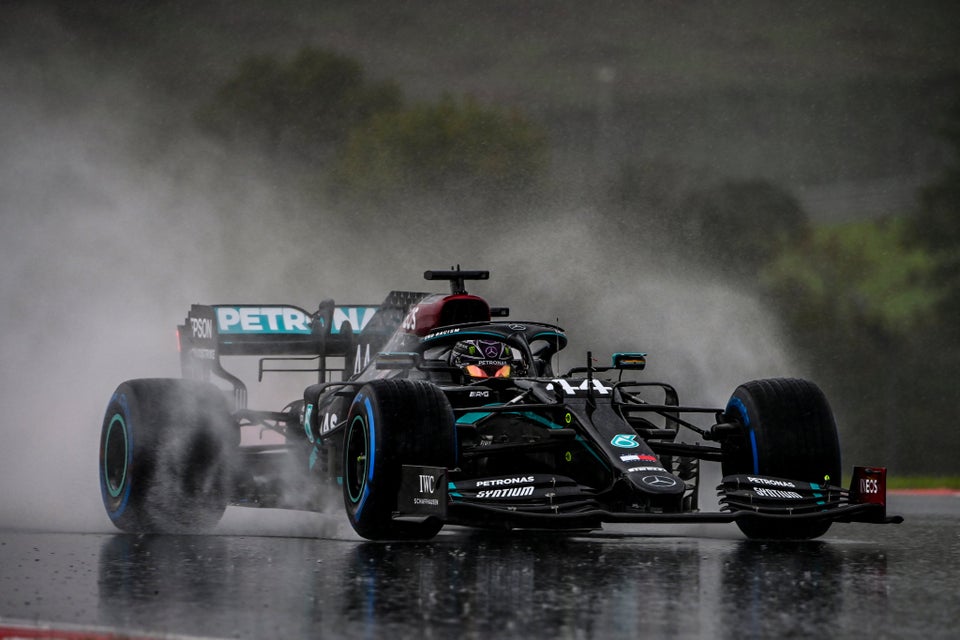
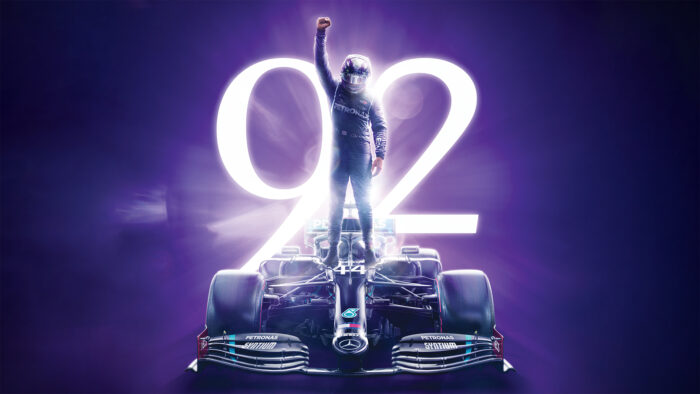
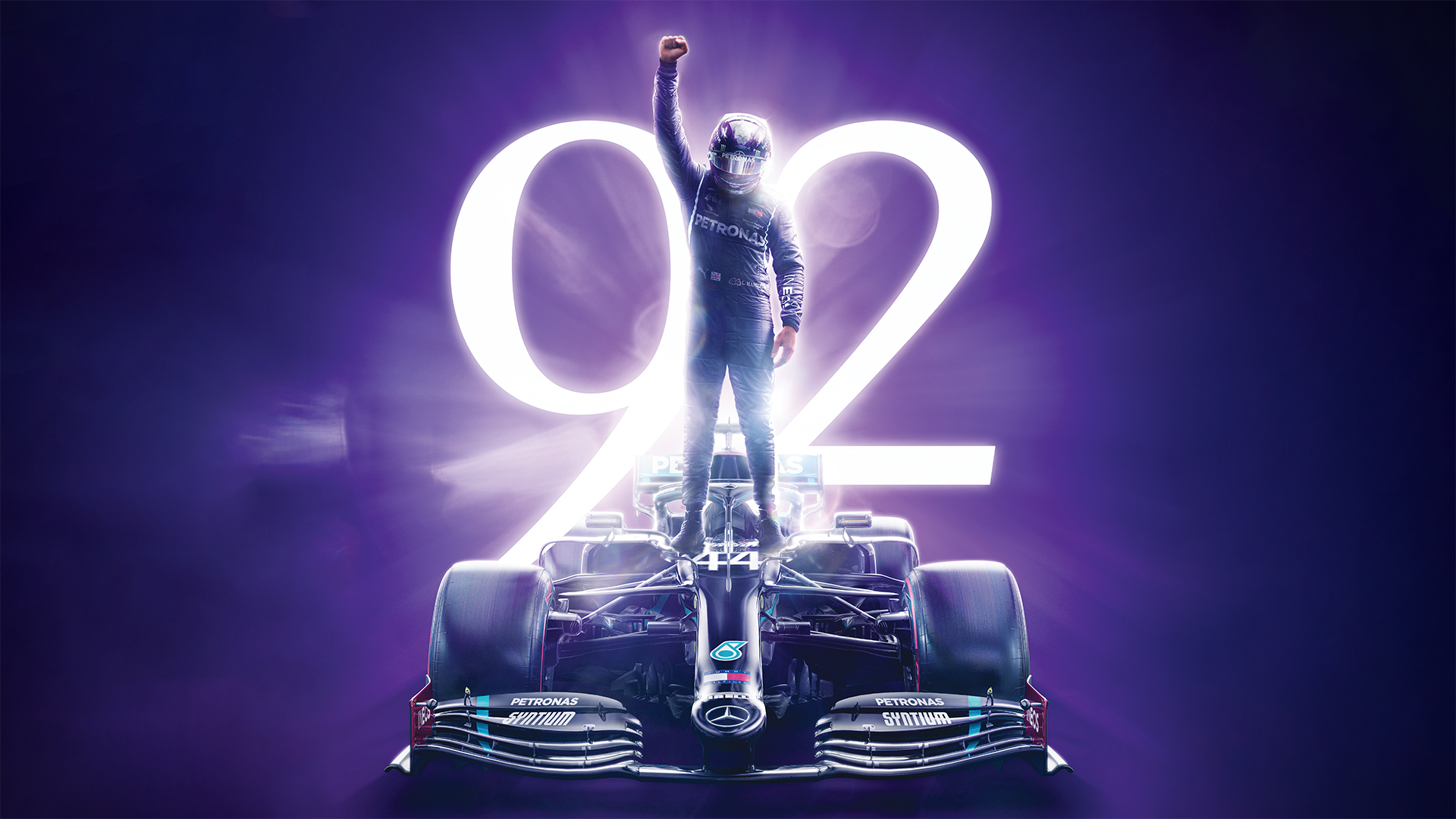
A lucky break involving a fortunately timed red flag at Imola led to many claims on social media that Lewis Hamilton is the luckiest driver ever to have raced.
So, how lucky is he exactly? Let’s investigate.
The Good
The Briton has certainly caught a lucky break from time to time.
Imola has been especially kind to him over the last 12 months. In addition to the red flag which rescued him this year, he received a helping hand at the 2020 race from a well-timed Virtual Safety Car. Hamilton was able to pit during the VSC period, allowing him to gain a net 10 seconds and steal the lead from teammate Valtteri Bottas.
A similar situation benefitted him at Silverstone and Sochi in 2019, both races ending with that familiar combination of the British and German national anthems.
Earlier that year, the controversial decision to penalise Sebastian Vettel at the Canadian Grand Prix propelled Hamilton to the top step of the podium, even if he wasn’t parked next to the number 1 board… And more problems for the Scuderia – this time a mechanical failure for Charles Leclerc – helped him clinch what had appeared an unlikely victory in Bahrain.
Obviously, over the years, there are many other times when retirements to others have seen him claim victory. Bottas was unlucky at the 2018 Azerbaijan Grand Prix, suffering a tyre blow-out with just three laps remaining. Mechanical failures put an end to battles between Hamilton and arch rival Nico Rosberg in Russia in 2015 and Britain in 2014.
The relentless consistency of the Hamilton-Mercedes partnership means that he is often there to capitalise when others falter, for whatever reason.
The Bad
Earlier in his career, Hamilton was not the polished article we see scooping up championship after championship today. He had a reputation for doing things the hard way, either from self-inflicted obstacles or external factors conspiring against him.
Even in 2014, Bleacher Report described him as “a three- or four-time world champion trapped in the career of a one-title wonder, with luck – more often than not – at the root of his failure to scoop more accolades.”
Image credit: Getty Images
And whilst that was the year in which he finally scooped that elusive second title, Lady Luck still made him work for it. The number 44 Mercedes retired with an engine problem just two laps into the season-opening Australian Grand Prix, immediately leaving him with a 25-point deficit to teammate Rosberg.
He won the next four races to claw back the gap and take the lead, only to lose it again in Monaco where, if we are to believe the German, it was purely bad luck to blame for his notorious trip down the escape road…
Further mechanical failures in Canada, Germany and Hungary – along with a race-ending puncture courtesy of Rosberg in Belgium – ultimately weren’t enough to deny him the championship, but they certainly didn’t make it easy.
And, if his second title was dramatic, it was nothing on his first. Of course, he infamously passed Timo Glock at the very final corner to regain that crucial fifth place, but a sudden deluge with five laps remaining when Hamilton had been in a comfortable position for the title certainly couldn’t be described as lucky.
After three seasons without a championship – and a particularly trying campaign in 2011 – Hamilton vowed to return stronger than ever in 2012. He followed through on that promise – seven pole positions over the course of the year demonstrating the speed that was clearly there – but forces beyond his control would derail his title bid at an alarming rate.
Image credit: Sky Sports F1
There were mechanical failures from the lead in Singapore and Abu Dhabi, and further issues in China, Germany, Japan and Korea. McLaren also suffered a series of catastrophic pit stops, which ruined Hamilton’s races in Bahrain, Monaco and Valencia.
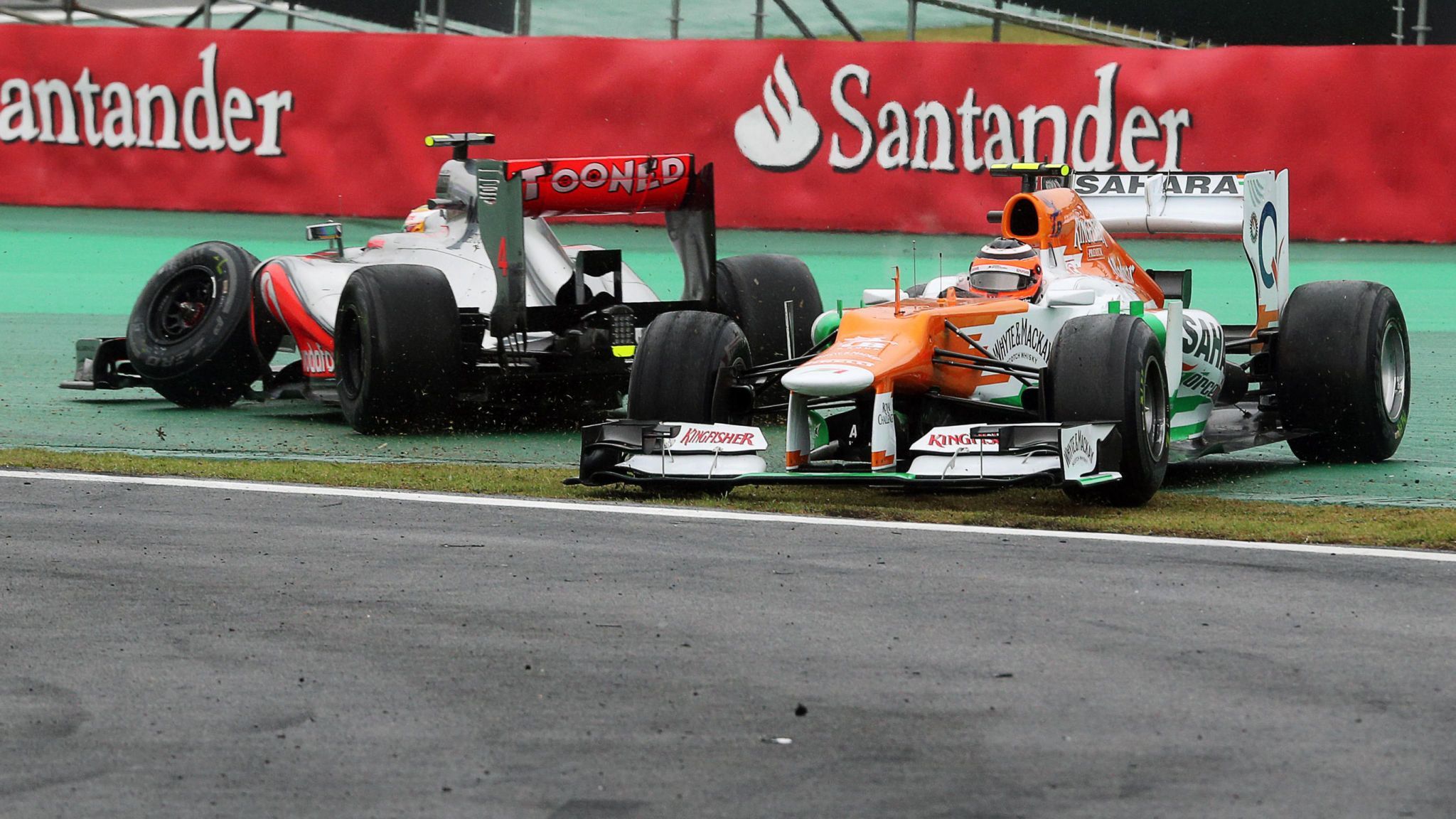
Nico Hülkenberg took him out of the race whilst battling for the lead in Brazil. Romain Grosjean and Pastor Maldonado caused two further retirements. And a fuel irregularity saw him demoted from pole to the back of the grid in Spain – but did give us a shock victory for a certain Venezuelan.
The Ugly
Hamilton has experienced two especially damaging pieces of misfortune that are the difference between him being a seven- and nine-time world champion.
First, in his rookie season, fate conspired to erase a 17-point advantage in the space of two races. The incident that saw him stuck in a Chinese gravel trap boils down to an error; arguably more so at the hands of the team, who left him out driving on tyres which were worn down to the canvas, but an error nonetheless. He was blameless, though, as his title aspirations crumbled in Brazil.
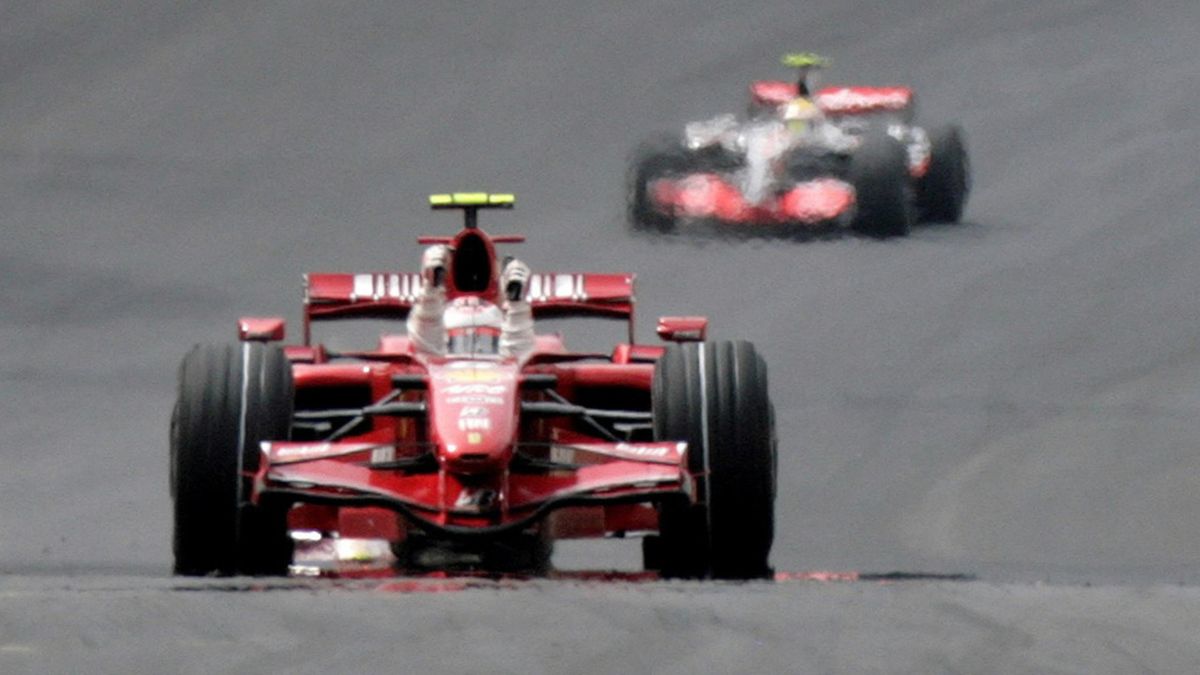
Despite that mishap in China, a young Hamilton still held an advantage of four points over teammate Fernando Alonso and seven points over Kimi Räikkönen. On lap 8, however, he suffered a gearbox problem and watched most of the field overtake him as he crawled up towards Ferradura. After about 30 seconds, he managed to reset his car’s computer and get going again but had fallen to 18th.
His recovery to an eventual seventh was not enough and he had somehow missed the chance to become the first-ever driver to secure the title in his rookie season.
Image credit: Eurosport
Nine years later, he was to be cruelly denied again.
The 2016 season was a tale of incredible consistency by Rosberg and horrendous reliability for Hamilton. Early in the season, two engine failures during qualifying – and being taken out at the first corner by future teammate Bottas – left Hamilton with a deficit to claw back, but by the summer break he had done just that.
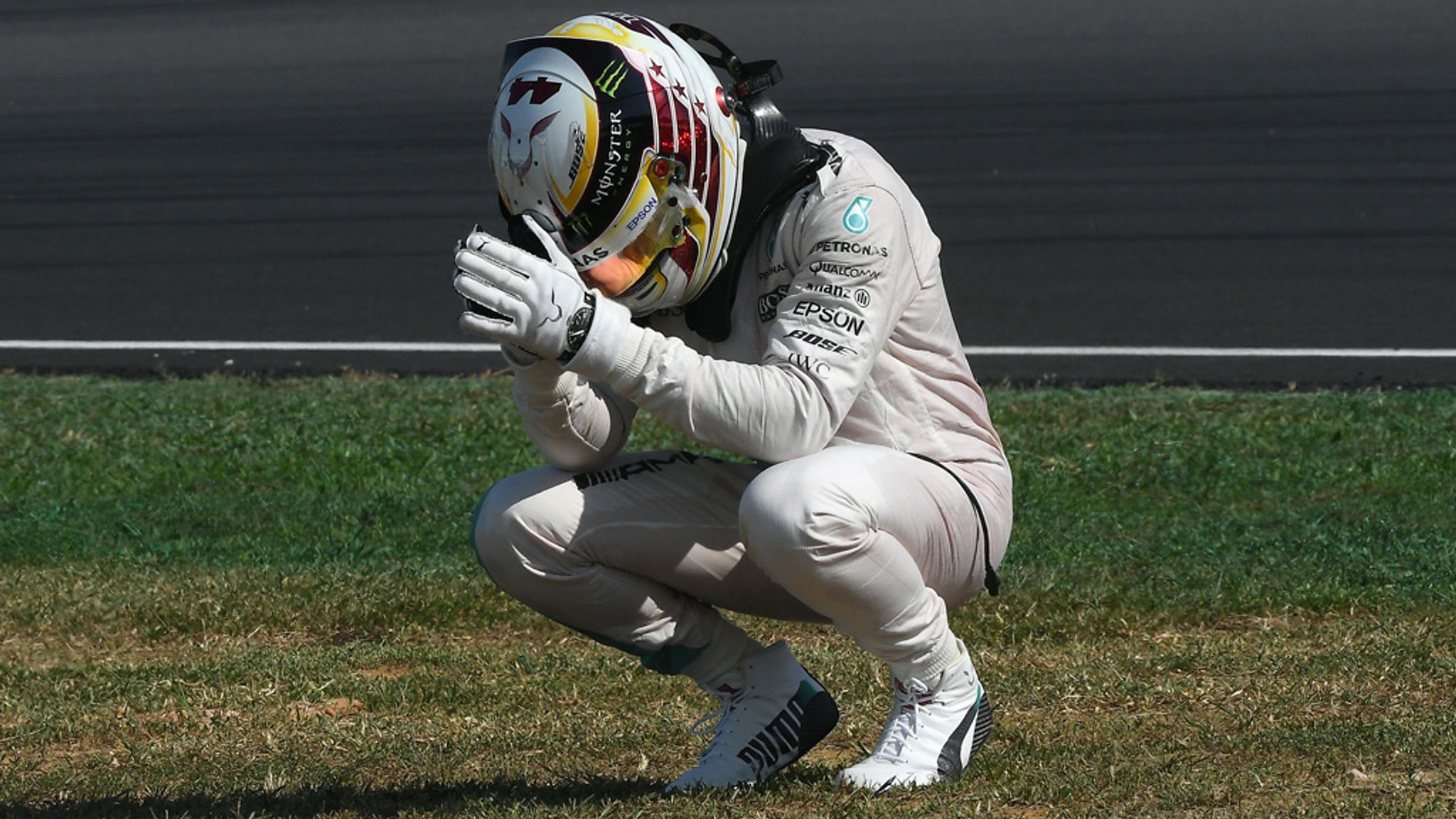
However, those failed engines also meant he had to start from the back of the grid at the next race in Belgium. After that, and a hydraulics fault in Singapore, he had lost the lead once again, but was looking good for a crucial win in Malaysia when we heard that fabled radio call of “Oh no, no” as Hamilton’s hopes went up in flames.
From there, Rosberg didn’t put a foot wrong and did all that was required of him to cling on to the title by five points, despite Hamilton’s best efforts to make life as hard as possible for him at the finale.
Image credit: Sky Sports F1
So, How Lucky is He?
There is, of course, the old adage that you make your own luck. Many times in recent years we have seen Hamilton avoiding unnecessary risk and taking as little out of the car as possible, clearly more interested in the long game and focused on the championship. That perspective has come with experience – the younger Hamilton fought tooth and nail for every position and it often got him into trouble.
Hamilton can appear especially lucky because he is in the spotlight and, thus, every break that goes his way is highlighted. Many fans are desperate for any result other than a Hamilton win after such a period of dominance, so when he lucks into a win or escapes a bad result, it can seem as though it’s just another case of ‘lucky old Lewis’.
But then occasions like Monza in 2020 – where Hamilton was unlucky with the timing of a safety car and being erroneously called into the pits lost him a certain win – are somewhat forgotten because Pierre Gasly‘s fairy-tale victory is (rightly) the main focus.
Ironically, it was Hamilton’s year of appalling luck in 2012 that led him to take the leap to Mercedes. So, considering the unparalleled success he has achieved as a result of that move, could it be argued that the bad luck was, in fact, good luck?
Fortune is a fickle mistress and one which is very hard to define.
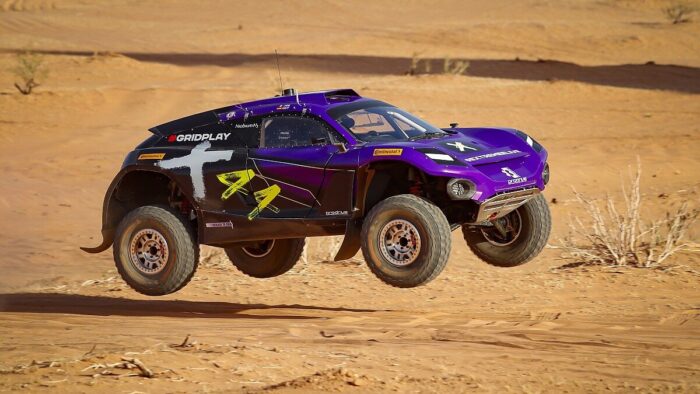
Last weekend saw the inaugural event of a brand new racing series. And it´s one worth taking note of.
Image credit: LAT Images
Not only does Extreme E spread an important message via an exhilarating format, but it also features some familiar names to fans of F1. Firstly, there is Jenson Button driving for and managing his own team – JBXE.
There are further F1 connections in former driver Stéphane Sarrazin, Zak Brown working as Team Principal for the Andretti United team, Carlos Sainz Sr and both Adrian Newey and Jean-Eric Vergne working for the Veloce Racing team, who have British W Series champion Jamie Chadwick behind the wheel.
Most importantly, however, it would appear that my time machine works and it is 2014 again…as Lewis Hamilton and Nico Rosberg are battling it out at the front.
Okay, they’re not driving, but it is the respective teams of the Mercedes friends-turned-foes that largely battled for supremacy in the opening X-Prix. Hamilton’s X44 team took pole position on Saturday after a time penalty for Rosberg’s RXR (Rosberg X Racing). But it was the German team that triumphed on race day with X44 eventually having to settle for third behind Andretti United.
So, How Does It Work?
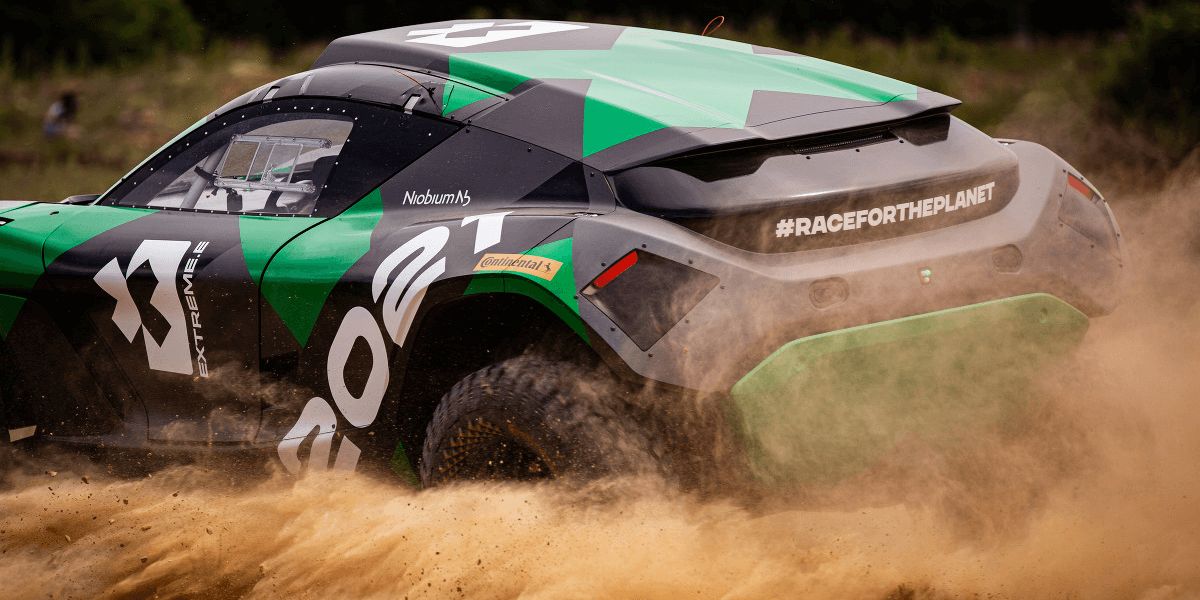
Every team uses the same all-electric Spark ODYSSEY 21 car, which utilises a 400kW battery designed by the Williams team and a McLaren drivetrain. It’s pretty nippy – producing 550 bhp and getting from 0-100kph in 4.5 seconds – and designed to be absolutely all-terrain.
Image credit: Extreme E
There are nine teams, each with one male and female driver. Along with the aforementioned F1 connections, there is plenty of royalty from other major forms of motorsport. Sébastian Loeb – who won nine straight titles between 2004 and 2012 – represents the WRC. And rallycross is represented mainly by the Swedish trio of Johan Kristoffersson, Timmy Hansen and Mattias Ekström, who between them have won the last five world titles.
All the action takes place over two days. On Saturday the teams do two qualifying runs of the course, with the male and female driver each driving a lap with a changeover – known as ‘The Switch’ – in between. The aggregate times produce an order.
From that order, the fastest three teams will go through to the first semi-final race on Sunday, the middle three teams battle it out in another semi dubbed the ‘Crazy Race’ and the slowest three teams will race in ‘The Shootout’. From that first semi, the top two finishers progress through to the final, joined by the winner of the Crazy Race. In the final, quite simply the winner of the race is crowned the X-Prix winner.
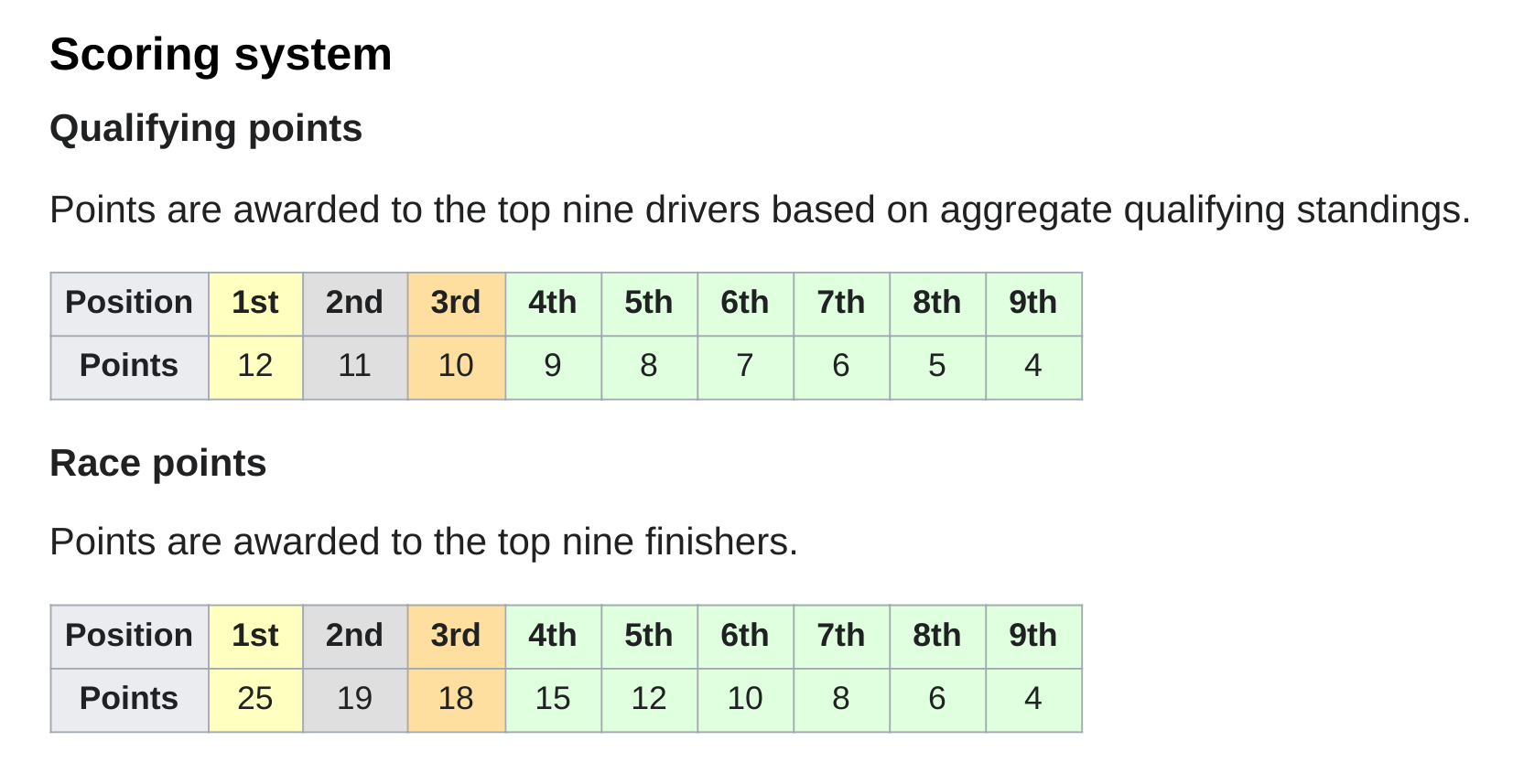
Points are awarded for both qualifying and the race, like so:
There are other unique features to spice up the racing yet further, such as ‘Hyperdrive’: whoever performs the longest jump on the first jump of each race is awarded an additional boost of speed and receives a bonus championship point.
What Does the Calendar Look Like?
There are five different venues for the inaugural season, each in a different remote location and themed around a related environmental issue. The season-opening Desert X-Prix took place in Al-‘Ula, Saudi Arabia, in support of the Great Green Wall Initiative and Red Sea turtle conservation.
The next stop will be Lac Rose in Senegal in late May for the Ocean X-Prix, where Extreme E is teaming up with local NGO Oceanium to plant one million mangrove trees in Senegal and aims to raise awareness regarding ocean crises. That is followed by a three-month gap before round 3 in Greenland, on the retreating Russell Glacier near Kangerlussuaq for the Arctic X-Prix.
The series then heads south – which it’s hard not to do from Greenland… – first to Santarém in the Pará region of Brazil for the Amazon X-Prix in October, working with The Nature Conservancy to protect and replant an area with agroforest which will provide crops that can be harvested by locals. And then finally to the Tierra del Fuego in Argentina for the finale – the Glacier X-Prix in mid-December.
Image credit: Martin Gunter
Is It Really That ‘Green’, Though?
The series is obviously very focused on promoting sustainability and gender equality, but it also wants to make a tangible impact. There will be a ‘legacy programme’ for each event – many of which are mentioned above – which aims to leave the venue in a better situation than before Extreme E visited.
A feature called ‘Gridplay’ allows fans to vote for their favourite driver to gain grid advantage – the team who receives the most votes can select its grid position for the final if they are in it – and each vote includes a micro-payment towards the legacy programme.
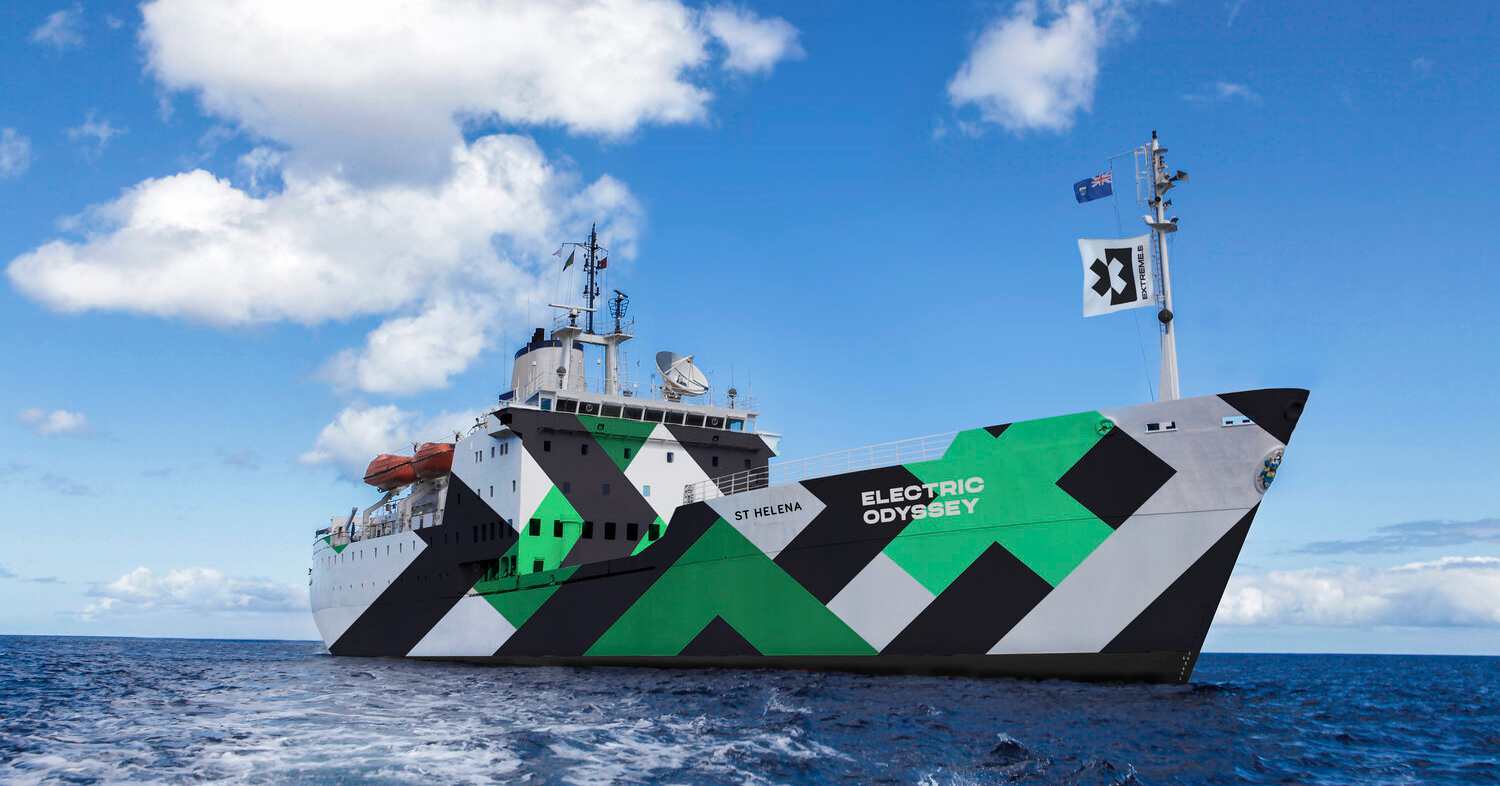
Extreme E is also, of course, very aware of its own carbon footprint. Thus, there will be no fans in attendance at the races and, more importantly, the RMS St. Helena will form an effective floating operations hub for the entire season.
It is a former Royal Mail passenger-cargo vessel which has undergone an extensive refit and will carry the cars and all other equipment required to each location. It will also house laboratories for scientists to carry out invaluable research on climate change and features chairs made from recycled plastic bottles.
Image credit: Extreme E
To keep things as low-carbon as possible, the cars’ batteries are charged by hydrogen fuel cells. This innovative idea from British company AFC Energy uses water and sun to generate hydrogen power. Not only will this process emit no greenhouse emissions, but its only by-product will be water, which will be utilised elsewhere on-site.
The logistics choice of sea rather than sky reduces their carbon footprint by at least two thirds and you have to say that they have left no stone unturned in their quest to be as green as possible.
To quote a great man: catching is one thing, passing is quite another.
Image credit: Getty Images
If the Bahrain Grand Prix is anything to go by, 2021 could be the year when F1 fans finally get to see the no-holds-barred fight between Lewis Hamilton and Max Verstappen that they have been craving for years.
It was largely expected that this season would prove to be another tale of Mercedes dominance; one more efficient stroll to an eighth consecutive title double. But those expectations have gradually dissipated over the last few weeks. Pre-season testing may always boil down to rumours, sandbags and cloak-and-dagger lap times but, by the end of the truncated three-day meeting, there was a growing consensus that Red Bull may actually have the fastest car.
And so it proved to be, as Verstappen claimed pole position by nearly four tenths on Saturday, with Hamilton claiming he “gave it everything”. It was Red Bull‘s race to lose – but lose it, they did.
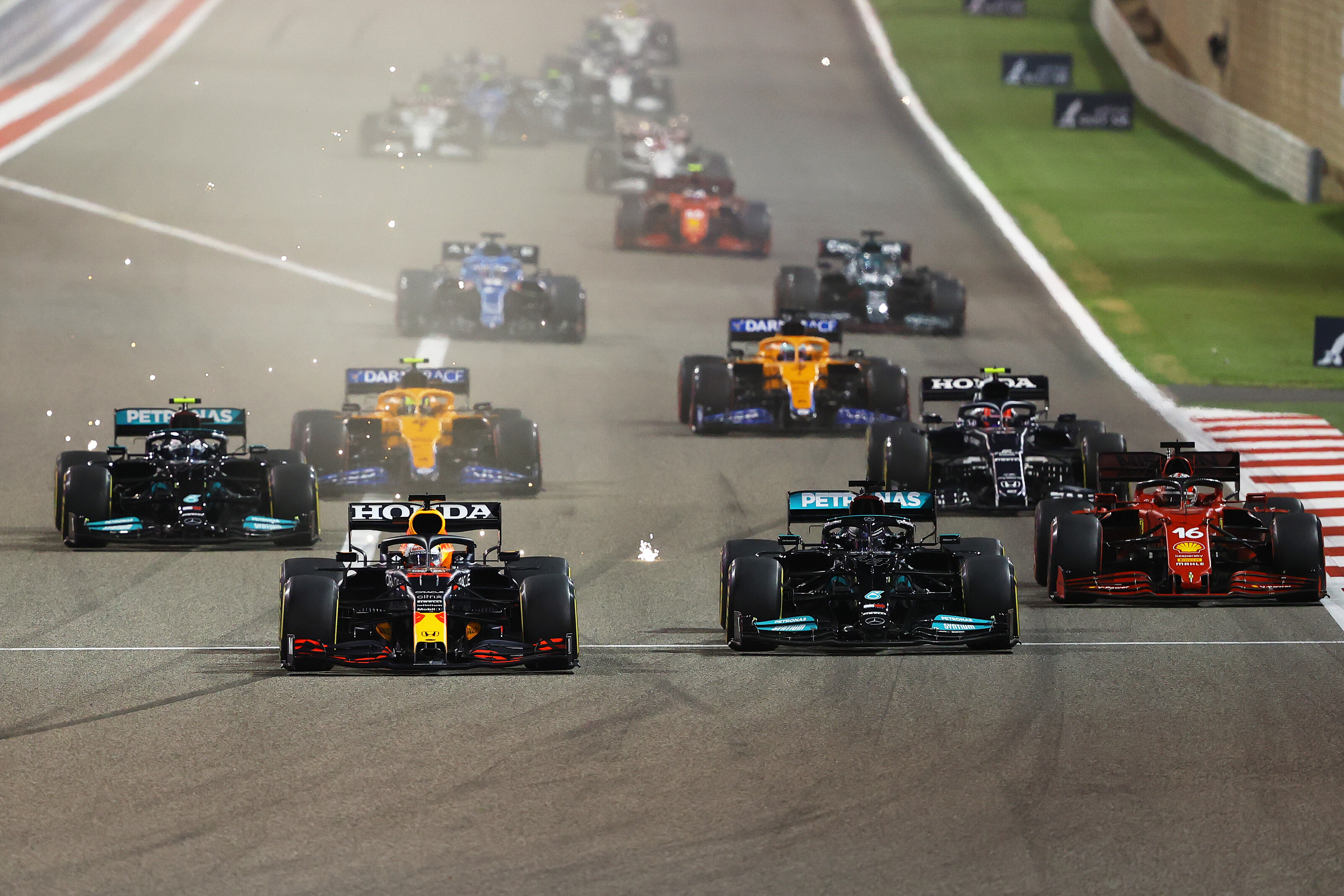
Both leading drivers got away well and the first stint was something of a stalemate. Crucially, though, Hamilton was able to remain within two seconds of the Red Bull and could therefore undercut the Dutchman when his pit window opened on lap 13. That gained the World Champion the lead and he – just about – kept it to the end.
Image credit: Getty Images
Verstappen still appeared the more likely victor as he closed the Mercedes down with a set of tyres that were 10 laps fresher. The gap reduced steadily to the point that, when Hamilton ran wide on lap 51, Verstappen was straight into the DRS window. And, sure enough, the Red Bull was ahead a couple of laps later. However, not legally, as he had passed Hamilton whilst off the circuit.
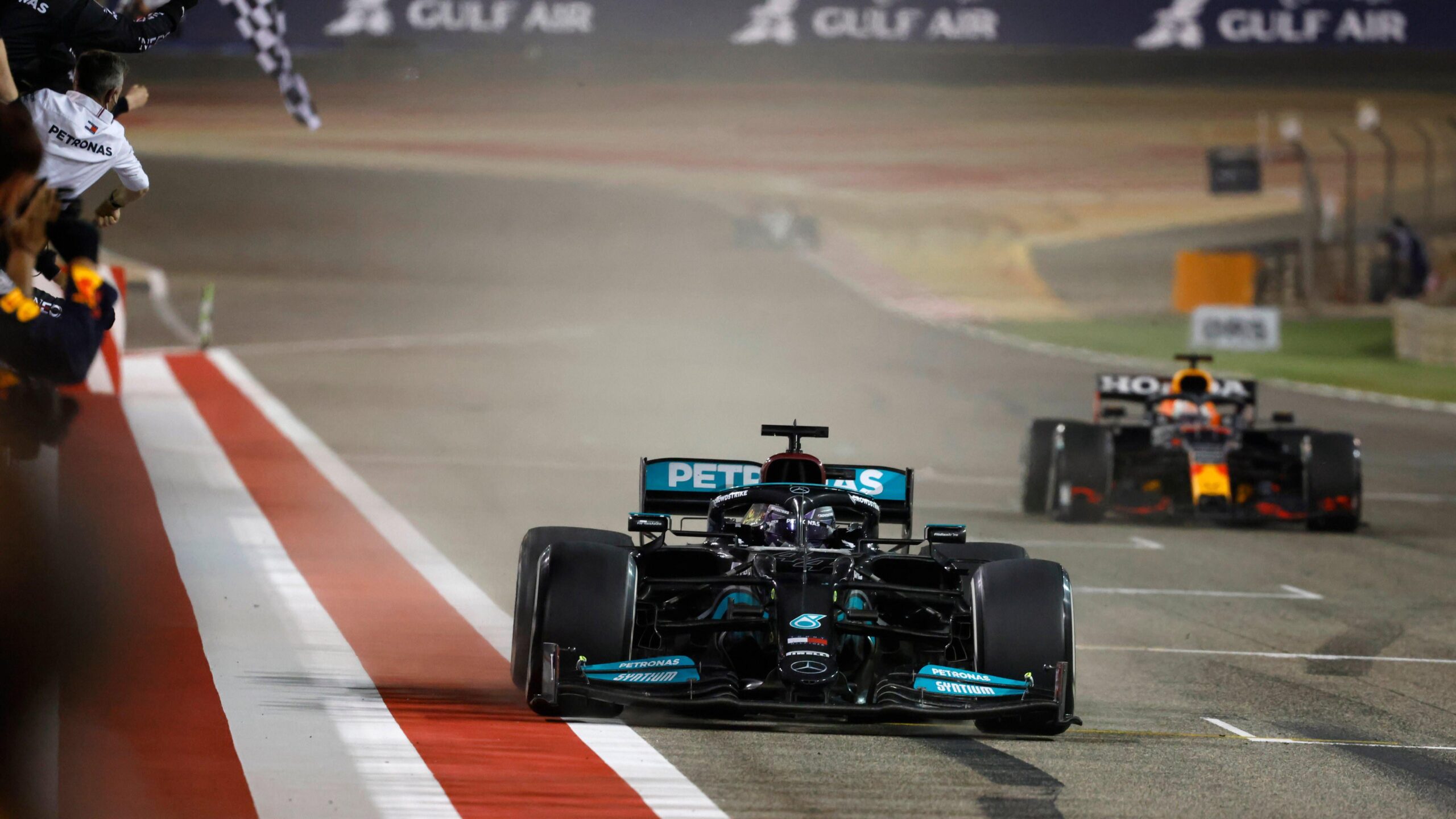
Going around the outside at Turn 4, Verstappen had a snap of oversteer which took him wide and his team immediately informed him to allow Hamilton back past. That would prove to be his best chance, as his tyres overheated following the Mercedes and his advantage was significantly reduced. The frustrated Dutchman gave it his all over the remaining three laps but ultimately had to watch as Hamilton took the chequered flag, ending a gripping battle of strategy and racecraft.
There has been some controversy regarding the track limits. Not really with the decision for Verstappen to give up the place – the drivers know you can’t complete a pass off the track. But that temporary overtake ironically came at the corner where the Mercedes drivers were told to stop ‘extending’. So, the question has revolved around what constitutes a ‘lasting advantage’. As ever, the stewards lacked consistency and, having initially told the drivers there would be no issue with track limits at Turn 4, changed their minds and sent Mercedes a warning halfway through the race. The pundits and fans have said it numerous times, but surely grass run-offs are the easiest way to clear up this issue…
How Mercedes Won the Battle
For once, this was a Mercedes team acting as the hunter rather than the hunted. We have grown so accustomed to the Silver Arrows leading from the front in the hybrid era that this felt like something of a novelty. And they proved that they are predictably good at it.
Image credit: LAT Images
It is usually Red Bull doing the chasing and making the aggressive strategy calls with Mercedes maintaining a conservative approach. This time, it was Hamilton who profited from a perfectly executed undercut. By the end of the following lap, Verstappen’s gap back to Hamilton was too small to get out ahead and, with Valtteri Bottas uncomfortably close behind, Red Bull were stuck between a rock and a hard place.
Red Bull’s second seat really is the Defence Against the Dark Arts professor of F1. And the curse didn’t hang about this year, as the latest victim – Sergio Pérez – ground to a halt on the formation lap. He was able to get moving again but had to start from the pit lane, which meant – as has usually been the case for the last two years – Red Bull were left to fight one-handed. Bottas pitted two laps after Hamilton and forced Red Bull to respond against another undercut; this prevented them from building the tyre offset they would have liked.
The second stops would likely have followed a similar pattern, but a painful, 10-second pit stop for Bottas meant Red Bull could leave their driver out this time and he was able to pit 10 laps later than the race leader. At this point, it was largely out of Mercedes’ hands. Fortunately for them, it was in the hands of Hamilton. And if there is one man on the grid who can keep his tyres alive whilst still pounding out respectable lap times then it is the seven-time world champion at their disposal.
It was another masterclass in tyre management. By rights, Verstappen should have been on his tail far sooner than lap 51. And, if he had been, the pass would likely have been more of a done deal. When he did catch up, the pair traded blows with the excellent car control and positioning you would expect. Under immense pressure, each made one slight mistake, but eventually it was Hamilton who held his nerve as the Red Bull breathed down his neck for the final three laps.
How Red Bull Have Started the War
Image credit: Honda Racing F1
They may have lost on the day, but Red Bull undoubtedly had the fastest car in Bahrain. So, how has that happened when we were all told repeatedly that so little was changing on the cars between 2020 and 2021?
Well, it would appear the regulation changes that did happen have affected the teams with low rake far more significantly than those with high rake. A large portion of the rear of the floor has effectively been chopped off over the winter in a bid to reduce downforce. The idea being to reduce speed and, thus, the strain on the overworked tyres in the wake of the multiple blow-outs experienced at last year’s British Grand Prix.
One of the greatest strengths for Mercedes was their rear downforce. And it would appear that the chunk removed has severely affected their rear stability. They have done an impressive job in the two weeks since the pre-season test to improve that and close the gap – which they believe was around 0.8 seconds – to Red Bull.
This theory is backed up by the other main losers in this regulation change – Aston Martin. The former Racing Point team infamously did their best to copy the Mercedes philosophy and appear to have been hit hard in the same area, but with less of an advantage to fall back on. They have seemingly gone from arguably the third best car last year to Lance Stroll fighting for a solitary point in Bahrain, whilst Sebastian Vettel had a debut to forget further back.
Honda have also given Red Bull a significant helping hand. The Japanese marque leaves the sport – again – at the end of the year, so rushed through its 2022 engine a year early and it would appear to be a masterpiece. This was also demonstrated by AlphaTauri‘s pace at the opening weekend.
Time will tell who is truly the team to beat. Bahrain is a fairly unique circuit, located in a gusty desert, and there is now a three-week gap for teams to further refine their new machines. It would also not be a surprise to see some updates in time for the return to Imola – so let’s watch this space. Either way, it appears that we have a race on our hands.
What About the Rest?
Now, bear with me as I attempt to condense down a lot of information into a few paragraphs…
McLaren lived up to expectations, claiming ‘best of the rest’ thanks to an impressive fourth for Lando Norris and a solid debut for Daniel Ricciardo in seventh. Surprisingly, it is Ferrari who seem to be their biggest challengers currently.The Scuderia were pleasantly surprised by the performance of the much-improved SF21 and Charles Leclerc produced a signature qualifying lap for fourth on the grid. The red cars reached the chequered flag in sixth and eighth and, whilst you still couldn’t exactly call that success for a team like Ferrari, it is certainly a big step up from last year.
Pérez recovered impressively after his nightmare start to claim fifth place and remind those instantly writing him off what he can do on a Sunday. The experienced Mexican claimed Driver of the Day and will surely continue to improve as he gets better acquainted with the RB16B. Another contender for Driver of the Day was Yuki Tsunoda. The AlphaTauri rookie shocked the paddock by finishing Q1 in second, before making a mess of Q2 and starting down in 13th. But he produced a mature performance on Sunday and finished ninth to become the first Japanese rookie ever to score points on his debut.
Aston Martin and Alpine appear to have dropped back from their positions – under different names – last year. Fernando Alonso briefly ran in the points on his return before retiring due to an unwanted sandwich wrapper. Meanwhile, the other multiple world champion in the midfield – Vettel – crashed into the back of Esteban Ocon to cap off a terrible first weekend in British racing green. That earned him two penalty points to add to the three he picked up for ignoring yellow flags on Saturday.
Alfa Romeo appear to have made progress but didn’t end up with anything to show for it, finishing just outside the points in 11th and 12th. Williams will be happy to at least no longer be propping up the field, as that honour now goes to the Haas team. The controversial Nikita Mazepin immediately earned himself a new nickname of Mazespin, with no fewer than five spins over the course of the weekend, the final one pitching him into the barriers three corners into his debut race.
Image credit: Getty Images
The Bahrain Grand Prix in 60 Seconds
Answering the Burning Questions
What is the pecking order? Who was holding the most back during testing? …See above.
Do Red Bull actually have the fastest car?! It’s close but, for now at least, it appears they do!
How will Sergio Pérez do in his first race for Red Bull? A tricky start but a trademark race performance.
How will Fernando Alonso fare on his return? Showed that he still has the speed…but does his car?
Have Ferrari made progress since last year? Yes, quite a lot!
If Valtteri Bottas is to become a world champion, he faces the unenviable task of beating Lewis Hamilton, in the same machinery, over the course of a season. That is something that the seven-time world champion’s varying teammates have achieved just twice, from 14 attempts; Jenson Button in 2011 and Nico Rosberg in 2016.
Fernando Alonso tied on points with a rookie Hamilton in 2007 during their fractious single season together at McLaren but technically lost out, courtesy of having achieved fewer wins.
So, how did Button and Rosberg achieve it?
2011
Image credit: LAT Photographic
2011 was something of an annus horribilis for Hamilton, during which he allowed multiple issues in his personal life to affect his performance on the track. There were tensions with then-girlfriend Nicole Scherzinger and, even more so, with his father.
Anthony Hamilton had managed his son’s career since the age of eight but, during 2010, the driver decided that he would rather have an independent manager who would allow him more freedom. It would take father and son several years to fully repair their relationship.
These stresses and strains manifested themselves mostly in the form of erratic driving and Hamilton suffered an error-filled season. He and Felipe Massa were practically inseparable on track; not in the sense that they were closely matched as much as that they managed to have no fewer than five collisions during the season.
That’s not to discredit Button, who had an excellent season and was clearly ‘best of the rest’ behind a runaway Sebastian Vettel. It was arguably his best year in the sport, even including his title win in 2009, and featured the truly epic, four-hour Canadian Grand Prix where Button came from last place to steal the victory from Vettel on the final lap.
It was a clear dip in form for Hamilton, though, compared to 2010 and 2012 when he was held back more by McLaren’s lack of reliability and operational issues.
Hamilton has clearly matured greatly in the decade since and is now generally able to keep any personal troubles away from the track. Bottas will need to do more than rely on some off days.
2016
Image credit: Zak Mauger/LAT/Rex/Shutterstock
Hamilton versus Rosberg was the ultimate friends-turned-foes story of the early hybrid era. Rosberg spent years trying to gain a psychological advantage over his rival but, having fallen short in 2014 and 2015, realised he needed to focus more on himself.
The start of the season went very much Rosberg’s way, with a string of issues blighting Hamilton – he was hit by Bottas at the start in Bahrain, before consecutive power unit failures left him far down the grid at the next two grands prix. He came back strongly, however, and – despite starting from last in Belgium after serving a penalty for having used too many power units – was leading at the summer break.
At a time when driver weight was still a critical factor, Rosberg decided to stop cycling in an attempt to lose weight from his legs during the break and succeeded in losing one kilogram. That translates to around four hundredths of a second per lap and Rosberg took pole from Hamilton in Japan by just two hundredths. It is those kind of marginal gains that can make all the difference in a season of fine margins.
Ultimately, another engine failure from the lead of the Malaysian Grand Prix would prove to be too much for the Briton to make up in the final races of the year – despite winning all of them – and, whilst Hamilton’s shocking reliability was undeniably a crucial factor in 2016, Rosberg had to be there to take every opportunity presented to him and he unfailingly was.
2021?
Image credit: Mercedes
So, what have we learnt?
That Bottas will likely need to extract every ounce of his ability, go to extreme lengths to enhance his performance wherever possible, make almost no mistakes, and could probably do with a decent slice of luck. But hey, stranger things have happened.
He has started the last two seasons strongly with a controlled win at the opening grand prix, before falling back as Hamilton builds up momentum and he – understandably – struggles to match the most successful driver of all time.
He will have to find a way to keep up the challenge in 2021, however, as it looks like it could well be his final season with Mercedes. George Russell proved he could, at the very least, match the Finn without any preparation at last year’s Sakhir Grand Prix and, once again, Bottas has only been given a one-year contract.
He seems to be in a great place in his life right now; whilst it was unknown to most, he was going through a divorce in 2019, but is now in a new relationship and seems content and motivated.
Will we see Bottas 3.0 or 4.0 or whatever software update he’s up to now this year? Could we get yet another Finnish world champion? And maybe one that would even break into a smile?!
He’ll need his coffee and his porridge, that’s for sure.
Lewis Hamilton and Mercedes have come to an agreement on a new contract for the seven-time world champion. But it’s only for 2021…
After a year of speculation – albeit with the general acceptance that the two parties would get things sorted eventually – the deal is finally done. From the outside, there seemed little reason to break up a winning combination. Arguably the most successful combination in the history of the sport.
Hamilton’s contract negotiations have often dragged on in recent years, since he took control of the process himself and has also moved into a powerful position as Formula 1’s most eminent figure. This one has been especially lengthy, though.
That is likely in part due to complications regarding the pandemic. It would appear that, in the past, Hamilton and Mercedes Team Principal Toto Wolff have often met up for dinner and hammered out the bulk of the agreement. That is obviously not so easily done currently.
But there have also been rumours regarding other sticking points. Some have mentioned a ‘Verstappen Clause’, which revolved around Hamilton being able to have a say on his teammate for 2022. Despite the name, that was not necessarily focussed directly on Max Verstappen, but the Dutchman is the most likely threat to Hamilton’s dominance in the sport and Wolff is known to have been keeping tabs on him for years. Mercedes even tried to sign him as a 16-year-old, but weren’t able to match Red Bull‘s promise of an immediate drive.
Image credit: Getty Images
However, Verstappen is contracted to Red Bull until the end of 2023 and Mercedes know all too well the pitfalls of having two ‘alpha’ drivers, both determined to lead the team, from their volatile years with the pairing of Hamilton and Nico Rosberg.
The more likely option for 2022 and beyond is surely George Russell. He is a junior Mercedes driver who demonstrated his considerable potential when given his one surprise opportunity at Sakhir and Daimler chairman Ola Kallenius wants Russell to be the team’s number one after Hamilton. The young Briton’s contract with Williams is up at the end of 2021 – as is that of current Mercedes driver Valtteri Bottas – so it would appear that there are three Mercedes drivers in competition for the two 2022 seats.
There is also talk of Hamilton’s new contract containing an option for a second year, though.
It is hard to know how much longer he wants to continue. From one race to the next he will often go from sounding like he is on the verge of announcing his retirement to discussing his excitement for the new regulations in 2022.
The 36-year-old is certainly aware that he is entering the twilight of his F1 career and has many passions outside the sport – his music, his fashion, his new XE team and his fight for equality – but you can see how intensely that competitive desire still burns every race weekend.
He has also utilised Formula 1 as a springboard for his various campaigns and, indeed, this new contract contains a ‘joint commitment for greater diversity and inclusion’. Perhaps he will take stock at the end of this year – when there is a good chance he will have become the outright most successful driver in history with an eighth title – and decide if he does want to continue.
Image credit: LAT Images
If the answer is yes, Mercedes would surely keep him on, and it would then most likely boil down to a battle between Russell and Bottas for the second seat. Mercedes would need to weigh up the pros and cons of consistency through a regulation change versus giving a deserved opportunity to their future star, who surely can only wait so long for his promotion.
If the answer is no, would they embrace change and swoop for Verstappen? A Verstappen and Russell pairing would likely be thrilling and very fast, but it would have undeniable parallels with a certain driver pairing at McLaren in 2007. And we all know how that one worked out…
A truly terrifying moment, but ultimately a miracle escape and a triumph for the halo.
Image credit: LAT Images
Lewis Hamilton produced another commanding performance to add an 11th victory to his 2020 tally at the Bahrain Grand Prix, and in doing so matched his personal best in one year despite this truncated season.
But that was not the headline news from Sakhir.
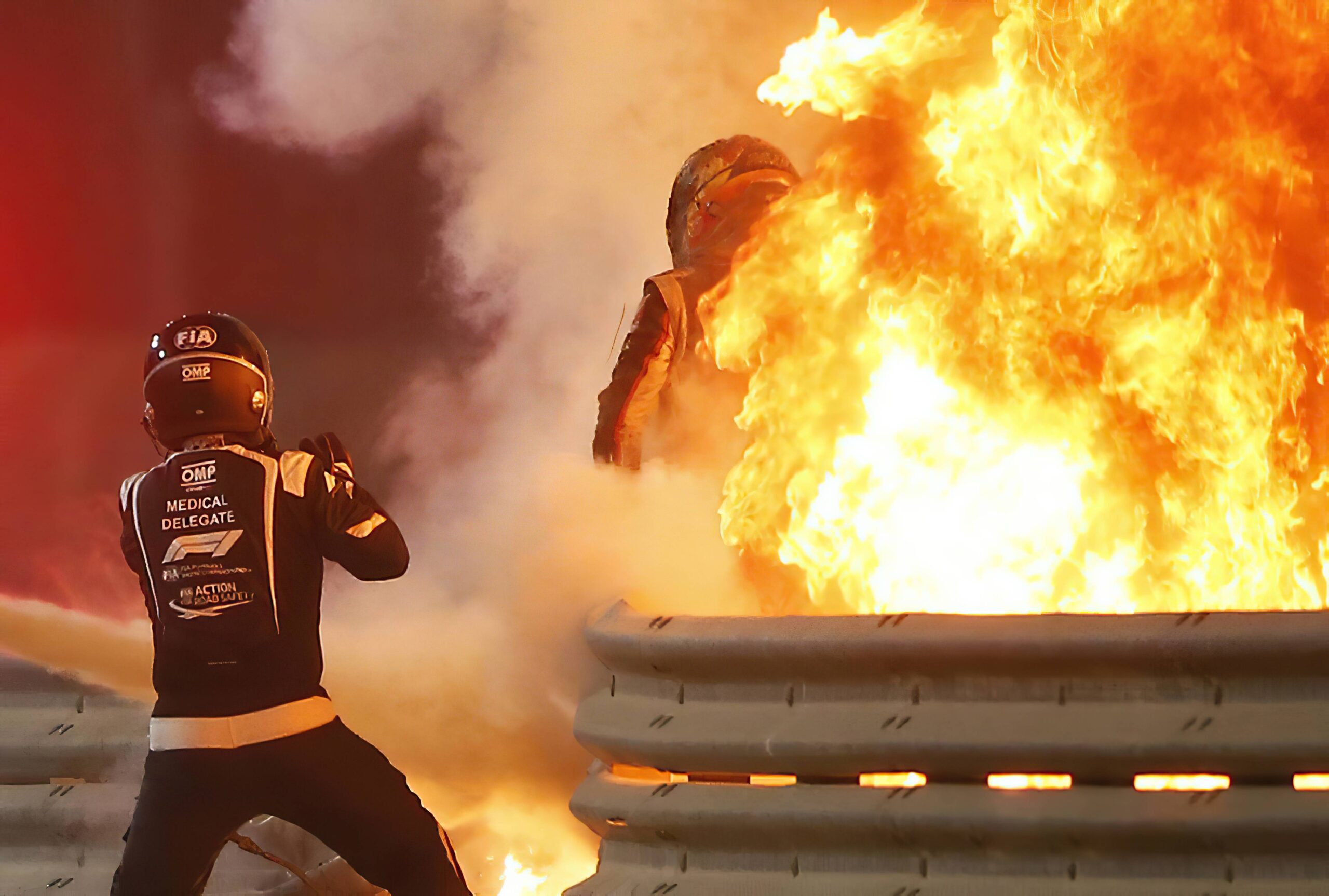
Just three corners into the race, Romain Grosjean speared into the barriers and, upon impact, produced a fireball the likes of which had not been seen in the last three decades of Formula 1.
Grosjean was towards the back of the field as the cars emerged from the first sequence of corners and could see chaos developing in front of him.
Lance Stroll had run well off the track and was bouncing back on from the right-hand side, Kimi Räikkönen was at least as far off the track to the left, coming perilously close to the barriers, and Lando Norris was showering those behind him with sparks from a damaged front wing after contact with Esteban Ocon.
Grosjean’s explanation will hopefully shed more light on the situation eventually, but it would appear that he saw an opportunity to the right of the pack on the run down to Turn 4. Crucially, though, Daniil Kvyat was seemingly in his blind spot. The Frenchman cut across sharply, leaving the AlphaTauri no chance of avoiding contact, and was sent into the barriers in a manner akin to the US police ‘PIT maneuver’.
Credit image: XPB Images
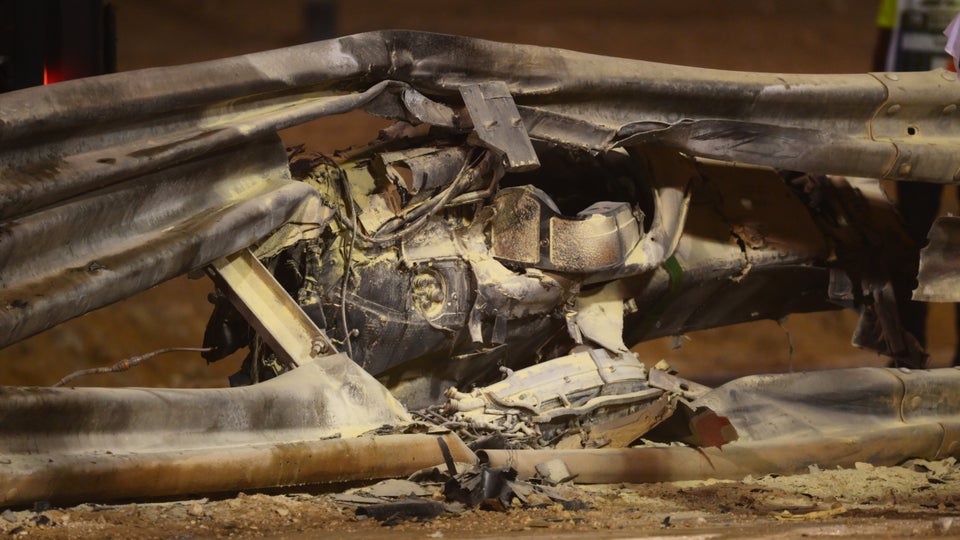
The Haas somehow pierced the barrier and split in two behind the driver, leaving the cockpit embedded in the twisted metal. Grosjean miraculously extricated himself from the inferno and a relieved audience was eventually shown images of him sat in the medical car, after a harrowing two-minute period without any information.
The drivers’ on-board footage showed numerous double-takes as they spotted the huge blaze in their mirrors and Charles Leclerc’s radio, in particular, reflected the feelings of most watching on.
Grosjean spent the night in hospital under observation as a precaution, but his injuries appear to be limited to second-degree burns to his hands and feet. Without doubt, the best-case scenario considering the ferocity of the incident.
The Show Must Go On
After a delay of over an hour, whilst the wreckage was dealt with and a new barrier installed, the drivers lined up for a second time.
The order for the second grid was taken from the order at Safety Car Line 2 during the original start. A poor getaway had dropped Valtteri Bottas from second to fourth, with Max Verstappen taking that second place, Sergio Pérez up from fifth to third and Norris up from ninth to seventh.
As he had done at the first time of asking, Hamilton took off from pole position like a rocket and left the rest of the field in his wake. Behind him, most of the drivers held their starting positions, but there would be barely half a lap of racing before another incident brought out the safety car.
Credit image: Getty Images
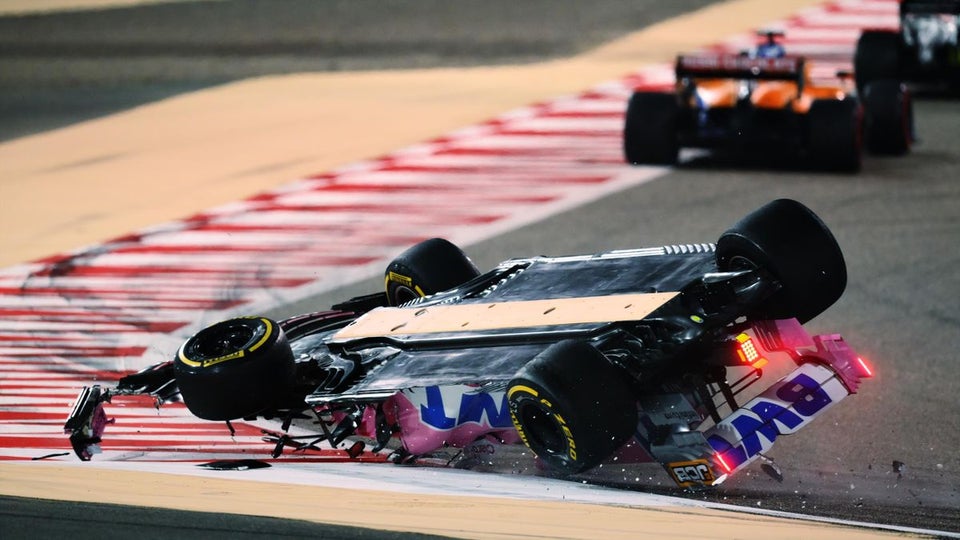
Kvyat was unfortunately involved again, as a clumsy move up the inside of Stroll resulted in front-to-rear tyre contact and the Racing Point being pitched upside down. Thankfully the Canadian was unhurt and able to climb out, but his run of poor luck – dating back to that tyre failure in Tuscany – continues.
There were no issues for Hamilton at the restart and, from there on, it was simply a case of managing his tyres and keeping the chasing Verstappen at bay. The gap between the two would stick at around five seconds for the remainder of the race, with Verstappen frustrated by some of his team’s strategic decisions but aware that they would likely always have struggled to threaten the World Champion.
Bottas’s day went from bad to worse as he picked up a puncture during the safety car period and dropped to the back of the field. Not for the first time this season, he struggled to make progress through the midfield and ultimately came home eighth; Verstappen has now reduced his deficit in the drivers’ standings to just 12 points.
Pérez looked to be en route to a second consecutive podium, only for his engine to fail in fairly spectacular fashion with just a handful of laps remaining. A disaster for Racing Point in their battle for third in the championship, with the retirement promoting the McLarens of Norris and Carlos Sainz to fourth and fifth – an impressive recovery from the Spaniard who had started 15th after a brake failure in qualifying. Pérez’s misfortune also saw Alexander Albon inherit a spot on the final step of the podium and a much-needed boost in his quest for a Red Bull seat next year.
Credit image: Wilhelm
For the second time, a stranded Racing Point brought out the safety car, under which the race would finish, but not before there was one final, unnerving moment as a marshal ran across the track in front of Lando Norris. At points, things had started to feel a little too reminiscent of Imola 1994 and it was honestly a relief to see the chequered flag wave with all the drivers and crew intact.
A Triumph for F1 Safety?
Romain Grosjean was able to suffer a 137mph crash – the instant retardation producing an impact measured at a force of 53G – and then immediately crawl from a pile of burning wreckage to safety. That is thanks to years of tireless research and hard work in the pursuit of safety in Formula 1.
Any remaining debate around the halo was emphatically put to bed as it quite clearly saved a life. The photos of the scraped top surface show how Grosjean’s halo effectively parted the gap in the barriers, as the front half of the Haas acted as a £10 million can opener, and spared his helmet that impossible job.
The ever-improving fireproof overalls now provide around 30 seconds of protection and, thankfully, the Frenchman was able to haul himself clear in around 28. Long-term saviours in the shape of the titanium safety cell around the cockpit and the HANS device also played crucial roles in this modern-day miracle.
That being said, this was not quite the unanimous triumph for f1 safety that some have painted it to be.
It was absolutely a freak accident, but questions must be asked about both the quality and placement of the guardrails. We have not seen a car spear through a barrier since the 70s. That situation infamously resulted in the tragic deaths of François Cevert and Helmuth Koinigg in consecutive years at Watkins Glen.
Also, were Grosjean not to have miraculously remained conscious after the initial impact, would the medical team have been able to do enough? FIA doctor Ian Roberts and medical car driver Alan van der Merwe are rightly being lauded for their rapid response and brave contribution, but had Grosjean been unconscious and still strapped into the car, would they have been able to extract him when they aren’t kitted out with even a full-face helmet themselves?
We can, at least, be sure that Formula 1 and the FIA will investigate these matters and learn from any mistakes, as they have done after every major incident in the past.
It is those lessons learnt in the past that saved Romain Grosjean’s life yesterday and both Professor Sid Watkins and Charlie Whiting can look down with great pride upon their legacy and their hand in this story of survival.
Who will have the strongest weekend in the battle for third in the Constructors’ Championship? After a painful weekend for Racing Point, McLaren now have a 17-point cushion.
Can Valtteri Bottas bounce back after a tough race in Turkey? …no.
Will Alexander Albon produce a performance worthy of a 2021 Red Bull seat? Whilst still a fair way off Verstappen’s ultimate pace, fourth on the grid and a spot on the podium (inherited or not) is much closer to Red Bull’s expectations.
In honour of Lewis Hamilton clinching a record-equalling seventh championship in some style last weekend, I have revisited and updated a post from around a year ago.
Once again, let’s discuss his standing in the annals of Formula 1.
Credit image: Mercedes
The Greatest of His Generation?
Hamilton burst onto the scene in 2007 and made about as big a mark on the sport as is possible in a rookie season. He had built up some hype through his stellar junior career, but he would be going up against Fernando Alonso – the reigning double world champion and the man who had just dethroned the great Michael Schumacher – as his McLaren teammate. Expectations were that he would be a solid number two driver whilst he gained some experience and learnt the intricacies of Formula 1.
The then 22-year-old should probably have won the championship but for a bizarre moment in China – McLaren leaving him out on tyres that were down to the canvas led to the driver sliding agonisingly into the gravel trap upon entering the pit lane – and some technical gremlins in the last race. But, whilst one point shy of the first rookie title in the sport’s history, Hamilton still finished ahead of his illustrious teammate, who promptly left for Renault.
Hamilton would right some wrongs and claim his maiden title the following year with the infamous ‘Is that Glock?‘ moment but then followed something of a dry spell. Brawn turned the sport on its head in 2009 and the beginning of the 2010s were a tale of Red Bull and Sebastian Vettel dominance.
McLaren provided Hamilton with cars that were fast but often fragile. That, combined with frequent operational errors in the team and an annus horribilis for the driver himself in 2011, meant there was never a sustained title challenge.
Around this time, the popular consensus was that Alonso, Hamilton and Vettel were the three biggest talents of their generation. But the order was up for debate.
Then came the hybrid era, however.
Hamilton’s move to the Mercedes team, a year earlier, turned out to be arguably the best career decision in the history of the sport as McLaren – ironically, with Alonso back at the helm – stalled with underpowered Honda engines and Mercedes took up their now perennial position as the class of the field.
Add to that, Hamilton combining his undeniable speed with a new-found maturity and he has become near untouchable in the years since. He has won 72 of the 135 races – a little over 50% – and every world championship bar 2016, when he was denied by a lot of bad luck with mechanical issues and some impressive consistency by then teammate Nico Rosberg.
The 2017 and 2018 seasons were billed as the battle for supremacy between Hamilton and Vettel with Mercedes and Ferrari finally closely matched. In the end, it was the man from Stevenage who consistently landed knockout blows, as Vettel’s challenges faltered and there is now no real debate as to which of the two men is top dog.
Some have pointed to Alonso as the most complete driver, but surely Hamilton has proven his worth in all areas by now. And Alonso’s notoriety when it comes to being hard to work with, along with the path of destruction he has left in his wake throughout his career, must be factored in. There is a point at which career choices are no longer poor by coincidence but that there are reasons for each failure.
Lewis Hamilton is the greatest driver of his generation.
The Greatest of His Nation?
This is where things start to get particularly tricky. It is incredibly difficult to compare drivers across different eras of the sport as Formula 1 today is near unrecognisable when compared to the 60s. The cars, the technology, the safety, the media – it is simply a different beast.
Image credit: Getty Images
The two other obvious contenders for ‘Best Brit’ would be Jim Clark and Sir Jackie Stewart. But then Stewart is quite adamant that Clark was a superior driver to himself so let’s focus on the two-time world champion.
Clark is still frequently referred to as the best ever by some. Even the great Juan Manuel Fangio himself described Clark as “outstandingly the greatest grand prix driver of all time”. We will never know what the Scot could ultimately have achieved, as his life was cut tragically short at 32 with a crash at the Hockenheimring, but he was undoubtedly the phenom of his era.
Out of the car, Clark was an introverted, simple farm boy from Scotland who was notoriously on edge before a race. Jack Brabham recalls that a doctor taking pulses and blood pressures before the race start thought that Clark was “in such a state that he shouldn’t start” But once behind the wheel, he was transformed. Ferociously fast with the deftest of touch; he had an absolute natural ability.
Whilst Clark’s career was obviously far shorter than Hamilton’s, the two men’s statistics are somewhat comparable once converted to percentages. Win percentage is very close with 34.72% for Clark and 35.61% for Hamilton. Clark has an advantage when it comes to pole position percentage (45.83% to 36.74%) whilst Hamilton has the lead in podium percentage (61.74% to 44.44%).
Ultimately, even those statistics are fairly meaningless as they are intrinsically linked to the subtleties of the sport at that time. For example, Hamilton will claim more podiums through better reliability whilst qualifying held less importance and was given far less attention in Clark’s day. Nonetheless, they make it clear that both men were the class of their respective fields.
I fall back to my point that it is basically impossible to definitively say whether a driver from the 1960s or 2010s is better, but Hamilton certainly doesn’t fall short of Clark’s incredibly high standards when it comes to piloting a racing car.
The Greatest of All Time?
Image credit: Reuters
G.O.A.T. (or Greatest Of All Time) is a term that is thrown about far too often on the internet these days, to the point that it is now used facetiously about as often as it is genuinely. But is Hamilton actually the G.O.A.T.?
As per the aforementioned point, comparing drivers across 70 years of F1 history and trying to conclusively choose the best ever is basically impossible. Fangio in the 50s was a winning machine and every driver racing today still has the utmost respect for him. Hamilton referred to him as the ‘Godfather’ upon matching his five titles in 2018 and Schumacher partied into the night having surpassed that former record.
Beyond Fangio and Clark, however, the two most commonly proffered names are Schumacher and the late, great Ayrton Senna. Whilst now spanning more than thirty years, all their careers narrowly overlapped – Senna and Schumacher between 1991 and 1994, Schumacher and Hamilton between 2010 and 2012 – and I think this period of time can be considered as modern Formula 1 and thus they are just about comparable…ish. So, let’s give it a shot.
The Numbers
Over the course of the last six months, Schumacher’s many records have gradually been eclipsed by Hamilton and his Silver Arrows steamroller. The conversation obviously extends far beyond numbers, but they are at least a foundation.
The German racked up 91 wins, 155 podiums, 68 pole positions, 77 fastest laps and, of course, seven world championships over the course of 307 grands prix. Those are simply ridiculous numbers and ones that many thought would never be beaten. But then came Hamilton.
It is the consistency of both Hamilton and his team in the hybrid era that has made it possible to surpass those hitherto unassailable records. If all seasons are converted to the current points system, Hamilton also moved past Schumacher’s tally at this year’s Belgian Grand Prix.
It is well noted that it is easier to rack up the numbers now as the F1 calendar has expanded and the quota of races each season has gradually increased. But when analysing Schumacher’s numbers, it is also worth considering his consistent status as clear number one driver.
Senna experienced this to some extent with Gerhard Berger for a couple of years and Valtteri Bottas has been Hamilton’s ‘wingman’ on a handful of occasions, but Schumacher had outright number one driver privileges throughout basically his entire career at Benetton and Ferrari. Many of his teammates struggled to challenge him anyway, but they were certainly not allowed to on the occasions where they were able to do so.
Senna’s career was another cut tragically short in 1994 – I went into great depth in hypothesising what he potentially would have achieved – but once the statistics are converted to percentages, the three drivers are fairly evenly matched. Hamilton probably has a slight edge when looking as a whole, but there is not much in it and obviously his percentages could go either way between now and the end of his career.
Schumacher was undeniably the greatest driver statistically for over 15 years. And yet, generally, more people seem to have considered Senna the greatest when the debate has arisen. That’s because being the greatest of all time goes far beyond the numbers.
Going Beyond the Numbers
There are two main components to being an incredible racing driver: raw speed and racecraft. There are other attributes, of course, such as technical aptitude, discipline, focus, being able to build a team around you and so on. Senna, Schumacher and Hamilton obviously all excel at these, but who comes out on top?
Raw speed is best demonstrated in qualifying; man and machine pushed to the absolute limit over the course of one lap. And this is where Senna and Hamilton are arguably a level above Schumacher. They have both produced laps that are scarcely believable.
Some have said that Schumacher’s qualifying record was hindered by the rules that had drivers qualifying with their race fuel in the car during the years when refuelling was a part of the sport, thus making qualifying more strategic and less about outright speed. But that was only the case for 4 of his 19 seasons.
Image credit: XPB Images
Racecraft is something that is tricky to define but – simply put – it is a driver’s ability to manage the entirety of a grand prix and everything that may be thrown at them. So, that’s measuring their pace and the toll it is taking on the car, wheel-to-wheel racing, strategy calls, etc.
This is where Hamilton and Schumacher perhaps have a slight edge over Senna.
Schumacher’s ability to produce lap after lap at full qualifying pace during the race is well-known and, if he was on pole position, it was very unlikely anyone would be able to find a way past him.
Once again, the goalposts have moved slightly when it comes to racecraft these days. With the current car and tyre designs, drivers are rarely pushing flat-out on a Sunday and it has become predominantly about tyre conservation. Hamilton has transcended his reputation – from a decade or so ago – of being blisteringly quick but not quite as smart during races, and is now famed for his racecraft; Paddy Lowe describing it as “unparalleled among the F1 greats”.
His ability to eke out the life of his tyres has been demonstrated numerous times recently. Just last season, he had to manage most of a race on ancient tyres in Monaco, Mexico and the US, coming away with two victories and a second place.
And then, at the very last race in Turkey, he transformed his inters into slick tyres during a 49-lap stint that ensure he took his seventh world title in the most impressive style. Sure, he may moan most of the way but, boy, does he get the job done…
Whilst discussing some of the technical ways in which Hamilton manages his car, Mercedes Technical Director James Allison – a man who has also worked with Schumacher and Alonso – describes his “instinctive ability” as “remarkable”.
When it comes to the other factors, it is hard to separate them. All three are famously relentless in their pursuit of perfection, leaving no stone unturned. It is possibly what sets them aside from the rest of the greats. All are very technically minded and each built a hugely successful team around them – McLaren, Ferrari and Mercedes respectively.
Hamilton, Schumacher and Senna are all incredibly good at basically every aspect of the sport. Of course. But there is something else beyond speed and ability that should be considered.
Going Beyond the Speed
There is undoubtedly a level of ruthlessness that is necessary to become a champion. But there is also a line. Senna and Schumacher crossed that line on multiple occasions, most famously in the two images above.
Whilst Senna’s infamous crash with Prost can be understood to some extent when you hear the full story of the politics with Jean-Marie Balestre, he still intentionally crashed into another driver to win the title, in an era of much-reduced safety. Senna’s intensity and unflappable self-belief often resulted in uncompromising driving to the very edge of acceptability and, on more than one occasion, beyond it. It was part of what made him so great, but he sometimes went too far and that has to be seen as a negative.
Schumacher has an unfortunately long string of misdemeanours. His attempts – one successful and one unsuccessful – to take out a Williams in the title decider were the biggest blots on his copybook. There is no doubt in my mind that both his collision with Damon Hill in 1994 and the one with Jacques Villeneuve in 1997 were fully intentional. He was disqualified from the entire 1997 season for his actions but somehow escaped unpunished with his world championship intact in 1994.
Off the track, things weren’t squeaky clean either. There were plenty of rumours – some proven – regarding the 1994 Benetton’s legality, Ferrari used every trick in the book (including threatening to end a Sauber driver’s career) to hinder Villeneuve in 1997 and their team orders in the early 2000s brought the sport to its knees.
These varying forms of misconduct are something we have never really seen from Hamilton.
Of course, there has been the odd drama. Off the track, there was ‘lie-gate‘, where he was instructed to lie to the stewards by his McLaren Sporting Director, and his tweeting of sensitive telemetry. But these were reasonably minor indiscretions and, on track, Hamilton can only ever fall under the category of firm but fair.
Even during his prickly relationship with teammate Nico Rosberg, as the German set about all-out psychological warfare, he would push his wheel-to-wheel racing to the limit but never beyond.
Image credit: Getty Images
This is what really sets Hamilton aside from the two other great champions. He has that steel and the relentless will to win…but he is also truly committed to winning the right way.
So…the Greatest?
Well.
I’m not going to be quite that definitive…not yet anyway. But he is well on his way.
Hamilton now holds most of the records the sport has to offer. He is accepted as one of the very fastest ever when it comes to raw speed and has, in recent years, added maturity, technical prowess and experience to create a winning machine.
Wolff says that the media, and people in general, should “recognise the opportunity [to] see maybe the best driver that has ever existed on an exceptional journey”. He has a point. It may be easy to grow tired of seeing the same driver win again and again but it will always be looked back upon with nostalgia and misty eyes. We are witnessing history being made.
It is worth remembering that Hamilton’s story has been something of a fairy tale. From a council estate in Stevenage, he fought through the ranks the hard way, funded by his father working multiple jobs, and has now reached the very pinnacle of his sport. He has also broken down barriers as the sport’s first black driver – even having to deal with racist abuse early in his career – and brought F1 to a whole new audience through his numerous extracurricular activities and massive social media presence.
He has taken that onto another level this year with his push for F1 activism. He is a leading light in the #WeRaceAsOne initiative and launched ‘The Hamilton Commission’ with the aim of increasing diversity within motorsport.
Did anyone expect this when a fresh-faced Hamilton showed up to Melbourne in 2007? Probably not. Although, there is a surprisingly prophetic quote from Schumacher on the eve of Hamilton’s first title the following year.
I will stick by my opinion that defining a clear ‘G.O.A.T.’ is near impossible, but there is nobody that I consider to have a better claim than Hamilton any longer.
And there is still more to come. As the man himself says, “I am working on a masterpiece and I haven’t quite finished it yet”. When he has finished, maybe we will have a definitive answer.
On a challenging, grey day in Istanbul, Lewis Hamilton took his 94th grand prix victory and, in doing so, claimed a record-equalling seventh world championship.
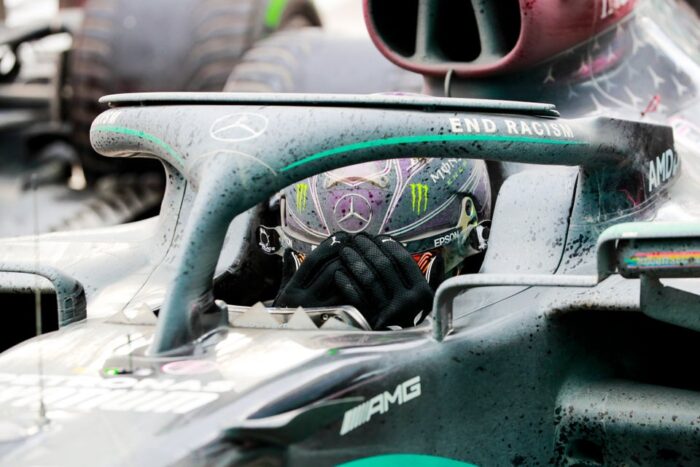
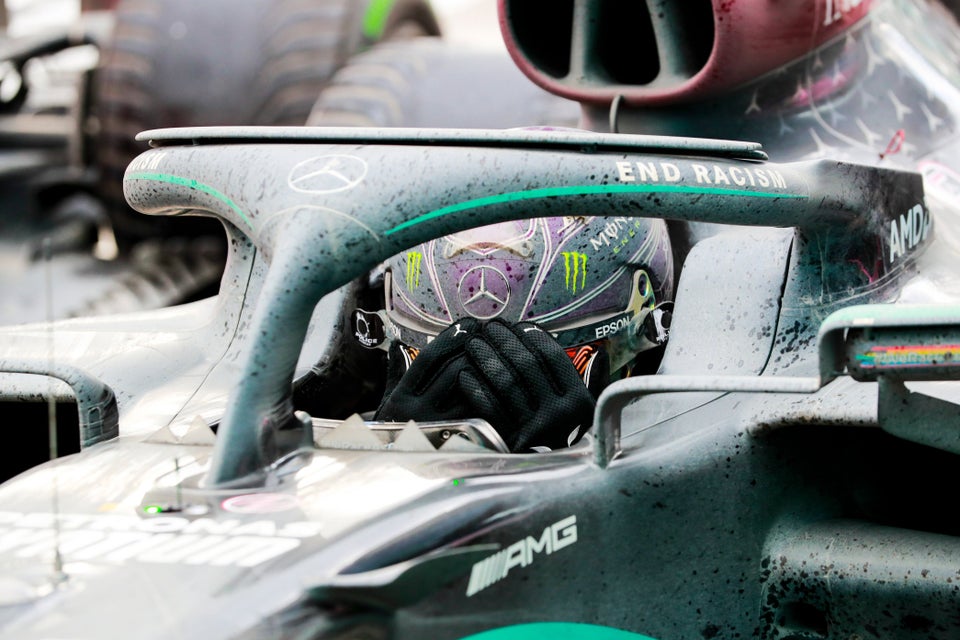
As the Mercedes pulled up to the specially marked ‘World Champion’ board, it looked as though it had been to war – intermediate tyres warn down to effectively become slicks, the usually glossy, black finish now matte thanks to a layer of grime and bitumen. In many ways, it had been a war. And Hamilton’s battling performance was one thoroughly fitting of becoming the most successful driver in the history of the sport.
It all started on Friday, with the Mercedes unable to get any heat into their tyres as they – and the rest of the field – slid round what was for all intents and purposes an ice rink, before rain arrived on Saturday to add yet more jeopardy. It speaks volumes that Hamilton was happy with sixth on the grid. Teammate Valtteri Bottas qualified ninth – as Lance Stroll took an incredible maiden pole position – and Hamilton appeared likely to clinch the title, but in an unusually low position.
As the lights went out, the Red Bulls of Max Verstappen and Alexander Albon struggled to get away and fell back down the field. The pack emerged from the first corner with a Racing Point 1-2, ahead of Hamilton and Sebastian Vettel, up from 11th on the grid. Esteban Ocon had been spun by his teammate, Daniel Ricciardo, and Bottas also found himself spinning in sympathy as he reacted to Ocon pointing in the wrong direction.
Halfway around the first tour, Hamilton would make his only error of the day as he missed the chicane of Turns 9 and 10, suffering with cold brakes, and fell back to sixth behind Vettel and the recovering Red Bulls. Those at the front then fell into something of a holding pattern until around lap 10 when the drivers decided to switch their wet tyres for inters, with Verstappen jumping Vettel through the pit stops.
By lap 18, Verstappen was closing up rapidly on the leading pair. The Dutchman had been the bookmakers’ favourite for the race, having looked the most comfortable throughout the weekend, but his impatience would get the better of him. Following Sergio Pérez too closely through the high-speed kink of Turn 11, Verstappen ran wide onto the extra slippery run-off area and performed an unwanted 540° pirouette. To compound his problems, he was then forced to retreat to the pits to replace his flat-spotted tyres.
Stroll continued to lead from his teammate past the halfway point and was displaying some impressive maturity for his first experience heading a grand prix. The track was continuing to dry, though, and his tyres were beginning to struggle. It was the Racing Point’s ability to heat its tyres sufficiently that had produced the surprise pole on Saturday but, as the race progressed, Stroll was now experiencing the other side of that double-edged sword. Pérez and the third-placed Albon were closing in.
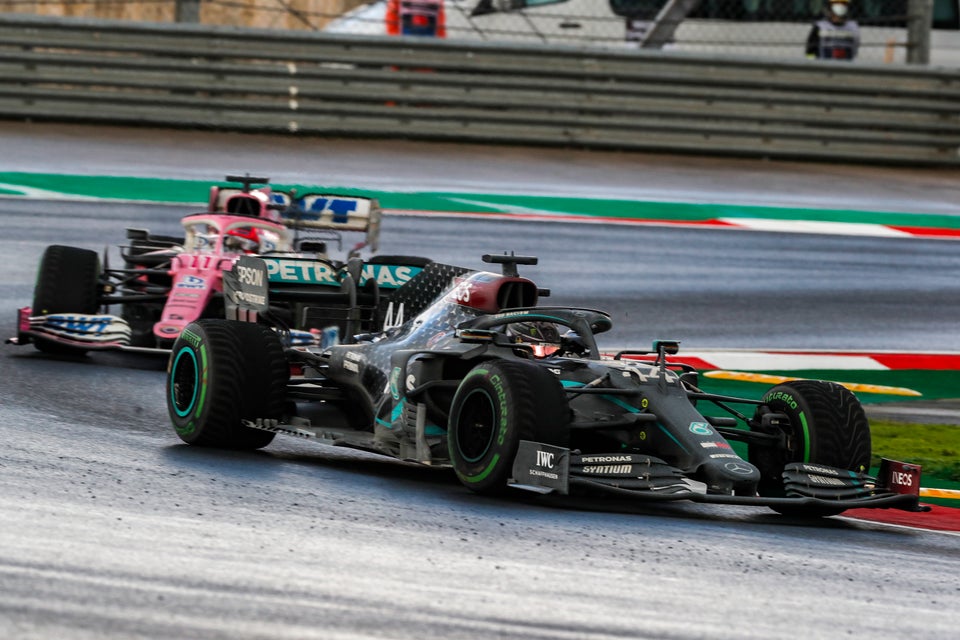
Albon would spin on lap 34, however, and thus released the increasingly confident Hamilton. The World Champion started eating into the gap at a rate of about one second per lap and Racing Point made what would turn out to be the poor decision to pit Stroll. He never got the new inters working – the tyres even graining within just a couple of laps – and fell all the way back to eventually finish a hugely disappointing ninth.
So, it had become a battle of F1’s two ‘tyre whisperers’ at the front. The overtake would not take Hamilton long, though, streaking past at the end of the back straight and clearing off into the distance. Within five laps he had built a gap of 15 seconds.
Image credit: Motorsport Images/Shutterstock
Further back, Charles Leclerc, who had been steadily working his way through the field, aided by some nicely timed pit stops, passed Verstappen for third place. Verstappen immediately headed into the pits for his third stop of the day, which promoted Vettel into fourth, and the two Ferraris set about closing the gap to Pérez.
To add one final twist to an extraordinary race, rain started to fall again in the final few minutes, with a downpour predicted for the very last lap. Verstappen and Kimi Räikkönen spun in tandem and Mercedes decided to bring Hamilton in for a ‘safety stop’. With thoughts of his infamous 2007 pit stop in China at the forefront of this mind, Hamilton overruled his team and brought the car home without incident for a victory that had required absolutely all of his skill and experience.
On the final lap, meanwhile, Leclerc had passed Pérez after he ran wide at the chicane, only to outbreak himself and lose not only second to the Mexican but also the final podium place to his teammate. A bitter pill to swallow for Leclerc, who was characteristically hard on himself for the mistake, but joy for two drivers, in Pérez and Vettel, who have had tough years for varying reasons. The Mexican makes yet another compelling case for a race seat next year.
The McLarens recovered very well from a disappointing qualifying and were the fastest cars on track at the end of the race. Carlos Sainz very nearly added extra salt to Leclerc’s wounds, crossing the line just a few metres behind, whilst Lando Norris recovered to take eighth and the fastest lap. The Red Bulls filled that McLaren sandwich, with Verstappen ahead of Albon, and Ricciardo secured the final point.
Image credit: LAT Images
Despite being over a pit stop behind the leaders in the early stages, Hamilton crossed the line with his second-largest winning margin ever of 31 seconds. It was a performance reminiscent of his largest winning margin at Silverstone in 2008. A masterclass in truly testing conditions and there were certainly shades of Felipe Massa as Hamilton’s only title rival, Bottas, spun no fewer than six times, before eventually being lapped by his teammate.
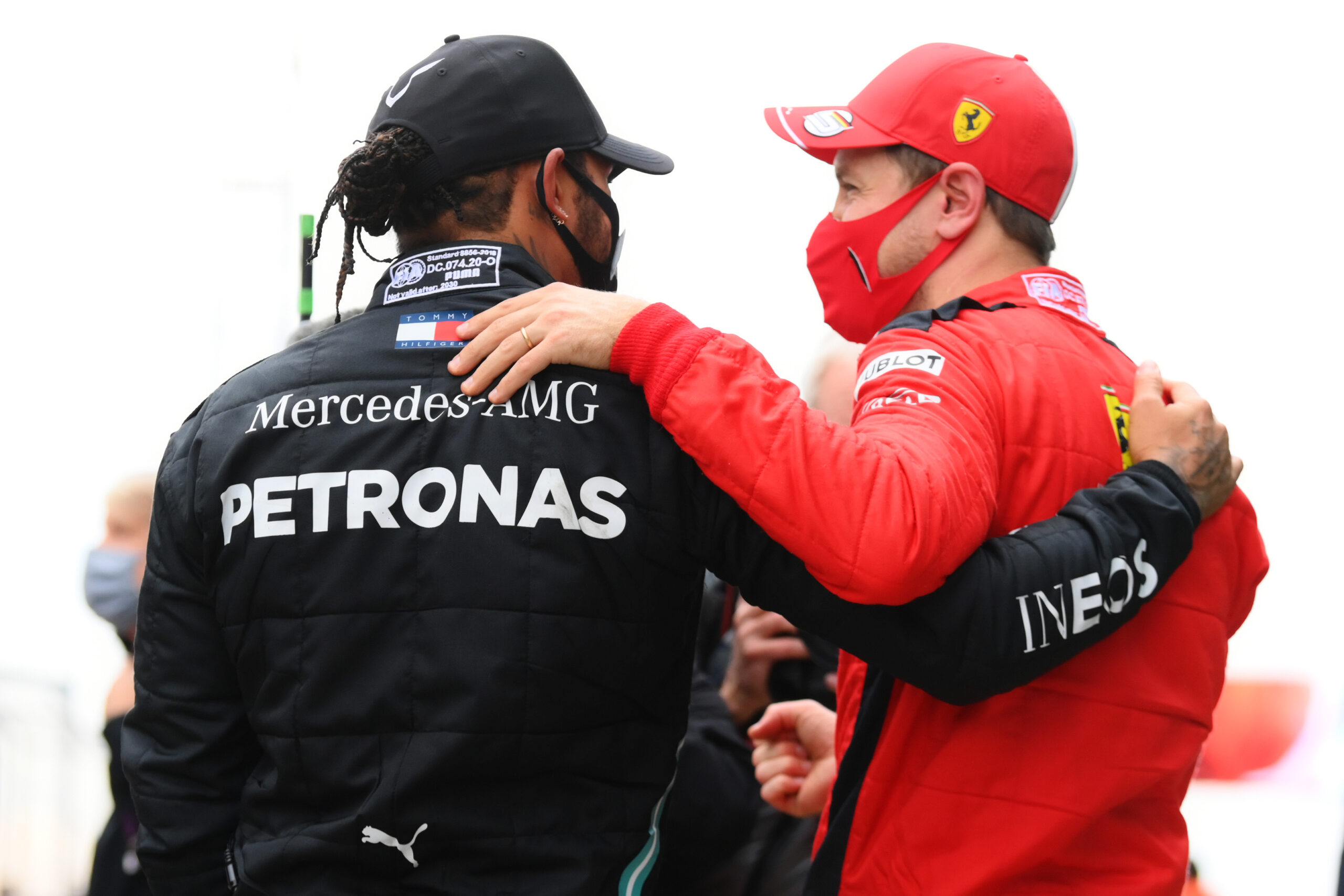
It felt very apt that Vettel should be on the podium to celebrate such a momentous occasion with Hamilton. The two have grown close through their title battles and Vettel was the first to congratulate the Briton as he sat, visibly overcome with emotion, in the cockpit. Vettel could be heard saying “it’s a privilege to be witnessing you making history, man”. They have now shared the podium more than any other pairing in history.
Image credit: Getty Images
Amid the Drama, an Alarming Error
Whilst there was undeniably a lot to deal with on Saturday, there was another worrying mistake made by Michael Masi and those in charge. When the cars were released from the pits for the start of Q2, a group of marshals and most importantly a recovery crane were still completing the removal of Nicholas Latifi’s abandoned Williams.
Alarmingly, Masi then doubled down on the error by later saying, “It was quite close to the barrier, the crane was on its way, and we were given assurances that it would be well and truly clear. Looking at everything, I was more than comfortable with the local assurances on that basis.”
For all his questionable safety cars and red flags this season, when there is a genuinely dangerous situation, the cars were sent out. A perilously wet track and a crane removing a car in the gravel trap should give anyone involved with F1 a sharp shot of PTSD and Martin Brundle sounded noticeably uncomfortable and shocked at what he was witnessing. And for the sake of what? A delay of a few seconds in restarting the session? It should be incredibly simple – the race does not restart until any recovery vehicle is beyond the confines of the circuit.
A final word for the man who became – at the very least, statistically – the greatest F1 driver of all time.
Lewis Hamilton very rarely lets his emotions come to the fore these days. So, it was particularly moving to see him totally overwhelmed by what he has achieved. With the frequency at which his wins come these days, it is easy to forget just how much he has had to overcome to get to this point; to realise his wildest dreams.
For, whilst he often plays down these milestones ahead of the event, he did admit that he had “probably secretly dreamt” of one day matching Michael Schumacher.
In fact, many of the parallels between Schumacher and Hamilton’s achievements are quite astounding. They both achieved their seventh title at the 14th round of their 14th year of Formula 1. And all this, whilst fighting what he describes as the “bigger fight” for equality and diversity.
Can Lewis Hamilton wrap up a record-equalling seventh World Championship? Yes, and in some style.
Will the track grip up over the course of weekend or will they continue skating around as per Practice 1? The rain came and made conditions even harder for the drivers.
Can any of the teams battling for third open up a gap to the others? It was a good weekend for Racing Point, who now have a slight advantage over McLaren in the standings.
Will we see any Vettel-Webber-esque teammate dramas this weekend? Nothing really, aside from the Renaults coming together at the first corner.
Lewis Hamilton took what had at one point seemed an unlikely victory at the 2020 Emilia Romagna Grand Prix, as his Mercedes team wrapped up a record-breaking seventh consecutive World Constructors’ Championship.
The World Champion was beaten to pole by teammate Valtteri Bottas on Saturday, later describing his lap as “piss poor”, and was then passed by Max Verstappen on the run to the first corner. The narrow Imola circuit proved very difficult to pass on, with the two-metre-wide behemoths of modern Formula 1, and the front three appeared to have formed an orderly queue that may well last the entire race.
However, it would transpire that Bottas had collected some Ferrari shrapnel on the second lap which was significantly affecting his aero performance. Red Bull pitted Verstappen on lap 19 and Mercedes immediately responded with a pit stop for Bottas to cover off the Dutchman. This released Hamilton who suddenly started producing a succession of fastest laps. His medium tyres seemed to be holding up well and Mercedes decided to extend his first stint with the potential to fit the soft tyre at the end.
As it became apparent just how much time Bottas was losing, Hamilton defied his aging tyres and increased his lead to almost the exact length of a pit stop. It would all become academic, however, as a Virtual Safety Car on lap 29, brought about by yet another mechanical retirement for Esteban Ocon, handed the lead to Hamilton on a plate. He re-emerged five seconds ahead of his teammate and Bottas was now forced to switch his attention to keeping Verstappen behind him.
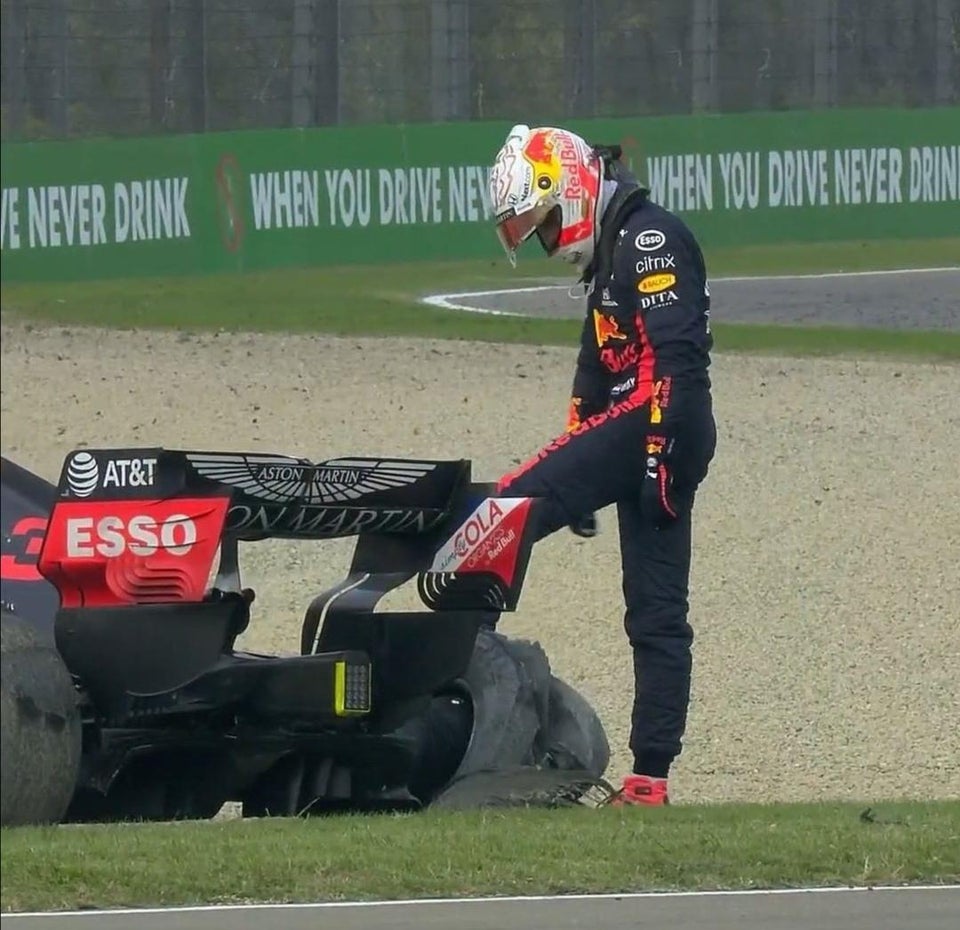
After a couple of close calls, a lock-up into Rivazza allowed Verstappen to pull right up to the gearbox of the Mercedes and he snatched second on the run down to Tamburello. Once again, it appeared as if the order had settled in for the remainder of the race, but there was one more twist in the tail. On lap 51, Verstappen’s right-rear tyre suddenly let go and left him stranded in the gravel trap.
Image credit: Formula 1
That brought out a full safety car. Both Mercedes drivers pitted without incident – the team able to remove the piece of Ferrari from Bottas’s bargeboards – and, surpisingly, so did Sergio Pérez, who was due to inherit that provisional podium position after having made excellent progress from 11th on the grid. Those behind him did not, though, and the Racing Point driver found himself behind Daniel Ricciardo, Charles Leclerc and Alexander Albon.
This was the second of two crucial weekends for Albon and he once again failed to produce. It is looking more and more likely that he will not be retained for 2021 and, with F2 driver Yuki Tsunoda being strongly linked to the second seat at AlphaTauri, Albon is now fighting desperately for his F1 career – let alone the Red Bull seat.
Out front, Hamilton comfortably extended his gap to Bottas and sealed the extra point for fastest lap on the final tour. Ricciardo just about held off Kvyat for his second podium in three races and, behind them, Pérez was unable to pass Leclerc for fifth. The final points positions went to the McLarens and the Alfa Romeos, with Kimi Räikkönen frustrated that he had finally taken his only pit stop one lap before the safety car was called.
Mercedes wrapping up the constructors’ title with a few races to go has become the norm for many years now and, with many fans thoroughly bored of the dominance, it is possible to forget what an incredible achievement it is that we are witnessing.
With a seventh consecutive Constructors’ Championship, Mercedes have surpassed the record set by the dominant Ferrari team of the Schumacher-Brawn-Todt era. This is now arguably the greatest team in the history of the sport. As we all know, they nailed the hybrid engine regulations in 2014 and gave themselves a massive head start for those first three years. Dominating one set of regulations is not rare – Red Bull, Williams, McLaren and Ferrari have all done it in the past – but 2017 brought about another major change in the cars and Mercedes simply aced that too.
Smaller changes since then – even the ones introduced specifically to target them, such as this year’s ban on ‘qualifying modes’ – have done little harm to the Silver Arrows’ supremacy either. Would anybody honestly be surprised if they do the best job on the 2022 regulations too?
Their biggest threat appears to come from the two most respected members of the team – Hamilton and Team Principal Toto Wolff – seemingly considering their positions, as both have been openly pondering how much longer they will continue. Time will tell on that front, but Hamilton himself is usually the first to point out that he is just the last link in a very long, particularly well-oiled chain.
Admittedly, as ‘last links’ go, Hamilton is maybe the greatest of all time – the same could be said for Wolff – but there will be more drivers and more team principals in the years to come and, assuming Mercedes stick to their relentlessly efficient principles, they will be at the forefront of the sport for a long, long time.
The Emilia Romagna Grand Prix in 60 Seconds
Answering the Burning Questions
How will a condensed two-day weekend affect the teams? There certainly seemed less prepared, particularly in terms of the behaviour of the tyres.
Can Mercedes wrap up a record seventh consecutive title? Of course they can.
How will Alexander Albon fare on a crucial weekend for his F1 future? Not well, sadly.
Which of the teams battling for third in the Constructors’ Championship will have the best weekend? Renault had marginally the best weekend and are now a single point ahead of their two rivals.
Will Kimi Räikkönen gain an advantage as the only driver to have previously raced at Imola? The veteran Finn had an excellent race and, with a safety car appearing one lap earlier, could have grabbed a large haul of points.
Lewis Hamilton won an entertaining race as Formula 1 made its first-ever trip to Portimão for the 2020 Portuguese Grand Prix.
All weekend, the drivers and teams struggled to get to grips (no pun intended) with the intricacies and idiosyncrasies of the tyres at the newly resurfaced, cold track. It led to an interesting qualifying session – where Hamilton took pole on the theoretically slower, medium compound – and a manic opening few laps.
On their medium tyres, the Mercedes – and Charles Leclerc, starting fourth after another excellent qualifying performance – struggled to produce enough heat on the cold, damp surface as a light drizzle continued to fall. Hamilton, who would later describe himself as “overly cautious”, took it very easy, more than aware that he would be the effective guinea pig for those behind him.
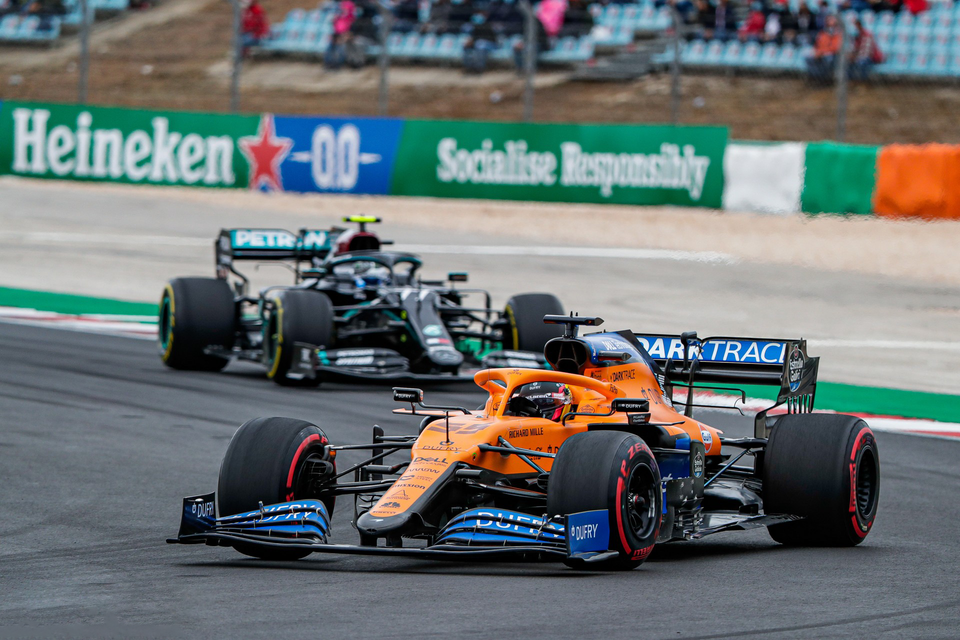
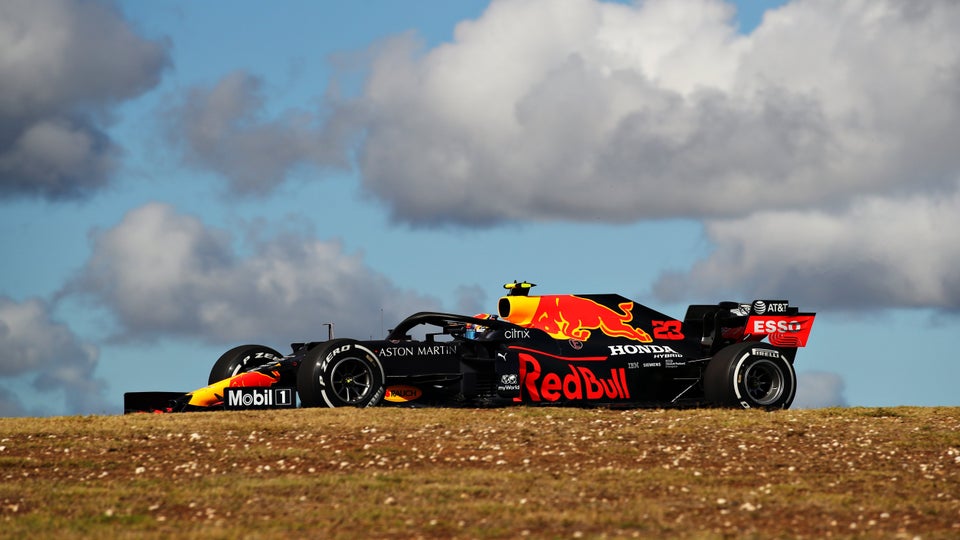
Speaking of those behind him, a good start from Sergio Pérez saw him alongside Max Verstappen at Turn 2 but would also see him facing the wrong way moments later as the Dutchman understeered into the Racing Point and pitched him off the track. The McLarens, meanwhile, were flying. Bottas passed Hamilton for the lead towards the end of the first lap but was then himself passed by Carlos Sainz, up from seventh on the grid and fully utilising the extra heat in his soft tyres. The sister McLaren of Lando Norris was also up to fourth, from eighth on the grid, and – most impressive of all – Kimi Räikkönen had passed no fewer than 11 cars on the opening lap, clearly drawing on his two years of rallying experience.
Image credit: XPB Images
Normality was soon restored once the medium tyres had reached temperature, however, with a top three of Bottas, Hamilton and Verstappen. For a while, the World Champion bided his time, staying around two seconds behind his teammate, but on lap 15 he made his move. Fastest lap followed fastest lap and he was soon within DRS range. It was a simple pass down the start/finish straight and, from there, Hamilton never looked back.
He built a gap of 10 seconds as Mercedes extended the first stint on both cars, before finally pitting the pair on laps 40 and 41. By the chequered flag, car number 44 had extended its lead to over 25 seconds. That is a rarity in this era of taking as little as possible out of the tyres, car and engine, but the chilly Algarve circuit meant it was a necessity to keep temperature in the tyres and, for once, Hamilton’s full potential was revealed. It was a fitting way in which to break Michael Schumacher’s all-time win record. 92 victories – a simply mind-boggling achievement and another step towards matching another Schumacher record with a seventh world title; Hamilton now has a 77-point lead in the standings with five races to go.
Verstappen spent the race in his now trademark, lonely position, unable to keep pace with the superior Mercedes but miles clear of the rest of the field. Behind him, Leclerc was similarly isolated and at least as impressive. The only non-Mercedes driver to start on the medium, the Monegasque had predictably fallen back at the start, but recovered well to fourth and was the last man to remain unlapped by the all-conquering leader.
Sergio Pérez produced an even better recovery after his clash with Verstappen on the opening lap and was running fifth in the closing laps. He would fall back, though, as he struggled on the soft tyres, first being passed by Pierre Gasly, on yet another strong weekend for the Frenchman, and then Sainz.
Esteban Ocon finished in eighth, just ahead of teammate Daniel Ricciardo, beating the Honey Badger for the first time since the 70th Anniversary Grand Prix back at the start of August. And Sebastian Vettel at least claimed his first point since Mugello on another weekend where he was thoroughly outclassed by Leclerc.
All in all, Portimão delivered a great race. The conditions helped in mixing things up somewhat, but there was some great wheel-to-wheel racing throughout the field – first Räikkonen and Sainz and then former teammates Pérez and Ocon running side-by-side for multiple corners. And it will now forever be etched into Formula 1 folklore as the venue for Hamilton’s record-breaking victory.
He failed in the first of those two objectives this weekend, unfortunately. Whilst ‘only’ half a second down on Verstappen in qualifying, Albon suffered another poor start and the two-stop strategy he ended up on only made matters worse as he was unable to make progress through the midfield. Being lapped by his teammate topped off another race to forget.
He would appear to be safe in his seat through to the end of 2020, but – whilst there are seemingly tensions between Red Bull and Gasly which reduce one threat to Albon – Horner and Helmut Marko now appear to be open to the idea of hiring from outside the Red Bull driver pool and, with Pérez and Nico Hülkenberg currently unemployed next year, there are some very tempting alternatives.
Grosjean Pulls No Punches
Image credit: XPB Images
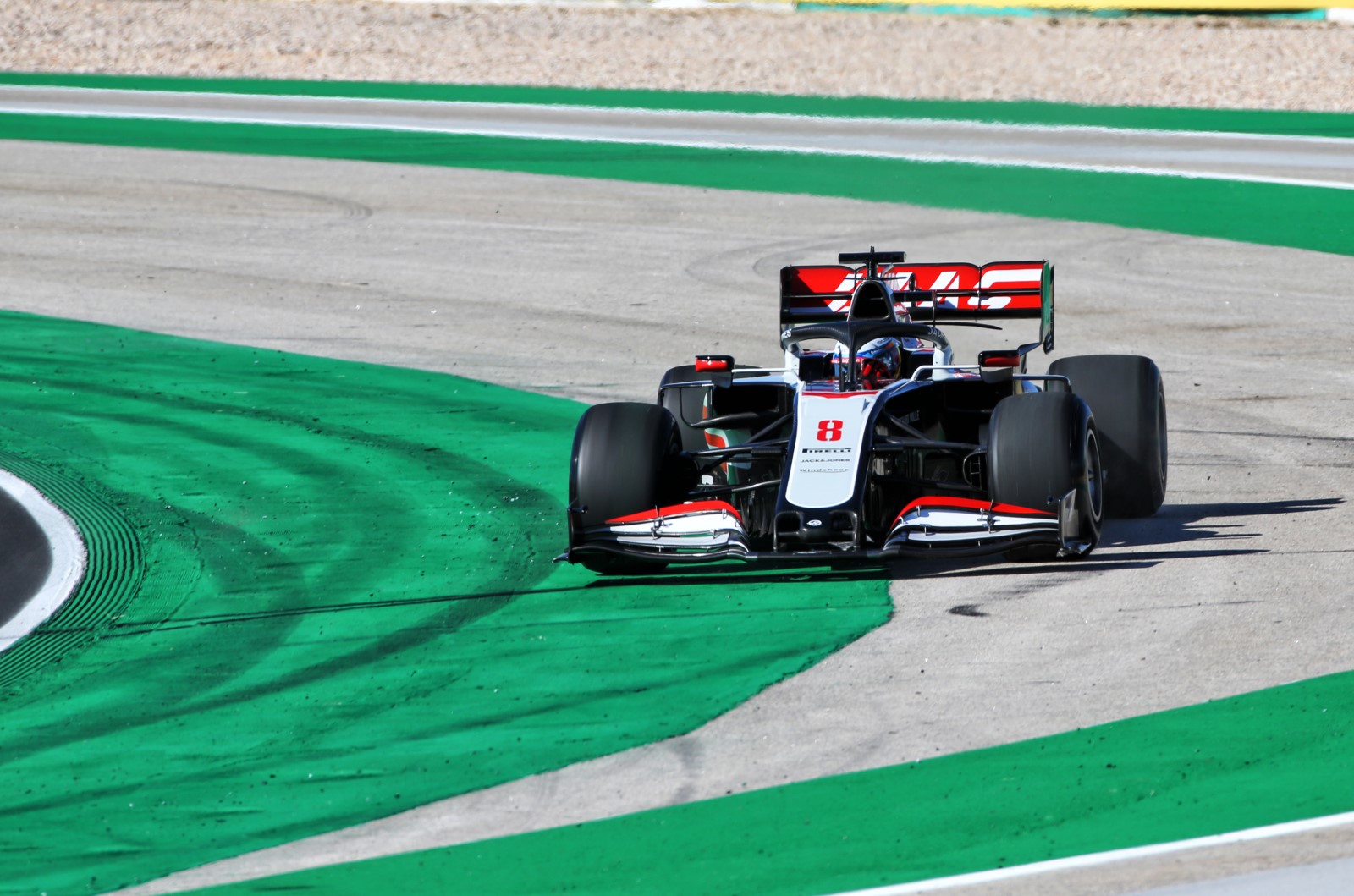
With the announcement ahead of the Portuguese Grand Prix that Romain Grosjean and Kevin Magnussen would be let go by the Haas team at the end of 2020, the drivers now have no reason to hold back.
Grosjean has been especially outspoken, stating that he believed the VF-20 was essentially the same car as in pre-season testing and now “the slowest in the paddock”.
“When it gets hot at the end of third practice you get the ride height and then it cools down – and then you start qualifying with a different one and every lap the rear suspension heats up and the rear ride height changes. Normally we’re struggling a little bit but this weekend the magnitude is quite bigger and we’ve got no idea why.”
There are deep-set issues at Haas. They have been going backwards rapidly since 2018 and, whilst becoming a cult hero for his entertaining appearances in Drive to Survive, surely Team Principal Guenther Steiner must be held accountable. We all hope that Gene Haas’s patience with the sport continues and we don’t lose another team, but he will know that changes need to be made to the current system.
The Portuguese Grand Prix in 60 Seconds
Answering the Burning Questions
Who will adjust best to a brand-new circuit to F1? Nobody adjusted especially well to the tricky conditions but, predictably, Mercedes came out as the class of the field.
Can Lewis Hamilton make the all-time win record his own this weekend? He can.
Which of the teams battling for third in the Constructors’ Championship will have the best weekend? It was very even between all three, with McLaren taking marginally more points than Renault and Racing Point.
Will there be any big driver line-up announcements? Not yet, but the rumours are getting more confident.
Surely we’ll get rain at one of these European October/November races? Right?! A bit of drizzle kept things interesting throughout but still no downpour.