The 2022 season has reached the summer break, but it very much feels like the remainder will be a cruise to the finish for Max Verstappen.
After three races, some fans and pundits were fearing the championship was already over on account of Charles Leclerc’s 46-point advantage over Verstappen.
But fast-forward less than four months and the situation could not be much more different.
A series of calamities – mostly mechanical and strategic – have seen that 46-point deficit for Verstappen turn into an 80-point lead heading into F1’s summer holidays.
Image credit: Philip Platzer/Red Bull Content Pool
It was redemption on two counts for Leclerc at the Red Bull Ring.
Firstly, making amends for a frustrating Sprint Race on Saturday where the two Ferrari drivers fought amongst themselves to the extent that Verstappen was able to get away.
But more importantly, it was revenge for the 2019 Austrian Grand Prix. A race that looked set to become Leclerc’s maiden victory, only for Verstappen to controversially snatch the lead away in the dying stages courtesy of a particularly impolite pass on the Monegasque.
On this occasion, Leclerc would be the one doing the passing, overtaking his title rival no fewer than three times as they ran differing strategies.
He then clung on commendably despite a late clutch issue to narrow the gap to Verstappen to 38 points and spark hope of a comeback.
Pain in France
That hope would all come crashing down a fortnight later, however.
Yet another Leclerc pole position preceded what looked set to be a fascinating battle between the season’s two main protagonists.
Verstappen had followed Leclerc closely in the early stages before fading slightly, prompting Red Bull to attempt an undercut.
Image credit: XPB Images.
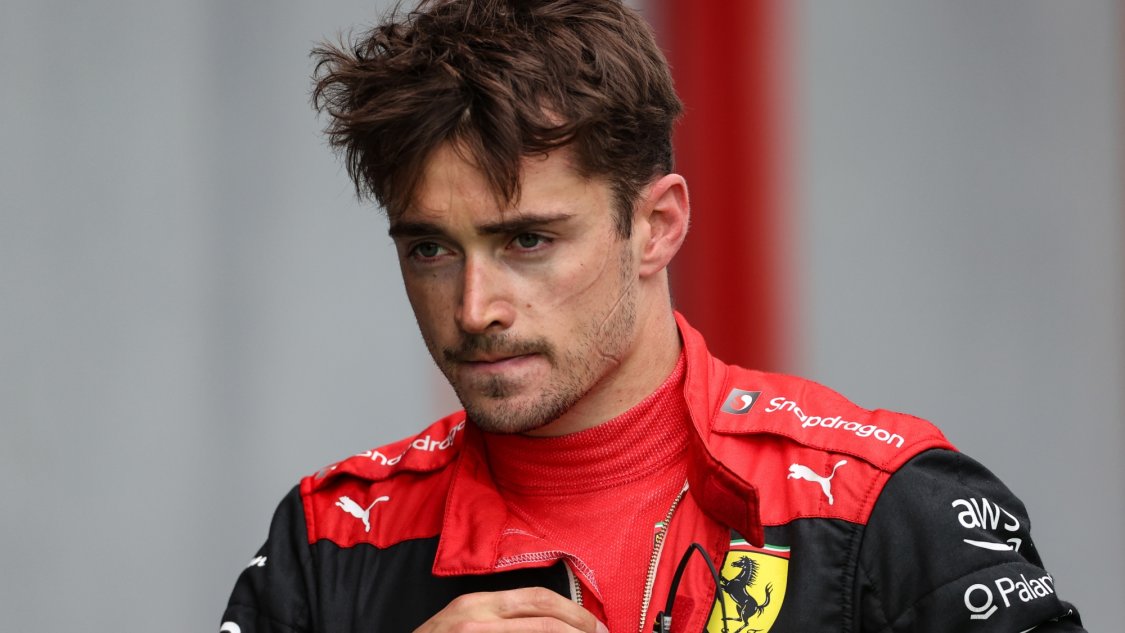
We would never find out whether or not that would work, though, as Leclerc made the biggest mistake of his season – if not his career – thus far, spinning out from the lead and ending up in a barrier.
There have been rumours and suspicions about a throttle issue contributing to the accident, but these are unproven and Leclerc publicly took responsibility.
Verstappen went on to take a comfortable win and extended his lead to 63 points – an advantage from which nobody has ever lost the title.
Another Ferrari Disasterclass To Round Off Part 1
The heat was immediately taken off Leclerc with another strategic blunder by his team in Hungary, though.
Having passed George Russell for the lead and with Verstappen recovering from 10th on the grid, Leclerc had the chance to keep his ever-so-slim title hopes alive heading into the summer break.
But Ferrari would be having none of that.
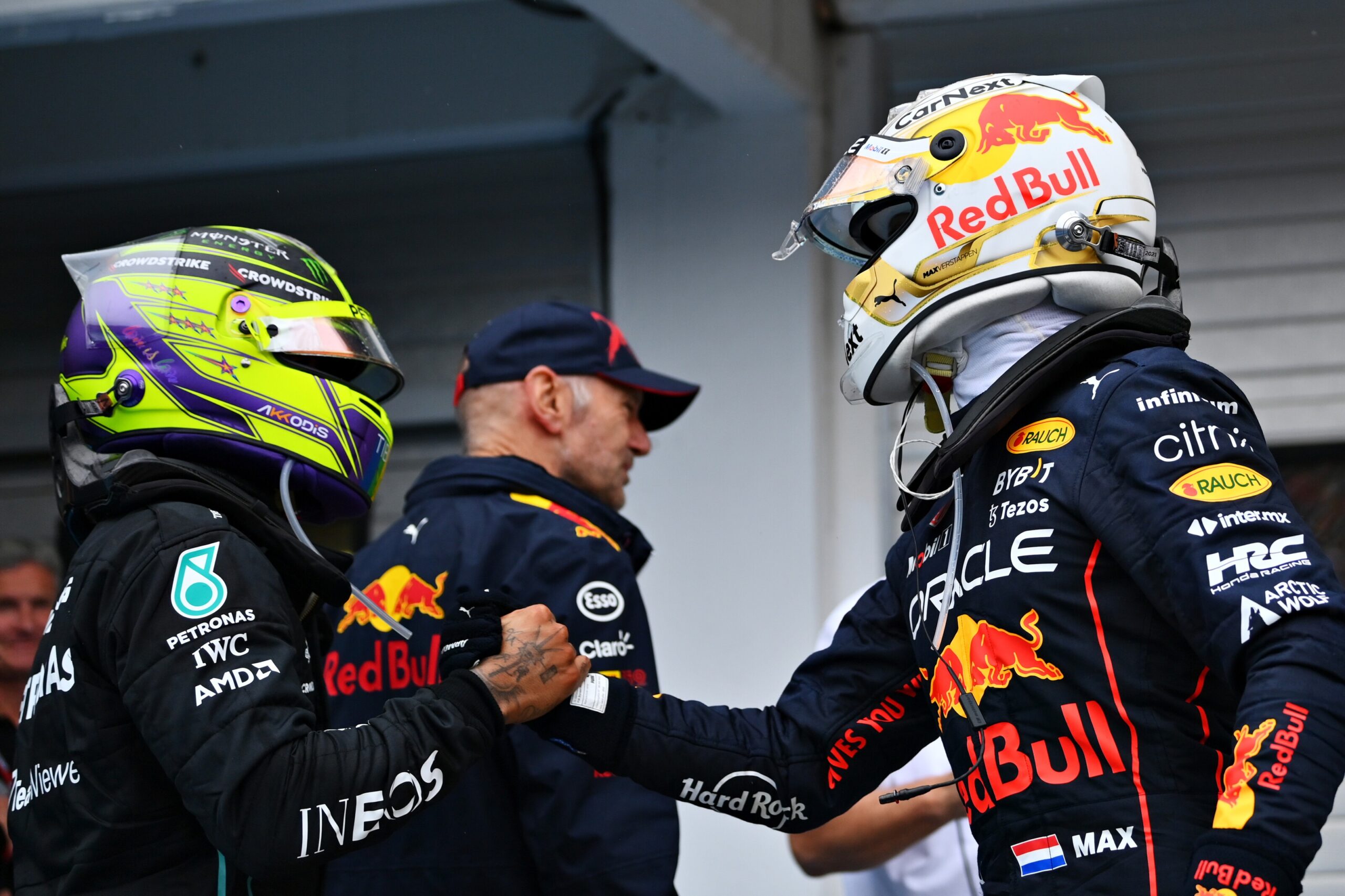
A bizarre decision to put their lead man on the hard tyre – and then later the soft – had the top three of Verstappen, Lewis Hamilton and Russell laughing in the cool-down room.
It dropped him from the lead to sixth and allowed Verstappen to win, despite having spun shortly after passing the helpless Leclerc.
Speaking of Mercedes, that makes back-to-back double podiums for the Silver Arrows and five in a row for Hamilton.
Image credit: Getty Images
They appear finally to be gaining an understanding of their new car and – depending on the impact of the new Technical Directive at the Belgian Grand Prix – could truly fight for wins in the remainder of the season.
Something which would be most welcome to prevent the season petering out in total Verstappen dominance.
And Finally, the Silliest of Silly Seasons
Within 48 hours of the Hungarian Grand Prix, the F1 driver conveyor belt had gone into meltdown.
With Sebastian Vettel having announced his upcoming retirement in Hungary, Fernando Alonso shocked the paddock on Monday by announcing he would be filling the vacant Aston Martin seat.
That led Alpine to announce Oscar Piastri’s promotion… Only for Piastri – after a couple of hours of deafening silence – to totally denounce said announcement.
I understand that, without my agreement, Alpine F1 have put out a press release late this afternoon that I am driving for them next year. This is wrong and I have not signed a contract with Alpine for 2023. I will not be driving for Alpine next year.
As things stand at the time of writing, it would appear that he will be replacing compatriot Daniel Ricciardo at McLaren next season.
The Honey Badger star that once shone so brightly is now flickering and in danger of being totally extinguished.
It would appear his only hope is returning to the Alpine seat – albeit Renault at that point – which he abandoned at the end of 2020, and perhaps rediscovering some form there.
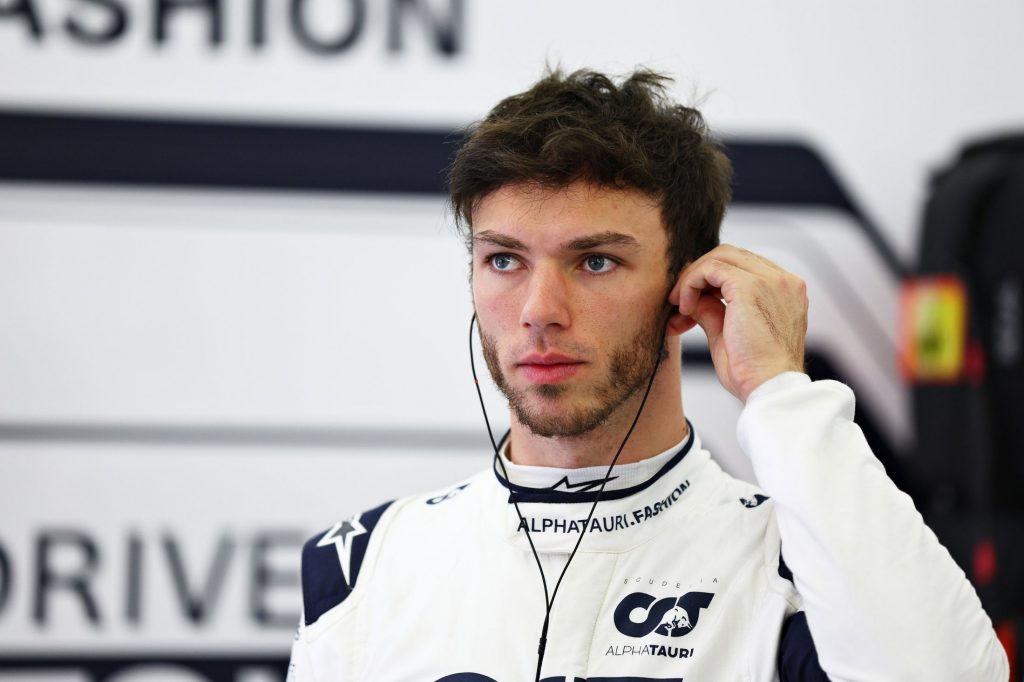
There is also talk of the French marque going for an all-French line-up, however, with Esteban Ocon being joined by Pierre Gasly.
Image credit: Getty Images
Gasly supposedly has an exit clause in his contract that allows him to leave for a team who are higher in the standings than AlphaTauri – which is currently most teams – and surely can’t be content stagnating in a Red Bull feeder system from which he will almost certainly never gain a promotion again.
Nicholas Latifi is expected to leave the sport, with Formula E champion Nyck de Vries and Williams academy driver Logan Sargeant seemingly the frontrunners to replace him.
Zhou Guanyu looks reasonably likely to retain his seat at Alfa, despite the promising Théo Pourchaire waiting in the wings and fighting for the Formula 2 title.
And as for Haas, it would surely only be a desperate Ricciardo – on a significantly lower wage – that could usurp Mick Schumacher.
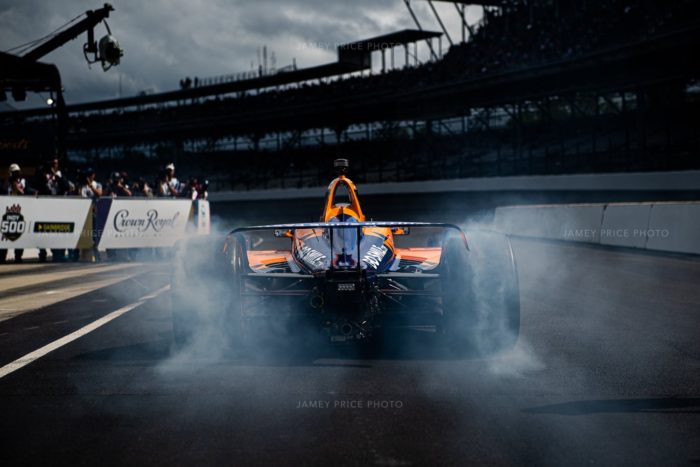
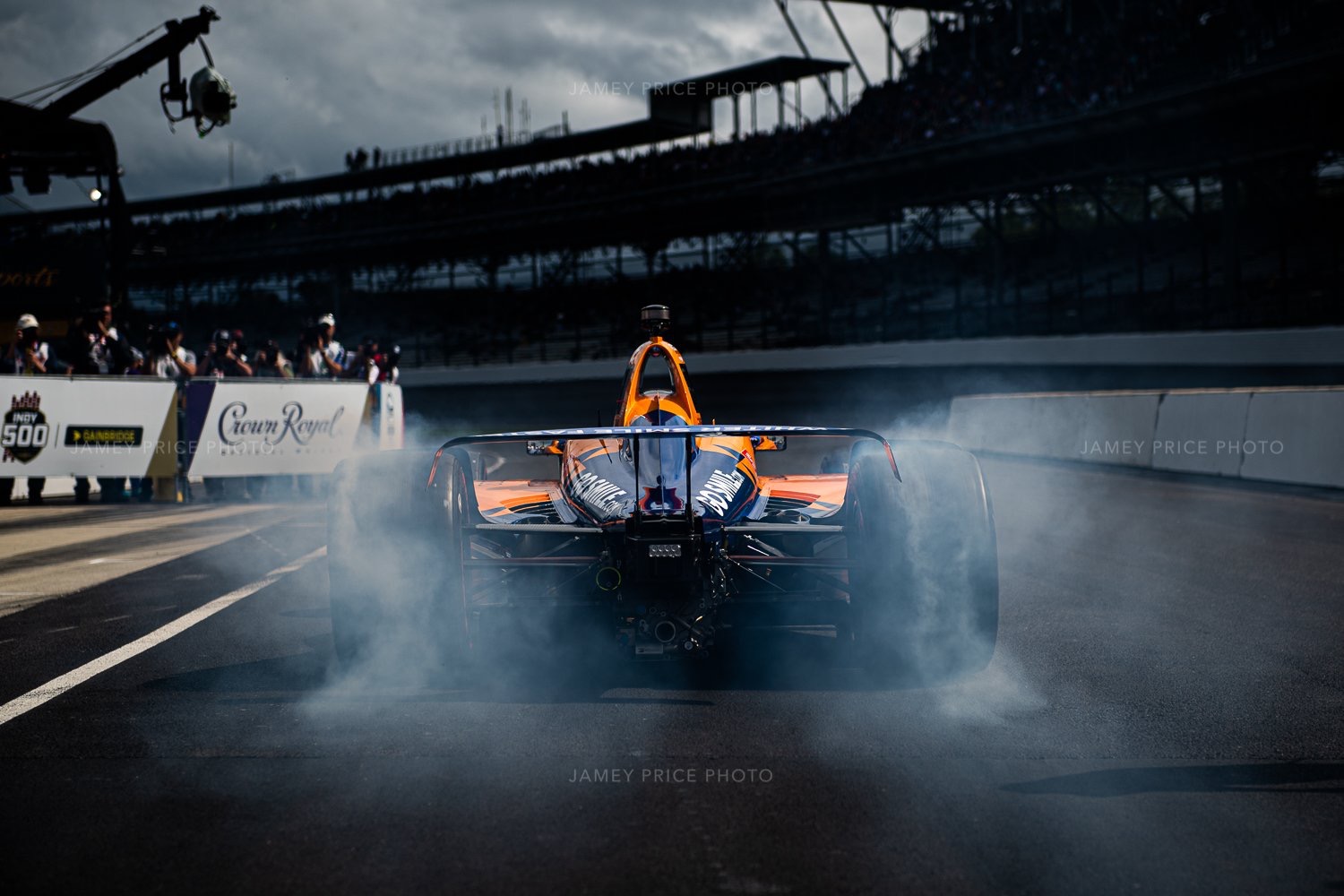
Slightly off-topic but a quick word on Fernando Alonso and his Indy 500 attempt this year in his quest to achieve the Triple Crown of Motorsport.
As Alonso completed his lap of honour at (most likely) his final Formula 1 race last November in Abu Dhabi, team boss Zak Brown said over the radio, “You are a champ! Let’s go win the Triple Crown”. But here we are six months later with Alonso and his team embarrassed, having not even qualified for the Indianapolis event.
The lead-up to the qualifying session was fraught with issues. Alonso lost the majority of the first practice day with an electrical issue, before a pretty nasty crash during the second. McLaren struggled to build a new car, having also discovered an engine problem, and the Spaniard did not run at all on the third day, leaving just the final practice day in which to do all their preparations. Alonso narrowly missed the cut-off in qualifying on Saturday, finishing 31st when the top 30 qualify, meaning he had to compete in yesterday’s ‘Bump Day’. This is when the bottom drivers compete for the final three spots available for the race. Alonso finished fourth of the six drivers competing, thus narrowly missing out again. This time by just 0.019mph.
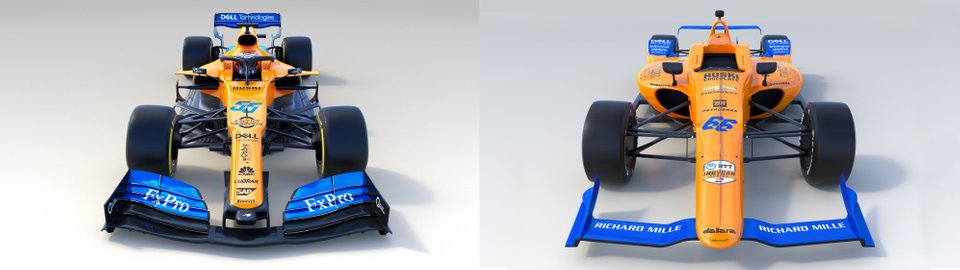
McLaren’s choice to set up their own team from scratch was brave but not totally unheard of for the Indy 500. The project has struggled from the outset, however, with many questioning decisions they have made throughout the process. Namely that they built the car in England, teamed up with Carlin, who have only 2 years of IndyCar experience, and scheduled only one test day before the first official test.
Image credit: McLaren
The situation was further complicated by Alonso’s Toyota contract from the World Endurance Championship which meant that Honda were unable to provide him an engine. They had said they were willing to, despite their largely uncomfortable recent history with McLaren in F1, but with that contract in place, their choice of teams to link up with was limited. Penske, the only available larger team, were not interested.
McLaren have given an impression of arrogance through this endeavour and it has ended up in a pretty embarrassing position for their company and brand. You wonder whether Alonso will now seek to move to a more established team for next year. His patience with McLaren in F1 was commendable in recent years but I doubt he will commit another year to this project when he has apparently made a good impression in the Indy paddock and would likely be taken on by the big-hitters – certainly once his Toyota contract has ended next year.
Speculation regarding new Le Mans regulations could even seen Juan Pablo Montoya beat him to the Triple Crown. And Alonso would certainly not enjoy that.
In honour of Daniel Ricciardo‘s first points for Renault, this is a piece on the history of established, successful drivers leaving established, successful teams and how it worked out for them.
I’m only discussing drivers who left of their own accord – or at least as best we can tell without knowing all the ins and outs – so moves such as Damon Hill’s from Williams to Arrows in 1997 as world champion won’t be included. The 50s had a far more fluid driver-team dynamic; for example, Juan Manuel Fangio regularly changing teams depending on which he thought had the best car at that time. So let’s begin in the 60s.
Results are mixed.
Jack Brabham | 1962 | Cooper > Brabham
Jack Brabham won back-to-back championships with Cooper in 1959 and 1960 but during the second of those seasons was already becoming convinced that he could produce a better car himself, particularly once having helped design the T63 that took him to the championship. After a poor showing from Cooper in 1961, Brabham left to start the team this bore his name.
The first few years were not successful. His team suffered poor reliability, not helped by Brabham’s reluctance to spend money, and in 1965 he was beginning to consider retirement. He handed his car over to several other drivers and the lead-driver role to Dan Gurney. During that season, Gurney took the team’s first win but then announced he was leaving to start a team of his own and so Brabham decided to continue.
It was a good decision. Largely thanks to an inspired decision regarding the new engine regulations, 1966 saw Brabham win his third world championship. And in doing so, became the only man to win the world championship in a car that carried his own name. A record that still stands and likely will for a long time.
Success? Definitely.
Emerson Fittipaldi | 1976 | McLaren > Copersucar
Titles in 1972 with Lotus and 1974 with McLaren saw Emerson Fittipaldi become the youngest double world champion in the history of the sport. A record that lasted more than two decades until Michael Schumacher‘s second title in 1995. Fittipaldi finished the 1975 season as runner-up to the Ferrari of Niki Lauda before shocking the F1 world by announcing he was leaving McLaren for Copersucar – a team funded by a Brazilian sugar marketing company and run by his brother, Wilson.
13th place on his debut set the tone for the venture, however. The Brazilian never won again and managed only two podiums in the remainder of his career, staying at the team until retiring at the end of 1980. He moved into management of the team but it folded in 1982.
Meanwhile, James Hunt won the 1976 world title in the seat Fittipaldi had vacated…
Success? Definitely not.
Niki Lauda | 1978 | Ferrari > Brabham
Niki Lauda’s relationship with Ferrari never really recovered from his decision to withdraw from the crucial Japanese Grand Prix of 1976. Having recently returned from his horrific crash at the Nürburgring and in appalling weather conditions, Lauda said “my life is worth more than a title”.
The following year, despite Lauda comfortably winning the championship, tensions continued to grow. The title was won due to consistency rather than outright pace and Lauda disliked his new teammate, Carlos Reutemann. He said he felt let down by Ferrari for them putting extra pressure on him and announced his decision to quit.
He moved to a Brabham team that had struggled for most of the 1970s and sadly for the Austrian not much was to change during his two years there, with unreliability a major issue. That was except for one race and one infamous car – the Brabham BT46B. A radical design that became known as the ‘Fan Car’. It won its first and only race but was never used again; other teams vigorously protested its legality and team owner Bernie Ecclestone did not want any legal complications whilst he worked on his acquisition of the sport’s commercial rights.
At the end of 1979, Lauda retired, stating he had “no more desire to drive around in circles”. He would return in 1982 with McLaren, however, and win the world championship in 1984.
Success? Not at Brabham but the decision was understandable and he got his third title in the end.
James Hunt | 1979 | McLaren > Wolf
Things went steadily downhill for James Hunt at McLaren after winning the 1976 World Championship. His title defence derailed early in the season due to problems with the new car and, whilst that season ended reasonably well, 1978 was a disaster. Lotus had developed very effective ‘ground effect’ aerodynamics and McLaren were slow to respond. The car was eventually revised midway through the season but it did not work. This, along with the death of his close friend Ronnie Peterson, crushed Hunt’s motivation.
Despite a poor 1978, Hunt was still very much in demand. He turned down an offer from Ferrari, due to their complicated political environment, electing instead to move to Walter Wolf Racing. A team which had won its very first race and powered Jody Scheckter to second in the world championship in its first season. However, the team’s ground effect car was uncompetitive and unreliable.
Hunt retired from six of the first seven races and, after the Monaco Grand Prix, announced his immediate retirement from the sport. He could only watch on as Scheckter won the championship in the Ferrari seat he had turned down.
Comebacks almost transpired. First as a replacement for the injured Alain Prost in 1980 but Hunt broke his leg whilst skiing. Then in 1982 he was offered a drive at Brabham by Bernie Ecclestone but turned it down. And even in 1990, at least somewhat due to financial troubles, Hunt considered a comeback with Williams – testing a modern car but running several seconds off the pace.
Success? No. But leaving McLaren was less the issue than turning down Ferrari.
Nelson Piquet | 1988 | Williams > Lotus
Despite winning the title in 1987 at Williams, Nelson Piquet became obsessed with his feeling that he was not being given the undisputed number one driver status he claims was promised to him by the team. Even going as far as saying they actually favoured Nigel Mansell. And so he left for Lotus, having been promised the status he craved there.
Honda, who paid most of his salary, were unhappy with Williams and moved their engines along with the Brazilian. McLaren, also with Honda power, then dominated the next two seasons. Lotus were stagnating and Piquet himself also wasn’t performing. It could be that he was never the same driver after a bad concussion suffered in a crash the previous year, but he significantly harmed his reputation and resorted to attacking his rivals via petty comments in the media.
He later moved to Benetton and won three races in two seasons but never again challenged for the championship.
Success? No and dragged his former team down with him too.
Michael Schumacher | 1996 | Benetton > Ferrari
You could argue that moving to Ferrari is never going to be that much of a risk, certainly compared to some others on this list. But Michael Schumacher left Benetton as the constructors’ champions, having won back-to-back titles himself with them, for a Ferrari team that hadn’t won a drivers’ title since 1979 and had only won two races in the past five seasons.
But Schumacher had grown tired of the way Benetton was run and wanted both an increased salary and a new project.
He got both and we all know how the next decade with the Scuderia played out. After a few years of near misses (or distinctly not missing Jacques Villeneuve’s Williams and subsequently being disqualified from the 1997 season), Schumacher dominated the early 2000s, winning every title available between 2000 and 2004.
Fernando Alonso then arrived and dethroned him with the seven-time champion retiring at the end of 2006. A brief return to the sport with Mercedes in 2010 produced just one podium but Schumacher will always be remembered as the dominant force in Ferrari red.
Success?The success story.
Jacques Villeneuve | 1999 | Williams > BAR
After winning both championships in 1997, Williams had a strange title defence, both in terms of livery – in red for the first time – and performance, without a single win. They had been hampered by the underpowered Mecachrome engine and Villeneuve decided to join the newly formed BAR team for 1999. That decision was also certainly swayed by his friend and personal manager, Craig Pollock, who partly owned the team.
They had lofty ambitions and made boastful claims of winning the championship in their debut year. Claims that ultimately became embarrassing when they failed even to score a point, Villeneuve setting an unwanted record of failing to finish the first 11 races of the season.
During the four seasons that followed, BAR improved somewhat but never enough to take a win. Pollock was sacked in 2002 and, after being outpaced by a young Jenson Button in 2003, Villeneuve left the team. Without a drive, he was forced into a sabbatical before returning for three races with Renault at the end of the year but was off the pace.
He eventually retired from F1 during the 2006 season, whilst racing for BMW Sauber, having effectively been replaced by Robert Kubica after refusing to be part of a potential ‘shoot-out’ with the Pole.
Success? Not at all. A career that nose-dived.
Lewis Hamilton | 2013 | McLaren > Mercedes
When Lewis Hamilton announced he was moving from McLaren to Mercedes for the 2013 season, there were not many that thought it was a wise decision. McLaren were serial winners and, whilst the last few seasons had seen them second or third best, with Red Bull dominant, Mercedes had generally been also-rans since returning to the sport in 2010. But Niki Lauda had convinced Hamilton that it was a wise decision. And boy, was he right.
There was a solid first season with a victory and fourth place in the championship. But then in 2014, having spent years preparing for the new regulations and hybrid engines, Mercedes produced a car that was in a different league to the rest and Hamilton himself found a new level of excellence.
How certain he, or Lauda, were of the Silver Arrows’ impending dominance is up for debate. But Hamilton’s place now amongst the greats is not. He has won four of the last five titles, narrowly losing out to teammate Nico Rosberg in 2016 after a season plagued with unreliability, and is closing in on Schumacher’s all-time records. Records that most thought would never be threatened.
Whether or not, he can pass those records, Hamilton undeniably made the correct career move. McLaren have not won a race since he left.
Success? If Schumacher is the success story then Hamilton is well on his way to replicating that story.
Fernando Alonso | 2015 | Ferrari > McLaren
Fernando Alonso could arguably be on this list on more than one occasion. At the end of 2007, he left McLaren, after the most dramatic and political of seasons, to return to Renault. Alonso won just two races in two seasons there, but his second spell with the French team had only ever been a stopgap on his journey to Ferrari.
He succeeded in joining the Scuderia in 2010 and came agonisingly close to titles in both his debut year and 2012. Poor strategy in the final race put paid to his hopes in 2010 and then, in 2012, Alonso drove arguably one of the best seasons in the history of the sport, regularly dragging an underperforming Ferrari to places it had no right to be but agonisingly lost out to Sebastian Vettel by three points, once again at the final race.
The Spaniard became disillusioned, doubting he would ever be provided with a truly title-winning machine, and made a decision that stunned the sport – to return to McLaren.
In 2008, Alonso ever rejoining McLaren would have seemed unthinkable. Indeed, it still did to most in 2014. But McLaren had linked up with Honda on their return to the sport and Alonso dreamed of emulating his hero, Ayrton Senna, and winning in a McLaren Honda.
Sadly, it was not to be. Honda struggled to catch up with the other engine manufacturers, stifled by massively complex technology and McLaren’s strict regime, and Alonso spent the remainder of his career once again dragging the car to places it had no right to be. But now that was the top ten, rather than the top of the podium.
Success? Alonso’s career decisions have almost become a running joke within the sport. The guy just couldn’t pick the right path. A story of what could have been.
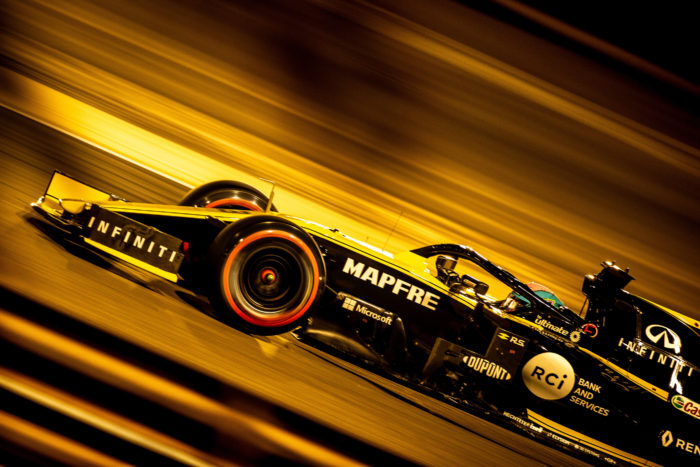
Daniel Ricciardo | 2019 | Red Bull > Renault
Daniel Ricciardo worked his way through the Red Bull junior system, progressing to Toro Rosso in 2012 and then being promoted to the big boy seat in 2014, promptly putting the reigning four-time world champion, Vettel, in his place. Ricciardo beat him fair and square and, when Vettel left the team at the end of the season, he became the team leader.
He then spent the last four seasons picking up plucky wins against the odds and pulling off audacious overtakes from way too far back, or “licking the stamp and sending it” as he’d put it. But the ever-likeable Aussie came to feel that Red Bull were beginning to favour their new golden boy, Max Verstappen, and decided to throw the dice with a move to Renault.
Only time will tell how he will compare to the others on this list. It could be an inspired move like Hamilton or a failed experiment like Villeneuve. Renault certainly have the aim of breaking into the current top 3 in years to come and there are new regulations coming in 2021 that could change the playing field completely.
We will just have to wait and see which part of that field Renault end up in.
Just a quick post on a new McLaren role for a certain Fernando Alonso.
Alonso has become an ambassador for McLaren and it is planned for him to test the car later in the year. He isn’t participating in the pre-season tests to ensure that the new drivers can familiarise themselves as much as possible with the new car. Very decent of him.
There has been a lot of speculation as to whether this is the Spaniard keeping his options open in case this year’s car is as much of a step forward as McLaren hope – and that has looked the case so far in testing – with a view to maybe worming his way back into a seat in 2020. But this is far from a unique situation. Jenson Button was given an ambassadorial role in 2017 and, beyond PR appearances and so forth, that only amounted to one fill-in drive at Monaco when Alonso decided to swan off to the Indy 500. And it would take either Carlos Sainz or Lando Norris being considerably off the pace for them to bump one of them down at the start of a promising new relationship.
Alonso said the role was ‘a true honour’ and ‘just the beginning’. Whether he’s referring to McLaren or F1 in general, it’s far from the beginning of his story… But if this move keeps one of the sport’s greatest characters in and around the paddock for a bit longer, that can only be seen as a good thing.
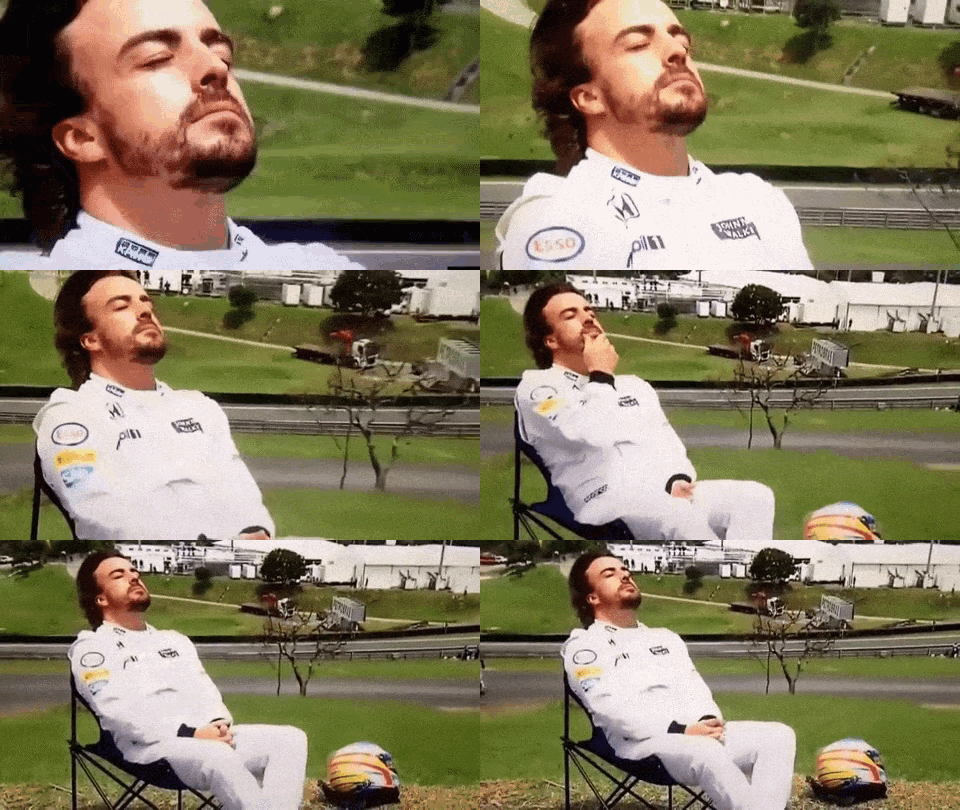
Alonso will have a bit more spare time in which to sunbathe this year.