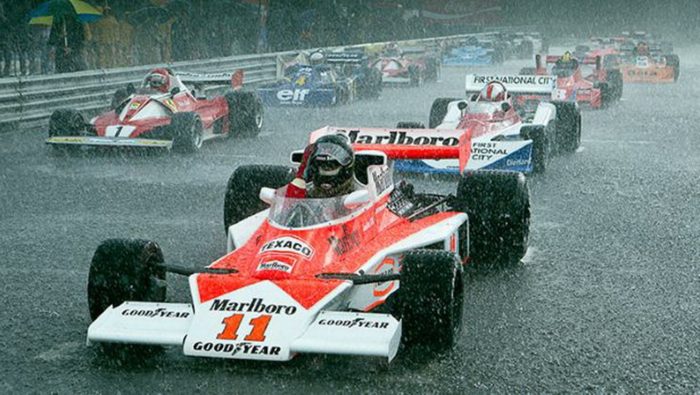
Kimi Räikkönen | “So many of the faces that were around me when I made my F1 debut in 2001 are still here and the unique atmosphere of this team is what gives me that extra motivation to keep going. I wouldn’t be here if I didn’t believe in the team’s project and in what we feel we can achieve together.”
Lewis Hamilton | “You want to look back and say I was a part of something much bigger than myself, than my team, than the sport, and I did it with a whole group of people and a lot of force against us, but also a lot of force because there was many of us pushing in the same direction”
Sergio Pérez | [On the prospect of joining Red Bull] “It’s a bit of a hot seat, no? But it’s an opportunity to be with a top team, that are fighting Mercedes pretty much every single race. The season is coming to an end so I think it’s important for teams to know what’s going on, what’s happening going forwards, and for drivers too. I’m looking at all my possible options, and I cannot take too long anymore.”
Lewis Hamilton won an entertaining race as Formula 1 made its first-ever trip to Portimão for the 2020 Portuguese Grand Prix.
All weekend, the drivers and teams struggled to get to grips (no pun intended) with the intricacies and idiosyncrasies of the tyres at the newly resurfaced, cold track. It led to an interesting qualifying session – where Hamilton took pole on the theoretically slower, medium compound – and a manic opening few laps.
On their medium tyres, the Mercedes – and Charles Leclerc, starting fourth after another excellent qualifying performance – struggled to produce enough heat on the cold, damp surface as a light drizzle continued to fall. Hamilton, who would later describe himself as “overly cautious”, took it very easy, more than aware that he would be the effective guinea pig for those behind him.
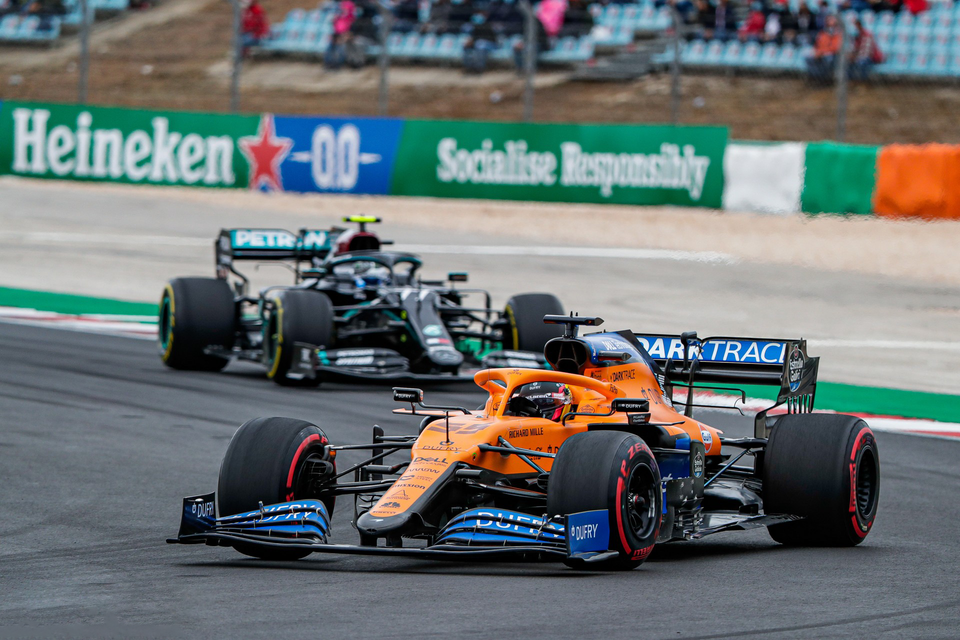
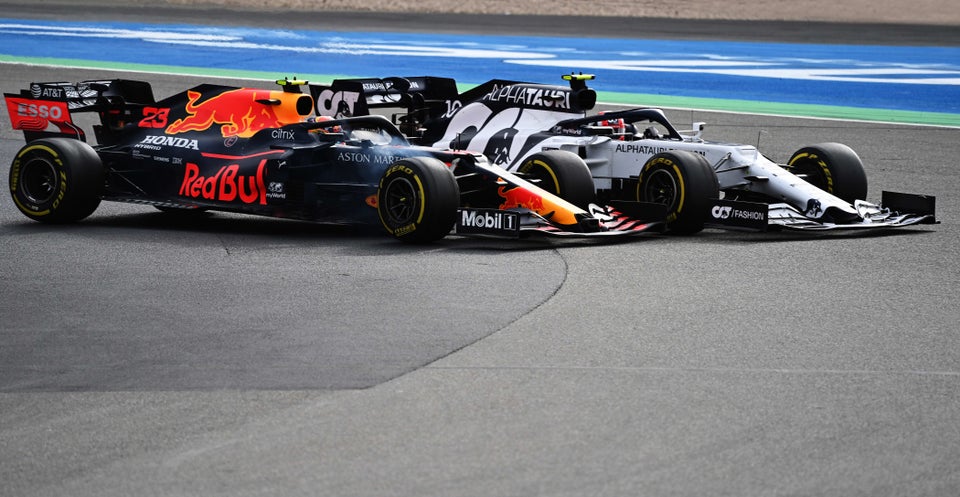
Speaking of those behind him, a good start from Sergio Pérez saw him alongside Max Verstappen at Turn 2 but would also see him facing the wrong way moments later as the Dutchman understeered into the Racing Point and pitched him off the track. The McLarens, meanwhile, were flying. Bottas passed Hamilton for the lead towards the end of the first lap but was then himself passed by Carlos Sainz, up from seventh on the grid and fully utilising the extra heat in his soft tyres. The sister McLaren of Lando Norris was also up to fourth, from eighth on the grid, and – most impressive of all – Kimi Räikkönen had passed no fewer than 11 cars on the opening lap, clearly drawing on his two years of rallying experience.
Image credit: XPB Images
Normality was soon restored once the medium tyres had reached temperature, however, with a top three of Bottas, Hamilton and Verstappen. For a while, the World Champion bided his time, staying around two seconds behind his teammate, but on lap 15 he made his move. Fastest lap followed fastest lap and he was soon within DRS range. It was a simple pass down the start/finish straight and, from there, Hamilton never looked back.
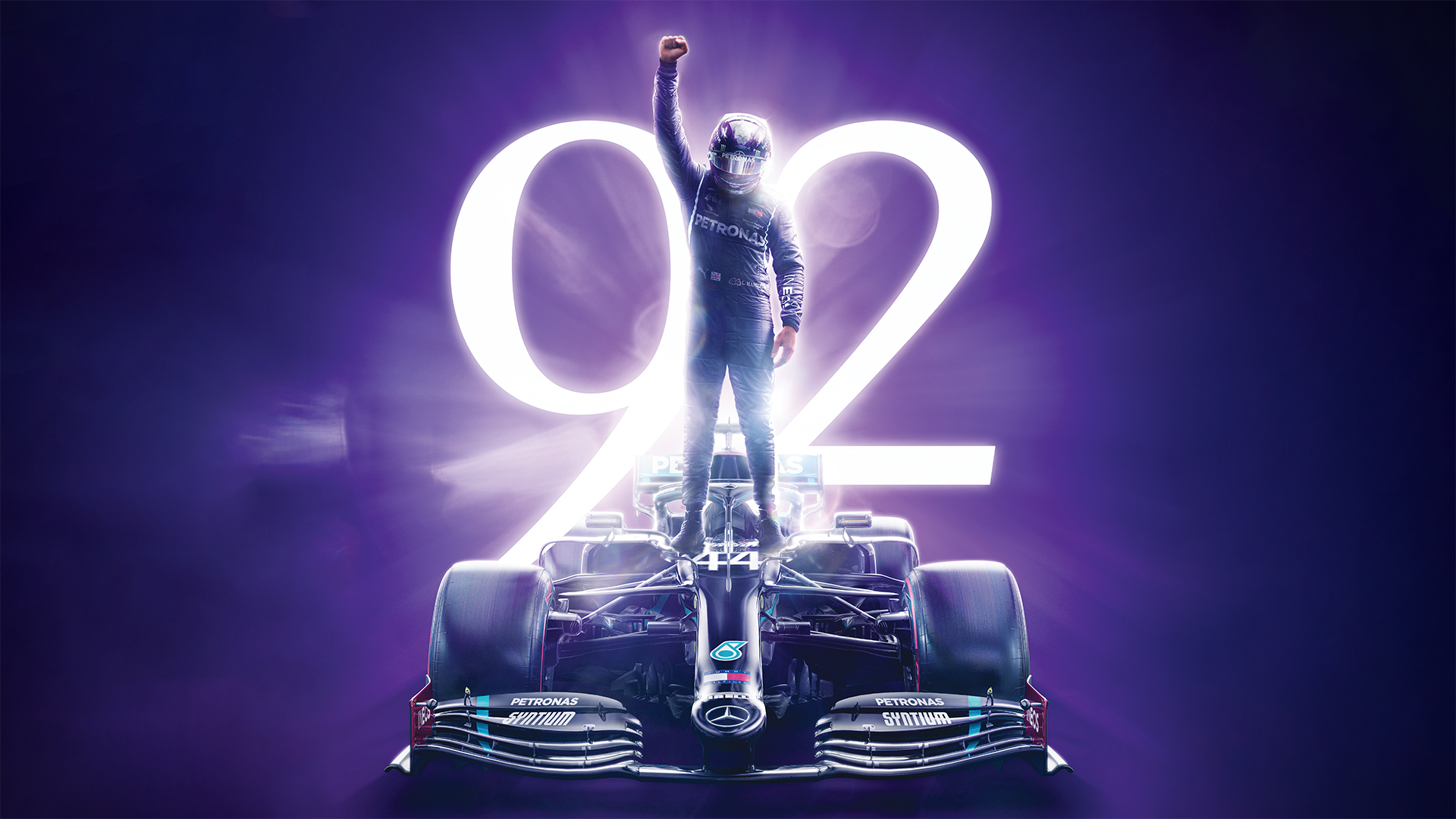
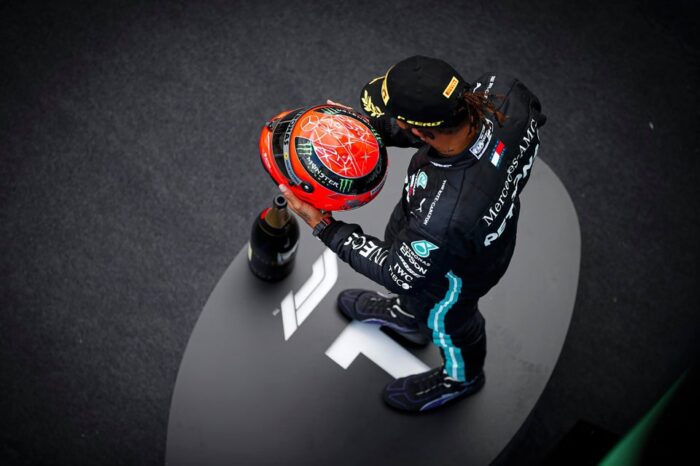
He built a gap of 10 seconds as Mercedes extended the first stint on both cars, before finally pitting the pair on laps 40 and 41. By the chequered flag, car number 44 had extended its lead to over 25 seconds. That is a rarity in this era of taking as little as possible out of the tyres, car and engine, but the chilly Algarve circuit meant it was a necessity to keep temperature in the tyres and, for once, Hamilton’s full potential was revealed. It was a fitting way in which to break Michael Schumacher’s all-time win record. 92 victories – a simply mind-boggling achievement and another step towards matching another Schumacher record with a seventh world title; Hamilton now has a 77-point lead in the standings with five races to go.
Verstappen spent the race in his now trademark, lonely position, unable to keep pace with the superior Mercedes but miles clear of the rest of the field. Behind him, Leclerc was similarly isolated and at least as impressive. The only non-Mercedes driver to start on the medium, the Monegasque had predictably fallen back at the start, but recovered well to fourth and was the last man to remain unlapped by the all-conquering leader.
Sergio Pérez produced an even better recovery after his clash with Verstappen on the opening lap and was running fifth in the closing laps. He would fall back, though, as he struggled on the soft tyres, first being passed by Pierre Gasly, on yet another strong weekend for the Frenchman, and then Sainz.
Esteban Ocon finished in eighth, just ahead of teammate Daniel Ricciardo, beating the Honey Badger for the first time since the 70th Anniversary Grand Prix back at the start of August. And Sebastian Vettel at least claimed his first point since Mugello on another weekend where he was thoroughly outclassed by Leclerc.
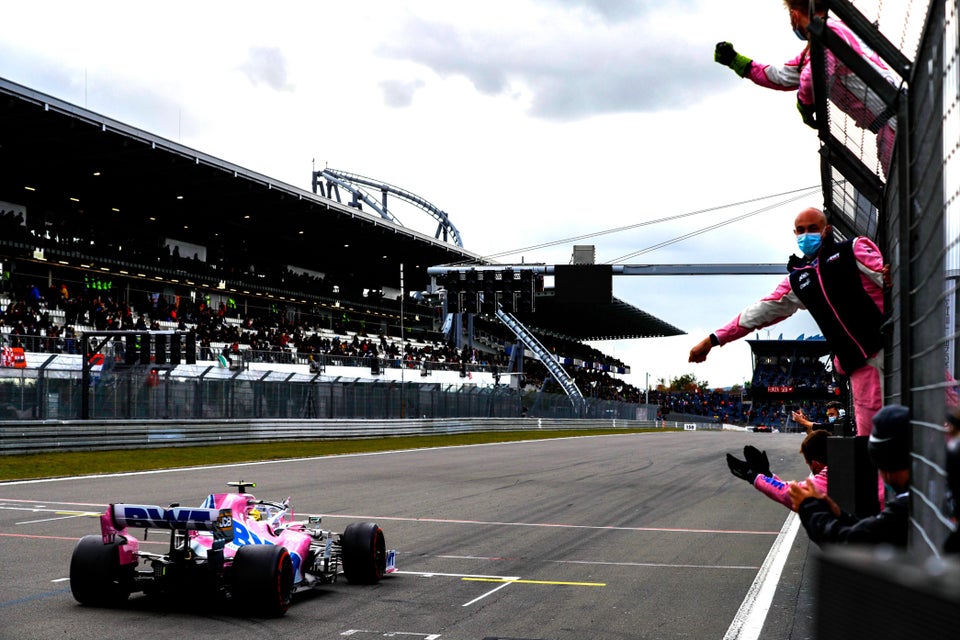
All in all, Portimão delivered a great race. The conditions helped in mixing things up somewhat, but there was some great wheel-to-wheel racing throughout the field – first Räikkonen and Sainz and then former teammates Pérez and Ocon running side-by-side for multiple corners. And it will now forever be etched into Formula 1 folklore as the venue for Hamilton’s record-breaking victory.
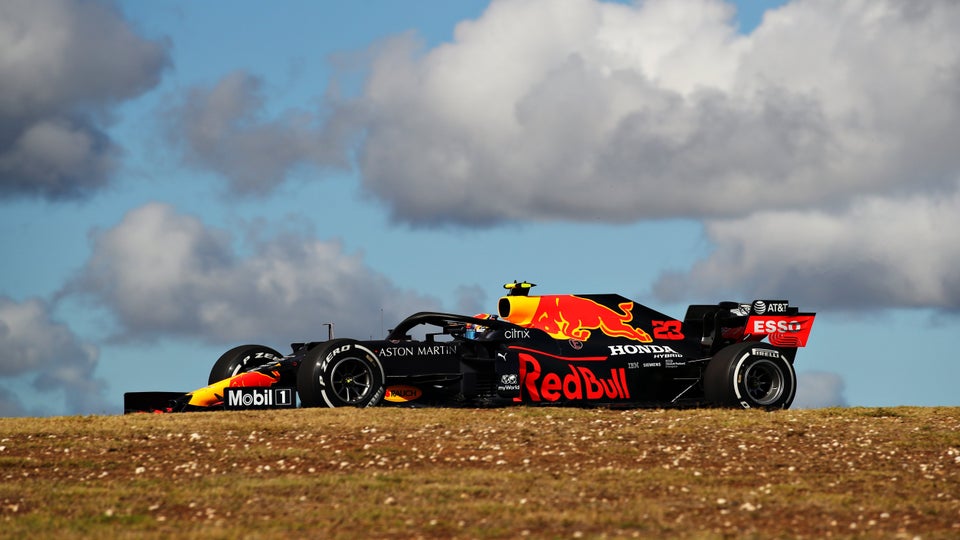
He failed in the first of those two objectives this weekend, unfortunately. Whilst ‘only’ half a second down on Verstappen in qualifying, Albon suffered another poor start and the two-stop strategy he ended up on only made matters worse as he was unable to make progress through the midfield. Being lapped by his teammate topped off another race to forget.
He would appear to be safe in his seat through to the end of 2020, but – whilst there are seemingly tensions between Red Bull and Gasly which reduce one threat to Albon – Horner and Helmut Marko now appear to be open to the idea of hiring from outside the Red Bull driver pool and, with Pérez and Nico Hülkenberg currently unemployed next year, there are some very tempting alternatives.
Grosjean Pulls No Punches
Image credit: XPB Images
With the announcement ahead of the Portuguese Grand Prix that Romain Grosjean and Kevin Magnussen would be let go by the Haas team at the end of 2020, the drivers now have no reason to hold back.
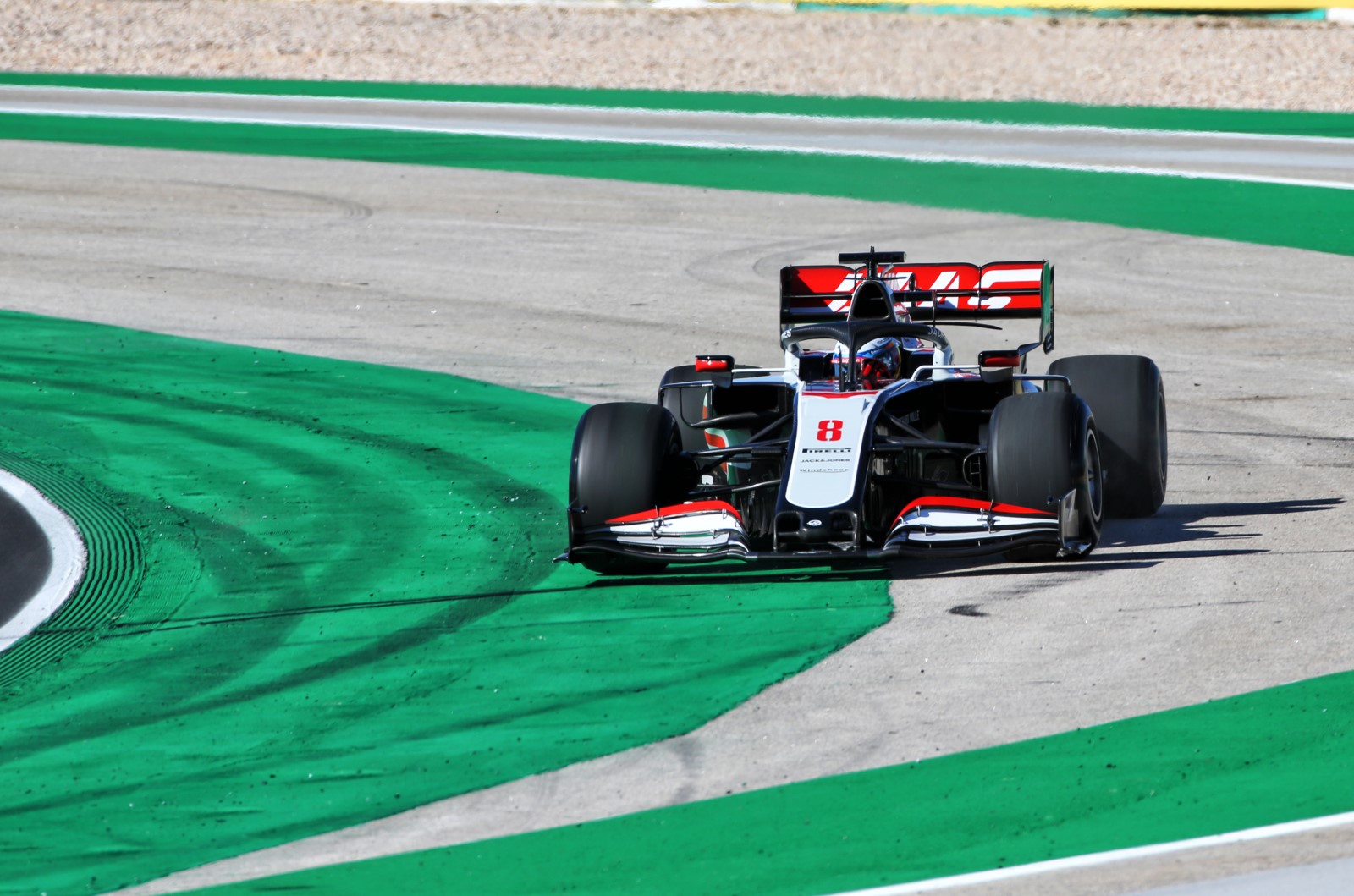
Grosjean has been especially outspoken, stating that he believed the VF-20 was essentially the same car as in pre-season testing and now “the slowest in the paddock”.
“When it gets hot at the end of third practice you get the ride height and then it cools down – and then you start qualifying with a different one and every lap the rear suspension heats up and the rear ride height changes. Normally we’re struggling a little bit but this weekend the magnitude is quite bigger and we’ve got no idea why.”
There are deep-set issues at Haas. They have been going backwards rapidly since 2018 and, whilst becoming a cult hero for his entertaining appearances in Drive to Survive, surely Team Principal Guenther Steiner must be held accountable. We all hope that Gene Haas’s patience with the sport continues and we don’t lose another team, but he will know that changes need to be made to the current system.
The Portuguese Grand Prix in 60 Seconds
Answering the Burning Questions
Who will adjust best to a brand-new circuit to F1? Nobody adjusted especially well to the tricky conditions but, predictably, Mercedes came out as the class of the field.
Can Lewis Hamilton make the all-time win record his own this weekend? He can.
Which of the teams battling for third in the Constructors’ Championship will have the best weekend? It was very even between all three, with McLaren taking marginally more points than Renault and Racing Point.
Will there be any big driver line-up announcements? Not yet, but the rumours are getting more confident.
Surely we’ll get rain at one of these European October/November races? Right?! A bit of drizzle kept things interesting throughout but still no downpour.
Will there be any big driver line-up announcements?
Surely we’ll get rain at one of these European October/November races? Right?!
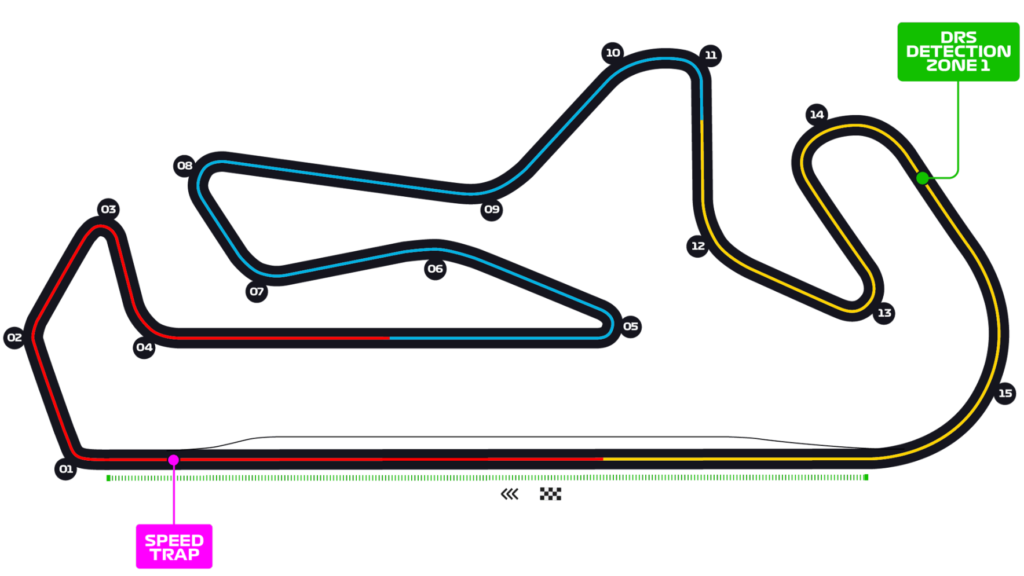
The Track
The Stats
Track Length: 4.653 km
Laps: 66
Race Distance: 306.826 km
First Grand Prix: 2020 (Portimão) | 1958 (Portuguese GP)
Race Lap Record: n/a
Outright Lap Record: n/a
Most Driver Wins: Alain Prost | 1984, 1987, 1988 (Portugal)
Most Constructor Wins: Williams | 1986, 1991, 1992, 1994, 1995, 1996 (Portugal)
The Weather
The Quotes
Romain Grosjean | “The last chapter is closed and the book is finished. I’ve been with Haas F1 team since day 1. Five years during which we went through highs and lows but the journey was worth it.”
Kevin Magnussen | “I have had a great time with the team for four years and I look back at a great journey. I am still working on my plans for the future, which I will announce in due course.”
Otmar Szafnauer | “If I thought our process was wrong [regarding Lance Stroll’s positive test], I would change it. I’m not going to do anything else.”
It’s been far too long since I posted a quiz. So, here’s a brand new one!
Helpful hint: who knew James Hunt was such a prolific qualifier?
Once you’re done, be sure to check out my other quizzes here.
(Whilst pairings of just 1-2 races have been removed from the early years, the number of teammates in the 50s and 60s has somewhat skewed the ratios of early drivers. * indicates the driver is currently active.)
It was a historic day, at a fittingly historic circuit, as Lewis Hamilton won the Eifel Grand Prix at the Nürburgring and, in doing so, matched Michael Schumacher‘s all-time record of 91 race wins. The World Champion had to work for this momentous victory, overcoming an in-form teammate, tricky conditions and a safety car.
Valtteri Bottas had taken an impressive pole on Saturday and kept up that gutsy approach on Sunday as, after Hamilton had made the better start and taken the inside line at the first corner, he kept his foot in whilst running well wide and somehow held onto the lead. Hamilton later mentioned how much that had impressed him.
The Finn kept the lead for 13 laps but, as his tyres began to suffer and Hamilton started to exert more pressure, he locked up into the first corner and dropped behind his teammate. The flat spots on his tyres meant he was forced to pit and change to a two-stop strategy. That may well have worked out in his favour, but a VSC after George Russell’s retirement gave Hamilton and Max Verstappen a cheap pit stop and then Bottas’s day went from bad to worse as a suspected MGU-H failure brought about his retirement. A 69-point deficit in the championship standings is now looking fairly insurmountable.
Insurmountable was a word often used about Schumacher’s records, though, and here we are.
https://www.youtube.com/watch?v=naerwOj5chM
Once his teammate had retired, Hamilton set about keeping the feisty Dutchman in the Red Bull at arm’s length and opened out a lead of around 10 seconds, whilst looking likely to lap every other car in the process. That was all cancelled out by a safety car on lap 44, however. It was another debatable call where a VSC would probably have sufficed and, once the lapped cars had been allowed to pass and catch back up to the field, Hamilton and Verstappen were at a significant disadvantage. In the freezing conditions, high up in the Eifel mountains, their tyres were now far too cold, having sat behind the safety car for a needless amount of time.
They would just about hang on at the restart – the Mercedes DAS system being thoroughly utilised for the first time – and, from there, Hamilton’s win looked secure. Behind the two frontrunners, Daniel Ricciardo held off the challenge of Sergio Pérez to finally earn that elusive podium for Renault. It has been a long time coming – Renault’s last podium was nine years ago – but Cyril Abiteboul’s trip to the tattoo parlour can now be booked. In all the excitement, the Aussie even forgot to do a ‘shoey’, much to his horror when this was pointed out later on…
Carlos Sainz found himself in fifth on a weekend where he had struggled with the latest aerodynamic updates, whilst teammate Lando Norris returned to his 2019 levels of luck with an engine issue denying him a shot at the podium. He nursed the problem for a long time before the anti-stall kicked in, leaving him powerless and, ultimately, sat in a deckchair.
Further back, Pierre Gasly took an opportunistic sixth ahead of Charles Leclerc, who once again outclassed teammate Sebastian Vettel all weekend. Nico Hülkenberg earned driver of the day in eighth after getting an even later call than he had for his previous substitute role in Silverstone. Lance Stroll seemingly developed a stomach bug and was unable to participate so the Hulk rushed to the Nürburgring just in time for Q1. He unsurprisingly qualified last with absolutely no practice but recovered incredibly well on race day and made yet another great case for a race seat in 2021.
Image credit: Motorsport Images
Romain Grosjean defied a sore finger to score his first points of the season in ninth and Antonio Giovinazzi held off Vettel for the final point, after having been hampered by the timing of the safety car.
Another Tough Day for Albon
Alexander Albon was slightly closer to Verstappen in qualifying – albeit half a second back and behind the Ferrari of Leclerc – and in a decent position to achieve the minimum that Red Bull really want from him. That is, being in fourth so that they can put more pressure on Mercedes in terms of strategy and potentially pick up the pieces from any misfortune out front.
But again, it was not to be.
A lock-up on the first lap led to an early first pit stop and, yet again, it would have to be a recovery drive from there. Having made it back into the top 10, he needlessly cut across in front of sister-teammate Daniil Kvyat; that lost the Russian his front wing and earned Albon a five-second penalty. He was very fortunate to escape without a puncture.
A few laps later he caught the other AlphaTauri of Pierre Gasly and, whilst attempting a pass into the first corner, locked-up again, very nearly spearing into the side of the Frenchman and then radioed in saying, “they race me so hard”. Martin Brundle’s retort in commentary of “Welcome to Formula 1” sums it up really.
Image credit: Getty Images
Albon was forced to retire shortly after as apparently a stone had punctured his radiator. The awkward nature of the radio message conveying to him that he would be retiring, combined with the poor race to that point, has led to some theories that he was retired mid-race out of ’embarrassment’ or to be fired.
Whilst that seems highly unlikely, it is not looking good for the Anglo-Thai driver. With Hülkenberg and Pérez both available next year and persistently proving their worth in tricky circumstances, it seems it is only Helmut Marko’s insistence upon hiring strictly from within the Red Bull driver pool that is keeping him in a job.
How High Can Hamilton Go?
With Hamilton now looking more certain than ever to secure a seventh world title by the end of the year and thus match another Schumacher record, how high can he raise the numbers that will be etched next to his name when he leaves the sport?
The next obvious landmark is 100.
100 poles could well happen this year and 100 wins is starting to seem a certainty at some point next year, considering the level of dominance shown by the Silver Arrows and the lack of evolution between this year’s cars and those of 2021. Some even talk of 10 world titles. But the new regulations in 2022 make anything from then a total unknown at this point and Hamilton is yet to officially sign a contract even for next season.
Wherever the high-tide marks settle, they may well look insurmountable as Schumacher’s did before. But, as the great man himself said, “records are there to be broken”. Maybe it could even be his son, Mick, who breaks them. For now, let’s just enjoy that we are witnessing history being made and great moments like Mick handing over a gift from the Schumacher family to Hamilton to honour his achievement.
The Eifel Grand Prix in 60 Seconds
Answering the Burning Questions
Can Lewis Hamilton match Michael Schumacher’s win record this weekend? He can!
Or can Valtteri Bottas push on after his win in Russia? He certainly pushed on in qualifying, but things gradually unravelled in the race.
Will there be any more stewarding or penalty controversies? Not particularly, other than some debate about the safety car.
Can Alexander Albon have a strong weekend and ease some pressure? Not in the slightest.
Will the cold weather throw up any curveballs? Will we get a wet and wild weekend? The cold weather did spice things up a little. But Friday was too wet to the point of no running and then we only got a few drops of rain on Saturday and Sunday. Until the traditional downpour just after the race, obviously…
Can Lewis Hamilton match Michael Schumacher’s win record this weekend?
Or can Valtteri Bottas push on after his win in Russia?
Will there be any more stewarding or penalty controversies?
Can Alexander Albon have a strong weekend and ease some pressure?
Will the cold weather throw up any curveballs? Will we get a wet and wild weekend?
The Track
The Stats
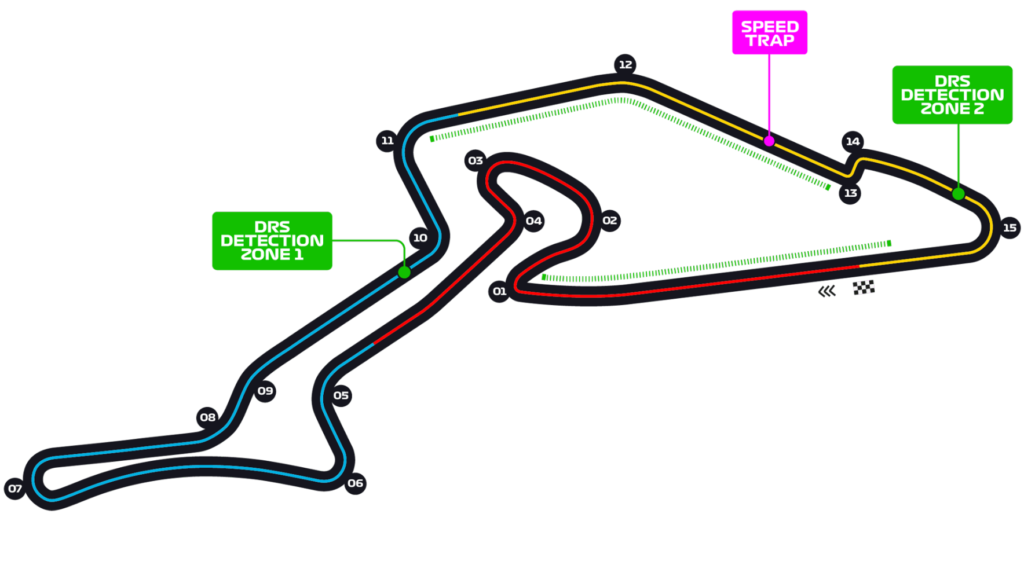
Track Length: 5.148 km
Laps: 60
Race Distance: 308.617 km
First Grand Prix: 1951
Race Lap Record: Michael Schumacher | Ferrari | 2004 | 1:29.468
Outright Lap Record: Michael Schumacher | Ferrari | 2004 | 1:28.351
Most Driver Wins: Michael Schumacher | 1995, 2000, 2001, 2004, 2006
Most Constructor Wins: Ferrari | 1951, 1952, 1953, 1956, 1963, 1964, 1972, 1974, 1985, 2000, 2001, 2002, 2004, 2006
The Weather
The Quotes
Christian Horner | “The shifting focus within the automotive industry has led to Honda’s decision to re-deploy their resources and we understand and respect the reasoning behind this. Their decision presents obvious challenges for us as a team but we have been here before and with our strength in depth we are well prepared and equipped to respond effectively.”
Max Verstappen | “I’m just concentrating on what I have to do, and that’s try and drive the car as fast as I can…with an engine in the back. I hope I’m not going to end up like Fred Flintstone and paddle it myself!”
Sebastian Vettel | “Michael is my hero so obviously we all would like, I think first and foremost that Michael could be here this weekend and see his son taking that step.”
Kimi Räikkönen | “Obviously we have some talks with the team. It’s my decision in the end and we’ll see what it comes to be. I enjoy the racing, but obviously we have more fun when we do better.”
Formula 1 stewarding has rarely been consistent. That is something which fans and drivers have become used to over the years, but it should not be the case.
There have been plenty of baffling decisions this year. At the Styrian Grand Prix, Lance Stroll escaped punishment despite clearly forcing Daniel Ricciardo off the track whilst attempting an overtaking manoeuvre – leaving the track himself for good measure – and then keeping the position.
It seemed a ‘slam dunk’ penalty to most of the paddock, thanks to the trifecta of forcing another car off the track, violating track limits and completing an overtake off the track all in one move. As well as, arguably, rejoining in an unsafe manner as he blocked Lando Norris upon his return.
The stewards, however, saw things differently. As is often the case, there was not much of an explanation as to their decision, which deemed it a “racing incident where neither driver was wholly to blame”.
Ricciardo said he thought it was “crystal clear” that it should have resulted in a penalty and, considering all he did was avoid a collision, it is difficult to see how the stewards apportioned any blame upon him.
This has long been the crux of the problem; the fans – and even the drivers – are often left bemused by the decisions and nobody stands up to justify them.
Image credit: LAT Images
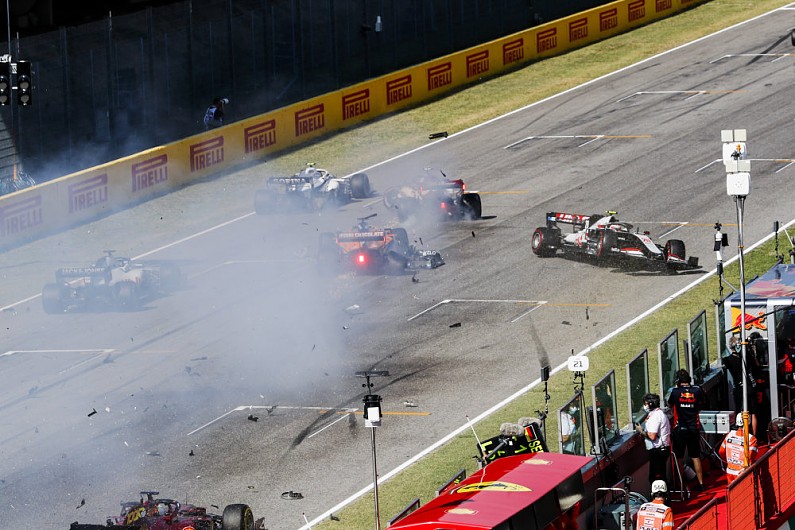
But then came the more recent issues. A multi-car pile-up in Tuscany led to numerous drivers blaming the safety car lights going out for the incident, but Race Director Michael Masi refused to take any responsibility and put the blame squarely on the drivers, in a somewhat derisive tone. And in Russia, we had the Lewis Hamilton practice start debacle.
The already flawed system has now been further undermined.
New Director, New Direction
Charlie Whiting was always going to be an impossible act to follow; the man was Formula 1.
Along with holding the all-important role of Race Director, he was safety delegate, chaired the driver briefings and wrote both the sporting and technical regulations – the ultimate poacher-turned-gamekeeper, attempting to keep the FIA a step ahead of the engineers looking for any possible loophole to exploit. Every driver had the utmost respect for him.
No one man would ever be able to fully replace Whiting but his most important role fell to Masi and, just seven races into his tenure, he was thrust abruptly into the spotlight.
Image credit: Imago Images
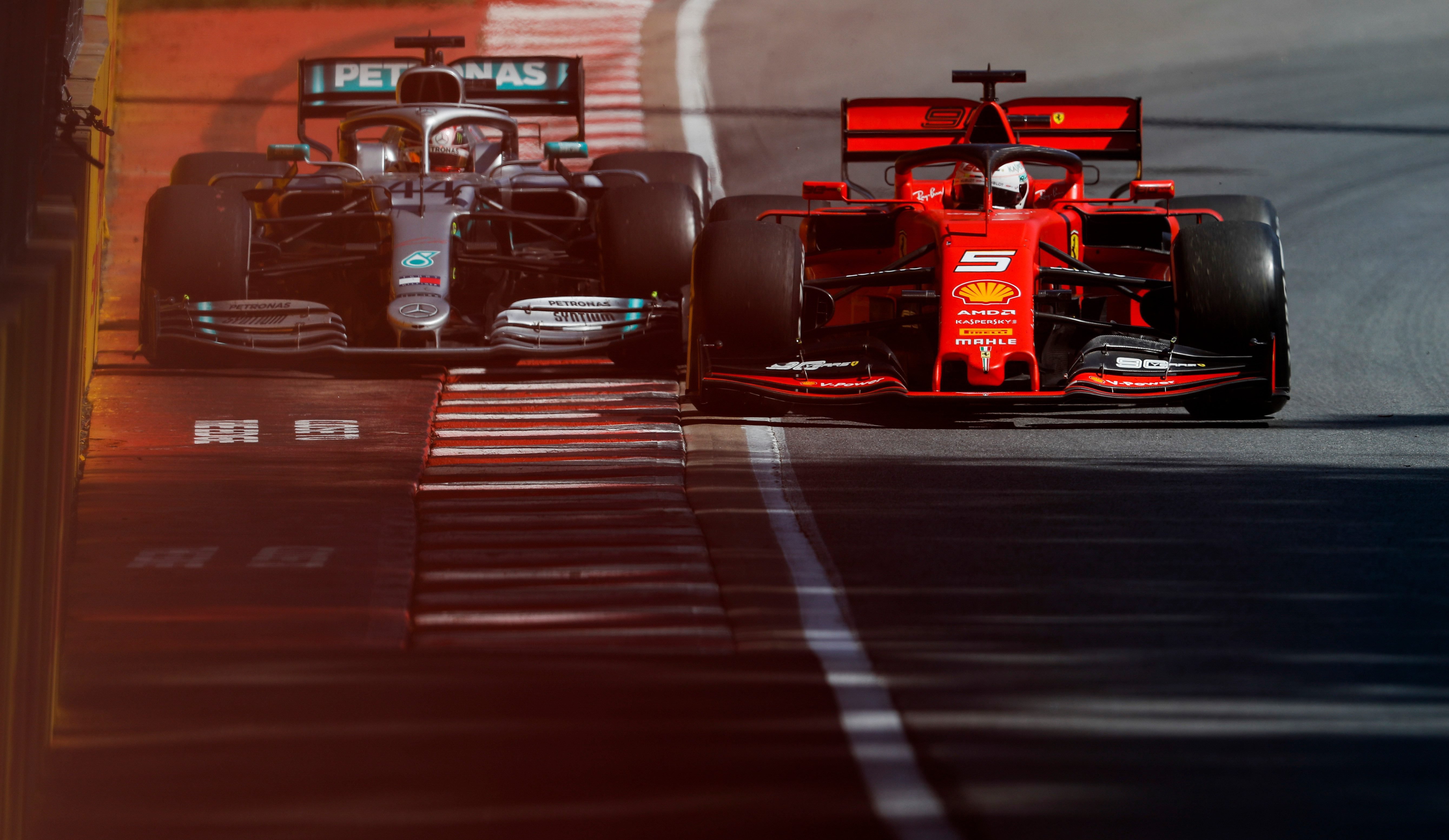
At the Canadian Grand Prix, after six races utterly dominated by Mercedes, the Ferrari of Sebastian Vettel was leading. However, on lap 48, he made a mistake under pressure from Hamilton and overcooked his entry into Turn 3, catching a snap of oversteer but in the process having to take to the grass.
He rejoined the track very close to Hamilton, who tried to go around the outside but was forced to back out as he was squeezed towards the wall. The stewards gave Vettel a five-second time penalty which effectively handed Hamilton the win and, likely in some part sparked by the unceasing Mercedes supremacy, many F1 fans took to their keyboards to vent their anger via social media.
For the record, I think it was the right decision. It was a very tough call, but the rules are the rules and they pointed to a penalty. It was uncannily similar to an incident in Japan 2018, between Max Verstappen and Kimi Räikkönen, which also resulted in a penalty and Whiting himself described as “a fairly straightforward one for the stewards”.
At the very next race, Verstappen – coincidentally at the same corner of the same circuit as the Stroll-Ricciardo incident – forced Leclerc wide and took the lead, along with the victory. Whilst in that incident, the Dutchman at least stayed on the track himself, it did appear to contradict the ruling from just two weeks earlier.
Seemingly in response to the public backlash from the Canadian Grand Prix, Masi and the FIA then announced a change in their approach when it came to applying penalties – in essence, that they would be more lenient and let the drivers battle it out on track as much as possible.
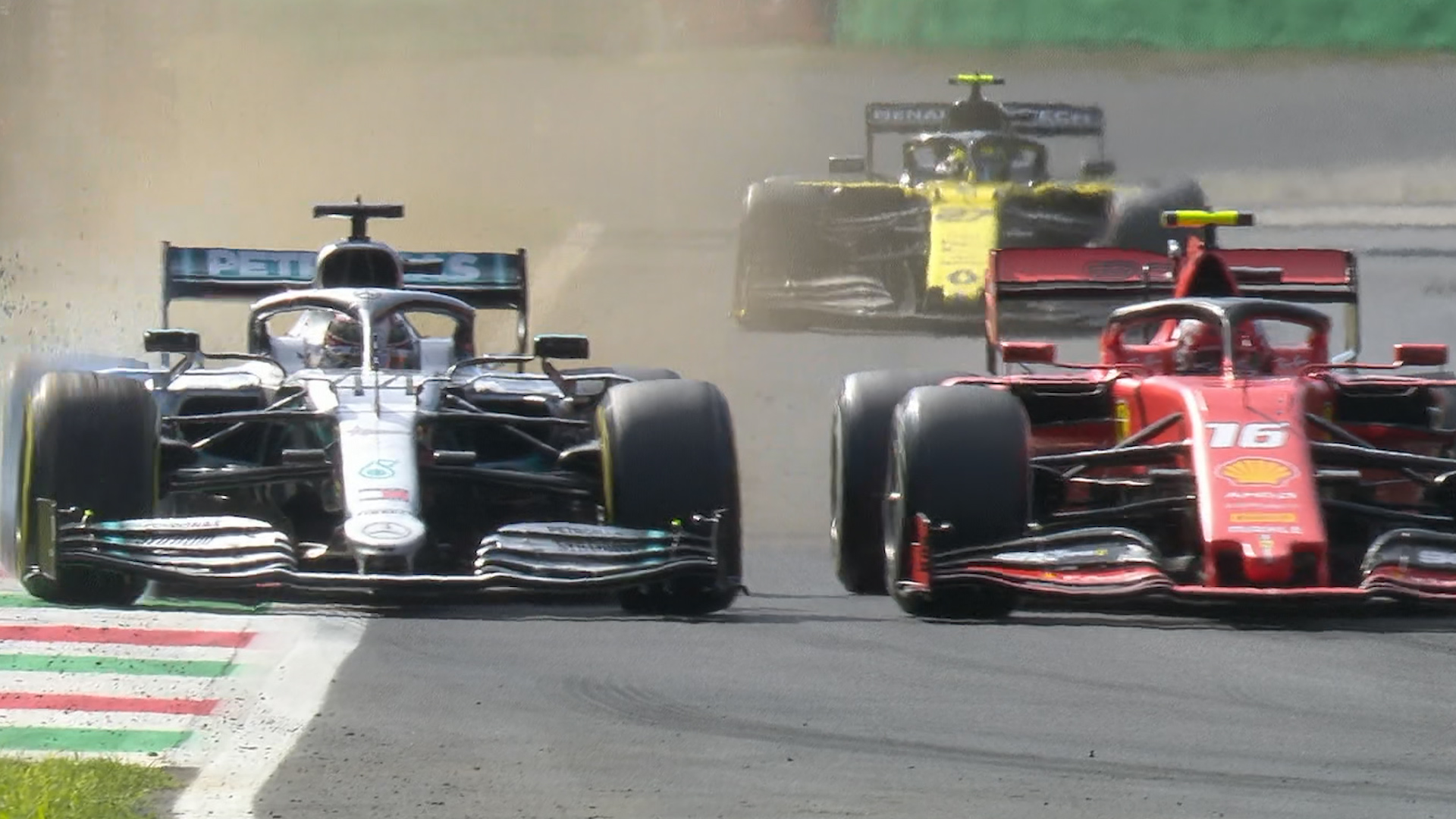
Later in the season, Leclerc would experience the other side of the coin as he forced Hamilton off the track whilst defending his lead of the Italian Grand Prix and received only a black-and-white flag as a warning for unsportsmanlike behaviour. Whilst explaining their decision-making, Masi stated that if the pair had made contact then it would have been a penalty rather than the black-and-white flag.
Image credit: Formula 1
This seems problematic. It is almost encouraging contact between drivers; in avoiding a dangerous move by another driver, the ‘victim’ of said move is putting themselves most likely off the track and doing the aggressor a favour at the same time.
We are in danger of veering towards the diving issue prevalent in football where players are required to produce theatrics in order to force the officials to make the right decision…
Is There a Solution?
We as fans must accept that the stewards have far more information than us to base their decisions on and that they are more experienced than 99% of us. That would be far easier, though, if the stewards were a consistent panel of respected figures who were fully accountable and explained exactly how and why they came to their decisions.A role as important as this, in a sport as enormous and opulent as F1, must be filled by the very best on a permanent basis.
Surely that’s not too hard for the senior leaders to put together – basically every other elite sport manages to do it.
The penalty points system may also need to be addressed as – whilst not inherently flawed – the application of points could probably be tweaked. The system was introduced in the wake of Romain Grosjean’s hit-and-miss (quite literally, at times) 2012 season and, in particular, the huge crash at the start of that year’s Belgian Grand Prix.
The rationale behind it is to prevent dangerous driving, but they are now seemingly being handed out as standard with most penalties, even when it was the team at fault.
Hamilton and Antonio Giovinazzi were given two penalty points when following team orders to pit in Monza. Another two points in Austria for the World Champion understeering into Alexander Albon on cold tyres seems a little harsh – it was a long way from a dangerous act.
The fact that one of the greatest drivers in the sport’s history – who is also universally accepted as one of the cleanest drivers on the grid – stands on the brink of a ban implies that the system should perhaps be looked at.
In the immediate future, simply some consistent calls would do. At the Styrian Grand Prix, in addition to what has already been mentioned, Sergio Pérez was allowed to drive around for three laps with a damaged front wing without seeing the black-and-orange flag – indicating a driver has a mechanical issue and must return to the pits – whilst Leclerc was given a 10-second penalty for the same offence at last year’s Japanese Grand Prix.
This is potentially due to the close call when Leclerc’s front wing end plate broke free and sliced off Hamilton’s wing mirror, but why are penalties suddenly being handed out dependent on the result rather than the letter of the law?
Consistency and transparency are vital. These are the basics and we should not have to be clamouring for them.
Valtteri Bottas finally took his second victory of the 2020 season at the Russian Grand Prix, as Lewis Hamilton suffered a weekend plagued by drama.
Things began to unravel for the championship leader during Q2 on Saturday. He ran wide during his first lap, which led to his time being deleted, and was just about to complete his second attempt when a Sebastian Vettel crash brought out a red flag. That led to a mad dash as most of the field attempted to get round and start a final lap in the two minutes remaining.
Hamilton passed the line with one second to spare and scraped through into final qualifying. His pole lap was characteristically emphatic – over half a second clear of Verstappen and Bottas – but he was always aware he would now have a fight on his hands in the race, as he had been forced to set his Q2 lap on the lesser-fancied soft tyre.
His problems would worsen before the lights even went out, however.
https://www.youtube.com/watch?v=nq-n9K7TxY4
He asked his team whether he was able to do his practice starts further down the pit lane as there was a lot of discarded rubber at the usual spot. The team confirmed – seemingly unaware of just how far down he meant – but the stewards saw it as an infringement and Hamilton was eventually given two five-second time penalties – one for each illegal practice start.
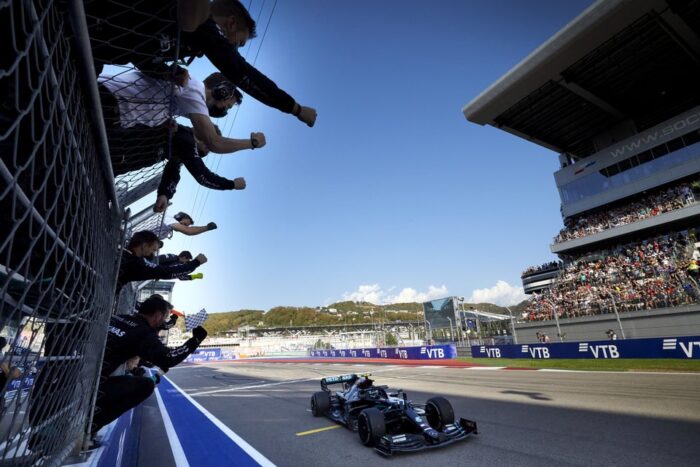
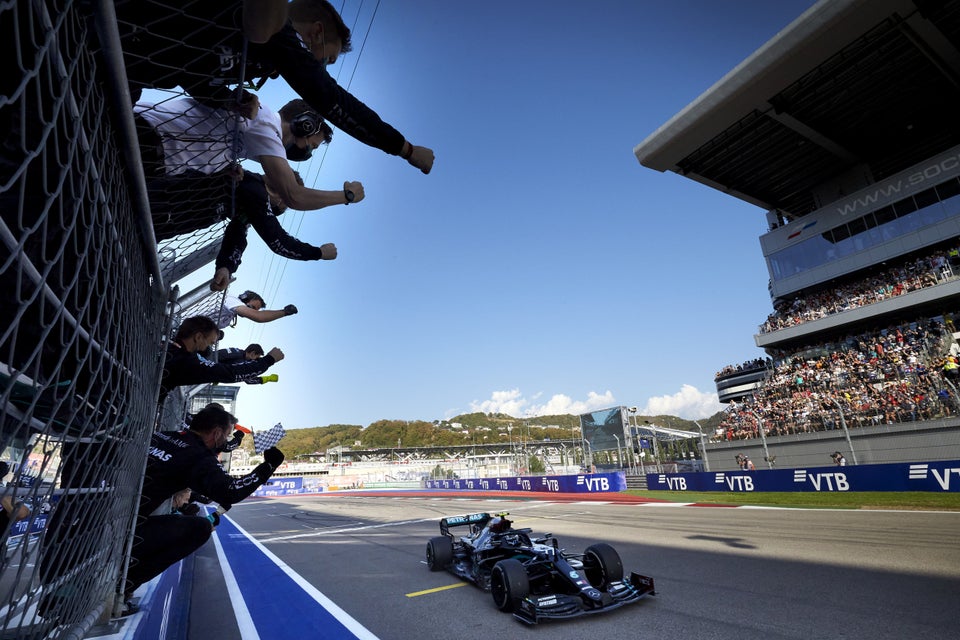
This, combined with his unfavourable tyre strategy, effectively removed him from the battle for the win and reduced the race at the front to a procession. Bottas didn’t put a foot wrong and claimed a comfortable victory, slightly narrowing the gap to Hamilton in the championship standings. He repeated his ‘open letter to his critics’ from Australia 2019 over the radio after the chequered flag but, frankly, there is only so much you can boast about a weekend where you qualified seven tenths behind your teammate and then profited from him receiving a penalty in the race.
Max Verstappen put two tough races in Italy behind him and resumed his M.O. this year of outperforming his Red Bull, miles clear of his teammate, and occasionally picking off a faltering Mercedes when the opportunity presents itself. Hamilton was never able to close in on the Dutchman, as he nursed his hard tyres for almost 40 laps and had to settle for third.
More First-Lap Chaos
Image credit: Reuters
Picking up where Mugello left off, there were plenty of incidents during the opening lap at Sochi. Carlos Sainz suffered a quite embarrassing retirement as he drove clean into the wall whilst attempting to navigate the bollards on the outside of Turn Two, hampering his teammate in the process as he bounced back onto the track. And a couple of corners later, Charles Leclerc clumsily understeered into Lance Stroll, pitching the Racing Point into the wall and out of the race. That brought out an early safety car.
Once the race was back underway, Sergio Pérez got himself into fourth with a bit of trademark tyre preservation and comfortably held that position to the flag. An ungainly piece of synchronised swimming between the Renaults resulted in Daniel Ricciardo picking up a five-second time penalty, but he had enough pace to extend a gap from Leclerc and hold onto fifth, whilst teammate Esteban Ocon kept the fast-finishing Daniil Kvyat – on a contra strategy at his home race – at bay to complete a decent haul of points for the yellow cars.
It was another tough weekend for Alexander Albon. More than a second slower than Verstappen on Saturday – and seemingly flummoxed as to why – he qualified 10th, was then given a five-place grid penalty for a gearbox change and ended up at the back of the pack after the first lap mêlée. Red Bull gambled on switching him to the hard tyres under the safety car but getting to the end on them was always going to be an impossible task and, after another stop, he would eventually recover to 10th and a single point, behind the AlphaTauri pair.
Image credit: Getty Images
Breaking the Rules
So, is it more a case of drivers breaking the rules…or that the rules themselves are broken?
I feel like a broken record, having to speak about stewarding once again, but here we are. With controversy currently surrounding Hamilton, Leclerc and the bollards at Turn Two, the Russian Grand Prix became a story of rules as much as racing.
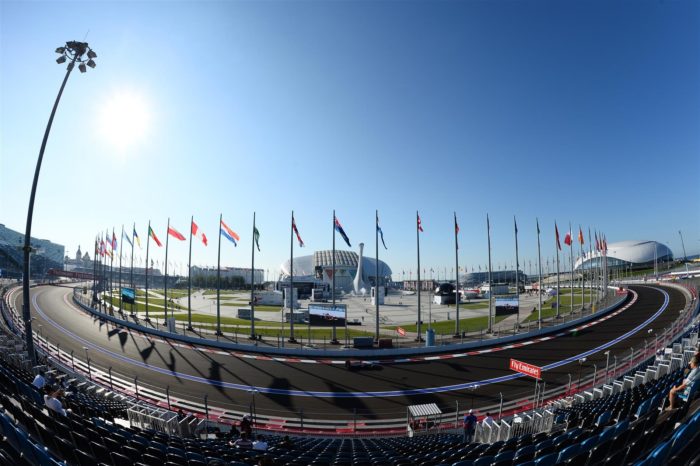
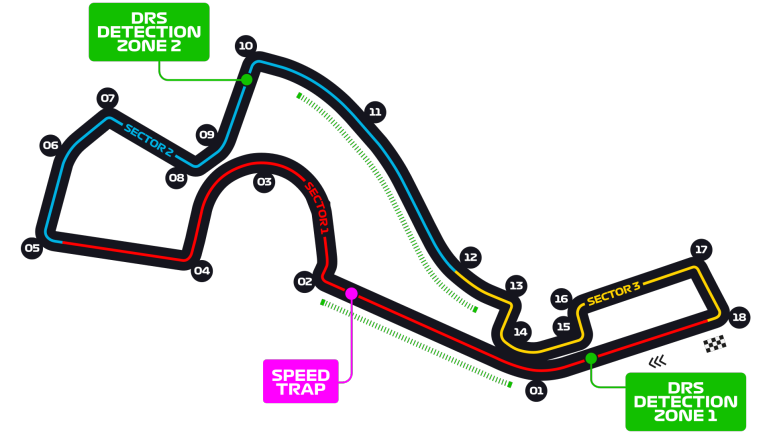
The Sochi track has never been a popular one – neither amongst drivers nor fans – and Turn Two has become a particular point of contention. George Russell describes it as “one of the worst corners of the calendar” and even proposed an alteration to it in a drivers briefing earlier this year.
It is just a poorly-designed corner – it’s as simple as that. It should be the main passing opportunity on a lap consisting mostly of dull 90-degree corners, but the way it narrows makes that difficult and, in past years, has led to much cutting of the kink which immediately follows. The attempts to counter that with strict measures such as time penalties is somehow worse though.
It really does feel like the FIA has lost its way when it comes to stewarding. We are now in a situation where Ricciardo – and later Albon – can receive five-second penalties for a tiny mistake, running slightly wide and in the process actually losing time, but Leclerc can take another driver out of the race and get away scot-free because it is the first lap of the race.
The alternative for Ricciardo and Albon was to attempt to get over to the bollards that define the accepted re-entry to the track, but those were criminally close to the wall and arguably less safe than rejoining in the normal manner. Whilst it was an undeniably humiliating crash for Sainz, it was on the cards. If you totally abandoned the corner – à la Verstappen on the first lap – then navigating the bollards was easy enough. But if you genuinely attempt the corner and end up that little bit wide, it’s practically impossible to get over to the bollards in time, as demonstrated by Romain Grosjean, who smashed through them in his attempt to follow the rulebook and brought out a VSC whilst they were replaced.
https://www.youtube.com/watch?v=P8N-UWbt4is
It is like the bigger picture has been totally abandoned by the FIA and its stewards.
Similarly, we had the penalties for Hamilton. A minor discretion in a “grey area of the regulations” – as described by Mark Webber and David Coulthard – before the race led to a significant in-race penalty. Hamilton was also awarded two penalty points on his licence, but they were later rescinded when the stewards determined that the team was at fault rather than the driver.
Why that’s the case here but not in Monza, where Hamilton also received penalty points for following a team order to pit, isn’t clear. Neither is it clear why it took so long for the stewards to change their mind, considering the radio of Hamilton being told he could perform the practice starts there were broadcast on the global feed immediately. And I won’t even get into the current conspiracy theories doing the rounds regarding steward Mika Salo and the Finnish commentary team receiving word on the penalties 15 minutes before they were announced…
Coulthard sums it up nicely when he says, “we’re just being bogged down by stewards getting in the way of allowing a sporting contest to play out”. This is needless micromanagement that has lost all sense of perspective. The stewarding process needs to be ripped apart and rebuilt from the ground up.
The Russian Grand Prix in 60 Seconds
Answering the Burning Questions
Can Lewis Hamilton match Michael Schumacher’s win record this weekend? Not this time.
Or will Valtteri Bottas continue his good form of past years at the Sochi track? …Kind of.
Or could a team other than Mercedes win the Russian Grand Prix for the first time?! Of course not.
Can Alexander Albon push on now that he’s claimed that first podium? Nope.
Who will top the midfield battle? Sergio Pérez in terms of a driver, Renault in terms of a team.
Lewis Hamilton | “[Breaking the win record] will happen at some stage. I’m not quitting any time soon – I can’t tell you how it will feel or what it will mean. There are other bigger issues happening in the world. Of course it’s an honour, but it doesn’t really mean anything.”
Sebastian Vettel | “On one hand, I will be sad because Michael is still my hero. On the other hand, I will be very happy for Lewis. He deserves all the success he has had. It has always been a number that has appeared impossible to reach. Seeing Lewis’s track record, he was getting closer and closer, and it is a question of time before he reaches that.”
Max Verstappen | “[The idea of reverse grids] is artificial and trying to create a show, which is not what F1 stands for. The cars will end in the same position. The fastest car should be in the front. That’s what everyone works for. F1 is about pure performance.”
Daniel Ricciardo | “[Monza was] exciting but it was organic. I’m just worried if we kind of add it in an artificial way and mix-up the field and every driver is getting an F1 win, does the value of an F1 win hold what it does today? That is the fine line and balance.”
After a rapid decline and a few years in the doldrums, McLaren are on the rise again – fighting for third in the Constructors’ Championship with Ferrari and aiming to move back to the very front when the new regulations kick in next season. How high were the highs? How did they fall? And how have they risen up again?
Image credit: Getty Images
McLaren were a behemoth of Formula 1 for the best part of four decades, largely thanks to Ron Dennis and his infamous, meticulous attention to detail.
Dennis took charge of an ailing McLaren team in 1980 and turned them into champions in just four years. Whilst not the outright fastest car in 1984, anything as fast as the McLarens often fell apart and anything as reliable usually finished behind.
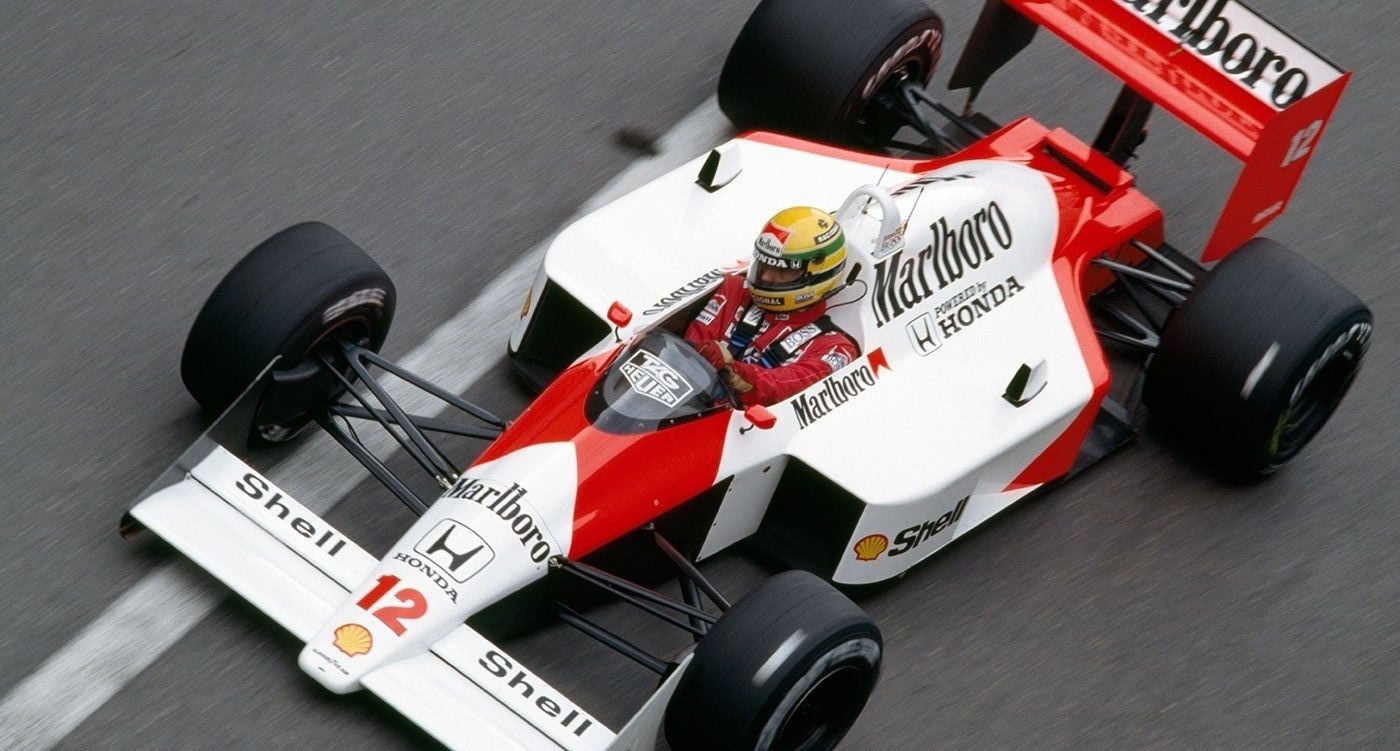
They would claim further titles in the following two years and, when the Williams-Honda partnership proved to be the class of 1987, Dennis lured the Japanese marque to leave Williams and join them. He also hired a certain Ayrton Senna. Thus ensued the most dominant season the sport has ever seen as McLaren won 15 of the 16 races.
The mid-90s saw something of a transitional period for the team, before Dennis stole from Williams again – this time, it was Adrian Newey – and the design genius led the now silver McLarens to back-to-back championships in 1998 and 1999. That would prove to be the final truly successful era of Dennis’s reign, however.
The only title they have won, so far, in the 21st Century is Lewis Hamilton’s maiden drivers’ title in 2008. By rights, 2007 should have been a double-championship year for them, but the eccentric character of Dennis is a double-edged sword and that second edge would contribute to the Spygate dramas.
Whilst his peculiarities undeniably produced much success, they also meant he lacked flexibility and had a relentless self-assurance that sometimes prevented him from seeing the bigger picture.
Image credit: Picture-Alliance/DPA
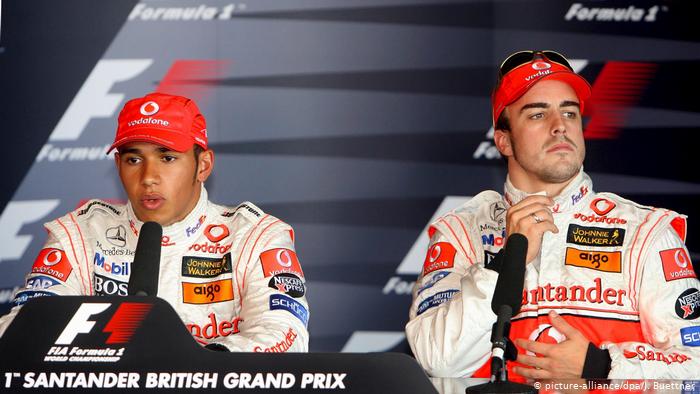
Fernando Alonso had been promised lead driver status upon his arrival at McLaren, but once it became clear that Hamilton – who Dennis had nurtured since the age of 12 – was just as good, Dennis went back on his word and set off the chain of events that would end up costing McLaren $100 million. Just as with Senna and Alain Prost before, Dennis’s lack of empathy was a factor in the damaging decline of the warring duo’s relationship.
After a period of Red Bull domination, during which McLaren usually had a fast but unreliable car, came the hybrid era.
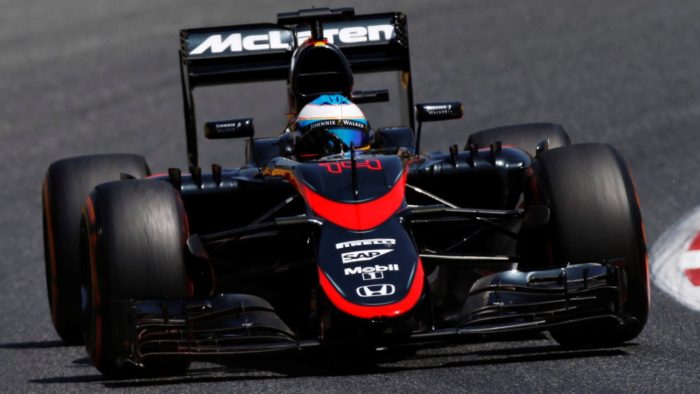
It started well with a double podium in the opening race, but that would prove to be McLaren’s final podium for over five years. As Mercedes took command of Formula 1, McLaren slipped further and further from their perch.
Dennis stated his belief that “customer teams will never be able to win the championship” and so ended ties with Mercedes and brought about a reunion with Honda; the nostalgic partnership would prove to be a story of style over substance and sentimentality over success, though.
McLaren’s entitled attitude under Dennis cost them greatly as they blamed Honda for all their issues and the once great constructor fell to a nadir of ninth in the 2017 Constructors’ Championship. A switch to Renault the following year showed that it was, in fact, McLaren’s design philosophy which caused significant straight-line speed issues and, to add insult to injury, Red Bull would go on to win a grand prix with Honda power at just their ninth attempt.
The blame culture and bland, grey precision in Dennis’s operations was arguably becoming outdated compared to the party atmosphere at Red Bull and the stereotypically efficient but, nonetheless, fun and blame-free approach adopted by Toto Wolff and the entire Mercedes operation.
Image credit: McLaren
The levels to which Ron Dennis’s forensic, quixotic approach extended are mind-boggling, and best surmised by his former employee: “One of the best ways to upset Ron Dennis is to sit down in his office, where he’ll usually have a few piles of papers neatly stacked on his desk, and just tip one of those piles by a few millimetres, knowing he’ll then focus on that pile for ages, because he won’t be sure whether you’ve straightened it or made it crooked”, Newey says.
“To me the new building was oppressive in its ordered greyness. Reminiscent of something from Fritz Lang’s Metropolis, it featured rows and rows of desks with nothing out of line. Built by the Empire. Not an environment in which I, among others, found it easy to be creative.”
“When we first moved in, we weren’t even allowed glasses of water at our desk, and absolutely no tea or coffee or personal effects. Somebody pointed out that it was probably illegal to deny workers water at their desk, so he had to relent on that, but not on the tea or coffee, and as far as personal effects went, you were allowed one family picture on your desk but it had to be stored in a drawer overnight.”
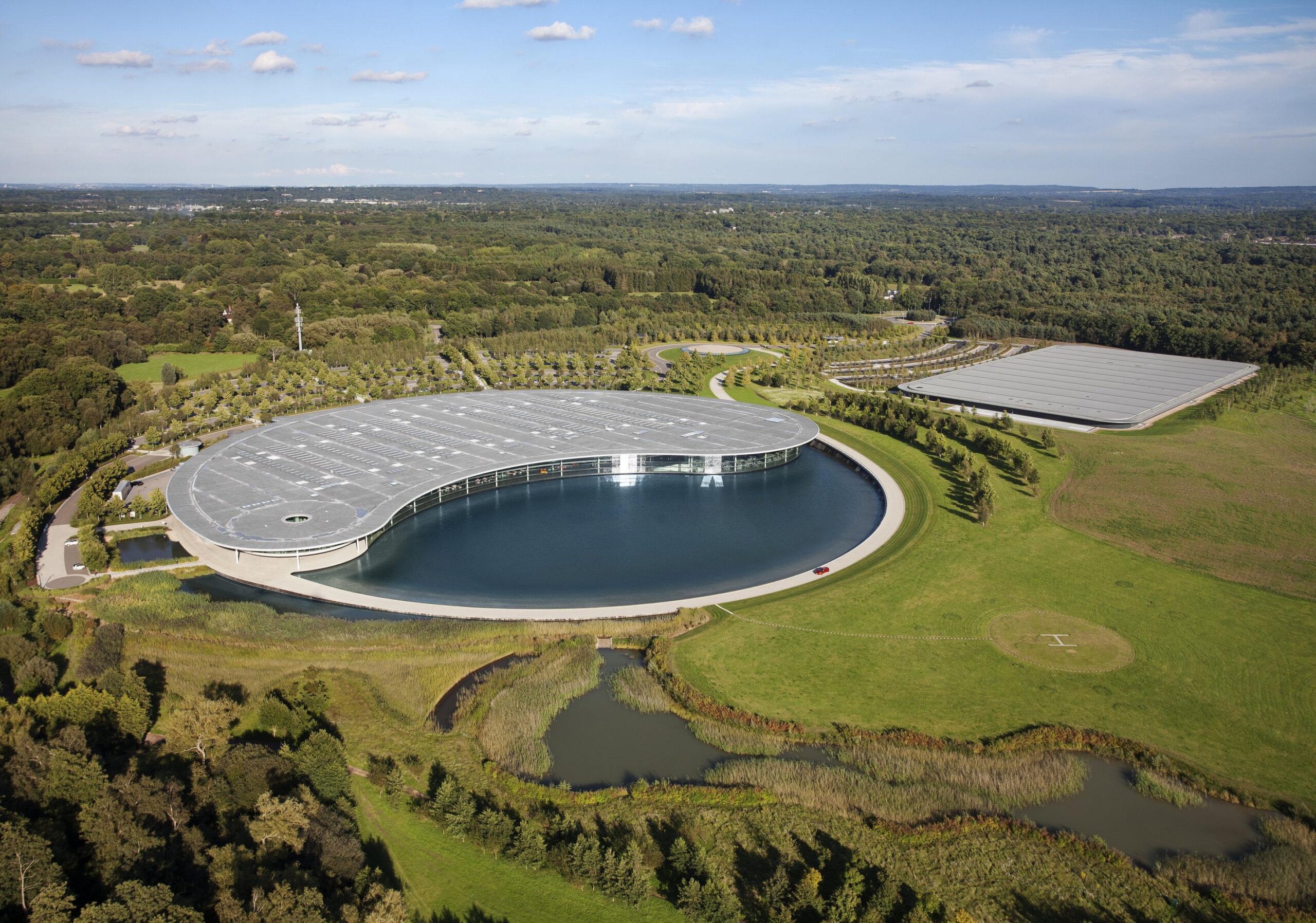
For all his success, having taken McLaren from a scruffy industrial estate in Woking to the futuristic, Norman Foster-designed Technology Centre, Dennis’s time seemed to be drawing to a close.
He would eventually ‘quit’ after being told by fellow shareholders that he had to give up his position as chairman and chief executive of McLaren Group.
With that, McLaren set about building a new legacy. They instantly chose to eschew the previous ‘Predatory Grey’ livery, in favour of incorporating the papaya orange historically associated with the team. It has taken some time but the new approach, led by a passionate and enthusiastic CEO in Zak Brown, is beginning to show dividends.
2019 saw McLaren outperform Renault – their current engine supplier, no less – to claim their best result since 2012, with fourth in the Constructors’ Championship. The business side of things is flourishing too, with a car now decked out with major sponsors such as Coca-Cola and Dell. Whilst their driver line-up also reflects their new values; Carlos Sainz and Lando Norris are fun-loving and have a light-hearted, harmonious relationship, but are equally – of course – very quick.
Norris is fast becoming one of the most popular drivers on the grid and has emphatically shown his progress on the track at the start of 2020. A maiden podium at the opening grand prix was a pleasant surprise and another flying finish one week later, moving up from eighth to fifth in the final two laps, has led to the ‘Last-lap Lando’ nickname. Meanwhile, Sainz came agonisingly close to taking a maiden victory – and McLaren’s first for eight years – at the chaotic Italian Grand Prix.
The team from Woking seem to be on the up and will be hoping to take advantage of the new regulations in 2022 to take that next step. In the meantime, they have a certain Daniel Ricciardo joining them next year, so things are unlikely to get dull any time soon…