The 2022 season has reached the summer break, but it very much feels like the remainder will be a cruise to the finish for Max Verstappen.
After three races, some fans and pundits were fearing the championship was already over on account of Charles Leclerc’s 46-point advantage over Verstappen.
But fast-forward less than four months and the situation could not be much more different.
A series of calamities – mostly mechanical and strategic – have seen that 46-point deficit for Verstappen turn into an 80-point lead heading into F1’s summer holidays.
Image credit: Philip Platzer/Red Bull Content Pool
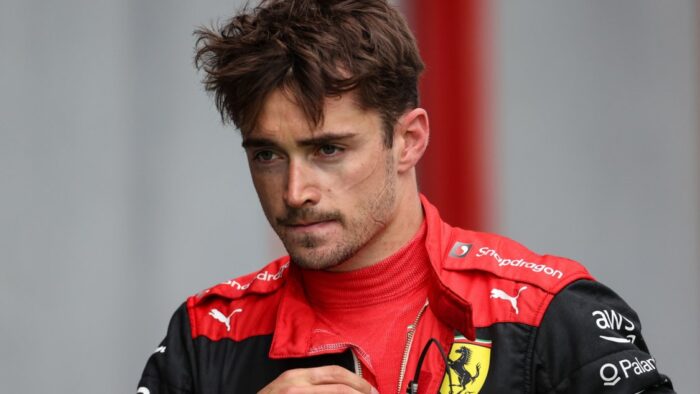
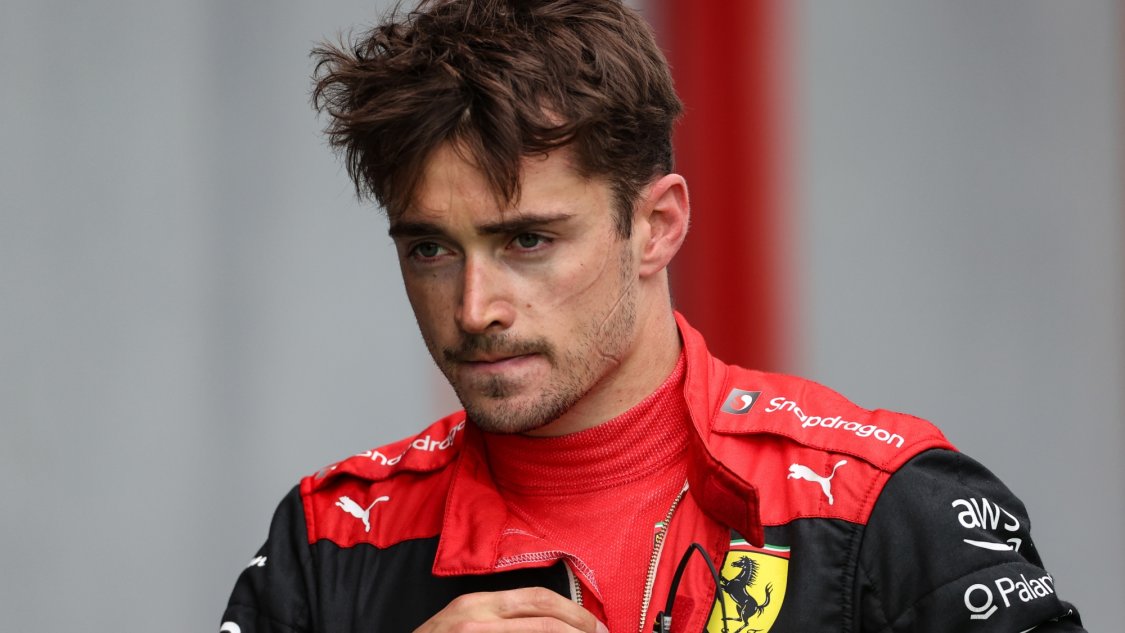
It was redemption on two counts for Leclerc at the Red Bull Ring.
Firstly, making amends for a frustrating Sprint Race on Saturday where the two Ferrari drivers fought amongst themselves to the extent that Verstappen was able to get away.
But more importantly, it was revenge for the 2019 Austrian Grand Prix. A race that looked set to become Leclerc’s maiden victory, only for Verstappen to controversially snatch the lead away in the dying stages courtesy of a particularly impolite pass on the Monegasque.
On this occasion, Leclerc would be the one doing the passing, overtaking his title rival no fewer than three times as they ran differing strategies.
He then clung on commendably despite a late clutch issue to narrow the gap to Verstappen to 38 points and spark hope of a comeback.
Pain in France
That hope would all come crashing down a fortnight later, however.
Yet another Leclerc pole position preceded what looked set to be a fascinating battle between the season’s two main protagonists.
Verstappen had followed Leclerc closely in the early stages before fading slightly, prompting Red Bull to attempt an undercut.
Image credit: XPB Images.
We would never find out whether or not that would work, though, as Leclerc made the biggest mistake of his season – if not his career – thus far, spinning out from the lead and ending up in a barrier.
There have been rumours and suspicions about a throttle issue contributing to the accident, but these are unproven and Leclerc publicly took responsibility.
Verstappen went on to take a comfortable win and extended his lead to 63 points – an advantage from which nobody has ever lost the title.
Another Ferrari Disasterclass To Round Off Part 1
The heat was immediately taken off Leclerc with another strategic blunder by his team in Hungary, though.
Having passed George Russell for the lead and with Verstappen recovering from 10th on the grid, Leclerc had the chance to keep his ever-so-slim title hopes alive heading into the summer break.
But Ferrari would be having none of that.
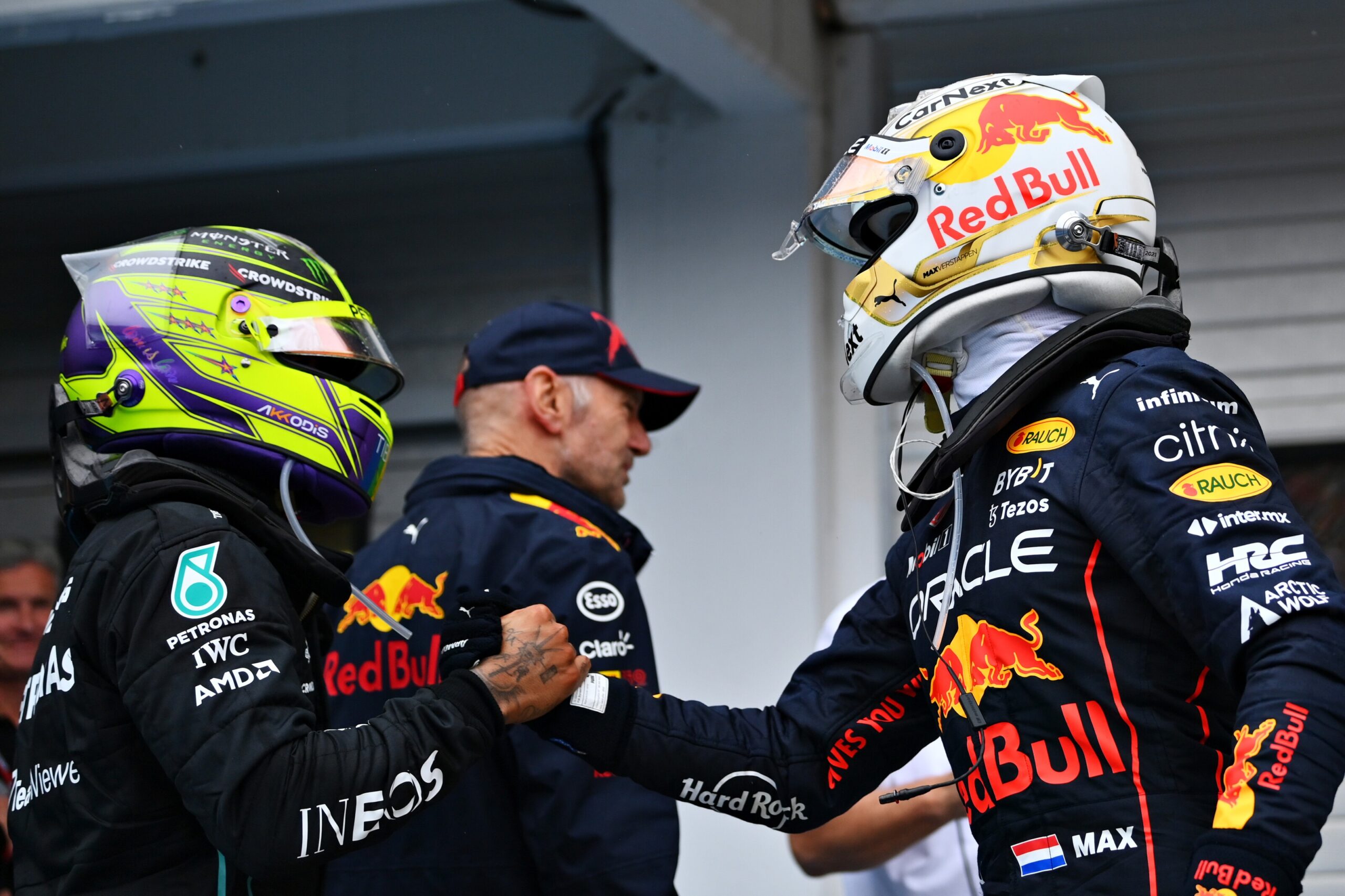
A bizarre decision to put their lead man on the hard tyre – and then later the soft – had the top three of Verstappen, Lewis Hamilton and Russell laughing in the cool-down room.
It dropped him from the lead to sixth and allowed Verstappen to win, despite having spun shortly after passing the helpless Leclerc.
Speaking of Mercedes, that makes back-to-back double podiums for the Silver Arrows and five in a row for Hamilton.
Image credit: Getty Images
They appear finally to be gaining an understanding of their new car and – depending on the impact of the new Technical Directive at the Belgian Grand Prix – could truly fight for wins in the remainder of the season.
Something which would be most welcome to prevent the season petering out in total Verstappen dominance.
And Finally, the Silliest of Silly Seasons
Within 48 hours of the Hungarian Grand Prix, the F1 driver conveyor belt had gone into meltdown.
With Sebastian Vettel having announced his upcoming retirement in Hungary, Fernando Alonso shocked the paddock on Monday by announcing he would be filling the vacant Aston Martin seat.
That led Alpine to announce Oscar Piastri’s promotion… Only for Piastri – after a couple of hours of deafening silence – to totally denounce said announcement.
I understand that, without my agreement, Alpine F1 have put out a press release late this afternoon that I am driving for them next year. This is wrong and I have not signed a contract with Alpine for 2023. I will not be driving for Alpine next year.
As things stand at the time of writing, it would appear that he will be replacing compatriot Daniel Ricciardo at McLaren next season.
The Honey Badger star that once shone so brightly is now flickering and in danger of being totally extinguished.
It would appear his only hope is returning to the Alpine seat – albeit Renault at that point – which he abandoned at the end of 2020, and perhaps rediscovering some form there.
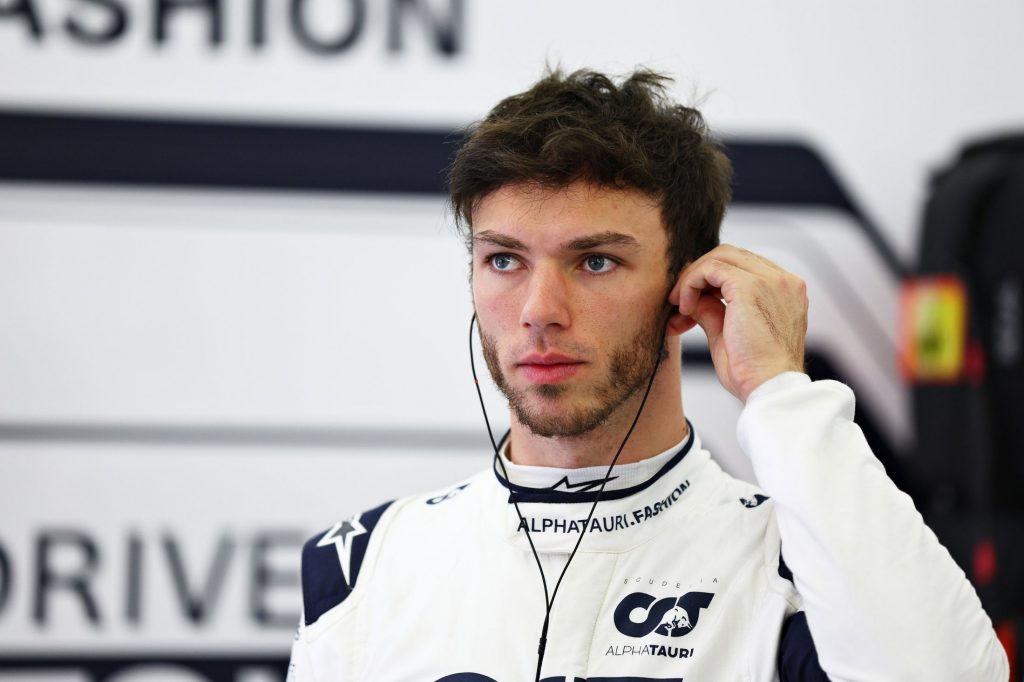
There is also talk of the French marque going for an all-French line-up, however, with Esteban Ocon being joined by Pierre Gasly.
Image credit: Getty Images
Gasly supposedly has an exit clause in his contract that allows him to leave for a team who are higher in the standings than AlphaTauri – which is currently most teams – and surely can’t be content stagnating in a Red Bull feeder system from which he will almost certainly never gain a promotion again.
Nicholas Latifi is expected to leave the sport, with Formula E champion Nyck de Vries and Williams academy driver Logan Sargeant seemingly the frontrunners to replace him.
Zhou Guanyu looks reasonably likely to retain his seat at Alfa, despite the promising Théo Pourchaire waiting in the wings and fighting for the Formula 2 title.
And as for Haas, it would surely only be a desperate Ricciardo – on a significantly lower wage – that could usurp Mick Schumacher.
It’s shoeys all round…except for the title rivals.
Image credit: Getty Images
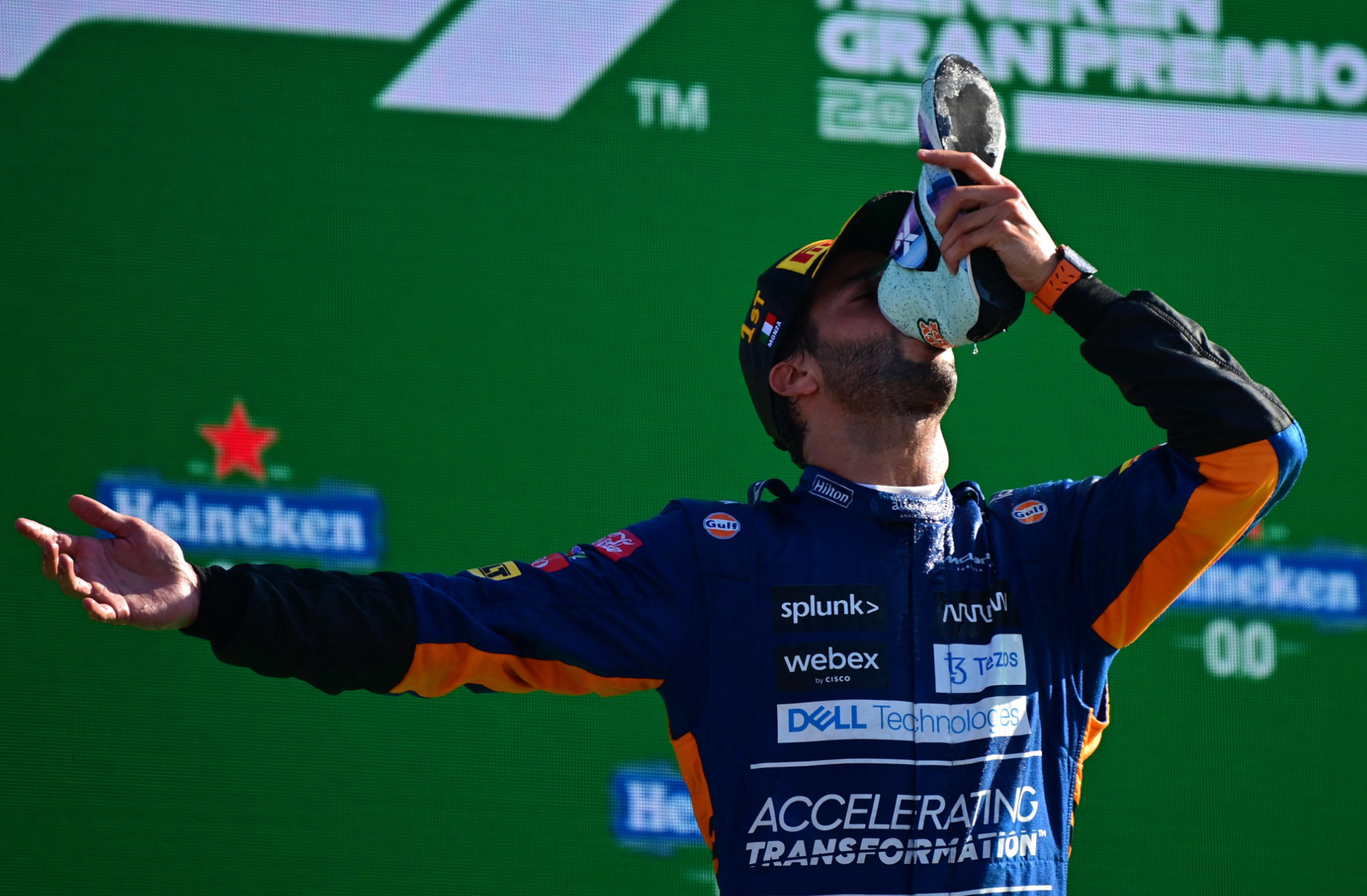
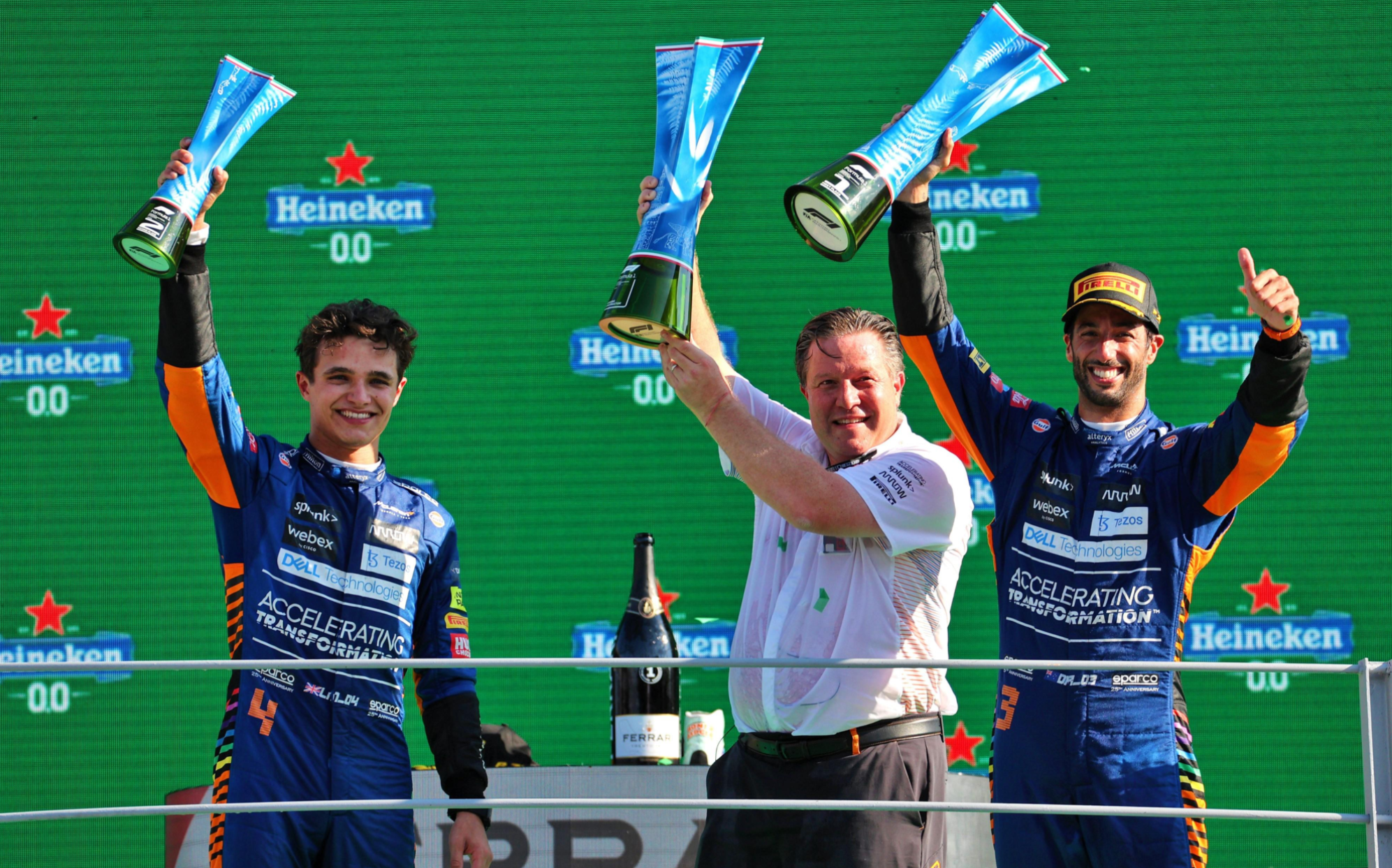
Daniel Ricciardo won his first race since leaving Red Bull in 2018 on an extraordinary Italian Grand Prix weekend.
McLaren were legitimate challengers in Monza and took advantage of the leading teams’ messy weekends to claim a first victory since 2012, with Lando Norris making it a 1-2 for the papaya team.
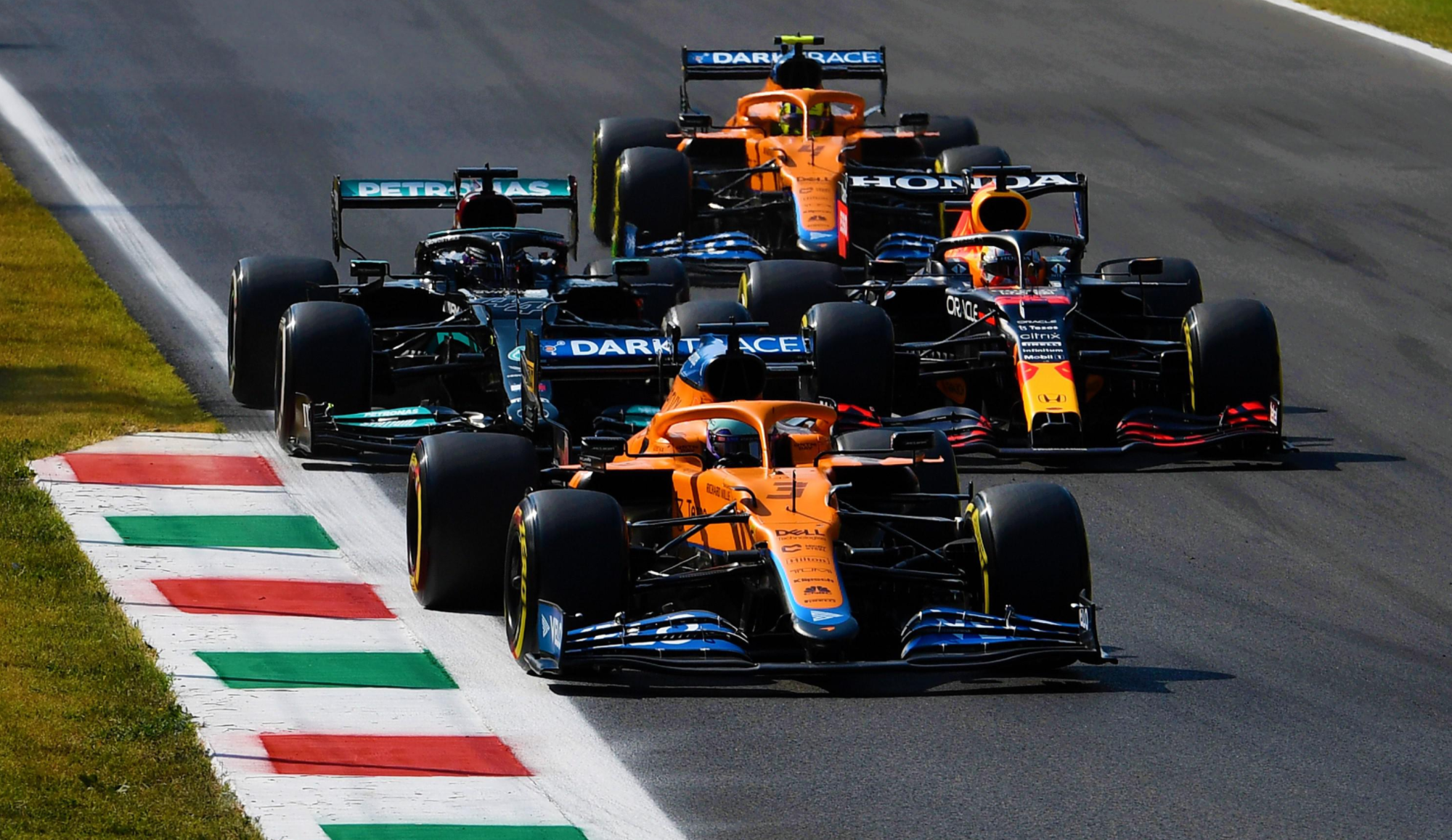
After a poor start in the sprint race, Lewis Hamilton found himself fourth on the grid and, with teammate Valtteri Bottas starting at the back after taking a new engine, it was Max Verstappen and Ricciardo who lined up on the front row.
The Honey Badger nailed his getaway and comfortably beat the Red Bull to the first corner. From there, he never looked back.
Hamilton also got a good start, passing Norris for third and then challenging Verstappen into the second chicane of Variante della Roggia. The reigning champion got himself alongside the Red Bull but – not for the first time this season – was run out of road on the outside and rejoined the track behind Norris.
Image credit: Getty Images
It would not be the rivals’ final meeting on track.
The first stint of the race was a tale of the two title contenders failing to pass the McLaren in front of them, largely thanks to their excellent straight-line speed and strong traction out of the final corner.
Ricciardo triggered the sole round of pit stops when he came in on lap 23, but the series of events leading to the biggest moment of the weekend began when Verstappen responded one lap later.
The usually flawless Red Bull pit crew suffered a sensor issue which led to a painful, 11-second stop for the championship leader and saw him fall behind Norris.
Mercedes – despite Hamilton having started on the harder tyre compound – knew this was their chance to jump Verstappen and brought car number 44 in two laps later. It was another poor stop, however – at a little over four seconds – and saw Hamilton rejoin right between Norris and Verstappen.
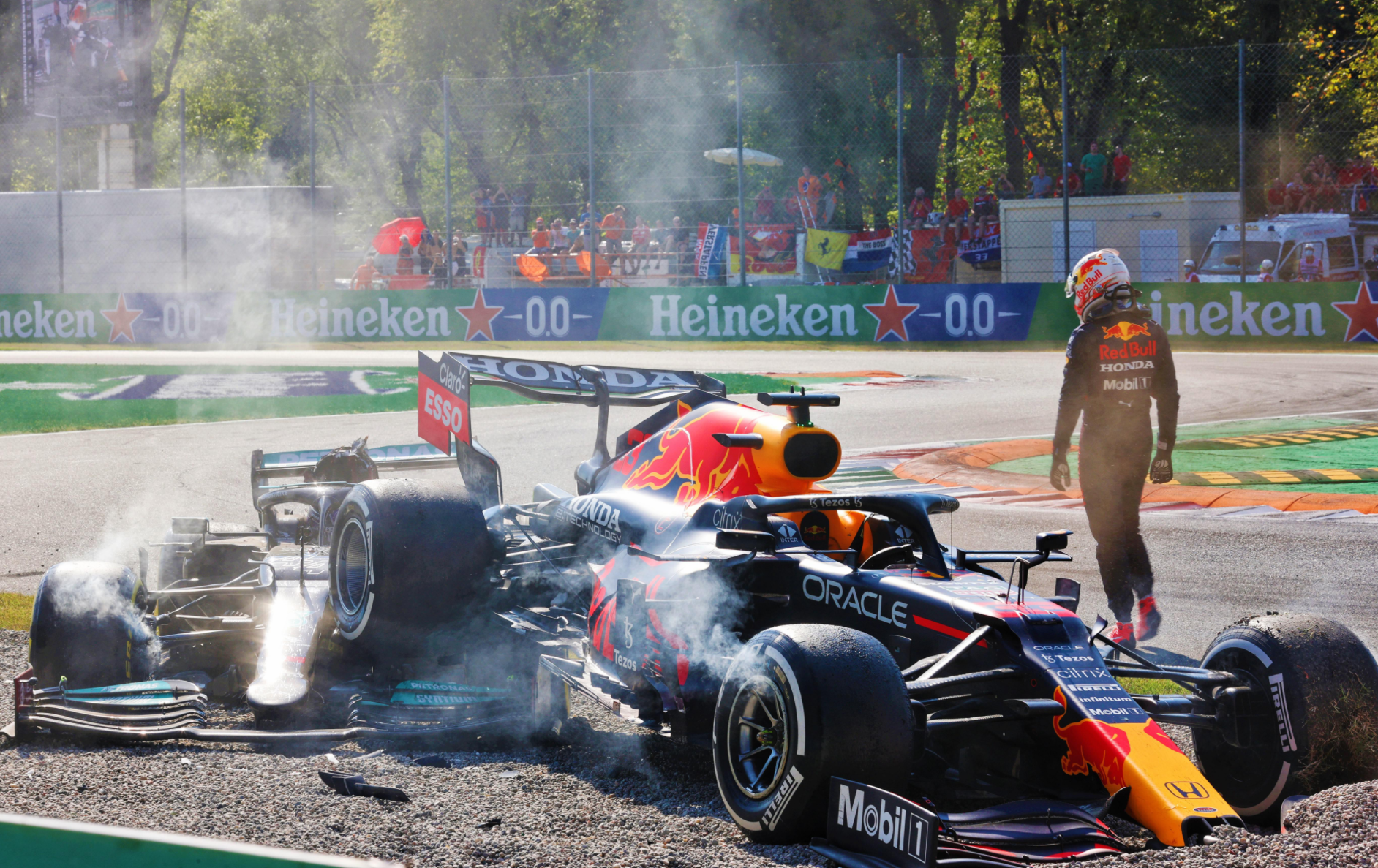
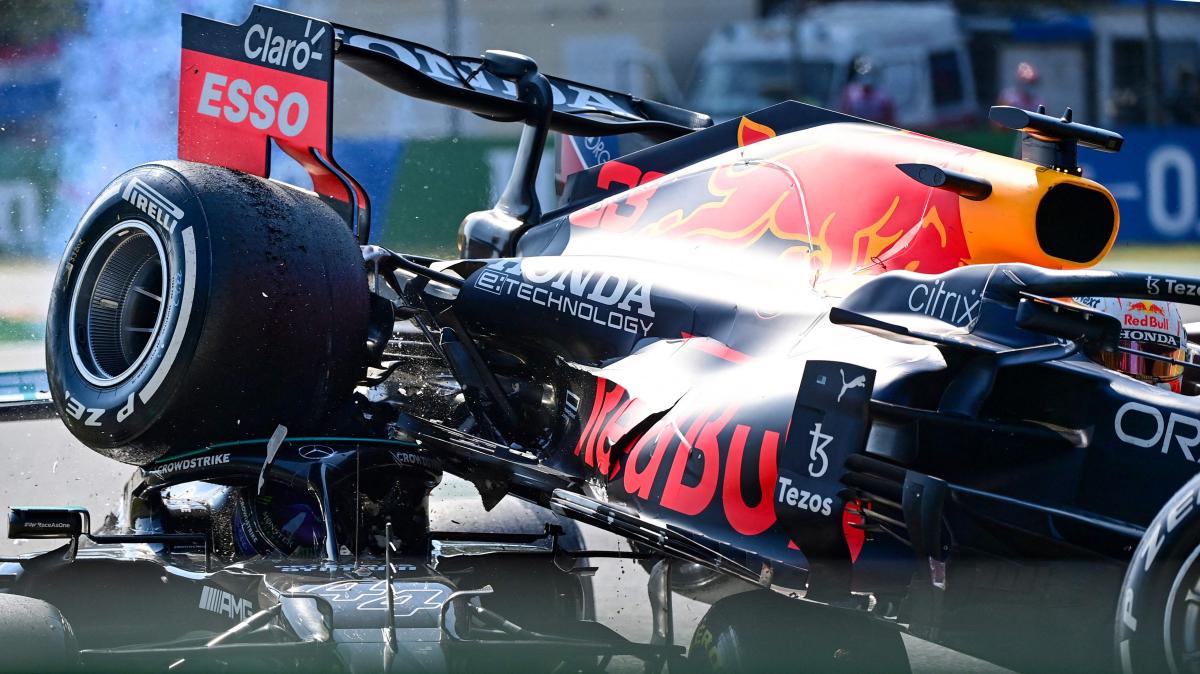
The Dutchman tried to stick it out around the outside of Turn One but ran out of road and bounced over the sausage kerbs. That sent him straight on into Hamilton and, as his right rear rode over the left rear of the Mercedes, he suddenly found himself sitting on top of his rival’s car.
Image credit: GPblog NL
Despite Hamilton’s efforts to reverse out from underneath the Bull which had so rudely mounted him, both were out of the race and the Safety Car was called.
The race restarted on lap 30 with Charles Leclerc delighting the Tifosi by having moved up into second with a cheap pit stop during the Safety Car period.
Not for long, though, as Norris bravely kept his foot in at almost 200 mph with two tyres on the grass through Curva Grande to retake the position from the Ferrari.
After a brief challenge on his teammate for the lead, McLaren decided to call the race off and focus on securing a scarcely believable 1-2.
Behind them, Bottas continued his inspired charge through the field. The Finn had topped qualifying on Friday and won the Sprint on Saturday but started at the back for the main event after taking on a new engine.
He fought his way up to fourth on the road, which became a podium once Sergio Pérez was hit with a five-second time penalty for overtaking off the track. The Mexican also recovered well from a disappointing qualifying but would ultimately claim fifth – splitting the two Ferraris – once the penalty was applied.
Out front, though, it was all about the McLarens, who completed another wave of of orange celebrations – after Verstappen’s win at home seven days before – as they crossed the line in first and second.
What a tale of redemption for the team and their Aussie driver, who had struggled so badly to adapt to his new car in the first part of the season.
Image credit: AFP
He appears to have succeeded in mentally resetting over the summer break and his eighth F1 victory will perhaps be the most satisfying of his career to date.
Now we wait to see what the Woking team can do with the regulations reset for next season. If they continue on their current trajectory, they could well be fighting for victories on a far more regular basis.
Breaking Down the Latest Hamilton-Verstappen Incident
Just as the battle at the front was becoming more amicable once again – with Hamilton appearing genuinely please for his rival’s home success – we get another flashpoint.
There was much debate over the culpability in their dramatic clash at Silverstone, and that will likely be the case again over the next fortnight.
Predictably, the drivers blamed each other. But the stance of Christian Horner – and even the ever-outspoken Helmut Marko – that it was a racing incident shows an effective admission of guilt on this one.
It usually takes just the slightest hint of accountability from Hamilton for them to go on the media warpath, encouraging their followers to raise their pitchforks to the sky.
There was an element or irony in elements of the Red Bull camp’s reaction in Italy. Firstly, Verstappen’s protestations that Hamilton should have left him more space are somewhat hypocritical, considering his approach to a very similar situation with the roles reversed on lap 1.
And, in hindsight, after having made such ridiculous accusations to the extremes of Hamilton having practically committed attempted murder in Silverstone, playing off an incident where their driver’s car struck Hamilton’s helmet as no big deal also seems a little incongruous.
Image credit: AFP
The stewards decided Verstappen was predominantly to blame and have handed him a three-place grid penalty for the next event. Not that it will matter considering the likelihood of Red Bull taking an engine penalty in Sochi.
From this writer’s point of view, the penalty feels about right. The Dutchman entered the chicane behind Hamilton but his overspeed meant that he was probably justified in sticking his car on the outside initially.
However, despite Hamilton leaving just about enough space to do so, it was clear that the trajectory and speed at which Verstappen entered was only going to result in one outcome, unless Hamilton basically parked his Mercedes on the outside of the second corner and waved him through.
That is the point at which most drivers on the grid – including Hamilton himself earlier in the race – would bail out of the move and take to the escape road. But Verstappen is not most drivers.
His sheer bloody-mindedness means that he will almost never back out of a confrontation. Since joining the sport – even as a 17-year-old – he has epitomised the Ayrton Senna ‘back out or we crash’ mantra.
Personally, I would much rather see a hard battle over the course of a series of corners or laps, with two racers battling it out right on the edge.
Image credit: XPB Images
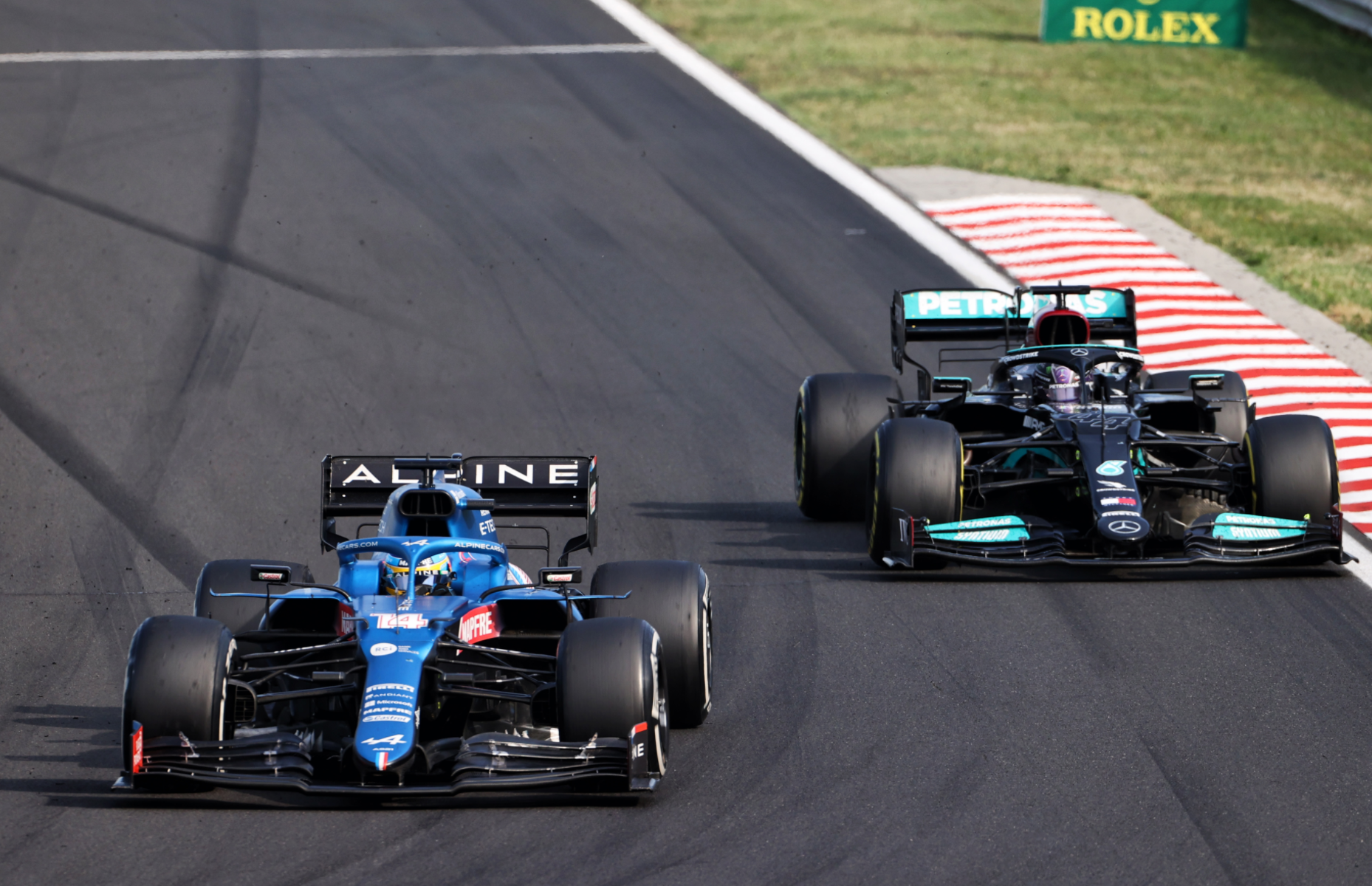
Hamilton and Fernando Alonso demonstrated that in Hungary this year – and many times before – as have plenty of other drivers.
That is surely what we want to see. Whilst these monumental crashes are great for the drama, and will be spoken about for years, it is a shame that the most referenced points of this incredible season will be the leaders ending up in the gravel, rather than battles for the ages like Alonso andMichael Schumacher at Imola in 2005.
It almost brings a question to Verstappen’s wheel-to-wheel ability. The 23-year-old is clearly spectacularly fast, but at what point do we consider him to be poor in wheel-to-wheel combat? The instances of him forcing drivers off the road outnumbers his on-the-edge battles at an increasing rate.
He surely has the ability and spatial awareness required, but whether he chooses to do so is the bigger issue.
There is a very fine line between hard driving and poor driving.
The Italian Grand Prix in 60 Seconds
Answering the Burning Questions
How will the Sprint Qualifying format play out this time around? Once again, we had a crazy weekend – but whether the format was instrumental in that is up for debate.
Will Mercedes dominate on a power-sensitive track? In terms of outright pace, probably. In terms of the race, it was actually a McLaren domination.
Will we get the usual Monza shenanigans in the regular qualifying session on Friday? Yep, as predicted it was all a bit cringeworthy at points.
Ecstasy for Verstappen, agony for Leclerc, frustration for Hamilton.
Image credit: Getty Images
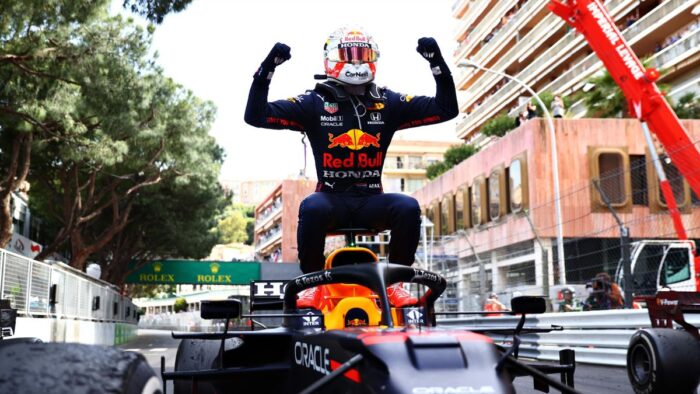
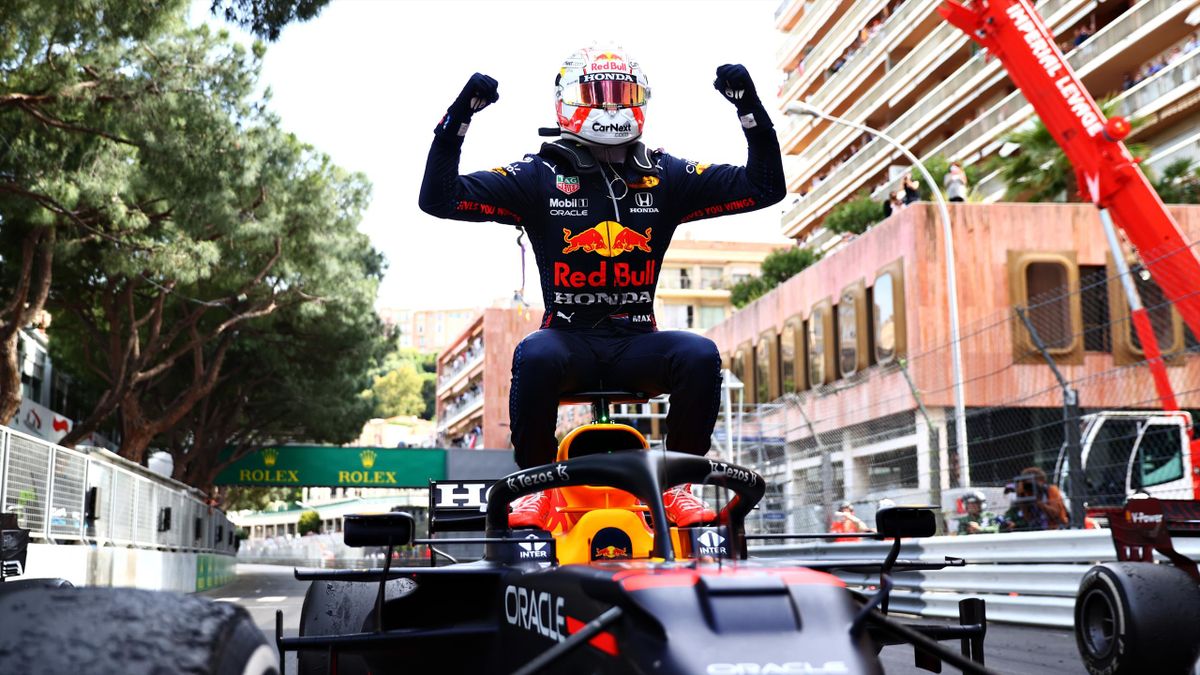
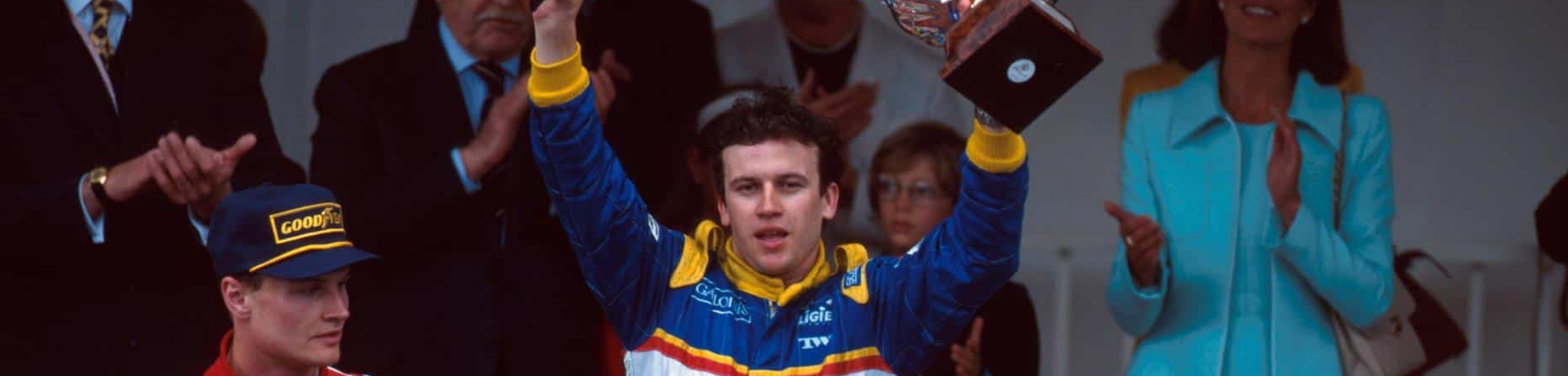
Max Verstappen took his first win at the Monaco Grand Prix as all his main challengers gradually fell by the wayside.
It appeared that Charles Leclerc had broken his Monaco curse when his gearbox was deemed safe to start the race after he had crashed in qualifying on his way to claiming pole position. But the curse returned with a vengeance on his installation lap and the Monegasque was cruelly consigned to watch his home race from the garage by a terminal driveshaft issue.
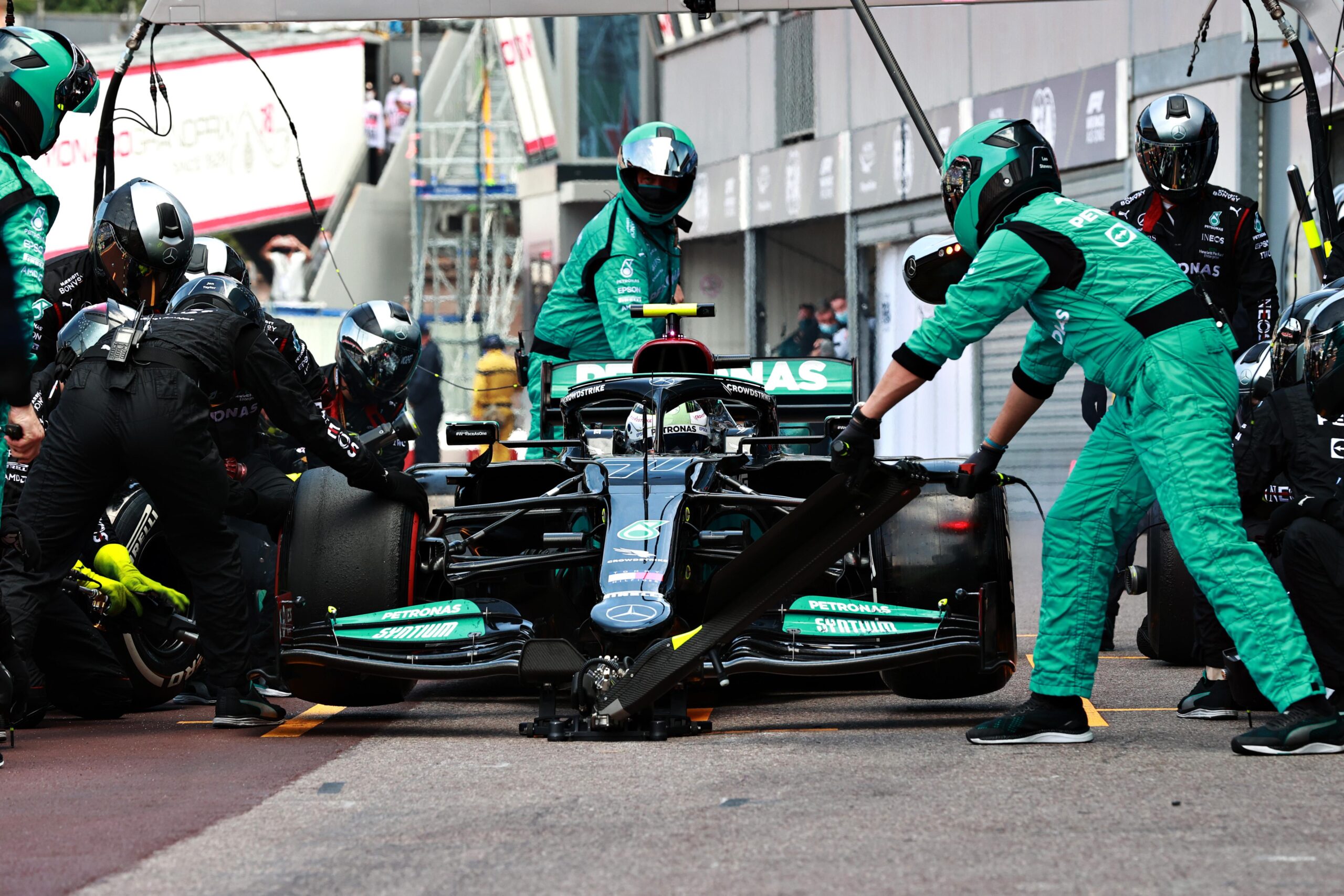
That left Verstappen effectively on pole and, once he had survived Valtteri Bottas‘s attack into the first corner, the race was his to lose. Bottas shadowed him for the first few laps as all the drivers managed their pace to conserve tyre life but, as they moved closer to the first stops, the Mercedes started to fall away from the Red Bull and into the clutches of Carlos Sainz in third place.
Out front, Verstappen was having no such dramas and serenely sailed to the chequered flag, keeping a comfortable gap to the chasing Sainz throughout. The Spaniard provided some consolation for Ferrari after Leclerc’s heartbreak with a strong second place, but was a little disappointed as he felt that he could have challenged for pole and victory without the Q3 red flag caused by his teammate’s crash.
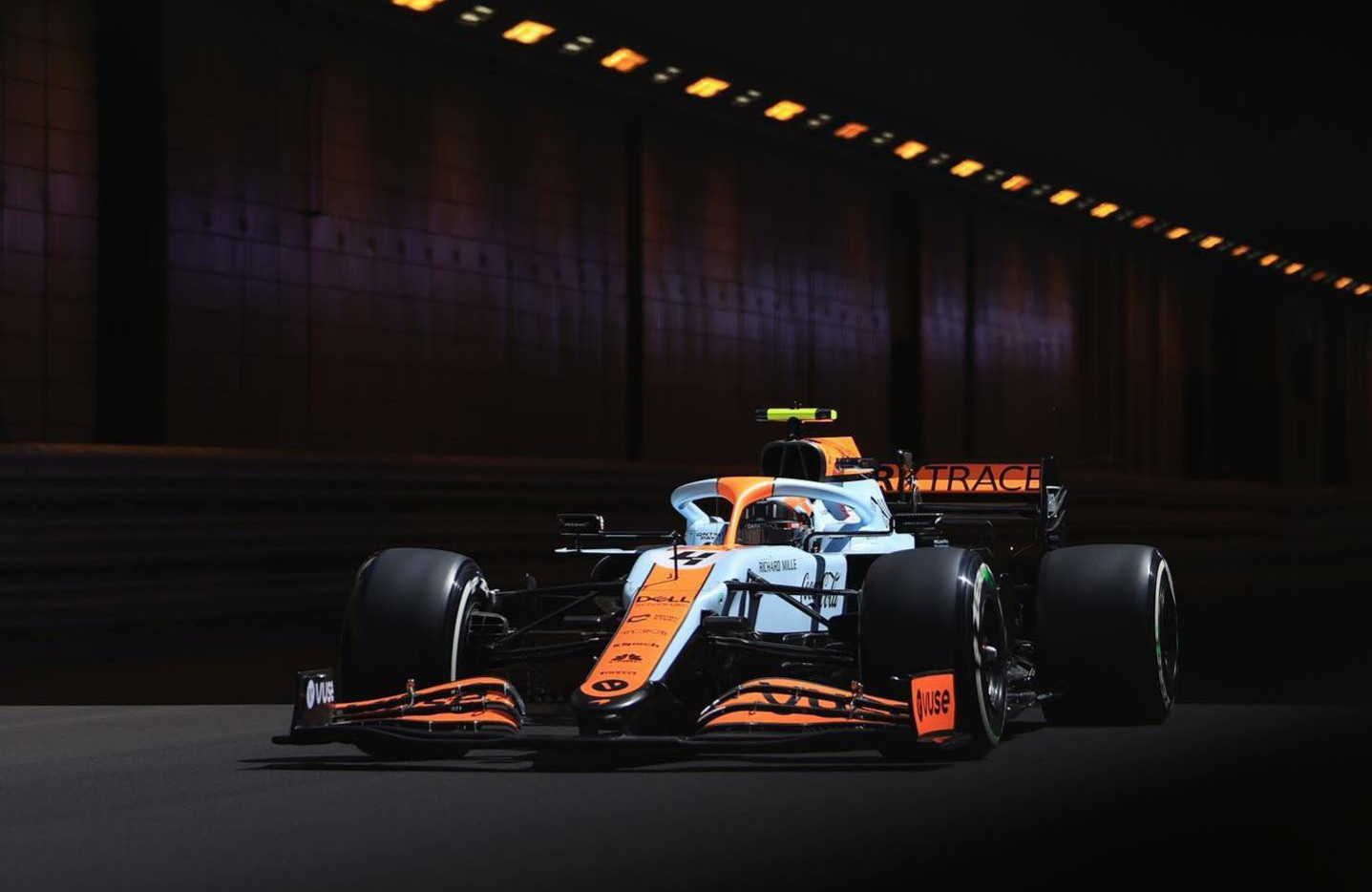
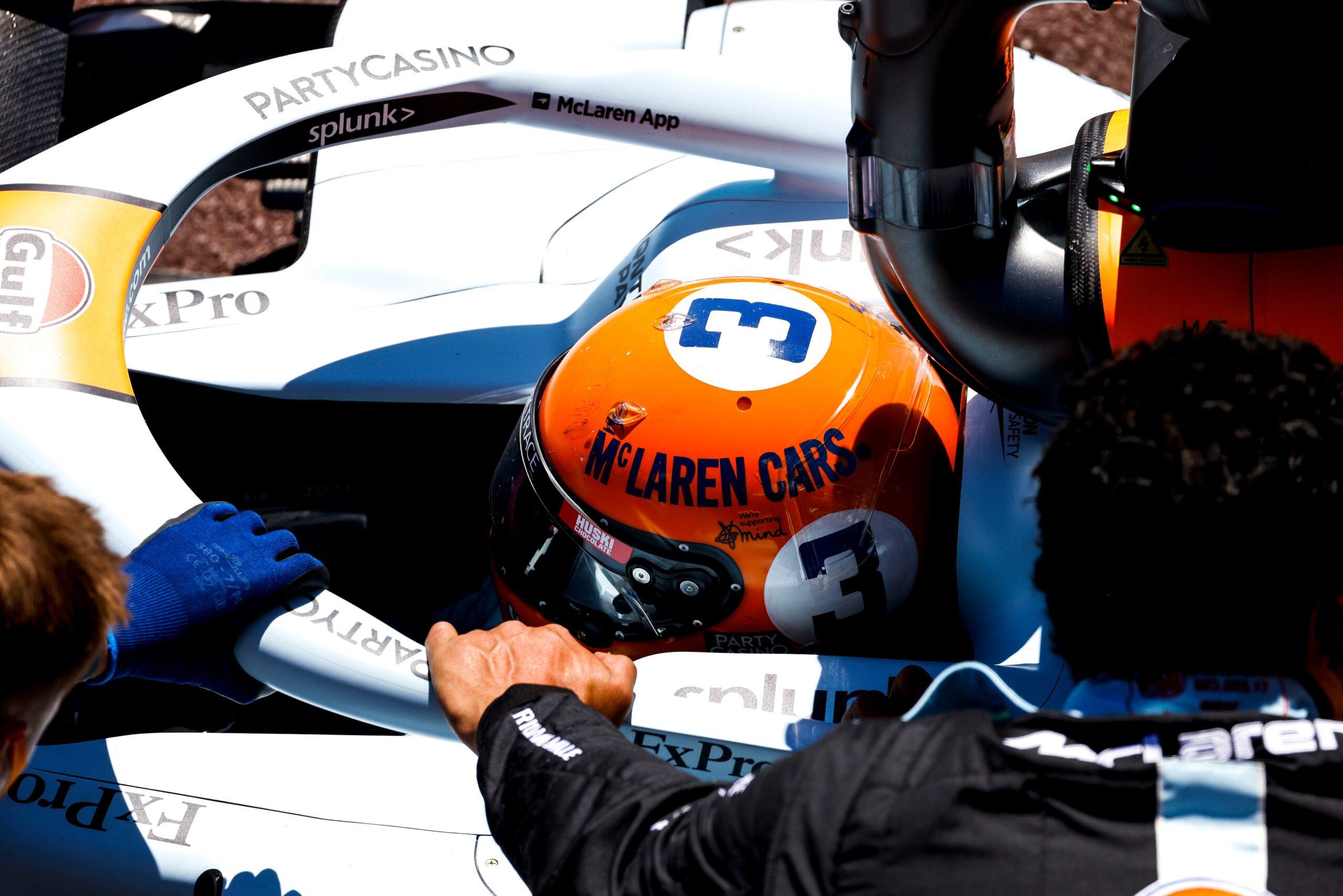
Lando Norris completed another excellent weekend – sporting the beautiful, one-off Gulf livery – and held off a late charge from Pérez to claim his second podium of the season and move up to third in the standings.
Image credit: Kym Illman
Vettel, Gasly and Hamilton predictably stayed in that order for the remainder of the race, Hamilton successfully pitting late on to claim the bonus point for fastest lap. Behind him, Lance Stroll made an alternative strategy work, starting on the hard tyres and moving up from 13th on the grid to finish eighth. Esteban Ocon finished a further half a minute down the road in ninth and Alfa Romeo‘s Antonio Giovinazzi claimed the final point – his first of the season.
It was a weekend not lacking in drama but the racing on Sunday was a typically mundane affair. And the Monegasque director – Monaco is the only race to use its own broadcast director – cut away from the one bit of wheel-to-wheel action that we did get… None of that will bother Verstappen and Red Bull, however, who have taken the lead in both championships. The momentum in the title battle switches once again.
Now, how will a very different street circuit – Baku in two weeks’ time – suit the cars?
Where Did That Ferrari Pace Come From?!
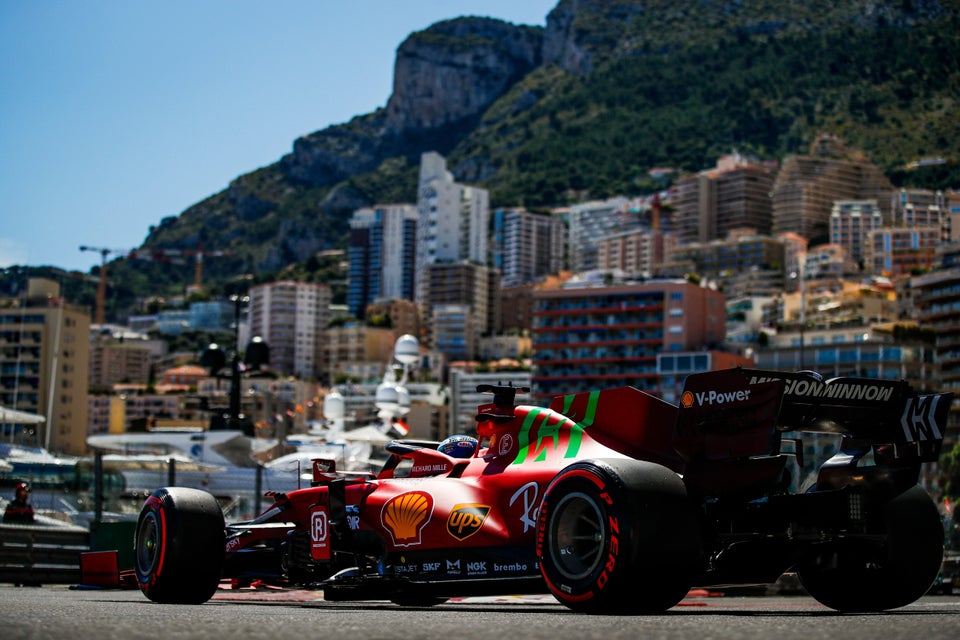
The Ferraris often flatter to deceive with their Friday pace, but this time they remained at the top of the timing charts throughout the weekend. So, how did that happen? Did they bring a major upgrade?
Image credit: DPPI
Well, I’m afraid to say – to any members of the Tifosi currently throwing their red caps in the air and declaring an imminent title charge – that is likely to be a one-off.
Ferrari have often gone well around the streets of the Principality – Vettel came home second in the previous two Monaco Grands Prix and 2017 saw a Ferrari 1-2. Their traditional short wheelbase makes the car nimble through the tight turns and, this year, the Monaco layout masked their still considerable deficiency when it comes to straight-line speed.
Even so, the drivers were surprised by their competitiveness.
“It is quite a big surprise,” Leclerc said. “Surely we were very competitive in Sector 3 in Barcelona, but again it’s a very different track and we were maybe expecting Red Bull and Mercedes to have something more for here, but apparently they didn’t and we were just very competitive from the start. So it was good, but until quali we didn’t believe we could fight for pole, so it’s a surprise.”
Whilst this likely isn’t the appearance of an unlikely championship contender, Ferrari can be very pleased with their progress since last year’s hugely disappointing campaign. Even the confines of Monaco wouldn’t have saved the SF1000. They can expect to compete at or near the front again in Hungary and Singapore – if that race happens – and now appear to be in a private battle with McLaren for third in the title. A feel good story for the two former giants of F1.
Vettel Finds Form, Ricciardo Loses It Again
Image credit: DPA Picture Alliance
It has been well documented that the drivers who switched teams for 2021 have been struggling to adapt due to the lack of testing. But Vettel appears to have finally made a breakthrough in the Aston Martin. He was far closer to Lance Stroll in Portugal and Spain than he had been at the first two grands prix of the year, and in Monaco he showed his experience, comfortably outperforming the Canadian in every session.
An impressive eighth in qualifying was turned into an even better fifth on Sunday, thanks to smart strategy and some guts during that wheel-to-wheel battle with Gasly. Vettel earned a well-deserved ‘Driver of the Day’ and will now look to build on this for the coming races.
Daniel Ricciardo, however, went in the opposite direction. After a much-improved performance in Spain saw him take a solid sixth place and finish ahead of teammate Norris for the first time, the wheels came off at what is his most successful circuit. The Aussie won here in 2018, after being robbed of victory in 2016, so moving aside to be lapped by Norris on Sunday will have been a bitter pill to swallow.
Image credit: Motorsport Images
Most worrying of all, he is at a loss to explain his lack of speed. “All weekend, even crossing the line a lot of laps I felt good, I was like that’s a good lap. And I think at one point I was 1.2s slower than say what Lando had just done, so no answers at the moment.”
He will need to find some answers quickly, or he risks having his reputation questioned in the manner Vettel’s was when Ricciardo joined Red Bull in 2014 and consistently outperformed him.
The Monaco Grand Prix in 60 Seconds
Answering the Burning Questions
Will Mercedes or Red Bull be on top around the twists of the Circuit de Monaco? Red Bull, if not Ferrari!
Can Max Verstappen make up for the many laps he spent stuck behind Lewis Hamilton in 2019? He can, in some style.
Will any teams surprise with their performance at this unique track? See above…
Who will have the best unique helmet design? The Williams drivers’ designs in honour of the team’s 750th race were nice, as were the McLaren Gulf specials, but I’m going for Bottas’s cartoon design.
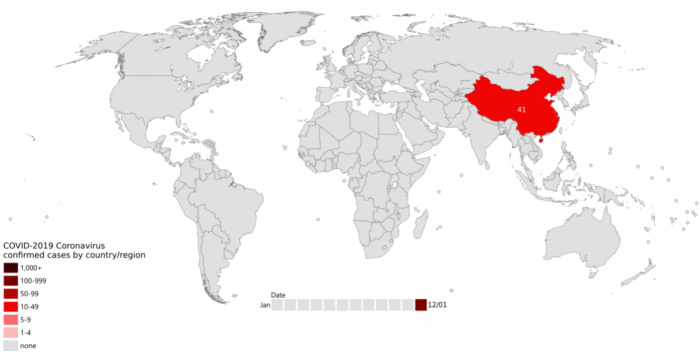
Well, we were in Melbourne, about to start another Formula 1 season…and then the world changed.
It has, in fact, changed beyond all recognition in the space of a few short months. Social distancing is the new normal – masks, gloves, two metre gaps, elbow bumps – and the Black Lives Matter campaign has swept around the globe after the death of George Floyd.
These have been truly unprecedented times, but, as curves have been flattened and lockdowns lifted, the world of sport is slowly, cautiously peering out from the rubble.
Image credit: AP
With cases reducing in most countries and both testing kits and protective equipment now far more readily available, many sporting bodies have decided that, with the correct safety measures in place, it is safe to resume.
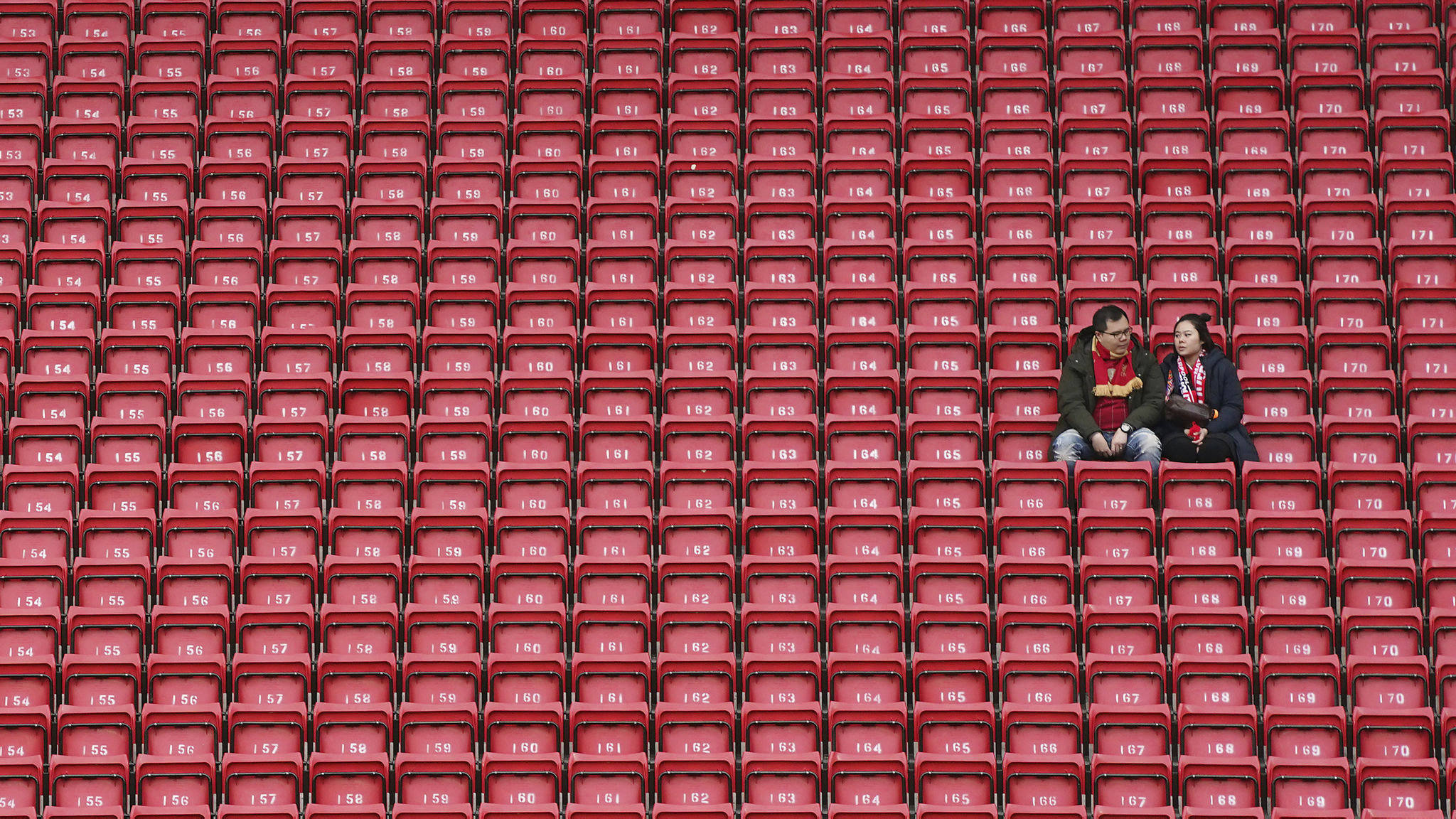
Premier League football has now restarted, with players and staff being tested twice a week, a maximum of 300 key people allowed inside the stadium and regular disinfection of equipment.
So, how will F1 look upon its return?
Formula 1’s ‘New Normal’
As sports go, the core elements of F1 are already fairly socially distanced; drivers are in their own cars, in the most advanced protective equipment and, if they get within two metres of their rivals, then they’ve probably crashed into one another…
This means that most of the changes will be aesthetic and/or behind the scenes.
The new regulations have been produced in conjunction with the WHO and feature all the measures with which we have become accustomed recently – two metre distancing wherever possible, PPE throughout and the expectation that “all attendees show responsible measures are being taken”.
There will be a daily questionnaire regarding potential symptoms to be completed by every member of the paddock, in addition to a contract tracing system, daily COVID briefings and an isolation hut on the premises.
What does it mean in terms of the show? Not a huge amount, really.
Image credit: Speedpix
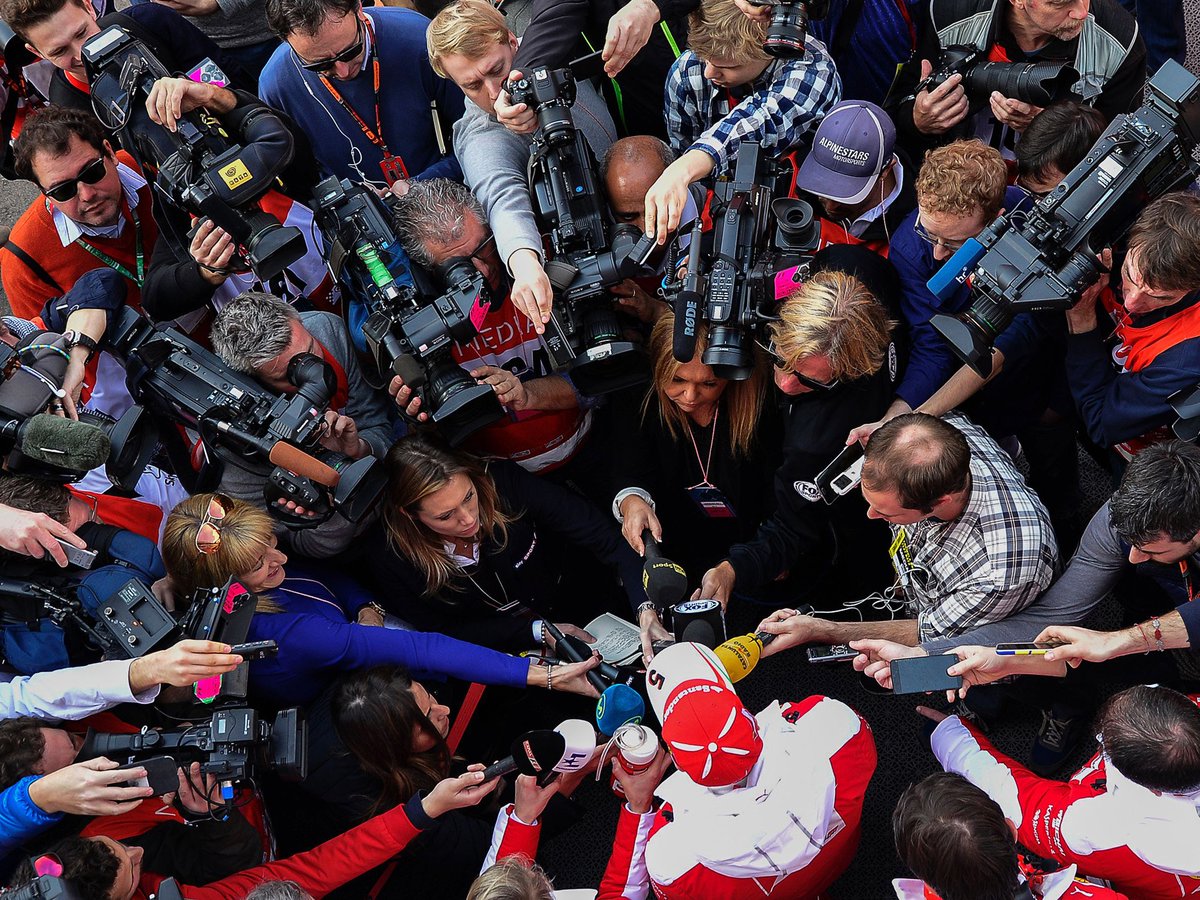
The grid process is to be shortened significantly. Media scrums are obviously a thing of the past; the media’s entry will be limited to mostly video or ‘pool’ interviews – where all outlets’ questions will be asked together. The weighbridge will be disinfected after each car’s visit and the podium celebrations will be moved to the grid, in order to enable two metre spacings between the steps.
There has been no word on the champagne as yet; maybe they’ll spray disinfectant instead.
What Could the Calendar End up Looking Like This Year?
It seems astonishing, in hindsight, that the opening Grand Prix of the year very nearly went ahead. It may well have done, too, but for a member of the McLaren crew testing positive for the virus on the Thursday night.
In the aftermath, grands prix were gradually postponed, with Monaco being the first to fully cancel its 2020 event. The difficulty of assembling the infrastructure necessary for a street race made the event impossible, even with restrictions beginning to relax.
The same obviously applies to the street races in Singapore and Baku, who duly followed suit, and the Australian, Dutch, French and Japanese Grands Prix weren’t far behind, cancelling for a variety of reasons.
The requirement for a season to qualify as a World Championship is a minimum of eight races. The talk of a three continent requirement can be put to bed after Managing Director Ross Brawn confirmed that, in the exceptional circumstances of the COVID-19 crisis, this “recommendation” will not have to be met.
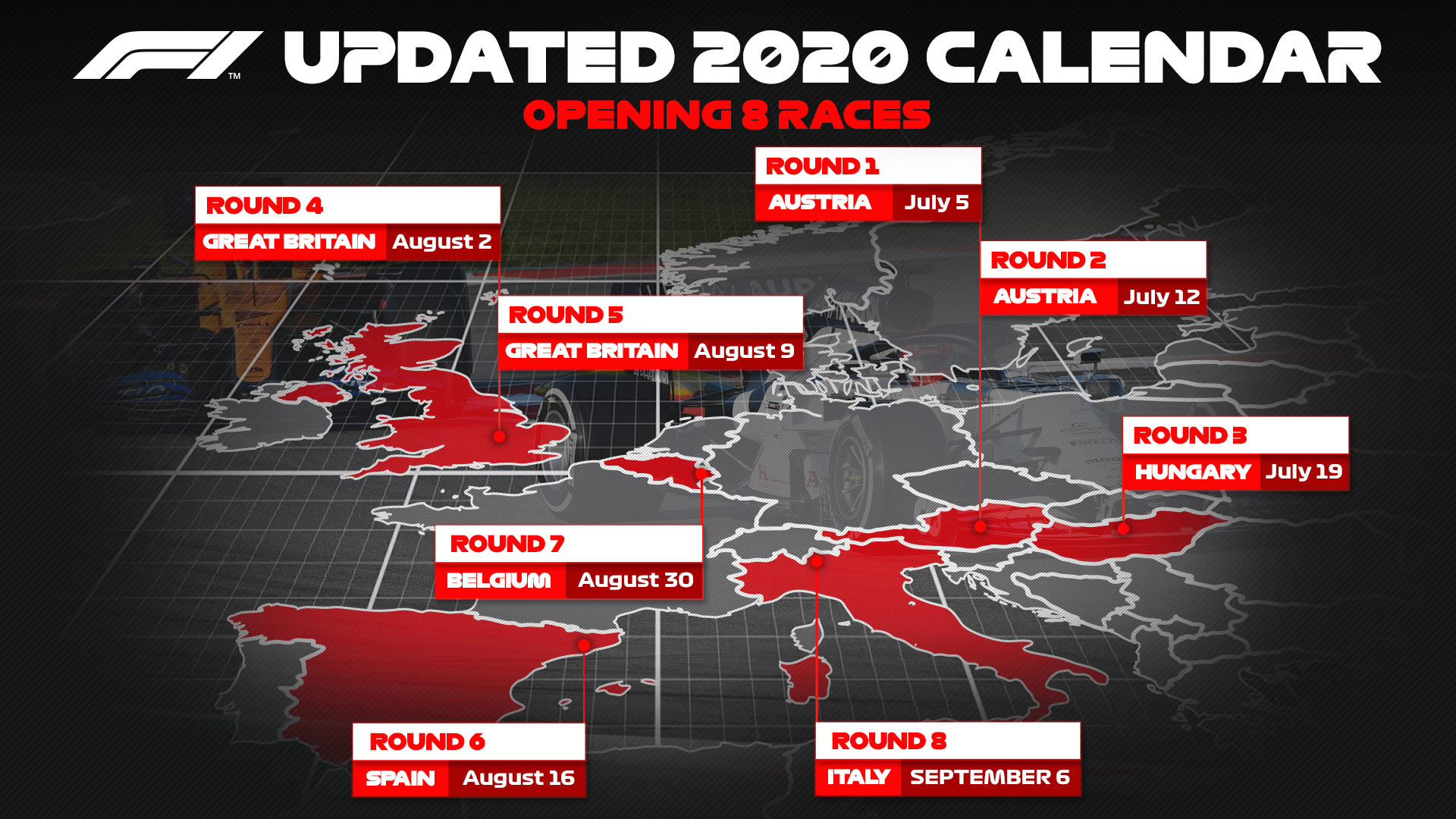
The FIA released a rescheduled calendar in early June, with the first eight races confirmed. They include – for the first time in F1’s history – a second race in both Austria and Great Britain; which have been named the Steiermark GP and the 70th Anniversary GP, respectively. The aim is to hold between 15 and 18 races overall, with the season potentially stretching into early 2021.
Image credit: Formula 1
Beyond this, things remain largely up in the air. The races in Canada and Vietnam continue to be a possibility and there may even be another double-header in China, ironically. Bahrain and Abu Dhabi look fairly solid bets to host at least one race.
The United States is far from over its Coronavirus struggles, whilst Mexico and Brazil appear to be going in the wrong direction, so the prospect of races there seems problematic. However, with Liberty Media waiving race fees and, in fact, paying to rent the facilities, there are some old faces throwing their hats into the ring.
From the more recent past, Hockenheim is looking likely to host a race, having dropped off the calendar for 2020. But blasts from the past such as Imola have been mentioned; both Estoril and Algarve in Portugal (and even Mugello in Italy) are being considered.
It’s hard to say currently how many races we’ll end up with and where they’ll be, but let’s just be glad that we have a championship at all.
Since You’ve Been Gone
So, if you’ve been out of the F1 loop during lockdown, what have you missed? Here are the main headlines…
Silly Season Before the Season Even Began
Image credit: Sky Sports F1
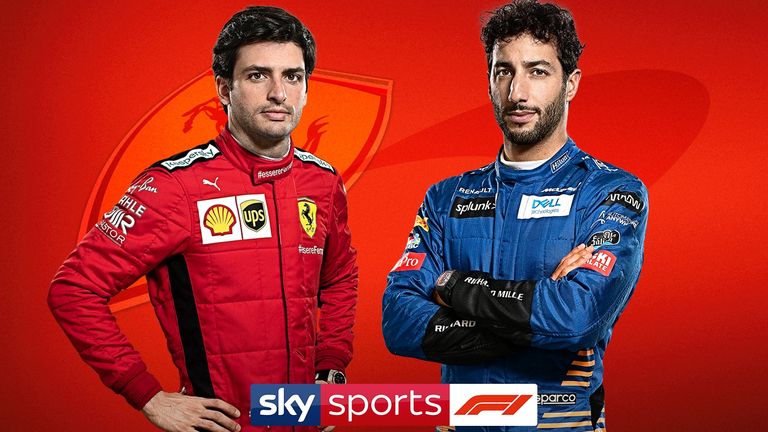
In the space of a couple of days, the F1 merry-go-round suddenly kicked into gear, sparked by Sebastian Vettel‘s announcement that he would be leaving Ferrari at the end of 2020. Within a few hours, Carlos Sainz was confirmed as his replacement and, not long after that, Daniel Ricciardo announced he was swapping the yellow of Renault for the papaya orange of McLaren in 2021.
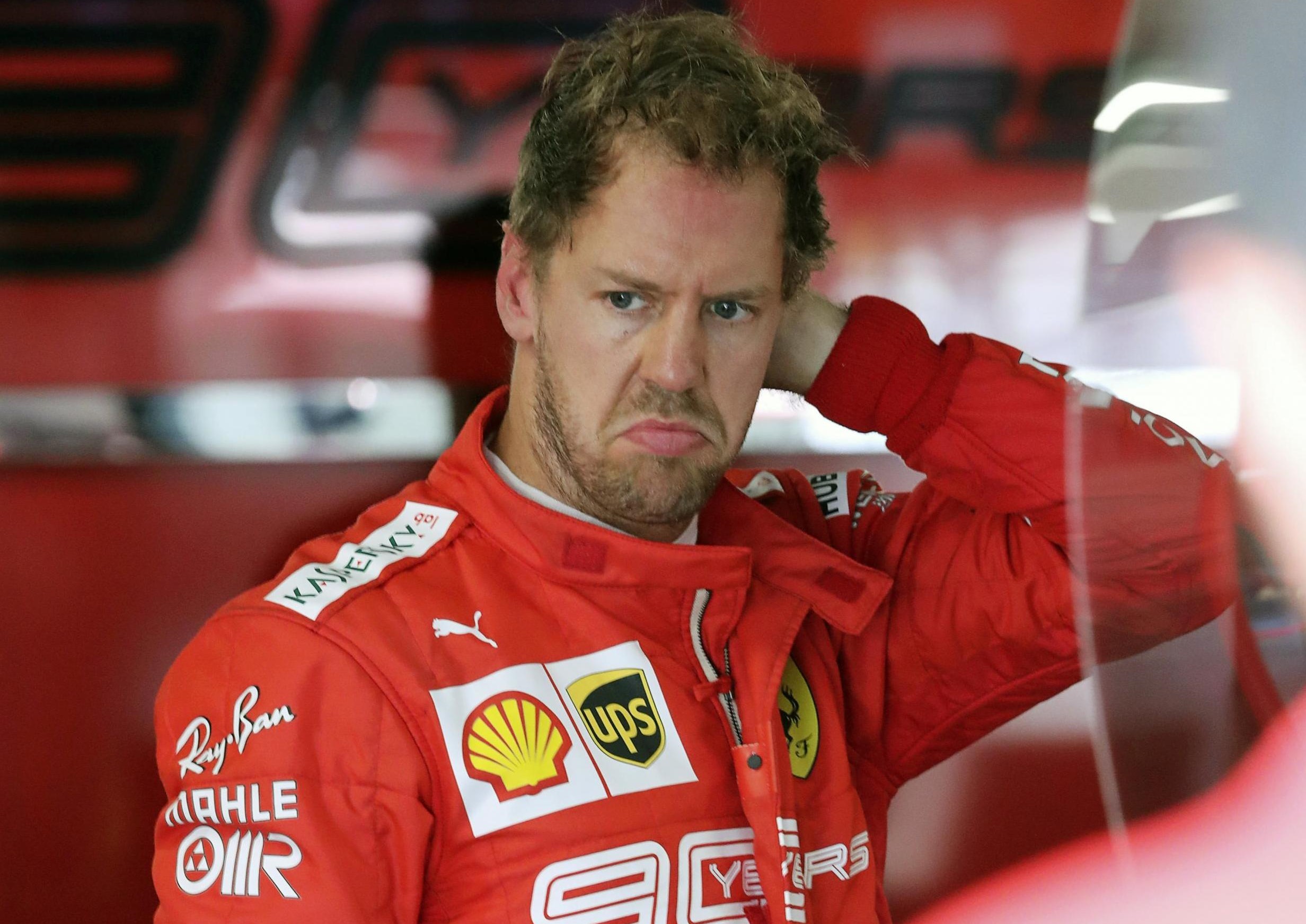
Vettel stated that “the team and I have realised that there is no longer a common desire to stay together beyond the end of this season”. Was he just burnt out after years of near misses and disappointment with the Scuderia? Or was it the team that have decided they want some fresh blood?
Either way, it can’t have been easy to give up on his dream of emulating his idol, Michael Schumacher, with a championship at Ferrari and his options for 2021 now look limited.
There were initial rumours of a Mercedes seat, but Toto Wolff has all but ruled that out, leaving his best chance at Renault. Will Vettel take a chance on what is currently a midfield team, with former teammate Ricciardo clearly having jumped ship? Or will he retire?
It would be a great shame for the sport to lose a four-time world champion, but you sense recently that his love for F1 has been dwindling a little.
Image credit: The Canadian Press
It is an incredible chance for Sainz, however. Many have seen him as a future de facto number two to Charles Leclerc, but let’s not write him off so soon. It is worth remembering that he largely matched Max Verstappen whilst the pair were at Toro Rosso and a stellar 2019 season refreshed memories of his considerable potential, after an uninspiring spell at Renault.
Ricciardo will be hoping that McLaren can continue their current upward trend and take advantage of the new regulations, which have now been delayed by a year to 2022. Unless he miraculously challenges for the title this year, it will have to be said that his Renault experiment was a failure.
It surely won’t wipe that perpetual smile off his face, though, and a pairing of the Australian and Lando Norris will certainly make 2021 an entertaining season for McLaren, in every sense.
Hamilton Leads the Fight
For once, that headline has nothing to do with Lewis Hamilton‘s dominance on the track.
The world champion has launched ‘The Hamilton Commission’ with the aim of increasing diversity within motorsport. “The time for platitudes and token gestures is over”, wrote Hamilton in a column for The Sunday Times. “Despite my success in the sport, the institutional barriers that have kept F1 highly exclusive persist.”
The 35-year-old has campaigned passionately during the enforced break, with a series of powerful statements on social media and participation in the peaceful BLM protest in Hyde Park.
Went down to Hyde Park today for the peaceful protest and I was so proud to see in person so many people of all races and backgrounds supporting this movement. It was really moving. I’m feeling extremely positive that change will come, but we cannot stop now. #blacklivesmatter ✊🏾 pic.twitter.com/koOTEPOXAh
And F1 has now followed his lead by launching the ‘We Race As One’ initiative, which has the aim to “impact long-lasting change, particularly regarding diversity and inclusion”. All cars will display a rainbow, comprising the colours of the 10 teams, throughout the 2020 season and the sport will also show support for key workers and families amid the fight against COVID-19.
As stated at the top of this article, the world has changed.
A Singapore Ferrari 1-2…just as everybody predicted…
Image credit: Motorsport Images
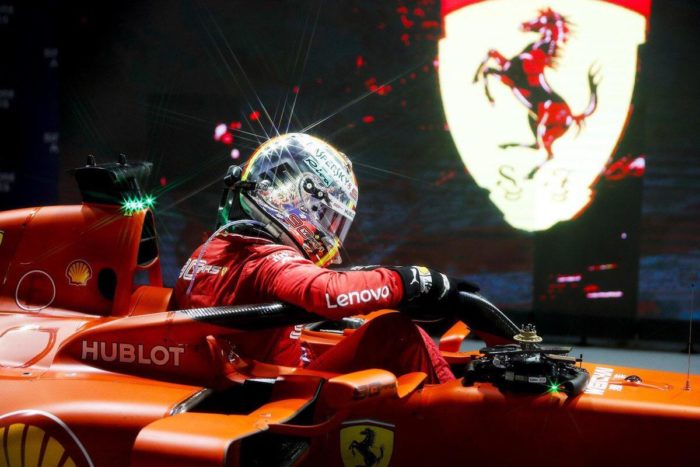
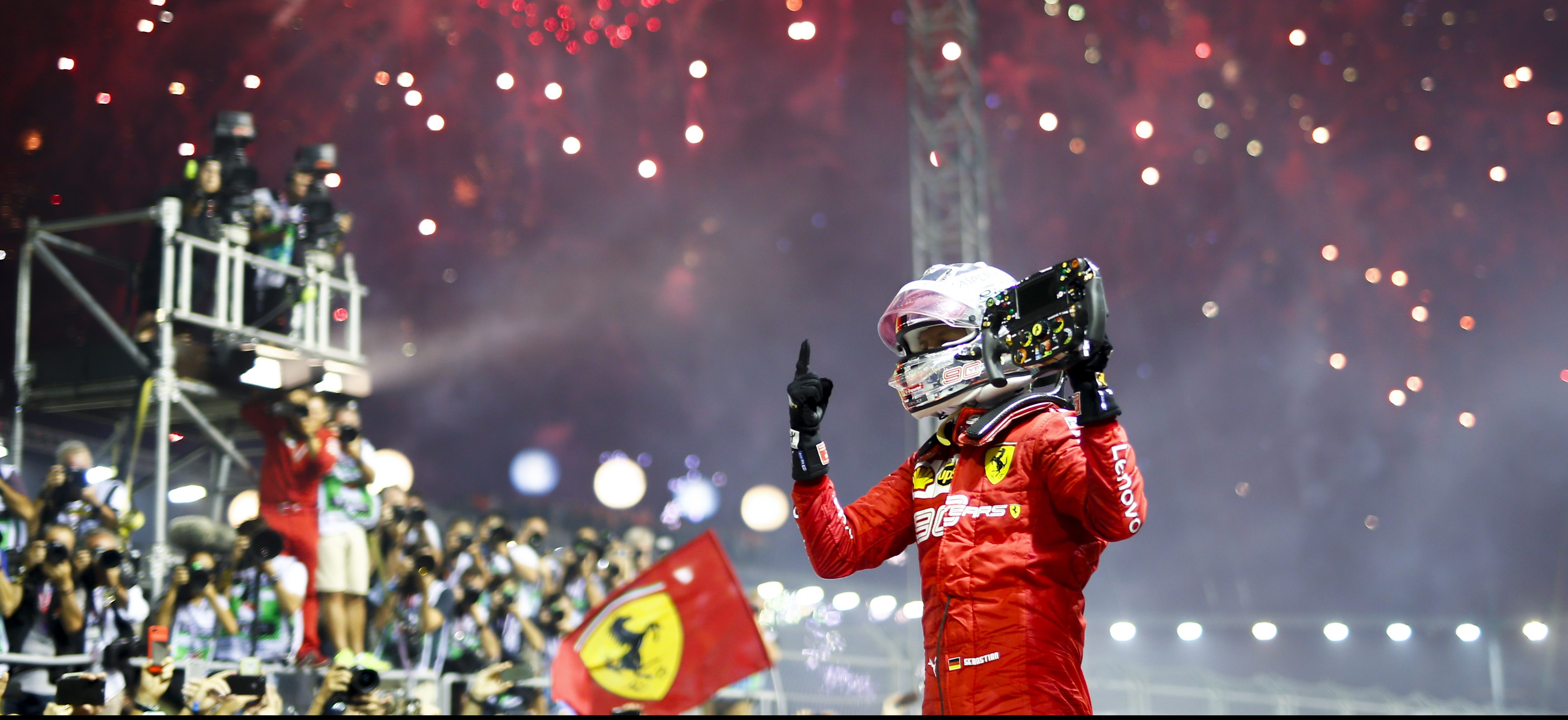
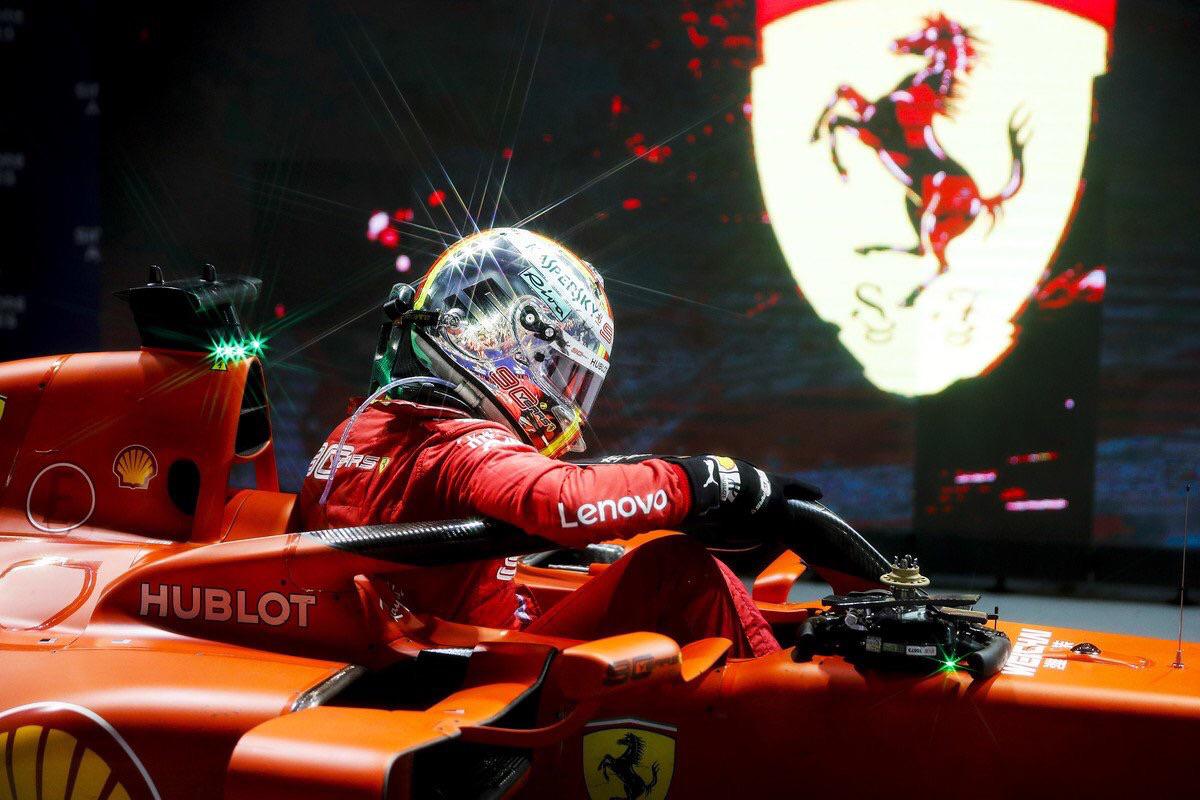
Sebastian Vettel completed a hat-trick of victories for Ferrari with an unexpected turn of speed under the lights at the 2019 Singapore Grand Prix. Coming into the weekend, the drivers, the team and their competitors were writing off their chances – even the ever-pessimistic Toto Wolff said early in the weekend he expected Max Verstappen to be their only competitor.
But, from Saturday morning, the red cars showed a sudden improvement after a seemingly very successful aerodynamic upgrade was fitted. Charles Leclerc claimed a stunning pole position, on the ragged edge of adhesion, and in doing so stole it away from his teammate Vettel, who had produced a great first run but failed to improve on his second attempt. Come Sunday, however, it would be Vettel returning the favour in the race as he benefitted from an accidental undercut on his teammate to take the victory.
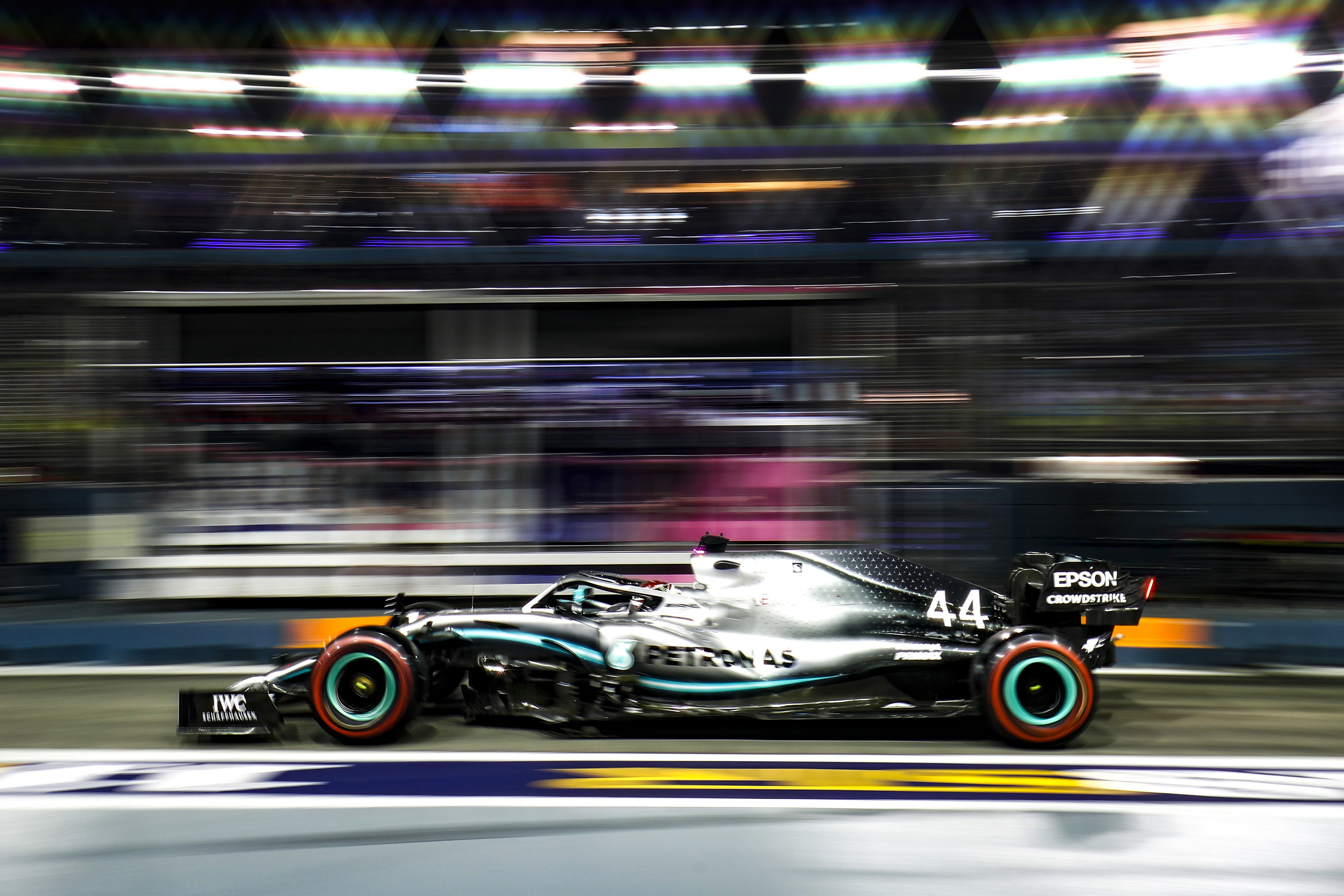
Behind the two prancing horses out front, Verstappen grabbed what had seemed an unlikely podium thanks to a strategic error from Mercedes dropping Lewis Hamilton from second to fourth. The champion’s teammate, Valtteri Bottas, followed him home in fifth with Alexander Albon just behind.
What could have been a thrilling finale, with the Mercedes closing in on fresher tyres, somewhat petered out thanks to a string of late safety cars which gave the Ferraris the breathing space – certainly in regards to tyre life – they required. However, the sight at each of the numerous restarts of two Ferraris and Verstappen heading into Turn 1 at Singapore probably set off some PTSD in a fair few Ferrari fans…
Behind the big three teams, Lando Norris put his recent run of bad luck behind him to claim ‘best of the rest’ and Pierre Gasly will have quietened some critics with a strong run to eighth place. The last points were collected by Nico Hülkenberg, who completed a decent recovery drive after a somewhat overambitious move on Carlos Sainz on the first lap, and Antonio Giovinazzi.
How Did Vettel End Up Ahead?
Leclerc led away from pole and controlled the first part of the race, as the front-runners crawled round Singapore’s abundance of turns painfully slowly, attempting to conserve their tyres. This slow pace meant the field remained close together though and produced some head-scratching amongst the strategy teams as the gap usually created between the top six and the rest of the field was not there for the leaders to emerge into after their stops.
Hamilton called for an undercut on Leclerc but Mercedes didn’t oblige and so Ferrari pitted Vettel to attempt the undercut on Hamilton himself. It was very effective – as it turned out, arguably, too effective. They expected Vettel to make up a second or two but, even with a pretty average pit stop, he made up well over three seconds and when Leclerc emerged from the pits a lap later, he was narrowly behind his teammate.
The young Monegasque was understandably perplexed and irked. He repeatedly came on to the radio asking what had happened, why it had happened and what was going to happen next. No particularly enlightening answers were forthcoming and, try as he might, he could not fashion even a sniff of an overtake and came home a discontented second.
Image credit: LAT Images
Vettel didn’t let the fortunate circumstances dampen his enjoyment of a long-awaited victory and brought out the old one-digit-salute for the first time in over a year. He also likely felt that this was justice for whatever precisely went on during that messy and controversial Italian Q3. Leclerc, after calming down somewhat, did mostly toe the company line and showed maturity in his reaction to missing out on the win through no fault of his own.
Could they have swapped the drivers? Potentially – and apparently that idea was discussed – but Vettel’s excellent out lap put him in the position to inherit the lead. Being told to relinquish a win, after the season he has had and the controversies in Canada and Italy, would surely have crushed him. It was probably the right call.
This will only serve to further increase tensions within the team, though. Imagine if Ferrari had been this competitive earlier in the year…
And How Did Mercedes Get It So Wrong?
We are all used to Mercedes as a no-nonsense, well-oiled machine in the hybrid era but there have been a few slip-ups (no oil pun intended) recently.
Obviously, whilst clearly a chastening weekend for all involved at Mercedes, the German Grand Prix was something of a lottery and they were far from the all only team to be caught out. Here, however, their call to keep Hamilton out seemed clearly foolish to most armchair strategists watching on. The driver’s call to undercut Leclerc would likely have seen him win the race but, once Mercedes had missed their chance to do so, they decided to gamble on going long.
A safety car in the time that Hamilton was still out would most likely have done the job. But this high-risk approach seems to go against the normal Mercedes sensible, efficient ethos – you don’t leave your strategy calls in the lap of the gods, hoping for a miracle. Without that kind of intervention, they were reliant on the out-of-position cars, that hadn’t stopped, holding up the defacto leaders and the world champion’s tyres were always likely to cry ‘enough’ before then.
Image credit: Daimler AG
And so it was that Mercedes had to bail out of the gamble and awkwardly ask Bottas – who is supposedly in a fight with Hamilton for the title, remember – to slow down dramatically so he didn’t pass his teammate and drag Albon through with him. James Vowles even worked it beautifully for the memers of the world by using his infamous ‘Valtteri, it’s James’ line again…
Any hope the team had of salvaging something from the situation by utilising the fresher tyres was then dashed by that series of late safety cars.
Is this a case of complacency from the Silver Arrows, with the title all but wrapped up halfway through the season? Are they now focusing on a bigger update for the start of next year so as not to reveal their latest secrets to their rivals? Or have they just been a bit unlucky in the last three races? Whatever the true answer, if they don’t win in Russia next weekend, it will be the longest winless run for Mercedes since the start of the hybrid era.
A Rollercoaster for Ricciardo
Daniel Ricciardo seemed in high spirits (not that that’s exactly noteworthy) coming to Singapore off the back of a great fourth place in Monza and he then followed that up by sealing a solid seventh position on the grid. It was not to last though as he was disqualified from the qualifying session for a technical infringement.
Ricciardo and Renault clearly took umbrage with the penalty but had no option other than to except it and move on, even if it was later revealed to be “after he benefitted from an advantage measured at one microsecond [0.000001s] due to a kerb hit that caused his MGU-K to over-rev on his slowest lap of Q1.” Unfortunately, rules are rules. If you give the teams an inch they will take a mile and if you give them a microsecond they will probably find a way to take a second.
So come Sunday, the Aussie unsurprisingly decided to go for it. He was doing an excellent job of carving through the field, if pushing his luck at points, and looked to have put himself in a net points-paying position but a clumsy move on Giovinazzi left him with a puncture and left him back near where he started.
It was a shame to see. Whilst clearly an excellent driver, at points you have to wonder whether Ricciardo earned his reputation for overtaking by ‘licking the stamp and sending it’ to drivers who would rather just get out of the way of what was normally a faster Red Bull.
Either way, the Honey Badger will leave Singapore, reset and come back fighting again in Sochi.
Answering the Burning Questions
Can Sebastian Vettel recover from a crushing weekend in Monza? He can!
Will the Mercedes or Red Bull be the best car around Marina Bay? Or maybe even Ferrari?! It was mostly just great to see such a fight between all three but seemingly the Ferrari did have an unexpected edge.
How will Alexander Albon cope in his first true head-to-head test against Max Verstappen? It was a solid performance on a very difficult and unforgiving track. But he will need to build on it and close the gap further.
Will Verstappen get through the first corner unscathed this weekend? Yes.
Can Renault keep up the momentum from their strong result in Italy? The car had promising speed but a minor technical glitch and a couple of crashes got in their way.
In honour of Daniel Ricciardo‘s first points for Renault, this is a piece on the history of established, successful drivers leaving established, successful teams and how it worked out for them.
I’m only discussing drivers who left of their own accord – or at least as best we can tell without knowing all the ins and outs – so moves such as Damon Hill’s from Williams to Arrows in 1997 as world champion won’t be included. The 50s had a far more fluid driver-team dynamic; for example, Juan Manuel Fangio regularly changing teams depending on which he thought had the best car at that time. So let’s begin in the 60s.
Results are mixed.
Jack Brabham | 1962 | Cooper > Brabham
Jack Brabham won back-to-back championships with Cooper in 1959 and 1960 but during the second of those seasons was already becoming convinced that he could produce a better car himself, particularly once having helped design the T63 that took him to the championship. After a poor showing from Cooper in 1961, Brabham left to start the team this bore his name.
The first few years were not successful. His team suffered poor reliability, not helped by Brabham’s reluctance to spend money, and in 1965 he was beginning to consider retirement. He handed his car over to several other drivers and the lead-driver role to Dan Gurney. During that season, Gurney took the team’s first win but then announced he was leaving to start a team of his own and so Brabham decided to continue.
It was a good decision. Largely thanks to an inspired decision regarding the new engine regulations, 1966 saw Brabham win his third world championship. And in doing so, became the only man to win the world championship in a car that carried his own name. A record that still stands and likely will for a long time.
Success? Definitely.
Emerson Fittipaldi | 1976 | McLaren > Copersucar
Titles in 1972 with Lotus and 1974 with McLaren saw Emerson Fittipaldi become the youngest double world champion in the history of the sport. A record that lasted more than two decades until Michael Schumacher‘s second title in 1995. Fittipaldi finished the 1975 season as runner-up to the Ferrari of Niki Lauda before shocking the F1 world by announcing he was leaving McLaren for Copersucar – a team funded by a Brazilian sugar marketing company and run by his brother, Wilson.
13th place on his debut set the tone for the venture, however. The Brazilian never won again and managed only two podiums in the remainder of his career, staying at the team until retiring at the end of 1980. He moved into management of the team but it folded in 1982.
Meanwhile, James Hunt won the 1976 world title in the seat Fittipaldi had vacated…
Success? Definitely not.
Niki Lauda | 1978 | Ferrari > Brabham
Niki Lauda’s relationship with Ferrari never really recovered from his decision to withdraw from the crucial Japanese Grand Prix of 1976. Having recently returned from his horrific crash at the Nürburgring and in appalling weather conditions, Lauda said “my life is worth more than a title”.
The following year, despite Lauda comfortably winning the championship, tensions continued to grow. The title was won due to consistency rather than outright pace and Lauda disliked his new teammate, Carlos Reutemann. He said he felt let down by Ferrari for them putting extra pressure on him and announced his decision to quit.
He moved to a Brabham team that had struggled for most of the 1970s and sadly for the Austrian not much was to change during his two years there, with unreliability a major issue. That was except for one race and one infamous car – the Brabham BT46B. A radical design that became known as the ‘Fan Car’. It won its first and only race but was never used again; other teams vigorously protested its legality and team owner Bernie Ecclestone did not want any legal complications whilst he worked on his acquisition of the sport’s commercial rights.
At the end of 1979, Lauda retired, stating he had “no more desire to drive around in circles”. He would return in 1982 with McLaren, however, and win the world championship in 1984.
Success? Not at Brabham but the decision was understandable and he got his third title in the end.
James Hunt | 1979 | McLaren > Wolf
Things went steadily downhill for James Hunt at McLaren after winning the 1976 World Championship. His title defence derailed early in the season due to problems with the new car and, whilst that season ended reasonably well, 1978 was a disaster. Lotus had developed very effective ‘ground effect’ aerodynamics and McLaren were slow to respond. The car was eventually revised midway through the season but it did not work. This, along with the death of his close friend Ronnie Peterson, crushed Hunt’s motivation.
Despite a poor 1978, Hunt was still very much in demand. He turned down an offer from Ferrari, due to their complicated political environment, electing instead to move to Walter Wolf Racing. A team which had won its very first race and powered Jody Scheckter to second in the world championship in its first season. However, the team’s ground effect car was uncompetitive and unreliable.
Hunt retired from six of the first seven races and, after the Monaco Grand Prix, announced his immediate retirement from the sport. He could only watch on as Scheckter won the championship in the Ferrari seat he had turned down.
Comebacks almost transpired. First as a replacement for the injured Alain Prost in 1980 but Hunt broke his leg whilst skiing. Then in 1982 he was offered a drive at Brabham by Bernie Ecclestone but turned it down. And even in 1990, at least somewhat due to financial troubles, Hunt considered a comeback with Williams – testing a modern car but running several seconds off the pace.
Success? No. But leaving McLaren was less the issue than turning down Ferrari.
Nelson Piquet | 1988 | Williams > Lotus
Despite winning the title in 1987 at Williams, Nelson Piquet became obsessed with his feeling that he was not being given the undisputed number one driver status he claims was promised to him by the team. Even going as far as saying they actually favoured Nigel Mansell. And so he left for Lotus, having been promised the status he craved there.
Honda, who paid most of his salary, were unhappy with Williams and moved their engines along with the Brazilian. McLaren, also with Honda power, then dominated the next two seasons. Lotus were stagnating and Piquet himself also wasn’t performing. It could be that he was never the same driver after a bad concussion suffered in a crash the previous year, but he significantly harmed his reputation and resorted to attacking his rivals via petty comments in the media.
He later moved to Benetton and won three races in two seasons but never again challenged for the championship.
Success? No and dragged his former team down with him too.
Michael Schumacher | 1996 | Benetton > Ferrari
You could argue that moving to Ferrari is never going to be that much of a risk, certainly compared to some others on this list. But Michael Schumacher left Benetton as the constructors’ champions, having won back-to-back titles himself with them, for a Ferrari team that hadn’t won a drivers’ title since 1979 and had only won two races in the past five seasons.
But Schumacher had grown tired of the way Benetton was run and wanted both an increased salary and a new project.
He got both and we all know how the next decade with the Scuderia played out. After a few years of near misses (or distinctly not missing Jacques Villeneuve’s Williams and subsequently being disqualified from the 1997 season), Schumacher dominated the early 2000s, winning every title available between 2000 and 2004.
Fernando Alonso then arrived and dethroned him with the seven-time champion retiring at the end of 2006. A brief return to the sport with Mercedes in 2010 produced just one podium but Schumacher will always be remembered as the dominant force in Ferrari red.
Success?The success story.
Jacques Villeneuve | 1999 | Williams > BAR
After winning both championships in 1997, Williams had a strange title defence, both in terms of livery – in red for the first time – and performance, without a single win. They had been hampered by the underpowered Mecachrome engine and Villeneuve decided to join the newly formed BAR team for 1999. That decision was also certainly swayed by his friend and personal manager, Craig Pollock, who partly owned the team.
They had lofty ambitions and made boastful claims of winning the championship in their debut year. Claims that ultimately became embarrassing when they failed even to score a point, Villeneuve setting an unwanted record of failing to finish the first 11 races of the season.
During the four seasons that followed, BAR improved somewhat but never enough to take a win. Pollock was sacked in 2002 and, after being outpaced by a young Jenson Button in 2003, Villeneuve left the team. Without a drive, he was forced into a sabbatical before returning for three races with Renault at the end of the year but was off the pace.
He eventually retired from F1 during the 2006 season, whilst racing for BMW Sauber, having effectively been replaced by Robert Kubica after refusing to be part of a potential ‘shoot-out’ with the Pole.
Success? Not at all. A career that nose-dived.
Lewis Hamilton | 2013 | McLaren > Mercedes
When Lewis Hamilton announced he was moving from McLaren to Mercedes for the 2013 season, there were not many that thought it was a wise decision. McLaren were serial winners and, whilst the last few seasons had seen them second or third best, with Red Bull dominant, Mercedes had generally been also-rans since returning to the sport in 2010. But Niki Lauda had convinced Hamilton that it was a wise decision. And boy, was he right.
There was a solid first season with a victory and fourth place in the championship. But then in 2014, having spent years preparing for the new regulations and hybrid engines, Mercedes produced a car that was in a different league to the rest and Hamilton himself found a new level of excellence.
How certain he, or Lauda, were of the Silver Arrows’ impending dominance is up for debate. But Hamilton’s place now amongst the greats is not. He has won four of the last five titles, narrowly losing out to teammate Nico Rosberg in 2016 after a season plagued with unreliability, and is closing in on Schumacher’s all-time records. Records that most thought would never be threatened.
Whether or not, he can pass those records, Hamilton undeniably made the correct career move. McLaren have not won a race since he left.
Success? If Schumacher is the success story then Hamilton is well on his way to replicating that story.
Fernando Alonso | 2015 | Ferrari > McLaren
Fernando Alonso could arguably be on this list on more than one occasion. At the end of 2007, he left McLaren, after the most dramatic and political of seasons, to return to Renault. Alonso won just two races in two seasons there, but his second spell with the French team had only ever been a stopgap on his journey to Ferrari.
He succeeded in joining the Scuderia in 2010 and came agonisingly close to titles in both his debut year and 2012. Poor strategy in the final race put paid to his hopes in 2010 and then, in 2012, Alonso drove arguably one of the best seasons in the history of the sport, regularly dragging an underperforming Ferrari to places it had no right to be but agonisingly lost out to Sebastian Vettel by three points, once again at the final race.
The Spaniard became disillusioned, doubting he would ever be provided with a truly title-winning machine, and made a decision that stunned the sport – to return to McLaren.
In 2008, Alonso ever rejoining McLaren would have seemed unthinkable. Indeed, it still did to most in 2014. But McLaren had linked up with Honda on their return to the sport and Alonso dreamed of emulating his hero, Ayrton Senna, and winning in a McLaren Honda.
Sadly, it was not to be. Honda struggled to catch up with the other engine manufacturers, stifled by massively complex technology and McLaren’s strict regime, and Alonso spent the remainder of his career once again dragging the car to places it had no right to be. But now that was the top ten, rather than the top of the podium.
Success? Alonso’s career decisions have almost become a running joke within the sport. The guy just couldn’t pick the right path. A story of what could have been.
Daniel Ricciardo | 2019 | Red Bull > Renault
Daniel Ricciardo worked his way through the Red Bull junior system, progressing to Toro Rosso in 2012 and then being promoted to the big boy seat in 2014, promptly putting the reigning four-time world champion, Vettel, in his place. Ricciardo beat him fair and square and, when Vettel left the team at the end of the season, he became the team leader.
He then spent the last four seasons picking up plucky wins against the odds and pulling off audacious overtakes from way too far back, or “licking the stamp and sending it” as he’d put it. But the ever-likeable Aussie came to feel that Red Bull were beginning to favour their new golden boy, Max Verstappen, and decided to throw the dice with a move to Renault.
Only time will tell how he will compare to the others on this list. It could be an inspired move like Hamilton or a failed experiment like Villeneuve. Renault certainly have the aim of breaking into the current top 3 in years to come and there are new regulations coming in 2021 that could change the playing field completely.
We will just have to wait and see which part of that field Renault end up in.