For a variety of reasons, including a lot of work and a trip to Mexico, I haven’t been able to write race reports for the first three grands prix this season.
There was also the issue of my falling out of love with F1 at the end of last year, which left me short on motivation.
However, the first race of the year did a lot to counter that.
A Positive Start in Bahrain
Image credit: Scuderia Ferrari
After pre-season testing, I was wary of a season of Red Bull and Max Verstappen domination. All allegiances aside, that really was the last thing the sport needed as it headed into its new era.
With the huge controversy of Abu Dhabi having left a bitter taste in the mouth for many, a runaway championship for the man who earned his maiden title via Michael Masi’s questionable decisions on lap 57 at the Yas Marina Circuit would not have been a good way for F1 to turn over a new leaf.
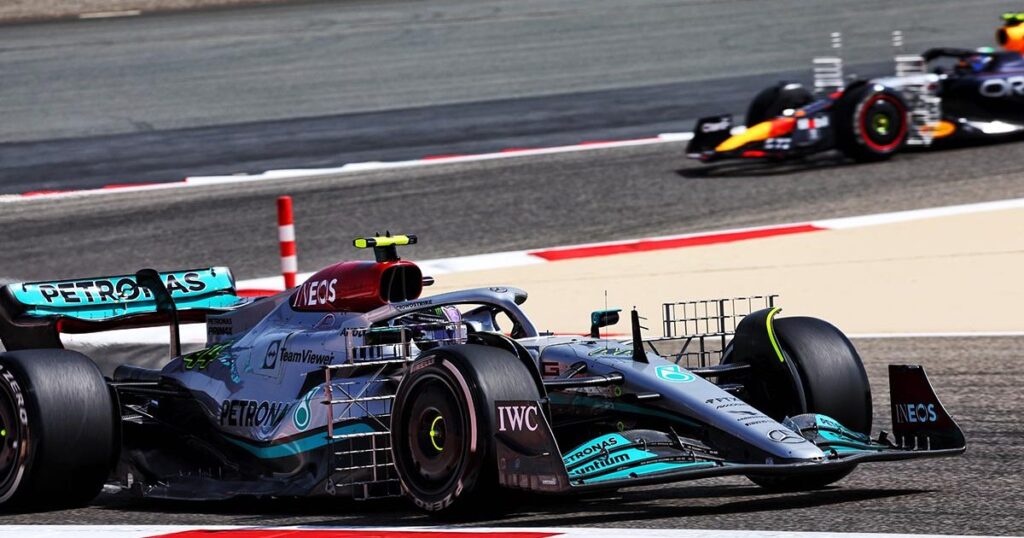
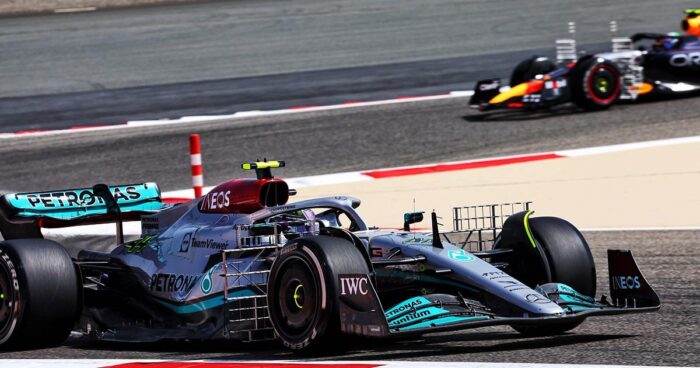
Whilst Mercedes have faltered, as their dramatic sidepod – or lack thereof – design seemingly left them suffering worse than most with the returning phenomenon known as ‘porpoising’, Ferrari have fortunately returned to the front to give us a title battle.
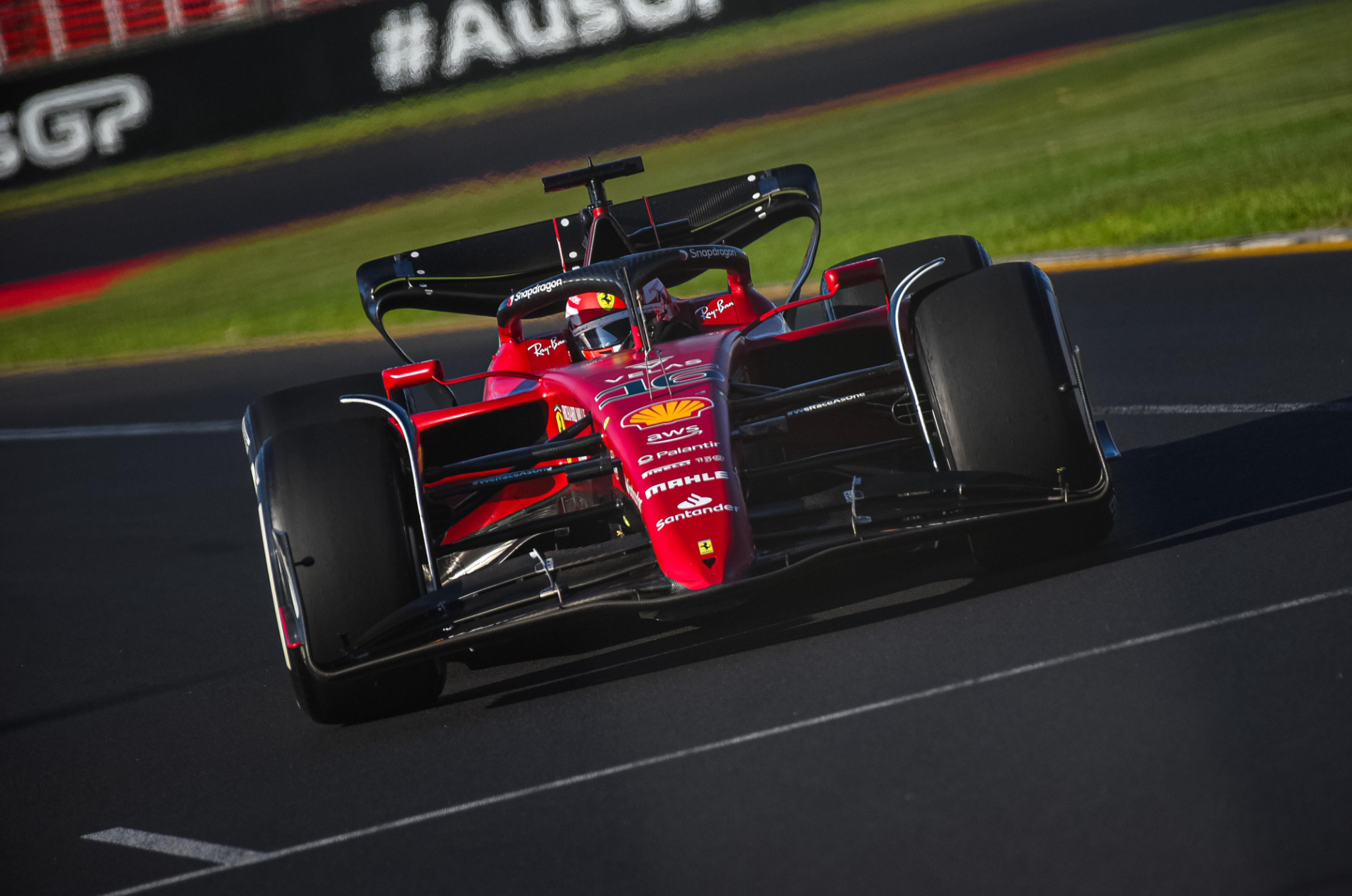
And armed with a truly frontrunning car, Charles Leclerc has been reminding the world exactly what he is capable of.
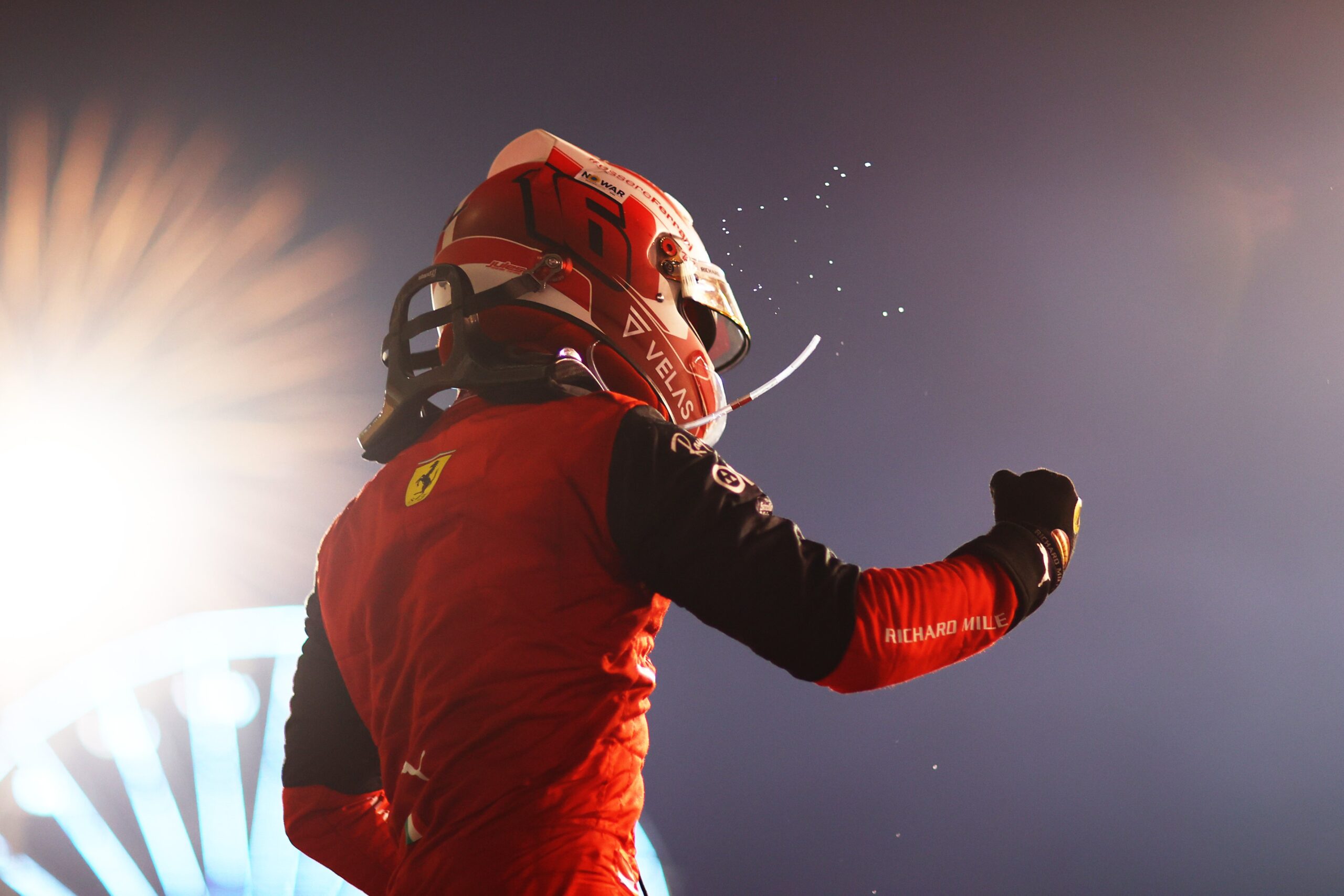
A thrilling battle with Verstappen at the season-opener in Bahrain ended up with the Ferrari man on top, the pair having gone wheel to wheel for a number of laps, but Leclerc using the DRS zones smartly and then building a gap to take his first victory since delighting the Tifosi at Monza in 2019.
Image credit: Getty Images
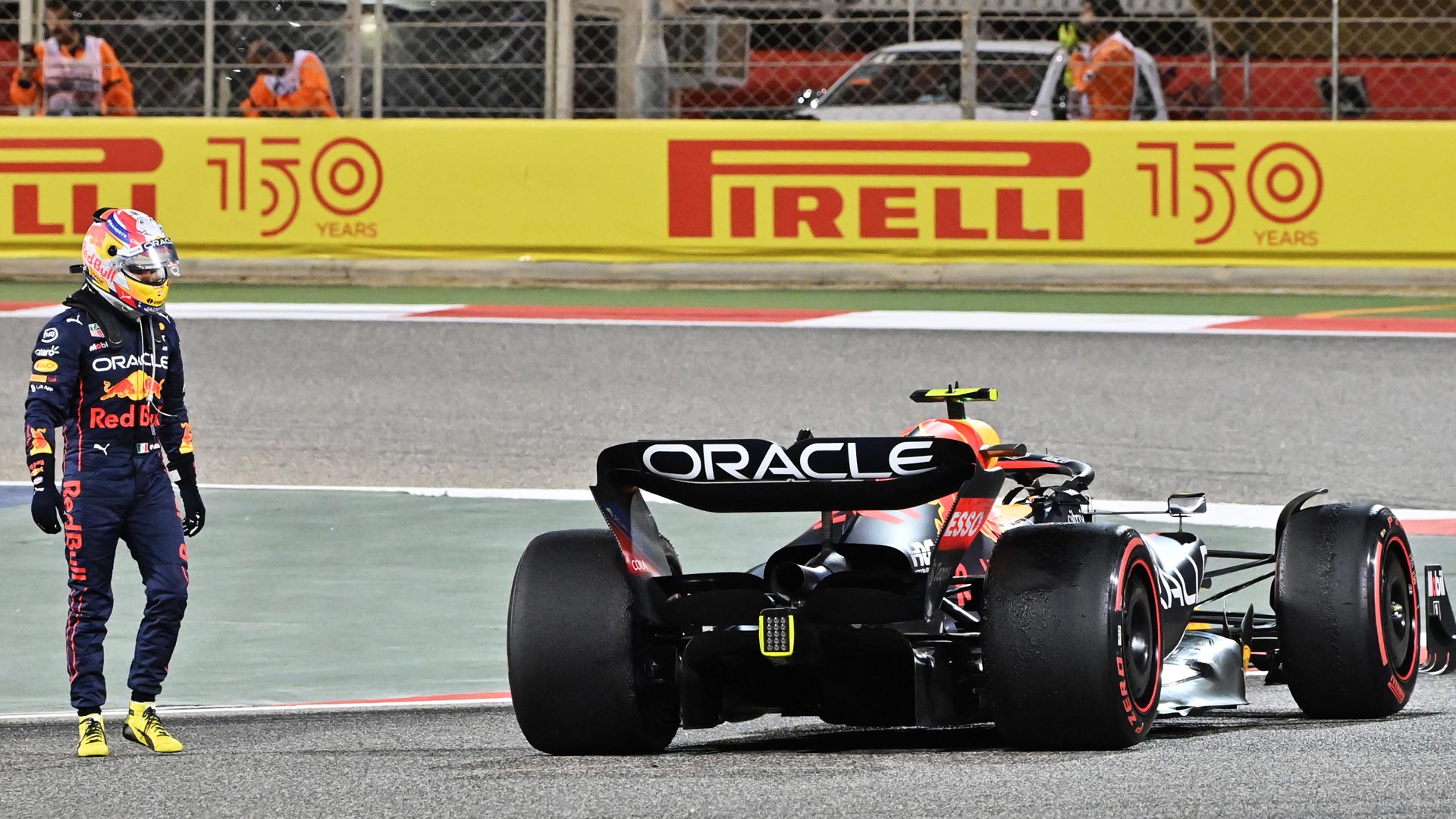
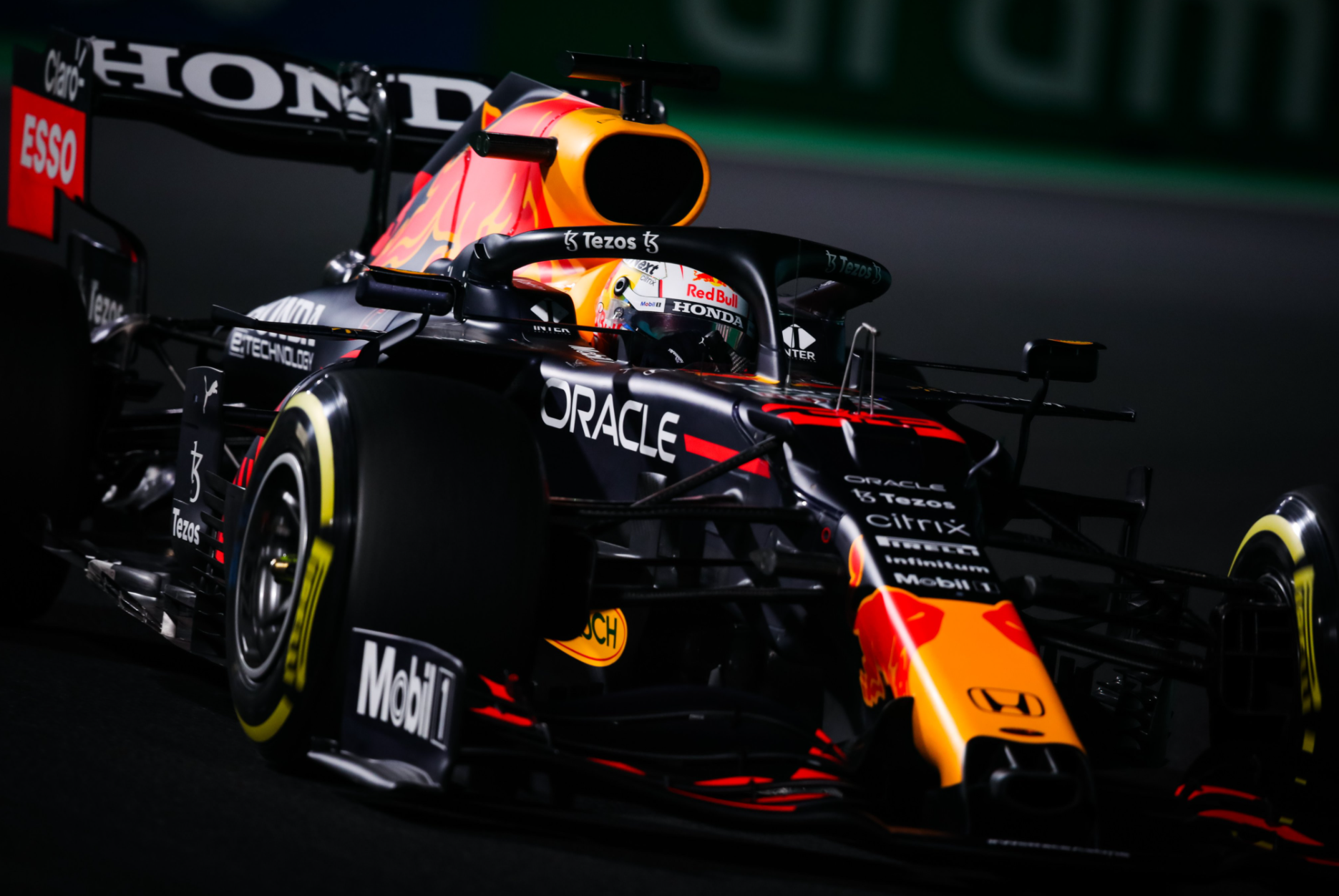
Things fell apart for the Red Bulls late on – Verstappen was forced to pull into the pits and retire just three laps from the end with a lack of fuel pressure, and teammate Sergio Pérez then suffered the same issue two laps later.
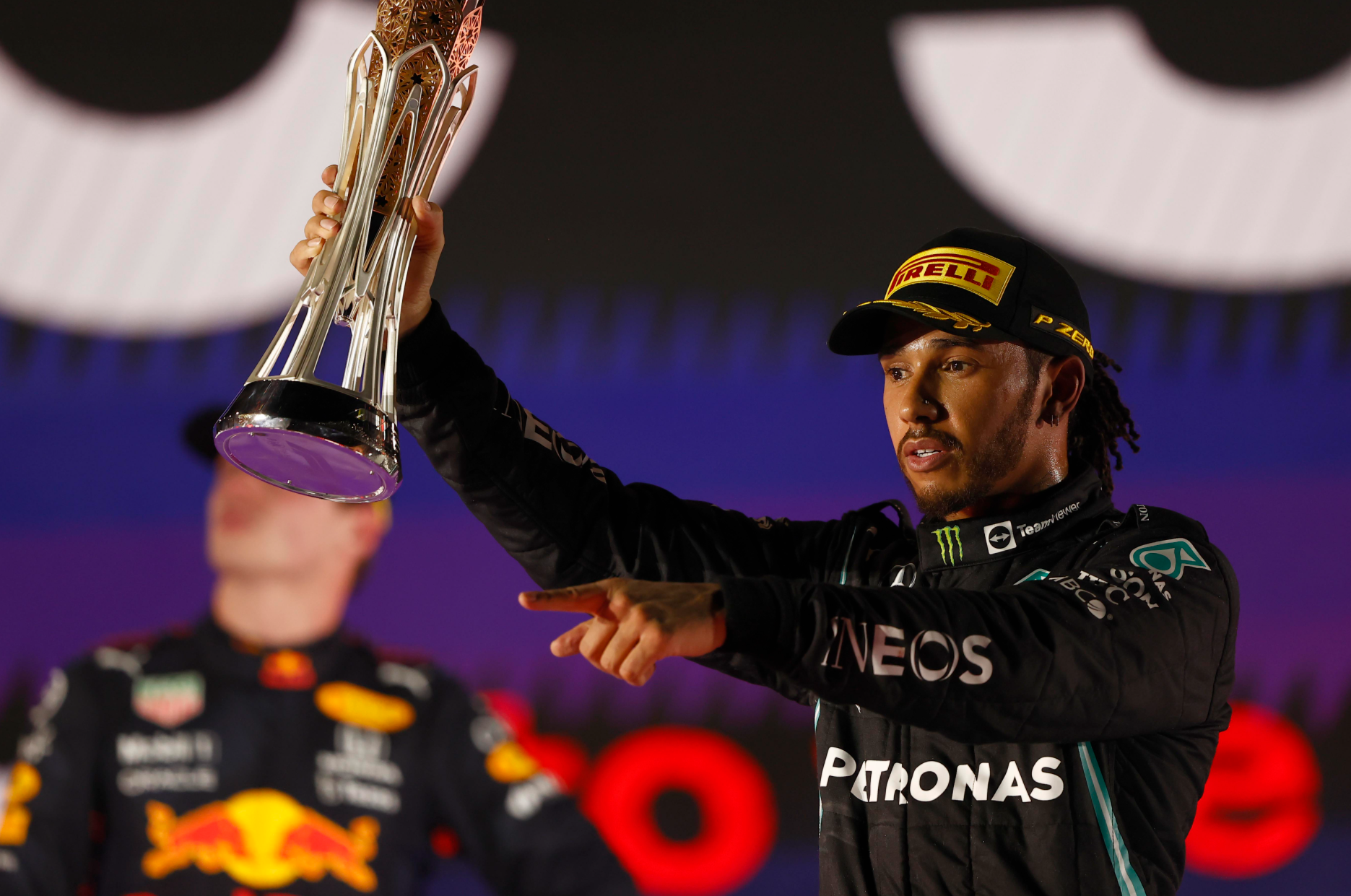
An exciting fight for the win – that hinted towards an exciting fight for the title – culminating in late drama, a Ferrari 1-2 and a surprise Lewis Hamilton podium – how many years has it been since those words would make sense together?.. – meant that the start of this season did a decent job of starting to make amends for the end of the previous one.
The Wrong Kind of Drama in Jeddah
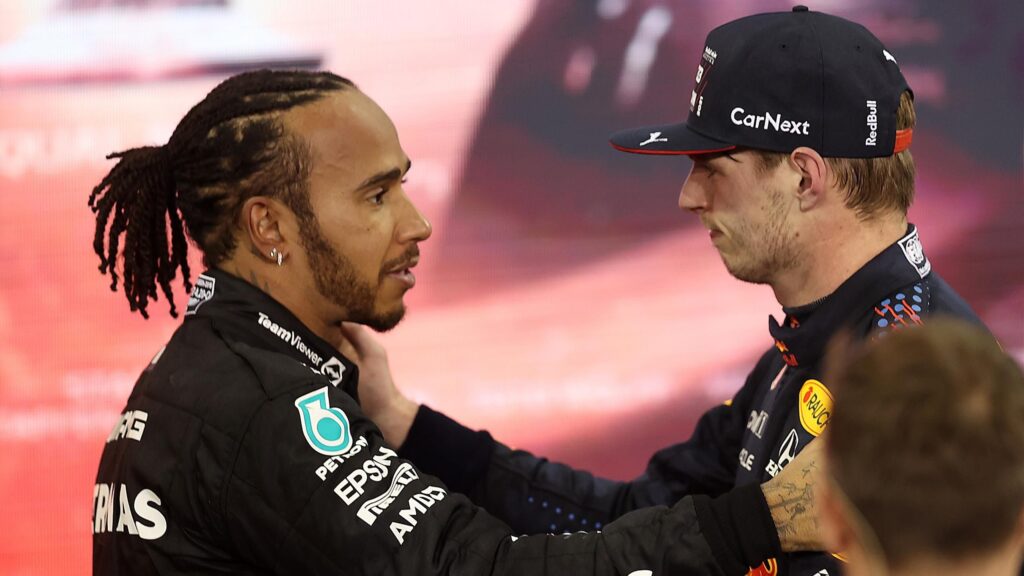
The two drivers – who have been rivals since their karting days – were back at it again a week later in Saudi Arabia.
The scene of perhaps Verstappen’s most contentious performance during the title battle with Hamilton last year, this time the Dutchman kept it clean and ultimately took the win.
Image credit: XPB Images
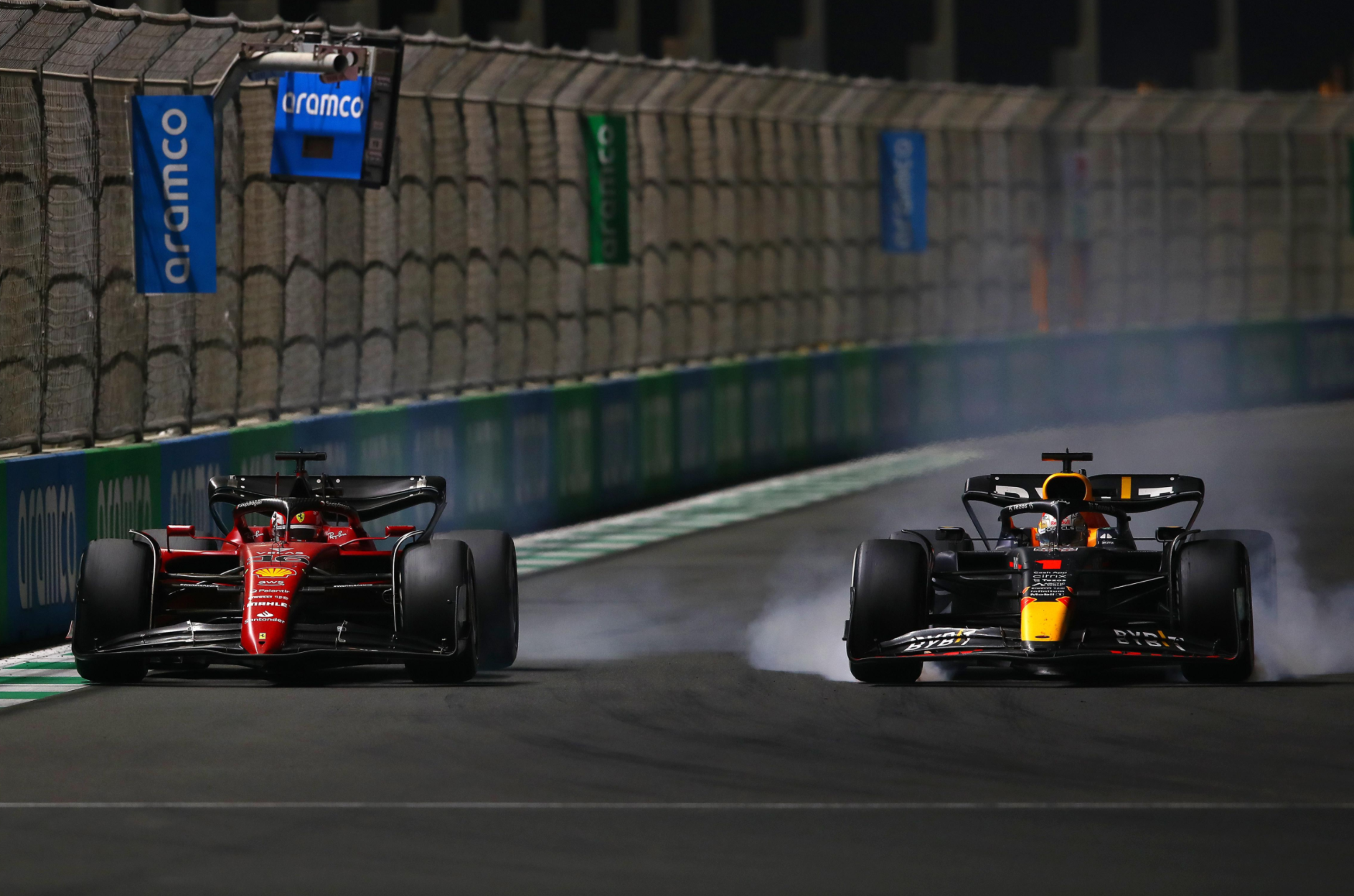
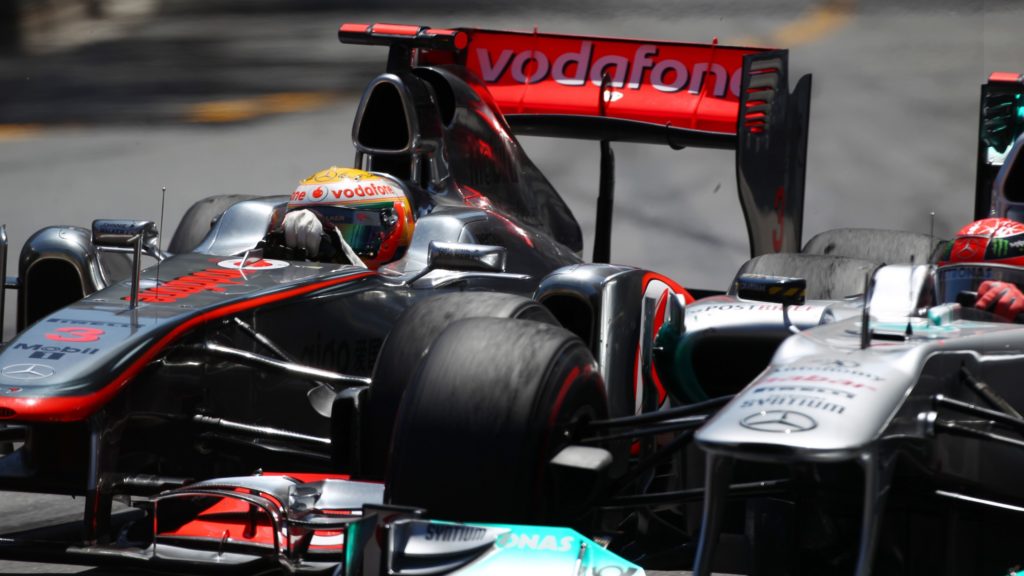
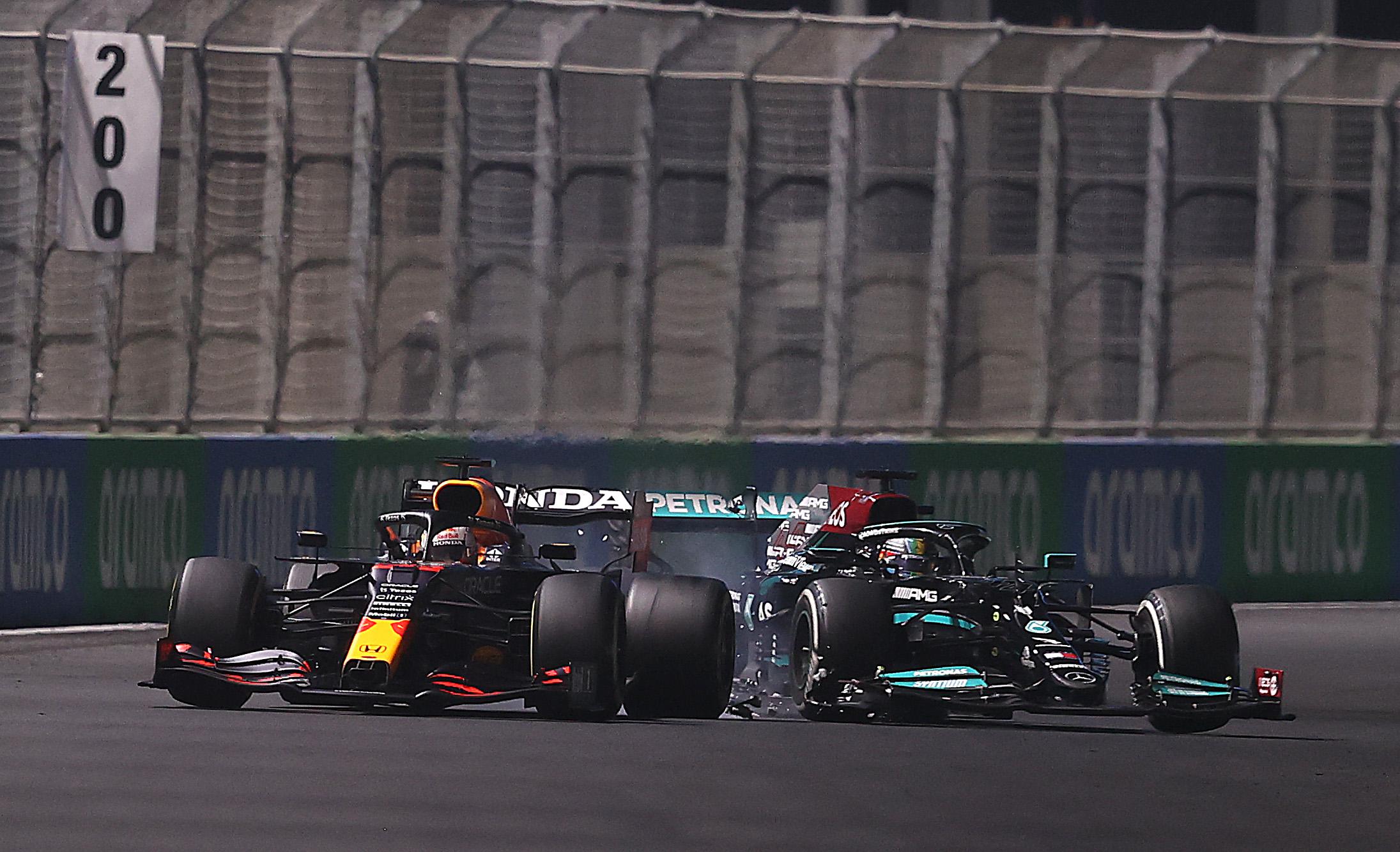
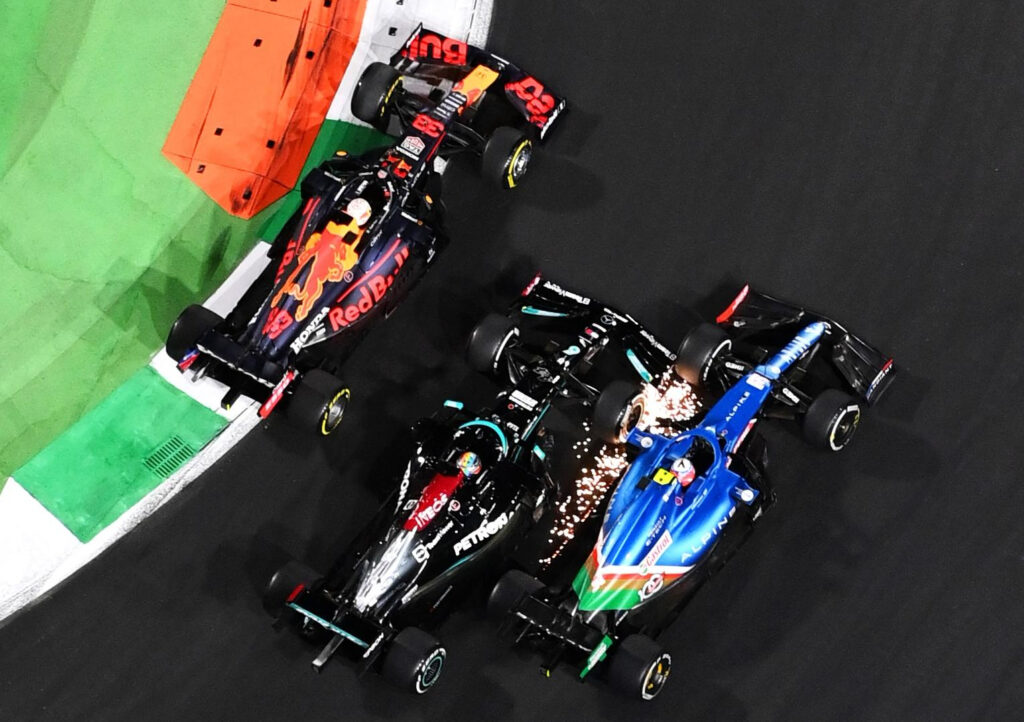
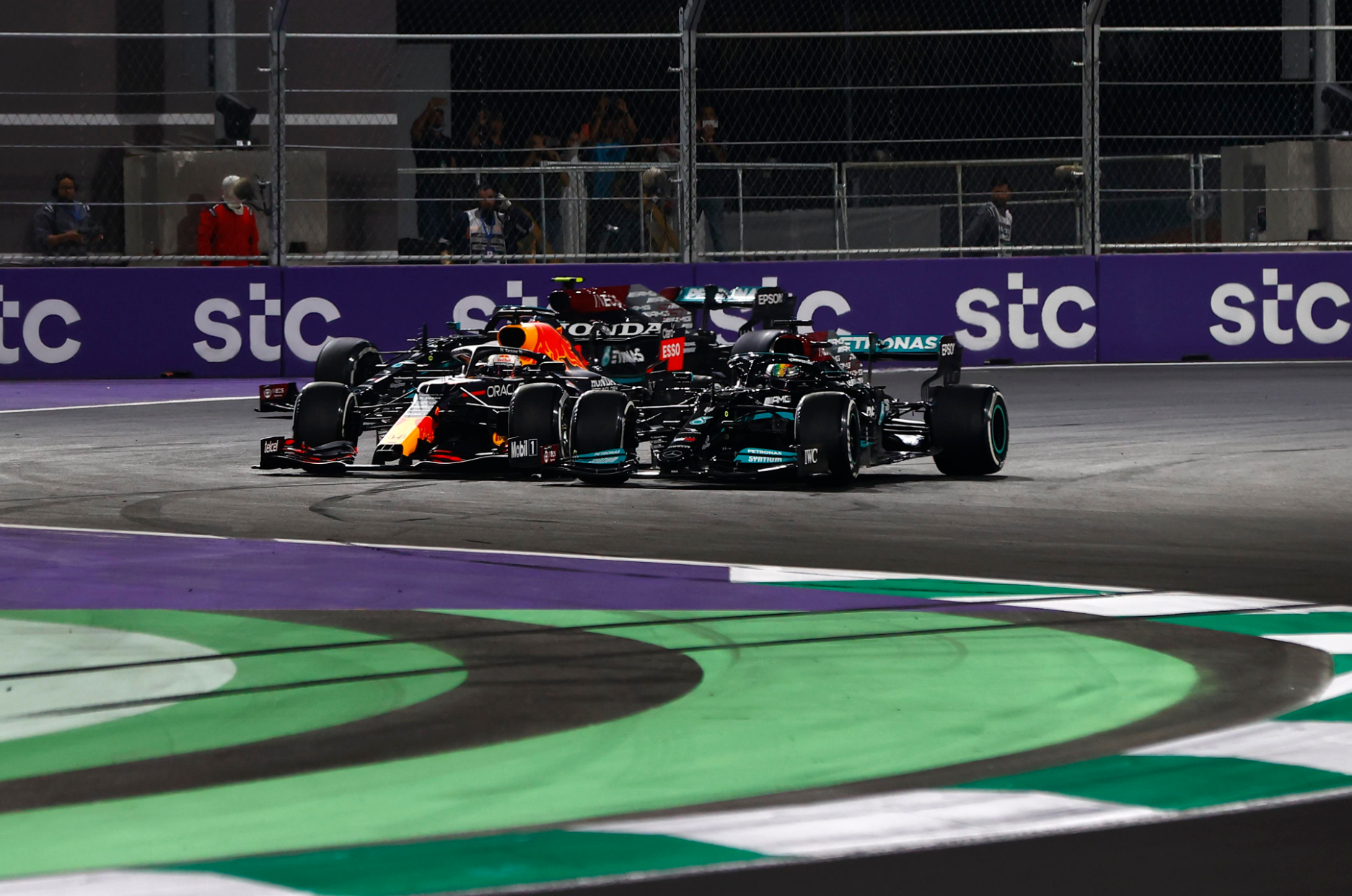
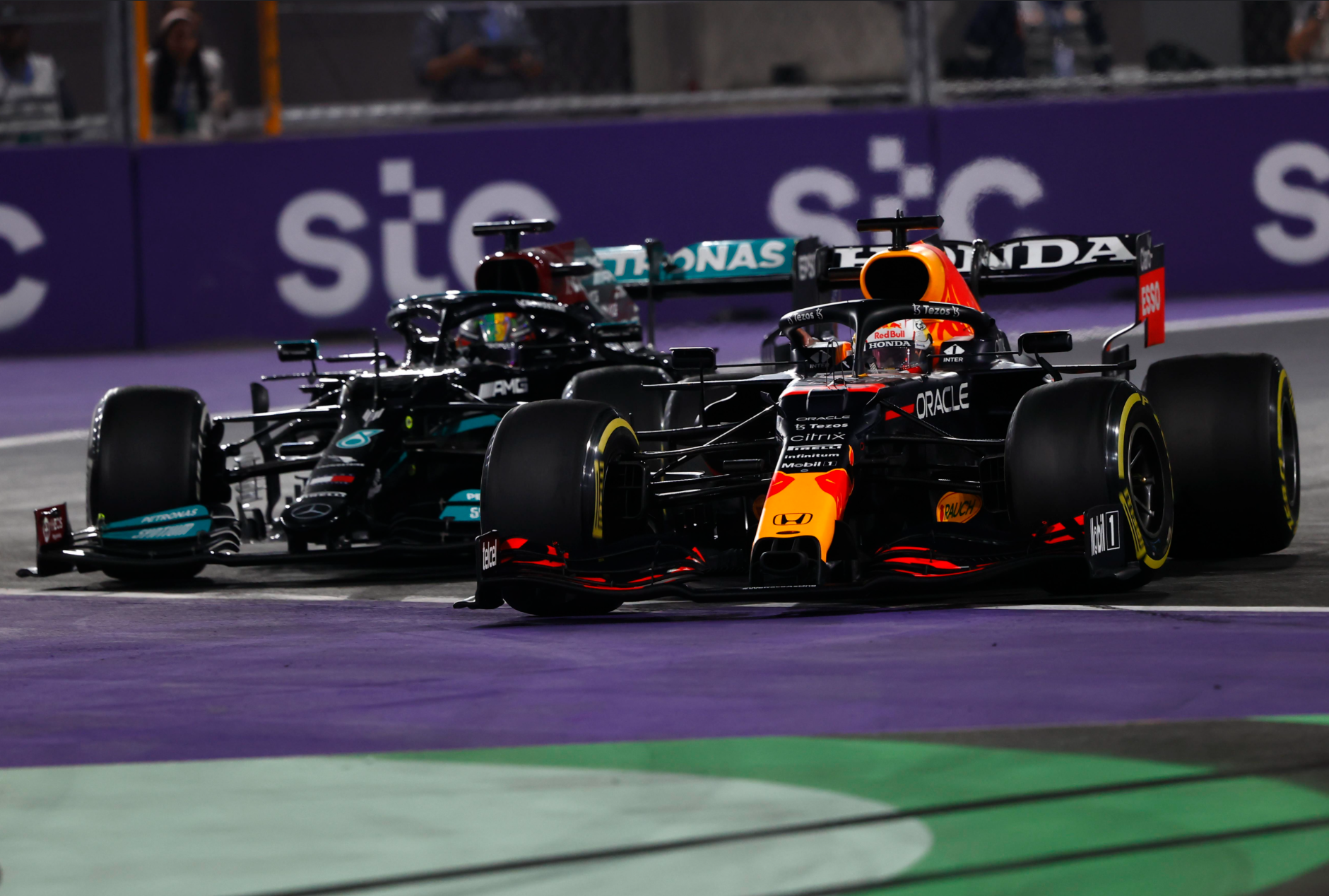
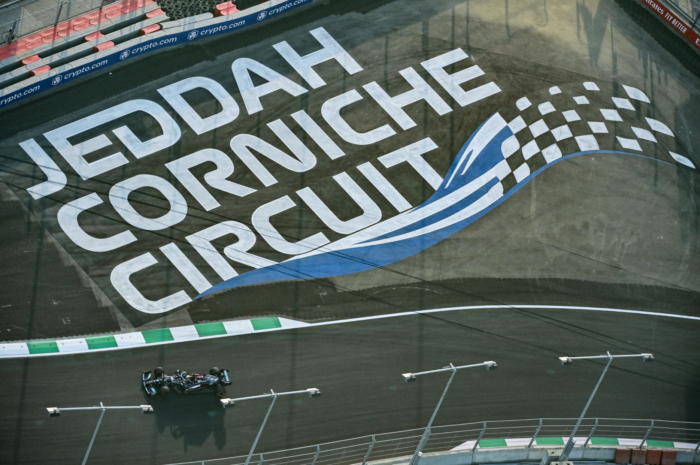
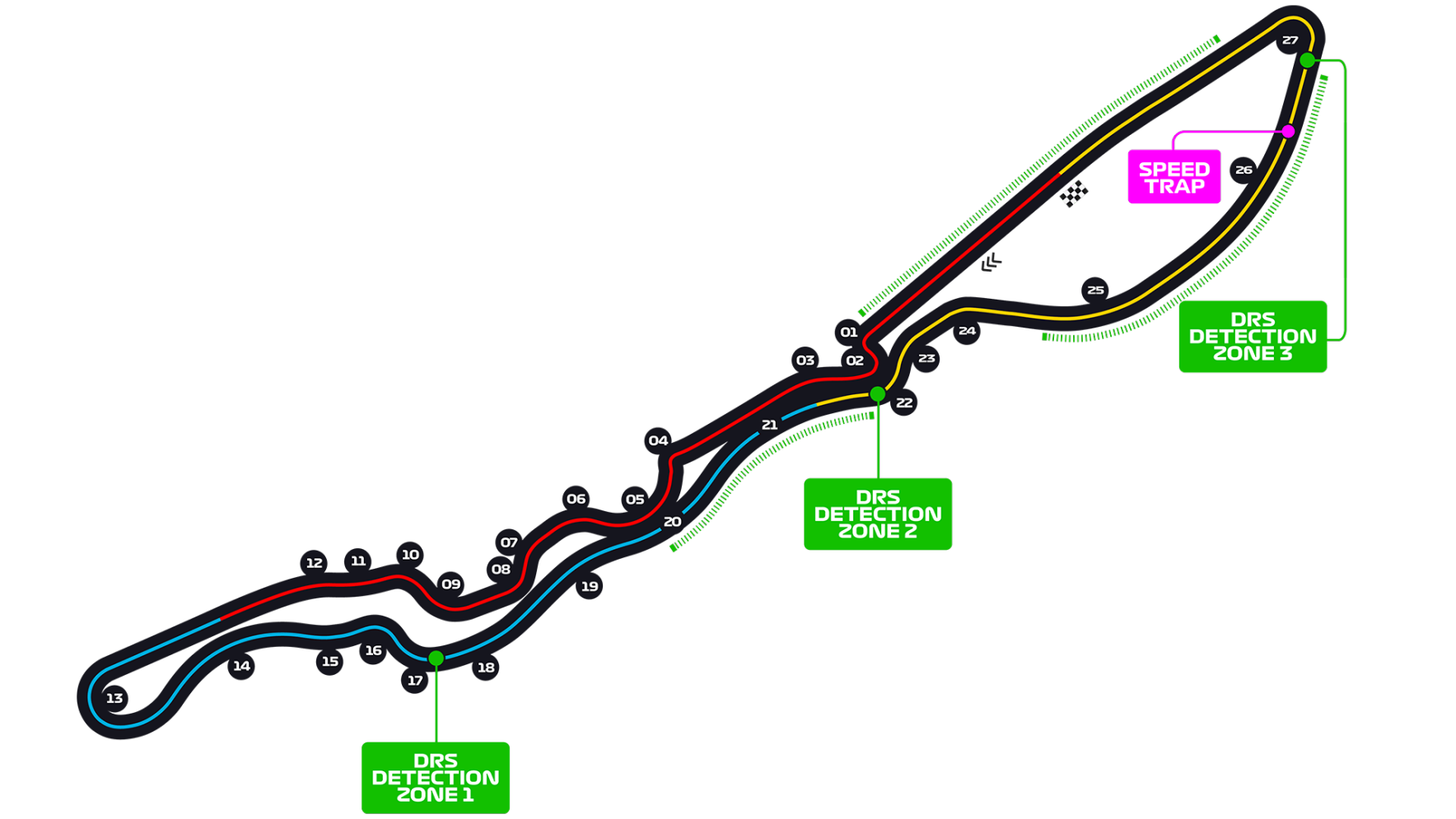
Another battle revolving around the strangely placed DRS zone before Jeddah Corniche Circuit’s final corner produced what could become an iconic photo as both drivers locked up whilst trying not to cross the detection line first.
This time, happily, there was no contact made and we avoided another brake-test-gate like in 2021.
Verstappen eventually found his way into the lead with just four laps remaining in what was probably the marginally quicker car over the course of the weekend, but was actually fortunate to be the leading Red Bull.
Pérez had finally taken his first ever pole position on Saturday – at the 215th time of asking – and was leading the race until he was scuppered by a poorly timed Safety Car.
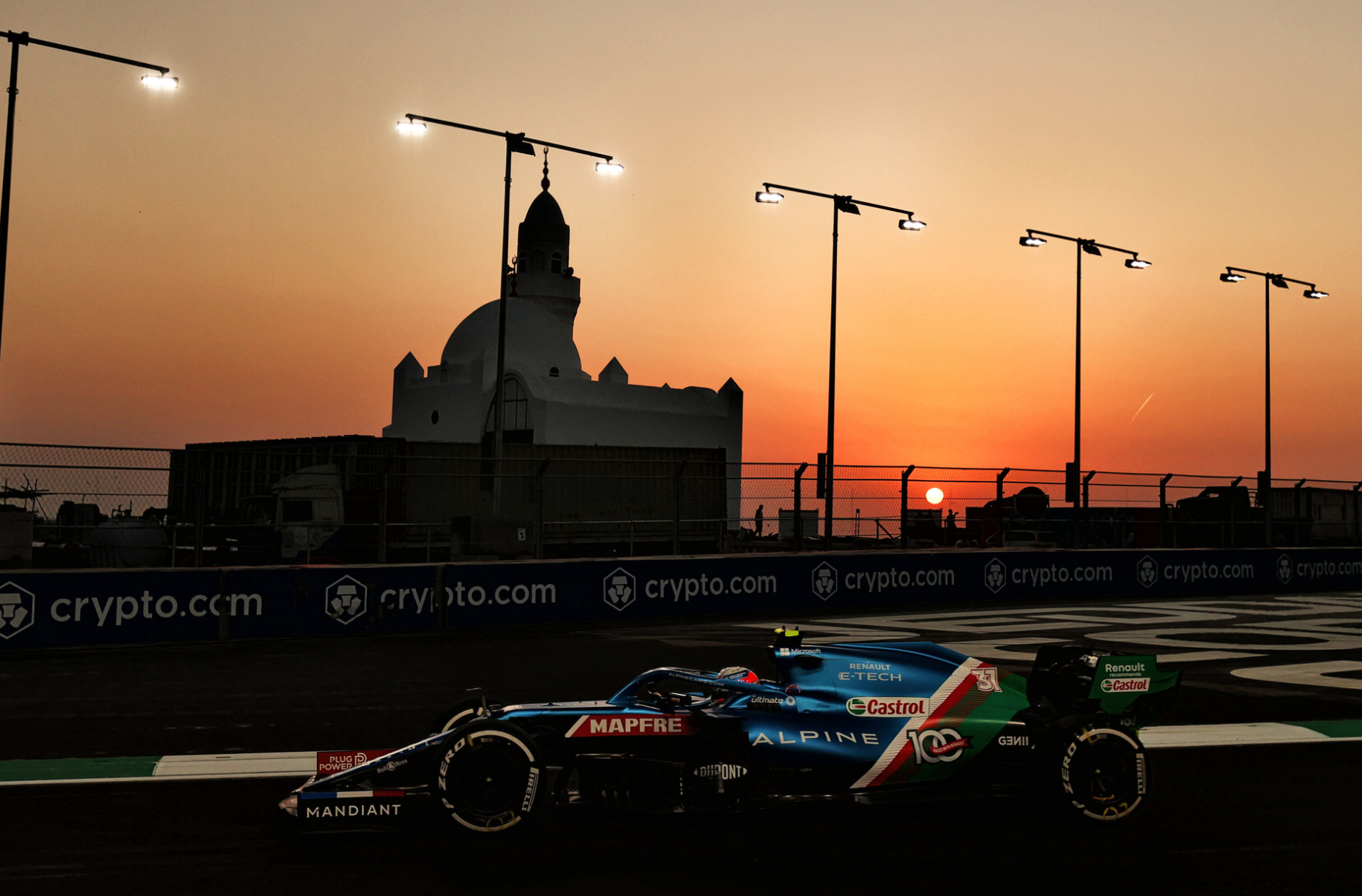
Although the on-track action was largely entertaining, this was not a good weekend for Formula 1, and on a personal note, undid a lot of the work the race in Sakhir had done in rebuilding my faith in the sport.
Putting aside the questions about whether F1 should be in Saudi Arabia at all, there were plenty more questions to be raised.
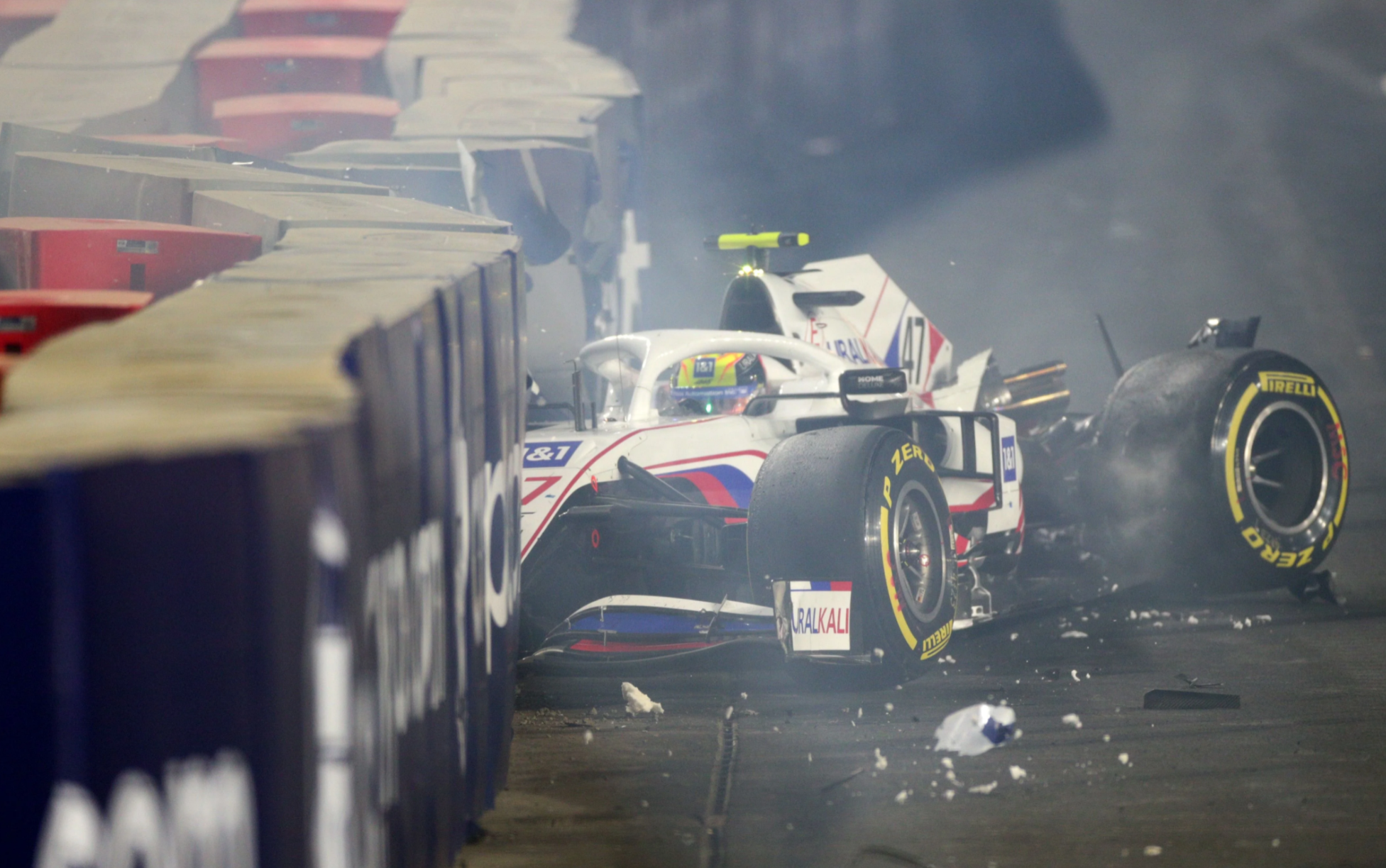
The ‘world’s fastest street circuit’ produced a horrible crash for Mick Schumacher. Luckily, the young German escaped mostly unharmed, but the incident solidified the feeling of many that the track is not truly fit for racing.
The fastest street circuit tag was simply a USP for the Saudi Arabian owners, and there is a reason that F1 cars had not previously been forced to fly through 300 km/h+ sections of consecutive blind corners at any point in its 70-year history.
Image credit: Getty Images
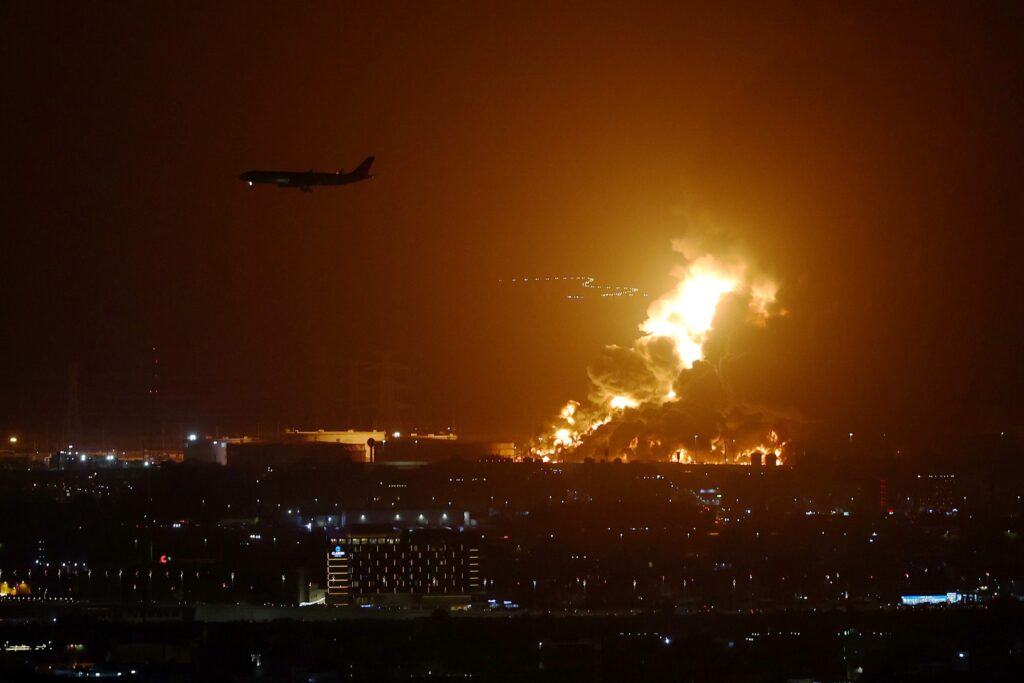
And, of course, there was also the missile attack on the Aramco oil plant just 10 kilometres from the circuit.
The drivers were clearly not okay with racing, and held talks with the various bigwigs deep into the early hours of Saturday morning before eventually agreeing to race.
Paddock rumours swirled about drivers and teams being forced to race, with the threat of ‘having a difficult time leaving the country’ if they did not.
Whether or not there was any truth to them, one thing is clear – the race should not have happened.
The irony of pushing on with the weekend in what was an effective warzone mere days after the Russian Grand Prix was cancelled and the drivers had held up ‘no war’ signs in Bahrain was obvious to all and uncomfortable to behold.
Moving onto Melbourne
A fortnight or so later, Formula 1 finally returned Down Under.
At the track where everything fell apart in March 2020, and at a time when the world appears to be moving past COVID, it felt like things had come full circle.
In terms of the F1 season, things also felt somewhat cyclical.
After a – this time very brief – battle with Verstappen, Leclerc dominated the race, if not the weekend, achieving his first ever grand chelem.
Image credit: Foto Colombo Images
He also extended his lead in the drivers’ standings to a mammoth 34 points as Red Bull suffered more reliability trouble and Verstappen had to pull over with a fuel leak.
The 46-point gap between the Dutchman and the Monegasque is far more than anything Hamilton or Verstappen had to overcome at any point during their battle last year, and it feels like the championship battle we all expected is already slipping away.
Of course, there are still 19 or 20 rounds to go and plenty of twists and turns to come.
Mercedes could well solve their problems and return to the battle at the front; there appears to be a lot of potential within the car.
McLaren also showed huge signs of improvement in Melbourne after a painful start to the season and Alpine have been hinting at a challenge at times.
With so much scope for development at this early stage of the new regulations, the playing field has the potential to change dramatically from race to race.
So, who knows? We could yet even end up with a four- or five-team fight at certain grands prix.
A guy can dream… And after the 2021 Abu Dhabi Grand Prix, an optimistic outlook at F1 is pretty much crucial for this writer.
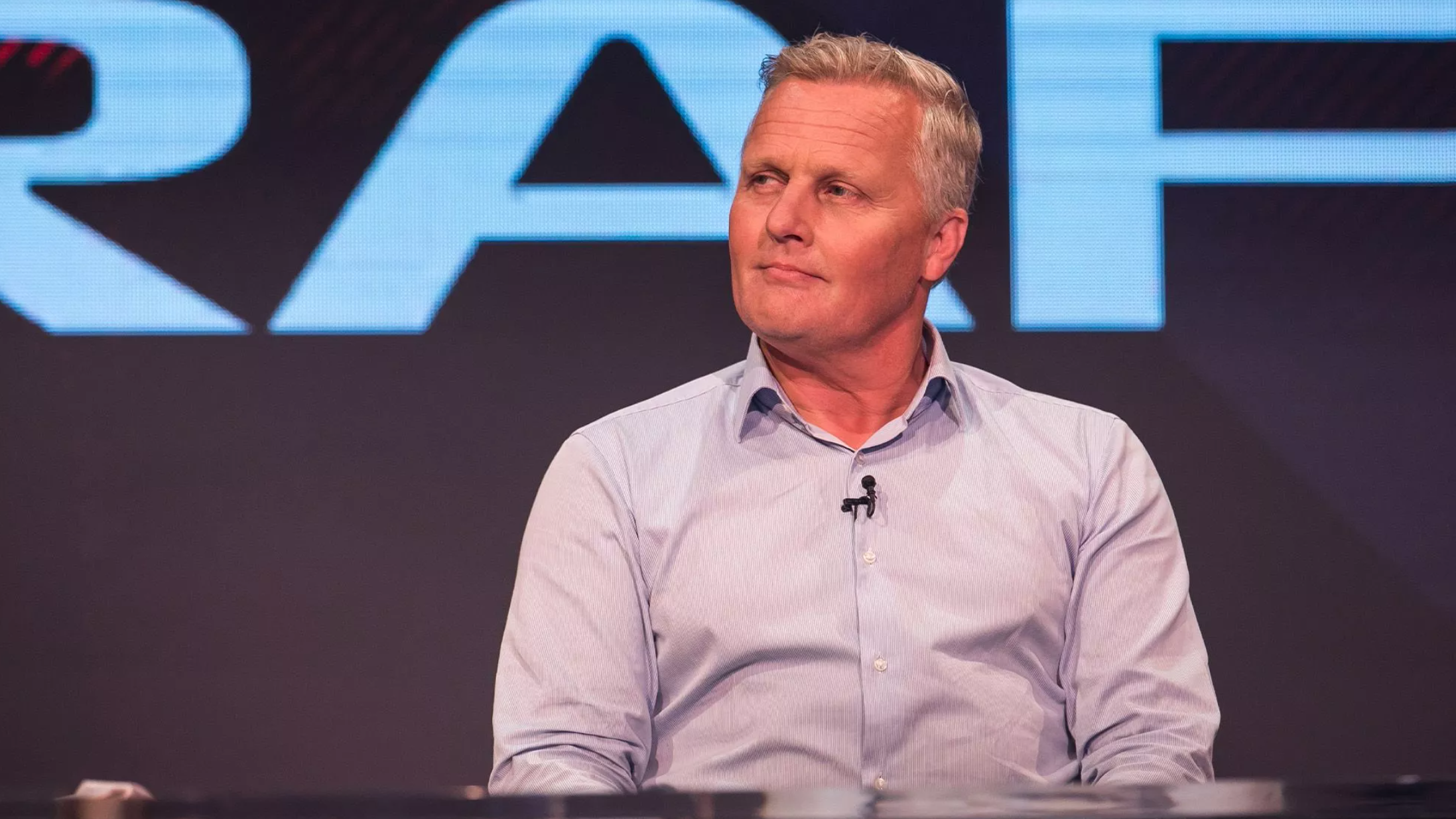
Former F1 race winner, Sky Sports pundit and the paddock’s favourite Essex cheeky chappy Johnny Herbert has had his say on the Abu Dhabi debacle, the future of F1 and the argument regarding who is F1’s GOAT.
In an interview with Betway, Herbert was asked where the sport stands after the controversial end to 2021.
“It was a real shame what happened at the end of last season.
“Formula 1 was in a fantastic place because of the wonderful battle between Lewis [Hamilton] and Max [Verstappen] throughout the season. There was a huge build-up to that final race and the hype around the sport was as big as it has been for a while.
“And then we saw that very strange decision from the race director and I think a lot of people who had been so excited throughout the season suddenly questioned what they’d been watching. It was so disappointing to have built that audience and then for the sport to let itself down like that.”
Whilst many pundits have toed the line or aimed to remain impartial, the former Benetton driver has been one of the most outspoken critics of the now infamous 58th lap of the 2021 Abu Dhabi Grand Prix.
Image credit: Getty Images
Just in case anyone has been living under a rock for the past three months, Michael Masi failed to correctly apply safety-car rules in order to give one final lap of racing, and Verstappen then went on to secure a maiden drivers’ title by passing seven-time world champion Hamilton on the final lap of the final race.
Masi has since been removed from the role of race director amid a personnel reshuffle and changes to the ‘refereeing process’ after the FIA opened an inquiry into events at the Yas Marina Circuit, and Herbert believes that those measures were imperative.
“The drivers’ trust in the race director had to be restored, that’s so important. That trust just didn’t exist and that isn’t a healthy place to be in going into each race.”
With those changes implemented, he is now optimistic for the future, however.
“It’s exciting. The new rules for 2022 mean that there is the potential for things to be a lot closer at the top.
“The good thing with the new rules is that it’s going to be a little bit tougher. The drivers are already saying that they’re having to think a little bit more about it when they’re in the car. That can only be a good thing and hopefully it sets us up for a competitive campaign.”
Image credit: PA
As for the competitive order, Herbert predicted a top four.
“We’re still going to have the normal battle between Mercedes and Red Bull, and I would expect those teams to be at the top again, but I know that fans of McLaren believe that Lando Norris has taken a big step forward and we can probably throw Ferrari into the mix as well.”
The first race seemed to show that McLaren have, in fact, gone in the opposite direction, but Ferrari are more than in the mix, having taken a 1-2 in Bahrain.
Hamilton was the driver to complete the podium – after late mechanical failures for both Red Bulls – but it did not disguise the fact that his Mercedes team have work to do if they are to get back to the front in 2022, having produced a car that has been suffering badly with the returning F1 phenomenon of ‘porpoising’.
If they can rectify those issues, however, Herbert thinks Hamilton will remain“motivated to do the best he can at any given track at any part of the season – he had that hunger in 2007 and he still has it now”.
So, if the 37-year-old can claim the eighth title that was snatched away from him oh so cruelly in December – and move clear of Michael Schumacher in the record they currently share – will that finally settle the debate as to who is Formula 1’s Greatest Of All Time?
Image credit: Reuters
“From my perspective, there are several drivers who could be considered, not just Lewis and Michael. Sterling Moss always said that it was Juan Manuel Fangio.
“One thing that probably gives Lewis the edge, even if he doesn’t win the eighth, is that he has to deal with everything else that comes with being a star now.
“I never thought I’d see any driver match Michael’s championship tally; I just didn’t think that was feasible.
“I think there’s a fair argument that he’s already the best.”
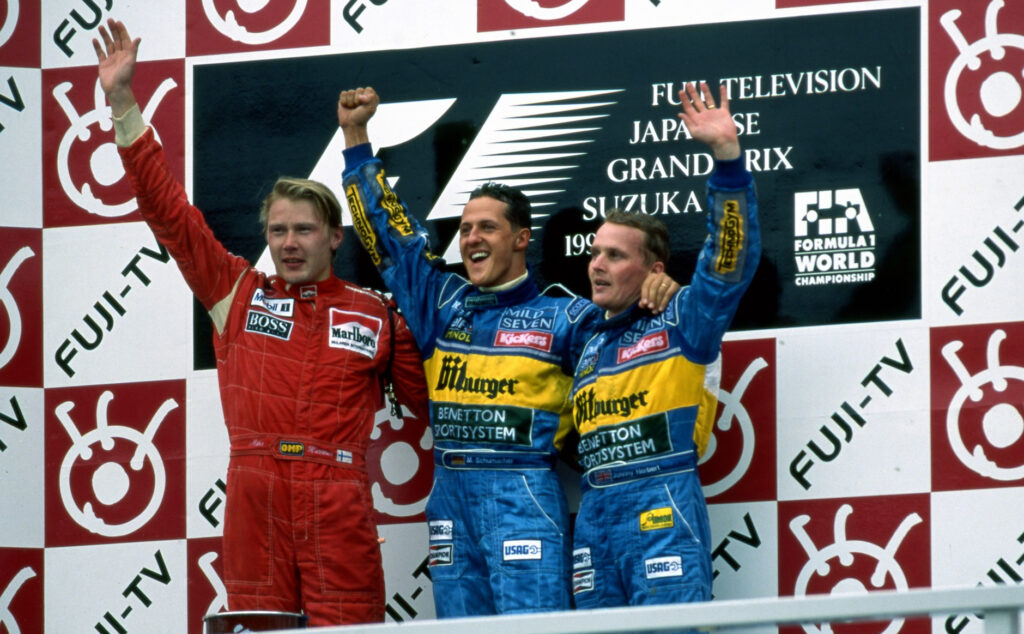
There are few better qualified to wade in on the debate than Herbert, who was paired up alongside Schumacher at Benetton in 1995.
The Briton took two of his three career wins during that season – whilst the German secured his second drivers’ title – but said that the favouritism shown towards the man on the other side of the garage by team boss Flavio Briatore was hard to deal with psychologically.
Image credit: XPB Images
“Realistically, I probably never would have beaten Michael, but I never got given the chance to get myself into the mental state needed to win races and win a championship. I never got given a go.
“Michael was very good at getting the people around him. Ross Brawn and Rory Byrne, the car designer, and a few other people moved to Ferrari and it wasn’t long before they became a winning machine with Michael, too.”
So, put on the spot for one final question, who does Herbert think will claim the 2022 Formula 1 drivers’ crown?
“I think I’m going to go for Lewis because the concept Mercedes have put together looks mighty interesting and the motivation, that burning desire, is still there.”
The cars have been fundamentally redesigned in an attempt to level the playing field and increase the drivers’ ability to follow closely and race wheel to wheel.
Wheel diameter has increased from 13 inches to 18 inches.
Michael Masi has been removed as race director after an inquiry into the 2021 Abu Dhabi Grand Prix, with Niels Wittich and Eduardo Freitas now sharing the role in a restructured race control.
The FIA have also introduced a new Virtual Race Control System, much like VAR in football, as well as a ban on team communications that lobby race officials.
Changes have been made after the controversy of the 2021 Belgian Grand Prix, including no points being awarded unless a minimum of two laps have been completed under green flag conditions.
Drivers are no longer required to start the race on the tyres they used to set their fastest time in Q2.
With 6,417 of the 2021 season’s 6,423 kilometres covered, Lewis Hamilton looked set for a record-breaking eighth World Drivers’ Championship.
But then Michael Masi decided he fancied one more lap of racing, and we all know what happened next.
An unprecedented eighth title would have secured Hamilton’s position as Formula 1’s ‘GOAT’ – Greatest Of All Time for the uninitiated – in many people’s eyes, but perhaps the circumstances around his loss are an even more compelling argument.
The accolade of GOAT is thrown around far too often and far too casually nowadays – in every sport, not just Formula 1.
It has been the recent presence and unparallelled excellence of all-time greats such as Lionel Messi and Cristiano Ronaldo in football, Roger Federer and Serena Williams in tennis, Usain Bolt in athletics, Tiger Woods in golf, and Tom Brady in American football – to name but a few – that has sparked the never-ending conversations.
Whilst technology has progressed in football since the days of Pelé and in golf since the days of Jack Nicklaus, in no other sport is the change as marked as it is in Formula 1.
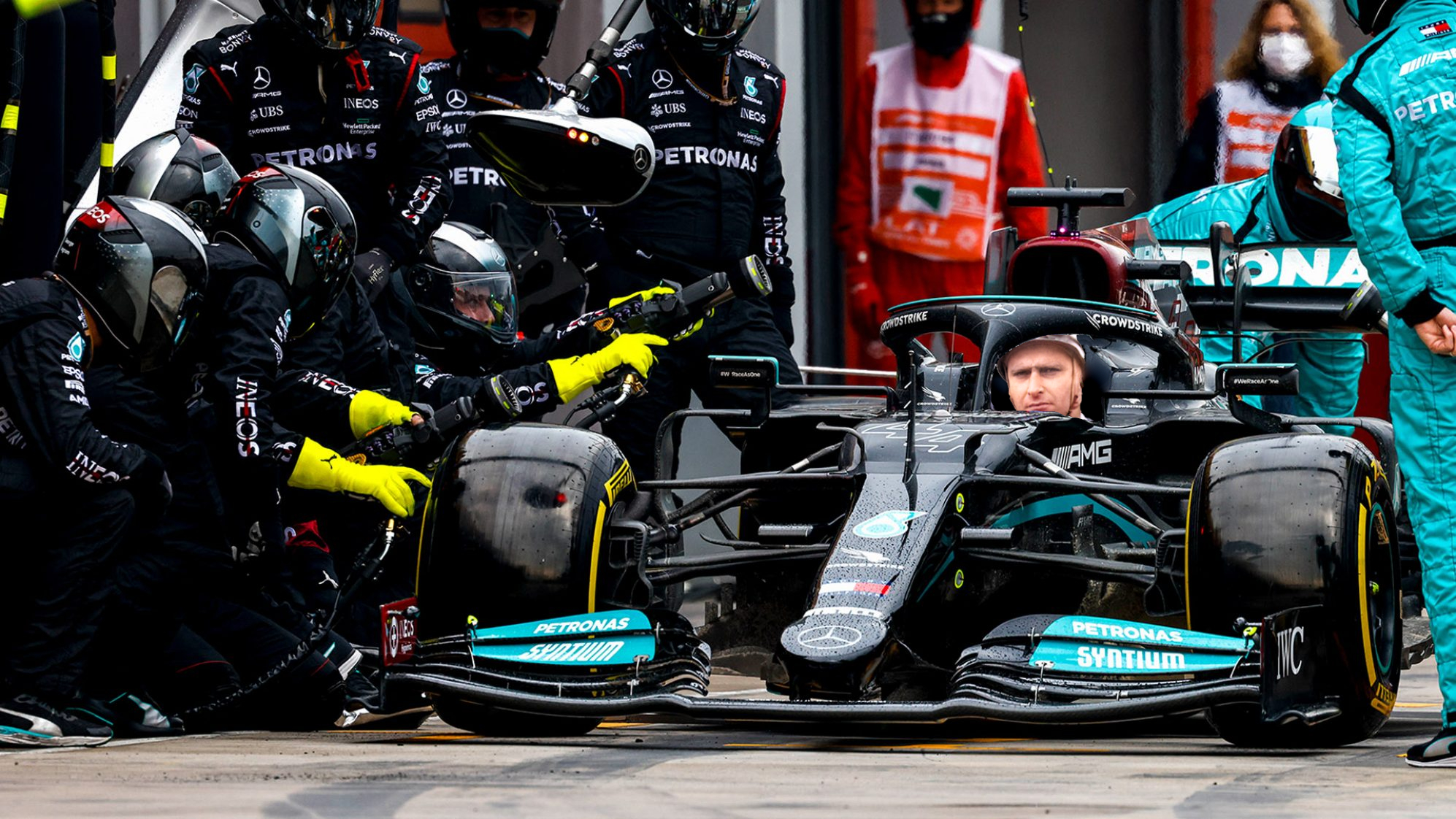
The cars of the present day are almost incomparable to those of the 50s: stick Juan Manuel Fangio in a Mercedes W12 and he would probably be unable to get the thing moving.
Image credit: Mercedes-AMG (plus a questionable photoshop job)
F1 GOAT even more complicated than in other sports, and maybe we are best separating it into modern Formula 1 and – for want of a better term – historical Formula 1.
The candidates for the ‘historical GOAT’ would likely be Fangio, Jim Clark and perhaps Alberto Ascari. (That is a debate I’ll save for another day.) As for the ‘modern GOAT’, most seem to accept it now boils down to Ayrton Senna, Michael Schumacher and Lewis Hamilton. With Alain Prost unfortunate not to make the cut.
So, how did Hamilton missing out on his eighth title increase his claim for the throne? Well, it was the manner in which he lost.
The three men are all, of course, incredibly fast. They are also famously relentless in their pursuit of perfection, leaving no stone unturned. All are very technically minded and each built a hugely successful team around them – McLaren, Ferrari, and Mercedes respectively.
Where they differ is in their view of fair play and how far they are willing to go to win.
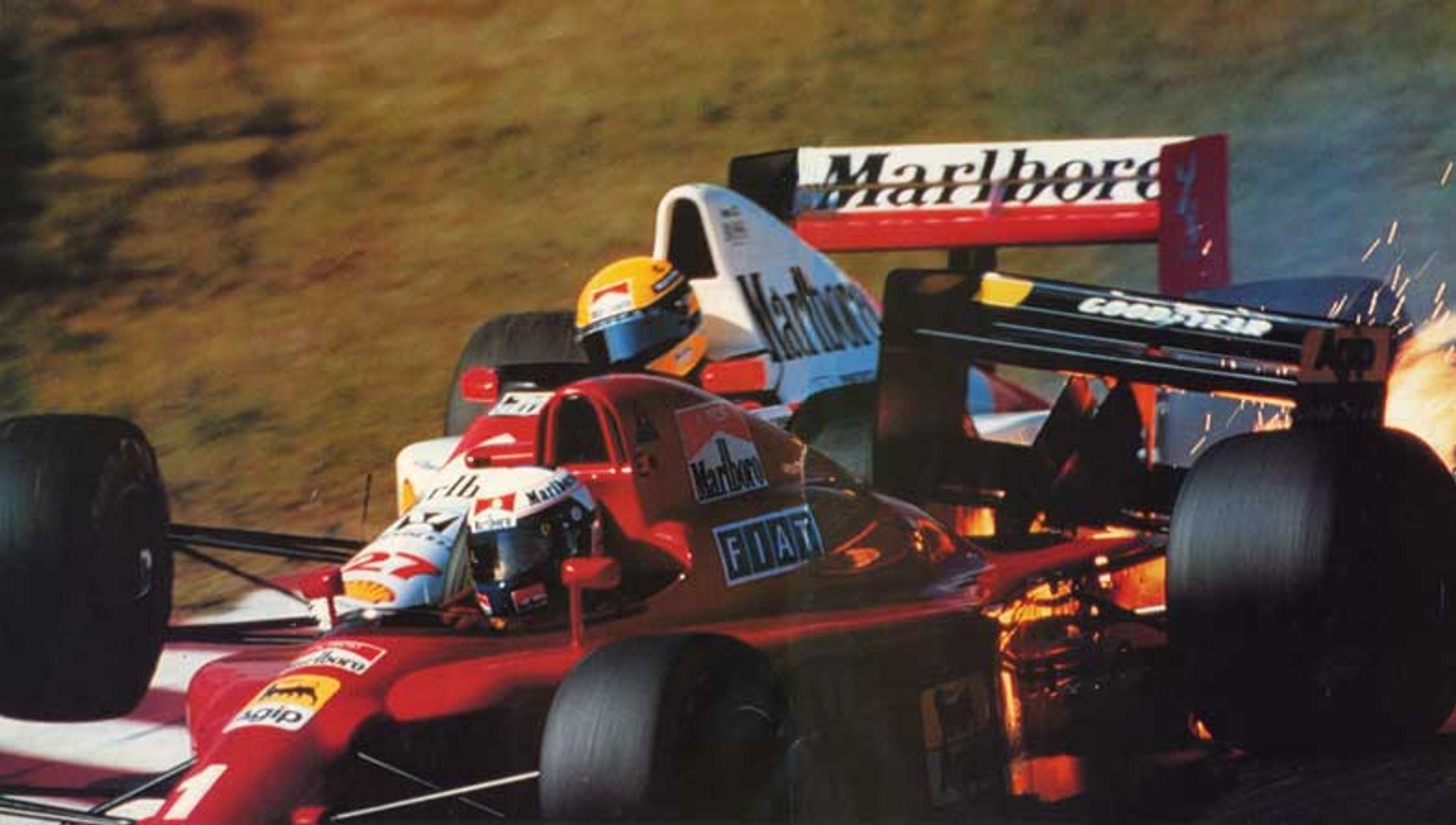
There is undoubtedly a level of ruthlessness required to become a champion. But there is also a line, and Senna and Schumacher crossed that line on multiple occasions, most famously during the 1990 Japanese Grand Prix and the 1997 European Grand Prix.
Senna’s intensity and unflappable self-belief often resulted in uncompromising driving to the very edge of acceptability and, on more than one occasion, beyond it. It was part of what made him so great, but he sometimes went too far and that has to be seen as a negative.
Schumacher has an unfortunately long string of misdemeanours. His attempts – one successful and one unsuccessful – to take out a Williams in the title decider were two of the biggest blots on his copybook. He was disqualified from the entire 1997 season for his actions but escaped unpunished with his championship intact in 1994.
These varying forms of misconduct are something we have rarely, if ever, seen from Hamilton.
Of course, there has been the odd drama. Off the track, there was ‘lie-gate‘ – where he was instructed to lie to the stewards by his Sporting Director at McLaren – and his tweeting of sensitive telemetry. But these were reasonably minor indiscretions and, on track, Hamilton generally falls under the category of firm but fair.
Even during his prickly relationship with former teammate Nico Rosberg, as the German set about all-out psychological warfare, he would push his wheel-to-wheel racing to the limit but never beyond.
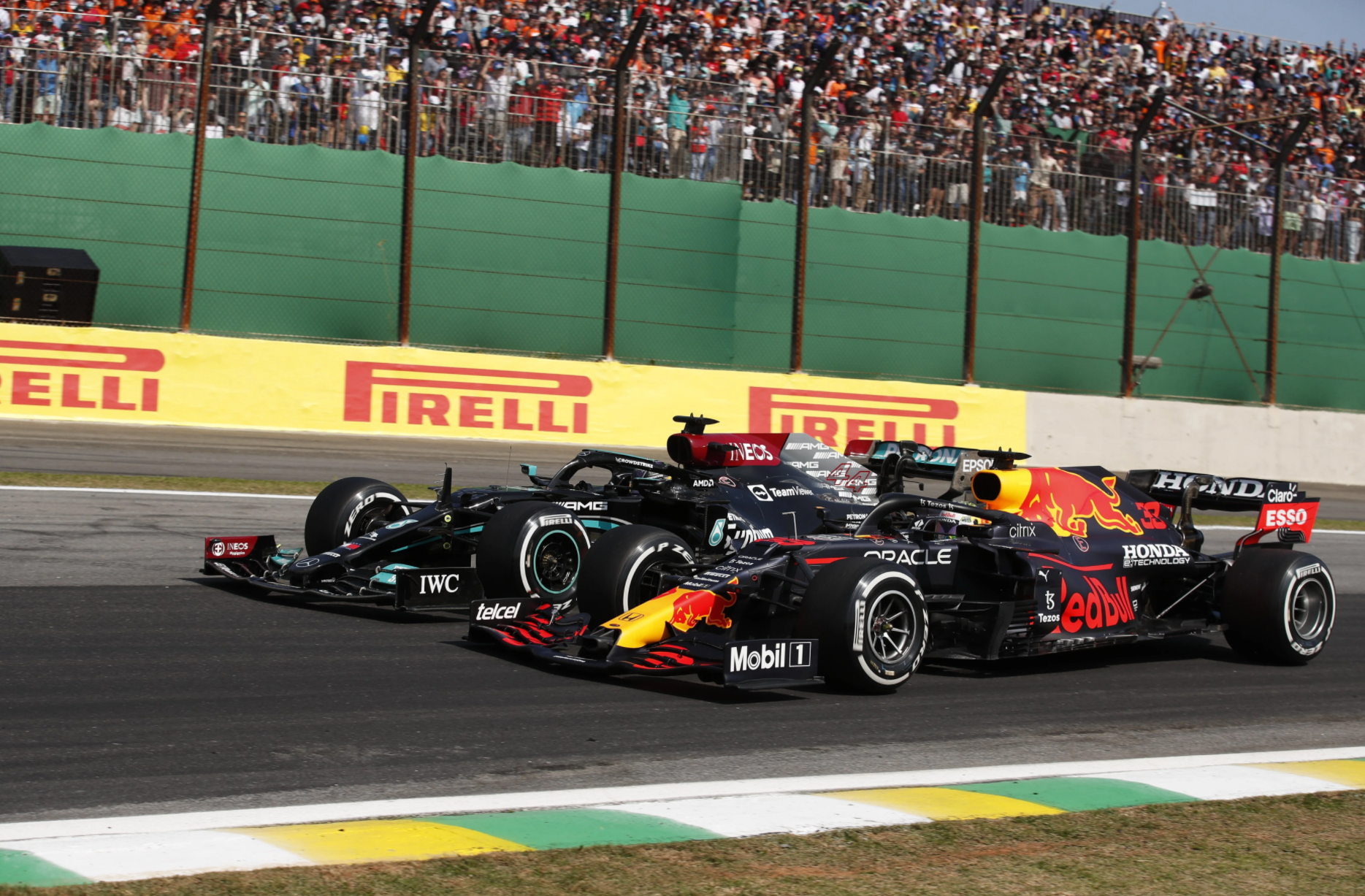
And that was on full display again this season as he went toe to toe with Max Verstappen.
Image credit: LAT Images
The pair’s clash at Silverstone was highly contentious and divisive, but – putting to one side the odd outrageous statement during the aftermath from Christian Horner or Helmut Marko claiming Hamilton tried to murder the Dutchman – with the benefit of hindsight, was a racing incident in which the seven-time world champion was arguably more culpable and certainly fortunate to escape without considerable damage.
Throughout the rest of the season, Hamilton repeatedly avoided contact with his title rival and showed what perhaps sets him apart from Senna and Schumacher – he has that steel and a relentless will to win, but he is also truly committed to winning the right way and – as he often points out was instilled in him from a young age by his father – doing his talking on the track.
Yes, he may complain over the radio, but that is something every single driver on the grid does. Hamilton’s radio is just broadcast far more than that of anyone else.
And then, even when he was robbed of the world championship by one of the most controversial decisions in Formula 1 history, he displayed the utmost sportsmanship and the epitome of class.
No mention of the controversy in his post-race interview – just a handshake with Verstappen, a congratulatory message for the new champion, and a thankyou to his team and the fans.
Image credit: Getty Images
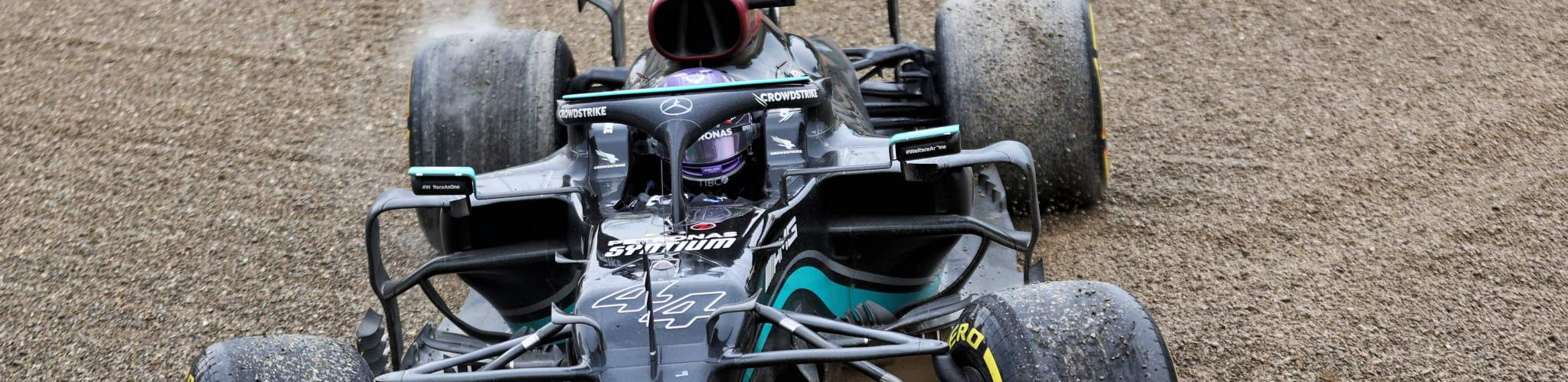
The recovery drive from the back of the grid in São Paulo was a performance for the ages – perhaps even at the very top of a stellar list compiled over the last 15 years – and one that would have been a worthy defining moment in a record-breaking achievement.
Would the two other great champions have been able to match that as a performance? You certainly wouldn’t put it past them.
But would they have been able to lose with as much style as Hamilton? That is very much up for debate.
Last Sunday, I was left feeling betrayed by the sport that I love. A sport that I started watching before I could talk and that I have now followed passionately for over a quarter of a century.
I was left questioning whether it really is a sport at all, after the latest in a worrying trend of decisions made with the focus clearly on entertainment rather than pure sporting fairness.
Last year I decided to leave my regular office job behind and pursue a career as a sports (specifically F1, where possible) journalist.
It has been going quite well: I own the fast-growing website on which this is posted, write for another more-established F1 publication and co-host their podcast, whilst also freelancing for Eurosport. David Croft and Damon Hill even read out a statistic I came up with during Sky F1’s broadcast at Abu Dhabi.
Nonetheless, as I lay in bed awake on Sunday and then Monday night, I was genuinely left questioning my decision. I asked myself whether I still wanted to devote my life to writing about Formula 1, when it appears to be heading in a direction which I’m not sure I can support.
Of course, I have been thrilled by the increase in popularity in recent years, which comes courtesy of an increased social media presence and Netflix’s Drive to Survive series. I love being able to talk to friends and strangers about F1, having spent decades being the only child/teenager/young adult I knew who cared about it.
Those changes have done wonders for the sport. But in arguably its biggest moment in decades, Formula 1 undermined all of that.
I was watching the race with four friends who have historically varied between a passing interest and absolutely no interest in F1, but they ended up invested as it progressed. As the chequered flag dropped, they were left somewhere between confused and disappointed.
I have waited a week to write this, to ensure I have fully processed all the events, allowed emotions to settle down, and given the F1 powers-that-be time to deal with the aftermath.
“The circumstances surrounding the use of the Safety Car following the incident of driver Nicholas Latifi, and the related communications between the FIA Race Direction team and the Formula 1 teams, have notably generated significant misunderstanding and reactions from Formula 1 teams, drivers and fans…”
The bitter taste in my mouth that had slowly started to subside in the subsequent days came back with a vengeance as those in charge shifted the blame onto the entirely innocent drivers, teams and fans. In effect, Formula 1 gaslighted its own fans.
There was no misunderstanding. Every fan knows exactly what happened and why it happened.
There is, of course, no way of knowing if the instruction to do so came from someone higher up – ahead of time or as events came to pass – but Michael Masi sacrificed the integrity of the regulations to tee up one final dramatic, headline-making, Netflix moment. And, in doing so, tainted F1’s best title battle in a generation in the space of one lap.
Ironically, in his desperate attempts to provide entertainment, Masi actually denied the sport one of its greatest comeback stories.
After Verstappen’s domination in Mexico, the consensus was that it was his title to lose. After Hamilton’s disqualification from Brazilian qualifying, the title race was declared over on social media. And yet, here we were, a little over three kilometres away from history being made – a record-breaking eighth World Drivers’ Championship earned the hard way, against a fearsome competitor.
That competitor and the ensuing competition had tested F1’s rulebooks more and more frequently as the season reached its climax, and ultimately showed that sweeping changes are required.
I do not envy Michael Masi’s job. But after the final-lap debacle, he has surely lost the already-wavering respect of the teams and drivers.
As has been well pointed out, his panicked decision to restart the race in an unprecedented manner not only screwed over Hamilton, but many other drivers.
Ferrari‘s Carlos Sainz was unable to fight for a maiden win, with numerous lapped cars in between himself and the front two. McLaren‘s Daniel Ricciardo saw the points-paying positions in front of him drive off into the distance as he was stuck behind the leading pair on his redundant, fresh tyres in a situation he described as “pretty fucked up”.
Aston Martin‘s Lance Stroll was stuck slightly further back and spent the entire lap being intermittently told to push and move over for blue flags, displaying exactly why the ignored regulation exists.
Another extract from the FIA statement reads, “The FIA’s primary responsibility at any event is to ensure the safety of everyone involved and the integrity of the sport.”
Red Bull argued that “any” does not mean “all” when defending themselves in Mercedes‘ post-race protest regarding Article 48.12 of the Sporting Regulations, which states “any cars that have been lapped by the leader will be required to pass the cars on the lead lap and the safety car”.
Formula 1 clearly also took “any” not to mean “all” in the previous statement.
Masi’s radio message to Toto Wolff at the end of the race came across as spiteful and malicious. Those are adjectives that should never be mentioned in the same breath as the name of a referee in any sport.
His position, in my eyes at least, is now untenable. And ahead of next season an entirely new structure of overseeing and adjudicating races should be put in place.
The FIA can no longer continue to police itself; that is not how the rest of the world works. There must be some accountability and an independent party involved when the FIA is challenged or investigated.
Even more so than ever before, the F1 social media circle is now a cesspool of vitriol, bitterness and sadly often racism, as a divided fanbase wages war against itself.
The 2022 season should be the most exciting prospect in years, with brand new cars and a feeling that anything can happen. I had been excited about it for a long time, but now cannot seem to shift an unsettling feeling.
The simplest metaphor I can find for the feeling is that of having stayed with your partner after finding out they cheated on you.
A profound love is still there – and always will be – but you just can’t quite look at them in the same way anymore.
A record four drivers – Fernando Alonso, Mark Webber, Sebastian Vettel and Hamilton – were in contention for the World Drivers’ Championship coming into the decider at Yas Marina in 2010
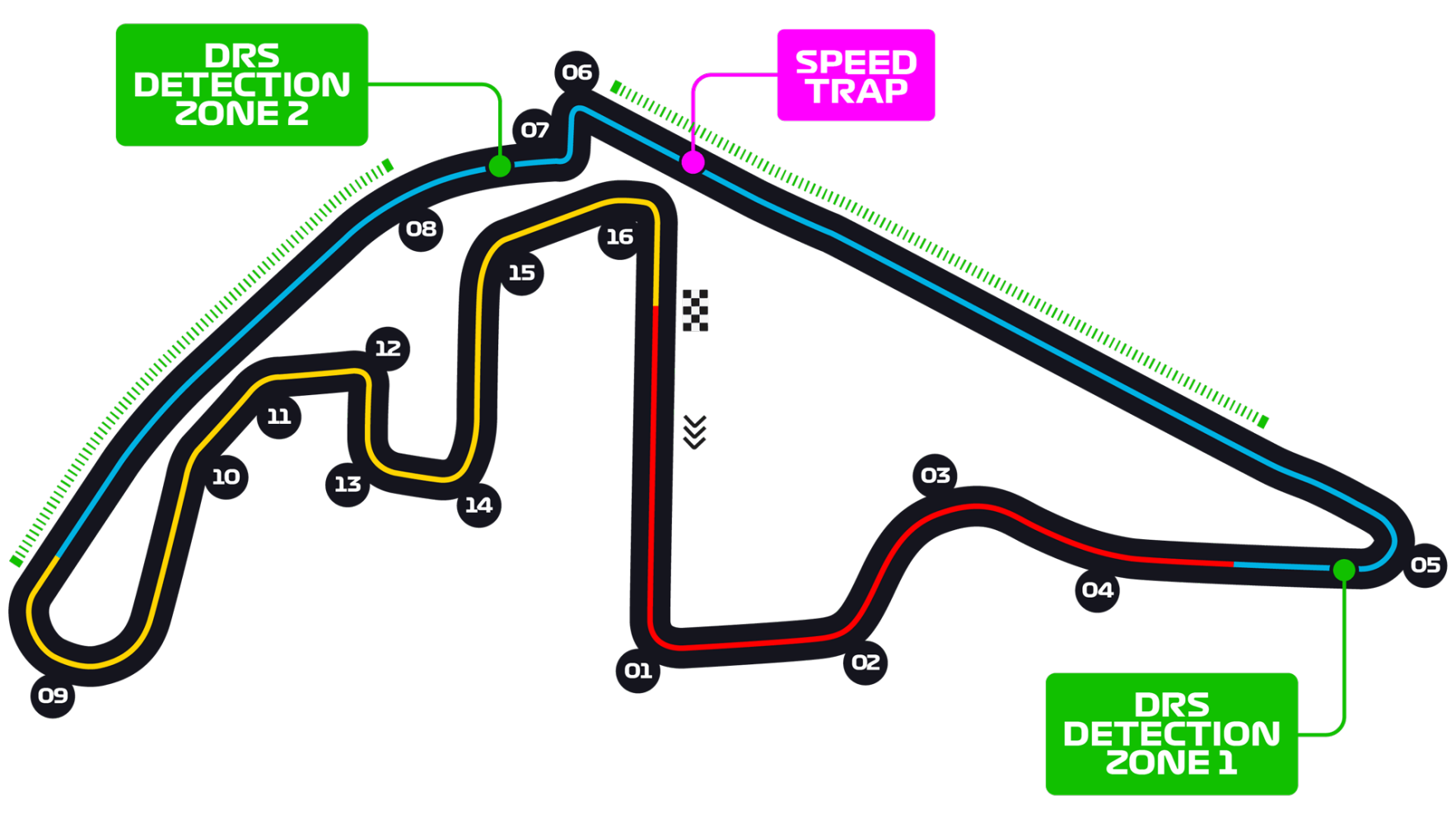
The track has a number of unique features: a tunnel is part of the pit-lane exit and the Yas Viceroy Hotel straddles the circuit between turns 18-19.
Yas Marina has an advanced track design with six different configurations to suit different racing series
Red Bull have never failed to get both of their cars through to the final part of qualifying at the Abu Dhabi Grand Prix
The Weather
The Quotes
Lewis Hamilton | “Honestly I think it’s such a hard job that the stewards have and Michael [Masi] has, and they have done an amazing job given everything that is thrown at them, every scenario is always different. Whether you agree with every decision or not, they have such a tough job.”
Max Verstappen | “I get treated differently to some other drivers. I end up with a penalty where others do the same thing and don’t get one. I don’t know why that is. You have to ask other people that question.”
Christian Horner | “I have a respect for Mercedes, I have a respect for Toto [Wolff]. That doesn’t mean I have to like him. Whoever comes on top out of this championship, either one, will be a deserving champion.”
Toto Wolff | “If things go against the team, against the two drivers, I can get quite emotional with the moment and Christian has his own way in dealing with it, as he said we’re very different personalities.”
Enough drama and controversy for an entire season.
Image credit: Daimler AG
Lewis Hamilton eventually took a crucial victory at a highly eventful Saudi Arabian Grand Prix, to set up a final showdown with rival Max Verstappen at Abu Dhabi.
After two red flags, three standing starts, numerous Virtual Safety Cars and even more flashpoints, Hamilton took the chequered flag ahead of Verstappen meaning they will head to the final race level on points.
The drama started on Saturday when the Dutchman, having reached the final corner of his final qualifying lap with a 0.2-second advantage and set for pole, hit the barrier and was forced to settle for third behind Hamilton and his Mercedes teammate Valtteri Bottas.
When the lights went out, all three leading drivers got away evenly and settled into a holding pattern. The first 10 laps, if anything, were actually quite dull.
But then Mick Schumacher hit the overworked tyre barrier at Turn 22, bringing out the Safety Car and setting up the first piece of controversy for the day.
The leading Mercedes pair pitted for hard tyres. Red Bull decided to roll the dice and leave Verstappen out on his aging mediums.
Image credit: FIA
Their gamble paid off as three laps later the red flag was produced, giving the championship leader a free change of tyres.
The race would restart from a standing start again and Hamilton, feeling a little hard done by, used all the tricks at his disposal to ensure his tyres were warmer than those of his rival.
His plan worked and he got a far better start, clearly past Verstappen as they approached the first corner. But, with characteristic bloody-mindedness, the Red Bull driver tried to hang it out around the outside, leaving the track and rejoining in Hamilton’s path.
An opportunistic Esteban Ocon, who had started fourth, took advantage to briefly lead before being almost immediately re-passed by Verstappen.
Only Leclerc’s car survived and Race Director Michael Masi showed another red flag.
During the pause, a bizarre situation ensued where Masi came over the radio to offer Red Bull a particular spot on the grid – initially second place as he seemingly forgot Ocon existed, before clarifying that he meant third, behind Ocon and Hamilton.
They accepted and the drivers lined up for a third time – having ticked off just 16 laps – with Ocon on pole position.
Red Bull decided to gamble again, fitting Verstappen with the medium tyres and again it worked – at least in the short term – as he used his extra grip to make a brave lunge down the inside and lead out of the first corner.
Image credit: The Guardian
Hamilton made slight contact with Ocon as he avoided the Red Bull but survived and regained second place at the end of the lap.
And so, we were faced with the prospect of yet another Hamilton-Verstappen scrap for the lead. They are rarely dull.
For a number of laps, car number 44 got agonisingly close to the DRS window but was never quite able to break into it and was frequently interrupted by a VSC to allow marshalls to pick up debris.
Eventually, as they started lap 37, Hamilton broke the one-second barrier and used DRS to fly past on the straight. As we could all have predicted, however, Verstappen wasn’t going to just sit back and take it.
With shades of Turn Four at Interlagos, he braked very late and failed to make the corner, forcing both drivers off the track. Things were about to get even sillier, though.
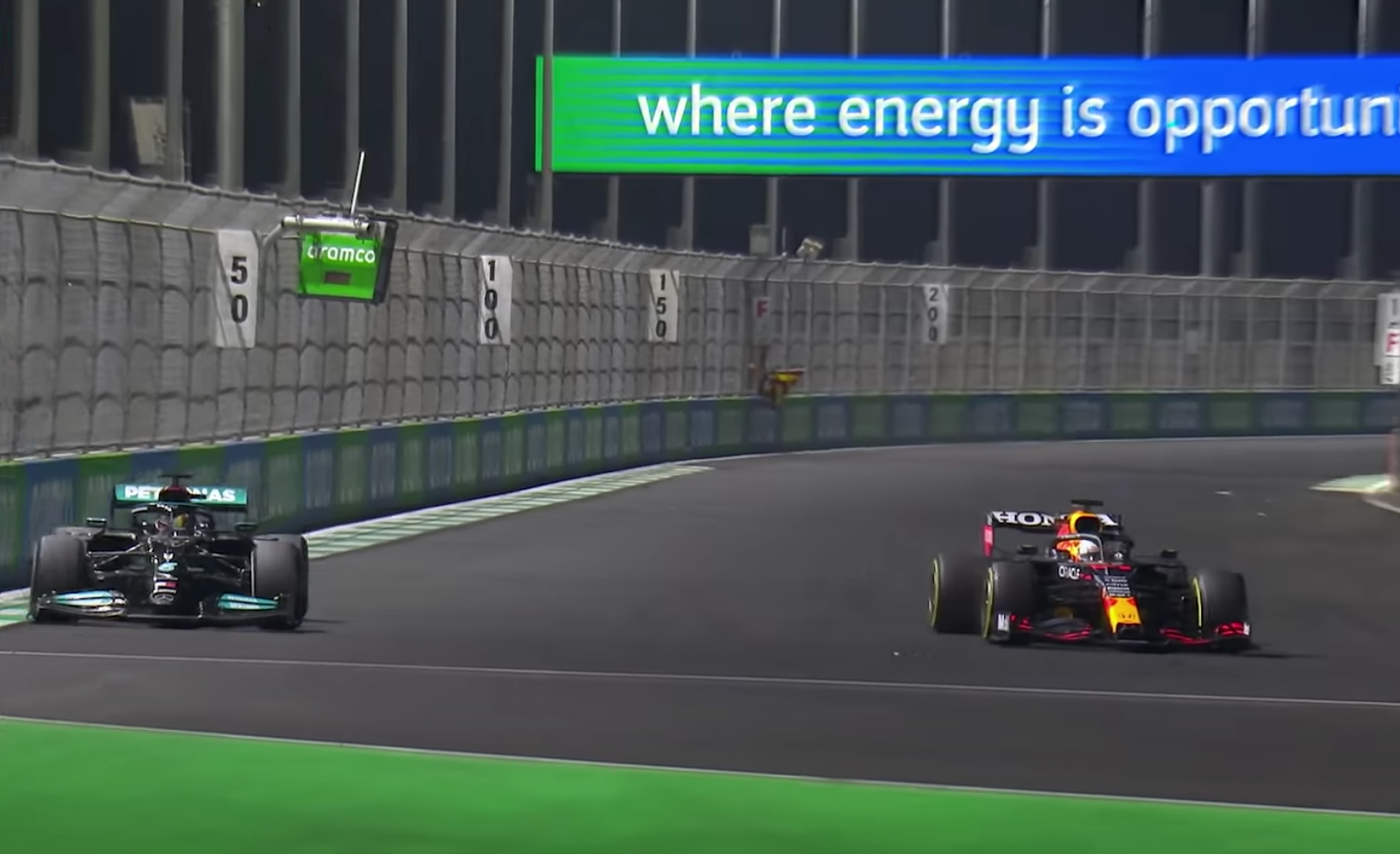
Red Bull radioed Verstappen, telling him to give the place back, but to do so “strategically”. He obliged, slowing as they approached the DRS detection point.
Hamilton, however, had had not yet been informed he was about to be handed the place. The pair slowed together and bizarrely made contact, Verstappen then driving off in the lead as Hamilton was left with a damaged front wing.
Image credit: Red Bull Racing
With the incident still under investigation, Verstappen let Hamilton past at the same spot five laps later, but immediately dived back down the inside to reclaim the lead.
At the same time, the 24-year-old received a five-second penalty for ‘leaving the track and gaining advantage’, seemingly for the initial Turn One incident, although at this point it was hard to keep up.
Either way, at the end of the lap, Hamilton again passed Verstappen on the run to the final corner – this time, seemingly without the Red Bull slowing to allow it – and made sure he stayed ahead by running his rival wide.
With Verstappen’s medium tyres finally having given up, Hamilton was able to streak off into the distance and set the fastest lap despite his broken wing. The gap back to the battle for third wasn’t sufficient for Red Bull to bring their man in for a new set of tyres to respond.
That battle for third was between Ocon and the recovering Bottas.
The Frenchman held off the faster Mercedes commendably in the dying laps, but was cruelly denied his third career podium as the Finn outdragged him to the line on the final lap, finishing just one tenth ahead.
But far up the road, it was an eighth victory of the season for Hamilton and the 103rd of his career, astonishingly leaving both championship protagonists on precisely 369.5 points, almost rendering the first 21 races pointless.
Even more incredibly, the total time for the two drivers in the races in which they have both finished now looks like this:
More than a solid day of racing over more than 5,000 kilometres and they are separated by mere seconds.
To put that in perspective, they have raced a little less than the distance from London to New York – more than 1/8th of the way around the entire planet – and arrived nine seconds apart.
Breaking Down the Controversies
So, where to start?
At the beginning, I suppose.
Lap 10-13: The Safety Car/Red Flag Drama
Image credit: Getty Images
Whilst it is understandable for Hamilton and Mercedes to feel a bit hard done by, there was no FIA conspiracy to give Verstappen the championship here.
Perhaps the call for the red flag could have come earlier, but it is far from unprecedented for one to be called after a period behind the Safety Car.
After all, Schumacher’s stricken Haas had to be removed from the barrier before its condition could be assessed.
The bigger question from this situation was why tyres are still allowed to be changed under red flag conditions. It was perfectly clear after the 2020 Italian Grand Prix that it effectively creates a lottery which punishes drivers at random.
Maybe now that it has (nearly) produced significant implications for the title fight, it will be addressed.
Lap 15: The First Turn-One Drama
Image credit: LAT Images
This one is pretty clear cut.
As the lights went out for a second time, Hamilton got the better start and was clearly ahead going into the first corner. Verstappen was then run out wide – as he himself has done to Hamilton numerous times this season – but rejoined in the Briton’s path and kept the position.
Although the manner in which it happened was quite bizarre, Red Bull were subsequently offered the option of produced allowing Hamilton back past, just on the grid, after the second red flag of the day had been called.
They accepted, and the drivers lined up on the grid for a third time.
Lap 37: The Second Turn-One Drama
Image credit: LAT Images
Having finally broken into the DRS window after 20 laps trying to do so, Hamilton got a run on Verstappen down the start-finish straight and, once again, arrived at Turn One ahead of his rival.
Verstappen braked very late and failed to make the corner, forcing both drivers off the track, before once again continuing on with the lead.
The post-race Red Bull narrative that only Verstappen was punished despite both drivers leaving the track is frankly a bit embarrassing, as they know full well that Hamilton was left with nowhere else to go and was clearly on a line to comfortably make the corner.
Whilst the goalposts were moved by the stewards’ inaction in Brazil – and the waters seemingly muddied in the discussions thereafter – this should be a simple case of either allowing the other driver past or taking a five-second penalty.
The Red Bull pit wall clearly acknowledged that on this occasion and radioed Verstappen to allow Hamilton through, thus leading onto…
Lap 37, Part Two: The Slowing to Pass Drama
Image credit: Getty Images
Now, this is probably the most complex of the race’s many controversies.
In his message to Verstappen telling him to give the place back, Race Engineer Gianpiero Lambiase told the Dutchman to do so “strategically”. Verstappen obliged, slowing as they approached the DRS detection point.
Hamilton slowed behind him, though, and with Verstappen now approaching a crawl in third gear, 200 km/h down on the usual speed at that area of the track, the pair collided.
Verstappen’s goal here was pretty clear – to ensure his rival passed him before the DRS detection so he could attempt to get back past immediately, whether or not that would have been legal (more on that later).
Hamilton’s part in the situation is a little more complicated. He was informed that Verstappen would be letting him past around a second after the contact.
Was he genuinely confused and wary of passing? Or was he aware of the situation and also trying to ensure that he didn’t reach the detection zone first?
With all the yellow flag dramas we have seen recently, there is certainly the chance that he was fearful of picking up a penalty for passing illegally.
But one would suspect it was more the latter. Hamilton surely knew that it was likely Verstappen would be asked to give the place back, and has been around long enough to know the game that his opponent was playing.
Verstappen was eventually given a 10-second time penalty and two points on his licence after the race for “braking suddenly (69 bar) and significantly, resulting in 2.4G deceleration.” So, it would appear Hamilton was correct in saying that he had been ‘brake-checked’ and Helmut Marko’s protestations that Verstappen had not braked at all were proven to be, well, characteristically unfounded.
The generally unbiased and analytical Karun Chandhok agrees with the stewards’ decision, saying “it’s quite clear he deviates (wrongly) from the racing line to the middle of the track and brakes unexpectedly”.
Either way, Verstappen drove off, Hamilton carried on minus a bit of front wing, Toto Wolff slammed his headphones to the floor, and the saga continued.
Lap 42: The Re-passing Drama
Image credit: Formula 1
As previously mentioned, Verstappen then let Hamilton past at the same spot five laps later, before immediately diving back down the inside to reclaim the lead.
This one was somewhat forgotten about in the grand scheme of things, with so much to already decipher and – more importantly – Hamilton finally getting the job done one lap later.
If he had not done so, the stewards would surely have been forced to intervene once more.
There are pretty clear rules about allowing a reasonable time before attempting to re-pass a car, with a precedent, in fact, set by an incident involving Hamilton some 13 years ago.
Verstappen is surely aware of this and it is hard to know exactly what his plan was by passing mere seconds after having ceded the position, but it was rendered moot when Hamilton successfully passed on lap 43.
In one final bit of drama, the seven-time world champion was warned for the manner in which he did so, Masi letting the Mercedes pit wall know that it was ‘almost a black-and-white flag’.
Image credit: Getty Images
And so, the two rivals head to the final race tied on points, and with Verstappen having shown he will do whatever it takes to win.
One can’t help but feel that we haven’t yet seen the final moment of controversy in this titanic championship battle.
The Saudi Arabian Grand Prix in 60 Seconds
Answering the Burning Questions
So, does round 21 go to Lewis Hamilton or Max Verstappen? It was a fight that packed some punches but Hamilton took it in the end.
Will Mercedes or Red Bull prove to have the stronger package around the world’s fastest street circuit? Until Verstappen’s error it looked like Red Bull on Saturday, but the Mercedes seemed to have the edge on race pace.
Can McLaren do anything to keep their fight against Ferrari for third alive? They narrowed the gap very slightly but not enough.
Will Mercedes or Red Bull prove to have the stronger package around the world’s fastest street circuit?
Can McLaren do anything to keep their fight against Ferrari for third alive?
The Track
The Stats
Track Length: 6.174 km
Laps: 50
Race Distance: 308.450 km
Maximum Speed: 330 km/h
Lap Time at Full Throttle: 72%
First Grand Prix: 2021
Race Lap Record: n/a
Outright Lap Record: n/a
Most Driver Wins: n/a
Most Constructor Wins: n/a
The Trivia
Jeddah features a calendar-high 27 corners, four more than the previous record at Singapore
In 1970 – the final year that Spa-Francorchamps was run as a true ‘road course’ – Chris Amon lapped at an average of 244.7 km/h. Whether you regard the old Spa as a true street track or not, Jeddah looks set to be comfortably quicker than that, and all of the other street tracks on the 2021 calendar
The track is one of only three on the 2021 calendar to feature three DRS zones
The Weather
The Quotes
Lewis Hamilton | “Do I feel comfortable here? I wouldn’t say I do. But it’s not my choice to be here. The sport has taken the choice to be here. If anyone wants to take the time to read what the law is for the LGBTQ+ community, it’s pretty terrifying. There’s changes that need to be made.
Max Verstappen | “We just have to try to put a good car on the track, and then of course you need to get comfortable driving as well because the track layout is very quick and not a lot of room for error. It’s a special track. We don’t really know what our competitors are going to do. We always try to do the best we can.”
Fernando Alonso | “I felt that we were building something even before the podium because the team had some weaknesses that we saw very early in the year. We worked on those throughout 2021 and I think we’ll be more ready in 2022. The podium for sure brings an extra boost for everyone.”
Stefano Domenicali | “[Sir Frank Williams] was a true giant of our sport that overcame the most difficult of challenges in life and battled every day to win on and off the track. We have lost a much loved and respected member of the F1 family and he will be hugely missed.”
The title looks increasingly like it will go down to the wire.
Image credit: Getty Images
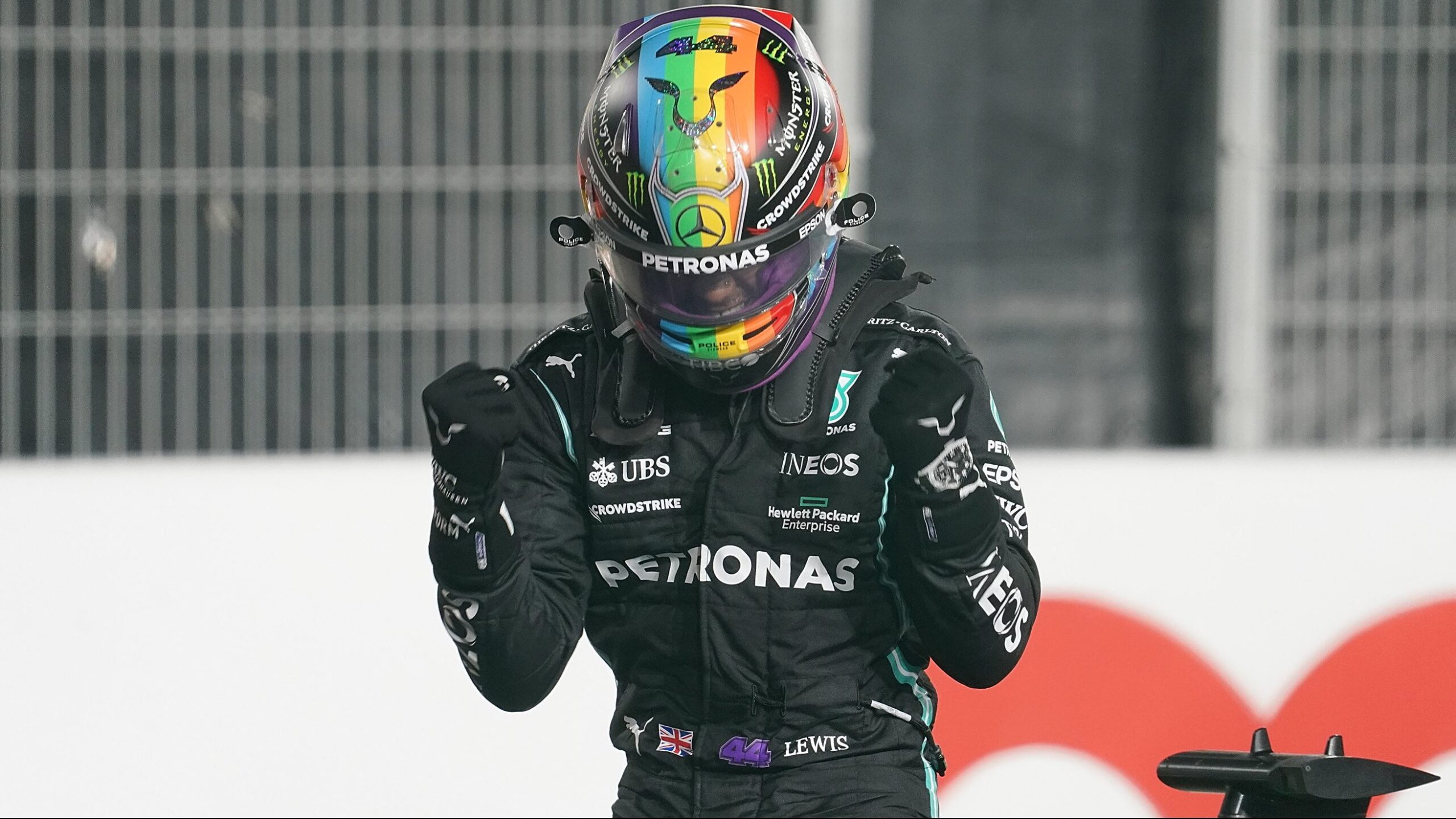
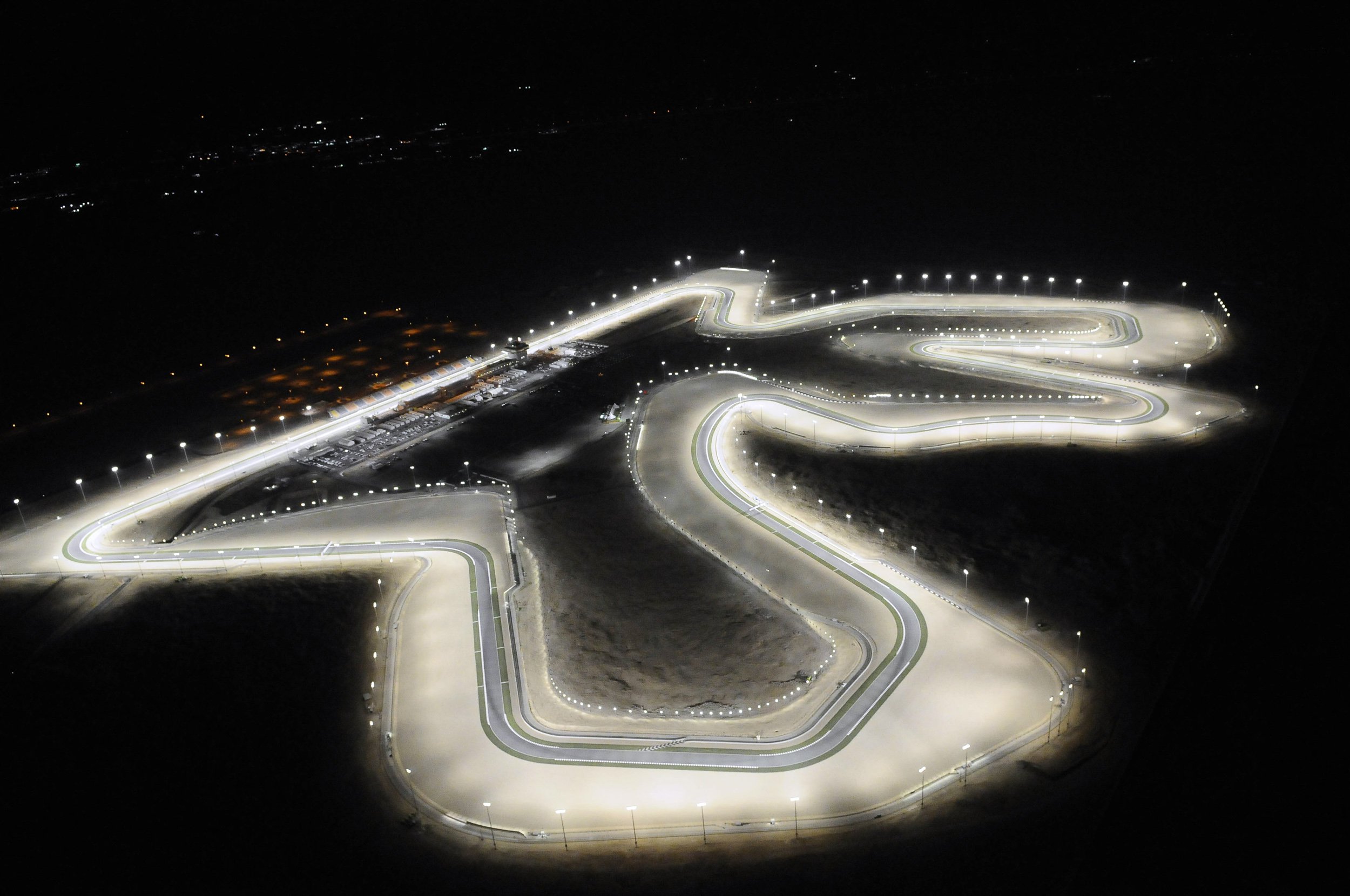
Lewis Hamilton – sporting a brave rainbow design on his crash helmet – dominated from pole position at the Qatar Grand Prix to narrow the gap to his title rival Max Verstappen.
The Mercedes – certainly in Hamilton’s hands – proved to be a class above at Losail on what will likely be its only appearance on the Formula 1 calendar.
Qatar took up the spot left vacant by the cancelled Australian Grand Prix and the Gulf State has since secured a 10-year deal for a race most likely at a different venue from 2023.
That is perhaps for the best as, whilst the track appeared fun to drive, it was not particularly conducive to good racing, with the drivers entirely reliant upon DRS for any overtakes.
We were given a mixed-up grid to spice things up somewhat, though, after five- and three-place penalties for Verstappen and Valtteri Bottas respectively, the pair having failed to slow for yellow flags during their final Q3 run on Saturday as they passed the three-wheeled Pierre Gasly.
Ironically, that left Gasly on the front row alongside Hamilton, with Fernando Alonso and Lando Norris on the second row, ahead of Carlos Sainz, Bottas and Verstappen.
The two out-of-place men had polar opposite starts. Bottas, having struggled to heat his medium tyres on the out lap, got away poorly from the dirty side of the grid, whilst Verstappen was up to fourth by the end of the first corner.
It only took him another four laps to move up to second and it suddenly looked as though we might be in store for another epic duel at the front.
Image credit: Getty Images
But Hamilton’s pace was simply too strong. He extended his advantage out to eight seconds and held it around there, with his team matching every strategy move Red Bull threw at them.
The seven-time world champion’s lead never looked in doubt, but there was some entertainment further back as the main protagonists’ wingmen fought through the field – Bottas had fallen back to 11th after his awful getaway, which is where Sergio Pérez had lined up on the grid after failing to progress through Q2.
The Mexican made lighter work of the midfielders, moving up to fourth by lap 16 but was brought in surprisingly early and had to do the hard work all over again.
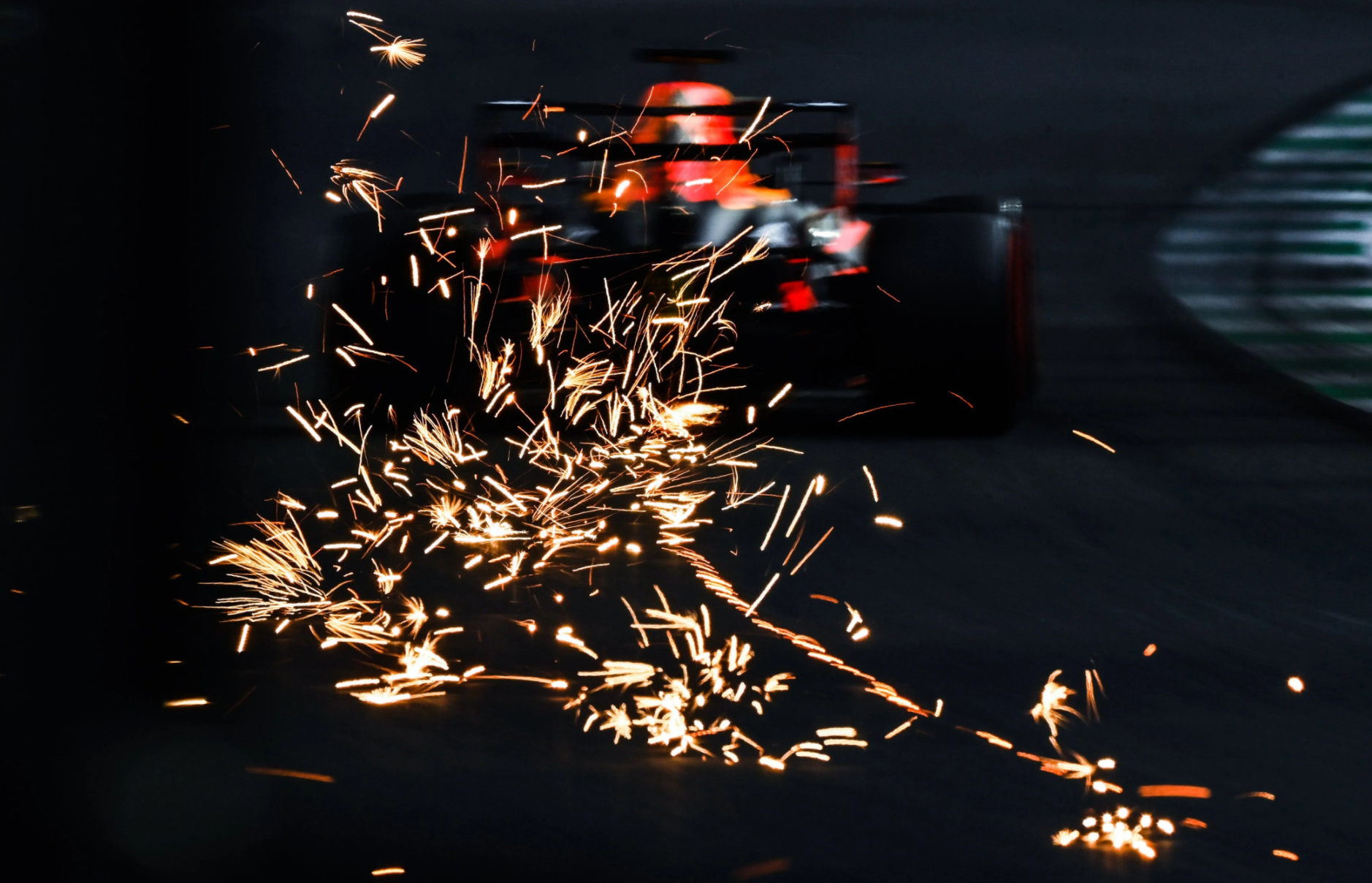
Bottas eventually made his way all the way up to third but Mercedes tried to stretch his medium tyres too far and they cried ‘no more’ on lap 32, a front-left puncture dropping him way down the order and showering Alonso with a floor-level firework display of sparks.
Pérez had made his way back up through the pack once again – this time to third – but even more surprisingly was brought in on lap 40 despite being on the hard tyres.
For a third time, he fought his way past a series of drivers. Alonso asked for his teammate Esteban Ocon to ‘defend like a lion’ and repay the Spaniard for his crucial defence from Hamilton in Hungary where the younger Alpine driver secured an unlikely victory.
Ocon did his best but was somewhat helpless as Pérez stormed past on fresher tyres in a faster car.
Another obstacle was removed when Norris was cruelly denied a well-deserved top-five finish by another puncture, leaving no cars between Alonso and the Red Bull.
Ironically, it would be further punctures that would save the double world champion, however, as the front-left tyres on both Williams cars also gave up. George Russell successfully brought his car back to the pits but Nicholas Latifi had an entire lap to do and eventually gave up, parking his car near a marshall post and bringing out a Virtual Safety Car.
Image credit: Formula 1
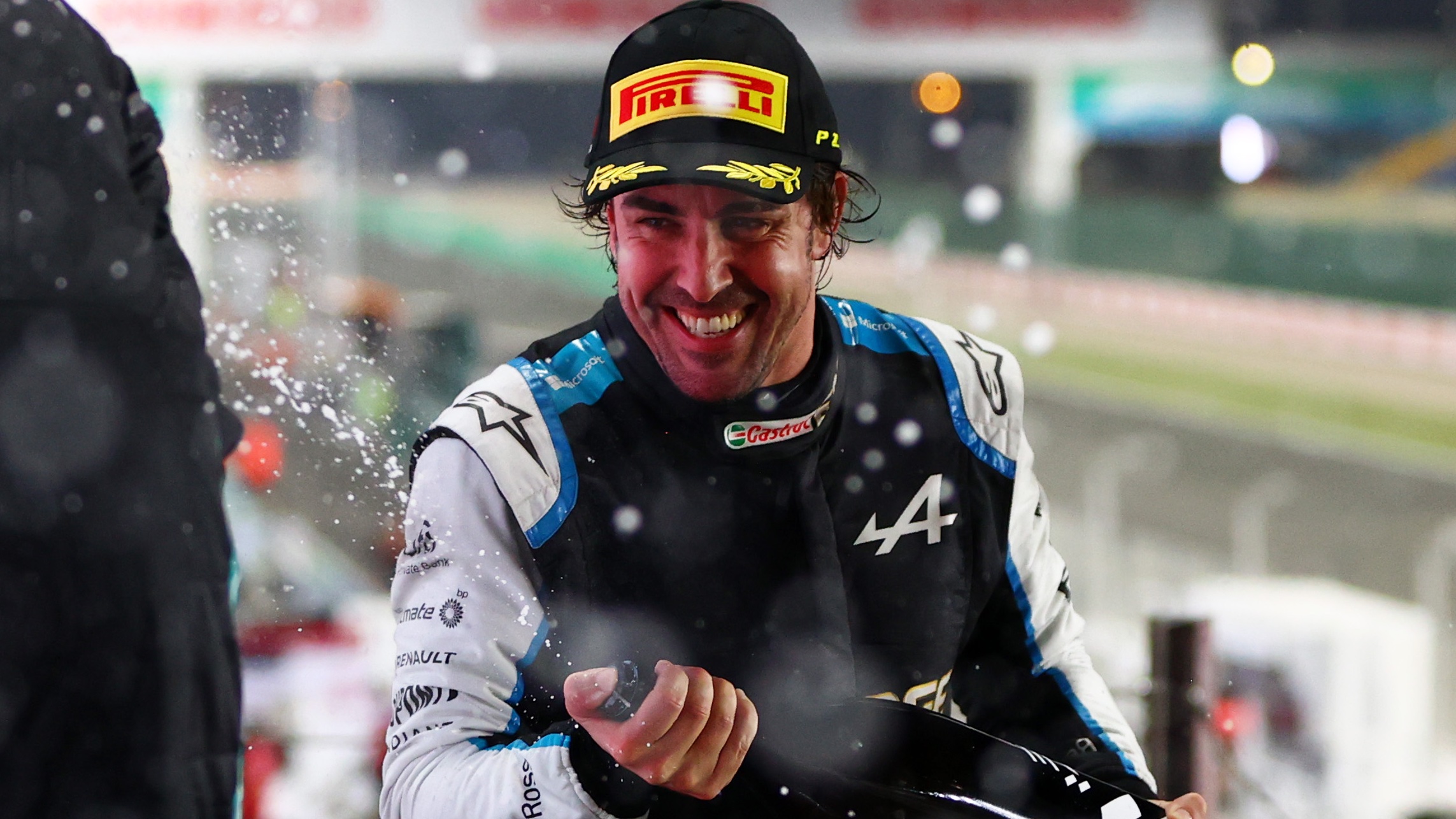
That gave Alonso the breathing space he needed – both in terms of the gap to Pérez and the life expectancy of his tyres – and he came home to secure his first podium in a very long time.
2674 days to be precise. That is slightly less time than the record held by Alexander Wurz, but Alonso did claim the record in terms of the number of races, having contested 105 grands prix since his last trip to the rostrum at the 2014 Hungarian Grand Prix.
To put that in context, the last time Alonso stood on the podium, Hamilton was a one-time world champion, Sebastian Vettel was still at Red Bull and Verstappen had never stepped into a Formula 1 car.
Out front, Hamilton sailed to a comfortable victory, despite being helpless as Verstappen claimed the single point for fastest lap, but narrows the gap in the standings to eight points nonetheless.
Ocon came home fifth on an excellent day for Alpine which should secure them fifth in the Constructors’ Championship as Gasly fell from second on the grid to 11th at the chequered flag. It was also a strong day for Aston Martin with Lance Stroll finishing sixth and Vettel also in the points.
Norris recovered to ninth after his puncture but finished behind the two Ferraris on a day where it had looked like McLaren could close the gap to the Scuderia.
The Qatar Grand Prix in 60 Seconds
Answering the Burning Questions
Can Lewis Hamilton and Mercedes build on the momentum from an incredible weekend in Brazil? They can – it was a stellar performance from driver and team in Qatar.
Who will adjust the best to a brand new circuit? Hamilton, as he often does at a new circuit, and Alonso. The veterans showing that experience pays off.
Can McLaren do anything to bounce back as their fight with Ferrari looks to be getting away from them? It looked likely to be a yes until that late puncture. Third may now be out of reach for McLaren and Norris is only just clinging onto fifth in the drivers’ standings.
The first of two new tracks as the season reaches its final three races.
The Burning Questions
Can Lewis Hamilton and Mercedes build on the momentum from an incredible weekend in Brazil?
Who will adjust the best to a brand new circuit?
Can McLaren do anything to bounce back as their fight with Ferrari looks to be getting away from them?
The Track
The Stats
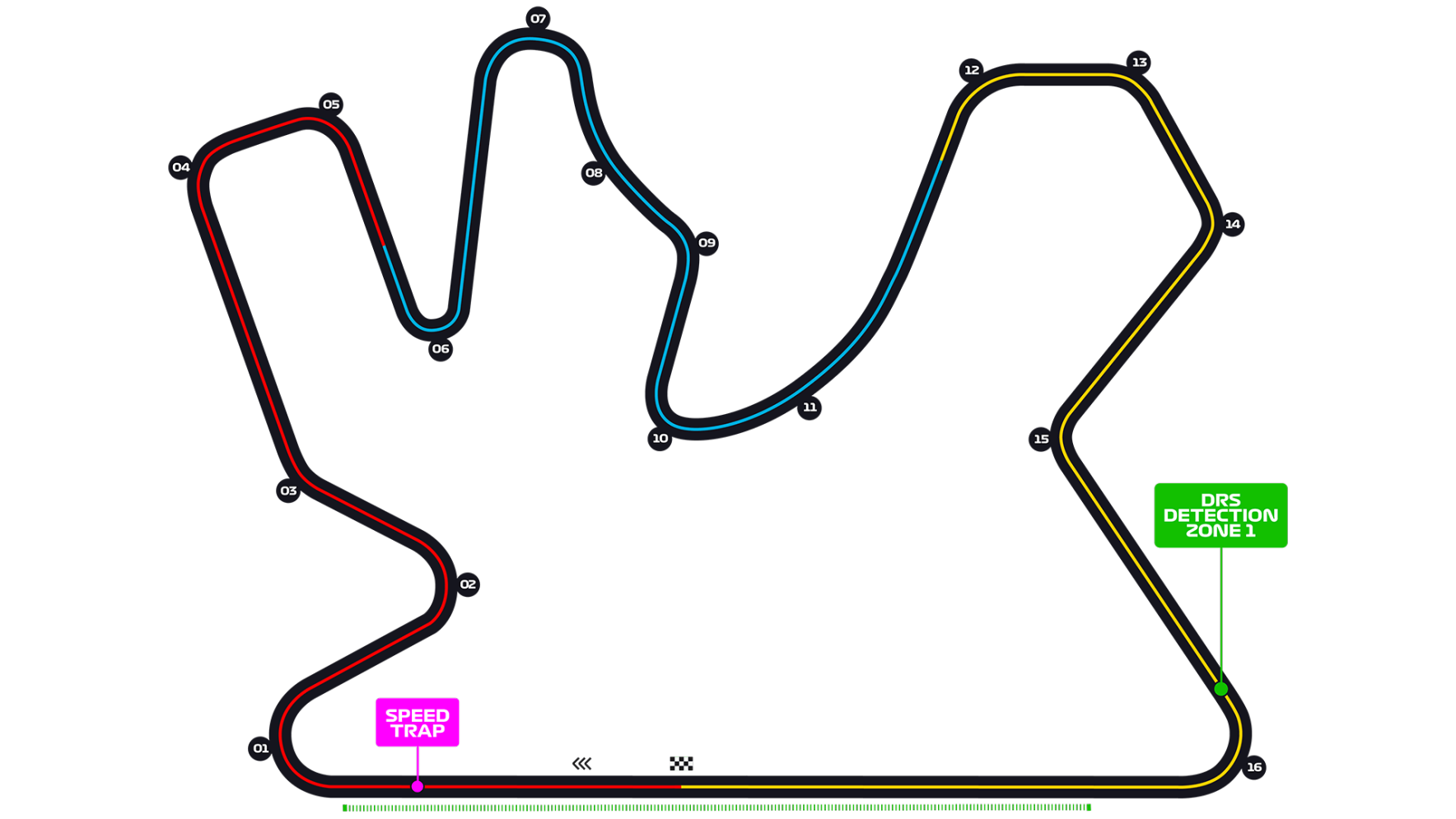
Track Length: 5.380 km
Laps: 57
Race Distance: 306.660 km
Maximum Speed: 350 km/h
Lap Time at Full Throttle: 51%
First Grand Prix: 2021
Race Lap Record: n/a
Outright Lap Record: n/a
Most Driver Wins: n/a
Most Constructor Wins: n/a
The Trivia
Sergio Pérez is the only current driver to have raced at Losail, winning a 2009 GP2 Asia event
MotoGP has competed at Losail since 2004
The track is 22 miles north of Qatar’s capital city of Doha
1992 world champion Nigel Mansell took victory at Losail in the short-lived Grand Prix Masters championship
The Weather
The Quotes
Lewis Hamilton | “I do think as sports go to these places, they are duty bound to raise awareness for these issues. These places need scrutiny. It needs the media to speak about these things. Equal rights is a serious issue. However, I am aware in this place they are trying to make steps and it can’t change overnight.””
Max Verstappen | “Listen, if it would have been the other way around in Brazil it would have exactly played out like that. It’s hard racing. We are fighting for a championship; we are not here to be in a kindergarten.”
Sebastian Vettel | “I guess we are all loving Formula 1 in one way or another. We go to many different places; some great places, some places maybe not so great, but it depends what you like. Some places that are very liberal, others are not, it’s probably a fair reflection of the world in general. So naturally there are places with things to catch up on and others are not.”
Charles Leclerc | “Whatever is allowed, then I just want it to be clear as a driver. That’s the only thing that matters to me. If this is allowed, then overtaking around the outside is going to be very difficult. But yeah, whatever the situation, the decision is, I’ll just adapt my driving to it; so I’m fine with both.”