Let’s act like we know what’s going on in testing: 2021 edition

Pre-season testing is infamously hard to decipher and usually ends up in fans, pundits and the media jumping to conclusions that are, more often than not, totally wrong.

As you can see from this quiz, the car ending testing on top has very rarely proved to be on top when the lights go out for the opening race. And this year, more than ever before, there is very little to go on. Testing usually consists of two sets of three or four-day blocks but this year, thanks to the pandemic, the teams have had just three days to get to grips with their latest machines.

To compound matters further, conditions in Bahrain were very blustery and there was even a sandstorm

Nonetheless, let’s see what we can figure out.

Not Plain Sailing for Mercedes

Image credit: Getty Images

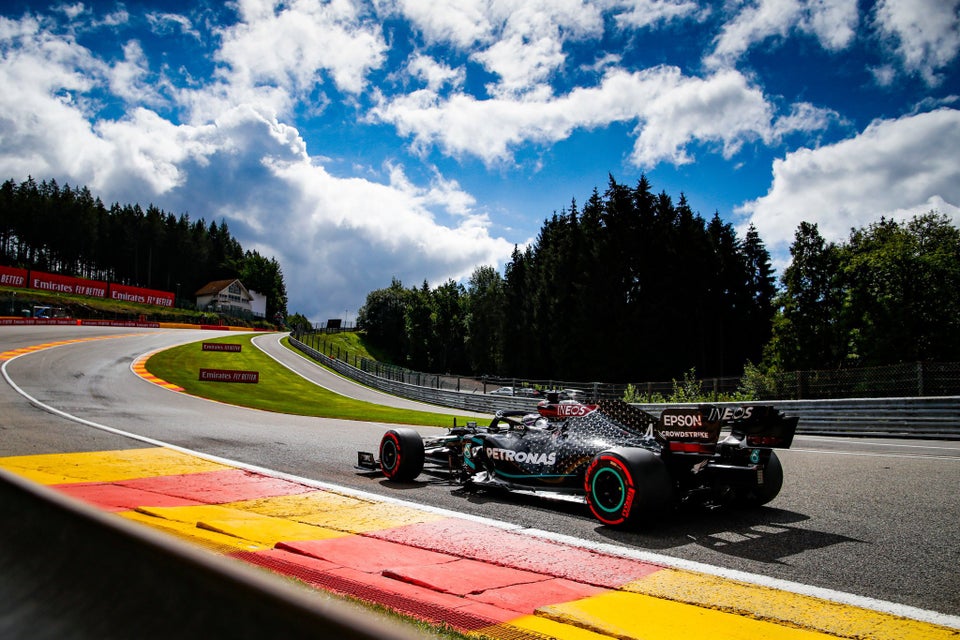
Mercedes have often been accused of ‘sandbagging’ during testing – and that would certainly have been easy in the Sakhir sandstorm – but this year, things look a little different. They have never been a team that does glory runs, but they have always maintained their metronomic consistency in pounding out lap after lap without issue.

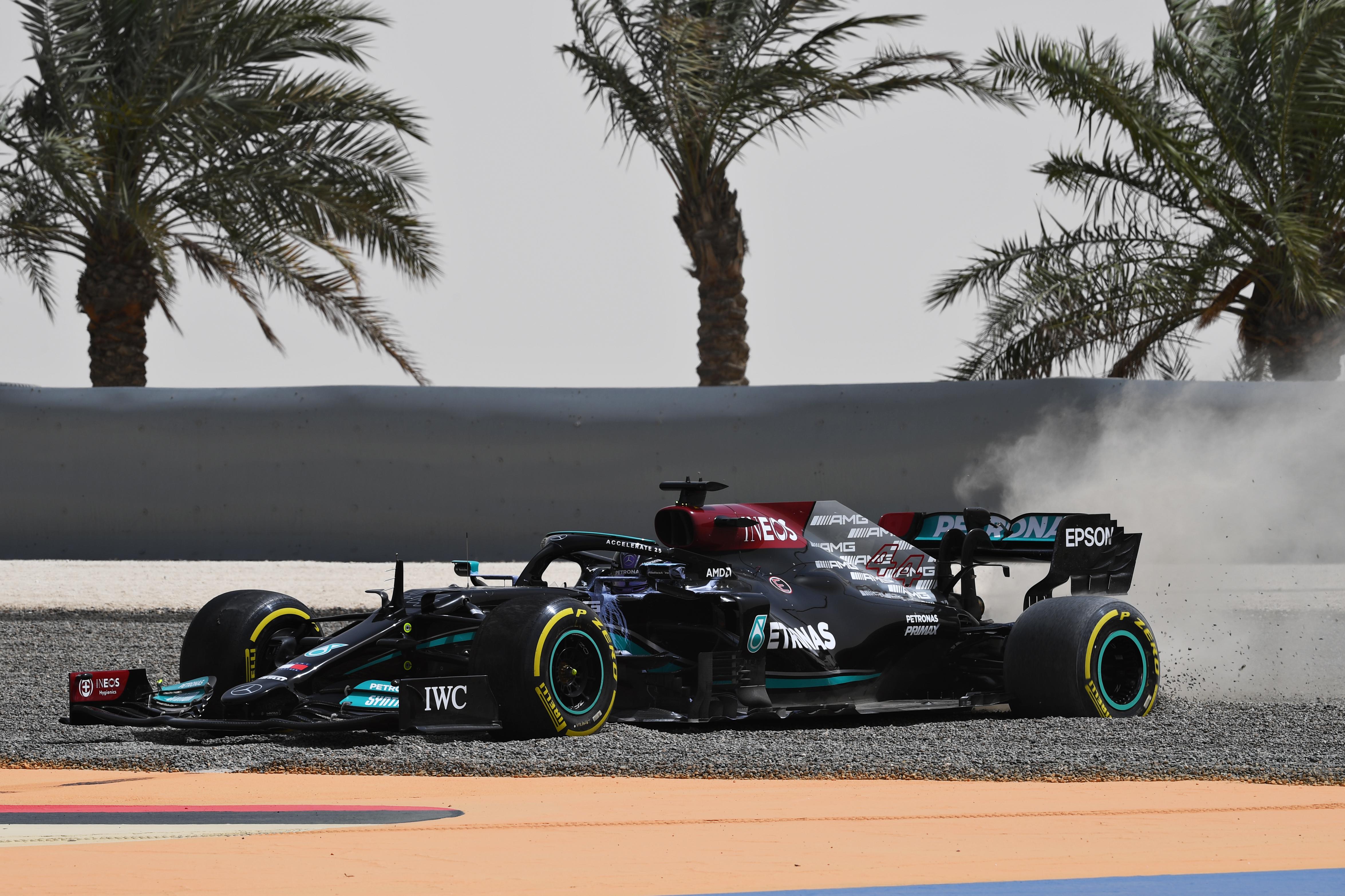
This test, however, started badly with a gearbox glitch limiting Valtteri Bottas to seven laps on the first morning. And when seven-time world champion Lewis Hamilton got into the car, he struggled to keep it pointing in the right direction. A series of uncharacteristic spins – once even ending up beached in a gravel trap – demonstrated the lack of rear stability that currently blights the W12.

Mercedes have proven themselves especially adept at problem solving, though, and nobody would be surprised to see them lock out the front row in two weeks. After all, it is better to find these issues now than in Q1 at the first grand prix.

Red Bull on the Rise

The struggles over at the Silver Arrows garage give a little hope for a more competitive season in 2021 and, if they do falter, Red Bull appear well-positioned to capitalise.

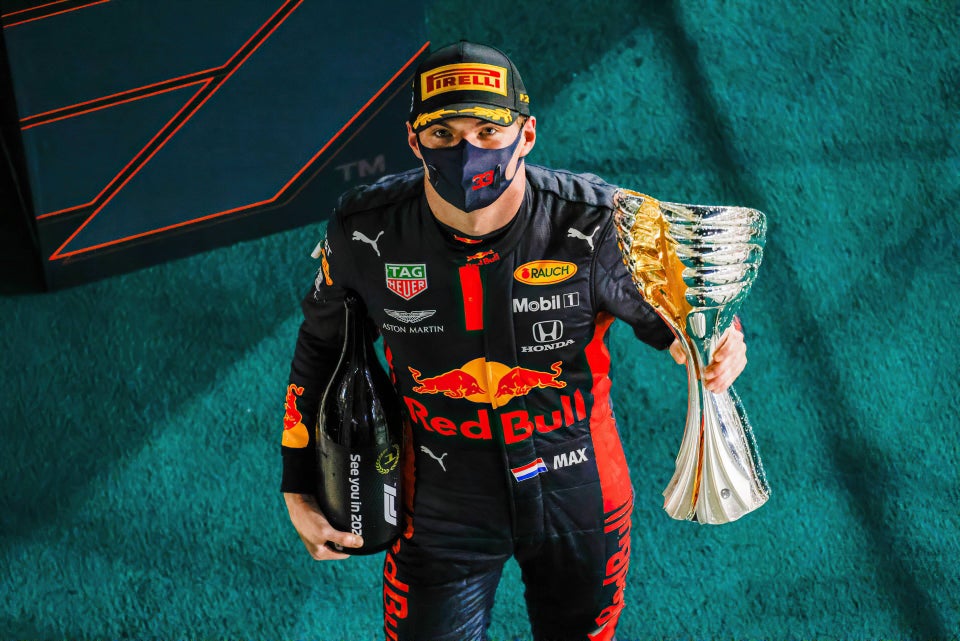
Max Verstappen produced the fastest time of the test and the Red Bull appeared on rails barring one early half-spin for the Dutchman. With AlphaTauri also often near the top of the timesheets – rookie Yuki Tsunoda even finished the final day a little under a tenth off Verstappen’s headline time – perhaps the new Honda power unit has made a significant jump in performance.

Either way, Red Bull’s Achilles’ heel in recent years has been a lack of understanding of their car in the early part of the season so, if they are on top of it already, that bodes well for their title challenge. The experience of Sergio Pérez should also help to develop the car; an area in which their academy prospects of the last two years will have struggled.

The Battle for Best of the Rest

Behind the likely top two teams, it’s anybody’s guess. The midfield was incredibly close last year, with McLaren ultimately edging the battle for third in the Constructors’ Championship, just ahead of Racing Point and Renault.

In the three months since the Abu Dhabi Grand Prix, those two names have ceased to be, with Racing Point transforming into Aston Martin and Renault becoming Alpine. Aston Martin were many experts’ choice for the bronze medal this year, thanks to their acquisition of the fabled 2020 Mercedes rear suspension and the expertise brought by four-time world champion Sebastian Vettel.

Things have not started smoothly for the British racing green team, however, with varying technical problems reducing their running time significantly. Vettel completed the fewest laps of any driver. Their ultimate pace is still an unknown, though, as they focused exclusively on long runs and propped up the timing sheets on the final day, three seconds slower than the rest of the field.

McLaren are looking strong with no issues from their change to Mercedes power and some decent flying lap times. They also have a somewhat controversial interpretation of the new diffuser regulations which has garnered much attention. It has not yet been banned by the FIA and, if allowed to remain, will not be easy for the other teams to copy.

Alpine also kept their true pace under wraps but showed impressive consistency and ended with a healthy number of laps completed. Fernando Alonso picked up where he left off in 2018 and didn’t appear to be suffering any ill effects from his cycling accident last month. Whilst there were a few niggles for FerrariCharles Leclerc brought about the first red flag of the test – they are fairly positive with their progress. Particularly in terms of straight line which was, by far, their largest issue in 2020. The Scuderia will be hopeful of, at the very least, moving up from their lowly sixth position in last year’s standings.

As mentioned, AlphaTauri have looked very strong throughout the test and tied with Alfa Romeo for most laps completed at 422. Veteran Kimi Räikkönen said, “I guess we are faster than at our best at the end of 2020, but whether that translates into a better performance in the races, that we will have to see.” It looks likely that Williams and Haas will be fighting over the wooden spoon but with the order from last year reversed. Particularly as Guenther Steiner confirmed there would be no updates to this year’s Haas.

Some Predictions I’ll Probably Regret Making

Okay, time to put my neck on the line, make some outrageous predictions and then see just how wrong I was in nine months’ time.

World Champion

.

MAX VERSTAPPEN

I know, I know. All the smart money is on Hamilton to seal that record-breaking eighth title in a year where the regulations have changed a relatively small amount since a Mercedes domination. But I just have a gut feeling. Verstappen seems to be getting stronger and, as mentioned, the Red Bull start to the year was far smoother than that of Mercedes. So, why not? Maybe the changing of the guard will arrive one year early than expected…

Surprise Winner

.

DANIEL RICCIARDO

2020 saw two shock victories from Pierre Gasly and Pérez. They were arguably the first surprise winners since Pastor Maldonado in 2012 but, with Ferrari now in the midfield, there are only four front-running cars and that increases the chance of someone sneaking in there when the leaders trip up. And who better than Daniel Ricciardo? He has that knack for capitalising when the chance is there and McLaren appear to be on an upward trajectory. Shoeys all round.

Surprise Podium

.

NICO HÜLKENBERG

The Hulk appears to be the reserve driver for half of the grid at this point, after proving his ability to step into a car on short notice and produce an impressive performance three times last year. He has been linked with stand-in roles for Red Bull, Aston Martin, McLaren and even Mercedes. Whilst Verstappen has been controversially vaccinated against COVID-19, most of the grid still has not and it seems likely that somebody will be forced to miss at least one race at some point. Let the curse finally be broken.

The 2021 season starts here

All the teams’ new challengers have now been launched – or at least the liveries have, with as little as possible given away in terms of their actual design.

So, as ever, there’s not a huge amount to garner from these launches but let’s at least talk about how pretty (or not, or familiar) the new liveries are and look for any significant design tweaks.

Mercedes-AMG Petronas Formula One Team

Image credit: Mercedes-AMG

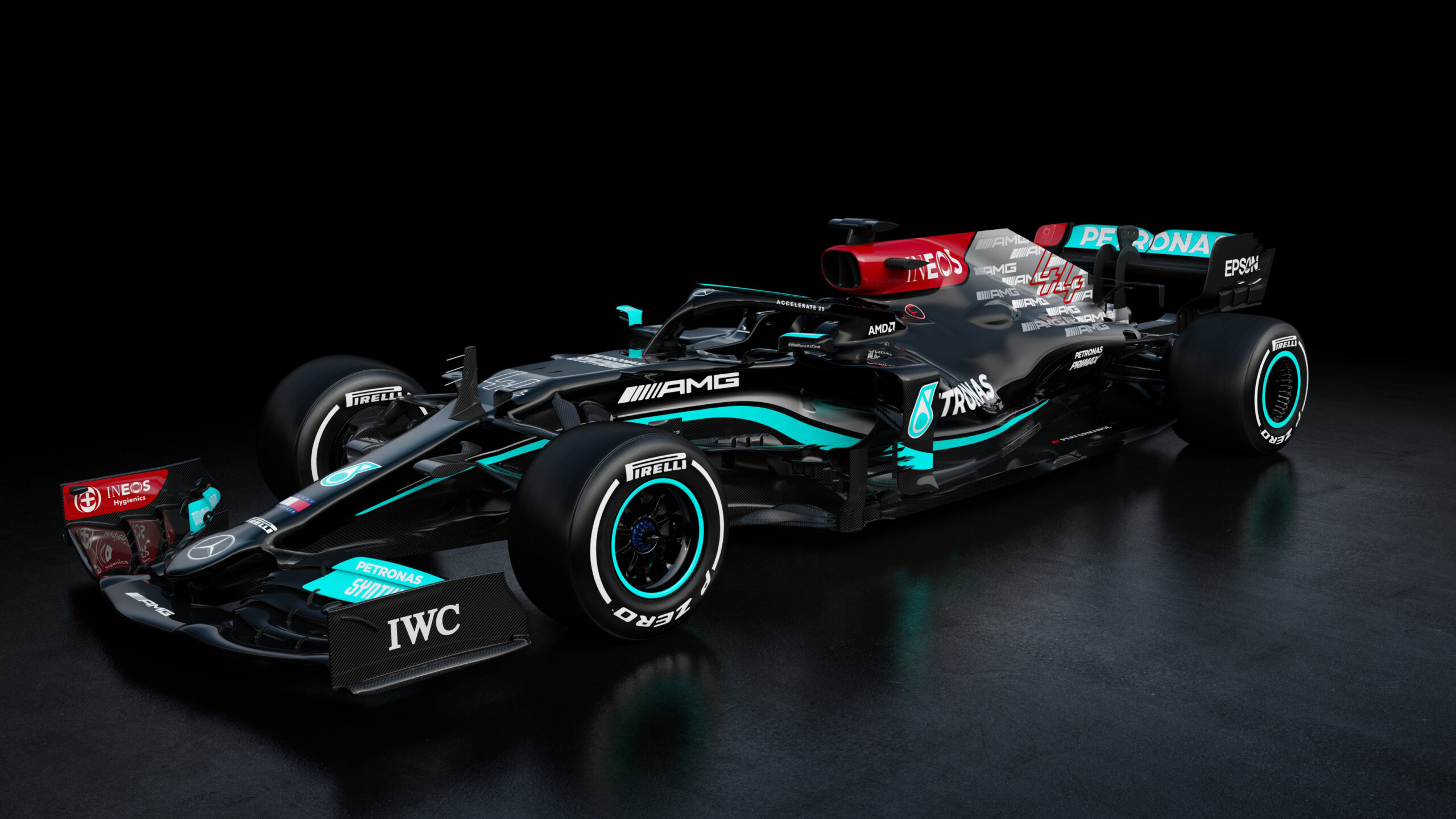
Mercedes stick with a black arrow for one more season, but have removed the sea of stars that adorned the rear of the engine cover on the last two cars. They have, in fact, been replaced by a sea of AMGs…

Whilst that has proved somewhat unpopular, the rest of the car is as sleek as ever. There is an increased presence of INEOS red, in line with their increased stake in the team, which makes the entire livery feel more together than last year’s. The font of the driver numbers has also finally been changed from what appeared to be default Arial in recent years.

Predictably Mercedes have revealed none of the tricks they may have up their sleeve this year – remember that they started work on this car earlier than any other team – so let’s see what car arrives at the pre-season tests…

Red Bull Racing Honda

Image credit: Red Bull Racing

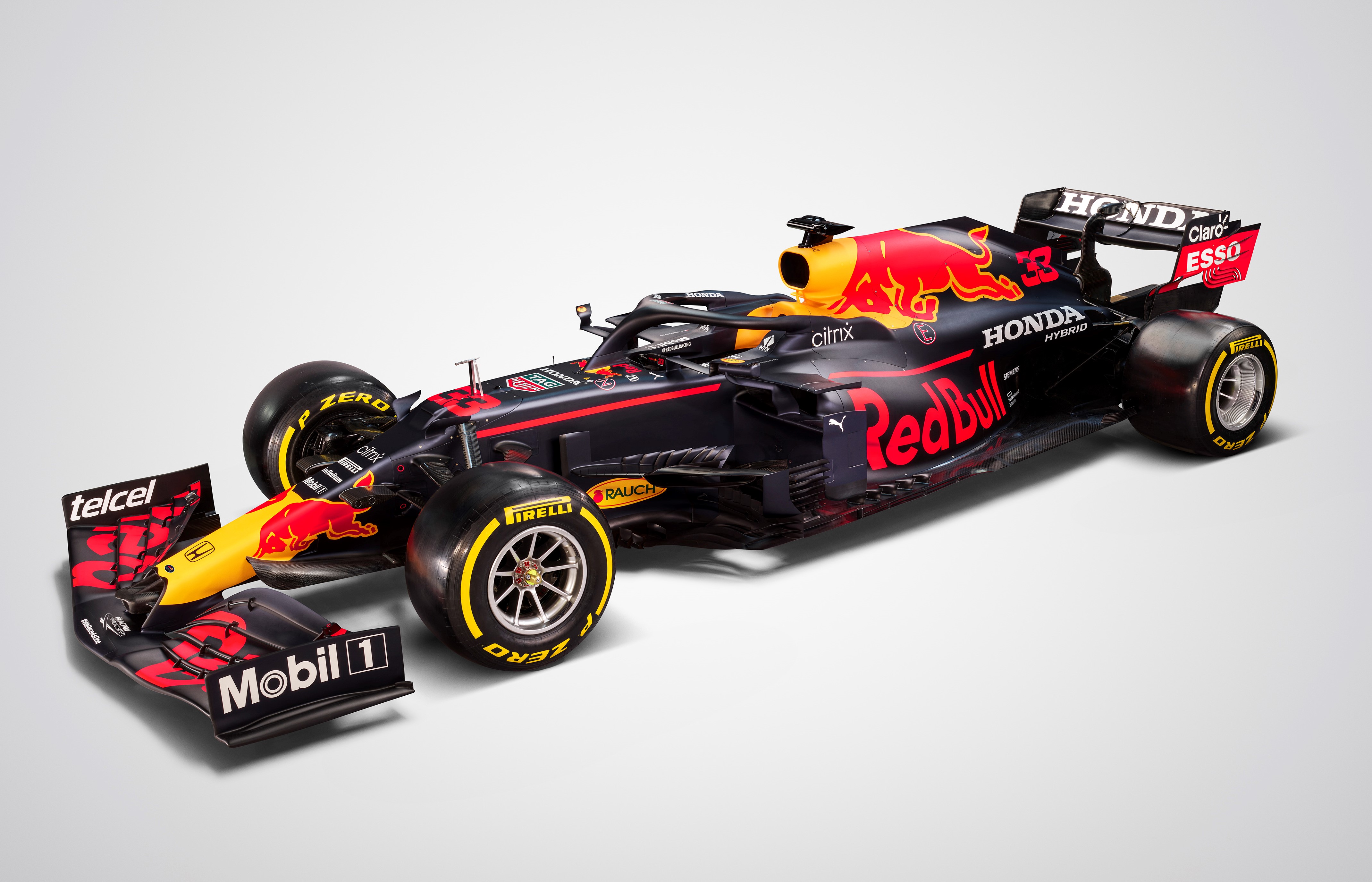
It’s yet another Ctrl+C, Ctrl+V job from Red Bull. Whilst it’s still a nice livery, it would have been nice to see a bit of a change. Perhaps they could have leaned a bit harder on the Red Bull yellow now that Renault have left that spot on the F1 colour wheel vacant.

There is some intense bargeboard work going on in the release photos, but Red Bull have often put something on the car to draw the eye at launch day only for it to disappear by the first test. So, let’s take that with a pinch of salt.

McLaren F1 Team

Image credit: McLaren F1

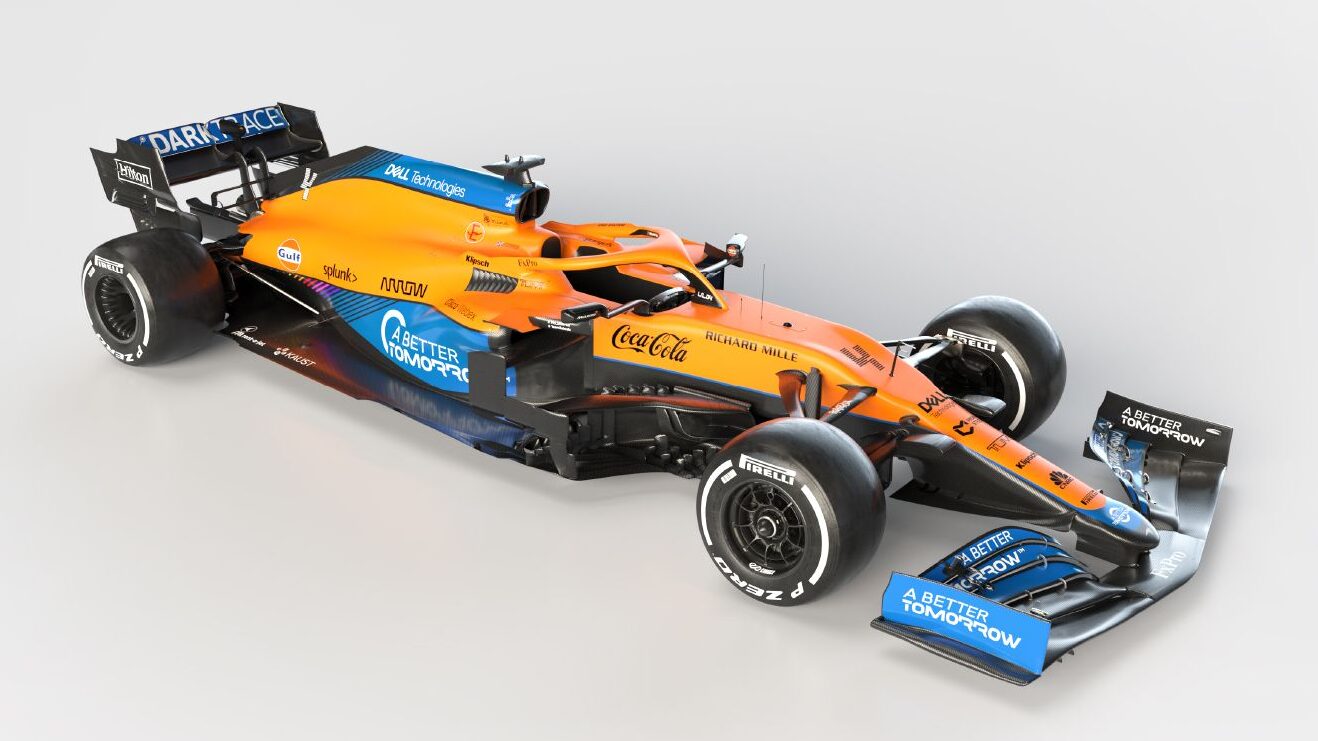
Bar a tiny bit of extra blue on the nose, the MCL35M is a carbon copy of the MCL35 in terms of livery. However, that ‘M’ is very significant and means that McLaren have likely had the biggest change in car over the winter.

That’s because that ‘M’ stands for Mercedes. McLaren have left Renault behind and the difference it has made to their aerodynamics around the power unit are huge. The cumbersome Renault engine took up a lot of space but the MCL35M’s engine cover is narrower even than last year’s Mercedes. If the Mercedes power pushes McLaren forward in the manner than many expect, they could well be challenging for regular podiums.

Aston Martin Cognizant Formula One Team

Image credit: Aston Martin F1

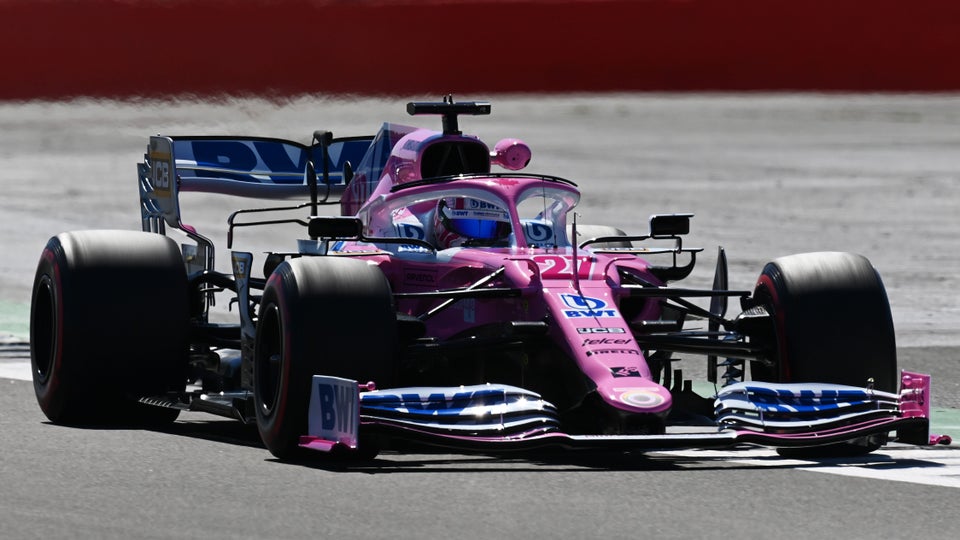
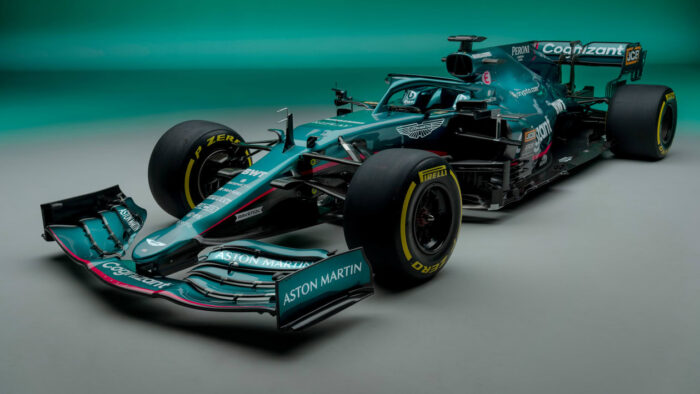
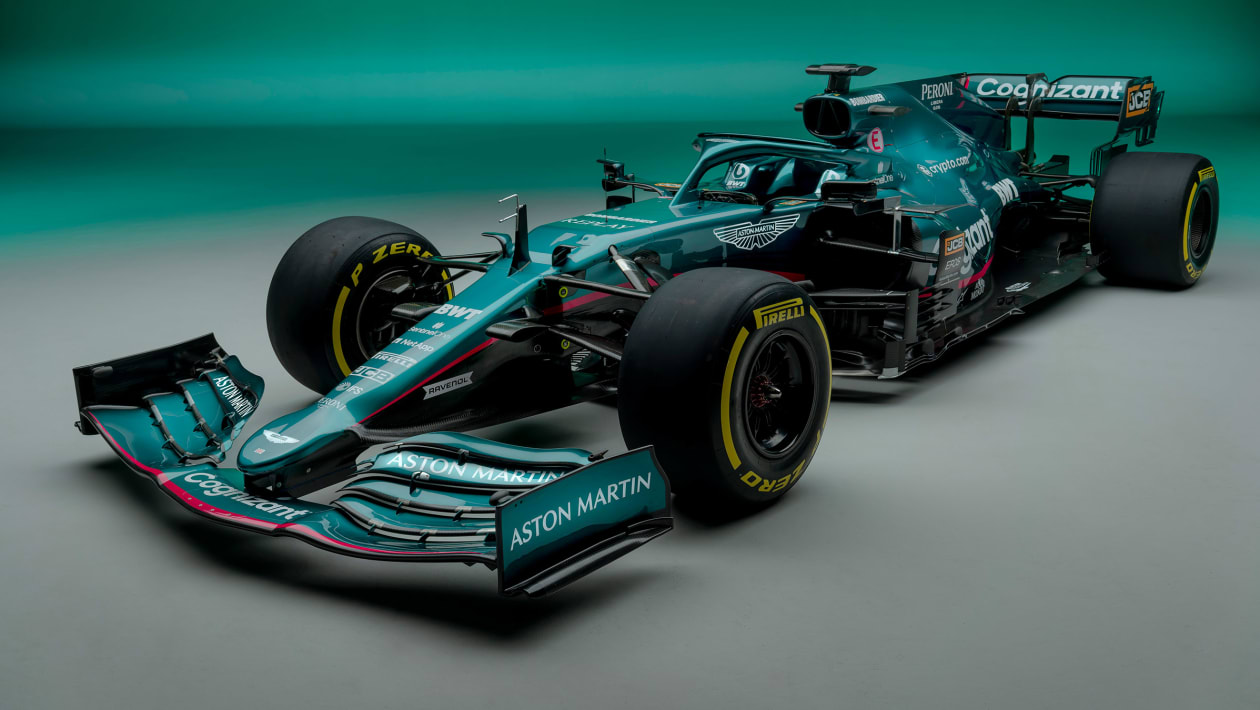
Aston Martin are finally back – and so is British racing green! Once the deal with BWT was announced, many feared the pink linked with their sponsorship would produce some kind of watermelon monstrosity. But the designers have, in fact, succeeded in combining the two elegantly.

It is deeper shade of pink and kept to just a couple of accents which surprisingly compliment the green. The rest of the design is very simple – one could argue unambitious – but the colour is the main attraction and looks predictably stunning in natural light. Will last year’s ‘Pink Mercedes’ be as successful as a ‘Green Mercedes’?

Alpine F1 Team

Image credit: Alpine F1

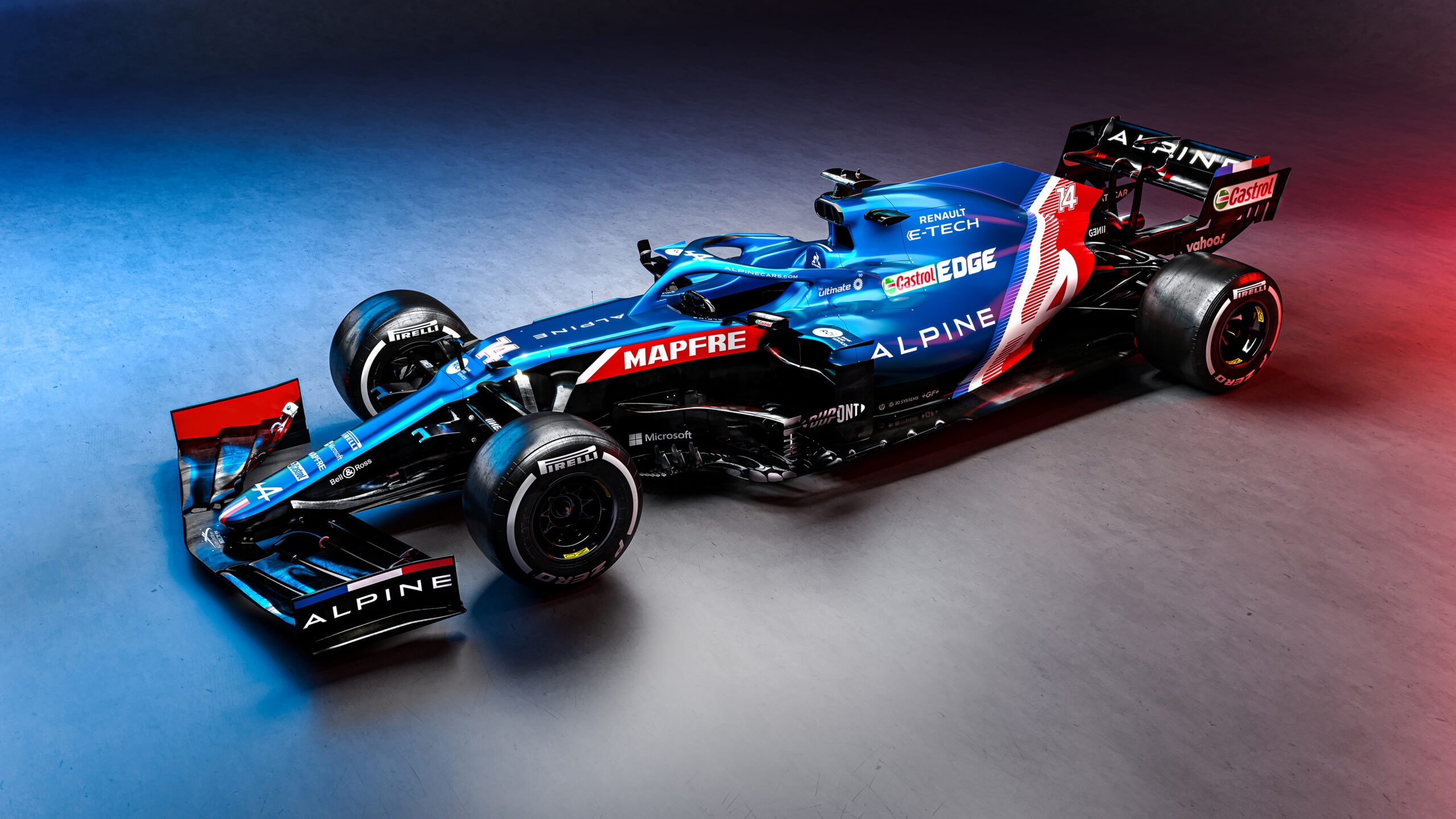
Onto another rebrand; this one with a distinctly French feel. The traditional Renault yellow has sadly gone from the grid, but the Alpine livery has turned out to be stunning. A metallic, electric blue, combined with a simple Tricolore effect towards the back is elegant but striking.

With a Renault engine underneath, the Alpine still has a distinctly wider engine cover than the rest of the grid. However, if the engine has been improved and can help move them closer to the top end of the field, they won’t mind one bit. They certainly won’t want Fernando discussing GP2 engines over the radio again.

Scuderia Ferrari Mission Winnow

Image credit: Scuderia Ferrari

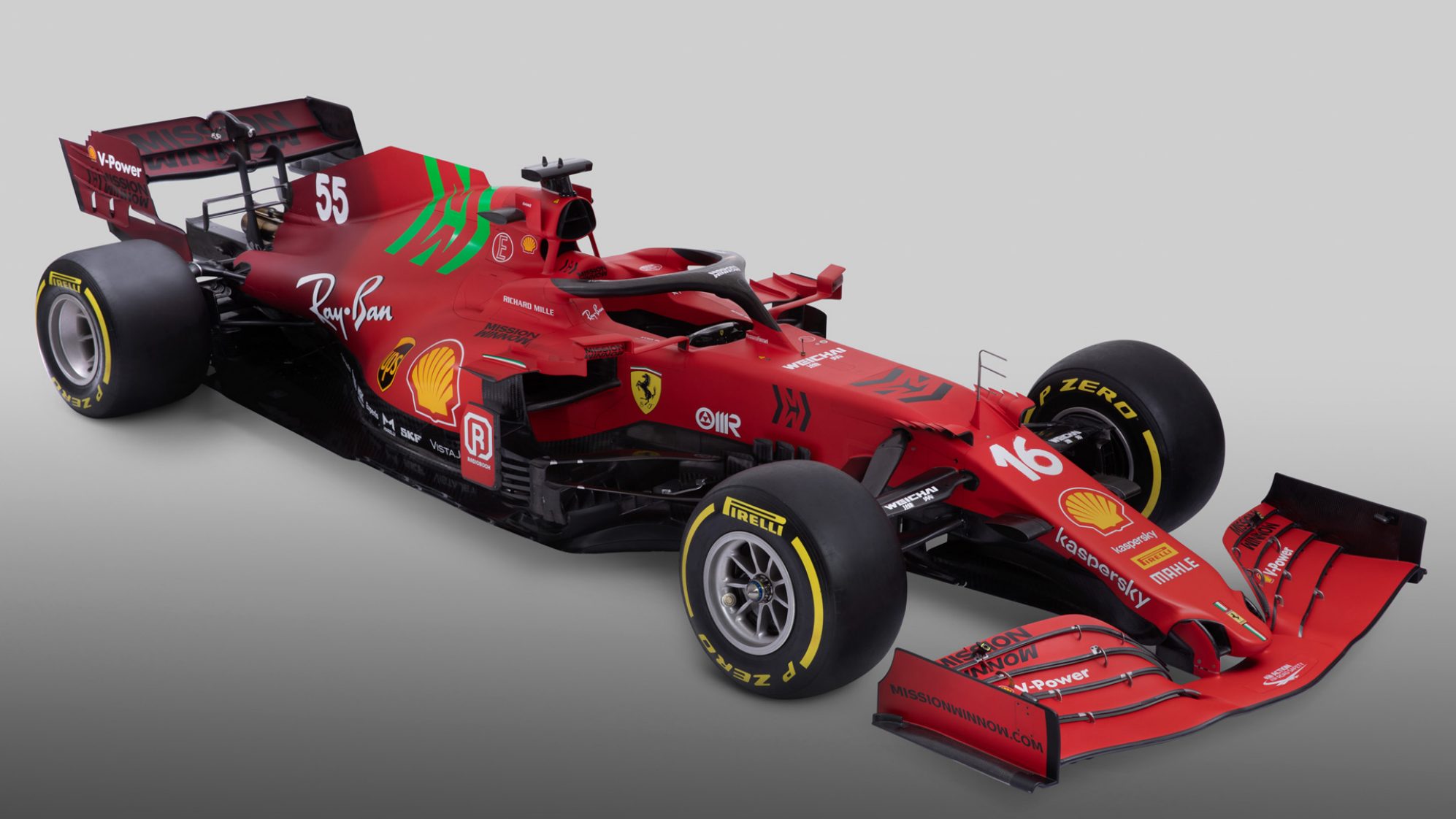
Shockingly, it’s not just red! Usually the most predictable launch of the year, Ferrari have gone more controversial for 2021. With a fade towards a darker shade of red at the back and a real curveball with a green Mission Winnow logo on the engine cover.

There are some interesting ideas but the execution seems slightly off – a white border around the green would likely have made it clash less. Not that the green logo is all that important in the grand scheme of things as Mission Winnow is banned in most of the Western world and will likely be gone after the Bahrain Grand Prix.

The nose has changed significantly as Ferrari move in the direction the rest of the field has already pursued and the Scuderia will have all their fingers crossed that the engine has been significantly improved so that they can claw back some performance after last year’s embarrassment. The new livery was leaked by a ‘hacker’ who set their computer clock ahead…so it’s not been the best start.

Scuderia AlphaTauri Honda

Image credit: Scuderia AlphaTauri

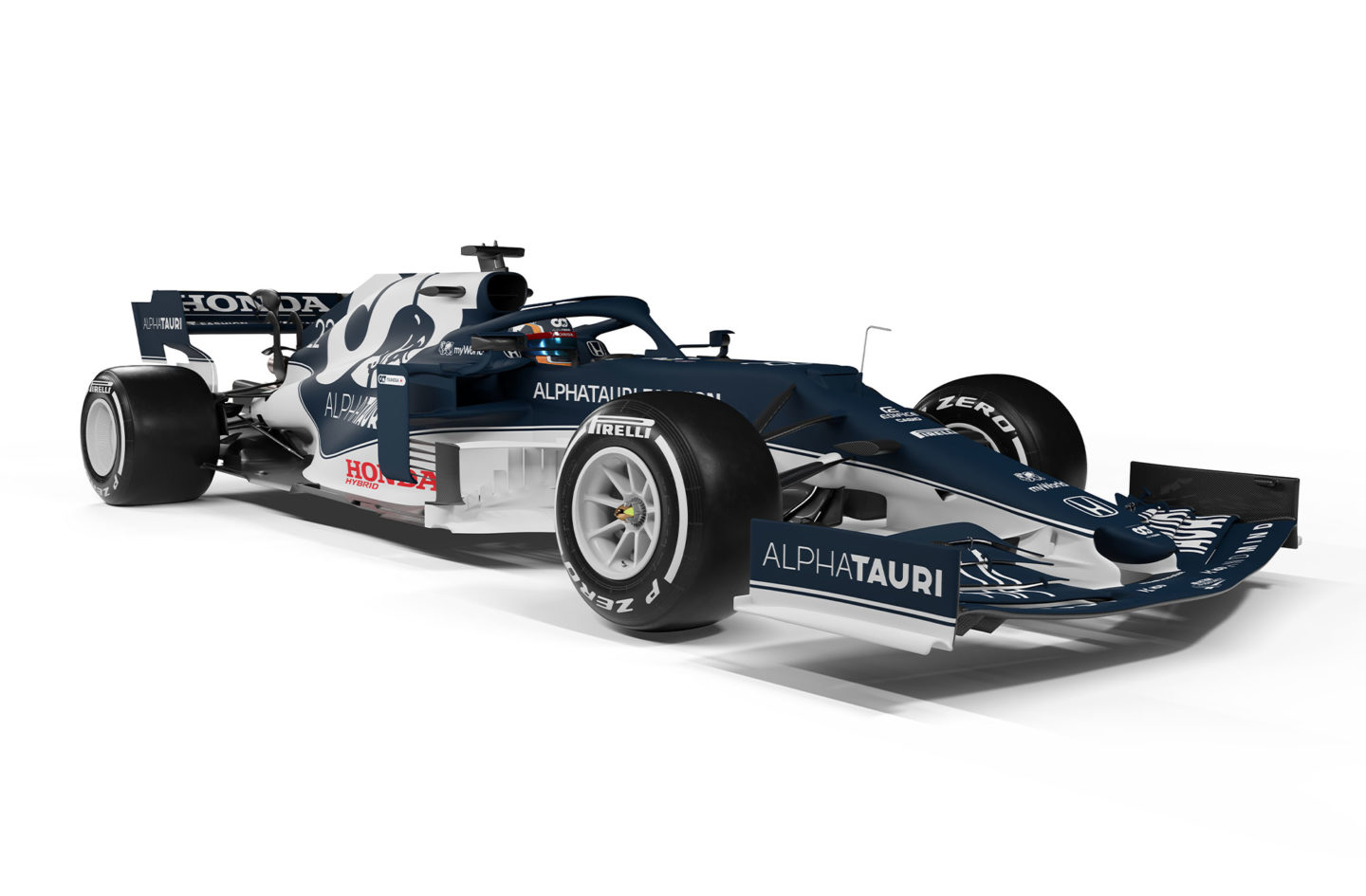
The team formerly known as Toro Rosso (and Minardi, of course) have produced another decent livery. It is similar to their design from last year but with the navy blue to white ratio skewed towards the former.

AlphaTauri have also used their allotted development tokens to redesign the nose. Whilst the official release images show last year’s nose, the team tested at Imola a few days later with a noticeably more slender design.

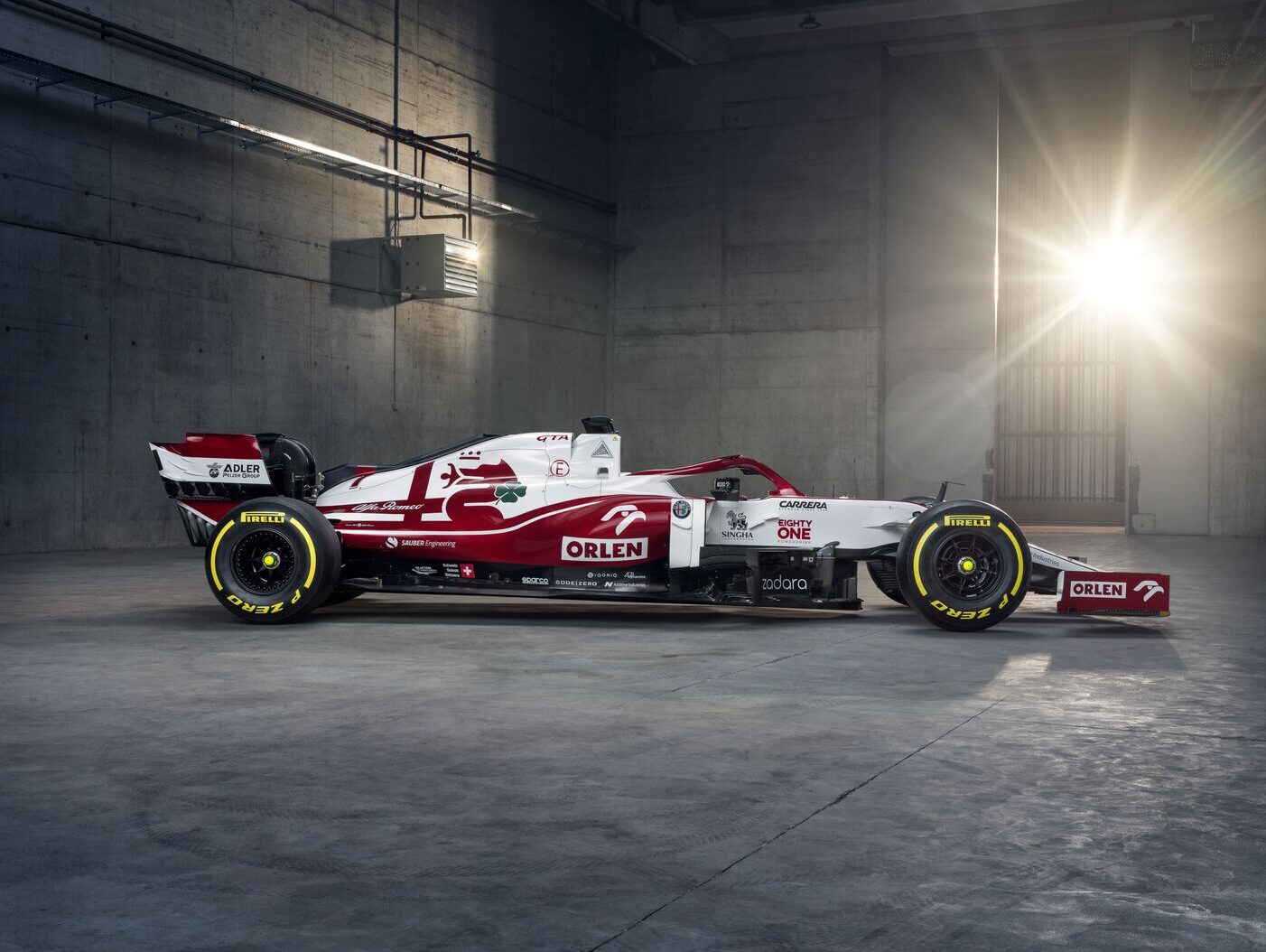
Alfa Romeo Racing Orlen

Image credit: Alfa Romeo Racing

Seemingly one of the Alfa Romeo designers accidentally hit ‘invert’ on last year’s livery and then decided it actually looked pretty good. And, in fairness, it does. It oozes that Alfa Romeo class and the green quadrifoglio added to the engine cover is also a nice touch.

They have added some interesting design features to the front of the car; the purpose of which I won’t claim to understand just yet, but will likely be hypothesised by Ted Kravitz as some point during the Sky testing coverage.

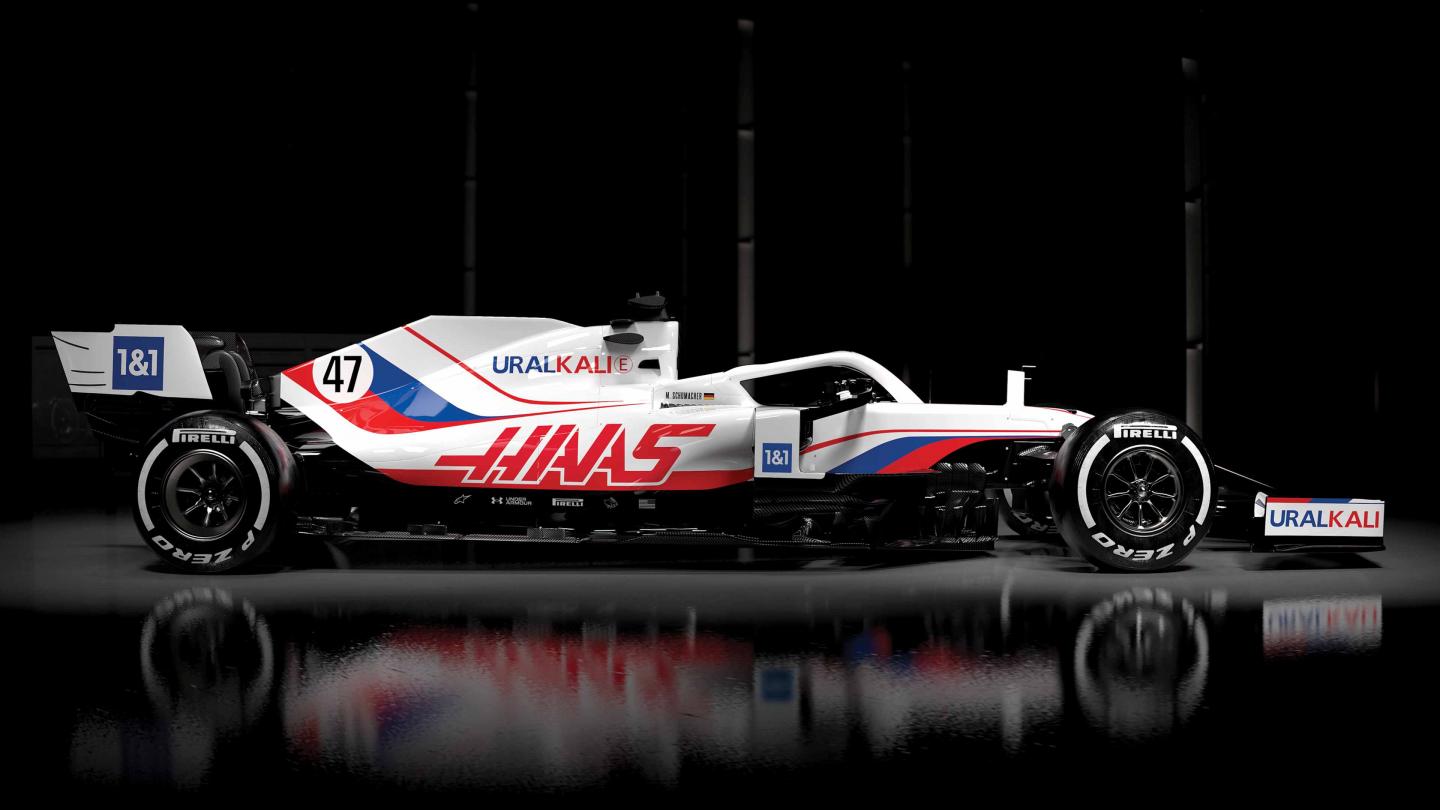
Uralkali Haas F1 Team

Image credit: Haas F1

Well then. Formula 1’s ‘American’ team is now effectively sporting a shiny, Russian flag. Since their arrival in 2015, Haas have resisted the temptation to produce any kind of stars and stripes livery, sticking to their traditional brand colours of grey and red. But then in came the controversial Mazepin family.

Rookie driver Nikita received backlash for a series of misdemeanours – both on track and off track – and many are pushing the #WeSayNoToMazepin movement. It appears, though, that he is going nowhere, largely thanks to Haas’s desperation for his father’s Uralkali funding. It would not be a surprise to see the Russian oligarch buy out the team within the next couple of years.

There is added irony in that Mazepin will not be allowed to race under the Russian flag, thanks to the CAS ruling on Russian doping. Apparently he is allowed to drive in a big, Russian flag, however.

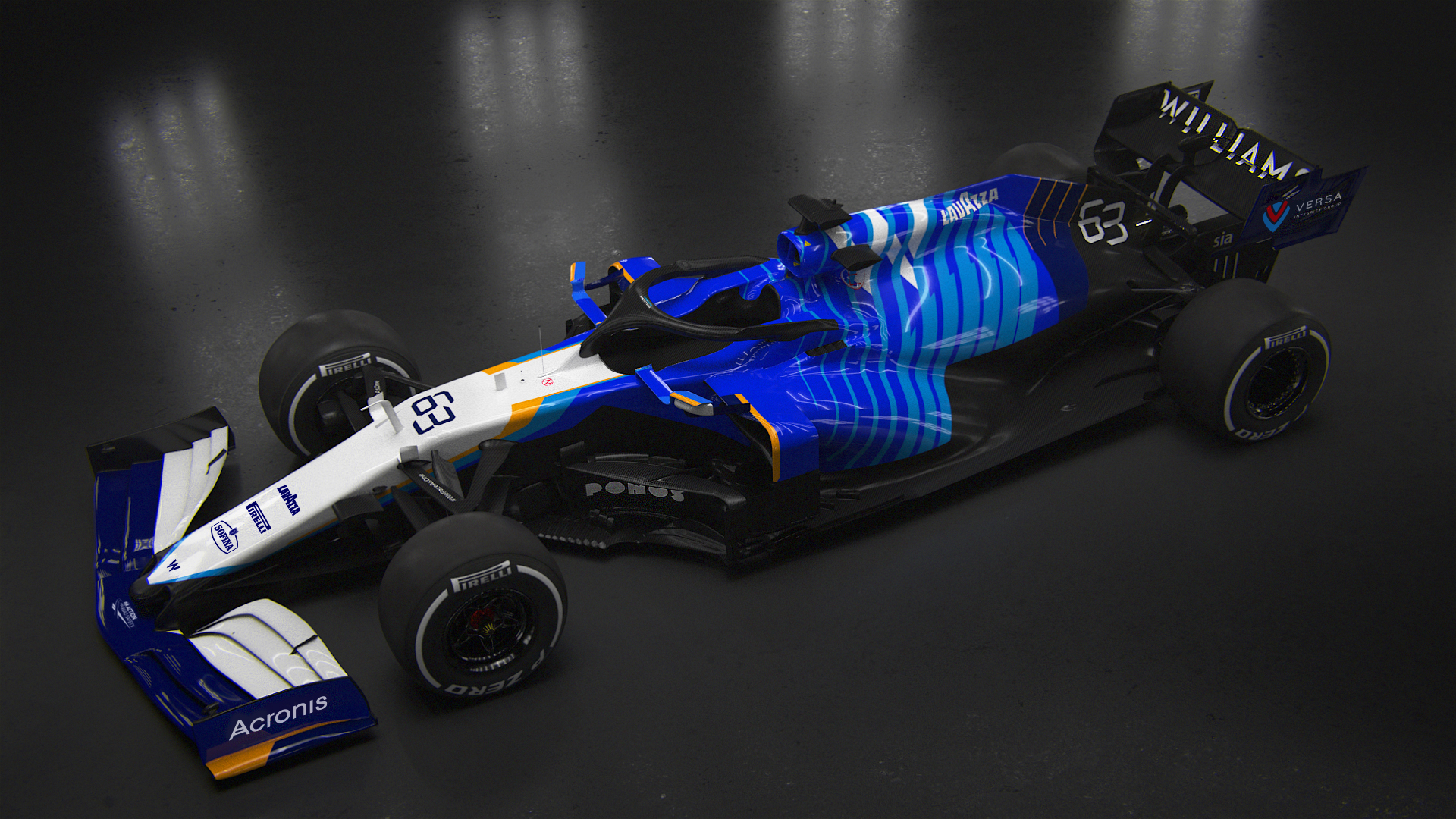
Williams Racing

Image credit: Williams Racing

Williams had planned for an innovative VR launch of their new livery but, unfortunately, the app they were using was hacked and the designs leaked early. The response has been mixed but the blue, yellow and white is a nice nod to their infamous liveries in the early 90s.

True, the final design could perhaps have been improved – as shown by many armchair designers on Reddit – but it is a decent attempt at something different. Plus, it is always more difficult with the constraints of board executives and sponsors to please. It’s a shame BWT didn’t sign up with Williams and produce a blue-and-pink number akin to Damon Hill’s 1992 Brabham, perhaps. There is a lot of blue and white on this year’s grid…

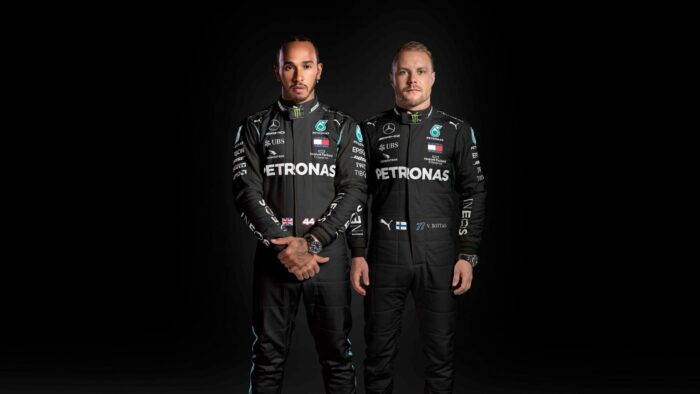
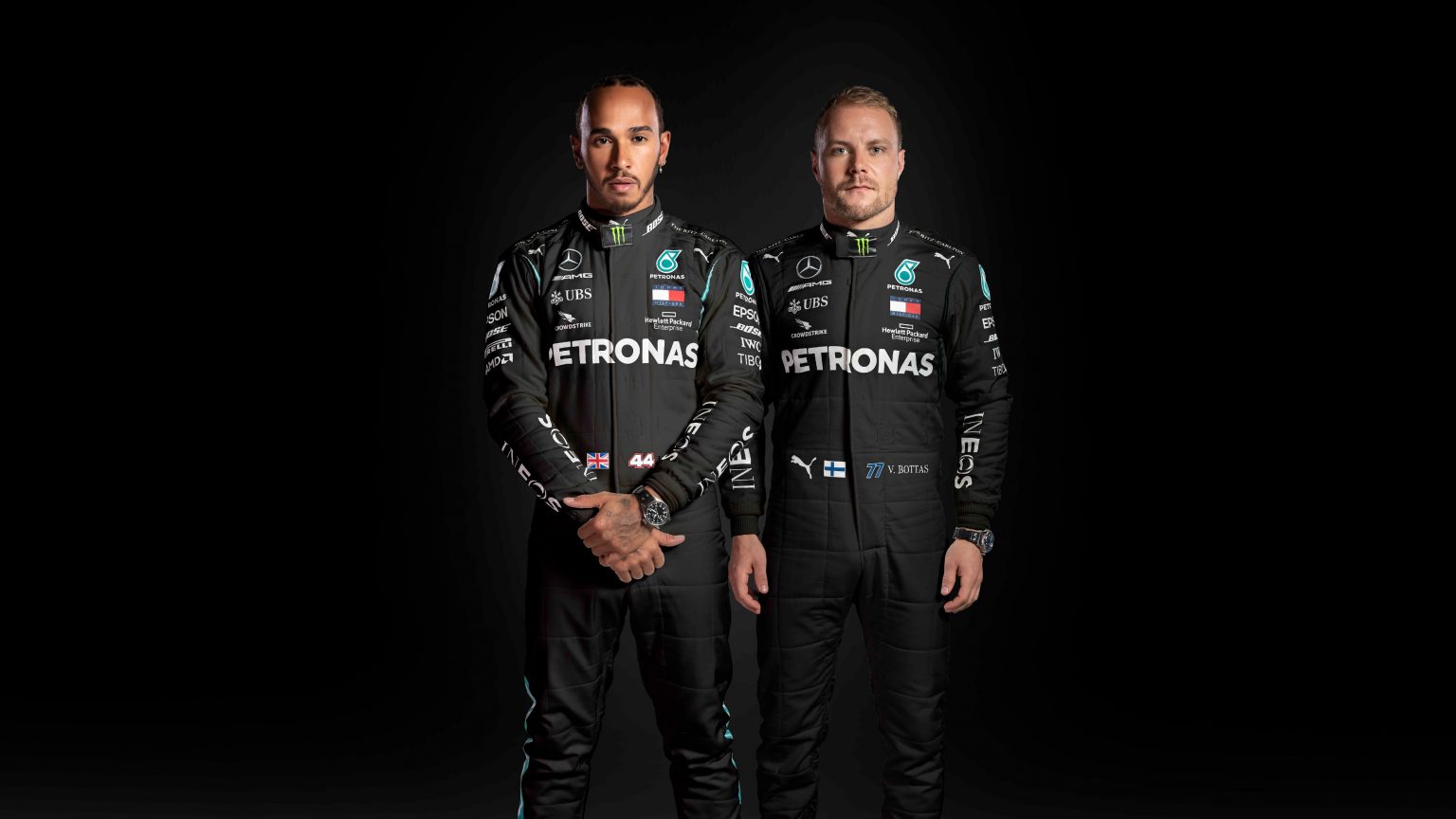
Lewis Hamilton and Valtteri Bottas pose for a Mercedes promo.

How do you beat one of the best ever?

If Valtteri Bottas is to become a world champion, he faces the unenviable task of beating Lewis Hamilton, in the same machinery, over the course of a season. That is something that the seven-time world champion’s varying teammates have achieved just twice, from 14 attempts; Jenson Button in 2011 and Nico Rosberg in 2016.

Fernando Alonso tied on points with a rookie Hamilton in 2007 during their fractious single season together at McLaren but technically lost out, courtesy of having achieved fewer wins.

So, how did Button and Rosberg achieve it?

2011

Jenson Button and Lewis Hamilton in 2011.
Image credit: LAT Photographic

2011 was something of an annus horribilis for Hamilton, during which he allowed multiple issues in his personal life to affect his performance on the track. There were tensions with then-girlfriend Nicole Scherzinger and, even more so, with his father.

Anthony Hamilton had managed his son’s career since the age of eight but, during 2010, the driver decided that he would rather have an independent manager who would allow him more freedom. It would take father and son several years to fully repair their relationship.

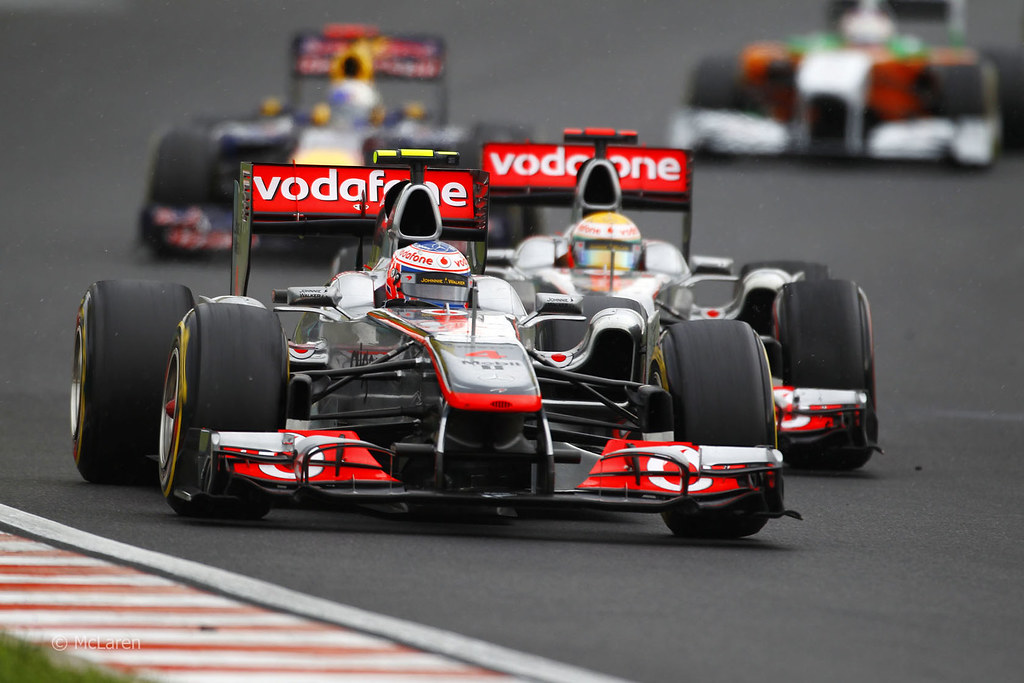
These stresses and strains manifested themselves mostly in the form of erratic driving and Hamilton suffered an error-filled season. He and Felipe Massa were practically inseparable on track; not in the sense that they were closely matched as much as that they managed to have no fewer than five collisions during the season.

That’s not to discredit Button, who had an excellent season and was clearly ‘best of the rest’ behind a runaway Sebastian Vettel. It was arguably his best year in the sport, even including his title win in 2009, and featured the truly epic, four-hour Canadian Grand Prix where Button came from last place to steal the victory from Vettel on the final lap.

It was a clear dip in form for Hamilton, though, compared to 2010 and 2012 when he was held back more by McLaren’s lack of reliability and operational issues.

Hamilton has clearly matured greatly in the decade since and is now generally able to keep any personal troubles away from the track. Bottas will need to do more than rely on some off days.

2016

Lewis Hamilton and Nico Rosberg collide at the 2016 Spanish Grand Prix.
Image credit: Zak Mauger/LAT/Rex/Shutterstock

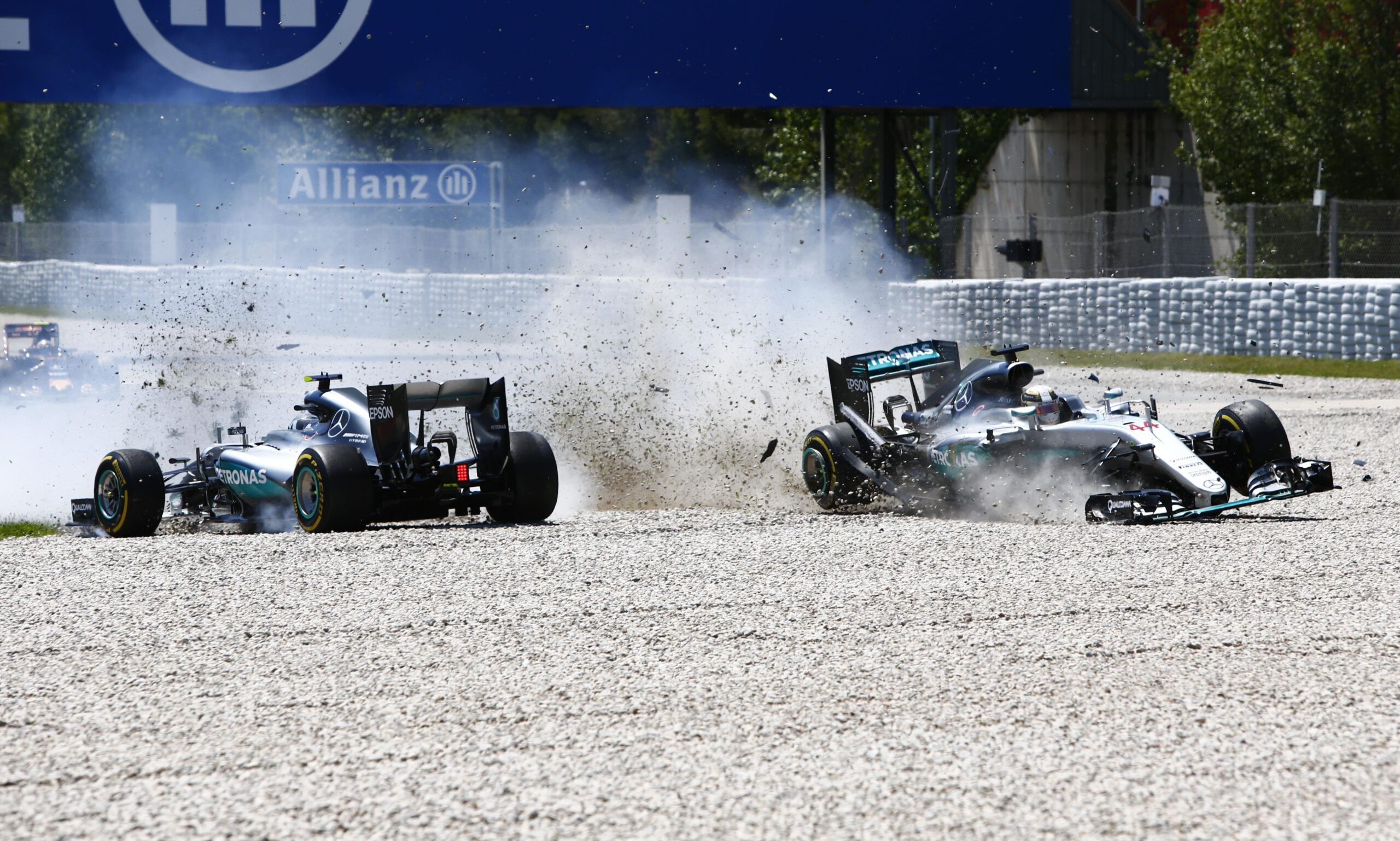
Hamilton versus Rosberg was the ultimate friends-turned-foes story of the early hybrid era. Rosberg spent years trying to gain a psychological advantage over his rival but, having fallen short in 2014 and 2015, realised he needed to focus more on himself.

The start of the season went very much Rosberg’s way, with a string of issues blighting Hamilton – he was hit by Bottas at the start in Bahrain, before consecutive power unit failures left him far down the grid at the next two grands prix. He came back strongly, however, and – despite starting from last in Belgium after serving a penalty for having used too many power units – was leading at the summer break.

At a time when driver weight was still a critical factor, Rosberg decided to stop cycling in an attempt to lose weight from his legs during the break and succeeded in losing one kilogram. That translates to around four hundredths of a second per lap and Rosberg took pole from Hamilton in Japan by just two hundredths. It is those kind of marginal gains that can make all the difference in a season of fine margins.

Ultimately, another engine failure from the lead of the Malaysian Grand Prix would prove to be too much for the Briton to make up in the final races of the year – despite winning all of them – and, whilst Hamilton’s shocking reliability was undeniably a crucial factor in 2016, Rosberg had to be there to take every opportunity presented to him and he unfailingly was.

2021?

Lewis Hamilton and Valtteri Bottas ready for 2021.
Image credit: Mercedes

So, what have we learnt?

That Bottas will likely need to extract every ounce of his ability, go to extreme lengths to enhance his performance wherever possible, make almost no mistakes, and could probably do with a decent slice of luck. But hey, stranger things have happened.

He has started the last two seasons strongly with a controlled win at the opening grand prix, before falling back as Hamilton builds up momentum and he – understandably – struggles to match the most successful driver of all time.

He will have to find a way to keep up the challenge in 2021, however, as it looks like it could well be his final season with Mercedes. George Russell proved he could, at the very least, match the Finn without any preparation at last year’s Sakhir Grand Prix and, once again, Bottas has only been given a one-year contract.

He seems to be in a great place in his life right now; whilst it was unknown to most, he was going through a divorce in 2019, but is now in a new relationship and seems content and motivated.

Will we see Bottas 3.0 or 4.0 or whatever software update he’s up to now this year? Could we get yet another Finnish world champion? And maybe one that would even break into a smile?!

He’ll need his coffee and his porridge, that’s for sure.

Taking your chance at Ferrari

How do you fill the shoes of a four-time world champion?

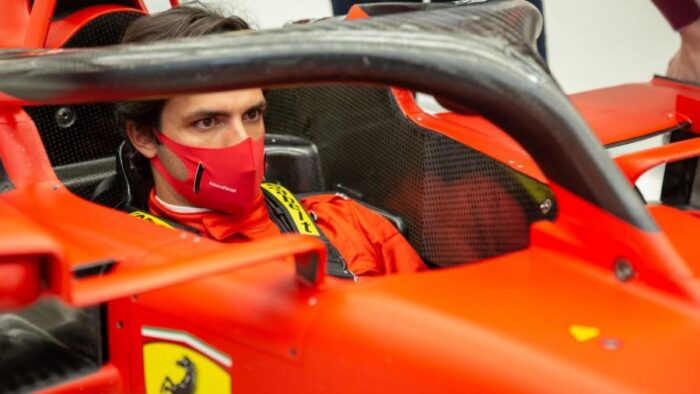
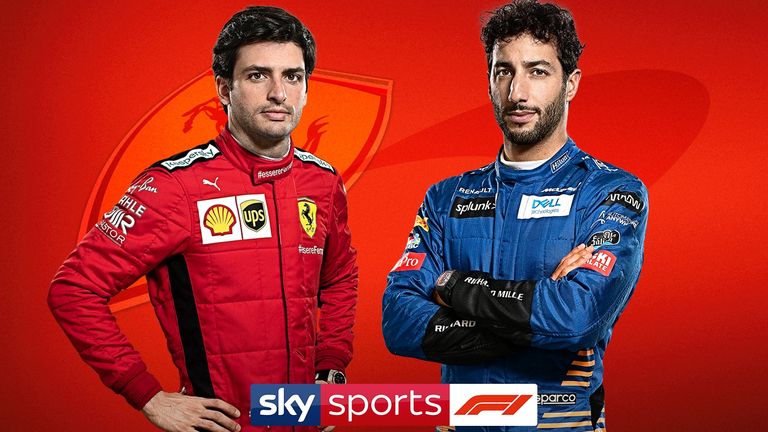
You would imagine that this thought has – fleetingly, at least – crossed the mind of Carlos Sainz ahead of his move to Ferrari this year. He will replace Sebastian Vettel who, whilst ultimately unsuccessful in his quest to bring a title back to Maranello, spearheaded the Italian marque’s endeavours from 2015 to 2020.

Many suspect the Spaniard will fulfil a role as the de facto number two to the Scuderia’s rising superstar, Charles Leclerc, but let’s not write him off so soon. It is worth remembering that Sainz largely matched Max Verstappen during their time as teammates at Toro Rosso and, after a somewhat uninspiring spell at Renault, has reminded the paddock of his considerable potential with two excellent seasons in the papaya orange of McLaren.

However, numerous Ferrari drivers have shown great potential, only for the expectation of the Tifosi – if not an entire nation – to weigh too heavily upon their shoulders.

So, can Sainz shine where many before him have only glimmered? He joins Ferrari after a few seasons at midfield teams who haven’t provided a serious chance at victory. How have those in a similar situation fared over the last few decades? Let’s investigate.

Jean Alesi

Tyrrell > Ferrari, 1991 | Races Before Move: 24 | Races for Ferrari: 81 | Wins: 1

Jean Alesi made quite an impact during his two seasons with Tyrrell, claiming two podiums in an underpowered car and famously battling with Ayrton Senna for the lead of the 1990 season-opener in Phoenix. His performances were impressive enough for Ferrari to take a chance on the young Frenchman.

Despite coping well with immediately having to compete with Alain Prost, Alesi would prove to be the perennial underachiever of F1 during the 90s – undeniably fast, but also an ill-fated combination of foolhardy and unlucky.

A Sicilian-born, passionate driver of the evocative number 27 Ferrari, Alesi was inevitably popular with the Tifosi but would ultimately manage just one win in 1995, before swapping seats with Michael Schumacher and moving to Benetton.

Eddie Irvine

Jordan > Ferrari, 1996 | Races Before Move: 32 | Races for Ferrari: 65 | Wins: 4

Eddie Irvine made an instant impression in F1 by scoring a point on his debut and then promptly being punched by Senna for having unlapped himself. Controversy continued to follow him, with two separate bans the following year and a subsequent threat of his Super Licence being revoked. He certainly showed flashes of speed in between the altercations, though, and Ferrari were suitably impressed to buy out his new contract with Jordan.

Irvine was initially unconvincing and, after a series of eight consecutive retirements, the Italian press was calling for him to be sacked. He steadily improved, however, and played a strong supporting role to Schumacher, before assuming the role of team leader in 1999 when the German broke his leg in a crash halfway through the season.

He would eventually miss out on the championship by two points but played a large part in Ferrari winning their first constructors’ title in 16 years. It would prove to be his final contribution before a largely unsuccessful move to Jaguar.

Rubens Barrichello

Stewart > Ferrari, 2000 | Races Before Move: 114 | Races for Ferrari: 104 | Wins: 9

Seen as a potential successor to Senna, Rubens Barrichello was already experienced in carrying the hopes of a nation by the time he joined Ferrari in 2000. He was, however, entering what was very much Schumacher’s team and that is something he would not be able to change over the subsequent six years.

The popular Brazilian would come to epitomise the ‘number two’ driver role – consistent, compliant and reliable but never quite fast enough to challenge the superstar on the other side of the garage. Team orders were, in fact, banned at the end of 2002 after the controversy of Ferrari forcing Barrichello to hand over a victory to his teammate in Austria.

With more freedom and a less commanding teammate, ‘Rubinho’ would likely have won far more than nine grands prix and could well have challenged for a title.

Felipe Massa

Sauber > Ferrari, 2006 | Races Before Move: 53 | Races for Ferrari: 139 | Wins: 11

Another popular Brazilian and one that would go on to become a Ferrari ‘number two’ also. Felipe Massa started out equal parts fast and error-prone with a hit-and-miss season at Sauber in 2002 but, after spending the following year as test driver for Ferrari, he rejoined his former team a more mature driver. He convincingly outpaced his former world champion teammate, Jacques Villeneuve, throughout the 2005 season and was signed to partner Schumacher at Ferrari for 2006.

Whilst still somewhat inconsistent, Massa was always fast and came about as close as you can to winning a world championship in 2008; only Lewis Hamilton’s infamous last corner “Is that Glock?” moment denying him the title.

A freak accident in 2009 left Massa briefly in a coma and, whilst he would recover in time for the following season, he was arguably never the same driver again. He spent his final four years with Ferrari in a support role to teammate Fernando Alonso and would never win another race.

Carlos Sainz

McLaren > Ferrari, 2021 | Races Before Move: 119 | Races For Ferrari: ? | Wins: ?

So, what does the future hold for Sainz in the red of the Scuderia?

Obviously, after such a calamitous season for Ferrari in 2020, the goalposts for a new recruit have been moved. The team will be rebuilding and that will likely help Sainz find his feet with expectations somewhat tempered for 2021 and a year to acclimatise without the instant pressure most of his predecessors have had to deal with.

Ferrari have historically held a policy of employing tried-and-tested drivers, but taking a chance on youth and potential last year, in Leclerc, proved very successful and 2021 will see the youngest Ferrari line-up in living memory. As we can see from these examples, joining Ferrari and dethroning a multiple world champion is no easy feat, but the young Monégasque managed it over the last two years. Now Sainz will have to attempt to dethrone him…

The 2020 Mostly F1 Awards

2020 is a year many will be looking to put behind them, but let’s quickly focus on it once more and dish out a few awards – some orthodox, some less so – for a season that nobody will ever forget.

Driver of the Year

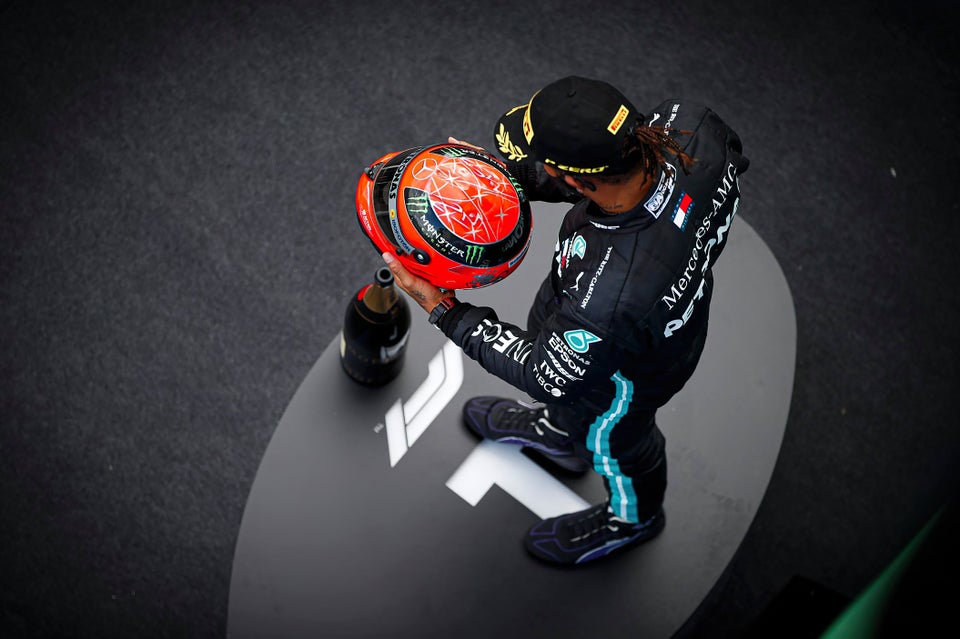
Lewis Hamilton admiring Michael Schumacher's helmet, which he was presented for matching the German's record.
Image credit: LAT Images

There were a few contenders for this award. Max Verstappen was excellent all year and took the battle to the superior Mercedes cars more often than he had any right to. Pierre Gasly topped off a fantastic redemption arc with an unlikely victory in Monza and there were also stellar performances from Sergio Pérez and Daniel Ricciardo.

Ultimately, though, it has to go to that man again – Lewis Hamilton. At the end of a season where he broke record after record and matched Michael Schumacher‘s high-tide mark of seven world titles, it would be wrong to give it to anybody else. Car number 44 won 11 of its 16 races and, whether or not that car is the class of the field, that takes some doing. Plus, who am I to argue with Her Majesty?

Honorable Mentions: Max Verstappen, Pierre Gasly, Sergio Pérez.

Team of the Year

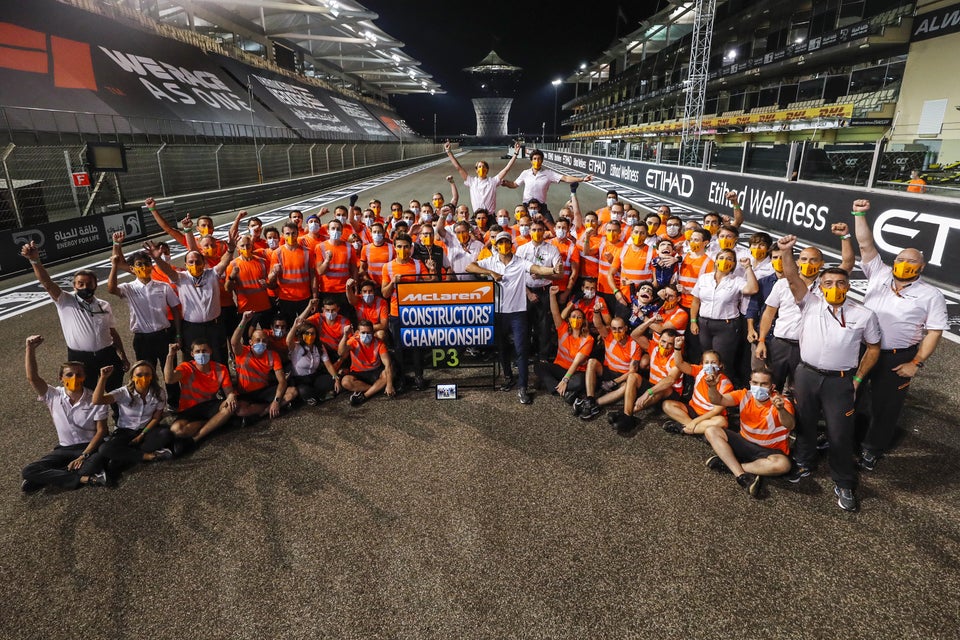
McLaren celebrate third place in the Constructors' Championship.
Image credit: McLaren F1

Now for a more controversial choice. Yes – as previously mentioned – Mercedes were once again the class of the field. By a long shot. But there were also mistakes, such as the radio calls to Hamilton in both Monza and Sochi, and controversies, such as the ‘Tracing Point’ saga and DAS.

McLaren clinching third in the Constructors’ Championship is a huge achievement and took a real team effort. Both drivers were excellent and very consistent throughout the season, the pit crews were error-free and management topped things off with a crucial investment and the signing of Ricciardo for 2021.

Third place is huge for the Woking team and shows that they continue to head in the right direction. After all, what would the odds of McLaren finishing ahead of Ferrari have been just a couple of years ago?

Honourable Mentions: Mercedes

Race of the Year

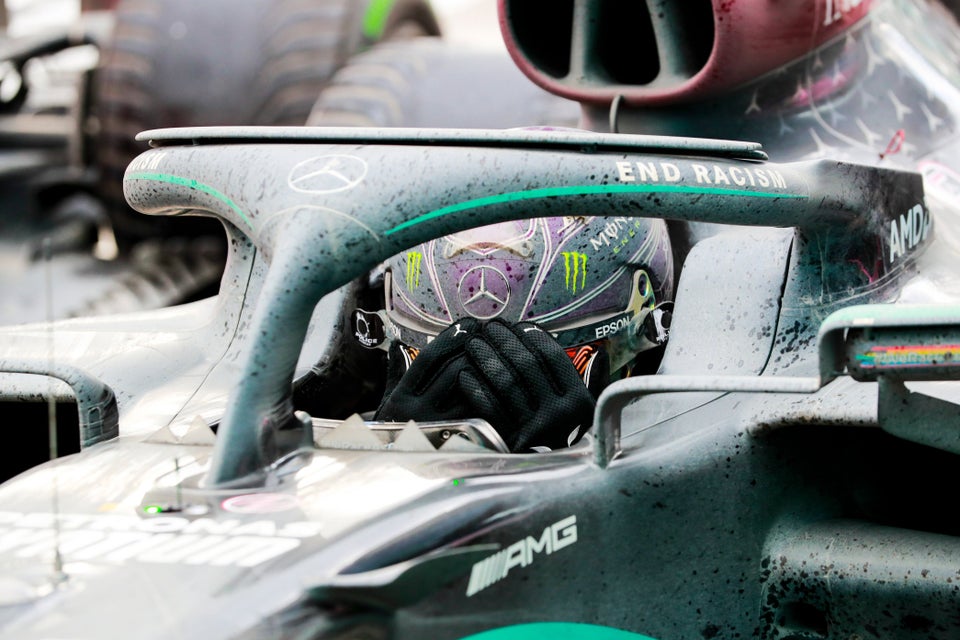
Lewis Hamilton is overcome with emotion as he seals his seventh title.
Image credit: LAT Images

The German Grand Prix was a fairly clear winner for the 2019 ‘Race of the Year’ but this time round it isn’t quite so clear cut. Eventful races in Italy and Sakhir produced shock winners and the cold weather in Portugal produced plenty of intrigue.

The Turkish Grand Prix takes the gong, though. Starting off with a shock maiden pole position for Lance Stroll, it was action-packed as drivers struggled with the slippery, wet tarmac after a recent resurfacing and a downpour on Sunday morning. And it proved to be just as momentous as it was chaotic, with Hamilton producing a victory thoroughly worthy of wrapping up a historic seventh world title.

Honourable Mentions: Italian Grand Prix, Sakhir Grand Prix, Portuguese Grand Prix

Drive of the Year

George Russell in the Mercedes at the 2020 Sakhir Grand Prix.
Image credit: LAT Images

When Hamilton contracted Covid-19, George Russell was unexpectedly thrust into the limelight with a chance in the dominant Mercedes at the Sakhir Grand Prix. The young Briton already had a strong reputation, having never been outqualified by a teammate after nearly two seasons in the sport.

But surely this was too big of an ask? Russell only had the three practice sessions to grow accustomed to his new machinery and barely fit into the car. On Saturday, though, he would finish qualifying just two hundredths behind Valtteri Bottas and then topped that by beating his vastly more experienced teammate off the line to lead on Sunday.

Sadly, the fairytale was not to be, thanks to some horrendous luck and a Mercedes blunder – which the next award shall expand on – but Russell nonetheless grabbed the sport’s attention and is now surely one season at most away from a seat much nearer the front of the field.

Honourable Mentions: Sergio Pérez in Sakhir, Lewis Hamilton in Turkey, Pierre Gasly at Monza

Blunder of the Year

So, yes, that blunder…

Mercedes are totally infallible and unflappable…99% of the time. But that 1% tends to be pretty disastrous. Hamilton’s pit stop at Germany in 2019 was comedic and embarrassing – especially due to the team wearing effective fancy dress in honour of 125 years in motorsport – but perhaps more understandable as Hamilton had crashed and immediately driven into the pits on a wet but drying track.

The disastrous pit stop in Sakhir was perhaps more costly and equally embarrassing. Mercedes called both drivers in for a ‘safety stop’ and had to double-stack, but a radio issue led to a miscommunication and confusion as Russell drove off with some of Bottas’s tyres and the Finn then sat there for 30 seconds as that realisation dawned upon the mechanics.

Russell had to pit again for the correct tyres the following lap and, to add salt to the wound, would pick up a puncture as he raced back through the field.

Honourable Mentions: Mercedes at Monza, Racing Point at Imola

Crash of the Year

The multi-car pile-up at Mugello would have taken ‘Crash of the Year’ comfortably in recent years. But 2020 had another surprise in store for the F1 world, in the shape of the most horrifying crash in decades.

When Romain Grosjean speared into the barriers at the start of the Bahrain Grand Prix and produced an instantaneous fireball, many at home and in the garages feared the worst. But, after two agonising minutes of no replays and no information, it was confirmed Grosjean had miraculously escaped and was safely sitting in the medical car.

The impact measured 53G but the Haas driver somehow remained conscious. He then found a way to escape the mangled wreckage – minus one shoe – and leapt over the barrier, aided by the heroic medical team, to safety. It is not the way Grosjean would have imagined he would enter retirement, but he is now surely just pleased to have reached it at all.

Honourable Mentions: Multi-car pile-up at Mugello, Lance Stroll in Bahrain

Overtake of the Year

Any overtake through Eau Rouge – yes, I know…it’s Raidillon actually – looks great, but the manner in which Pierre Gasly kept his foot in as Pérez squeezed him into the wall on the run up makes this one extra special.

The bravery was particularly poignant as Gasly remembered his close friend, Anthoine Hubert, who had sadly died in a crash at the same corner a year earlier.

Honourable Mentions: George Russell in Sakhir, Kevin Magnussen in Spain

Opening Lap of the Year

https://www.youtube.com/watch?v=2ChdaNDFI30

Whilst it was the other Alfa Romeo driver, Antonio Giovinazzi, who relentlessly made up positions at the start in 2020 – obviously helped by qualifying towards the back each time – Kimi Räikkönen surely had the best opening lap of the year.

As the pack slithered round in the freezing conditions in Portugal, ‘The Iceman’ lived up to his name, climbing from 16th to 6th in one tour of the 4.692 km circuit. There’s life in the old dog yet.

Honourable Mentions: Sebastian Vettel in Turkey, Antonio Giovinazzi at Monza

Best Day of Silly Season

Carlos Sainz and Daniel Ricciardo in their new team overalls.

‘Silly season’ got underway before a wheel had been turned in anger in 2020. With Covid-19 halting matters in Melbourne and then ultimately causing a four-month delay, there was at least some action to discuss in the driver market.

Especially so when, in the space of 24 hours, Sebastian Vettel was confirmed to be leaving Ferrari at the end of the season, Carlos Sainz was named as his replacement and then Ricciardo filled the vacant seat at McLaren.

Honourable Mentions: Vettel replacing Pérez, Pérez replacing Albon

Best Vocal Performance

Vettel’s surprise farewell song to his Ferrari team was very touching, but the performance maybe left a little to be desired. Lando Norris, however, belted out a radio check in Mugello with the confidence of a drunk man in a karaoke bar.

Honourable Mentions: Sebastian Vettel in Abu Dhabi

2020 drivers’ report cards

Lewis Hamilton

1st | Pts: 347 | Wins: 11 | Podiums: 14 | Poles: 10 | FL: 6 | Ret: 0

Lewis Hamilton somehow matched many of his statistics from 2019 despite a truncated season of just 17 races, one of which he missed after contracting Coronavirus (and was then clearly still suffering the effects upon his return for the finale). Before his absence at the Sakhir Grand Prix, the World Champion was looking likely to break Jim Clark‘s record for the highest percentage of laps led in a season.

Either way, winning 11 of his 16 races shows the level of dominance from Hamilton this year, which he puts down to the Black Lives Matter movement giving him extra drive. He may be turning 36 in January – and still not technically confirmed at Mercedes for 2021 – but he shows no signs of slowing down just yet. Which is bad news for his competitors.

Highlight: Matching Michael Schumacher‘s record of seven world championship titles.

Lowlight: His week with Covid-19. It would appear that it hit him hard.

GRADE: A+

Valtteri Bottas

2nd | Pts: 223 | Wins: 2 | Podiums: 11 | Poles: 5 | FL: 2 | Ret: 1

2020 proved to be another false dawn for Valtteri Bottas. After winning the belated season opener, the Finn gradually fell away from Hamilton in the standings and, by the time Hamilton had wrapped up the title in Turkey, was barely hanging onto second place in the championship.

It must be said that Bottas suffered more than his fair share of bad luck again; a tyre blow-out at Silverstone and engine failure at the Nürburgring were both costly. Ultimately, though, he just wasn’t good enough. Taking on Lewis Hamilton for the title in the same machinery is one of the biggest challenges in the sport and Bottas is left with another winter of reflection, trying to figure out a way to beat one of the greatest of all time.

Highlight: A perfect start in Austria.

Lowlight: An embarrassing day of spins in the wet as Hamilton clinched the title in Turkey.

Grade: B-

Max Verstappen

3rd | PTS: 214 | WINS: 2 | PODIUMS: 11 | POLES: 1 | FL: 3 | RET: 5

Max Verstappen has competed with Hamilton for ‘driver of the year’ rights throughout the season and there is precious little to separate them. He has frequently outperformed his Red Bull machinery and taken the fight to the Mercedes cars on his own, whilst his teammate was fighting in the midfield.

The flying Dutchman appears to have reached a new level of maturity whilst holding onto his raw speed and, given the right machinery, could surely mount a serious title challenge. Verstappen has not had much of a threat from the other side of the garage since Daniel Ricciardo left in 2018. Perhaps the experience of Sergio Pérez can help develop the car and push him on further next season.

Highlight: A dominant win in Abu Dhabi was a nice way to way to enter the winter break.

Lowlight: Throwing away a chance at victory in Turkey after a moment of impatience.

Grade: A

Alexander Albon

7th | PTS: 105 | WINS: 0 (BEST: 3rd) | PODIUMS: 2 | POLES: 0 | FL: 0 | RET: 2

It has been a tough year for Alexander Albon. After showing promise in his short spell at Red Bull last year, team bosses had hoped the affable Anglo-Thai driver could push on with time to fully prepare and a complete season. But, sadly, they have been disappointed.

Albon may well have won the first race of the year, if not for the collision with Hamilton, but things unravelled thereafter. He looked increasingly jaded as the season wore on and he remained the wrong side of half a second per lap slower than Verstappen. At least he was allowed to see out the season and given every chance to impress, which has not always been a courtesy granted to those at Red Bull.

In the end, his demotion to reserve driver looks the correct choice; hopefully he can take some time to clear his head and return stronger.

Highlight: A long-overdue maiden podium at Mugello after overtaking Ricciardo.

Lowlight: Being widely mocked for a radio message where he complained about being ‘raced so hard’ as he struggled to pass the AlphaTauris.

Grade: D

Carlos Sainz

6TH | PTS: 105 | WINS: 0 (BEST: 2nd) | PODIUMS: 1 | POLES: 0 | FL: 1 | RET: 2

After some poor luck earlier in the season, Carlos Sainz recovered to claim sixth in the drivers’ standings for the second year running, which is a good representation of his consistency during his time at McLaren. The Spaniard also very nearly claimed a maiden victory at the madcap Italian Grand Prix and overtook the Mercedes to lead early on in Portugal.

His performances in orange have earned him a move to the famous red of Ferrari. Oddly, it could currently be viewed as a move backwards considering the Scuderia’s struggles in 2020. Wherever they prove to be in the pecking order over the next two years, Charles Leclerc will be a very challenging teammate and should prove definitively whether Sainz is a driver in the top echelon or a solid support act for a superstar.

Highlight: Mixed emotions when so close to victory, but second in Monza still tastes pretty sweet ahead of a move to Ferrari.

Lowlight: A cruel late puncture at Silverstone costing him fourth place.

Grade: B+

Lando Norris

9TH | PTS: 97 | WINS: 0 (BEST: 3rd) | PODIUMS: 1 | POLES: 0 | FL: 2 | RET: 1

Lando Norris started the season with two spectacular races in Austria. A first ever podium snatched on the line at the first was followed up with another dramatic finish a week later and the new nickname of ‘Last Lap Lando’.

Things generally didn’t fall the young Briton’s way in the second half of the season, however, and he wasn’t in the right place to capitalise during the crazy races in Italy and Bahrain. It was another consistent season, though, and Norris just about edged his more-experienced teammate in the qualifying and race head-to-heads over their two years together. It may be the end of the ‘Carlando’ bromance but Ricciardo will likely prove just as fun and at least as fast.

Highlight: Getting to demonstrate his signature champagne-spraying technique at the first race.

Lowlight: An engine failure when competing for a podium at the Nürburgring left him sat in a deckchair.

Grade: B

Sergio Pérez

4TH | PTS: 125 | WINS: 1 | PODIUMS: 2 | POLES: 0 | FL: 0 | RET: 2

It took the prospect of Sergio Pérez leaving the sport for some people to truly appreciate him. Once the news broke that he would be replaced by Sebastian Vettel next year, pundits and drivers alike came out and said it would be a travesty if the Mexican didn’t find a seat for 2021. Pérez justified their remarks with a series of stellar performances, culminating in an emotional maiden win at the Sakhir Grand Prix and fourth in the standings despite missing two races with Covid-19.

The poisoned chalice of the second seat at Red Bull is his reward. It’s not an easy job, but Pérez is a wise, old head these days and knows his strengths and weaknesses. He’s unlikely to best Verstappen on a Saturday too often but his ability to preserve his tyres may well bring him back into the running on race day.

Highlight: A very well-deserved win in Sakhir, even after finishing the opening lap in last place.

Lowlight: An engine failure a week earlier in Bahrain costing him a podium.

Grade: A-

Lance Stroll

11TH | PTS: 75 | WINS: 0 (BEST: 3rd) | PODIUMS: 2 | POLES: 1 | FL: 0 | RET: 5

A strong start to the year – including a podium at Monza – saw Lance Stroll temporarily holding fourth in the standings. But then came a horrible run of bad luck. A tyre failure when chasing another podium in Mugello was followed by being spun out on the first lap in Russia and then a very messy episode at the Nürburgring. Stroll withdrew due to a ‘stomach bug’ but was then confirmed as having Covid-19 a week later.

He took a surprise pole position in Turkey and led for much of the race, but an ill-advised pit stop saw him fall back to ninth. Being flipped upside-down in Bahrain, followed by another podium a week later and then a frustrating race in Abu Dhabi completed a rollercoaster season for the Canadian. He has certainly shown more flashes of speed this season, though, and can compare himself against a four-time world champion next year in the rebranded Aston Martin.

Highlight: That surprise maiden pole – the first by a Canadian not named Villeneuve.

Lowlight: A costly, heavy crash in Mugello.

Grade: B-

Daniel Ricciardo

5TH | PTS: 119 | WINS: 0 (BEST: 3rd) | PODIUMS: 2 | POLES: 0 | FL: 2 | RET: 1

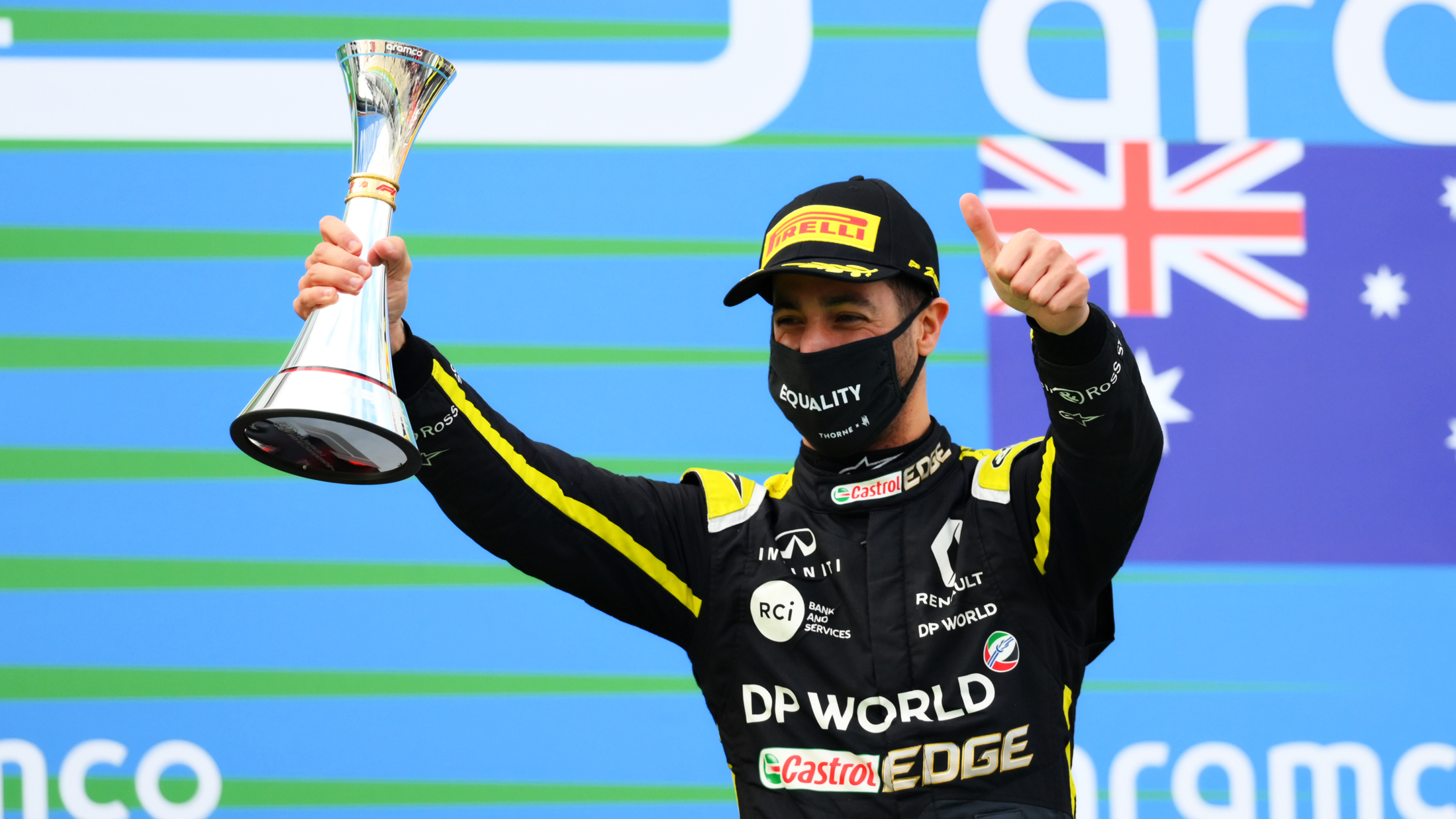
It took the best part of two years, but Daniel Ricciardo did eventually succeed in his goal of a podium at Renault – their first in over a decade – and thus earned a tattoo for team boss Cyril Abiteboul. Ricciardo was already confirmed to leave the team, though, as he moves to McLaren for 2021.

Whilst the Renault project that persuaded the Honey Badger to leave Red Bull appears to be making more progress than it was last year, McLaren is still arguably a step up in team – third in the standings this year and with Mercedes engines for 2021. Ricciardo also crushed another well-respected teammate in Esteban Ocon and now has Norris in his sights for next year.

Highlight: Finally claiming that podium after numerous near misses.

Lowlight: A safety car costing him third place two races earlier in Mugello.

Grade: A-

Esteban Ocon

12TH | PTs: 62 | WINS: 0 (BEST: 2nd) | PODIUMS: 1 | POLES: 0 | FL: 0 | RET: 4

It has been a challenging year for Esteban Ocon. His reputation as a potential star of the future has taken a hit after something of a mauling by his older teammate. 15-2 in qualifying and 13-4 on race day doesn’t make for pretty reading, but there were some mitigating factors.

He certainly had the worst of the reliability issues and was returning the sport after a year as a reserve driver to a brand new car. Nonetheless, he will likely need to do better next season to retain his seat and the replacement for Ricciardo is none other than double world champion Fernando Alonso. Who, whilst turning 40 next year, is unlikely to be a pushover…

Highlight: Another driver with a maiden podium – this time in Sakhir.

Lowlight: Yet another mechanical failure when running strongly at the Eifel Grand Prix.

Grade: C

Sebastian Vettel

13th | Pts: 33 | Wins: 0 | Podiums: 1 | Poles: 0 | FL: 0 | Ret: 2

Back in January, the odds of Sebastian Vettel finishing the season in 13th would have been pretty huge. And yet, what once would have been headline-worthy, is now mundane.

It has been a rough year for the former champion. After being informed back in May that his services would no longer be required come the end of the season, Vettel has often looked disinterested and off the pace. Perhaps understandably so, considering the appalling car that Ferrari produced for 2020 and his lack of an incentive to work towards improving it for next year.

There was, at least, a surprise podium in Turkey and it was fitting that he shared that podium with Hamilton as he matched the record of Vettel’s idol. A new project in Aston Martin green suits Vettel well and will surely see him producing the performances which we know he can deliver.

Highlight: Using his experience to claim one final podium for Ferrari amid the madness of Istanbul.

Lowlight: Spending most of the season half a second off the pace of his teammate.

Grade: C-

Charles Leclerc

8TH | PTS: 98 | WINS: 0 | PODIUMS: 2 | POLES: 0 | FL: 0 | RET: 4

Ferrari may have had a shocking year, but it has at least allowed the raw talent of Charles Leclerc to shine. He has consistently overdelivered and earned himself two unlikely podiums early in the year, whilst building on his momentum from last year and, frankly, crushing Vettel. The German’s farewell message even described Leclerc as “the most talented driver he has come across in 15 years of F1”.

There have been mistakes, however. Leclerc clumsily took both Ferraris out at the first corner in Styria and caused another early incident in Sakhir. He also threw away podium at the final few corners in Turkey. It is easy to forget, though, that this is only his third season in the sport and, if he irons out those errors, he could well deliver on Vettel’s big words over the next few years.

Highlight: A stunning drive to third place at Silverstone.

Lowlight: Judging by his radio message, that error in Turkey cut him deep.

Grade: B+

Daniil Kvyat

14TH | PTS: 32 | WINS: 0 (BEST: 4th) | PODIUMS: 0 | POLES: 0 | FL: 0 | RET: 2

Daniil Kvyat came on strong towards the end of the year, with an impressive fourth place at Imola and some great qualifying performances. But it was a case of too little, too late as he was dropped by AlphaTauri for the latest Red Bull prodigy in the shape of Yuki Tsunoda and is left without a seat for 2021.

The Russian’s Red Bull rollercoaster has finally come to an end but he appears determined to find a route back into the sport. He has certainly shown some talent over the years but has rarely been consistent. Will any team decide to give him a chance in 2022? Time will tell.

Highlight: Nearly snatching a podium at Imola.

Lowlight: The agonising minutes waiting to hear about Romain Grosjean after his (innocent) involvement in the accident.

Grade: C

Pierre Gasly

10th | PTS: 75 | WINS: 1 | PODIUMS: 1 | POLES: 0 | FL: 0 | RET: 3

What a difference a year can make and what a difference it has made for Pierre Gasly. Just over 12 months after being dropped by Red Bull, he took an incredible maiden victory at Monza in an AlphaTauri.

Whilst it obviously required a fair dose of luck, it was a fitting reward for what is one of F1’s great comebacks in recent years. Gasly has been excellent all year and the big question now is where he can go next. There is seemingly no place for him at Red Bull in the future and the rumours are that he has been speaking to Renault (or Alpine as they will be known) about a seat for 2022. He will need to ensure he beats Tsunoda first though.

Highlight: No competition. The biggest shock victory in years.

Lowlight: Being denied a shot at another podium in Imola by a mechanical failure.

Grade: A-

Kimi Räikkönen

16TH | PTS: 4 | WINS: 0 (BEST: 9TH) | PODIUMS: 0 | POLES: 0 | FL: 0 | RET: 1

With Alfa Romeo struggling to get into the points, many expected Kimi Räikkönen to call it a day at the end of the season. And he has certainly seemed unenthused – even by his own standards – this year. But no, he lives to race once more.

He will turn 42 during the 2021 season but generally still delivers on race day, even if he seems to have lost some outright speed during qualifying. As much as it’s hard to believe, he must truly love racing if he’s happy to continue driving round in the lower midfield for another year.

Highlight: Bwoah, who knows? It was all okay.

Lowlight: See above.

Grade: C+

Antonio Giovinazzi

17TH | PTS: 4 | WINS: 0 (BEST: 9TH) | PODIUMS: 0 | POLES: 0 | FL: 0 | RET: 3

Ninth at the opening grand prix of the year was as good as it got for Antonio Giovinazzi in 2020. There were two further points-scoring races but not much else of note.

The Italian has made some progress and edged out his teammate in qualifying, but most of the paddock expected him to make way for one of the many Ferrari academy drivers in F2 next year. As it was, Mick Schumacher went to Haas, Callum Ilott became Ferrari’s test driver and Robert Shwartzman has been given another year in F2. So, Giovinazzi gets another season. He will need to do something pretty special with it to prove his worth.

Highlight: Probably keeping his seat for next year.

Lowlight: Crashing at Spa for the second consecutive year (and receiving very little sympathy from his teammate).

Grade: C

Romain Grosjean

19TH | PTS: 2 | WINS: 0 (BEST: 9TH) | PODIUMS: 0 | POLES: 0 | FL: 0 | RET: 3

It had been a fairly understated season from Romain Grosjean up until Bahrain, with very few incidents – which made a pleasant change from last year. But then came a crash that was the equivalent of a season’s worth of incidents, and then some.

The images of Grosjean miraculously escaping the fireball that had engulfed the remnants of his Haas will leave an indelible mark on the sport. It is a shame that he did not get to sign off in the manner that he would have liked with a heroic return in Abu Dhabi, but things will have been thoroughly put into perspective by that crash. Grosjean gets to go home to his young family and that is the biggest prize.

Highlight: Surviving a horrific, 53-G crash.

Lowlight: The point at which he “accepted death” whilst stuck in the cockpit.

Grade: An Honorary A

Kevin Magnussen

20TH | PTS: 1 | WINS: 0 (BEST: 10TH) | PODIUMS: 0 | POLES: 0 | FL: 0 | RET: 7

2020 proved to be another frustrating year for Kevin Magnussen and he honestly seems happy enough to be losing his seat. Haas struggled again – particularly now that they were hampered with an underpowered Ferrari engine – and the 28-year-old managed just one single point all year. He certainly wasn’t aided by reliability, ending up with comfortably the most retirements on the grid, largely thanks to mechanical issues.

It is bizarre to think that Magnussen’s sole podium in his entire F1 career was on his debut. He has since said it was actually a poisoned chalice in that it set his expectations too high. A move to race for Chip Ganassi in the WTSCC will hopefully allow him to experience that champagne feeling for the first time in seven years.

Highlight: Briefly running third in Hungary after a strategy gamble paid off.

Lowlight: Most of the rest of the year.

Grade: C+

George Russell

18TH | PTS: 2 | WINS: 0 (BEST: 9TH) | PODIUMS: 0 | POLES: 0 | FL: 1 | RET: 4

Having spent most of the year once again excelling in a slow Williams, George Russell was suddenly propelled into the limelight as he replaced the Covid-stricken Hamilton at Mercedes. And boy, did he seize his opportunity.

Russell had earned the ‘Mr. Saturday’ nickname after never having been outqualified by a teammate and dragging the Williams into Q2 on numerous occasions. And he very nearly kept his perfect record despite his lack of experience – and barely fitting into the car – qualifying just two hundredths behind Bottas. He then topped that on Sunday by passing Bottas off the line and controlling the race. Only for a botched Mercedes pit stop and a puncture to cruelly deny him an extraordinary result.

Nonetheless, he enhanced his already burgeoning reputation and is now metaphorically – if not quite literally – hammering on Toto Wolff’s door for a seat at Mercedes in 2022.

Highlight: Passing Bottas to lead into the first corner for the first time.

Lowlight: Either the poor luck in Sakhir or spinning under the safety car when on for his first points with Williams.

Grade: A-

Nicholas Latifi

21st | PTS: 0 | WINS: 0 (BEST: 11TH) | PODIUMS: 0 | POLES: 0 | FL: 0 | RET: 3

Nicholas Latifi came into the sport with a reputation as nothing more than a pay driver but, whilst not exactly setting the world alight, he has been closer to Russell than Robert Kubica was last year. And few have criticised the decision to retain him for next season.

He is another, though, who will likely have to find another level to prove remain in the sport for 2022. Especially with Williams under new management and less desperate for funds.

Highlight: Very nearly an unlikely point in 11th on his debut.

Lowlight: Russell’s appearance in a Mercedes meaning Latifi dropped below him in the standings.

Grade: C-

Lewis Hamilton and his place in history [redux]

In honour of Lewis Hamilton clinching a record-equalling seventh championship in some style last weekend, I have revisited and updated a post from around a year ago.

Once again, let’s discuss his standing in the annals of Formula 1.

Lewis Hamilton streaks past in his Mercedes.
Credit image: Mercedes

The Greatest of His Generation?

Hamilton burst onto the scene in 2007 and made about as big a mark on the sport as is possible in a rookie season. He had built up some hype through his stellar junior career, but he would be going up against Fernando Alonso – the reigning double world champion and the man who had just dethroned the great Michael Schumacher – as his McLaren teammate. Expectations were that he would be a solid number two driver whilst he gained some experience and learnt the intricacies of Formula 1.

But that’s not how Lewis Hamilton operates.

He swept around the outside of his teammate at the very first corner of his F1 career and that set the tone for what would be a most fractious and dramatic year at McLaren.

The then 22-year-old should probably have won the championship but for a bizarre moment in China – McLaren leaving him out on tyres that were down to the canvas led to the driver sliding agonisingly into the gravel trap upon entering the pit lane – and some technical gremlins in the last race. But, whilst one point shy of the first rookie title in the sport’s history, Hamilton still finished ahead of his illustrious teammate, who promptly left for Renault.

Hamilton would right some wrongs and claim his maiden title the following year with the infamous ‘Is that Glock?‘ moment but then followed something of a dry spell. Brawn turned the sport on its head in 2009 and the beginning of the 2010s were a tale of Red Bull and Sebastian Vettel dominance.

McLaren provided Hamilton with cars that were fast but often fragile. That, combined with frequent operational errors in the team and an annus horribilis for the driver himself in 2011, meant there was never a sustained title challenge.

Around this time, the popular consensus was that Alonso, Hamilton and Vettel were the three biggest talents of their generation. But the order was up for debate.

Then came the hybrid era, however.

Hamilton’s move to the Mercedes team, a year earlier, turned out to be arguably the best career decision in the history of the sport as McLaren – ironically, with Alonso back at the helm – stalled with underpowered Honda engines and Mercedes took up their now perennial position as the class of the field.

Add to that, Hamilton combining his undeniable speed with a new-found maturity and he has become near untouchable in the years since. He has won 72 of the 135 races – a little over 50% – and every world championship bar 2016, when he was denied by a lot of bad luck with mechanical issues and some impressive consistency by then teammate Nico Rosberg.

The 2017 and 2018 seasons were billed as the battle for supremacy between Hamilton and Vettel with Mercedes and Ferrari finally closely matched. In the end, it was the man from Stevenage who consistently landed knockout blows, as Vettel’s challenges faltered and there is now no real debate as to which of the two men is top dog.

Some have pointed to Alonso as the most complete driver, but surely Hamilton has proven his worth in all areas by now. And Alonso’s notoriety when it comes to being hard to work with, along with the path of destruction he has left in his wake throughout his career, must be factored in. There is a point at which career choices are no longer poor by coincidence but that there are reasons for each failure.

Lewis Hamilton is the greatest driver of his generation.

The Greatest of His Nation?

This is where things start to get particularly tricky. It is incredibly difficult to compare drivers across different eras of the sport as Formula 1 today is near unrecognisable when compared to the 60s. The cars, the technology, the safety, the media – it is simply a different beast.

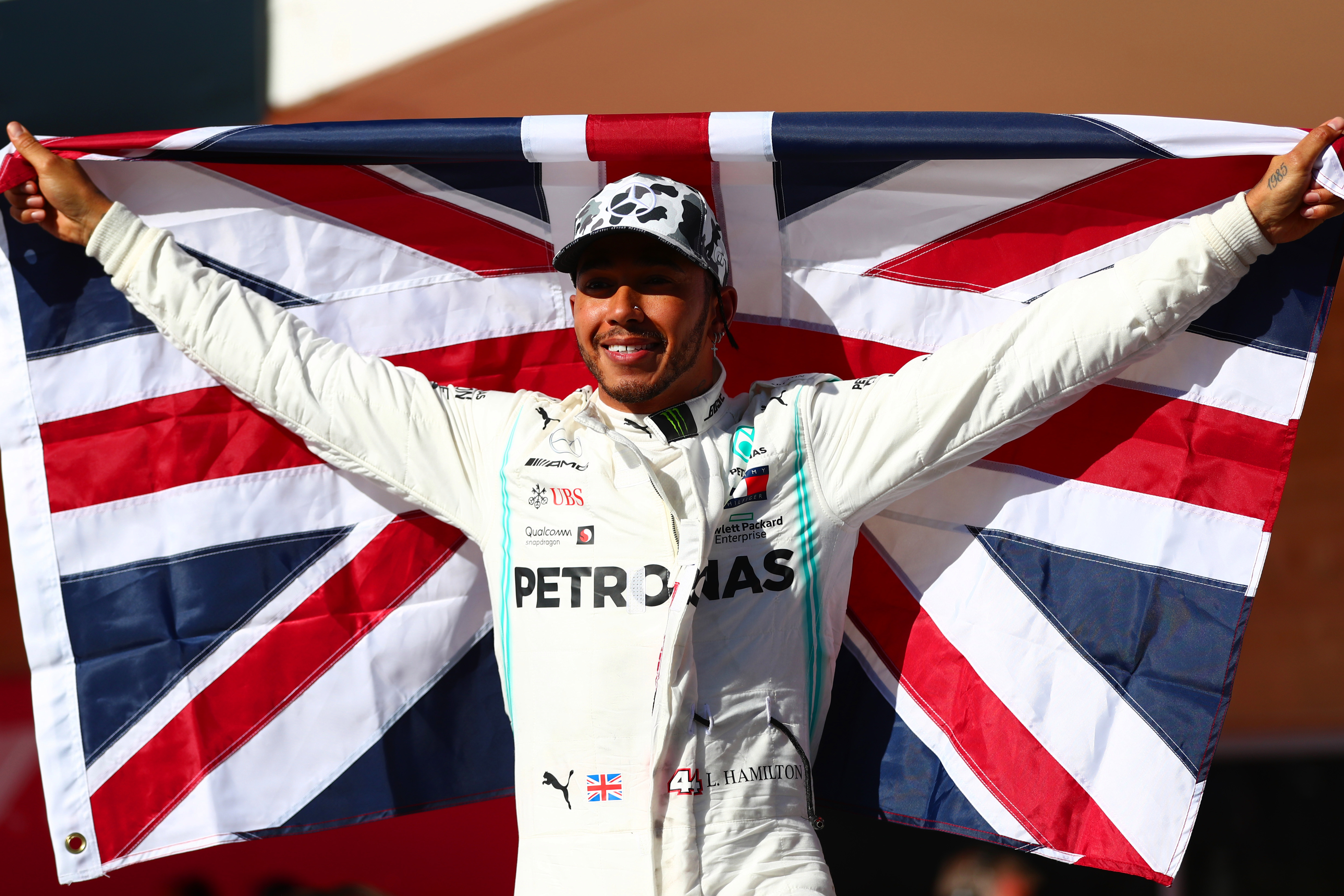
Lewis Hamilton celebrates with a Union Jack.
Image credit: Getty Images

The two other obvious contenders for ‘Best Brit’ would be Jim Clark and Sir Jackie Stewart. But then Stewart is quite adamant that Clark was a superior driver to himself so let’s focus on the two-time world champion.

Clark is still frequently referred to as the best ever by some. Even the great Juan Manuel Fangio himself described Clark as “outstandingly the greatest grand prix driver of all time”. We will never know what the Scot could ultimately have achieved, as his life was cut tragically short at 32 with a crash at the Hockenheimring, but he was undoubtedly the phenom of his era.

Out of the car, Clark was an introverted, simple farm boy from Scotland who was notoriously on edge before a race. Jack Brabham recalls that a doctor taking pulses and blood pressures before the race start thought that Clark was “in such a state that he shouldn’t start” But once behind the wheel, he was transformed. Ferociously fast with the deftest of touch; he had an absolute natural ability.

Whilst Clark’s career was obviously far shorter than Hamilton’s, the two men’s statistics are somewhat comparable once converted to percentages. Win percentage is very close with 34.72% for Clark and 35.61% for Hamilton. Clark has an advantage when it comes to pole position percentage (45.83% to 36.74%) whilst Hamilton has the lead in podium percentage (61.74% to 44.44%).

Ultimately, even those statistics are fairly meaningless as they are intrinsically linked to the subtleties of the sport at that time. For example, Hamilton will claim more podiums through better reliability whilst qualifying held less importance and was given far less attention in Clark’s day. Nonetheless, they make it clear that both men were the class of their respective fields.

I fall back to my point that it is basically impossible to definitively say whether a driver from the 1960s or 2010s is better, but Hamilton certainly doesn’t fall short of Clark’s incredibly high standards when it comes to piloting a racing car.

The Greatest of All Time?

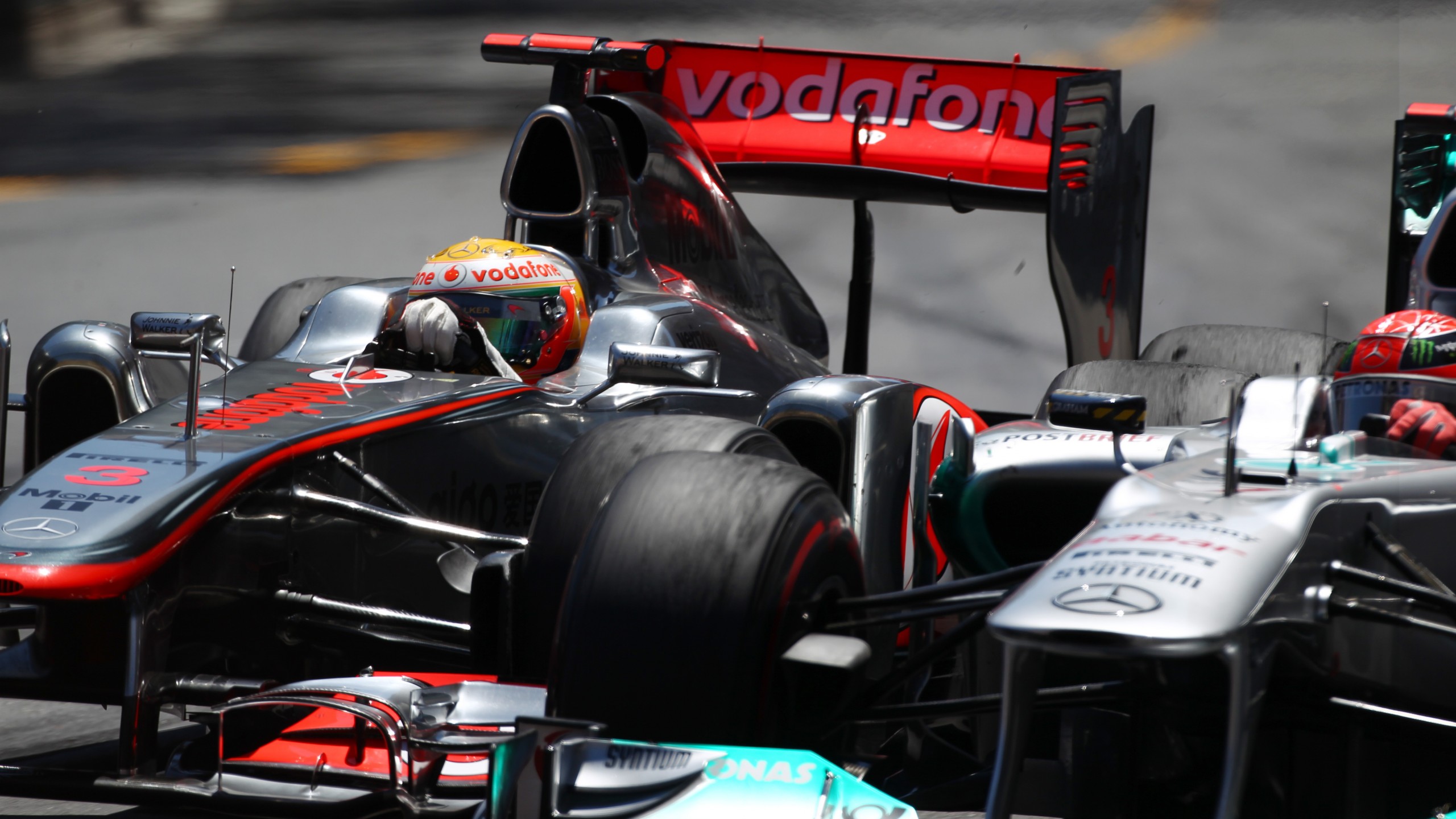
Lewis Hamilton and Michael Schumacher go wheel-to-wheel at the 2011 Monaco Grand Prix.
Image credit: Reuters

G.O.A.T. (or Greatest Of All Time) is a term that is thrown about far too often on the internet these days, to the point that it is now used facetiously about as often as it is genuinely. But is Hamilton actually the G.O.A.T.?

As per the aforementioned point, comparing drivers across 70 years of F1 history and trying to conclusively choose the best ever is basically impossible. Fangio in the 50s was a winning machine and every driver racing today still has the utmost respect for him. Hamilton referred to him as the ‘Godfather’ upon matching his five titles in 2018 and Schumacher partied into the night having surpassed that former record.

Beyond Fangio and Clark, however, the two most commonly proffered names are Schumacher and the late, great Ayrton Senna. Whilst now spanning more than thirty years, all their careers narrowly overlapped – Senna and Schumacher between 1991 and 1994, Schumacher and Hamilton between 2010 and 2012 – and I think this period of time can be considered as modern Formula 1 and thus they are just about comparable…ish. So, let’s give it a shot.

The Numbers

Over the course of the last six months, Schumacher’s many records have gradually been eclipsed by Hamilton and his Silver Arrows steamroller. The conversation obviously extends far beyond numbers, but they are at least a foundation.

The German racked up 91 wins, 155 podiums, 68 pole positions, 77 fastest laps and, of course, seven world championships over the course of 307 grands prix. Those are simply ridiculous numbers and ones that many thought would never be beaten. But then came Hamilton.

It is the consistency of both Hamilton and his team in the hybrid era that has made it possible to surpass those hitherto unassailable records. If all seasons are converted to the current points system, Hamilton also moved past Schumacher’s tally at this year’s Belgian Grand Prix.

It is well noted that it is easier to rack up the numbers now as the F1 calendar has expanded and the quota of races each season has gradually increased. But when analysing Schumacher’s numbers, it is also worth considering his consistent status as clear number one driver.

Senna experienced this to some extent with Gerhard Berger for a couple of years and Valtteri Bottas has been Hamilton’s ‘wingman’ on a handful of occasions, but Schumacher had outright number one driver privileges throughout basically his entire career at Benetton and Ferrari. Many of his teammates struggled to challenge him anyway, but they were certainly not allowed to on the occasions where they were able to do so.

Senna’s career was another cut tragically short in 1994 – I went into great depth in hypothesising what he potentially would have achieved – but once the statistics are converted to percentages, the three drivers are fairly evenly matched. Hamilton probably has a slight edge when looking as a whole, but there is not much in it and obviously his percentages could go either way between now and the end of his career.

Schumacher was undeniably the greatest driver statistically for over 15 years. And yet, generally, more people seem to have considered Senna the greatest when the debate has arisen. That’s because being the greatest of all time goes far beyond the numbers.

Going Beyond the Numbers

There are two main components to being an incredible racing driver: raw speed and racecraft. There are other attributes, of course, such as technical aptitude, discipline, focus, being able to build a team around you and so on. Senna, Schumacher and Hamilton obviously all excel at these, but who comes out on top?

Raw speed is best demonstrated in qualifying; man and machine pushed to the absolute limit over the course of one lap. And this is where Senna and Hamilton are arguably a level above Schumacher. They have both produced laps that are scarcely believable.

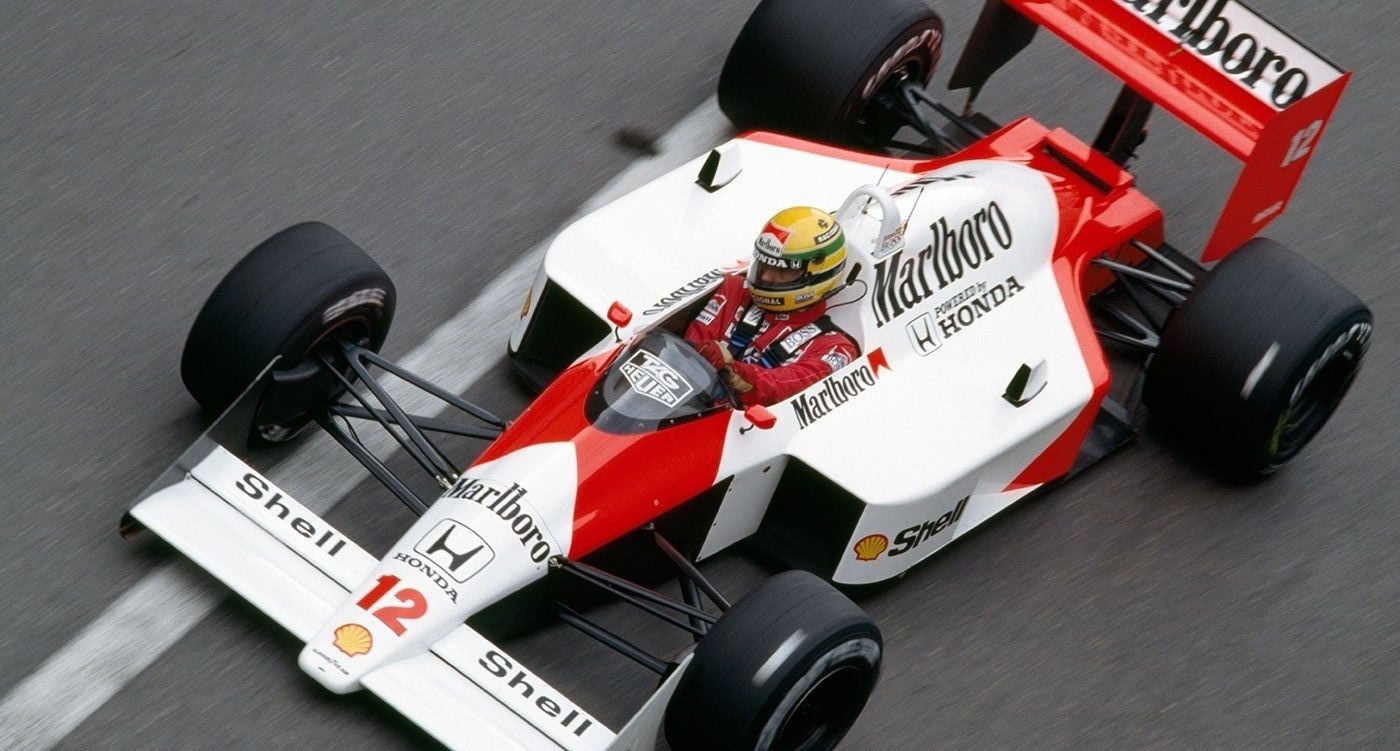
Senna claiming pole in Monaco in 1988, nearly one and a half seconds ahead of teammate Alain Prost, or Hamilton in Singapore 30 years later, producing a lap faster than the Mercedes computer thought possible. Mercedes Team Principal Toto Wolff described it as “the best lap I have ever seen in a Formula 1 car“.

Some have said that Schumacher’s qualifying record was hindered by the rules that had drivers qualifying with their race fuel in the car during the years when refuelling was a part of the sport, thus making qualifying more strategic and less about outright speed. But that was only the case for 4 of his 19 seasons.

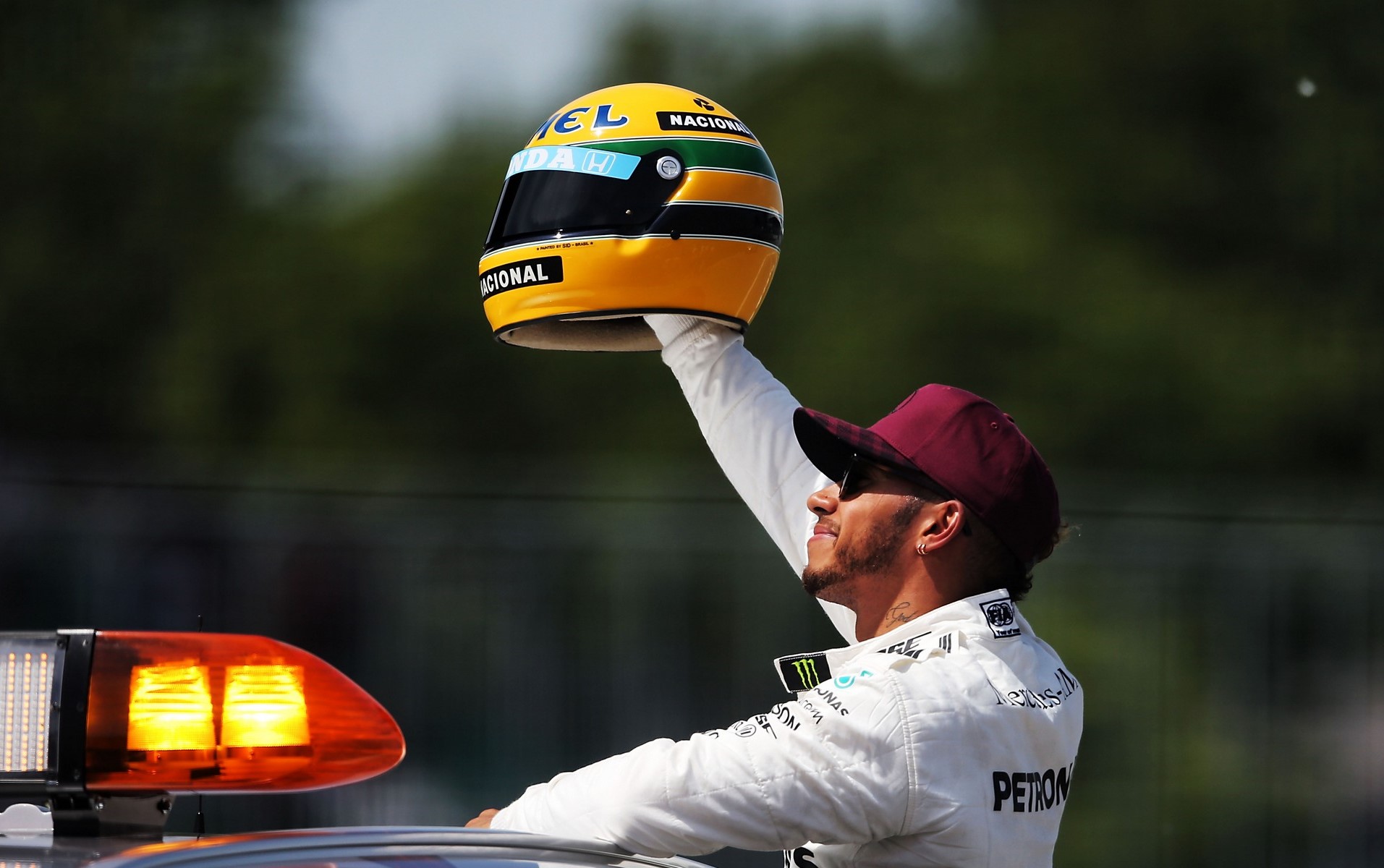
Lewis Hamilton with his Ayrton Senna helmet.
Image credit: XPB Images

Racecraft is something that is tricky to define but – simply put – it is a driver’s ability to manage the entirety of a grand prix and everything that may be thrown at them. So, that’s measuring their pace and the toll it is taking on the car, wheel-to-wheel racing, strategy calls, etc.

This is where Hamilton and Schumacher perhaps have a slight edge over Senna.

Schumacher’s ability to produce lap after lap at full qualifying pace during the race is well-known and, if he was on pole position, it was very unlikely anyone would be able to find a way past him.

Once again, the goalposts have moved slightly when it comes to racecraft these days. With the current car and tyre designs, drivers are rarely pushing flat-out on a Sunday and it has become predominantly about tyre conservation. Hamilton has transcended his reputation – from a decade or so ago – of being blisteringly quick but not quite as smart during races, and is now famed for his racecraft; Paddy Lowe describing it as “unparalleled among the F1 greats”.

His ability to eke out the life of his tyres has been demonstrated numerous times recently. Just last season, he had to manage most of a race on ancient tyres in Monaco, Mexico and the US, coming away with two victories and a second place.

And then, at the very last race in Turkey, he transformed his inters into slick tyres during a 49-lap stint that ensure he took his seventh world title in the most impressive style. Sure, he may moan most of the way but, boy, does he get the job done…

Whilst discussing some of the technical ways in which Hamilton manages his car, Mercedes Technical Director James Allison – a man who has also worked with Schumacher and Alonso – describes his “instinctive ability” as “remarkable”.

When it comes to the other factors, it is hard to separate them. All three are famously relentless in their pursuit of perfection, leaving no stone unturned. It is possibly what sets them aside from the rest of the greats. All are very technically minded and each built a hugely successful team around them – McLaren, Ferrari and Mercedes respectively.

Hamilton, Schumacher and Senna are all incredibly good at basically every aspect of the sport. Of course. But there is something else beyond speed and ability that should be considered.

Going Beyond the Speed

There is undoubtedly a level of ruthlessness that is necessary to become a champion. But there is also a line. Senna and Schumacher crossed that line on multiple occasions, most famously in the two images above.

Whilst Senna’s infamous crash with Prost can be understood to some extent when you hear the full story of the politics with Jean-Marie Balestre, he still intentionally crashed into another driver to win the title, in an era of much-reduced safety. Senna’s intensity and unflappable self-belief often resulted in uncompromising driving to the very edge of acceptability and, on more than one occasion, beyond it. It was part of what made him so great, but he sometimes went too far and that has to be seen as a negative.

Schumacher has an unfortunately long string of misdemeanours. His attempts – one successful and one unsuccessful – to take out a Williams in the title decider were the biggest blots on his copybook. There is no doubt in my mind that both his collision with Damon Hill in 1994 and the one with Jacques Villeneuve in 1997 were fully intentional. He was disqualified from the entire 1997 season for his actions but somehow escaped unpunished with his world championship intact in 1994.

There were plenty more to come; another notable transgression being parking his car at Rascasse during qualifying in the 2006 Monaco Grand Prix in an attempt to prevent Alonso claiming pole position, which also led to a disqualification from the session. And even upon his return to the sport in 2010, he very nearly put his former teammate Rubens Barrichello into the wall at high speed in Hungary, the Brazilian describing it as “the worst piece of defensive driving I have ever seen”.

Off the track, things weren’t squeaky clean either. There were plenty of rumours – some proven – regarding the 1994 Benetton’s legality, Ferrari used every trick in the book (including threatening to end a Sauber driver’s career) to hinder Villeneuve in 1997 and their team orders in the early 2000s brought the sport to its knees.

These varying forms of misconduct are something we have never really seen from Hamilton.

Of course, there has been the odd drama. Off the track, there was ‘lie-gate‘, where he was instructed to lie to the stewards by his McLaren Sporting Director, and his tweeting of sensitive telemetry. But these were reasonably minor indiscretions and, on track, Hamilton can only ever fall under the category of firm but fair.

Even during his prickly relationship with teammate Nico Rosberg, as the German set about all-out psychological warfare, he would push his wheel-to-wheel racing to the limit but never beyond.

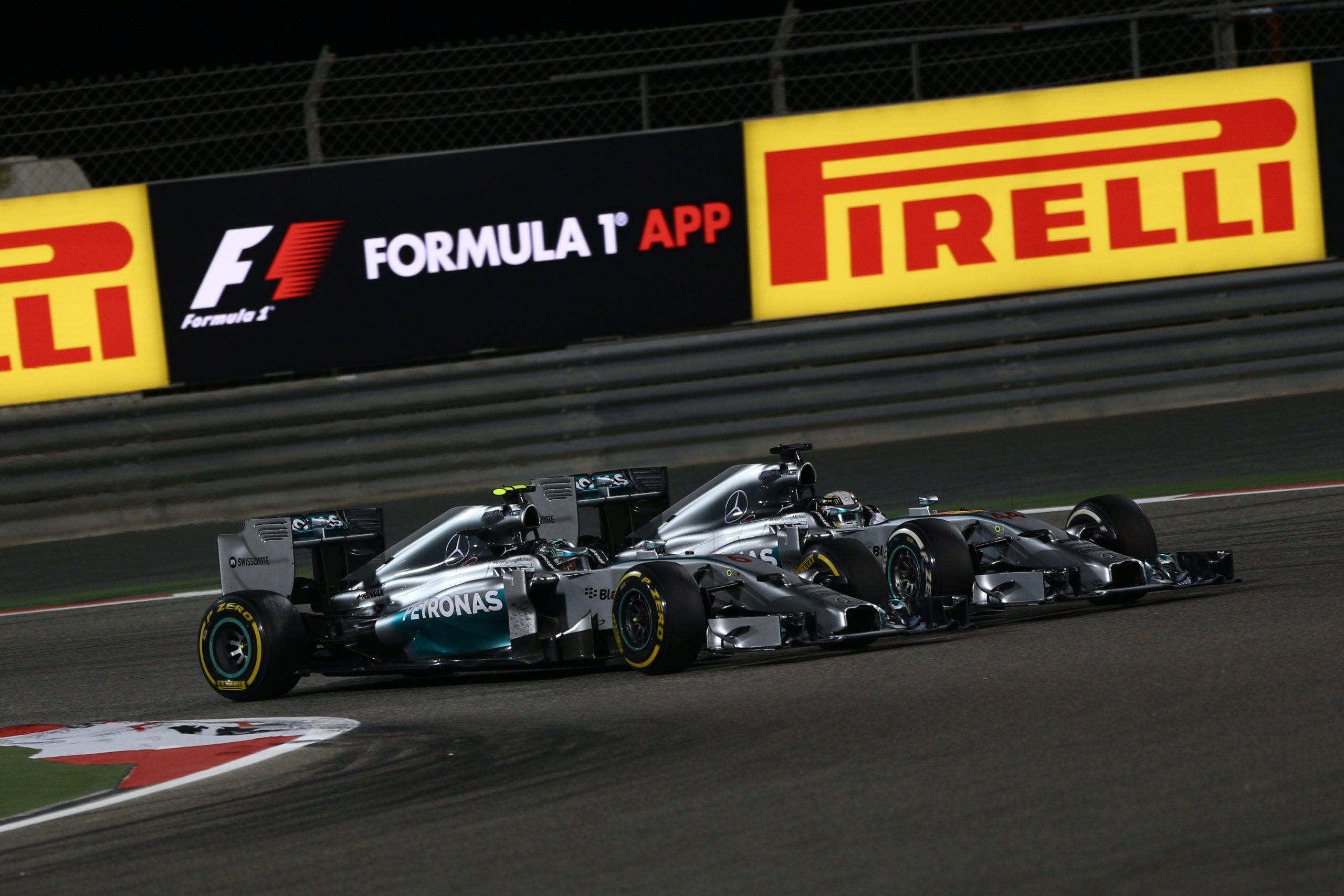
Lewis Hamilton and Nico Rosberg battle in Bahrain.
Image credit: Getty Images

This is what really sets Hamilton aside from the two other great champions. He has that steel and the relentless will to win…but he is also truly committed to winning the right way.

So…the Greatest?

Well.

I’m not going to be quite that definitive…not yet anyway. But he is well on his way.

Hamilton now holds most of the records the sport has to offer. He is accepted as one of the very fastest ever when it comes to raw speed and has, in recent years, added maturity, technical prowess and experience to create a winning machine.

Wolff says that the media, and people in general, should “recognise the opportunity [to] see maybe the best driver that has ever existed on an exceptional journey”. He has a point. It may be easy to grow tired of seeing the same driver win again and again but it will always be looked back upon with nostalgia and misty eyes. We are witnessing history being made.

It is worth remembering that Hamilton’s story has been something of a fairy tale. From a council estate in Stevenage, he fought through the ranks the hard way, funded by his father working multiple jobs, and has now reached the very pinnacle of his sport. He has also broken down barriers as the sport’s first black driver – even having to deal with racist abuse early in his career – and brought F1 to a whole new audience through his numerous extracurricular activities and massive social media presence.

He has taken that onto another level this year with his push for F1 activism. He is a leading light in the #WeRaceAsOne initiative and launched ‘The Hamilton Commission’ with the aim of increasing diversity within motorsport.

Did anyone expect this when a fresh-faced Hamilton showed up to Melbourne in 2007? Probably not. Although, there is a surprisingly prophetic quote from Schumacher on the eve of Hamilton’s first title the following year.

I will stick by my opinion that defining a clear ‘G.O.A.T.’ is near impossible, but there is nobody that I consider to have a better claim than Hamilton any longer.

And there is still more to come. As the man himself says, “I am working on a masterpiece and I haven’t quite finished it yet”. When he has finished, maybe we will have a definitive answer.

Lewis Hamilton heading up Eau Rouge in 2020.
Image credit: DPPI Media

How to solve a problem like the stewards

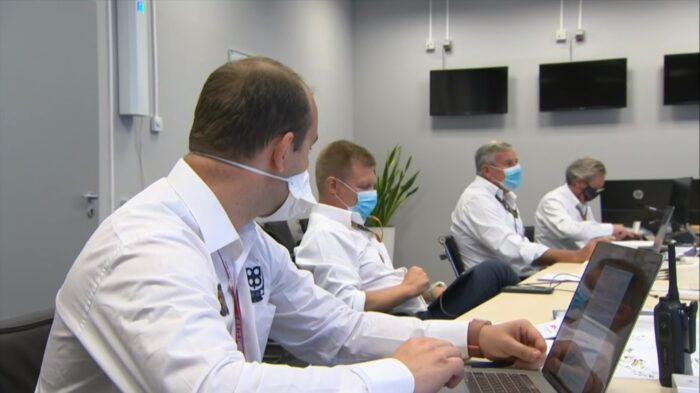
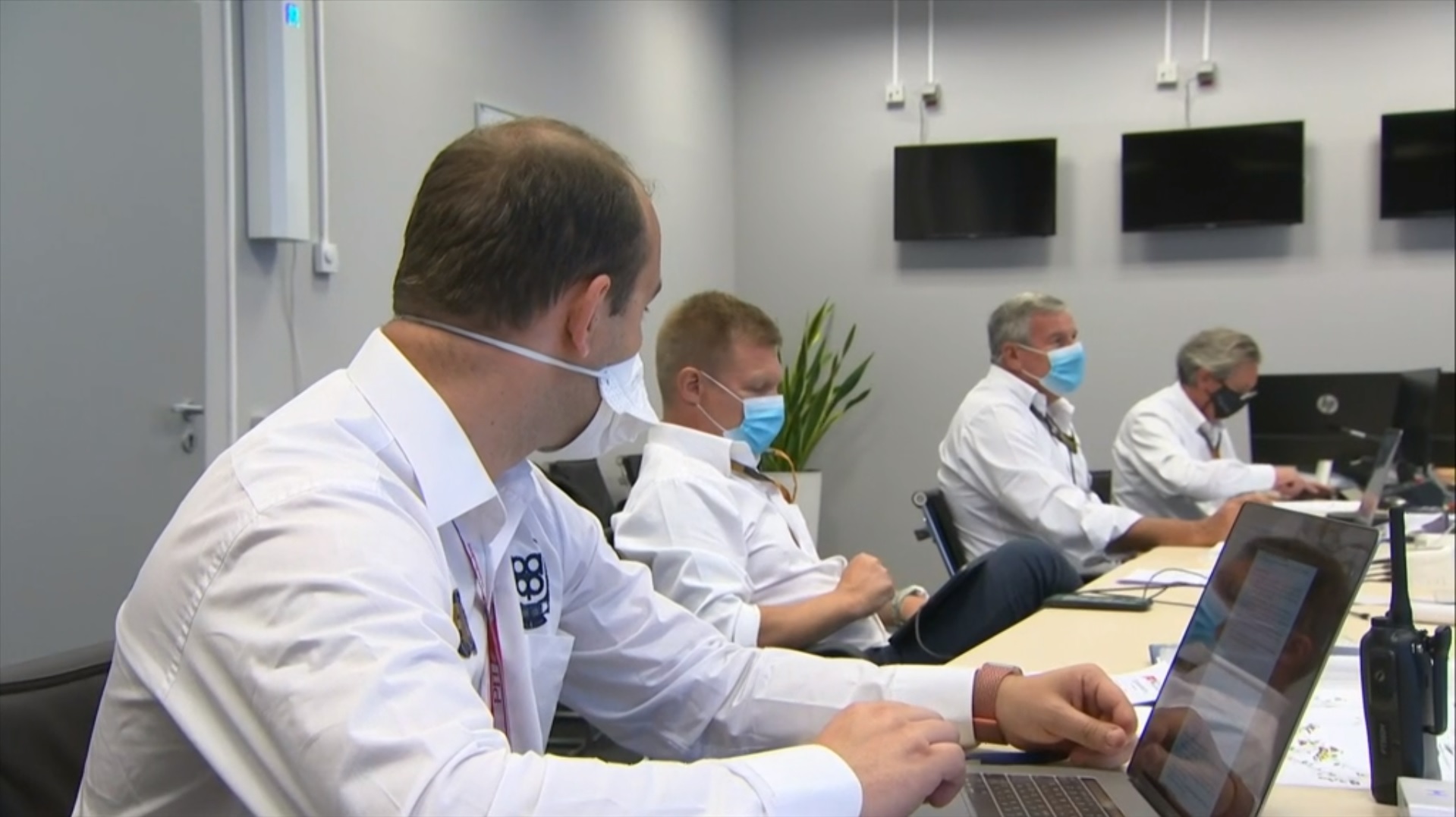
Behind the scenes in the stewards office.
Image credit: Formula 1

Formula 1 stewarding has rarely been consistent. That is something which fans and drivers have become used to over the years, but it should not be the case.

There have been plenty of baffling decisions this year. At the Styrian Grand Prix, Lance Stroll escaped punishment despite clearly forcing Daniel Ricciardo off the track whilst attempting an overtaking manoeuvre – leaving the track himself for good measure – and then keeping the position.

It seemed a ‘slam dunk’ penalty to most of the paddock, thanks to the trifecta of forcing another car off the track, violating track limits and completing an overtake off the track all in one move. As well as, arguably, rejoining in an unsafe manner as he blocked Lando Norris upon his return.

The stewards, however, saw things differently. As is often the case, there was not much of an explanation as to their decision, which deemed it a “racing incident where neither driver was wholly to blame”.

Ricciardo said he thought it was “crystal clear” that it should have resulted in a penalty and, considering all he did was avoid a collision, it is difficult to see how the stewards apportioned any blame upon him.

This has long been the crux of the problem; the fans – and even the drivers – are often left bemused by the decisions and nobody stands up to justify them.

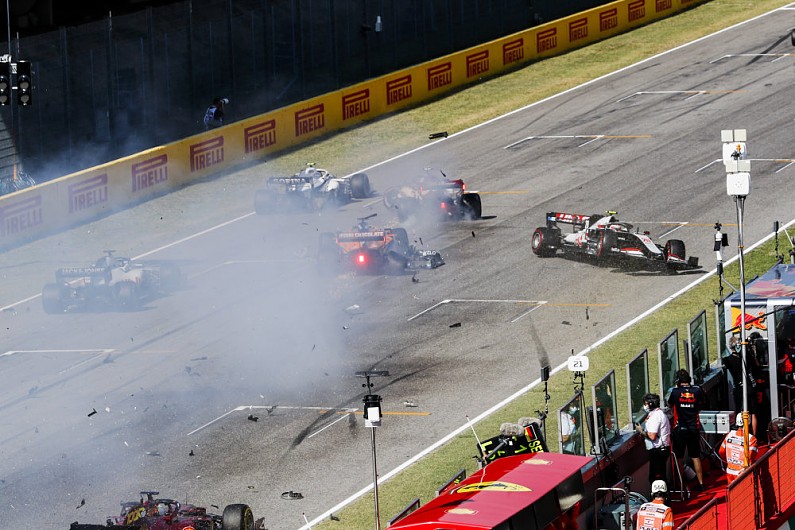
The multi-car pile-up at Mugello.
Image credit: LAT Images

But then came the more recent issues. A multi-car pile-up in Tuscany led to numerous drivers blaming the safety car lights going out for the incident, but Race Director Michael Masi refused to take any responsibility and put the blame squarely on the drivers, in a somewhat derisive tone. And in Russia, we had the Lewis Hamilton practice start debacle.

Conspiracy theories abound as decisions were reversed, comparisons drawn with similar Charles Leclerc incidents and – the icing on the conspirator’s cake – news broke of the Finnish commentary team learning of the penalties 15 minutes prior to their announcement, with part-time Finnish commentator Mika Salo in the stewards’ office.

The already flawed system has now been further undermined.

New Director, New Direction

Charlie Whiting was always going to be an impossible act to follow; the man was Formula 1.

Along with holding the all-important role of Race Director, he was safety delegate, chaired the driver briefings and wrote both the sporting and technical regulations – the ultimate poacher-turned-gamekeeper, attempting to keep the FIA a step ahead of the engineers looking for any possible loophole to exploit. Every driver had the utmost respect for him.

No one man would ever be able to fully replace Whiting but his most important role fell to Masi and, just seven races into his tenure, he was thrust abruptly into the spotlight.

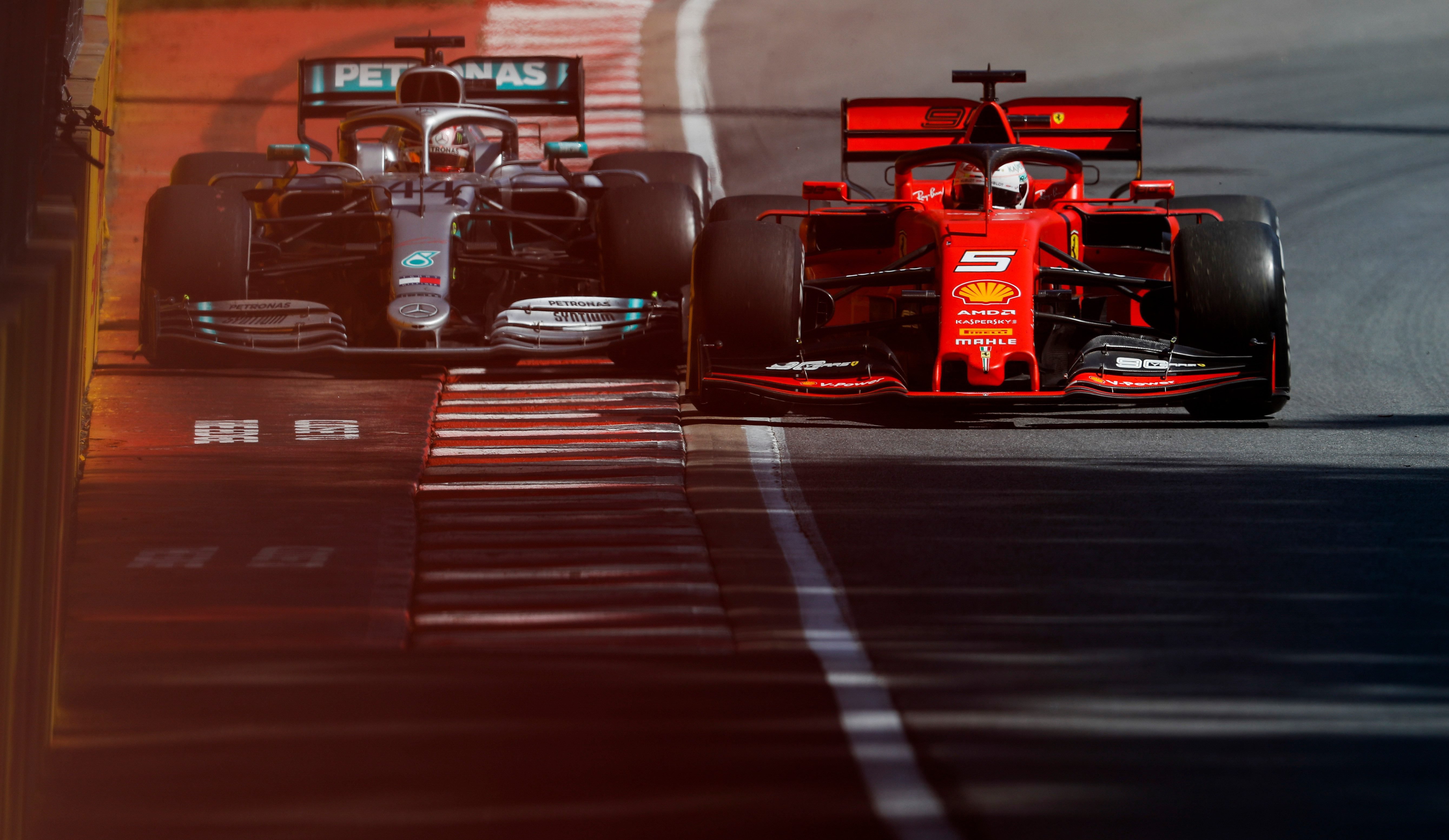
Sebastian Vettel and Lewis Hamilton at the 2019 Canadian Grand Prix.
Image credit: Imago Images

At the Canadian Grand Prix, after six races utterly dominated by Mercedes, the Ferrari of Sebastian Vettel was leading. However, on lap 48, he made a mistake under pressure from Hamilton and overcooked his entry into Turn 3, catching a snap of oversteer but in the process having to take to the grass.

He rejoined the track very close to Hamilton, who tried to go around the outside but was forced to back out as he was squeezed towards the wall. The stewards gave Vettel a five-second time penalty which effectively handed Hamilton the win and, likely in some part sparked by the unceasing Mercedes supremacy, many F1 fans took to their keyboards to vent their anger via social media.

For the record, I think it was the right decision. It was a very tough call, but the rules are the rules and they pointed to a penalty. It was uncannily similar to an incident in Japan 2018, between Max Verstappen and Kimi Räikkönen, which also resulted in a penalty and Whiting himself described as “a fairly straightforward one for the stewards”.

At the very next race, Verstappen – coincidentally at the same corner of the same circuit as the Stroll-Ricciardo incident – forced Leclerc wide and took the lead, along with the victory. Whilst in that incident, the Dutchman at least stayed on the track himself, it did appear to contradict the ruling from just two weeks earlier.

Seemingly in response to the public backlash from the Canadian Grand Prix, Masi and the FIA then announced a change in their approach when it came to applying penalties – in essence, that they would be more lenient and let the drivers battle it out on track as much as possible.

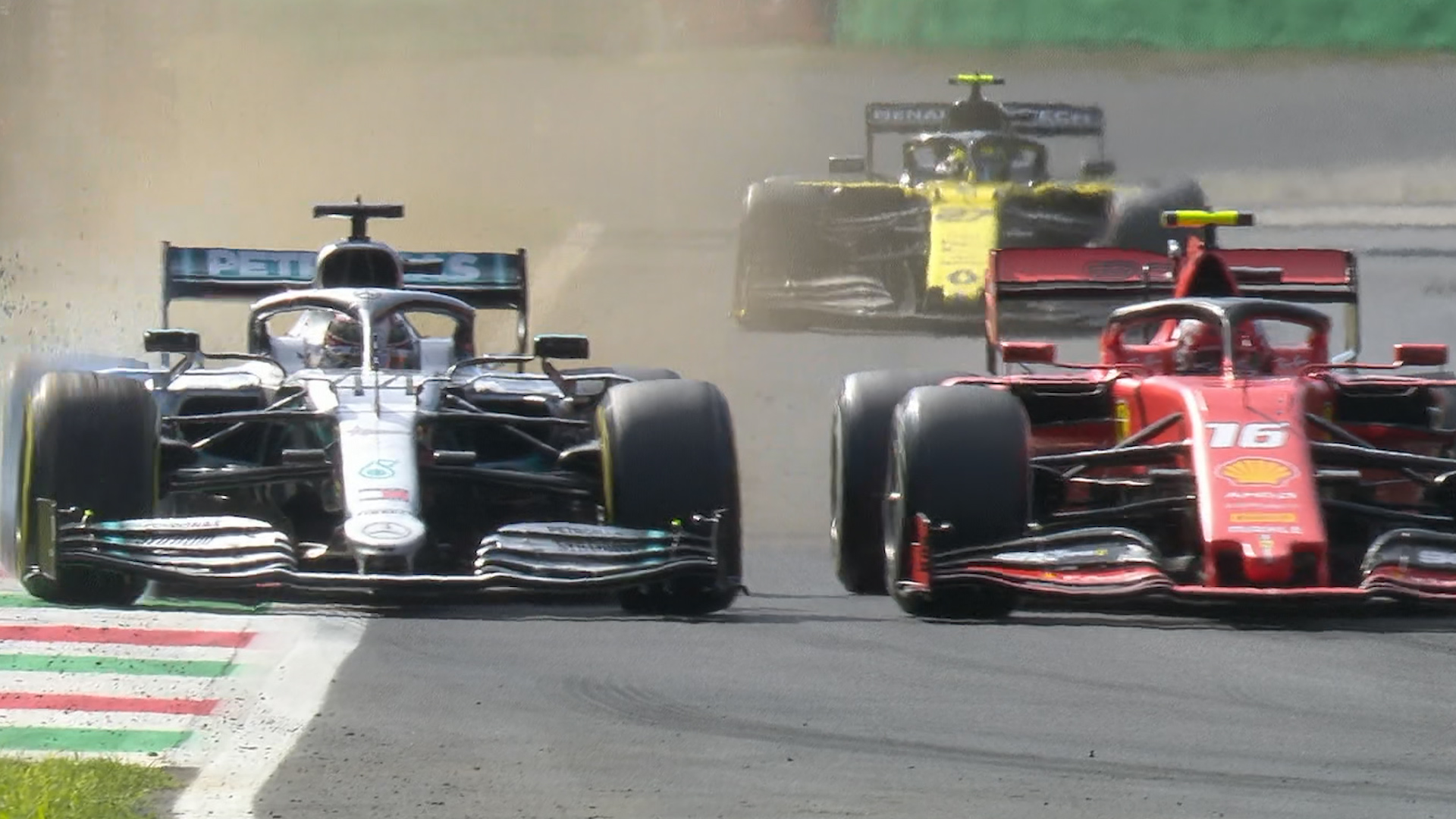
Later in the season, Leclerc would experience the other side of the coin as he forced Hamilton off the track whilst defending his lead of the Italian Grand Prix and received only a black-and-white flag as a warning for unsportsmanlike behaviour. Whilst explaining their decision-making, Masi stated that if the pair had made contact then it would have been a penalty rather than the black-and-white flag.

Charles Leclerc and Lewis Hamilton at the 2019 Italian Grand Prix.
Image credit: Formula 1

This seems problematic. It is almost encouraging contact between drivers; in avoiding a dangerous move by another driver, the ‘victim’ of said move is putting themselves most likely off the track and doing the aggressor a favour at the same time.

We are in danger of veering towards the diving issue prevalent in football where players are required to produce theatrics in order to force the officials to make the right decision…

Is There a Solution?

We as fans must accept that the stewards have far more information than us to base their decisions on and that they are more experienced than 99% of us. That would be far easier, though, if the stewards were a consistent panel of respected figures who were fully accountable and explained exactly how and why they came to their decisions.A role as important as this, in a sport as enormous and opulent as F1, must be filled by the very best on a permanent basis.

Surely that’s not too hard for the senior leaders to put together – basically every other elite sport manages to do it.

The penalty points system may also need to be addressed as – whilst not inherently flawed – the application of points could probably be tweaked. The system was introduced in the wake of Romain Grosjean’s hit-and-miss (quite literally, at times) 2012 season and, in particular, the huge crash at the start of that year’s Belgian Grand Prix.

The rationale behind it is to prevent dangerous driving, but they are now seemingly being handed out as standard with most penalties, even when it was the team at fault.

Hamilton and Antonio Giovinazzi were given two penalty points when following team orders to pit in Monza. Another two points in Austria for the World Champion understeering into Alexander Albon on cold tyres seems a little harsh – it was a long way from a dangerous act.

The fact that one of the greatest drivers in the sport’s history – who is also universally accepted as one of the cleanest drivers on the grid – stands on the brink of a ban implies that the system should perhaps be looked at.

In the immediate future, simply some consistent calls would do. At the Styrian Grand Prix, in addition to what has already been mentioned, Sergio Pérez was allowed to drive around for three laps with a damaged front wing without seeing the black-and-orange flag – indicating a driver has a mechanical issue and must return to the pits – whilst Leclerc was given a 10-second penalty for the same offence at last year’s Japanese Grand Prix.

This is potentially due to the close call when Leclerc’s front wing end plate broke free and sliced off Hamilton’s wing mirror, but why are penalties suddenly being handed out dependent on the result rather than the letter of the law?

Consistency and transparency are vital. These are the basics and we should not have to be clamouring for them.

An orange phoenix emerging from grey flames: McLaren rises from the ashes

After a rapid decline and a few years in the doldrums, McLaren are on the rise again – fighting for third in the Constructors’ Championship with Ferrari and aiming to move back to the very front when the new regulations kick in next season. How high were the highs? How did they fall? And how have they risen up again?

Image credit: Getty Images

McLaren were a behemoth of Formula 1 for the best part of four decades, largely thanks to Ron Dennis and his infamous, meticulous attention to detail.

Dennis took charge of an ailing McLaren team in 1980 and turned them into champions in just four years. Whilst not the outright fastest car in 1984, anything as fast as the McLarens often fell apart and anything as reliable usually finished behind.

They would claim further titles in the following two years and, when the Williams-Honda partnership proved to be the class of 1987, Dennis lured the Japanese marque to leave Williams and join them. He also hired a certain Ayrton Senna. Thus ensued the most dominant season the sport has ever seen as McLaren won 15 of the 16 races.

The mid-90s saw something of a transitional period for the team, before Dennis stole from Williams again – this time, it was Adrian Newey – and the design genius led the now silver McLarens to back-to-back championships in 1998 and 1999. That would prove to be the final truly successful era of Dennis’s reign, however.

The only title they have won, so far, in the 21st Century is Lewis Hamilton’s maiden drivers’ title in 2008. By rights, 2007 should have been a double-championship year for them, but the eccentric character of Dennis is a double-edged sword and that second edge would contribute to the Spygate dramas.

Whilst his peculiarities undeniably produced much success, they also meant he lacked flexibility and had a relentless self-assurance that sometimes prevented him from seeing the bigger picture.

Lewis Hamilton and Fernando Alonso during their tense season as McLaren Formula 1 teammates.
Image credit: Picture-Alliance/DPA

Fernando Alonso had been promised lead driver status upon his arrival at McLaren, but once it became clear that Hamilton – who Dennis had nurtured since the age of 12 – was just as good, Dennis went back on his word and set off the chain of events that would end up costing McLaren $100 million. Just as with Senna and Alain Prost before, Dennis’s lack of empathy was a factor in the damaging decline of the warring duo’s relationship.

After a period of Red Bull domination, during which McLaren usually had a fast but unreliable car, came the hybrid era.

It started well with a double podium in the opening race, but that would prove to be McLaren’s final podium for over five years. As Mercedes took command of Formula 1, McLaren slipped further and further from their perch.

Dennis stated his belief that “customer teams will never be able to win the championship” and so ended ties with Mercedes and brought about a reunion with Honda; the nostalgic partnership would prove to be a story of style over substance and sentimentality over success, though.

McLaren’s entitled attitude under Dennis cost them greatly as they blamed Honda for all their issues and the once great constructor fell to a nadir of ninth in the 2017 Constructors’ Championship. A switch to Renault the following year showed that it was, in fact, McLaren’s design philosophy which caused significant straight-line speed issues and, to add insult to injury, Red Bull would go on to win a grand prix with Honda power at just their ninth attempt.

The blame culture and bland, grey precision in Dennis’s operations was arguably becoming outdated compared to the party atmosphere at Red Bull and the stereotypically efficient but, nonetheless, fun and blame-free approach adopted by Toto Wolff and the entire Mercedes operation.

The Bond villain-esque lair and base of Formula 1 operations that is the McLaren Technology Centre.
Image credit: McLaren

The levels to which Ron Dennis’s forensic, quixotic approach extended are mind-boggling, and best surmised by his former employee: “One of the best ways to upset Ron Dennis is to sit down in his office, where he’ll usually have a few piles of papers neatly stacked on his desk, and just tip one of those piles by a few millimetres, knowing he’ll then focus on that pile for ages, because he won’t be sure whether you’ve straightened it or made it crooked”, Newey says.

“To me the new building was oppressive in its ordered greyness. Reminiscent of something from Fritz Lang’s Metropolis, it featured rows and rows of desks with nothing out of line. Built by the Empire. Not an environment in which I, among others, found it easy to be creative.”

“When we first moved in, we weren’t even allowed glasses of water at our desk, and absolutely no tea or coffee or personal effects. Somebody pointed out that it was probably illegal to deny workers water at their desk, so he had to relent on that, but not on the tea or coffee, and as far as personal effects went, you were allowed one family picture on your desk but it had to be stored in a drawer overnight.”

For all his success, having taken McLaren from a scruffy industrial estate in Woking to the futuristic, Norman Foster-designed Technology Centre, Dennis’s time seemed to be drawing to a close.

He would eventually ‘quit’ after being told by fellow shareholders that he had to give up his position as chairman and chief executive of McLaren Group.

With that, McLaren set about building a new legacy. They instantly chose to eschew the previous ‘Predatory Grey’ livery, in favour of incorporating the papaya orange historically associated with the team. It has taken some time but the new approach, led by a passionate and enthusiastic CEO in Zak Brown, is beginning to show dividends.

2019 saw McLaren outperform Renault – their current engine supplier, no less – to claim their best result since 2012, with fourth in the Constructors’ Championship. The business side of things is flourishing too, with a car now decked out with major sponsors such as Coca-Cola and Dell. Whilst their driver line-up also reflects their new values; Carlos Sainz and Lando Norris are fun-loving and have a light-hearted, harmonious relationship, but are equally – of course – very quick.

Norris is fast becoming one of the most popular drivers on the grid and has emphatically shown his progress on the track at the start of 2020. A maiden podium at the opening grand prix was a pleasant surprise and another flying finish one week later, moving up from eighth to fifth in the final two laps, has led to the ‘Last-lap Lando’ nickname. Meanwhile, Sainz came agonisingly close to taking a maiden victory – and McLaren’s first for eight years – at the chaotic Italian Grand Prix.

The team from Woking seem to be on the up and will be hoping to take advantage of the new regulations in 2022 to take that next step. In the meantime, they have a certain Daniel Ricciardo joining them next year, so things are unlikely to get dull any time soon…

The most dramatic final laps in F1 history

Three weeks ago, at the British Grand Prix, Lewis Hamilton provided what will likely become an iconic image as he scraped across the line to take a record seventh home victory on effectively three wheels.

A final-lap puncture – two laps after his teammate had suffered the same issue – saw his thirty second lead being agonisingly reduced by Max Verstappen. The World Champion would just about hang on, though, and take the chequered flag with a gap of just over five seconds to the charging Red Bull.

It was a dramatic final lap of what had been a somewhat processional race, but it was probably not the most dramatic. Here are a few contenders for that accolade…

2016 Austrian Grand Prix

Hamilton was chasing down his teammate, Nico Rosberg, for the lead as he attempted to close the gap in the championship after early-season reliability issues. The two Mercedes had come together in a costly way a few races earlier in Spain and, as Hamilton went to the outside of Turn Two on the final lap, they would do so again.

Rosberg tried to force Hamilton wide – a move he had been on the receiving end of numerous times – but went too far, damaging his front wing and limping home in fourth place with a 10-second penalty for good measure. Rosberg would go on to eventually claim the championship, nonetheless, after another costly engine failure for Hamilton late in the season.

2011 Canadian Grand Prix

The longest race in the sport’s history came right down to the wire. After numerous safety cars and a full, two-hour suspension for torrential rain, Sebastian Vettel started the final lap with Jenson Button breathing down his neck, a little over four hours after they had initially started the race.

Button had stopped no fewer than six times and at one point had been in last position, but his excellence in tricky conditions allowed him to scythe through the field and force Vettel into a mistake halfway round the final lap. The German ran wide onto a wet patch at Turn Six and Button came through to take a truly extraordinary victory.

2008 Brazilian Grand Prix

Whilst the lead of the race may not have changed hands, final laps don’t come much more dramatic than this. Hamilton needed fifth in the final race of the season to guarantee a maiden title, having excruciatingly missed out in similar circumstances the year before. But mother nature was not going to make things simple.

A wet-dry race saw heavy rain fall with a handful of laps remaining and a pit stop resulted in the young Briton rejoining in fifth. An equally young Vettel passed him on lap 69 of 71 and it looked as though Hamilton would miss out again as Felipe Massa took the victory that he required to become champion. However, Timo Glock had not stopped for wet tyres and Hamilton passed him on the final corner of the final lap of the final race to reclaim that crucial fifth position and win the championship.

1997 Hungarian Grand Prix

Damon Hill so nearly pulled off the ultimate underdog story at the Hungaroring in 1997. Having been dropped by Williams at the end of 1996, despite winning the world championship, Hill joined a struggling Arrows team, inspired by new boss Tom Walkinsaw’s grand plans. It didn’t work out as planned, though, and the champion had just one point as he arrived at the 11th race of the season.

Thanks to a unique mix of tyre complications, multiple retirements and brilliance from Hill, he found himself in a comfortable lead for most of the race. But, just a couple of laps away from Arrows’ first ever victory, his hydraulic pump failed and Hill was agonisingly passed by Villeneuve on the final tour. The problem was eventually put down to a broken washer worth 50 pence.

1982 Monaco Grand Prix

It seemed as though nobody fancied winning the 1982 Monaco Grand Prix. With three laps remaining and rain starting to fall, Alain Prost spun out from the lead, handing the lead to Riccardo Patrese, only for the Italian to spin, as well, one lap later. That left Didier Pironi in the lead, but his car would run out of fuel on the final lap. Andrea de Cesaris would have inherited the lead but had also run out of fuel and Derek Daly – the next man down the road – had just retired with a gearbox failure.

As James Hunt put it, “we’ve got this ridiculous situation where we’re all sitting by the start-finish line waiting for a winner to come past, and we don’t seem to be getting one”. Patrese had managed to restart his car, though, and eventually came through to take his first victory.

1971 Italian Grand Prix

The Italian Grand Prix in 1971 saw the closest ever finish to a race. It was also the final Italian Grand Prix to be run on the original layout; the enormous speeds reached that year saw two chicanes introduced in 1972 on safety measures.

The high speeds resulted in the field breaking up into packs, with the leading one consisting of eight drivers. Peter Gethin, Ronnie Peterson, François Cevert, Mike Hailwood and Howden Ganley battled all the way to the end, constantly in and out of each other’s slipstreams. They crossed the finish line covered by just 0.61 seconds, with less than two tenths covering the top four and Peter Gethin taking his sole F1 victory by 0.01 seconds.

1967 Italian Grand Prix

Jim Clark was cruelly denied victory in one of his greatest ever races at the 1967 Italian Grand Prix. The Scot led the race until lap 12 when he picked up a puncture and lost an entire lap. He then spent the next 48 laps fighting through the field at an astonishing rate, before taking the lead and pulling away.

Clark’s poor luck was not over, however, as on the final lap a faulty fuel pump slowed him significantly and allowed John Surtees and Jack Brabham to pass. Surtees took what would prove to be his final win by less than a car length at the line, as Clark coasted to a consolatory third place.

Honourable mentions must also go to: Nigel Mansell grinding to a halt whilst waving to the crowd at the 1991 Canadian Grand Prix; Didier Pironi and Gilles Villeneuve’s infamous scrap at Imola in 1982; Jack Brabham crashing at the final corner of the 1970 Monaco Grand Prix; and the four-way photo finish at Monza in 1969.

Tagged