George Russell | “The incident is one thing, my actions afterwards were another, and in my opinion they weren’t good enough. I do want to be a role model, I do want to lead by example, and my actions post-crash were not that.”
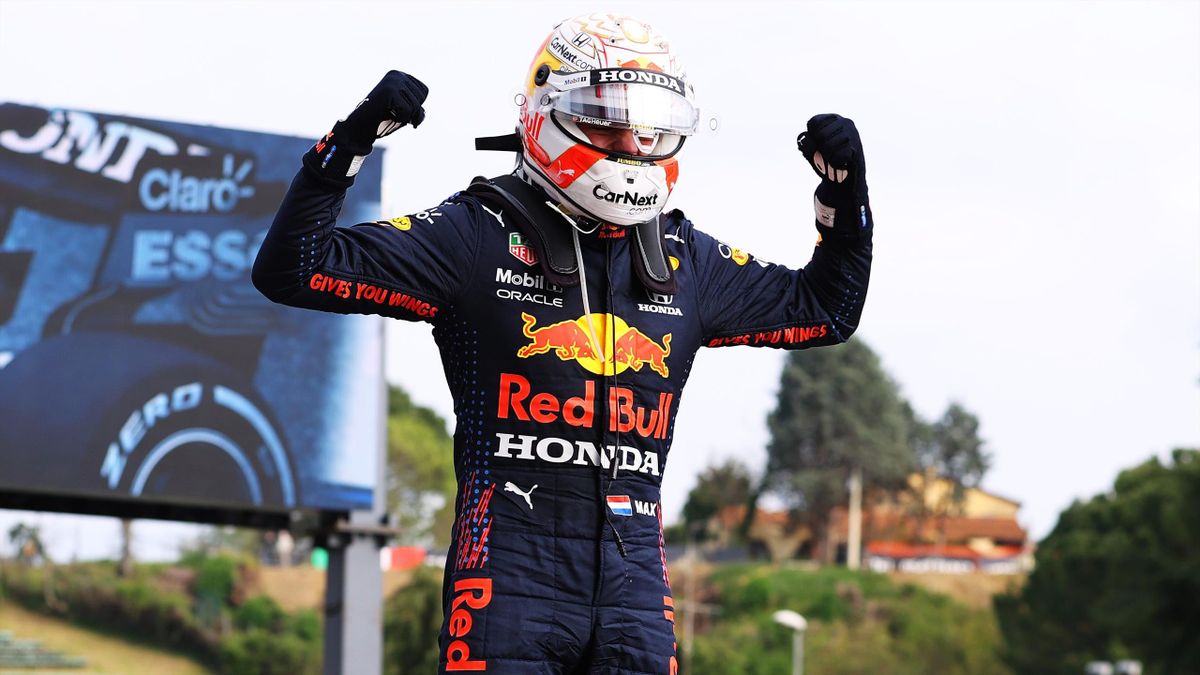
Max Verstappen | “It was of course great to win, after missing out in Bahrain it felt very satisfying to win the race in Imola. There were definitely a few things that we wanted to learn from the Bahrain race, which we did, and we could bring home the win.”
Fernando Alonso | “It’s going to be difficult here, for sure. It’s another new circuit. Most of the grid, they raced here five months ago, so that’s something that I will need to get up to speed with quickly in the free practice.”
Nicholas Latifi | ” Obviously it’s really disappointing for me, two years my home race has been cancelled. But I do believe it was the right decision for the health and safety of the Canadian people and the travelling Formula 1 personnel.”
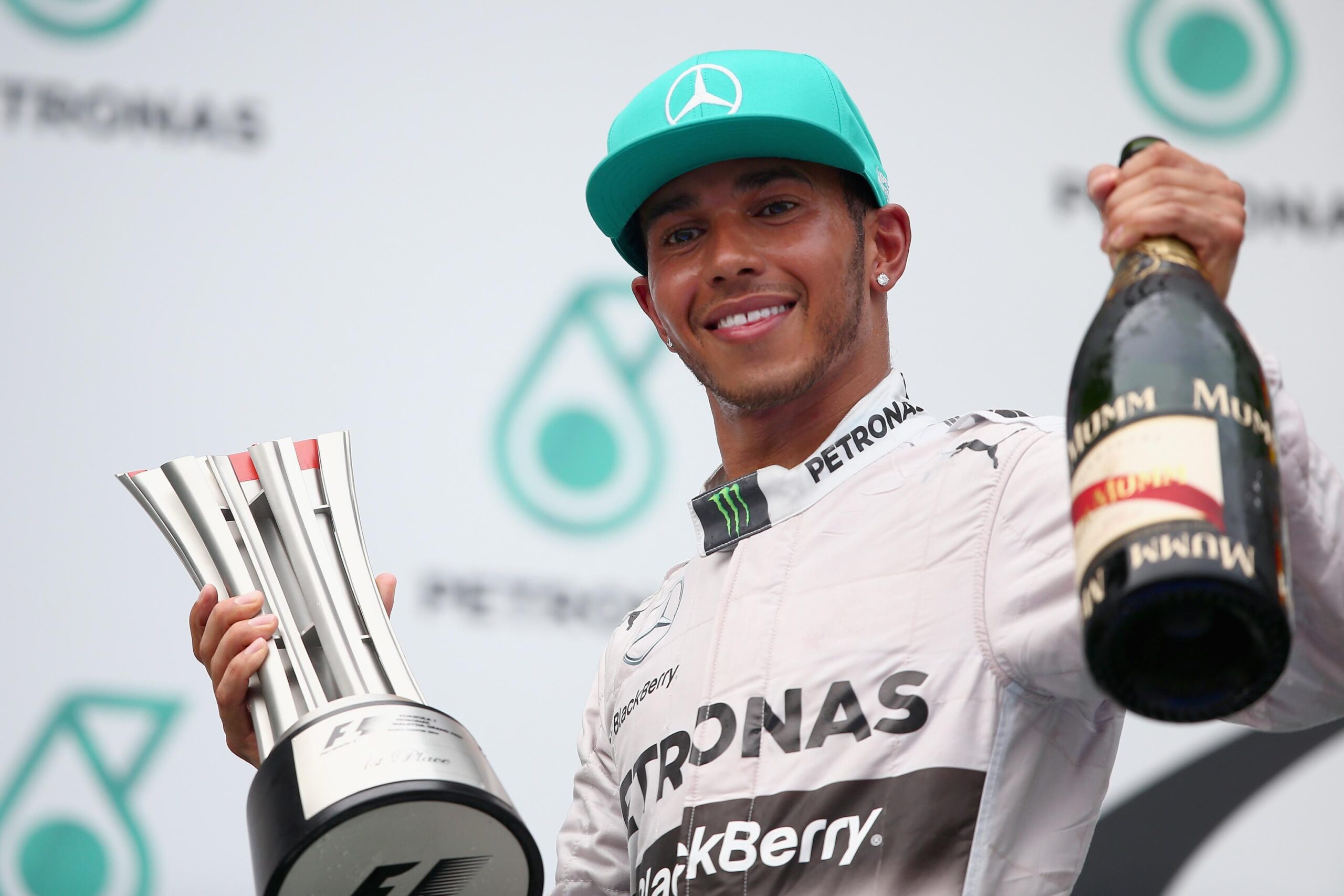
A lucky break involving a fortunately timed red flag at Imola led to many claims on social media that Lewis Hamilton is the luckiest driver ever to have raced.
So, how lucky is he exactly? Let’s investigate.
The Good
The Briton has certainly caught a lucky break from time to time.
Imola has been especially kind to him over the last 12 months. In addition to the red flag which rescued him this year, he received a helping hand at the 2020 race from a well-timed Virtual Safety Car. Hamilton was able to pit during the VSC period, allowing him to gain a net 10 seconds and steal the lead from teammate Valtteri Bottas.
A similar situation benefitted him at Silverstone and Sochi in 2019, both races ending with that familiar combination of the British and German national anthems.
Earlier that year, the controversial decision to penalise Sebastian Vettel at the Canadian Grand Prix propelled Hamilton to the top step of the podium, even if he wasn’t parked next to the number 1 board… And more problems for the Scuderia – this time a mechanical failure for Charles Leclerc – helped him clinch what had appeared an unlikely victory in Bahrain.
Obviously, over the years, there are many other times when retirements to others have seen him claim victory. Bottas was unlucky at the 2018 Azerbaijan Grand Prix, suffering a tyre blow-out with just three laps remaining. Mechanical failures put an end to battles between Hamilton and arch rival Nico Rosberg in Russia in 2015 and Britain in 2014.
The relentless consistency of the Hamilton-Mercedes partnership means that he is often there to capitalise when others falter, for whatever reason.
The Bad
Earlier in his career, Hamilton was not the polished article we see scooping up championship after championship today. He had a reputation for doing things the hard way, either from self-inflicted obstacles or external factors conspiring against him.
Even in 2014, Bleacher Report described him as “a three- or four-time world champion trapped in the career of a one-title wonder, with luck – more often than not – at the root of his failure to scoop more accolades.”
Image credit: Getty Images
And whilst that was the year in which he finally scooped that elusive second title, Lady Luck still made him work for it. The number 44 Mercedes retired with an engine problem just two laps into the season-opening Australian Grand Prix, immediately leaving him with a 25-point deficit to teammate Rosberg.
He won the next four races to claw back the gap and take the lead, only to lose it again in Monaco where, if we are to believe the German, it was purely bad luck to blame for his notorious trip down the escape road…
Further mechanical failures in Canada, Germany and Hungary – along with a race-ending puncture courtesy of Rosberg in Belgium – ultimately weren’t enough to deny him the championship, but they certainly didn’t make it easy.
And, if his second title was dramatic, it was nothing on his first. Of course, he infamously passed Timo Glock at the very final corner to regain that crucial fifth place, but a sudden deluge with five laps remaining when Hamilton had been in a comfortable position for the title certainly couldn’t be described as lucky.
After three seasons without a championship – and a particularly trying campaign in 2011 – Hamilton vowed to return stronger than ever in 2012. He followed through on that promise – seven pole positions over the course of the year demonstrating the speed that was clearly there – but forces beyond his control would derail his title bid at an alarming rate.
Image credit: Sky Sports F1
There were mechanical failures from the lead in Singapore and Abu Dhabi, and further issues in China, Germany, Japan and Korea. McLaren also suffered a series of catastrophic pit stops, which ruined Hamilton’s races in Bahrain, Monaco and Valencia.
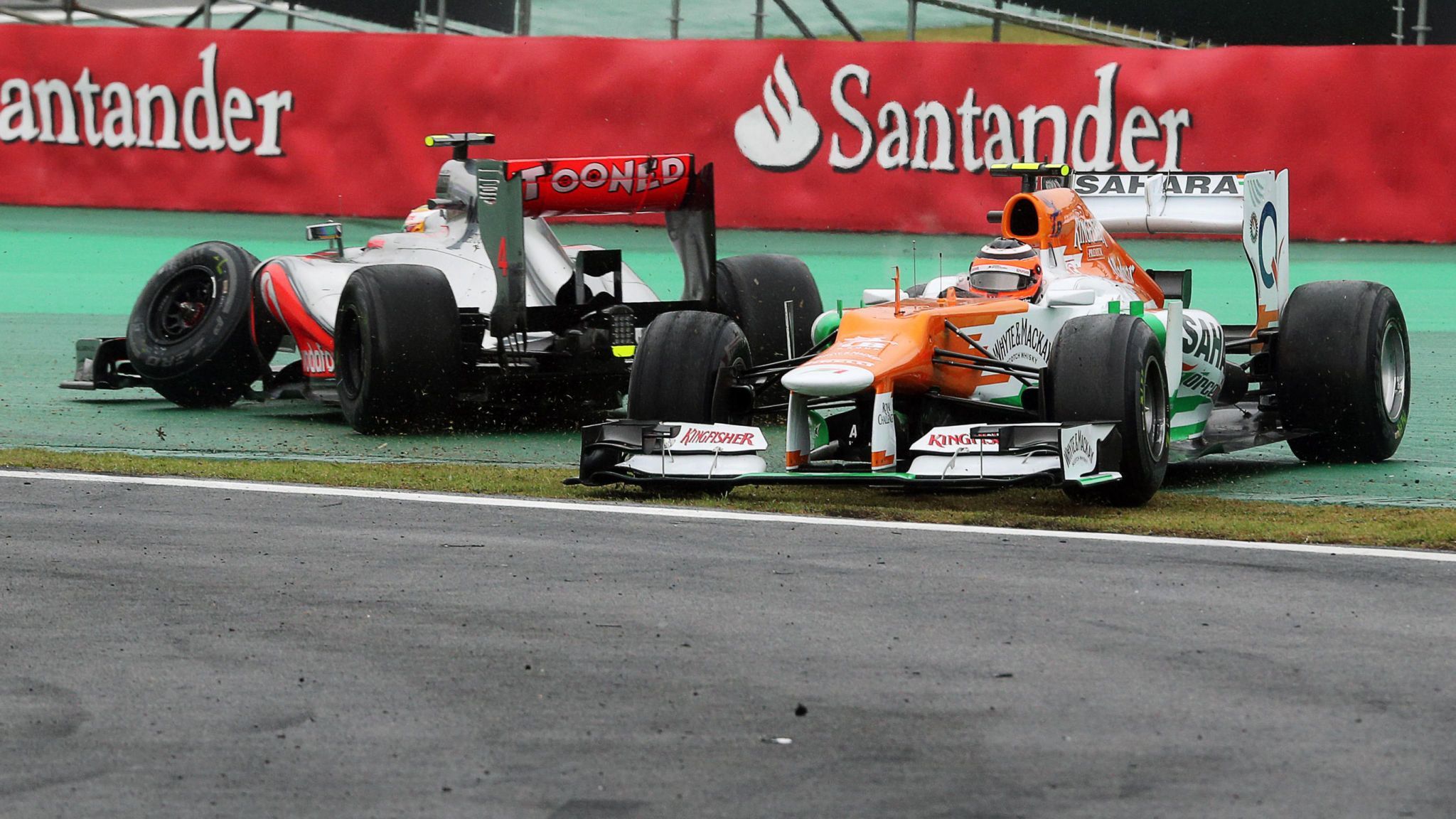
Nico Hülkenberg took him out of the race whilst battling for the lead in Brazil. Romain Grosjean and Pastor Maldonado caused two further retirements. And a fuel irregularity saw him demoted from pole to the back of the grid in Spain – but did give us a shock victory for a certain Venezuelan.
The Ugly
Hamilton has experienced two especially damaging pieces of misfortune that are the difference between him being a seven- and nine-time world champion.
First, in his rookie season, fate conspired to erase a 17-point advantage in the space of two races. The incident that saw him stuck in a Chinese gravel trap boils down to an error; arguably more so at the hands of the team, who left him out driving on tyres which were worn down to the canvas, but an error nonetheless. He was blameless, though, as his title aspirations crumbled in Brazil.
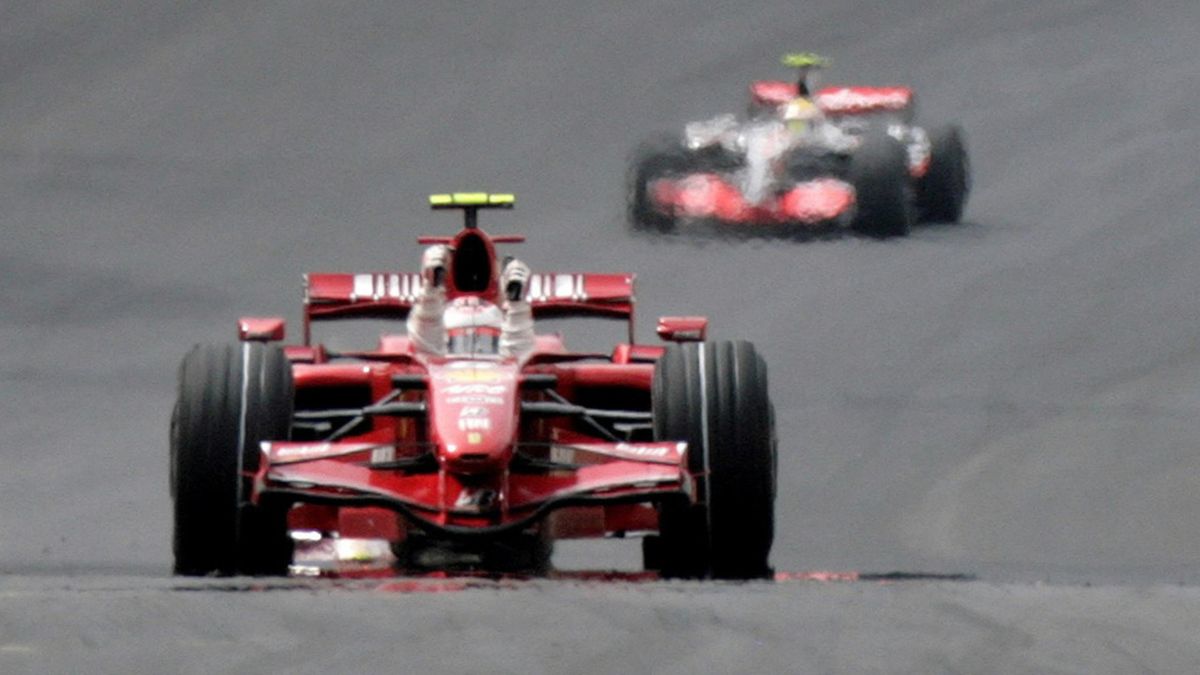
Despite that mishap in China, a young Hamilton still held an advantage of four points over teammate Fernando Alonso and seven points over Kimi Räikkönen. On lap 8, however, he suffered a gearbox problem and watched most of the field overtake him as he crawled up towards Ferradura. After about 30 seconds, he managed to reset his car’s computer and get going again but had fallen to 18th.
His recovery to an eventual seventh was not enough and he had somehow missed the chance to become the first-ever driver to secure the title in his rookie season.
Image credit: Eurosport
Nine years later, he was to be cruelly denied again.
The 2016 season was a tale of incredible consistency by Rosberg and horrendous reliability for Hamilton. Early in the season, two engine failures during qualifying – and being taken out at the first corner by future teammate Bottas – left Hamilton with a deficit to claw back, but by the summer break he had done just that.
However, those failed engines also meant he had to start from the back of the grid at the next race in Belgium. After that, and a hydraulics fault in Singapore, he had lost the lead once again, but was looking good for a crucial win in Malaysia when we heard that fabled radio call of “Oh no, no” as Hamilton’s hopes went up in flames.
From there, Rosberg didn’t put a foot wrong and did all that was required of him to cling on to the title by five points, despite Hamilton’s best efforts to make life as hard as possible for him at the finale.
Image credit: Sky Sports F1
So, How Lucky is He?
There is, of course, the old adage that you make your own luck. Many times in recent years we have seen Hamilton avoiding unnecessary risk and taking as little out of the car as possible, clearly more interested in the long game and focused on the championship. That perspective has come with experience – the younger Hamilton fought tooth and nail for every position and it often got him into trouble.
Hamilton can appear especially lucky because he is in the spotlight and, thus, every break that goes his way is highlighted. Many fans are desperate for any result other than a Hamilton win after such a period of dominance, so when he lucks into a win or escapes a bad result, it can seem as though it’s just another case of ‘lucky old Lewis’.
But then occasions like Monza in 2020 – where Hamilton was unlucky with the timing of a safety car and being erroneously called into the pits lost him a certain win – are somewhat forgotten because Pierre Gasly‘s fairy-tale victory is (rightly) the main focus.
Ironically, it was Hamilton’s year of appalling luck in 2012 that led him to take the leap to Mercedes. So, considering the unparalleled success he has achieved as a result of that move, could it be argued that the bad luck was, in fact, good luck?
Fortune is a fickle mistress and one which is very hard to define.
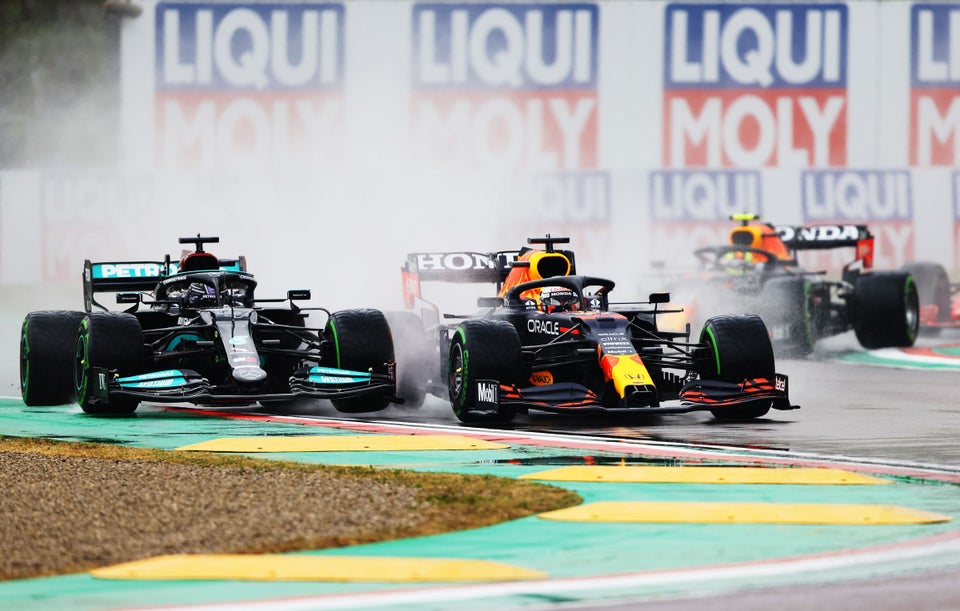
When the lights did go out, it was Verstappen who made a flying start from third on the grid. He had the racing line into the first corner and was able to run his main rival, Lewis Hamilton, out of road and claim the lead. Hamilton bounced over the raised kerbs and damaged his front wing but held onto second. Further round the first lap, Nicholas Latifi spun his Williams and then, upon rejoining, put himself into the wall after leaving Nikita Mazepin nowhere to go on the run down towards the Variante Alta.
That produced a safety car and (you’d expect) a moment of calm… But no, Mick Schumacher overcooked it whilst warming his tyres and pitched himself into the wall at the pit exit. The German rookie was able to recover but would have to drive round minus a front wing for a couple of laps as the pit lane was closed, ironically, to clear the debris from his crash. Sergio Pérez then ran wide into the gravel and earned himself a penalty by passing two cars to reclaim his position under safety car conditions.
Image credit: Formula 1
Verstappen controlled the restart well and the leading pair dropped the rest of the pack. Leclerc – running in an impressive third – was already 15 seconds behind when Verstappen pitted on lap 28. Hamilton responded a lap later but a slow stop ruined any chances of him jumping the Dutchman and he rejoined a few seconds behind.
The World Champion appeared to be more comfortable on the dry tyres, though, and was closing the gap as the two drivers worked their way through the backmarkers. However, on lap 31, Mercedes‘ race imploded.
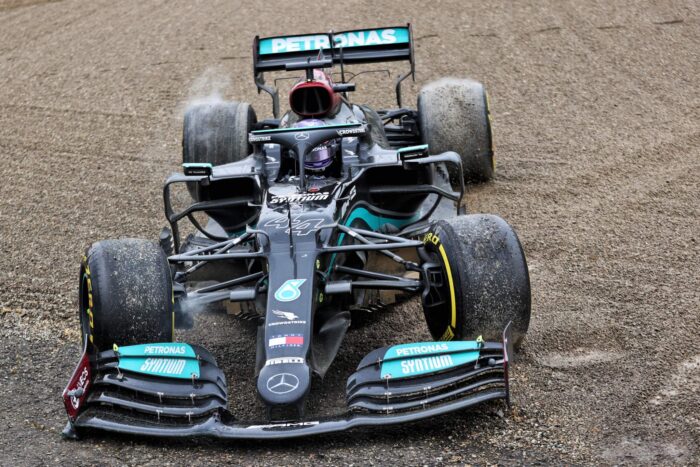
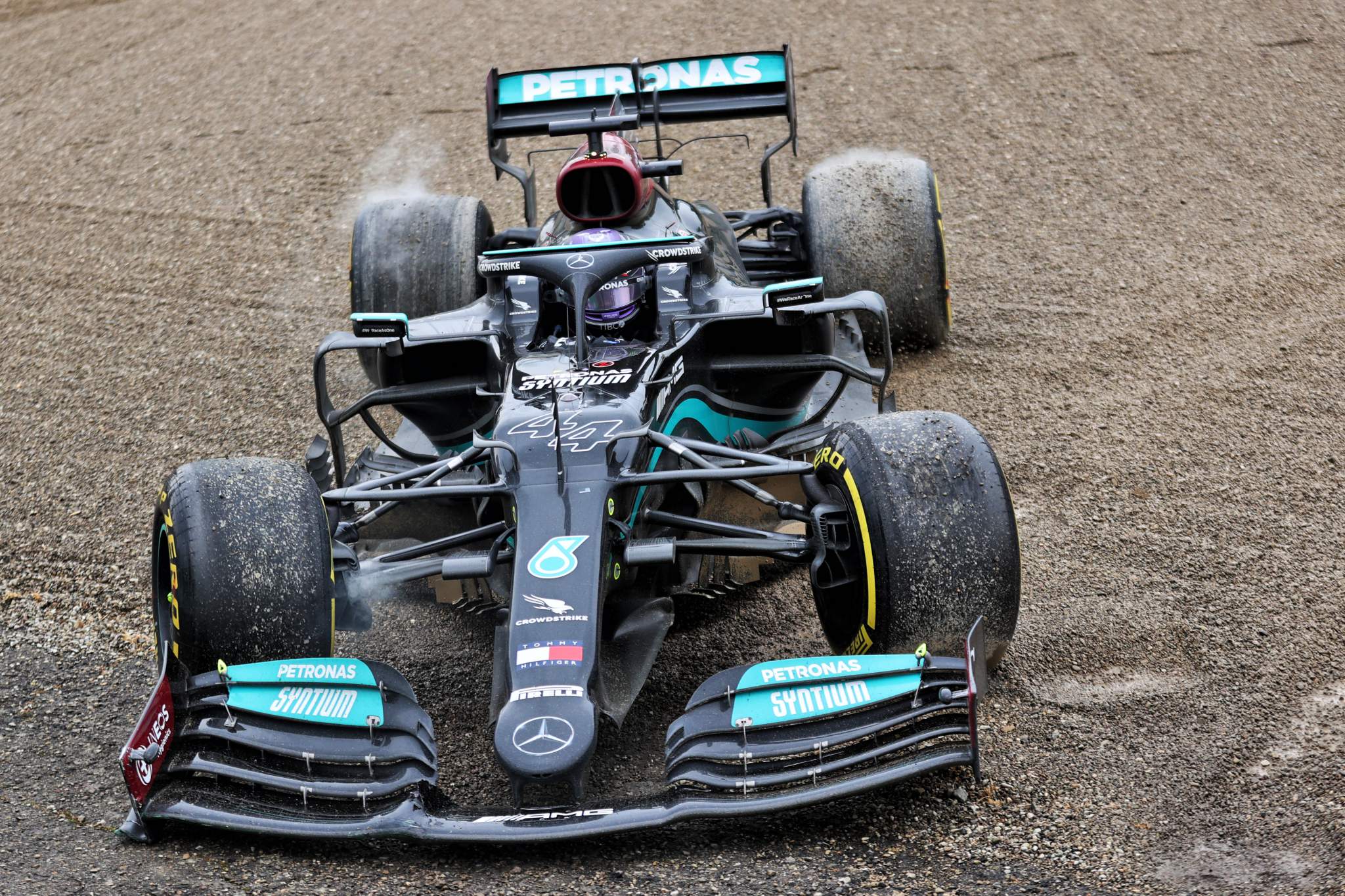
George Russell slowed to allow his fellow countryman past as they approached the Tosa hairpin, but stayed on the racing line. Force to overtake on the wet part of the track, Hamilton slithered off into the gravel and ultimately the wall, as the appalling turning circle of a modern Formula 1 car was laid bare. After some trouble, he engaged reverse gear and excruciatingly back-pedalled over the gravel and onto the track, but with a damaged front wing. And things were about to go from bad to worse in the Mercedes camp.
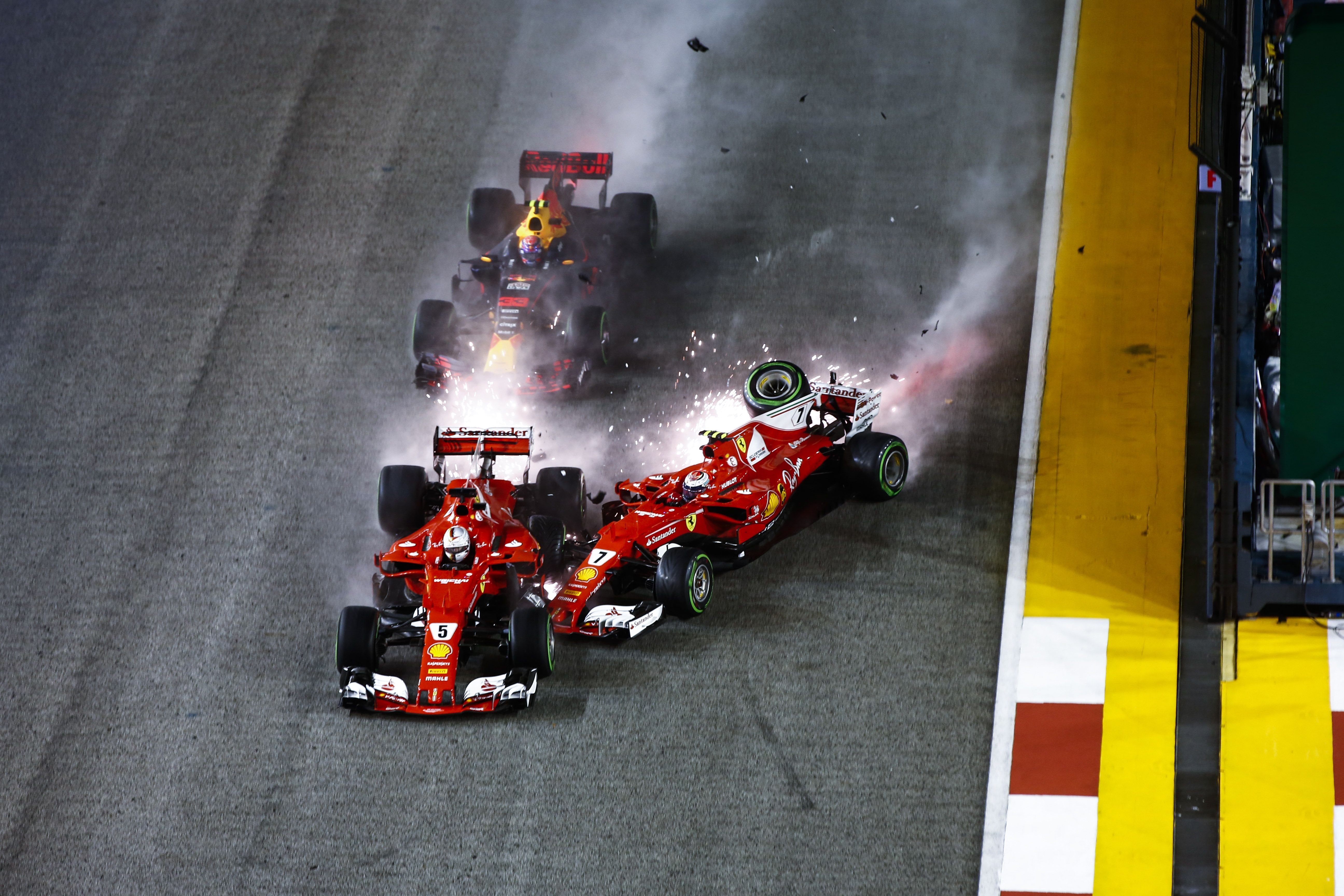
As Hamilton limped back to the pits, the other Mercedes driver and the Mercedes protégé came together in a massive way. After a poor qualifying had seen Bottas start from eighth, his struggles had continued come the race and he unbelievably found himself defending against a Williams. At full speed on the start-finish straight, Russell pulled alongside the Mercedes but put a wheel on the grass and immediately speared across into the Finn, both drivers going straight on and smashing into the barriers. With debris all over the track, the race was red-flagged.
After a brief stoppage, the drivers rejoined the track for a rolling restart. Ironically, the Mercedes disaster had actually aided Hamilton, who found himself in ninth, no longer a lap down, and with a repaired car. Verstappen then got lucky himself as he lost the car whilst backing the pack up for the restart, but was just about able to save the situation and Leclerc politely remained behind.
When he did successfully get the race back underway, the McLaren gamble to fit soft tyres saw Lando Norris pass Leclerc for second and briefly put pressure on the leader. Yuki Tsunoda passed Hamilton into the first corner but immediately spun and a lap later Pérez also found himself pointing the wrong direction in the gravel. A tale of hero to zero for the Mexican who had been the first teammate to outqualify Verstappen since Daniel Ricciardo left the team.
Two drivers may have removed themselves as obstacles, but Hamilton still had a lot of work to do if he was to recover to the podium. But recover he did. Slowly but surely, he got to within a second of each of the cars in front and executed a move into Tamburello. Norris put up an excellent fight on what were now very worn soft tyres, but eventually ceded his position with three laps remaining. He would hold off the chasing Ferraris for third, though, and claimed a very well-earned podium – the second of his career.
Ricciardo took sixth but – after earlier having to move aside for his teammate – admitted he still has a lot of work to do as he tries to acclimatise to his new, papaya machine. Late penalties for Lance Stroll and Kimi Räikkönen saw Pierre Gasly promoted to seventh and Alonso claim his first point since returning to the sport, despite never looking especially comfortable in the car.
Image credit: Getty Images
Out front, it had all been plain sailing for Verstappen since his minor blunder at the restart and he had built up a comfortable 20-second lead. Hamilton snatched the fastest lap late on, which keeps him one point ahead in the drivers’ standings, but the title fight is very much on.
A Damaging Day for Bottas and Russell
Now that the field has closed up so dramatically on the Silver Arrows, when Bottas has one of his off-days in qualifying, it is far more brutally exposed. He was a little under half a second shy of his teammate’s pole time and whilst, in the past, that would often still have seen him on the front row, in Imola it left him in an embarrassing eighth place.
And yet, Sunday was arguably worse. Surprisingly, considering his heritage and love of rallying, driving in the wet does not appear to be a strong suit for the Finn – just look at his performance in Turkey last year… He fell back a further two places at the start and then spent 28 laps stuck behind the Aston Martin of Stroll. That is what put him into a situation where he could be crashed into by an arguably overexcited Russell.
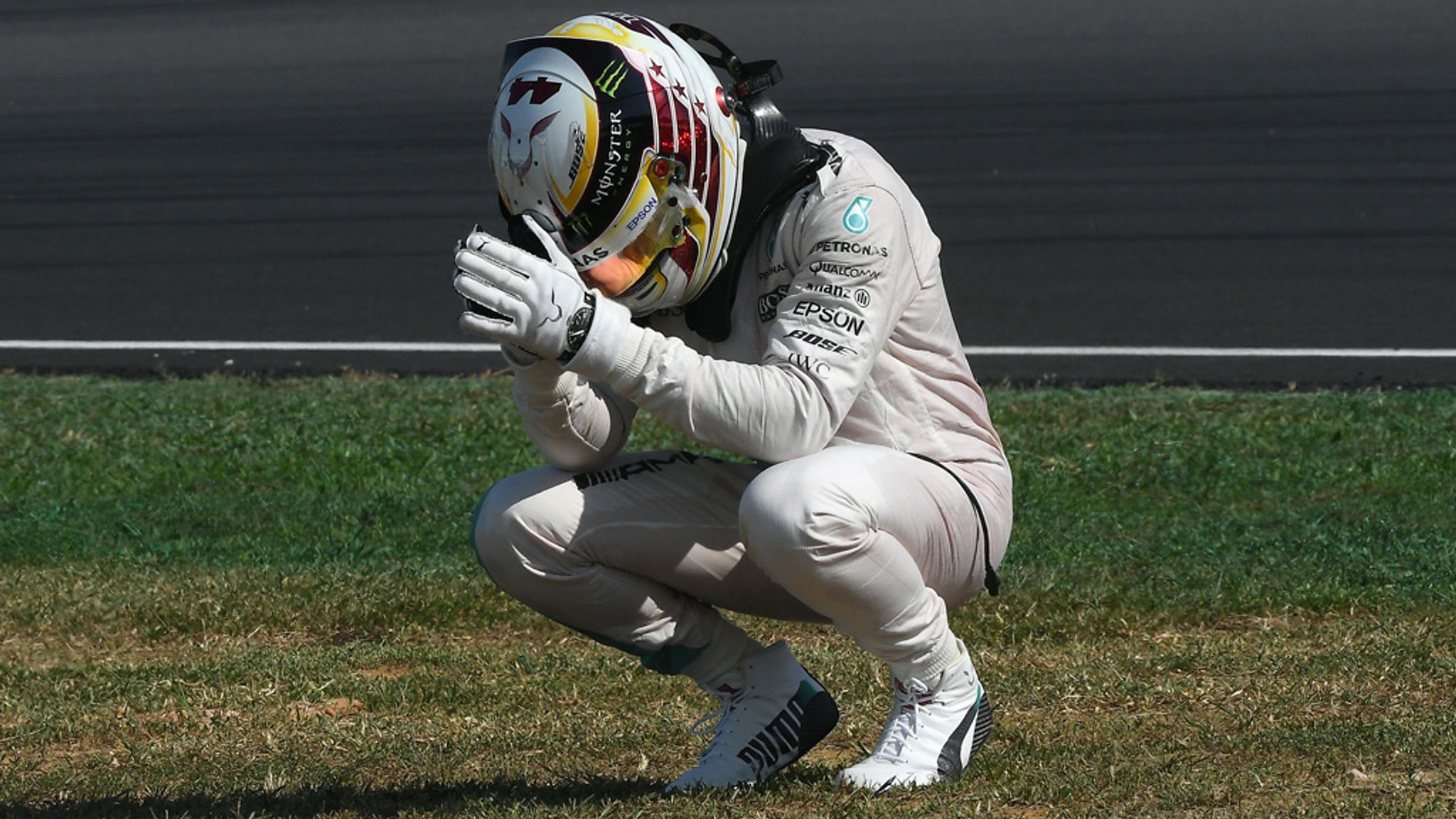
If you are expecting that to reflect well on Russell’s chances of replacing him next year, however, you’d be wrong. Whilst qualifying saw another performance worthy of his ‘Mr. Saturday’ moniker and the incident with Bottas itself could have been excusable, it was his reaction during the aftermath that left a bitter taste in the mouth.
Image credit: Getty Images
First, Russell stormed up to the smoking wreckage that contained Bottas, lambasted him for “trying to kill them both” and gave him a smack on the helmet for good measure. As Bottas emerged visibly winded from his car and was then being examined at the medical centre, Russell was already Tweeting his criticisms and claiming that Bottas would have defended differently if it were another driver.
Whilst his initial, heat-of-the-moment reaction was understandable, he really should have thoroughly examined the footage before going to see the media as it seems pretty clear to most that it was somewhere between a racing incident and Russell’s fault. Mercedes Team Principal Toto Wolff described it as 60:40 in terms of blame and was left fairly unimpressed.
This comes not long after the young Briton crashed behind the safety car whilst also chasing points at Imola last year. There is no denying that he has talent – and he obviously cannot have any blame attributed to him for what happened in Bahrain last year – but, if he is not careful, he could gain himself a reputation for choking when opportunities come his way. And throwing his toys out of the pram in the process.
The Emilia Romagna Grand Prix in 60 Seconds
Answering the Burning Questions
With a very different location to the last race, will Red Bull still have the fastest car? It was hard to say. It looks like Mercedes have certainly at least closed the gap.
Can Max Verstappen make amends for his near miss last time out? Very much so!
Will any of the teams have brought significant upgrades for the first European race after a three-week gap? Ferrari’s new floor appears to have given them a performance boost.
How will the midfield shape up? Can Alpine or Aston Martin improve on their disappointing performances in the desert? A little but the midfield order appeared pretty similar.
Will we see some challenging conditions with cold temperatures and a fair chance of rain? We will!
Lewis Hamilton | “You can see that Red Bull currently are ahead and we are the hunters. I think we like that position. I like it. That’s what I started out with back when I was racing karts at Rye House. It’s nothing new for me and it’s definitely exciting.”
Max Verstappen | “They are very close even if they don’t say it. [Bahrain] is definitely an opportunity missed, but if we have the fastest car it won’t matter because we have 22 races to finish in front of them.”
Daniel Ricciardo | “Such a fun circuit. It’s so fast. I think last year was my favourite qualifying lap of the year. It’s awesome.”
George Russell | “I made what is probably the biggest mistake of my career at Imola in 2020 when crashing under the safety car. It’s a track where, if you make a mistake, you’re out. But that’s what racing should be about! I’ll look to try and rectify my mistake from last year with a good result this weekend.”
Last weekend saw the inaugural event of a brand new racing series. And it´s one worth taking note of.
Image credit: LAT Images
Not only does Extreme E spread an important message via an exhilarating format, but it also features some familiar names to fans of F1. Firstly, there is Jenson Button driving for and managing his own team – JBXE.
There are further F1 connections in former driver Stéphane Sarrazin, Zak Brown working as Team Principal for the Andretti United team, Carlos Sainz Sr and both Adrian Newey and Jean-Eric Vergne working for the Veloce Racing team, who have British W Series champion Jamie Chadwick behind the wheel.
Most importantly, however, it would appear that my time machine works and it is 2014 again…as Lewis Hamilton and Nico Rosberg are battling it out at the front.
Okay, they’re not driving, but it is the respective teams of the Mercedes friends-turned-foes that largely battled for supremacy in the opening X-Prix. Hamilton’s X44 team took pole position on Saturday after a time penalty for Rosberg’s RXR (Rosberg X Racing). But it was the German team that triumphed on race day with X44 eventually having to settle for third behind Andretti United.
So, How Does It Work?
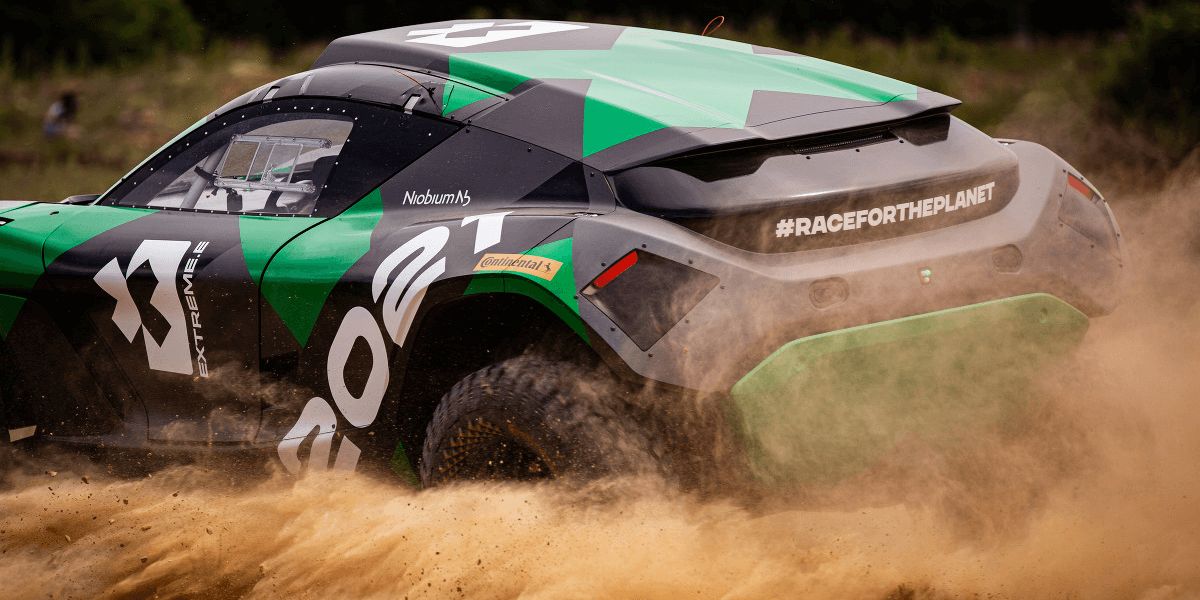
Every team uses the same all-electric Spark ODYSSEY 21 car, which utilises a 400kW battery designed by the Williams team and a McLaren drivetrain. It’s pretty nippy – producing 550 bhp and getting from 0-100kph in 4.5 seconds – and designed to be absolutely all-terrain.
Image credit: Extreme E
There are nine teams, each with one male and female driver. Along with the aforementioned F1 connections, there is plenty of royalty from other major forms of motorsport. Sébastian Loeb – who won nine straight titles between 2004 and 2012 – represents the WRC. And rallycross is represented mainly by the Swedish trio of Johan Kristoffersson, Timmy Hansen and Mattias Ekström, who between them have won the last five world titles.
All the action takes place over two days. On Saturday the teams do two qualifying runs of the course, with the male and female driver each driving a lap with a changeover – known as ‘The Switch’ – in between. The aggregate times produce an order.
From that order, the fastest three teams will go through to the first semi-final race on Sunday, the middle three teams battle it out in another semi dubbed the ‘Crazy Race’ and the slowest three teams will race in ‘The Shootout’. From that first semi, the top two finishers progress through to the final, joined by the winner of the Crazy Race. In the final, quite simply the winner of the race is crowned the X-Prix winner.
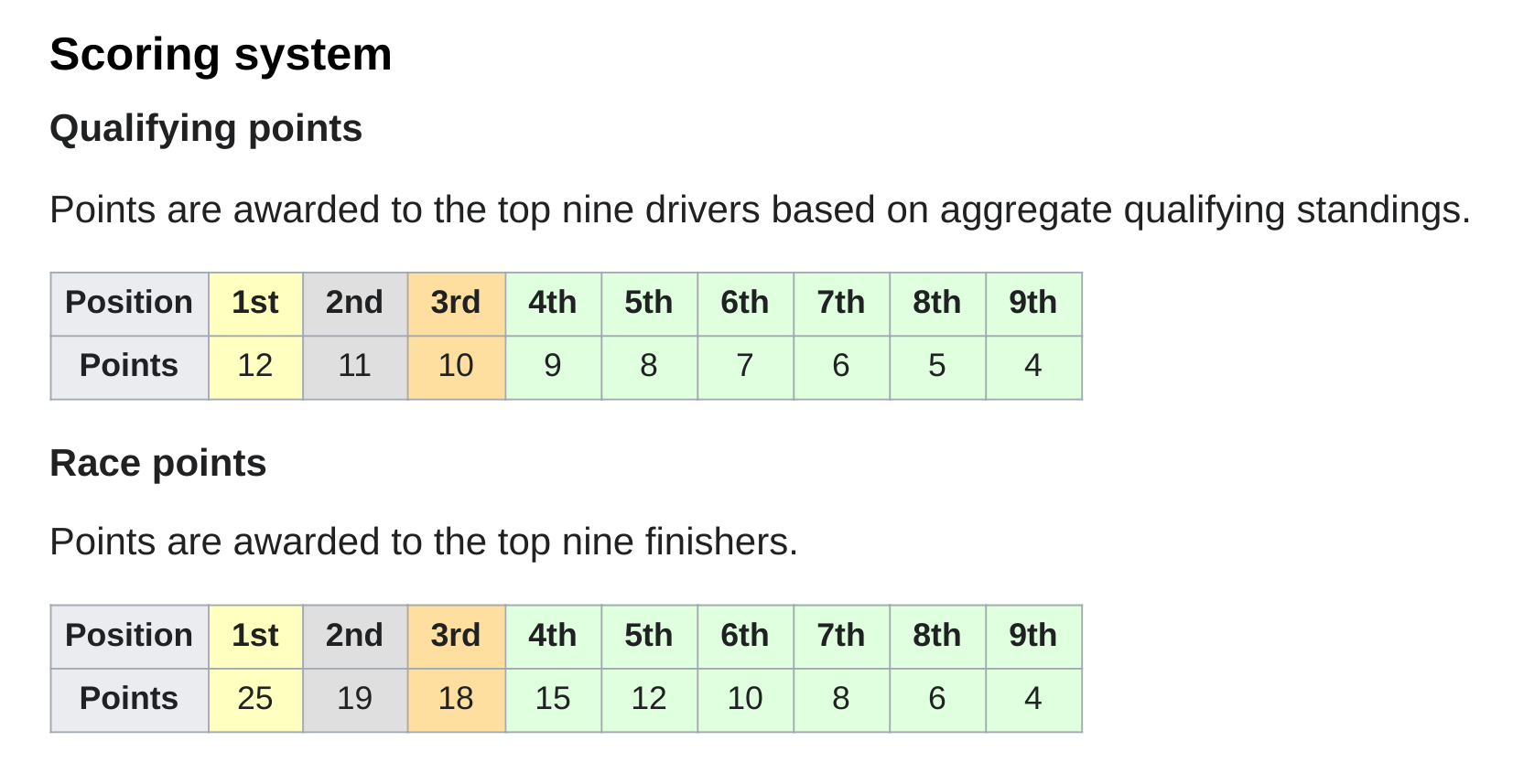
Points are awarded for both qualifying and the race, like so:
There are other unique features to spice up the racing yet further, such as ‘Hyperdrive’: whoever performs the longest jump on the first jump of each race is awarded an additional boost of speed and receives a bonus championship point.
What Does the Calendar Look Like?
There are five different venues for the inaugural season, each in a different remote location and themed around a related environmental issue. The season-opening Desert X-Prix took place in Al-‘Ula, Saudi Arabia, in support of the Great Green Wall Initiative and Red Sea turtle conservation.
The next stop will be Lac Rose in Senegal in late May for the Ocean X-Prix, where Extreme E is teaming up with local NGO Oceanium to plant one million mangrove trees in Senegal and aims to raise awareness regarding ocean crises. That is followed by a three-month gap before round 3 in Greenland, on the retreating Russell Glacier near Kangerlussuaq for the Arctic X-Prix.
The series then heads south – which it’s hard not to do from Greenland… – first to Santarém in the Pará region of Brazil for the Amazon X-Prix in October, working with The Nature Conservancy to protect and replant an area with agroforest which will provide crops that can be harvested by locals. And then finally to the Tierra del Fuego in Argentina for the finale – the Glacier X-Prix in mid-December.
Image credit: Martin Gunter
Is It Really That ‘Green’, Though?
The series is obviously very focused on promoting sustainability and gender equality, but it also wants to make a tangible impact. There will be a ‘legacy programme’ for each event – many of which are mentioned above – which aims to leave the venue in a better situation than before Extreme E visited.
A feature called ‘Gridplay’ allows fans to vote for their favourite driver to gain grid advantage – the team who receives the most votes can select its grid position for the final if they are in it – and each vote includes a micro-payment towards the legacy programme.
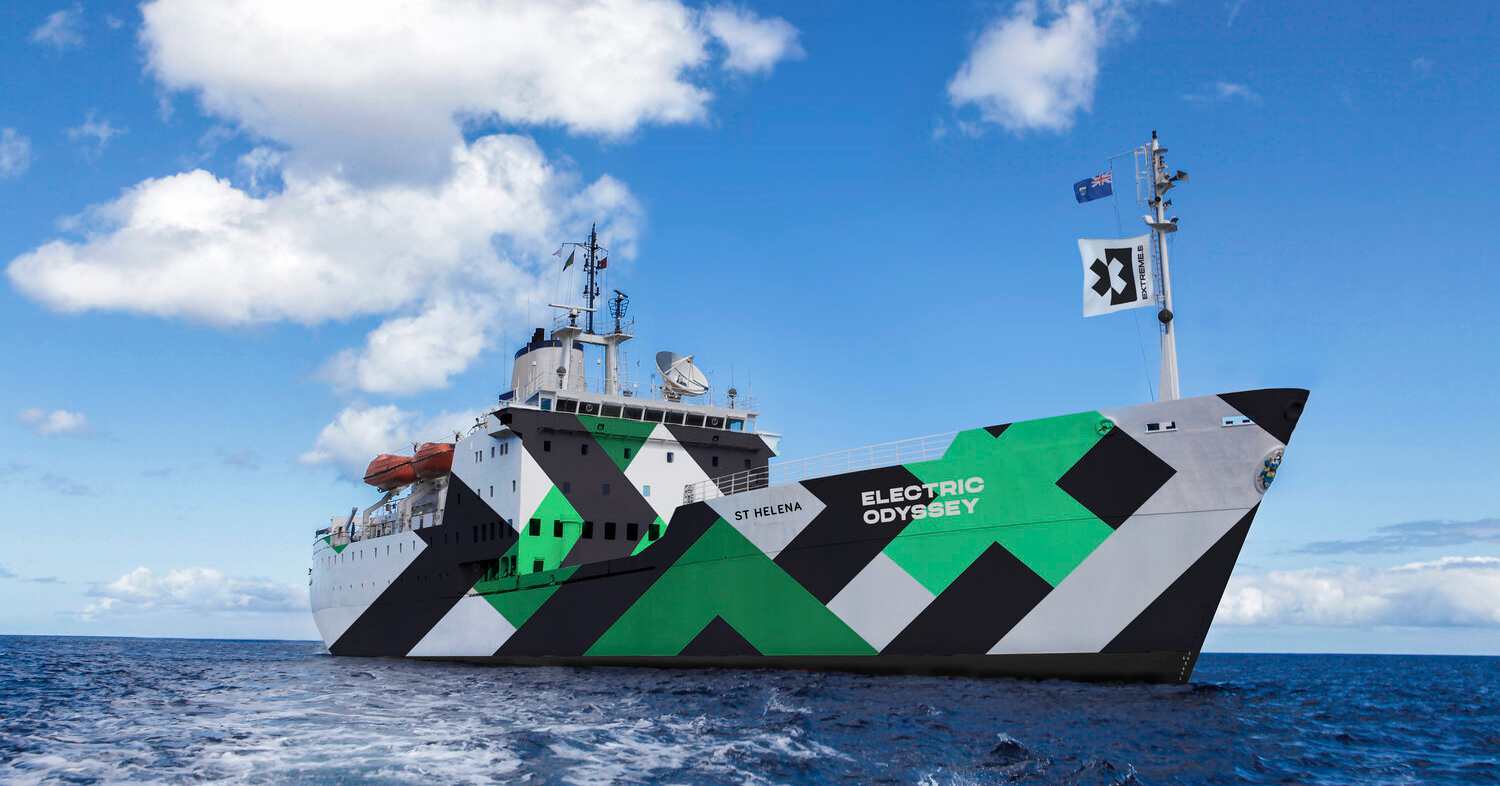
Extreme E is also, of course, very aware of its own carbon footprint. Thus, there will be no fans in attendance at the races and, more importantly, the RMS St. Helena will form an effective floating operations hub for the entire season.
It is a former Royal Mail passenger-cargo vessel which has undergone an extensive refit and will carry the cars and all other equipment required to each location. It will also house laboratories for scientists to carry out invaluable research on climate change and features chairs made from recycled plastic bottles.
Image credit: Extreme E
To keep things as low-carbon as possible, the cars’ batteries are charged by hydrogen fuel cells. This innovative idea from British company AFC Energy uses water and sun to generate hydrogen power. Not only will this process emit no greenhouse emissions, but its only by-product will be water, which will be utilised elsewhere on-site.
The logistics choice of sea rather than sky reduces their carbon footprint by at least two thirds and you have to say that they have left no stone unturned in their quest to be as green as possible.