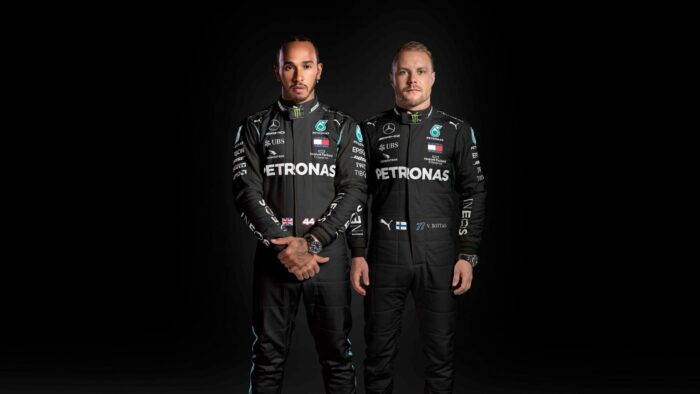
Lewis Hamilton and Valtteri Bottas pose for a Mercedes promo.

How do you beat one of the best ever?

If Valtteri Bottas is to become a world champion, he faces the unenviable task of beating Lewis Hamilton, in the same machinery, over the course of a season. That is something that the seven-time world champion’s varying teammates have achieved just twice, from 14 attempts; Jenson Button in 2011 and Nico Rosberg in 2016.

Fernando Alonso tied on points with a rookie Hamilton in 2007 during their fractious single season together at McLaren but technically lost out, courtesy of having achieved fewer wins.

So, how did Button and Rosberg achieve it?

2011
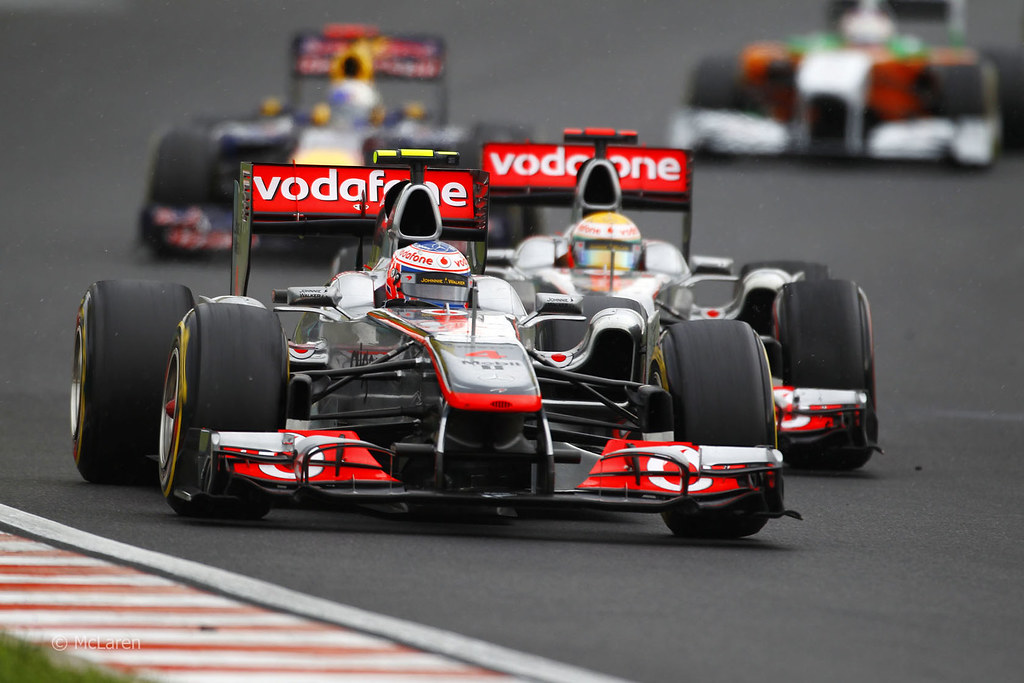
Jenson Button and Lewis Hamilton in 2011.
Image credit: LAT Photographic

2011 was something of an annus horribilis for Hamilton, during which he allowed multiple issues in his personal life to affect his performance on the track. There were tensions with then-girlfriend Nicole Scherzinger and, even more so, with his father.

Anthony Hamilton had managed his son’s career since the age of eight but, during 2010, the driver decided that he would rather have an independent manager who would allow him more freedom. It would take father and son several years to fully repair their relationship.

These stresses and strains manifested themselves mostly in the form of erratic driving and Hamilton suffered an error-filled season. He and Felipe Massa were practically inseparable on track; not in the sense that they were closely matched as much as that they managed to have no fewer than five collisions during the season.

That’s not to discredit Button, who had an excellent season and was clearly ‘best of the rest’ behind a runaway Sebastian Vettel. It was arguably his best year in the sport, even including his title win in 2009, and featured the truly epic, four-hour Canadian Grand Prix where Button came from last place to steal the victory from Vettel on the final lap.

It was a clear dip in form for Hamilton, though, compared to 2010 and 2012 when he was held back more by McLaren’s lack of reliability and operational issues.

Hamilton has clearly matured greatly in the decade since and is now generally able to keep any personal troubles away from the track. Bottas will need to do more than rely on some off days.

2016
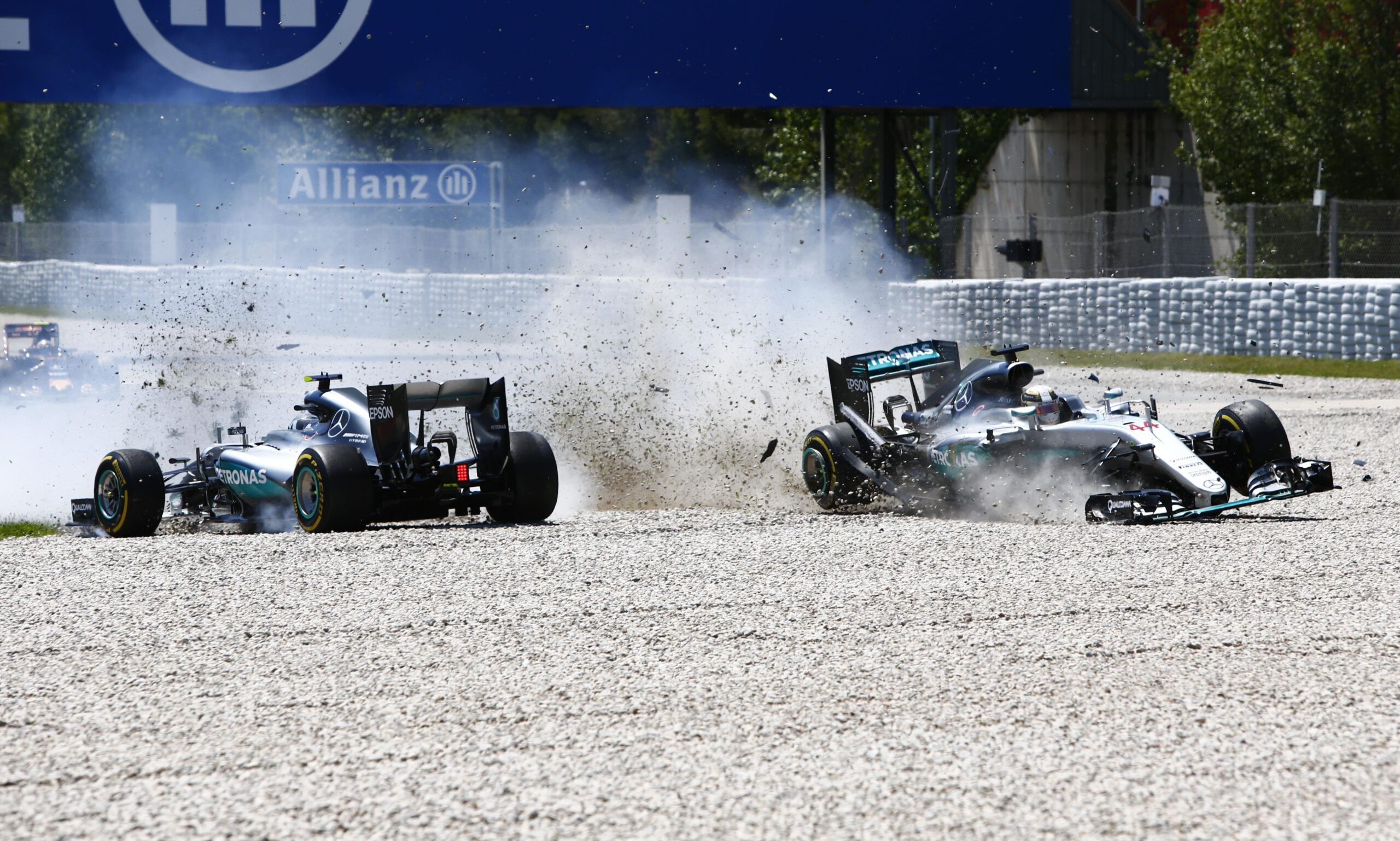
Lewis Hamilton and Nico Rosberg collide at the 2016 Spanish Grand Prix.
Image credit: Zak Mauger/LAT/Rex/Shutterstock

Hamilton versus Rosberg was the ultimate friends-turned-foes story of the early hybrid era. Rosberg spent years trying to gain a psychological advantage over his rival but, having fallen short in 2014 and 2015, realised he needed to focus more on himself.

The start of the season went very much Rosberg’s way, with a string of issues blighting Hamilton – he was hit by Bottas at the start in Bahrain, before consecutive power unit failures left him far down the grid at the next two grands prix. He came back strongly, however, and – despite starting from last in Belgium after serving a penalty for having used too many power units – was leading at the summer break.

At a time when driver weight was still a critical factor, Rosberg decided to stop cycling in an attempt to lose weight from his legs during the break and succeeded in losing one kilogram. That translates to around four hundredths of a second per lap and Rosberg took pole from Hamilton in Japan by just two hundredths. It is those kind of marginal gains that can make all the difference in a season of fine margins.

Ultimately, another engine failure from the lead of the Malaysian Grand Prix would prove to be too much for the Briton to make up in the final races of the year – despite winning all of them – and, whilst Hamilton’s shocking reliability was undeniably a crucial factor in 2016, Rosberg had to be there to take every opportunity presented to him and he unfailingly was.

2021?
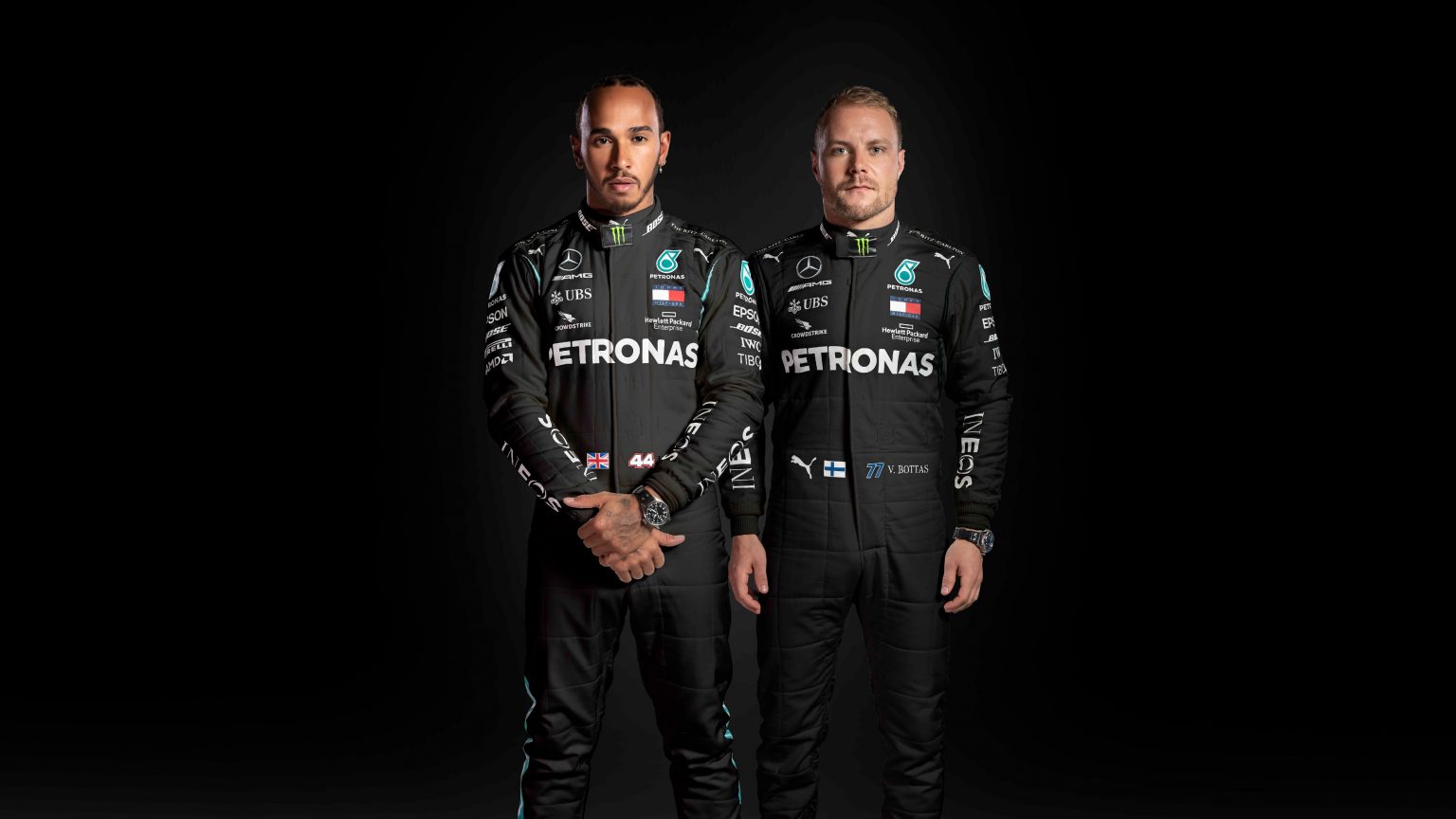
Lewis Hamilton and Valtteri Bottas ready for 2021.
Image credit: Mercedes

So, what have we learnt?

That Bottas will likely need to extract every ounce of his ability, go to extreme lengths to enhance his performance wherever possible, make almost no mistakes, and could probably do with a decent slice of luck. But hey, stranger things have happened.

He has started the last two seasons strongly with a controlled win at the opening grand prix, before falling back as Hamilton builds up momentum and he – understandably – struggles to match the most successful driver of all time.

He will have to find a way to keep up the challenge in 2021, however, as it looks like it could well be his final season with Mercedes. George Russell proved he could, at the very least, match the Finn without any preparation at last year’s Sakhir Grand Prix and, once again, Bottas has only been given a one-year contract.

He seems to be in a great place in his life right now; whilst it was unknown to most, he was going through a divorce in 2019, but is now in a new relationship and seems content and motivated.

Will we see Bottas 3.0 or 4.0 or whatever software update he’s up to now this year? Could we get yet another Finnish world champion? And maybe one that would even break into a smile?!
He’ll need his coffee and his porridge, that’s for sure.

Hamilton finally signs on the dotted line

Lewis Hamilton and Mercedes have come to an agreement on a new contract for the seven-time world champion. But it’s only for 2021…

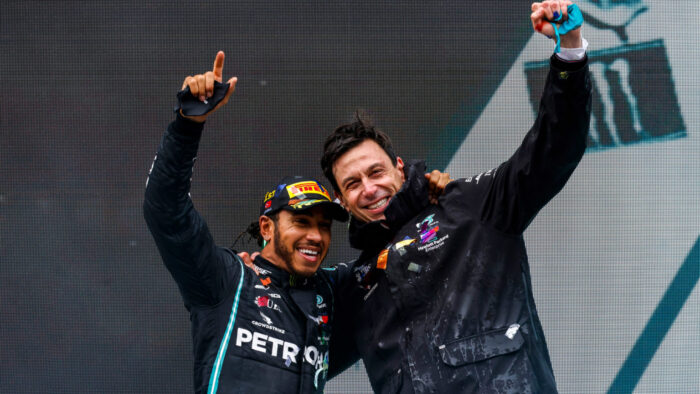
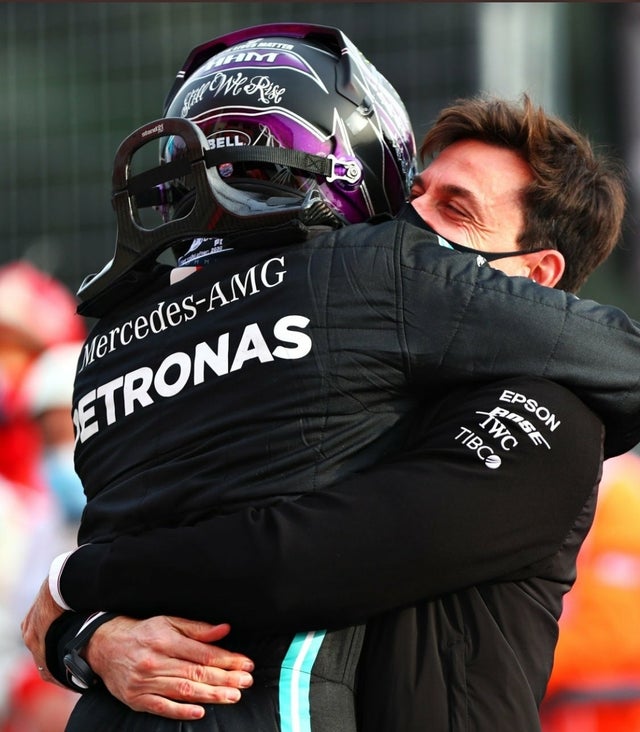
Lewis Hamilton and Toto Wolff celebrate Mercedes' seventh world title.

After a year of speculation – albeit with the general acceptance that the two parties would get things sorted eventually – the deal is finally done. From the outside, there seemed little reason to break up a winning combination. Arguably the most successful combination in the history of the sport.

Hamilton’s contract negotiations have often dragged on in recent years, since he took control of the process himself and has also moved into a powerful position as Formula 1’s most eminent figure. This one has been especially lengthy, though.

That is likely in part due to complications regarding the pandemic. It would appear that, in the past, Hamilton and Mercedes Team Principal Toto Wolff have often met up for dinner and hammered out the bulk of the agreement. That is obviously not so easily done currently.

But there have also been rumours regarding other sticking points. Some have mentioned a ‘Verstappen Clause’, which revolved around Hamilton being able to have a say on his teammate for 2022. Despite the name, that was not necessarily focussed directly on Max Verstappen, but the Dutchman is the most likely threat to Hamilton’s dominance in the sport and Wolff is known to have been keeping tabs on him for years. Mercedes even tried to sign him as a 16-year-old, but weren’t able to match Red Bull‘s promise of an immediate drive.

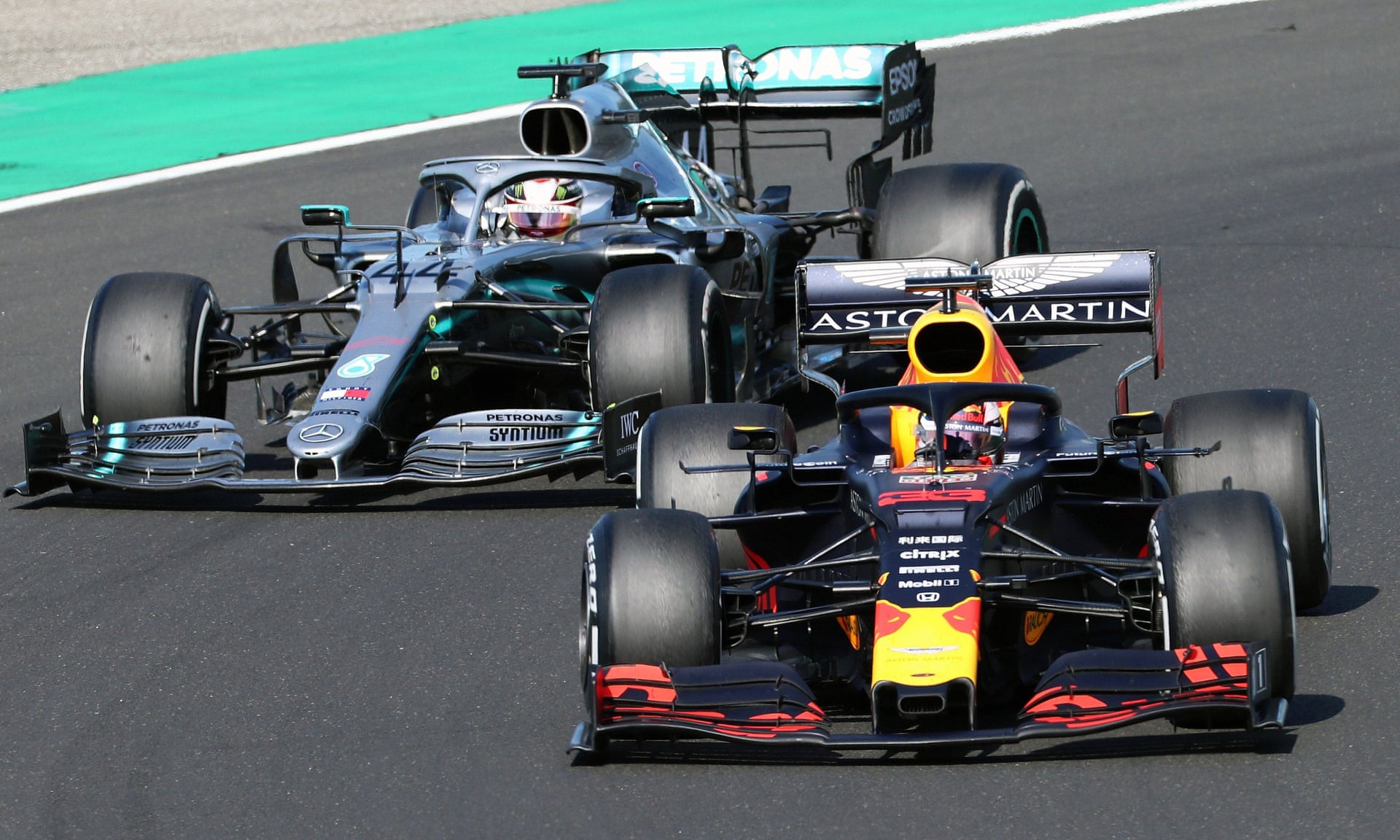
Max Verstappen and Lewis Hamilton in 2019.
Image credit: Getty Images

However, Verstappen is contracted to Red Bull until the end of 2023 and Mercedes know all too well the pitfalls of having two ‘alpha’ drivers, both determined to lead the team, from their volatile years with the pairing of Hamilton and Nico Rosberg.

The more likely option for 2022 and beyond is surely George Russell. He is a junior Mercedes driver who demonstrated his considerable potential when given his one surprise opportunity at Sakhir and Daimler chairman Ola Kallenius wants Russell to be the team’s number one after Hamilton. The young Briton’s contract with Williams is up at the end of 2021 – as is that of current Mercedes driver Valtteri Bottas – so it would appear that there are three Mercedes drivers in competition for the two 2022 seats.

There is also talk of Hamilton’s new contract containing an option for a second year, though.

It is hard to know how much longer he wants to continue. From one race to the next he will often go from sounding like he is on the verge of announcing his retirement to discussing his excitement for the new regulations in 2022.

The 36-year-old is certainly aware that he is entering the twilight of his F1 career and has many passions outside the sport – his music, his fashion, his new XE team and his fight for equality – but you can see how intensely that competitive desire still burns every race weekend.

He has also utilised Formula 1 as a springboard for his various campaigns and, indeed, this new contract contains a ‘joint commitment for greater diversity and inclusion’. Perhaps he will take stock at the end of this year – when there is a good chance he will have become the outright most successful driver in history with an eighth title – and decide if he does want to continue.

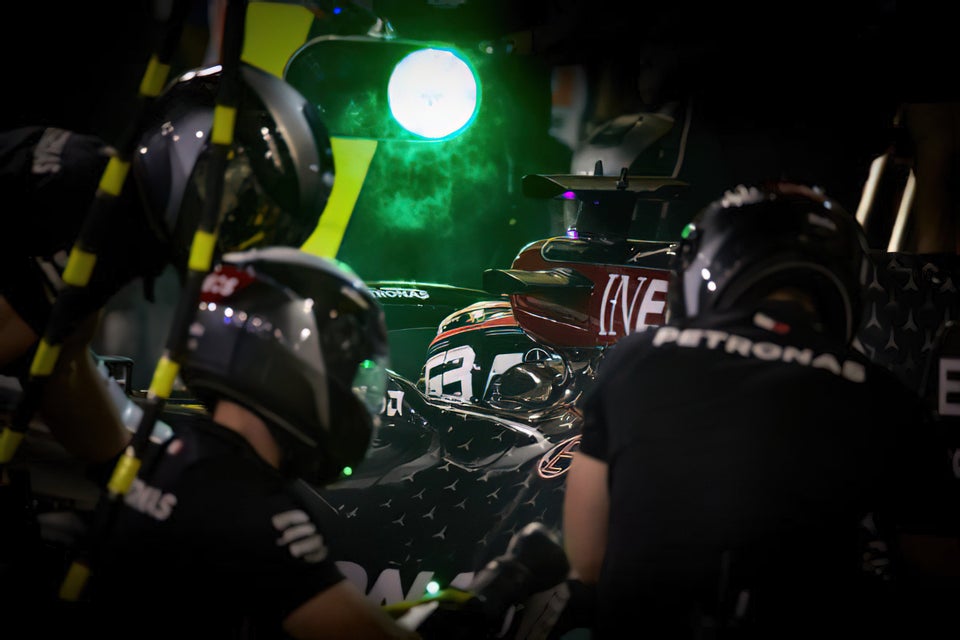
George Russell in the Mercedes at the 2020 Sakhir Grand Prix.
Image credit: LAT Images

If the answer is yes, Mercedes would surely keep him on, and it would then most likely boil down to a battle between Russell and Bottas for the second seat. Mercedes would need to weigh up the pros and cons of consistency through a regulation change versus giving a deserved opportunity to their future star, who surely can only wait so long for his promotion.

If the answer is no, would they embrace change and swoop for Verstappen? A Verstappen and Russell pairing would likely be thrilling and very fast, but it would have undeniable parallels with a certain driver pairing at McLaren in 2007. And we all know how that one worked out…

Taking your chance at Ferrari

How do you fill the shoes of a four-time world champion?

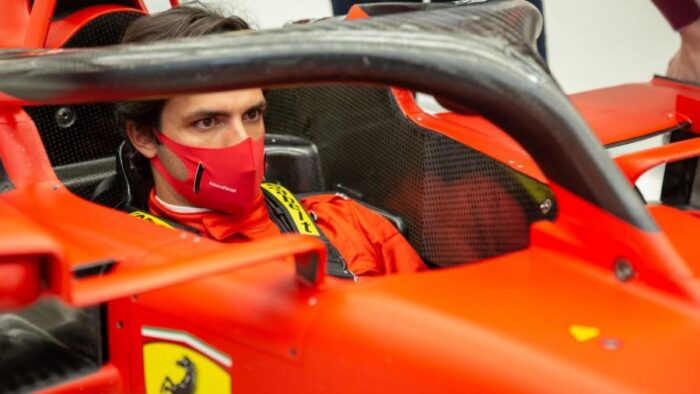
You would imagine that this thought has – fleetingly, at least – crossed the mind of Carlos Sainz ahead of his move to Ferrari this year. He will replace Sebastian Vettel who, whilst ultimately unsuccessful in his quest to bring a title back to Maranello, spearheaded the Italian marque’s endeavours from 2015 to 2020.

Many suspect the Spaniard will fulfil a role as the de facto number two to the Scuderia’s rising superstar, Charles Leclerc, but let’s not write him off so soon. It is worth remembering that Sainz largely matched Max Verstappen during their time as teammates at Toro Rosso and, after a somewhat uninspiring spell at Renault, has reminded the paddock of his considerable potential with two excellent seasons in the papaya orange of McLaren.

However, numerous Ferrari drivers have shown great potential, only for the expectation of the Tifosi – if not an entire nation – to weigh too heavily upon their shoulders.

So, can Sainz shine where many before him have only glimmered? He joins Ferrari after a few seasons at midfield teams who haven’t provided a serious chance at victory. How have those in a similar situation fared over the last few decades? Let’s investigate.

Jean Alesi

Tyrrell > Ferrari, 1991 | Races Before Move: 24 | Races for Ferrari: 81 | Wins: 1

Jean Alesi made quite an impact during his two seasons with Tyrrell, claiming two podiums in an underpowered car and famously battling with Ayrton Senna for the lead of the 1990 season-opener in Phoenix. His performances were impressive enough for Ferrari to take a chance on the young Frenchman.

Despite coping well with immediately having to compete with Alain Prost, Alesi would prove to be the perennial underachiever of F1 during the 90s – undeniably fast, but also an ill-fated combination of foolhardy and unlucky.

A Sicilian-born, passionate driver of the evocative number 27 Ferrari, Alesi was inevitably popular with the Tifosi but would ultimately manage just one win in 1995, before swapping seats with Michael Schumacher and moving to Benetton.

Eddie Irvine

Jordan > Ferrari, 1996 | Races Before Move: 32 | Races for Ferrari: 65 | Wins: 4

Eddie Irvine made an instant impression in F1 by scoring a point on his debut and then promptly being punched by Senna for having unlapped himself. Controversy continued to follow him, with two separate bans the following year and a subsequent threat of his Super Licence being revoked. He certainly showed flashes of speed in between the altercations, though, and Ferrari were suitably impressed to buy out his new contract with Jordan.

Irvine was initially unconvincing and, after a series of eight consecutive retirements, the Italian press was calling for him to be sacked. He steadily improved, however, and played a strong supporting role to Schumacher, before assuming the role of team leader in 1999 when the German broke his leg in a crash halfway through the season.

He would eventually miss out on the championship by two points but played a large part in Ferrari winning their first constructors’ title in 16 years. It would prove to be his final contribution before a largely unsuccessful move to Jaguar.

Rubens Barrichello

Stewart > Ferrari, 2000 | Races Before Move: 114 | Races for Ferrari: 104 | Wins: 9

Seen as a potential successor to Senna, Rubens Barrichello was already experienced in carrying the hopes of a nation by the time he joined Ferrari in 2000. He was, however, entering what was very much Schumacher’s team and that is something he would not be able to change over the subsequent six years.

The popular Brazilian would come to epitomise the ‘number two’ driver role – consistent, compliant and reliable but never quite fast enough to challenge the superstar on the other side of the garage. Team orders were, in fact, banned at the end of 2002 after the controversy of Ferrari forcing Barrichello to hand over a victory to his teammate in Austria.

With more freedom and a less commanding teammate, ‘Rubinho’ would likely have won far more than nine grands prix and could well have challenged for a title.

Felipe Massa

Sauber > Ferrari, 2006 | Races Before Move: 53 | Races for Ferrari: 139 | Wins: 11

Another popular Brazilian and one that would go on to become a Ferrari ‘number two’ also. Felipe Massa started out equal parts fast and error-prone with a hit-and-miss season at Sauber in 2002 but, after spending the following year as test driver for Ferrari, he rejoined his former team a more mature driver. He convincingly outpaced his former world champion teammate, Jacques Villeneuve, throughout the 2005 season and was signed to partner Schumacher at Ferrari for 2006.

Whilst still somewhat inconsistent, Massa was always fast and came about as close as you can to winning a world championship in 2008; only Lewis Hamilton’s infamous last corner “Is that Glock?” moment denying him the title.

A freak accident in 2009 left Massa briefly in a coma and, whilst he would recover in time for the following season, he was arguably never the same driver again. He spent his final four years with Ferrari in a support role to teammate Fernando Alonso and would never win another race.

Carlos Sainz

McLaren > Ferrari, 2021 | Races Before Move: 119 | Races For Ferrari: ? | Wins: ?

So, what does the future hold for Sainz in the red of the Scuderia?

Obviously, after such a calamitous season for Ferrari in 2020, the goalposts for a new recruit have been moved. The team will be rebuilding and that will likely help Sainz find his feet with expectations somewhat tempered for 2021 and a year to acclimatise without the instant pressure most of his predecessors have had to deal with.

Ferrari have historically held a policy of employing tried-and-tested drivers, but taking a chance on youth and potential last year, in Leclerc, proved very successful and 2021 will see the youngest Ferrari line-up in living memory. As we can see from these examples, joining Ferrari and dethroning a multiple world champion is no easy feat, but the young Monégasque managed it over the last two years. Now Sainz will have to attempt to dethrone him…